Dealing with Mammon

25th Sunday in Ordinary Time [C] – September 22, 2019 – Luke 16:1-13

money for othersThere is something strange in our Gospel today. Jesus is praising the cunning steward. Why does Jesus commend his shrewd action? To understand Jesus’ words, we need to comprehend first what really takes place with this servant and his master.

There is a steward who had been entrusted by his master to take care of his master’s house and possession, and yet, instead doing his job, he prefers to squander his master’s wealth and betrays his master’s trust. Angered master does what he is expected to do. He fires his useless servant. Yet, upon this impending judgment, the servant realizes that he is not able to dig, meaning he cannot labor in the farmland or at the construction sites. He is also ashamed to become a beggar. Then, he engineers a way out. He calls all his master’s debtors and cut into half all their debts by manipulating their letter of agreement. By doing this, he is doing a favor to them and making them as their friends. This is to secure way to survive after his expulsion. Surely this is manipulation and corruption, and yet he is praised for doing so. What’s going on?

Jesus gives us an example of how smart the children of this world manage their affairs. In the time of crisis, the wicked servant is able to discern well what is most important in his life, that is his survival. For a while, the servant is attached to the wealth of his master and spending them as if this money is his. But, when he realizes he is in the great trouble, he makes the right choice. He detaches himself from his addiction from wealth and make them as a means to achieve his survival. Jesus then compares the children of this world, and the children of light. If the children of this world can use and manipulate the material possession for their earthly motives, so the children of light shall use the same wealth to attain even a loftier goal.

This teaching of Jesus is important and massive implication. We are not only allowed, but even encouraged to use the material goods and wealth in order to reach heaven. Jesus even uses a stronger term: make friends for yourself with dishonest wealth! Surely, it does not mean we can buy heaven, or we can bribe God! We cannot never do those things. These material possession and money serve us as means to live decent lives, help each other and worship God.

The problem is that we, the children of light, are not friends with wealth. We either hate money or we love money. Firstly, some of us may have a perspective that money is evil, dangerous and leading to sin. Thus, when we hate money, we detest also those who have money. The hatred of money may lead to hatred of others, and we may fail to fulfill Christ’s commandment: to love one another. Secondly, many of us love money. We are attached to earthly wealth that we forget their true purpose. We make means into the end, and end into the means. We turn our family, friends, employees, religion, even God as tools to gain more and more money. It is a disheartening reality nowadays that some people create new religions and churches to enrich themselves. We are only to love God and to love each other for the love of God, but never money. We make friends with earthly wealth in order for us to gain heaven.

Valentinus Bayuhadi Ruseno, OP

Tuhan dan Mamon

Minggu Biasa ke-25 [C] – 22 September 2019 – Lukas 16: 1-13

wealth growingAda sesuatu yang aneh dalam Injil kita hari ini. Yesus memuji pelayan yang curang itu. Mengapa Yesus memuji tindakan cerdiknya? Untuk memahami kata-kata Yesus, kita perlu memahami terlebih dahulu apa yang sebenarnya terjadi dengan hamba ini dan tuannya.

Ada seorang hamba yang telah dipercayakan oleh tuannya untuk mengurus rumah dan kepemilikan tuannya, namun, alih-alih melakukan pekerjaannya, ia lebih memilih untuk menghambur-hamburkan kekayaan tuannya dan mengkhianati kepercayaan tuannya. Tuannya tentu menjadi marah. Dia memecat hambanya yang tidak berguna itu. Namun, sebelum ia diusir oleh tuannya, sang hamba menyadari bahwa ia tidak dapat menggali, yang berarti ia tidak dapat bekerja di tanah pertanian atau di pekerjaan bangunan. Dia juga malu menjadi pengemis. Lalu, ia merekayasa jalan keluar. Dia memanggil semua orang yang berhutang pada tuannya dan menghapuskan sebagian dari  utang-utang mereka dengan memanipulasi surat perjanjian mereka. Tentunya, orang-orang ini senang hutang mereka berkurang. Dengan melakukan ini, sang hamba melakukan hal menguntungkan bagi dia dan para pengutang, dan menjadikan mereka sebagai teman mereka. Dan jika diusir oleh tuannya, dia memiliki teman untuk menampungnya dan dia bisa bertahan hidup. Sejatinya ini adalah sebuah manipulasi dan korupsi, namun ia malah dipuji karena melakukannya. Apa yang sebenarnya terjadi?

Yesus memberi kita hamba yang cerdik ini sebagai sebuah contoh tentang seberapa pintarnya anak-anak di dunia ini mengelola urusan mereka. Di masa krisis, hamba yang jahat mampu membedakan dengan baik apa yang paling penting dalam hidupnya, yaitu kelangsungan dan masa depan hidupnya. Pada awalnya, hamba terikat pada kekayaan tuannya dan menghambur-hamburkannya seolah-olah uang ini adalah miliknya. Tetapi, ketika dia menyadari bahwa dia berada dalam kesulitan besar, dia membuat pilihan yang tepat. Dia melepaskan diri dari kecanduannya dari kekayaan dan menjadikannya sebagai sarana untuk mencapai kelangsungan hidupnya. Yesus kemudian membandingkan anak-anak dunia ini dengan anak-anak terang. Jika anak-anak di dunia ini dapat menggunakan dan memanipulasi kepemilikan materi untuk motif duniawi mereka, anak-anak terang pun seharusnya menggunakan kekayaan yang sama untuk mencapai bahkan tujuan yang lebih tinggi.

Ajaran Yesus ini memiliki implikasi penting dan masif. Kita tidak hanya diizinkan, tetapi bahkan didorong untuk menggunakan barang-barang materi dan kekayaan untuk mencapai surga. Yesus bahkan menggunakan istilah yang lebih kuat: ikatlah persahabatan dengan mempergunakan kekayaan! Tentunya, itu tidak berarti kita dapat membeli surga, atau kita dapat menyuap Tuhan! Kita tidak bisa melakukan hal-hal itu. Kepemilikan materi dan uang ini ada sebagai sarana untuk hidup yang layak, membantu sesama dan menyembah Tuhan.

Masalahnya adalah kita, anak-anak terang, tidak tahu berteman dengan kekayaan. Ada dua ekstrem: entah kita benci uang atau kita cinta uang. Pertama, beberapa dari kita mungkin memiliki perspektif bahwa uang itu jahat, berbahaya dan sebuah godaan untuk dosa. Jadi, ketika kita membenci uang, kita membenci juga mereka yang punya uang. Kebencian terhadap uang dapat menyebabkan kebencian terhadap orang lain, dan kita bisa gagal memenuhi perintah Kristus: untuk saling mengasihi. Kedua, banyak dari kita cinta uang. Kita terikat pada kekayaan duniawi bahwa kita melupakan tujuan sejati kita. Kita membuat sarana menjadi tujuan, dan tujuan menjadi sarana. Kita menjadikan keluarga, teman, karyawan, agama, bahkan Tuhan kita sebagai sekedar sarana untuk mendapatkan lebih banyak uang. Adalah kenyataan yang menyedihkan saat ini bahwa beberapa orang membuat agama dan gereja baru untuk memperkaya diri mereka sendiri. Kita hanya mencintai Tuhan dan mencintai sesama demi cinta Tuhan, tetapi tidak pernah uang. Kita berteman dengan kekayaan duniawi agar kita mendapatkan surga.

Valentinus Bayuhadi Ruseno, OP

Heart

Reflection on the 8th Sunday in Ordinary Time [March 3, 2019] Luke 6:39-45

prisoner prayer
Prisoner praying during church ceremony at Naivasha Maxium Security Prison. During the church service some prisoners pray on their own. – 24.11.2012. Copyright: Ulrik Pedersen

These past three Sundays, we have been listening on the series of Jesus’ teachings given at the Plain [Luk 6:20-49]. Two Sundays ago, we read about the Beatitudes. This is the set of conditions that leads us to true happiness and blessedness. Last Sunday we discover some practical steps to achieve this Beatitude, like we shall love our enemies. And this Sunday, we find the heart of Jesus’ teachings: it is the formation of the heart.

In our contemporary world, the heart generally symbolizes the source of affection, passion and love. Filipinos love basketball, and they give their best support every time their national team compete in international tournaments. Their battle cry is “Laban! Puso!” literally translated as “Fight! Heart!” Surely, the heart here refers to the burning passion to overcome enormous challenges during the ball game.

When a lady is not sure whether to accept or not a man to be her boyfriend, we often advise her to follow her “heart”. When she has a new boyfriend and is in love, she calls him as her “sweetheart”. But, when she suddenly loses her boyfriend because of unexpected betrayal, she suffers an immense “broken heart”. Because of this traumatic experience, she refuses to love anymore, and she now possesses “the heart of stone.” Surely, a lot of hearts!

However, the word “Heart” in Bible has a slightly different meaning from our common understandings. Heart in the Bible is not just the source of our emotional life, but the center of the human life, vitality and personality. It is also the seat of human intellect, judgment and conscience. Thus, when Jesus says “A good person out of the store of goodness in his heart produces good…” it does not simply mean that person has the emotions that support him in doing good. It means a person has a fundamental judgement, stable attitude and permanent character to choose and do good, despite the contrary feelings he has. Good-hearted person can do good even person he hates. For Jesus, heart is not only affection, but it is also action.

In the context, the formation of the heart means the formation of the entire human person. Jesus understands that unless we possess the characters of a good man or woman, we are just staging a play, and become hypocrites [meaning actors] before other people.

How are we going to form our hearts? Jesus gives us a hint as He says, “from the fullness of the heart the mouth speaks.” The question then is: what fills our hearts? It is evil and wicked things, or good and holy things?

I am currently assigned in General Santos City, Mindanao, Philippines, and one of the highlights of my stay is when I visit and celebrate mass with the female inmates in the city jail. At first, I was hesitant and afraid to interact with them as I perceived them as being “criminals”. These are women with “wicked hearts”. But, I was totally wrong. When I prayed with them, I witnessed women prayed earnestly and deeply in faith. I met this woman, just call her Mary, and I listened to her story. She has been in the prison for five years, and due to ineffective justice system, her trial is still on going. She is a single mother with five children. She was caught using drugs, and she admitted it to escape from the reality of harsh life. She was crying as she narrated her story. And, I asked her what made endure her terrible situation. She simply answered, “I have God in my heart.”

We are living in much better condition than Mary, but do we have God in our heart? What fills our heart? Do we fill our hearts with Godly things? Do we allow God to reign in our hearts?

Deacon Valentinus Bayuhadi Ruseno, OP

The Tale of Two Kings

The solemnity of Christ the King [November 25, 2018] John 18:33-37

“You say I am a king. For this I was born and for this I came into the world, to testify to the truth. Everyone who belongs to the truth listens to my voice (John 18:37).”

Our Liturgical Year ends with a drama of two kings: Pilate and Jesus. Pilate was representing the superpower nation in those times, the Roman Empire. So massive in its military domination and so ruthless in its conquests are Rome with her mighty legions. Kingdoms bent their knees in homage to Cesar, the king of kings. Pilate embodied this culture of intimidation and violence. He was a notoriously brutal leader, who stole from his subjects and executed people even without a trial. Surely, he thought of himself as the powerful ‘king’ of Jerusalem and anyone who stoodon his way, would be destroyed. 

We are constantly tempted to belong to this kingdom. A husband refuses to listen to his wife and forces his wills in the family through his physical superiority. Insecure with themselves, bigger and tougher guys bully the smaller and weaker kids in a school. Sadly, it takes place not only in school but almost everywhere: family, workplace, society and even cyberspace. The boss intimidates his employees. The government leaders violently suppress any critical voices no matter correct they may be. In the height of his dictatorship, Joseph Stalin bullied the Church saying, “How many division of tank does the Pope have?” Machiavelli, an Italian philosopher, evenonce concluded that the orderly society is built upon fear and violence

However, we have Jesus, the King. But, what kind of king he is? If He is a king, why does he never put on any royal crown, exceptthe crown of thorns forcefully embeddedon his head (Mat 27:29)? If He is a king, why does he have no imperial throneexcept the germ-plagued manger of Bethlehem and the ghastly wood of the cross(Luk 2:7 and Mark 15:30)? If He is a king, why does he control no formidablearmy, except the disbanded group of naïve followers: one of them sold him for30 pieces of silver, a price of a slave,another denied Him for three times and the rest ran for their lives? Is Jesus really a king? 

Reading our today’s Gospel closely, Jesus says that His kingdom is not of this world. This means that His kingdom does not conform to the standards of this world. It is not built upon military power, forceful domination, or bloody war. Thus, He is king with no golden crown, and his kingdom has no single army. Jesus further reveals that He comes to testify to the truth (John 18:37), and indeed, He is the TruthHimself (John 14:6). He is the king that rules the kingdom of truth, and his subjects are those listen and witness to the truth. His is the Kingdom that turns upside down the values of the earthly kingdom. It is not built upon deceit, coercion, or clever political maneuvers,but upon mercy, justice and honesty. It embodies the genuine love for others even the enemies, service to everyone especially to the poor, and true worshipof God.

At the end of the liturgical year, it is providential that the Church chooses this reading for us to contemplate. From the entire liturgical year, we come to the Churchand listen to the scriptural readings especially the Gospel. We listen to JesusHimself, and we are confronted with various aspects of this one Truth. Now, itis time for us to decide whether we become part of the kingdom of Pilate, or welisten to the Truth and follow Jesus.

Br. Valentinus Bayuhadi Ruseno, OP

Kisah Dua Raja

Hari Raya Kristus Raja [25 November 2018] Yohanes 18: 33-37

“Engkau mengatakan, bahwa Aku adalah raja. Untukitulah Aku lahir dan untuk itulah Aku datang ke dalam dunia ini, supaya Akumemberi kesaksian tentang kebenaran; setiap orang yang berasal dari kebenaranmendengarkan suara-Ku (Yoh 18:37)”

Tahun Liturgi Gereja diakhiri dengan drama dua raja: Pilatus dan Yesus. Pilatus mewakili negara adidaya pada masa itu, Kekaisaran Romawi. Ini adalah kerajaan yang begitu besar dominasi militernya dan semua kerajaan lain bertekuk lutut menghormati sang Kaisar Roma, raja dari segala raja. Di Yerusalem dan Yudea, Pilatus menjadi wajah dari kerajaan yang dilandasi oleh budaya intimidasi dan kekerasan ini. Pilatus adalah seorang pemimpin yang brutal, yang mencuri dari rakyatnya dan mengeksekusi orang bahkan tanpa pengadilan. Tentunya, dia menganggap dirinya sebagai ‘raja’ dari Yerusalem dan siapa saja yang berdiri di jalannya, akan ia hancurkan.

Kita juga terus digoda untuk menjadi bagian dari kerajaan ini. Kadangkala seorang suami menolak untuk mendengarkan istrinya dan memaksakan kehendak-Nya dalam keluarga melalui kekuatan fisiknya. Atau, tidak aman dengan diri mereka sendiri, orang-orang yang lebih besar menggertak anak-anak yang lebih kecil dan lebih lemah di sekolah. Sayangnya, itu terjadi tidak hanya di sekolah tapi di hampir di mana-mana: keluarga, tempat kerja dan bahkan dunia maya. Joseph Stalin, diktator Uni Soviet menggertak Gereja dengan mengatakan, “Berapa banyak divisi tank yang Paus miliki?” Machiavelli, seorang filsuf Itali, bahkan pernah menyimpulkan bahwa ketertiban dalam masyarakat sebenarnya dibangun di atas ketakutan dan kekerasan

Namun, kita memiliki Yesus, sang Raja. Namun, raja macam apakah Yesus? Jika Dia adalah raja, mengapa ia tidak pernah mengenakan mahkota emas, kecuali mahkota duri tertanam di kepalanya (Mat 27:29)? Jika Ia adalah raja, mengapa ia tidak memiliki takhta kekaisaran kecuali palungan yang kotor di Betlehem dan kayu salib yang mengerikan (Luk 2: 7 dan Markus 15:30)? Jika Dia adalah raja, mengapa ia tidak memiliki tentara yang tangguh? Ironisnya, Ia hanya memiliki kelompok pengikut yang naif yang akhirnya tercerai berai: salah satu dari mereka bahkan menjual-Nya seharga 30 keping perak, harga seorang budak, yang lain menyangkal Dia tiga kali dan sisanya melarikan diri menyelamatkan diri merek sendiri? Apakah Yesus benar-benar seorang raja?

Membaca Injil kita hari ini dengan seksama, Yesus berkata bahwa kerajaan-Nya bukan dari dunia ini. Ini berarti bahwa kerajaan-Nya tidak sesuai dengan standar dunia ini. Kerajaan-Nya tidak dibangun di atas kekuatan senjata, dominasi militer, atau kemenangan di dalam perang. Dengan demikian, Dia adalah raja tanpa mahkota emas, dan kerajaannya tidak memiliki angkatan bersenjata. Yesus lebih lanjut mengungkapkan bahwa Dia datang untuk bersaksi tentang kebenaran (Yoh 18:37), dan memang, Dia adalah Sang Kebenaran (Yoh 14:6). Dia adalah raja yang memerintah kerajaan kebenaran, dan rakyatnya adalah mereka yang mendengarkan dan menjadi saksi dari kebenaran. Nya adalah Kerajaan yang membalikkan nilai-nilai kerajaan duniawi. Kerajaan ini tidak dibangun di atas tipu daya, korupsi, atau manuver politik yang sesat, tetapi pada belas kasih, keadilan dan kejujuran. Kerajaan ini mewujudkan cinta kasih sejati bagi sesama bahkan bagi mereka yang kita anggap musuh, pelayanan bagi semua orang terutama untuk orang miskin, dan penyembahan Tuhan yang benar.

Di pengakhir tahun liturgi ini, adalah sebuah penyelenggaraan Ilahai bahwa Gereja memilih bacaan Injil ini untuk kita renungkan. Di sepanjang tahun liturgi, kita datang ke Gereja dan mendengarkan banyak pembacaan dari Kitab Suci terutama Injil. Kita mendengarkan Yesus sendiri, dan kita dihadapkan pada berbagai aspek dari Kebenaran yang berasal dari Yesus. Sekarang, dihadapan dua raja ini, adalah waktu bagi kita untuk memutuskan apakah kita menjadi bagian dari kerajaan Pilatus, atau kita mendengarkan Kebenaran dan mengikuti Yesus.

Frater Valentinus Bayuhadi Ruseno, OP

The Little Apocalypse

Reflection on the 33rd Sunday in Ordinary Time [November 18, 2018] Mark 13:24-32

…they will see ‘the Son of Man coming in the clouds’ with great power and glory… (Mk. 13:26)

The last book of the Bible is called the Book of Apocalypse. The Greek word “ apokalopsis ” means unveiling or revelation.  Thus, the 27th book of the New Testament is also known as the Book of Revelation. It is recognized as an “apocalypse” literature because the book unveils the future events, and usually, these are dramatic happenings at the end of the world. Our Gospel this Sunday is taken from Mark chapter 13, and this chapter is also known as the little “Apocalypse.”

Mark 13 speaks about the coming of the Son of Man. But, reading closely, we discover some distressing and even horrifying events that precede this glorious coming. The Temple of Jerusalem will be demolished, Jesus’ followers will endure severe persecution, and the sun, the moon, and other celestial bodies begin crumbling. This generation will be a terrible time to live.

For modern readers like us, our Gospel today does not sound optimistic at all. In fact, we may question whether it is a Good News of salvation or a nightmarish story that scares little children? For many of us who attend the Sunday mass faithfully, we listen to this little apocalypse at the end of every Church’s liturgical year. Thus, as we have heard it year after year, the story has lost its teeth, and we no longer pay attention to its details. After all, we are still alive and kicking.

However, the apocalypse literature has a different impact and meaning for the first Christians, the original readers of the Gospel of Mark. For the early Church, the apocalypse does not mean to be a horror story, but rather a message of hope.  The early Christians were a tiny minority in the vast Roman empire. Because they were firm in their conviction to worship one God, and refuse to worship Caesars and the Roman gods, they were continually subjects of harassment, persecution and even martyrdom. One of the most brutal persecutions of Christians was under the order of Emperor Nero. He blamed Christians for the fire that consumed parts of the City of Rome. He ordered Christians to be arrested and tortured. Some were fed to the wild beasts. Some were eaten by the hungry dogs. Others were burned at stick to light up the City at night.  In this time of desperation, Mark chapter 13 gave them the Gospel of hope. No matter what happened to Christians, whether it is discrimination, persecution, disaster, or even the end of the world, we are assured that it is God who is in control; He has the final word.

The mere fact we can read this reflection means that we are living in a much better time compared to the persecuted Christians. However, the message of the apocalyptic literature remains true to us and all Jesus’ followers through the ages. Facing daily challenges and toils, unexpected and unfortunate events, and various problems and complexities, we tend to shrink to ourselves, to be frustrated, and lose hope. More and more young people easily get depressed, and some, unfortunately, decide to end their lives. This happens, I believe, because we no longer know how to hope. In his book, Crossing the Threshold of Hope, St. John Paul II was asked whether the holy pope ever doubted his relationship with God, especially in these periods of trouble and difficulty. As a man of hope, his answer was simple yet powerful, “Be not afraid!” The Church should be the school that teaches her children to dare to hope, even hope against all hope, because in the end, God has the final word, and we should not be afraid.

Br. Valentinus Bayuhadi Ruseno, OP

Harapan di Hari Akhir


Minggu ke-33 dalam Masa Biasa [18 November 2018]

Markus 13: 24-32

“Pada waktu itu orang akan melihat Anak Manusia datang dalam awan-awan dengan segala kekuasaan dan kemuliaan-Nya.” (Mrk. 13:26)

Buku terakhir di Alkitab dikenal juga sebagai Kitab Wahyu. Dalam Bahasa Yunani, kata yang digunakan adalah “apokalopsis” yang berarti penyingkapan atau pewahyuan. Literatur “apokaliptik” merupakan karya-karya tulis mengungkap rahasia peristiwa masa depan, dan biasanya, ini adalah kejadian-kejadian dramatis di akhir dunia. Injil kita hari Minggu ini diambil dari Markus pasal 13, dan bab ini juga dikenal sebagai apokaliptik kecil.

Markus 13 berbicara tentang kedatangan Anak Manusia. Namun, ketika kita membaca lebih seksama, kita menemukan beberapa peristiwa yang menyedihkan dan bahkan mengerikan yang akan mendahului kedatangan Yesus yang mulia ini. Bait Allah Yerusalem akan dihancurkan, pengikut-pengikut Yesus akan mengalami penganiayaan, dan matahari, bulan, dan objek-objek angkasa lainnya tak lagi berfungsi. Zaman ini akan menjadi waktu yang mengerikan bagi manusia untuk hidup.

Bagi pembaca modern seperti kita, Injil kita hari ini tidak terdengar optimis sama sekali. Sebenarnya, kita mungkin mempertanyakan apakah ini adalah Kabar Baik tentang keselamatan atau kisah mimpi buruk yang sekedar menakut-nakuti anak-anak kecil? Bagi banyak dari kita yang menghadiri misa Mingguan dengan setia, kita mendengarkan kisah apokaliptik kecil ini di akhir setiap tahun liturgi Gereja. Karena kita mendengar kisah ini dari tahun ke tahun, kisah apokaliptik ini telah kehilangan giginya, dan kita tidak lagi takut dengan hal-hal yang akan terjadi. Toh nyatanya, kita masih hidup dan baik-baik saja.

Namun, literatur apokaliptik memiliki dampak dan makna yang berbeda bagi umat Kristiani pertama, yang adalah pembaca pertama Injil Markus. Bagi Gereja Perdana, apokaliptik tidak berarti cerita horror akhir dunia yang menakutkan, melainkan sebuah pesan harapan. Umat ​​Kristiani awal adalah minoritas kecil di kekaisaran Romawi yang besar. Karena mereka teguh dalam keyakinan mereka untuk menyembah Allah yang esa, dan menolak untuk menyembah Kaisar Roma dan dewa-dewa Romawi, mereka terus menerus menjadi subjek pelecehan, penganiayaan dan bahkan menjadi martir.

Salah satu penganiayaan yang paling brutal terhadap umat Kristiani terjadi di bawah perintah Kaisar Nero. Dia menyalahkan umat Kristiani atas api yang membakar sebagian Kota Roma. Dia memerintahkan agar umat Kristiani untuk ditangkap dan disiksa. Beberapa menjadi umpan binatang buas. Beberapa dimakan oleh anjing-anjing lapar. Lainnya dibakar hidup-hidup untuk menerangi Kota Roma di malam hari. Dalam masa keputusasaan ini, Markus pasal 13 memberi mereka Injil pengharapan. Tidak peduli apa yang terjadi pada umat Kristiani, apakah itu diskriminasi, penganiayaan, bencana, atau bahkan akhir dunia, mereka yakin bahwa Allahlah yang memegang kendali; Dia yang berkuasa dan memiliki kata terakhir.

Fakta bahwa kita dapat membaca refleksi kecil ini berarti bahwa kita hidup dalam zaman yang jauh lebih baik dibandingkan dengan umat Kristiani yang dianiaya. Namun, pesan dari literatur apokaliptik tetap relevan bagi kita semua. Menghadapi tantangan dan kerja harian, kejadian yang tidak terduga dan tidak menyenangkan, dan berbagai masalah dan kerumitan hidup, kita cenderung frustrasi, dan kehilangan harapan. Semakin banyak orang muda saat ini yang dengan mudah mengalami depresi, dan sebagian, sayangnya, memutuskan untuk mengakhiri hidup mereka. Ini terjadi karena kita tidak lagi tahu bagaimana berharap. Dalam bukunya, “Crossing the Threshold of Hope”, St. Yohanes Paulus II ditanya apakah sang paus pernah meragukan hubungannya dengan Tuhan, terutama dalam masa sulit dalam hidupnya. Jawabannya sederhana namun penuh pengharapan, “Jangan takut!” Gereja adalah sekolah yang mengajar anak-anaknya untuk berani berharap karena pada akhirnya, Tuhanlah yang memiliki kata akhir, dan kita tidak perlu takut.

Frater Valentinus Bayuhadi Ruseno, OP

The Scribes

Reflection on the 32nd Sunday in Ordinary Time [November 11, 2018] Mark 12: 38-44

[the Scribes] devour the houses of widows and, as a pretext, recite lengthy prayers. They will receive a very severe condemnation. (Mk. 12:40)

kissing the groundIn Jesus’ time, the scribes are the well-educated Jewish men who are expert in the Law of Moses. Some of them come from the wealthy families, and others hail from the priestly clan. Being able to teach and interpret the Law, they receive the respect and honor from the ancient Jewish society. Thus, ordinary Jews will greet them and prepare them the seats of honor in the synagogues and the banquets. Surely, there is no problem with receiving greetings and sitting as honor guests. Jesus Himself is often greeted as “Teacher” or “Rabbi”, and He attends the banquets as guest of honor (see Mar 14:3). The problem comes when some of the scribes possesses “narcissistic desire” and intentionally look for these privileges.
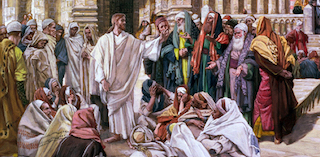
However, not only Jesus criticizes them for this narcissistic attitude, He gravely condemns also their acts of injustice, particularly “devouring the houses of widows.” In Jesus’ time, widows (Hebrew “almanah”) is considered to be one of the poorest and weakest. They are women who do not only lose their husband, but also fall into deeper poverty because they no longer have anybody to support them. They are lucky if their family and relatives take care of them, but in difficult times, they are left to their own. The Law of Moses provides that the widows, together with the orphans and strangers should be protected (see Deu 10:18).

Since the scribes are the respected and wealthy members of the society, it is a logical choice to entrust the care of Jewish widows to them. Unfortunately, instead helping and defending the widows, some of the scribes oppress and steal from the little the widows have. To steal is evil, but to rob the poor people who place their trust in us is far greater evil. Yet, it is not yet worst. After perfectly hiding their acts of injustice, some of the scribes continue going to the Temple and reciting lengthy prayer, as if there is nothing happens. This is hypocrisy, a double-life attitude at its finest!

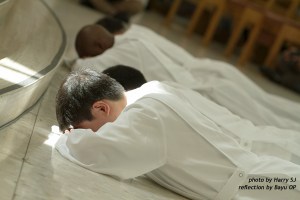
As my ordination day to the diaconate is drawing closer, some of my brothers in the community and friends began to call me with title of honor like “reverend” or simply, “rev”. Admittedly, I am not comfortable with it. I wish that the people remain calling me brother. However, it has become the common practice in the Catholic Church to honor her ordained ministers. It is my prayer and my sincere wish I will not be like some of the Scribes who become “narcissistic” and “covets” the people’s adulation and all the privileges it brings. George Weigel, an American Catholic author, in his recent article, traces the root of Catholic anger against the clergy in the US. He writes that while it is true that many clergymen are good and holy, it is the clerical narcissism that builds anger of the Catholic lay.

Learning from the scribes, the narcissism is the seed. The vice grows into hidden acts of injustice. And from evil of injustice, the men in white garment are turning worse as they live in hypocrisy. It is my earnest hope that we continue praying, supporting and even correcting our brothers who are ordained to become the servants of God and His people. Without God’s grace, the right dose of humility and lay people’ prayer and help, our deacons, priests and bishops may become like the scribes who earn Jesus’ condemnation.

Br. Valentinus Bayuhadi Ruseno, OP

Sang Ahli Hukum Taurat

Minggu ke-32 dalam Masa Biasa [11 November 2018] Markus 12: 38-44

[Para ahli Taurat] yang menelan rumah janda-janda, sedang mereka mengelabui mata orang dengan doa yang panjang-panjang. Mereka ini pasti akan menerima hukuman yang lebih berat (Markus 12:40)

jesus n scribesPada masa Yesus hidup, para ahli Taurat adalah orang Yahudi terdidik dan menjadi ahli dalam Hukum Musa. Beberapa dari mereka berasal dari keluarga kaya, dan yang lain dibesarkan dari klan imam. Mampu mengajar dan menafsirkan Hukum, mereka menerima respek dan kehormatan dari masyarakat Yahudi. Dengan demikian, orang-orang Yahudi kebanyakan akan menyapa dengan hormat para ahli Taurat ini dan mempersiapkan bagi mereka kursi kehormatan di sinagoga dan perjamuan. Tentunya, tidak ada masalah dengan menerima salam dan duduk sebagai tamu kehormatan. Yesus sendiri sering disambut sebagai “Guru” atau “Rabi”, dan Dia menghadiri perjamuan sebagai tamu kehormatan (lihat Mar 14:3). Masalah muncul ketika beberapa ahli Taurat memiliki “hasrat narsistik”, menjadi gila hormat dan dengan sengaja mencari yang kehormatan dan semua hak-hak istimewa.
Namun, Yesus tidak hanya mengkritik mereka karena sikap narsis ini, Dia dengan serius mengecam tindakan ketidakadilan mereka, terutama karena mereka “menelan rumah para janda.” Pada zaman Yesus hidup, para janda (bahasa Ibrani “almanah”) dianggap sebagai salah satu bagian masyarakat Yahudi yang paling miskin dan lemah. Mereka adalah wanita yang tidak hanya kehilangan suaminya, tetapi juga jatuh miskin karena mereka tidak lagi  memiliki sarana penopang hidup. Mereka beruntung jika keluarga dan kerabat mereka merawat mereka, tetapi pada masa-masa sulit, mereka dibiarkan terlantar. Hukum Musa menyatakan bahwa para janda, bersama dengan anak-anak yatim dan orang asing harus dilindungi (lihat Ul. 10:18).

Karena para ahli Taurat adalah salah satu anggota masyarakat yang paling dihormati dan kaya, itu adalah pilihan logis untuk mempercayakan pelayanan kepada para janda Yahudi kepada mereka. Sayangnya, alih-alih membantu dan membela para janda, beberapa ahli Taurat menindas dan mencuri dari para janda miskin ini. Mencuri itu jahat, tetapi merampas dari orang-orang yang menaruh kepercayaan mereka pada kita adalah kejahatan yang jauh lebih besar. Namun, hal ini bukanlah yang terburuk. Setelah dengan sempurna menyembunyikan tindakan ketidakadilan mereka, beberapa ahli Taurat tanpa malu pergi ke Bait Allah dan membaca doa yang panjang. Ini adalah kemunafikan!

Ketika hari pentahbisan saya semakin dekat, beberapa frater dan teman-teman mulai memanggil saya dengan sapaan kehormatan seperti “reverend” (- yang dihormati). Harus diakui, saya tidak nyaman. Saya berharap bahwa orang-orang tetap memanggil saya sebagai frater atau “Brother”. Namun, ini telah menjadi tradisi umum bagi para awam memanggil mereka yang telah tertahbis. Saya hanya bisa berdoa dan berhasrat bahwa saya tidak akan seperti beberapa ahli Taurat “narsistik” dan gila akan pujian orang-orang dan semua kenyamanan hidup. George Weigel, seorang penulis Katolik Amerika, dalam artikel terbarunya, menelusuri akar kemarahan umat Katolik terhadap para klerus di AS. Dia menulis bahwa memang benar bahwa banyak para romo dan uskup yang baik dan kudus, tetapi umat tidak lagi tahan dengan sikap narsisisme yang diperlihatkan sejumlah oknum klerus di Amerika.

Belajar dari ahli-ahli Taurat, narsisisme adalah benih yang tertanam dalam hati mereka yang tertahbis. Jika dibiarkan benih ini tumbuh menjadi tindakan-tindakan ketidakadilan yang tersembunyi. Dan dari kejahatan ketidakadilan, kaum berjubah putih bisa hidup dalam kemunafikan. Adalah harapan saya bahwa kita terus berdoa, mendukung dan bahkan mengoreksi saudara-saudara kita yang adalah hamba Allah dan umat-Nya. Tanpa rahmat Allah, kerendahan hati dan doa serta bantuan para umat awam, para diakon, imam, dan uskup kita mungkin bisa menjadi seperti ahli Taurat yang narsis dan munafik.

Br. Valentinus Bayuhadi Ruseno, OP

Deacon

Reflection on the 31st Sunday in Ordinary Time [November 4, 2018]

Mark 12:28-31

“You shall love the Lord your God… The second is this: ‘You shall love your neighbor as yourself.’ There is no other commandment greater than these.” (Mk. 12:30-31)

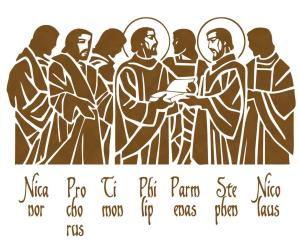
Seven Deacons (Monochrome)I am currently preparing for my ordination to the diaconate. It is a transitional stage before I become a priest of Jesus Christ. Despite the fact of being transitional, a deacon in itself is an important state in the life of the Church. Bishop Virgilio David, DD of Kalookan reminded the 15 newly-ordained Jesuit deacons in his homily last October that we shall not see a deacon as a mere stepping step toward higher states, like priests and bishops. It is the very core in the layers of concentric circles that make up the ordained ministries of the Church. The diaconate is not a lower rank but the core, without which both the offices of presbyters and bishops collapse. It is the foundation on which we build leadership in the Church. Yet, why do the deacons have to be placed at the core, and become the foundation?

Pope Benedict in his apostolic letter “Omnium in Mentem” clarified further the basic identity of a deacon. He wrote, “deacons are empowered to serve the People of God in the ministries of the liturgy, the word, and charity.” The deacons are the heart of both the ordained and non-ordained ministers of the Church because they perform and remind the most basic duties of every Church’s servants: to serve and love God and His people. The very word deacon is coming from the Greek word, “ diakoneo ” meaning to serve, and therefore, a deacon is someone who serves, a servant. Yet, it is not any service. If we go back to the first chapter of the Gospel of Mark, the first person who serves Jesus, the God-man, is Peter’s mother-in-law (Mar 1:31). She serves Jesus because He has restored her to health. It is not a service done out of fear, but gratitude and love. Thus, to serve and to love are at the very essence of being deacon.

In today’s Gospel, Jesus faces the scribe who asks Him on the first of all the commandments. In the Law of Moses, aside from the famous Ten Commandments, they have hundreds of more commandments. Jesus answers, “You shall love the Lord, your God, with all your heart, with all your soul, and with all your mind.” Jesus quotes part of the Shema or the basic Jewish Creed that every devout Jews would recite every day (see Deu 6:4-5). Yet, Jesus does not stop there. He completes the first and the greatest law with another one, “You shall love your neighbor as yourself.” It also comes from the Old Testament (see Lev 19:18). To the delight of the scribe, Jesus’ answer is an orthodox one, but there is something novel as well.

The connection between first and second turns to be a watershed. For Jesus, true love for God has to be manifested in love for others, and genuine love for others has to be oriented toward God. Thus, it is unthinkable for Jesus to order His disciples to kill for the love of God. Or, Jesus will not be pleased if His followers are busy with performing rituals, but blind to the injustices that plague their communities.

With these Jesus’ first commandments in mind, we can now see why the role of the deacons is fundamental in the Church. The deacons are those who are called and empowered to fulfill Jesus’ commandment of love. The deacons are to serve and love God and His people, both in the context of Christian worship and real life. While it is true that deacons are one of the ordained ministers in the Church, every Christian is also called to become a “deacon” in our lives, to serve God and His people out of love.  Without the heart of a deacon, who is the very core of Church’s ministry, every Christian, whether they are lay or cleric, will lose their identity and fail to accomplish the most fundamental law of Christ.

Br. Valentinus Bayuhadi Ruseno, OP