
True Greatness

Reflection on the 25th Sunday in Ordinary Time [September 23, 2018] Mark 9:30-37

“Whoever wants to be first must be last of all and servant of all.” (Mk. 9:35)
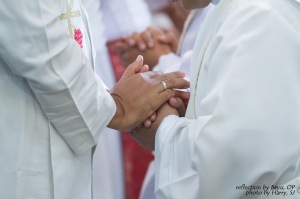
ordination 1While I was reflecting on this Sunday’s Gospel, I was able to discover some news about our Church. Good News! The Catholic Church in the Philippines is preparing herself for the 500 years of the arrival of Christianity in this archipelago. The first baptism and Eucharist were taking place in 1521 as the Spanish missionaries began their evangelization mission. As part of this grand preparation, the Bishops of the Philippines have decided to celebrate this year as the year of the clergy and the consecrated persons. The major theme of this year is the renewed servant-leaders for the new evangelization. In view of this, many programs and activities are organized to help both the ordained ministers and the religious brothers and sisters to deepen their commitment to God and their service to the people.

Not so good news. It is also true, however, that today the Church is also facing a deep crisis. In many countries and places, the clergy, as well as the religious persons, are caught in scandals and shameful things. One among the worst is the sexual abuses involving the minors done by priests and even bishops, and the massive cover-up staged to tolerate this structural evil. Yet, this is not the only thing that plagues the Church. Some ordained ministers are dishonest and having double-standard lives. Some are secretly enriching themselves. Others may not commit any scandal, but are lacking in compassion and enthusiasm in serving the people of God. Many stories are circulating of priests refusing to hear confession or anointing the dying because they like to prioritize their scheduled hobbies or religious persons who are grumpy and easily irritated with others. These attitudes simply drive people away from the Church. The rest of us perhaps are just nothing but mediocre clergy or religious. This reminds me of Pope Francis who points that holiness as opposed to ‘bland and mediocre existence.’

Our Gospel narrates Jesus who in private teaches the disciples, who will be the first and models of Church’s leaders. The Gospel itself can be divided into two parts. The first part speaks of Jesus foretelling his impending suffering and death in Jerusalem. Here, reacting to Jesus’ words, the disciples drop silence. Perhaps, the memory of Jesus scolding Peter and calling him “Satan” is still fresh in the mind of the disciples and nobody wants to repeat the same embarrassment. The second part of the Gospel tells us of the topic of greatness. This time, the disciples have a different reaction. Not only do they initiate the discussion, but they are also passionately arguing among themselves. We can imagine Peter boasting himself as the leader among the apostles, or John telling everyone that he is the closest to Jesus, or Matthew being proud of his richness. After all, these are our first Pope and first bishops. Yet, when Jesus asks them, they once again fall silent.

The apostles seem to forget that Jesus’ disciples have to carry their cross and follow Jesus to Jerusalem. Jesus, however, understands that human desire for excellence is a gift from God. Jesus does not forbid His apostles to have dreams and strive for greatness, but He makes a radical twist. He directs this powerful energy from achieving one selfish interests into serving others. Thus, Jesus’ unforgettable line: “Whoever wants to be first must be last of all and servant of all.” (Mk. 9:35) Indeed, they need to excel, but not any worldly measures, but in serving and empowering others. In his exhortation, Gaudete et Exsultate, Pope Francis calls this “the Logic of the Cross.” True happiness is a paradox. If the clergy, the religious and all of us want to be genuinely happy, then it is not so much on the wealth and success we have gained, but from our service and sacrifice for others.

We continue to pray for our priests and bishops, as well as our religious brother and sisters. We pray not only that they may avoid scandals, but they may be holy. As Pope Benedict XVI puts it, “holiness is nothing other than charity lived to the full.”

Br. Valentinus Bayuhadi Ruseno, OP
Kekudusan dalam Keagungan

Renungan untuk Minggu ke-25 dalam Masa Biasa [22 September 2018] Markus 9: 30-37

“Jika seseorang ingin menjadi yang terdahulu, hendaklah ia menjadi yang terakhir dari semuanya dan pelayan dari semuanya.” (Mrk. 9:35)

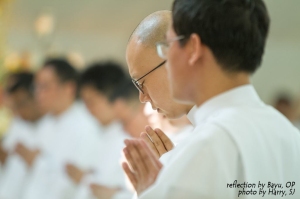
ordination 2Ketika saya merenungkan Injil hari Minggu ini, saya membaca beberapa berita tentang Gereja. Ada Kabar baik. Gereja Katolik di Filipina mempersiapkan diri untuk perayaan 500 tahun kedatangan iman Kristiani di negara ini. Baptisan dan Ekaristi pertama terjadi pada tahun 1521 sewaktu para misionaris Spanyol memulai misi evangelisasi mereka. Sebagai bagian dari persiapan besar ini, para Uskup Filipina memutuskan untuk merayakan tahun ini sebagai tahun para klerus [daikon, imam, dan uskup] dan rohaniwan. Dengan demikian, banyak program dan kegiatan diselenggarakan di berbagai keuskupan di Filipina untuk membantu para klerus dan biarawan untuk memperdalam komitmen mereka pada Allah dan pelayanan mereka kepada umat dan bangsa.
Tetapi, ada juga berita yang tidak begitu baik. Saat ini, Gereja juga menghadapi krisis yang mendalam. Di banyak negara dan tempat, para klerus dan biarawan, terlibat dalam skandal dan hal-hal yang memalukan. Salah satu yang terburuk adalah pelecehan seksual yang melibatkan anak di bawah umur yang dilakukan oleh beberapa imam dan bahkan uskup, dan ada usaha untuk menutup-nutupi hal ini sehingga kejahatan struktural ini berkembang subur. Namun, ini bukan satu-satunya hal yang mengganggu Gereja. Beberapa klerus tidak jujur ​​dan memiliki kehidupan ganda. Beberapa diam-diam memperkaya diri mereka sendiri. Beberapa mungkin tidak melakukan skandal apa pun, tetapi kurang berbelas kasih dan tidak miliki semangat dalam melayani umat Allah. Banyak cerita yang beredar tentang pastor yang menolak untuk mendengar pengakuan dosa atau mengurapi orang yang sakit karena mereka memprioritaskan hobi mereka atau para biarawan yang gampang marah terhadap orang lain. Sikap-sikap ini hanya membuat umat menjauh dari Gereja.

Injil kita Minggu ini berkisah tentang Yesus yang mengajar para murid, yang kemudian akan menjadi pemimpin Gereja perdana. Injil ini sendiri dapat dibagi menjadi dua bagian. Bagian pertama berbicara tentang Yesus menubuatkan penderitaan dan kematian yang akan datang di Yerusalem. Di sini, para murid hanya terdiam. Mungkin, memori akan Yesus yang menegur Petrus dan memanggilnya “Setan” masih segar di pikiran para murid dan tidak ada yang ingin mengulangi peristiwa pemalukan yang sama. Bagian kedua dari Injil berbicara tentang tema kebesaran dan kepemimpinan. Kali ini, para murid memiliki reaksi yang berbeda. Tidak hanya mereka yang memulai diskusi, tetapi mereka juga dengan penuh semangat berdebat di antara mereka sendiri. Kita dapat membayangkan Petrus membanggakan dirinya sebagai pemimpin di antara para rasul, atau Yohanes mengatakan kepada semua orang bahwa ia adalah yang paling dekat dengan Yesus, atau Matius bangga akan kekayaannya. Bagaimanapun, mereka adalah Paus pertama dan para uskup pertama kita. Namun, ketika Yesus bertanya kepada mereka, mereka sekali lagi terdiam.

Para rasul sepertinya lupa bahwa murid-murid Yesus yang sejati harus memikul salib mereka dan mengikuti Yesus ke Yerusalem. Namun, Yesus memahami bahwa keinginan manusia untuk menjadi yang terbaik adalah karunia dari Allah juga. Yesus tidak melarang rasul-rasul-Nya untuk bermimpi dan berusaha untuk mencapai kebesaran, tetapi Dia membuat perubahan radikal. Dia mengarahkan energi yang kuat ini dari sekedar untuk mencapai kepentingan pribadi, berubah menjadi untuk melayani orang lain. Lalu, Yesus pun berkata, “Jika seseorang ingin menjadi yang terdahulu, hendaklah ia menjadi yang terakhir dari semuanya dan pelayan dari semuanya.” (Mrk. 9:35) Memang, mereka perlu menjadi unggul, tetapi tidak dala ukuran duniawi, tetapi dalam melayani dan memberdayakan sesama.

 Dalam dokumen terbarunya, Gaudete et Exsultate, Paus Fransiskus berbiacara tentang “Logika Salib.” Kebahagiaan sejati adalah sebuah paradoks. Jika para klerus, biarawan dan kita semua ingin bahagia, bukanlah kejayaan dan kesuksesan duniawi yang kita kejar, tetapi pelayanan dan pengorbanan kita untuk orang lain.

Kita terus berdoa bagi para imam dan uskup kita, serta para biarawan. Kita berdoa tidak hanya agar mereka dapat menghindari dosa, tetapi mereka mungkin menjadi kudus. Sebagaimana dikatakan Paus Benediktus XVI, “kekudusan tidak lain adalah kasih yang dihidupi sampai penuh.”

Frater Valentinus Bayuhadi Ruseno, OP

Half Christ

Reflection on 24th Sunday in Ordinary Time [September 16, 2018] Mark 8:27-35

“Jesus asked them, ‘But who do you say that I am?’ (Mk. 8:29)”

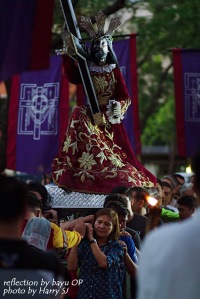
carrying crossSeveral years ago, I gave a talk on the introduction to Christology to a group of young Filipino professionals who wished to deepen their spirituality. The first question I asked them as we commenced the short course was, “Who do you say that Jesus is?” The answers were varied. Some gave a dogmatic formula like Jesus is God, one quoted the Bible saying Jesus is the Word made flesh, one expressed boldly that Jesus is Savior and Lord, and the rest shared personal convictions like Jesus is their closest friend, or Jesus is their Shepherd. All these answers were right, but nobody claimed that Jesus is the Christ. Considering that our subject was Christology, we missed the basic Jesus’ title, in Greek, “Christos,” in Hebrew, “Messiah,” and translated into English, the Anointed One. Fortunately, around two thousand years ago, Simon Peter was able to spell the title when Jesus Himself asked the question.
Going deeper into our Gospel today, we are at chapter 8 of the Gospel of Mark. Since Mark has 16 chapters, we are literally in the middle of this second canonical Gospel. Yet, today’s reading does only happen to be in the middle of the Gospel, but it turns out to be the turning point of the Gospel. In the first eight chapters, Mark narrates Jesus’ ministry in Galilee and some other Gentile regions in the north of Israel. Jesus is doing wonders and teaching with authority. He can draw a lot of people, and some of them will be close followers called His disciples. Meanwhile, the last eight chapters, Jesus begins to journey down south and reaches His destination in Jerusalem. There, He will face his tormentors, and He will meet His passion, death and resurrection.

Peter gets the bulls-eye answer. After all, Peter’s profession is what Mark intends to convey to his readers, “The beginning of the gospel of Jesus Christ (Mk. 1:1).” Unfortunately, when Jesus reveals His suffering and death, it does not sit well with Peter’s idea of the Messiah. Perhaps Peter gets stuck with the concept of a powerful and conquering Christ that will lead Israel into victory.  Jesus has been preaching about the coming of the Kingdom, teaching unforgettable lessons, and performing unmatched miracles. Surely, nothing, not even the great Roman empire could beat this Messiah. However, Peter just desires the first half of the Gospel, and cannot be at peace with the other half of the Gospel. If Peter and other disciples want to accept Jesus fully, then they need to embrace the other half of the Gospel of Jesus Christ as well. Following Jesus does not stop in Galilee where things are just awesome, but it has to go down to Jerusalem, where the persecution and death lurk. Thus, Jesus declares, “Whoever wishes to come after me must deny himself, take up his cross, and follow me. (Mk. 8:34).”

Often we are like Peter. We call ourselves Jesus’ disciples and accept the Gospel of Jesus Christ, but in reality, we just want half of Jesus or parts of the Gospel. We go to the Church and worship God, but we do not want to soil our hands in helping our brothers and sisters in need. Married couples enjoy the benefits of marriage, yet refuse to see children as a gift of God. Religious men and women vow to serve the Lord and His Church, but often, we serve our own interests and desires. No wonder G. K. Chesterton once wrote, “The Christian ideal has not been tried and found wanting. It has been found difficult; and left untried.” As we try to answer Jesus’ question, “Who do you think that I am?”, we are invited to reflect and to accept Jesus and His Gospel, not half, but the whole of Him.

Br. Valentinus Bayuhadi Ruseno, OP

Setengah Kristus

Renungan untuk Minggu ke-24 dalam Masa Biasa [16 September 2018] Markus 8: 27-35

“Yesus bertanya kepada mereka, “Tetapi apa katamu, siapakah Aku ini?” (Mk. 8:29)

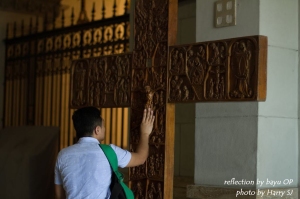
touching the crossBeberapa tahun yang lalu, saya memberikan ceramah pengantar Kristologi bagi sekelompok profesional muda Filipina yang ingin memperdalam spiritualitas mereka. Pertanyaan pertama yang saya tanyakan kepada mereka adalah, “Menurut kamu, siapakah Yesus itu?” Jawabannya beragam. Beberapa memberikan formula dogmatis seperti Yesus adalah Allah, ada yang mengutip Alkitab dan mengatakan Yesus adalah Firman yang menjadi daging, seseorang menyatakan dengan berani bahwa Yesus adalah Juruselamat dan Tuhan, dan sisanya berbagi keyakinan pribadi seperti Yesus adalah sahabat terdekat mereka, atau Yesus adalah Gembala mereka. Semua jawaban ini benar, tetapi tidak ada yang mengklaim bahwa Yesus adalah Kristus. Mempertimbangkan bahwa ceramah kami adalah Kristologi, kami sepertinya lupa akan identitas dasar Yesus, dalam bahasa Yunani, “Christos,” dalam bahasa Ibrani, “Mesias,” yang berarti “Yang Diurapi”. Untungnya, sekitar dua ribu tahun yang lalu, Simon Petrus mampu mengucapkan identitas dasar ini ketika Yesus Sendiri menanyakan pertanyaan ini.

Masuk lebih dalam ke dalam Injil kita hari ini, kita berada di bab 8 Injil Markus. Injil Markus memiliki 16 bab, kita secara harfiah berada di tengah-tengah Injil ini. Namun, bacaan hari ini hanya berada di tengah-tengah Injil, tetapi ternyata menjadi titik balik dari Injil. Delapan bab pertama, Markus menceritakan pelayanan Yesus di Galilea dan beberapa wilayah non Yahudi lainnya di utara Israel. Yesus melakukan mujizat dan mengajar dengan otoritas. Dia dapat menarik banyak orang, dan beberapa dari mereka akan menjadi pengikut dekat yang disebut sebagai murid-murid-Nya. Sedangkan, delapan bab terakhir, Yesus mulai melakukan perjalanan ke selatan dan mencapai tujuan-Nya di Yerusalem. Dia akan menghadapi para penyiksanya di sana dan Dia akan menjalani sengsara, kematian, dan kebangkitan-Nya.

Petrus mendapat jawaban dengan benar. Pengakuan Petrus tidak lain adalah apa yang Markus ingin sampaikan kepada para pembacanya, “Inilah permulaan Injil tentang Yesus Kristus, Anak Allah (Mk. 1:1).” Sayangnya, ketika Yesus mengungkapkan bahwa Anak Manusia akan menderita dan wafat, Petrus merasa tidak cocok dengan gagasan tentang Mesias tersebut. Mungkin Petrus terjebak dengan konsep Kristus yang kuat dan dapat memimpin Israel menuju kejayaan. Yesus telah mewartakan tentang kedatangan Kerajaan, mengajar pelajaran yang tak terlupakan, dan melakukan mujizat yang tak tertandingi. Tentunya, kerajaan Romawi yang besar pun tidak mampu mengalahkan Mesias ini. Namun, Petrus hanya menginginkan paruh pertama dari Injil, dan tidak dapat menerima Injil secara keseluruhan. Jika Petrus dan murid-murid lain ingin menerima Yesus sepenuhnya, maka mereka perlu menerima paruh kedua dari Injil Yesus Kristus juga. Mengikuti Yesus tidak berhenti di Galilea di mana hal-hal yang luar biasa terjadi, tetapi harus turun ke Yerusalem, di mana penganiayaan dan kematian mengintai. Dengan demikian, Yesus menyatakan, “Setiap orang yang mau mengikut Aku, ia harus menyangkal dirinya, memikul salibnya dan mengikut Aku (Mk. 8:34).”

Seringkali kita seperti Petrus. Kita menyebut diri kita murid Yesus dan menerima Injil Yesus Kristus, tetapi dalam kenyataannya, kita hanya ingin separuh dari Yesus atau bagian dari Injil. Kita pergi ke Gereja dan menyembah Tuhan, tetapi kita tidak ingin membantu saudara-saudari kita yang membutuhkan. Kita aktif di Gereja, tetapi kita tetap saja membawa agenda pribadi dan mendapatkan keuntungan sendiri. Pria dan wanita yang hidup membiara juga tidak terhindar dari godaan ini. Kita berjanji untuk melayani Tuhan dan Gereja-Nya, tetapi seringkali, kita melayani kepentingan dan keinginan kita sendiri. Sewaktu kami mencoba menjawab pertanyaan Yesus, “Tetapi apa katamu, siapakah Aku ini?”, Apakah Yesus kita adalah Yesus yang hanya setengah? Apakah Yesus kita hanya mengambarkan kepentingan-kepentingan pribadi kita? Apakah kita berani mengikuti Yesus secara utuh?

Frater Valentinus Bayuhadi Ruseno, OP

Beyond Healing

Twenty-Third Sunday in Ordinary Time [September 9, 2018] Mark 7:31-37

“Jesus has done everything well; he even makes the deaf to hear and the mute to speak.” (Mk. 7:37)

jesus heals deaf muteThe deaf man whom Jesus heals is so blessed. He is able to see Jesus, and He finds healing. Inspired by this miracle, we wish that we will also meet Jesus and He will heal our sickness and solve our problems. Thus, we come to various places where we believe Jesus will heal us. We visit pilgrimage sites, we attend prayer and worship meetings, we recite various novenas, and we become actively involved in the Church’s organizations. We believe that our faith in Jesus will save us. However, what if our prayers are not granted? What if our problems are not solved but rather grow in number? What if our sickness is not healed, but gets worse? What if we do not feel that we are saved? One time, I visited Flora [not her real name], a colon-cancer patient, and she asked me, “Brother, I have faith in God, and I faithfully serve the Church, but why am I suffering from this terrible sickness?” Surely, it was a tough question.
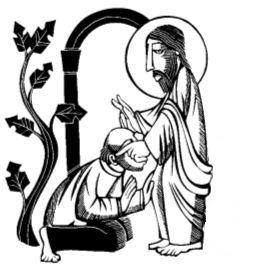
In today’s Gospel, Mark, the evangelist, seems to present Jesus as the traditional faith-healer. Just like other healers, Jesus touches the affected body parts of the sick person, namely his ears and tongue. Jesus also spits because, in ancient times, saliva is believed to have therapeutic effects. The act of spitting itself is also considered to drive away evil spirits, and some diseases are thought to come from these evil spirits. Then, Jesus groans to heaven and says a word, “Ephphatha!” This is like other faith-healers who utter certain formula of magic words or incantation as to affect the healing desired. What the people need is to have faith in the faith-healer, and viola, they are healed.

Inspired by this kind of model, we begin to treat Jesus as a faith-healer. We just need to have faith in Him, and the rest will be just perfect. We believe in Him, and we will be saved. That’s all! This image of Jesus is, however, distorted and even dangerous. We reduce Jesus as mere instant problem-solver and an ultimate trouble-shooter. Again, what if we do not get what we expect despite our effort to trust in Him?

Mark is inviting us to read his Gospel more profoundly.  There is something more remarkable that we, ordinary readers of the Bible, miss. In original Greek, the term for speech impediment or mute in the Gospel of Mark is “mogilalos.” This very term is also used in the book of Isaiah when the prophet prophesied, “…, and the mute tongue – “mogilalos” – sing for joy (Isa. 35:6 – our first reading)”. But, the prophecy is not only about healing the diseases, but it is about the holistic restoration of both the land and the people of God (see Isa 35:1-10). Mark does not only want to present Jesus as someone more powerful than faith-healers, but he points to us that Isaiah’s prophecy is being fulfilled. In Jesus, God has come to His people and redeemed us. Yet, what does it mean in our daily lives?

This means our faith in Jesus has to be bigger than ourselves, our personal problems and concerns. It is true that we may not have immediate healing to our sickness and solution to our problems, but our lives and our capacity to live and love are enlarged. And, as we become more loving, we begin to change also people around us. As people change, our world will become a better place.

Going back to Flora. After reflecting for a while, I answered Flora, “Well, I do not exactly know why God allows this sickness. But, as you can see, your family is doing their best to help you recover because they love you. Now, you are doing your best to get healed because you love them. See, God has made you bigger than yourself before. I believe faith is working in you.”

Br. Valentinus Bayuhadi Ruseno, OP

Lebih dari Penyembuhan

Minggu ke-23 dalam Masa Biasa [9 September 2018] Markus 7: 31-37

“Ia menjadikan segala-galanya baik, yang tuli dijadikan-Nya mendengar, yang bisu dijadikan-Nya berkata-kata.” (Markus 7:37)

ephphathaMinggu ini kita mendengar tentang Yesus yang menyembuhkan seorang tuli dan bisu. Terinspirasi oleh mukjizat ini, kita berharap bahwa Yesus akan menyembuhkan penyakit kita dan memecahkan segala masalah kita. Jadi, kita pergi ke berbagai tempat ataupun kegiatan di mana kita percaya Yesus akan menyembuhkan kita. Kita pergi ke situs ziarah, kita menghadiri pertemuan doa, dan kita menjadi aktif terlibat di Gereja. Kita percaya bahwa iman kita kepada Yesus akan menyelamatkan kita. Namun, bagaimana jika doa kita tidak dikabulkan? Bagaimana jika masalah kita tidak selesai tetapi bertambah jumlahnya? Bagaimana jika penyakit kita tidak sembuh, tetapi semakin parah? Suatu kali, saya mengunjungi Flora [bukan nama sebenarnya], pasien kanker usus besar, dan dia bertanya kepada saya, “Frater, saya memiliki iman kepada Tuhan Yesus, dan saya dengan setia melayani di Gereja, tetapi mengapa saya menderita penyakit yang mengerikan ini? “Tentunya, ini pertanyaan yang sulit dijawab.
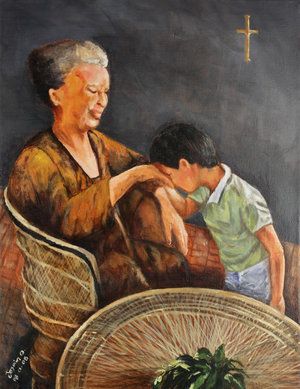
Dalam Injil hari ini, Markus, penginjil, tampaknya menampilkan Yesus sebagai seorang penyembuh iman tradisional. Sama seperti penyembuh lainnya, Yesus menyentuh bagian tubuh yang yang bermasalah, yaitu telinga dan lidah. Yesus juga meludah karena, pada zaman itu, air liur diyakini memiliki efek terapeutik. Tindakan meludah sendiri juga dianggap bisa mengusir roh jahat, dan beberapa penyakit diduga berasal dari roh jahat ini. Kemudian, Yesus mengucapkan sepatah kata, “Efata!” Ini seperti para penyembuh lainnya yang mendaraskan mantra atau doa, untuk mempengaruhi penyembuhan yang diinginkan.

Terinspirasi oleh citra semacam ini, kita mulai memperlakukan Yesus sebagai seorang penyembuh iman. Kita hanya perlu memiliki iman kepada-Nya, dan semuanya akan menjadi baik. Kita percaya kepada-Nya, dan kita akan diselamatkan. Namun, citra Yesus yang seperti ini adalah sebuah distorsi dan bahkan berbahaya. Kita menjadikan Yesus sebagai pemecah masalah instan, dan ini tidak selalu benar. Sekali lagi, bagaimana jika kita tidak mendapatkan apa yang kita harapkan meskipun kita sudah beriman kepada-Nya?

Markus mengundang kita untuk membaca Injilnya lebih dalam. Ada sesuatu yang luar biasa yang biasanya luput dari perhatian kita. Dalam bahasa Yunani, istilah untuk bisu atau sulit berbicara dalam Injil Markus adalah “mogilalos.” Istilah ini juga sebenarnya digunakan dalam kitab Yesaya ketika sang nabi bernubuat, “Pada waktu itu orang lumpuh akan melompat seperti rusa, dan mulut orang bisu – mogilalos – akan bersorak-sorai (Yes. 35:6, dari bacaan pertama kita)”. Namun, nubuatan ini bukan hanya tentang penyembuhkan penyakit, tetapi juga tentang pemulihan yang menyeluruh akan umat Allah (lihat Yes 35: 1-10). Markus tidak hanya ingin menampilkan Yesus sebagai seseorang penyembuh iman, tetapi ia menunjukkan kepada kita bahwa nubuatan Yesaya telah digenapi. Di dalam Yesus, Tuhan telah datang kepada umat-Nya dan menebus kita. Namun, apa maksud pengenapan ini dalam kehidupan kita sehari-hari?

Ini berarti iman kita kepada Yesus lebih besar dari diri kita sendiri, masalah dan kecemasan pribadi kita. Memang benar bahwa kita mungkin tidak segera disembuhkan kita dan tidak mendapatkan solusi untuk masalah kita, namun dengan iman, hidup kita dan kemampuan kita untuk mengasihi semakin luas. Dan, saat kita mampu lebih mengasihi, kita mulai mengubah juga orang-orang di sekitar kita. Seperti ketika orang berubah, dunia kita akan menjadi tempat yang lebih baik.

Kembali ke Flora. Setelah merenung sejenak, saya menjawab Flora, “Saya tidak tahu mengapa Tuhan mengijinkan hal-hal ini terjadi. Tapi, lihatlah, keluarga ibu melakukan yang terbaik untuk membantu ibu pulih karena mereka mengasihi ibu. Sekarang, ibu juga melakukan yang terbaik untuk sembuh karena ibu mengasihi mereka. Lihat Tuhan telah membuat ibu lebih besar dari diri ibu sebelumnya, dan ini adalah iman.”

Frater Valentinus Bayuhadi Ruseno, OP

Tradition

Twenty Second Sunday in Ordinary Time [September 2, 2018] Mark 7:1-8, 14-15, 21-23

“You disregard God’s commandment but cling to human tradition.” (Mk. 7:8)

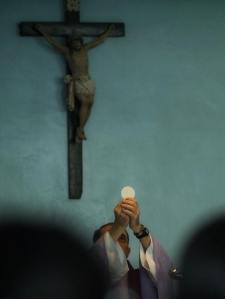
mano poIn today’s Gospel, Jesus seems to denounce all traditions. However, this position is rather simplistic and unattainable. The reason is that human beings are the creatures of traditions. Tradition comes from Latin word, “tradere”, meaning “to hand down”. Thus, crudely put, tradition is anything that has been handed down from our predecessors. Traditions range from something tangible like technologies and fashions, to something intangible like values, languages, sciences and many more. I remember how my mother taught me basic Christian prayers, like Our Father, Hail Mary, and the Rosary, and how my father would regularly bring us to the Church every Sunday. This is my family’s religious traditions. As an Indonesian living in the Philippines, I appreciate the “Mano Po” tradition among the Filipinos. This is a simple gesture of respect and blessing. The younger Filipinos are to hold a hand of older Filipino, and place it on their forehead.

Had Jesus renounced all the traditions, He should have stopped speaking Aramaic, refrained from teaching the people, begun removing all His Jewish clothes, and walking naked! Yet, Jesus did not do those things. Jesus respects traditions and acknowledges their importance. However, Jesus also recognizes that there are some traditions that are problematic and bring more problems rather than solutions. Immersed in the stream of traditions, Jesus invites us to discern well on what traditions that bring us true worship of God and genuine progress for human society.

Going back to the time of Jesus, the Jews are particular with ritual purity because they can only worship God when they are ritually clean. In view of this worship, they carefully avoid contamination from blood, dead body and unclean animals, or any objects that are in contact with these things. Since they are not sure whether their hands and utensils are ritually clean, especially if they come from the marketplace or the fields, they make it a habit to purify their hands and utensils to evade contamination from uncleanliness. Thus, various purification rituals develop into traditions for the Jews. The intention of these traditions is good because they assist people to worship God. However, some of the Pharisees put excessive emphasis on these traditions and make them absolute as if failure to observe these rituals means they fail to revere God. They confuse between the genuine worship that brings true honor for God, and other traditional practices that assist people in achieving this worship.

Jesus does not only invite us to discern carefully various traditions we have, but Jesus also offers us a more fundamental tradition in worshiping God. Instead of “handing down” practices or things, Jesus hands down something most important, namely His own life for God and us. Jesus gives up His Body and Blood, His total self, in the Last Supper, and this sacrifice reaches its summit at the Cross. His self-offering becomes the most pleasing worship to God, and procures the gift of salvation for all of us. Because of His Tradition, the world is no longer the same. Jesus hands over this great Tradition to His Disciples and throughout the generations, the Christians are faithfully offering this sacrifice of Jesus Christ in the Eucharist. As we partake Jesus’ self-offering, we are also empowered to hand down ourselves to others. This means we are invited to make our daily sacrifices, to persevere in doing good, and to be faithful to our commitments either as spouse, parents, priests, religious, or professionals. As we live this greatest tradition daily, we do not only make the world a better place, but to offer a pleasing worship to God.

Br. Valentinus Bayuahadi Ruseno, OP

Faith and Suffering

Twenty-First Sunday in Ordinary Time [August 26, 2018] John 6:60-69

“Master, to whom shall we go? You have the words of eternal life (Jn. 6:67).”

nazareno
photo by Harry SJ

In our today’s Gospel, Simon Peter and other disciples are facing a major crossroad: whether they will believe in Jesus’ words and they need to consume Jesus’ flesh and blood as to gain eternal life, or they will consider Jesus as insane and leave Him. They are dealing with hard and even outrageously unbelievable truth, and the easiest way is to leave Jesus. Yet, amidst doubt and lack of understanding, Peter’s faith prevails, “Master, to whom shall we go? You have the words of eternal life (Jn. 6:67).” It is faith that triumphs over the greatest doubt, a faith that we need also.


I am ending my clinical pastoral education at one of the busiest hospitals in Metro Manila. It has been a truly faith-enriching and heart-warming experience. I am blessed and privileged to minister to many patients in this hospital. One of the most memorable and perhaps faith-challenging encounter is with Christian [not his real name].

When I visited the pediatric ward, I saw a little boy, around six years old, lying on the bed. He was covered by a thin blanket and seemed in pain. Then I talked to the watcher who happened to his mother, Christina [not her real name]. She told me that the dialysis did not go well and he had a little fever. As the conversation went on, I discovered that Christian was not that young. He was actually 16 years old. I did not believe my eyes, but the mother explained that it was because his kidneys shrank to the point of disappearing, and because of this terrible condition, his growth stopped, and his body also shrank. Christian has undergone dialysis for several years, and due to recurrent infections, the hospital has been his second home. Christina herself lost his husband when he died several years ago, and stopped working to take care of Christian. The older sister of Christian had to stop schooling and worked to support the family.

Looking at Christian, and listening to Christina, I was hurt, and I was almost shedding tears. Despite my long theological formation, I cannot but question God. “Why do You allow this kind of terrible suffering to an innocent little man? Why do you allow his life and future be robbed by this illness?” My faith was shaken. Then, I was asking Christina how she was able to deal with the situation. She shared that it was really difficult, but she has accepted the condition, and she continues to struggle to the end because she loved Christian. I was also asking her what made her strong, and I cannot forget her answer. She said that she was strong when she saw little Christian’s smiles, and she felt his simple happiness.

Right there and then, through Christina, I felt God has answered my questions and doubts. It is true that terrible things happen, but God never leaves us. He was there in Christian’s simple smiles. He was there in little acts of love from Christina for her son. It is true that life is full of incomprehensive sufferings and heart-breaking moments, like the loss of loved ones, the broken relationships, the health and financial problems, and perhaps the recent revelation of sexual abuses done by many Catholic priests in the US. These can trigger our anger and disappointment towards God. We shall remain angry, confused and lost if we focus on the painful reality, but God is inviting us to see Him in simple and ordinary things that bring us comfort, strength, and joy. If Jesus calls us to have faith the size of mustard seed, it is because this kind of faith empowers us to recognize God in simple and ordinary things of our lives.

Br. Valentinus Bayuhadi Ruseno, OP

The Body of Christ in Our Lives

Twentieth Sunday in Ordinary Time [August 19, 2018] John 6:51-58

“Whoever eats my flesh and drinks my blood has eternal life…(Jn. 6:54)”

consecration 1
photo by Harry Setianto SJ

From Jesus’ time until the present, the Eucharist is one of Jesus’ most difficult teachings to understand, less to believe. People can easily agree with Jesus when He says that we need to love our neighbors as ourselves. People may have a difficult time to forgive and to love one’s enemy, but they will accept that vengeance and violence will not solve any issue. Perhaps, it is easier if we are simply to accept Jesus with our whole heart and believe that we are saved. However, Jesus does not only teach those beautiful things. Jesus goes to the very length of the Truth about our salvation. He is the Bread of Life, and this Bread of Life is His flesh and blood. Jesus does not only ask us to believe but to eat His flesh and drink His blood so that we may have eternal life.

For the Jews during that time, to eat human flesh is a total abomination and to drink blood, even the blood of an animal, is forbidden. Thus, when Jesus tells them to consume His Flesh and Blood, many Jews would think that He must be out of His mind. The people are following Jesus because they witnessed Jesus’ power in multiplying the bread, and they want to make him their leader. Yet, Jesus reminds them that they miss the mark if they simply follow Him because he feeds them with the ordinary bread. They should work for the Bread of Life that is Jesus Himself. Many of Jesus’ initial followers murmur, and eventually, they leave Him, because of this very hard teaching.

Going to our time, Eucharist remains the most difficult to understand. Are this small white tasteless bread and a drop of wine truly the Body and Blood of Christ? How can this ordinary food contain the fullness of Jesus’ divinity and humanity? Why should we bend our knee in adoration before an ordinary thing? The greatest minds ever born, from St. Paul to our contemporary scholars, have tried to explain the mystery, but none of their explanation is adequate. St. Thomas Aquinas who was able to write one of the most profound explanations of the Eucharist, eventually had to admit that this is the mystery of faith. He wrote in his hymn to the Blessed Sacrament, Tantum Ergo, “Præstet fides supplementum, Sensuum defectu (Let faith provide a supplement, for the failure of the senses).”

Indeed, the greatest faith is needed to accept the greatest mystery, because the humblest form of food brings us to the eternal life. Yet, this becomes one of the most beautiful Good News Jesus brings. The eternal life is not something we only gain afterlife, but Jesus makes this life available here and now.  If God is truly present in this small bread, then He is also present in our daily life, no matter ordinary it is. If Jesus is broken in the Eucharist, so He is embracing us in our darkest and broken moments of life. If Jesus who is the Wisdom of God, is contained in this little host, this Wisdom provides us with true meaning in our seemingly senseless lives.

What I am ending my pastoral work in the hospital, and one thing I most grateful is that I am given an opportunity to walk together with many patients, and to minister the Holy Communion to them. The Eucharist as the real presence of Christ becomes their consolation and strength. It becomes the greatest sign that God does not abandon them despite unsurmountable problems they need to face. Through the Body of Christ in the Eucharist and the Word of God in the Bible, we together journey to find meaning in the midst of painful and broken reality of sickness and death. In the Eucharist, our life is not just a bubble of intelligence in the endless stream of meaningless events, but participation in the eternal life of God.

Br. Valentinus Bayuhadi Ruseno, OP

Tubuh Kristus dalam Kehidupan Kita

Minggu ke-20 dalam Masa Biasa
19 Agustus 2018
Yohanes 6: 51-58

“Barangsiapa makan daging-Ku dan minum darah-Ku, ia mempunyai hidup yang kekal… (Yoh. 6:54)”

consecration 2
foto oleh Fr. Harry SJ

Ekaristi adalah salah satu ajaran Yesus yang paling sulit untuk dipahami apalagi di dipercayai. Orang-orang dapat dengan mudah setuju dengan Yesus ketika Dia mengatakan bahwa kita perlu mengasihi sesama seperti diri kita sendiri. Orang-orang mungkin kesulitan untuk memaafkan dan mengasihi musuh, tetapi mereka akan menerima bahwa pembalasan dan kekerasan tidak akan menyelesaikan masalah. Namun, Yesus tidak hanya mengajarkan hal-hal yang indah ini. Yesus mewartakan kebenaran yang total tentang keselamatan kita. Dia adalah Roti Kehidupan, dan Roti Hidup ini adalah darah dan daging-Nya sendiri. Yesus tidak hanya meminta kita untuk percaya tetapi untuk memakan daging-Nya dan minum darah-Nya sehingga kita dapat memiliki hidup yang kekal.

Bagi orang Yahudi waktu itu, makan daging manusia adalah sebuah kekejian dan minum darah, bahkan darah hewan, adalah hal terlarang. Jadi, ketika Yesus mengatakan kepada mereka untuk mengkonsumsi Daging dan Darah-Nya, banyak orang Yahudi berpikir bahwa Yesus itu gila. Orang-orang mengikuti Yesus karena mereka menyaksikan kuasa Yesus dalam melipatgandakan roti, dan mereka ingin menjadikan-Nya pemimpin mereka. Namun, Yesus mengingatkan mereka bahwa tidak tepat jika mereka hanya mengikuti Dia karena dia memberi mereka makan dengan roti biasa. Mereka perlu bekerja untuk Roti Hidup yakni Yesus sendiri. Banyak pengikut awal Yesus bersungut-sungut, dan akhirnya, mereka meninggalkan Dia, karena pengajaran yang sangat sulit ini.

Di zaman sekarang, Ekaristi tetap sulit untuk dipahami. Apakah roti tawar kecil putih dan setetes anggur ini benar-benar Tubuh dan Darah Kristus? Bagaimana makanan biasa ini mengandung kepenuhan keilahian dan kemanusiaan Yesus? Mengapa kita harus menekuk lutut kita dihadapan hosti kecil? Pemikir-pemikir besar telah mencoba menjelaskan misteri itu, tetapi tidak satu pun dari penjelasan mereka yang cukup memadai. Santo Thomas Aquinas yang mampu menulis salah satu penjelasan paling mendalam tentang Ekaristi, akhirnya harus mengakui bahwa ini adalah misteri iman. Dia menulis dalam nyanyiannya kepada Sakramen Mahakudus, Tantum Ergo, “Præstet fides supplementum, Sensuum defectu (Biarkan iman melengkapi, saat indera gagal).”

Sungguh, iman terbesar diperlukan untuk menerima misteri terbesar, karena bentuk makanan yang paling sederhana membawa kita ke kehidupan kekal. Namun, ini menjadi salah satu Kabar Baik yang Yesus bawa. Kehidupan kekal bukanlah sesuatu yang hanya kita peroleh di akhirat, tetapi Yesus menjadikan kehidupan ini tersedia di sini dan saat ini. Jika Tuhan bisa benar-benar hadir dalam roti kecil ini, Dia juga hadir dalam kehidupan kita sehari-hari, bahkan di dalam hal paling sederhana sekalipun. Jika Yesus dipecah dan dibagikan dalam Ekaristi, Iapun mampu memeluk kita di saat-saat yang paling gelap dan pahit dalam hidup. Jika Yesus yang adalah sang Kebijaksanaan Allah, terkandung dalam hosti kecil ini, Kebijaksanaan ini memberi kita makna yang sejati dalam kehidupan kita yang sederhana.

Saya akan mengakhiri karya pastoral saya di rumah sakit, dan satu hal yang paling saya syukuri adalah bahwa saya diberi kesempatan untuk menemani banyak pasien, dan melayani Komuni Kudus bagi mereka. Ekaristi sebagai kehadiran Kristus yang nyata menjadi penghiburan dan kekuatan mereka. Ini menjadi tanda terbesar bahwa Tuhan tidak meninggalkan mereka meskipun ada banyak masalah yang harus mereka hadapi. Melalui Tubuh Kristus dalam Ekaristi dan Firman-Nya di dalam Alkitab, kita bersama-sama melakukan perjalanan untuk menemukan makna di tengah-tengah realitas sakit dan kematian. Dalam Ekaristi, hidup kita bukan sekedar serentetan peristiwa-peristiwa tanpa arti, tetapi partisipasi kita dalam kehidupan kekal Allah.

Frater Valentinus Bayuhadi Ruseno, OP