

Fourteenth Sunday in Ordinary Time [July 8, 2018] Mark 6:1-6
“He was amazed at their lack of faith.” (Mk. 6:6)
 When Jesus teaches in the synagogue in Nazareth, the listeners are amazed by his wisdom. Jesus speaks like a mighty prophet. However, the people soon make a background check on Jesus, and they realize Jesus’ identity and his family background. Nazareth is a small rural town in Galilee, and everyone knows everyone in this kind of setting. The people of Nazareth know Jesus as a son of a carpenter, and himself a carpenter. They are familiar also with Jesus’ family and relatives.
It is just impossible for a carpenter, an artisan who spends most of his time doing manual labor to acquire such profound wisdom. The people of Nazareth also recognize that Jesus is a son of Mary and they know His relatives. It seems the people are aware that Jesus’ relatives are just ordinary and poor Jews. None of them seems to possess a notable personality. Jesus should stay where He belongs: an ordinary Jewish and a poor laborer. Thus, to become a charismatic preacher and an admirable rabbi is simply unthinkable. Jesus, recognizes the root cause: lack of faith.
We are living two millennia after Christ, but unfortunately, this debilitating mentality continues to exist and even thrive in our midst. It is a mentality that boxes people in their limitations and suppresses their potential to grow and improve. This is the mentality that fuels fundamentalism, racism, negative stereotypes, and other destructive ideologies that divide people. Once a loser, always a loser; once an Asian, always an Asian; once an addict, always an addict. Yet, this mentality does not only reside the big ideologies, but it also affects our personal lives: when we think we are always right, and others are always wrong; when we believe that we are holier than others; when we only trust ourselves; when we refuse to forgive others; when we cling to our pride.
Dealing with this crippling mentality, Jesus brings to the fore the reality that humans are beings with faith. With faith, that is the spiritual gift from God; we are empowered to go beyond our own cultural, mental, bodily limitations. In the Gospels, faith enable God’s power to do much more in persons’ lives, and the same faith inspires us to see God’s works in us. The paralytic is healed because of the faith of his friends who carry him to Jesus (Mark 2:1-6); the woman with hemorrhage is healed because of her faith (Mark 5:25-34); Jesus tells Jairus, the synagogue official to have faith and Jesus brings his daughter to life (Mark 5:35-43).
I am currently doing my pastoral work as a chaplain in one of the hospitals in Metro Manila. My duty is to visit the patients, to give blessing and minister the Holy Communion, but fundamentally, to be with them and listen to them. I cannot do much in term of physical cure, but I realize that sickness is not only physical. Healing includes psychological and spiritual aspects. I journey with the patients in their joy, sorrow, frustration, and hope. I accompany them as they try to resolve some issues like anger, broken relationship, and painful memories. As I walk with them, I also realize my weaknesses. Yet, despite this brokenness, people with faith have always found strength and courage to heal, to go beyond themselves and live a meaningful life.
Br. Valentinus Bayuhadi Ruseno, OP
 Ketika Yesus mengajar di sinagoga di Nazaret, para pendengar kagum dengan kebijaksanaan-Nya. Yesus berbicara seperti seorang nabi yang perkasa. Namun, orang-orang segera melakukan pemeriksaan latar belakang pada Yesus, dan mereka menyadari identitas Yesus dan latar belakang keluarganya. Nazaret adalah desa kecil di Galilea, dan semua penduduk saling mengenal satu sama lain di lingkungan seperti ini. Orang-orang Nazaret mengenal Yesus sebagai putra seorang tukang kayu, dan dirinya sendiri adalah tukang kayu. Mereka juga akrab dengan keluarga dan kerabat Yesus.
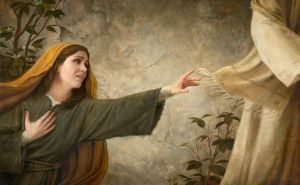 Today’s Gospel seems to be just another healing miracles of Jesus, but if we read it closely, the story of the healing of the woman with hemorrhage is extraordinary tale of faith. We are not sure what kind of hemorrhage she suffers, but the fact that she bears the sickness for 12 years, spends a lot for the medication, and does not get any better, means it is pretty serious, if not terminal. During this time, the physicians are extremely rare, and expectedly, the patients need to spend a lot of money. The woman may come from a wealthy family, but she is impoverished because her prolong sickness. The woman is losing her life and facing despair. I am currently assigned as an associate chaplain in one of the hospitals in Metro Manila, and my duty is to make pastoral visit to these patients. I encounter some patients who are suffering from certain health conditions that drain all their resources, and it seems the situation does not get any better. I realize the story of the woman with hemorrhage is not only her story happened in the far past, but it is also our stories here and now.
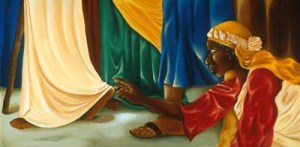 Injil hari ini tampaknya tidak berbeda dengan kisah-kisah mukjizat penyembuhan Yesus, tetapi jika kita membaca dengan seksama, kisah penyembuhan perempuan dengan pendarahan ini sebenarnya luar biasa. Kita tidak tahu dengan pasti pendarahan apa yang dideritanya, tetapi fakta bahwa ia menderita kondisi ini selama 12 tahun, menghabiskan banyak untuk pengobatan dan kondisinya semakin memburuk, ini berarti sangat serius. Pada zaman itu, tabib sangat jarang, dan berobat perlu mengeluarkan banyak uang. Perempuan ini mungkin berasal dari keluarga kaya, tetapi dia jatuh miskin karena kondisinya tersebut. Perempuan ini mulai kehilangan hidupnya dan menghadapi keputusasaan. Saya saat ini ditugaskan sebagai asisten imam di salah satu rumah sakit di Metro Manila, dan tugas saya adalah melakukan kunjungan pastoral ke pasien-pasien yang dirawat di rumah sakit tersebut. Tidak jarang saya menjumpai pasien yang menderita kondisi kesehatan yang menguras semua sumber daya mereka, dan tampaknya situasi mereka tidak menjadi lebih baik. Saya menyadari kisah perempuan dengan pendarahan ini bukan hanya kisahnya yang terjadi di masa lalu, tetapi juga kisah umat manusia di zaman ini.
 Today we are celebrating the birth of John the Baptist. Two figures emerge as the protagonists of our today’s Gospel, Elizabeth, and Zachariah. Luke describes the couple as “righteous in the eyes of God, observing all the commandments and ordinances of the Lord blamelessly. (Luk 1:6)”. But, they have no child. The possibility to have a child is close to zero as Elizabeth is perceived to be barren and Zachariah is already old. In ancient Jewish society, children are considered to be a blessing of the Lord and a source of honor, and barrenness is a curse and shame.
 Hari ini kita merayakan kelahiran Yohanes Pembaptis. Ada dua tokoh protagonis pada Injil kita hari ini, Elizabeth, dan Zakharia. Santo Lukas mendeskripsikan pasangan itu sebagai “orang benar di hadapan Allah dan hidup menurut segala perintah dan ketetapan Tuhan dengan tidak bercacat.” (Luk 1: 6) ”. Tapi, mereka tidak memiliki anak. Kemungkinan memiliki anak juga mendekati nol karena Elizabeth adalah mandul dan Zakharia sudah tua. Dalam masyarakat Yahudi kuno, anak dianggap sebagai berkat Tuhan dan sumber kehormatan, dan kemandulan adalah kutukan dan rasa malu.
 We often take for granted that we are created as a bodily creature. Our body is integral to our humanity and created by God as something good; we receive our body as a gift. We freely receive our body from our parents, and our parents from their parents and this goes on till we discover God as the source of this gift. Because our body is a gift from God, we are called to honor our body as we honor the Giver of the gift Himself.
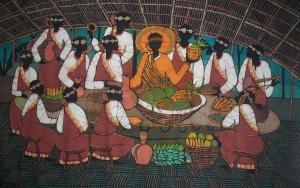 Tubuh kita adalah bagian integral dari kemanusiaan kita dan diciptakan oleh Tuhan sebagai sesuatu yang baik. Tubuh kita adalah sebuah karunia. Dengan cuma-cuma, kita menerima tubuh kita dari orang tua kita, dan orang tua kita dari orang tua mereka dan ini berlangsung terus sampai kita menemukan Tuhan sebagai sumber dari karunia ini. Karena tubuh kita adalah karunia dari Tuhan, kita dipanggil untuk menghormati tubuh kita sebagaimana kita menghormati Sang pemberi karunia.
 In Medio Ecclesiae