Our Perfect Sacrifice

22nd Sunday in Ordinary Time

September 3, 2023

Roman 12:1-2

Matthew 16:21-27

Any true worship in the Bible comes in the form of offering sacrifice. What is a sacrifice? Sacrifice takes place when we offer something precious to God, and in ancient societies, cattle are considered to be precious possessions. Abel offered the firstlings of his flock, their fat portions [see Gen 4:4]. After the flood, Noah built an altar, and sacrificed animals that were pleasing to the Lord [see Gen 8:20]. At the feet of Sinai, Moses slaughtered oxen as sacrifices to the Lord as the covenant between God and Israelites was established [See Exo 24:4-5]. Yet, at times, non-bloody sacrifices are also offered. Melchizedek brought bread and wine as offerings [see Gen 14:18]. The entire book of Leviticus regulates the sacrificial worship of the Israelites. 

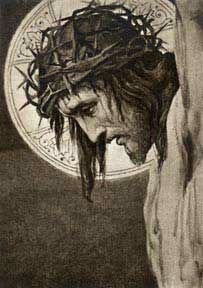
If the Eucharist is our worship, then what do we offer as a sacrifice in the Eucharist? Surely, it is neither animals nor any earthly things. Our sacrifice in the Eucharist is Jesus [see 1 Cor 5:7]. Since Jesus is divine and sinless, He becomes the perfect sacrifice, and consequently, the Eucharist is the perfect worship. 

However, if we see part of the Eucharist carefully, we encounter a sentence that the priest utters, “pray brethren, that my sacrifice and yours, may be acceptable to God, the almighty Father.”  This is intriguing because this sentence tells us that the faithful attending the Eucharist have a different sacrifice from the priest’s offering. If the sacrifice offered by the priest is the Body and Blood of Christ, then what is the sacrifice of the people?

St. Paul helps us answer this question. In his letter to the Romans, he wrote, “I appeal to you therefore, brothers and sisters, by the mercies of God, to present your bodies as a living sacrifice, holy and acceptable to God, which is your spiritual worship [Rom 12:1; second reading].” Our sacrifices are our bodies and our lives. And, we offer our lives in the Eucharist and we unite them to the sacrifice of Jesus Christ, this becomes our spiritual worship. 

Yet, Paul is also appealing that we offer not any kind of body, but holy and pleasing to the Lord. Thus, it is our duty to keep our lives from sins and things that are unpleasant to God. We cannot say that it is enough to believe in Christ, but we are not obeying His laws. We cannot claim that it is enough to go to the Church every Sunday but do evil on the other days. Every day is an opportunity to make our lives pleasing to the Lord.

Lastly, we need to remember that suffering is also part of our lives. Thus, if we endure unavoidable sufferings with patience, this too can be part of our living sacrifice that is pleasing to God. In the Eucharist, our lives and our sufferings are offered as our living sacrifice and since it is pleasing to God, our lives transformed into blessings. Now, we know why God allows suffering in our lives. This is why Jesus rebuked vehemently Peter for preventing Him from bearing the cross and dying. In Christ, eventually, sufferings may even become blessings.

Valentinus Bayuhadi Ruseno, OP
Pope: Leader and Father

21st Sunday in Ordinary Time [A]
August 27, 2023
Matthew 16:13-20

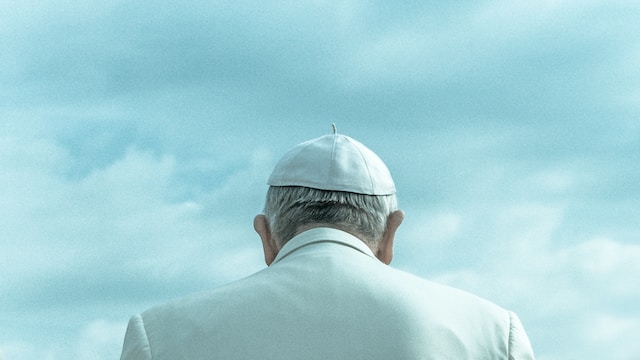
The Catholic Church is known for her distinctive features and teachings, like belief in the Holy Trinity, the real presence of Jesus Christ in the Eucharist, the Bible as the written Word of God, and the veneration of the Blessed Virgin Mary and other saints. Yet, one feature stands out because it is not only teachings, things, or rites but a living person. This is the Pope. Most of the earth’s population arguably recognizes modern-day popes, like St. John Paul II, Benedict XVI, and Francis. What are the roles of the pope? Why is the pope central to the Catholic Church?

Indeed, I cannot do justice here. I want to focus on the pope as our leader and father. Every human community needs leaders, and this includes the Catholic Church. While it is true that the real founder and head of the Catholic Church is Jesus Christ, He entrusted the role of leading and shepherding to man and his successors. This is why Jesus gave Peter the keys to the Kingdom of Heaven. Why keys? Our first reading provides us with the answer [Is 22:19-23]. Here, through the prophet Isaiah, the Lord appointed Eliakim, son of Hilkiah, as the master of the palace. This was the highest position in the Kingdom, just second to the king himself. We can liken him to Prime Minister, who takes charge on the king’s behalf. How do we know that he is the master of the palace? He has the key to the house of David. Thus, like Eliakim, Peter received the keys to the Kingdom. Therefore, he is the master of the palace of Jesus Christ.

Then, why do we call the leader of the Catholic Church as Pope? The word pope comes from the Latin’ Papa,’ meaning ‘father.’ Then, why do we call him ‘father’ or ‘Papa’? Again, the answer goes back to the Old Testament, to Eliakim. As the master of the palace, Eliakim shall be the father to the inhabitants of Jerusalem. Therefore, like Eliakim, Peter shall be the father to the inhabitants of the Kingdom. While the leadership role is often clearly defined, the role of a father is often misunderstood. A father is a head figure in the family. Thus, Catholic Church is not only an organization but fundamentally a family.

A father protects and provides for his family. Thus, the pope is responsible for protecting the faithful from dangers, especially spiritual threats like false doctrines. He also provides for our spiritual needs, like Eucharist, prayers, and exhortations. Father is also a man who educates and disciplines his children. Therefore, the pope is expected to raise us in true faith and correct us if we begin to go astray. Indeed, a pope cannot take care of us individually. Still, he can lead and educate us through his representatives, especially bishops and parish priests.

One more thing that we must never forget is that the pope is also a frail human. We see Peter, who kept failing, then we may encounter some popes who do not meet our expectations. Indeed, it must be a difficult situation for the Church, but all the more, we need to pray for our leader and father.

Valentinus Bayuhadi Ruseno, OP

Yesus, Seorang Wanita, dan Anjing

Minggu ke-20 dalam Masa Biasa [A]
20 Agustus 2023
Matius 15:21-28

Injil hari ini sungguh mencengangkan. Bagaimana mungkin Yesus bertindak begitu keras terhadap seorang perempuan yang sedang kesusahan? Mengapa Yesus harus menyebutnya ‘anjing’? Di manakah belas kasihan Yesus?

Konteks sejarah mungkin dapat membantu kita. Yesus dan murid-murid-Nya sedang dalam perjalanan menuju daerah Tirus dan Sidon. Kedua kota kuno ini berada di luar wilayah Israel di sebelah utara (saat ini di Lebanon). Tujuan utama dari kedatangan Yesus ke daerah ini adalah untuk beristirahat. Pelayanan yang terus menerus di Palestina menguras tenaga, dan mereka membutuhkan istirahat. Jadi, kita dapat membayangkan Yesus dan para pengikut-Nya kelelahan setelah melakukan berbagai pelayanan dan perjalanan yang panjang, tetapi tiba-tiba, seorang wanita Kanaan datang dan mengusik ketenangan mereka.

Reaksi yang umum dilakukan adalah meminta wanita itu untuk pergi, dan inilah yang disarankan oleh para murid kepada Yesus. Namun, Yesus tidak mengusir perempuan itu dan tidak mengabaikannya, melainkan memulai sebuah dialog. Kita menyadari bahwa Yesus memiliki rencana khusus untuk wanita ini. Namun, apakah tujuan-Nya bagi perempuan itu?

Pertama, Yesus mengatakan kepada perempuan itu bahwa Dia datang untuk domba-domba yang hilang dari suku Israel, yang berarti prioritas-Nya adalah bagi bangsa Israel dan bukan orang non-Yahudi. Namun, wanita itu menolak untuk menyerah dan bahkan berlutut di hadapan Yesus. Menariknya, kata Yunani yang digunakan adalah ‘προσκυνέω’ (proskuneo), dan kata ini dapat diterjemahkan sebagai ‘menyembah’. Meskipun ada penolakan, perempuan itu tetap berjuang dan bahkan menyembah Yesus. Melihat reaksi perempuan itu, Yesus pun berkata dengan kata-kata yang lebih keras, “Tidaklah patut mengambil roti anak-anak dan melemparkannya kepada anjing-anjing (Mat. 15:26).” Sekali lagi, perempuan itu menolak untuk menyerah. Di luar dugaan, ia tidak marah atau merasa terhina. Sebaliknya, ia berkata, “Benar, Tuhan, bahkan anjing-anjing pun makan remah-remah yang jatuh dari meja tuannya (Mat. 15:27).” Karena kasihnya yang besar kepada putrinya dan iman kepada Yesus, ia tidak keberatan disamakan dengan ‘anjing’ dan bahkan merasa puas dengan apa yang tersisa. Mendengar jawaban perempuan itu, Yesus menyatakan bahwa ia memiliki iman yang besar dan akan menerima permintaannya.

Namun, ada sebuah pertanyaan yang mengganjal. Apakah benar-benar sebuah penghinaan untuk menyebut wanita itu ‘anjing’? Menarik untuk diperhatikan bahwa kata Yunani yang digunakan adalah ‘κυνάριον’ (kunarion), dan itu bukan sembarang anjing, tetapi seekor anjing kecil yang biasa dipelihara di dalam rumah. Ya, ini adalah seekor anjing, tetapi ia adalah bagian dari keluarga dan sering kali disayangi. Meskipun benar bahwa orang-orang bukan Yahudi belum menjadi prioritas Yesus, namun mereka sangat dekat dengan hati-Nya. Sekarang, dengan menyadari hal ini, ‘kunarion’ dapat menjadi sebuah penghinaan atau sebuah istilah yang menunjukkan kasih sayang. Untungnya, wanita itu memutuskan untuk melihat istilah ini bukan sebagai penghinaan tetapi sebagai kesempatan untuk lebih dekat dengan Yesus.

Kita tahu sekarang bahwa Yesus menjadikan perempuan itu sebagai model iman dalam menghadapi cobaan dan kesulitan. Melalui perempuan itu, Yesus menunjukkan bahwa diamnya Allah terhadap permintaan kita sebenarnya adalah rencana Allah bagi kita. Tanpa ujian iman, kita tidak akan bertumbuh dalam relasi kita dengan Allah. Ujian iman adalah bagian dari pendidikan Allah. Inilah cara Dia melatih orang-orang yang dikasihi-Nya. Dia menguji Abraham, menantang Musa, dan mengizinkan Daud menanggung penganiayaan. Adalah suatu kehormatan bagi kita untuk diuji oleh Tuhan.

Valentinus Bayuhadi Ruseno, OP

A Woman Called Dog

20th Sunday in Ordinary Time [A]

August 20, 2023

Matthew 15:21-28

Today’s gospel is genuinely puzzling. How could Jesus act so harshly toward a woman in distress? Why did Jesus have to call her ’a dog’? Where was Jesus’ compassion and mercy?

A bit of historical context may help us. Jesus and His disciples were going toward the district of Tyre and Sidon. These two ancient cities were outside Israel’s territory to the north (presently in Lebanon). The primary purpose of coming to this area was to rest. The constant ministries in Palestine drained the energy, and they needed rest. So, we can imagine Jesus and His followers were exhausted after the various ministries and long journeys, but suddenly, a Canaanite woman came and disturbed their peace.

The typical reaction would be to ask the woman to leave, and this is precisely what the disciples suggested to Jesus. Yet, Jesus did not send her away nor ignore her but instead started a dialogue. We may recognize that Jesus has a particular plan for this woman. But what is His goal for her?

Firstly, Jesus told her that He came for the lost sheep of the house of Israel, meaning His priority would be the Israelites and not the Gentiles. Yet, the woman refused to give up and even kneel before Jesus. Interestingly, the Greek word used is ‘προσκυνέω’ (proskuneo), and this word can be translated as ‘to worship.’ Despite the apparent rejection, she stepped up her determination and even worshiped Jesus. Looking at her reaction, Jesus also came with stronger words, “It is not fair to take the children’s bread and throw it to the dogs (Mt 15:26)” Again, the woman refused to yield. Unexpectedly, she was neither angry nor insulted. Instead, she said, “Yes, Lord, yet even the dogs eat the crumbs that fall from their masters’ table (Mt 15:27).” Because of her great love for her daughter and her trust in Jesus, it did not bother her to be associated to ‘dogs’ and even content with the leftovers. Hearing her answers, Jesus proclaimed that she had great faith and would receive her request.

Yet, a question lingers. Is it truly an insult to call the woman ’a dog’? It is interesting to notice that the Greek word used is ‘κυνάριον’ (kunarion), and it is not just any dog, but a little household dog. Yes, it is a dog, but it is a part of the family and often well-loved. While it is true that the Gentiles were not Jesus’ priority yet, they were very close to His heart. Now, aware of this, ‘kunarion’ can be either an insult or a term of endearment. Fortunately, the woman decided to see this term not as an insult but as an opportunity to get closer to Jesus.

We recognize now that Jesus was making the woman the model of faith in the face of trials and difficulties. Through her, Jesus demonstrated that God’s apparent silence to our request is, in fact, God’s plan for us. Without the test of faith, we will not grow in our relationship with God. Test of faith is part of God’s pedagogy. It is how He trained His beloved ones. He tested Abraham, challenged Moses, and allowed David to endure persecution. It is our privileged to be tested by God.

Valentinus Bayuhadi Ruseno, OP

Elijah and the Lord God

19th Sunday in Ordinary Time [A]

August 13, 2023

Matthew 14:22-33

1 Kgs 19:9-13a

Elijah is considered one of the greatest prophets of the Old Testament. His name means the Lord is God (a combination of ‘El’ and ‘YHWH’), and this speaks volumes of his mission to defend the worship of the true God, to oppose vehemently idolatry and to constantly remind Israelites of their covenant with their God. He courageously criticized even kings and queens. He was also renowned as a mighty prophet who performed many miracles.

One of his greatest showdowns is the contest on Mount Carmel (see 1 King 18). He challenged the prophets of Baal to call out to their god and ask it to pour down rain because the land had experienced a long drought. This trial is to prove who is the real God, the Lord or Baal. Around 400 prophets of Baal accepted the challenge and performed all sorts of rituals but to no avail. Elijah even mocked them. He said something like, “Your god must be asleep or going on vacation”. Then, when his turn came, he did a simple ritual and called the Lord God. His prayer was answered, and the rain suddenly fell from the sky. Feeling victorious, Elijah slaughtered all the Baal prophets.

This event enraged Jezebel, wife of Ahab, king of Israel, and as the avid support of Baal, she ordered that Elijah be seized and executed. Unexpectedly, Elijah, the mighty prophet of God and miracle worker, became afraid and ran away. Tired of running, he asked the Lord to take his life. Yet, the Lord sent His angel to feed him. He continued his journey to Mount Horeb in Sinai. There, he encountered the Lord, but not in the way he expected. The Lord was not in the great wind, earthquakes, or powerful fire but the calm whisper sound. Indeed, God was in the least expected place. However, after Elijah realized God’s presence and spoke with Him, Elijah was back on his feet and walked back to Israel to continue his missions.

The life of Elijah teaches us several precious lessons. Often like Elijah, we became afraid, intimidated and unsure of our lives and missions in the face of danger and suffering. We tend to forget the great things the Lord has done through our hands. We have this ‘spiritual amnesia’. We ignore the truth that the Lord who has been with us in the past is also the same Lord who will be with us in the future. Even trials and pains are part of His providence.

The second lesson is also precious. God can often be found in the places and times we do not expect. Surely, God is present in the Eucharist and our prayers. Yet, the Lord is hidden in the ordinary people we meet daily. Jesus is there in simple acts of kindness and love we receive. God is there when we can be faithful to our day-to-day commitment to our spouse and children. Despite our struggles, the Lord is there when we keep doing good things for others.

Valentinus Bayuhadi Ruseno, OP
Transfigurasi dan Salib

Pesta Transfigurasi [A]

6 Agustus 2023

Matius 17:1-9

Hari ini Gereja merayakan Transfigurasi. Ini adalah peristiwa luar biasa dalam kehidupan Yesus dimana Yesus berubah rupa atau memanifestasikan kodrat ilahi-Nya kepada murid-murid-Nya yang terpilih, yaitu Petrus, Yakobus dan Yohanes. Tidak hanya penampilan-Nya yang menjadi putih menyilaukan, agung dan ilahi, tokoh-tokoh yang paling menonjol dalam Perjanjian Lama, Musa dan Elia juga muncul. Musa dan Elia menyaksikan Tuhan di gunung pada masa mereka. Sekarang, mereka menyaksikan Tuhan yang sama di Gunung Transfigurasi. Melihat Yesus dalam keilahian-Nya pastilah merupakan pengalaman yang fenomenal bagi Petrus, Yakobus dan Yohanes.  Tentunya, Petrus ingin menikmati pengalaman itu selamanya dan dengan demikian, ia menawarkan untuk membangun sebuah tenda agar mereka dapat tinggal selama mungkin dalam momen yang luar biasa itu.

Namun, Yesus memiliki rencana lain, dan berubah penampilan-Nya kembali menjadi manusia biasa. Yesus kemudian turun dari gunung dan berjalan menuju Yerusalem. Di sana, Dia memikul salib-Nya, mengalami penderitaan yang brutal dan kematian yang mengerikan. Dia diperlakukan sebagai penjahat terburuk, dan ditinggalkan oleh murid-murid terdekat-Nya. Mungkin, beberapa murid kecewa dan kehilangan harapan, dan beberapa lainnya marah dan frustrasi. Bahkan Petrus, Yakobus dan Yohanes tampaknya melupakan pengalaman mulia di gunung Tranfigurasi. Yakobus melarikan diri. Petrus bahkan menyangkal Dia. Hanya Yohanes yang tetap tinggal dan menemani ibu Yesus di kaki salib. Namun, justru inilah inti dari transfigurasi. Yesus yang ilahi di atas bukit transfigurasi adalah Yesus yang sama dengan Yesus yang menderita di bukit Kalvari. Yesus yang paling indah di atas awan yang ditemani oleh Musa dan Elia, adalah Yesus yang tersiksa di kayu salib yang diapit oleh dua penjahat.

Transfigurasi mengajarkan kita pelajaran yang sangat berharga. Seringkali, seperti para murid, kita hanya ingin tetap bersama Yesus ketika Yesus berada di saat-saat yang bercahaya. Namun, ketika Yesus disalibkan dan terlihat sengsara, kita gagal melihat-Nya, melarikan diri dan bahkan menyangkali-Nya. Kita lupa bahwa Dia adalah Yesus yang sama. Sangat mudah bagi kita untuk mengenali Yesus dan mengucap syukur kepada-Nya ketika hidup kita diberkati dengan stabilitas finansial, kesehatan yang baik, atau karier yang sukses. Dan tentu saja, kita berkata kepada Tuhan, kita ingin tinggal selamanya di saat-saat yang mulia ini. Namun, apakah kita melihat Yesus ketika hidup kita sedang sulit? Mungkin, seperti para rasul, kita marah, frustrasi, dan menyalahkan Yesus.

Jadi, bagaimana kita dapat melihat Yesus di kayu salib? Kita perlu belajar dari rasul Yohanes, terutama  bagaimana Yohanes dapat melihat Yesus dan tetap setia? Pertama, Yohanes dapat melihat Yesus di kayu salib karena ia tidak sendirian. Ia melihat Yesus bersama dengan ibu Yesus. Ia belajar dari teladan Maria yang berdiri di depan salib Putra-Nya. Jika kita ingin melihat Yesus di kayu salib dan tetap setia kepada-Nya, kita harus bersama dengan ibu-Nya dan belajar darinya.  Apakah kita mengundang Maria ketika hidup kita sulit? Apakah kita berdoa rosario pada saat pencobaan?

Kedua, Yohanes juga tidak hanya dengan Maria, tetapi juga dengan murid-murid lain yang setia di kaki salib.  Merka mewakili Gereja. Apakah kita menyadari bahwa kita adalah bagian dari Gereja, Tubuh Kristus, dan penderitaan kita adalah penderitaan seluruh Gereja? Apakah kita mengijinkan Gereja untuk menemani kita saat kita berjalan melalui masa-masa sulit kita?

Ketiga, Yohanes berdiri di kaki salib Yesus, menyimbolkan kesatuannya dengan Yesus yang sengsara. Penderitaan itu sendiri sia-sia dan tak bermakna, tetapi saat kita menyatukannya dengan salib Yesus di dalam doa dan Ekaristi, maka penderitaan kita memiliki nilai penebusan.

Valentinus Bayuhadi Ruseno, OP

Transfiguration and the Cross

Feast of Transfiguration [A]
August 6, 2023
Matthew 17:1-9

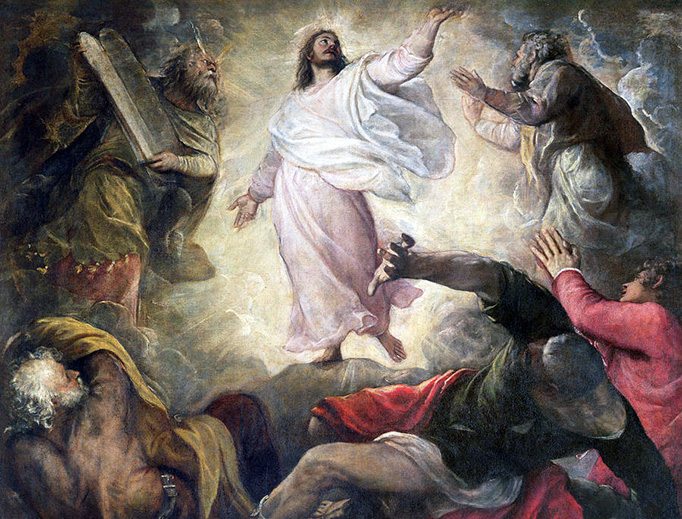
Today the Church is celebrating the event of Transfiguration. This is an extraordinary event in the life of Jesus in which Jesus transfigured or manifested His divine nature to His chosen disciples, Peter, James and John. His appearance became dazzling white, majestic and divine, and the most prominent figures of the Old Testament, Moses and Elijah, also showed up. Moses and Elijah witnessed the Lord in the mountain during their time. Now, they witnessed the same Lord in the mount of TransfigurationTransfiguration. To see Jesus in His divinity must be a phenomenal experience for Peter, James and John. Surely, Peter wanted to savor the experience forever, and thus, he offered to build a tent so they could stay as long as possible in that beatific moment.

However, Jesus had another plan and returned to His ordinary human appearance. Jesus then went down from the mount and walked toward Jerusalem. There, He embraced His cross, brutal suffering and horrifying death. He was treated as the worst criminal and abandoned by His closest disciples. Perhaps, some disciples were disappointed and losing hope, and some were angry and frustrated. Even Peter, James and John seemed to forget the glorious experience of Transfiguration. James ran away. Peter even denied Him. Only John stayed and accompanied the mother of Jesus at the foot of the cross. Yet, this is precisely the point of TransfigurationTransfiguration. The divine Jesus on the mount transfiguration is the same dying Jesus on the Mount of Calvary. The most beautiful Jesus on the cloud, accompanied by Moses and Elijah, is the tortured Jesus on the cross flanked by two criminals.

Transfiguration teaches us precious lessons. Like the disciples, we often want to stay with Jesus when Jesus is in His luminous moments. Yet, when Jesus is crucified and looks miserable, we fail to see Him, run away and even deny Him. We forget that He is the same Jesus. We can easily recognize Jesus and thank Him when our lives are blessed with financial stability, good health, or successful careers. And naturally, we tell the Lord we want to stay forever in these glorious moments. Yet, do we see Jesus when our lives are hard? Perhaps, like the apostles, we are angry, frustrated, and blaming Jesus.

So, how are we able to see Jesus on the cross? We need to learn from the apostle John, and how can John see Jesus and stay faithful? John could see Jesus on the cross because he was not alone. He was seeing Jesus together with Jesus’ mother. He was learning from the example of Mary, who was standing at the cross of His Son. If we want to see Jesus on the cross and stay faithful to Him, we must be with His mother and learn from her. Do we invite Mary when our lives are hard? Do we pray the rosary in times of trials?

However, Mary does not only stand for her person but also the Church. Do we recognize that we are part of the Church, the Body of Christ? Do we allow the Church to accompany us as we walk through our difficult times? Do we help and support others also in our community or parish?

Valentinus Bayuhadi Ruseno, OP

The Scribes of the Kingdom

17th Sunday in Ordinary Time [A]

July 30, 2023

Matthew 13:44-52

The Scribes are often perceived as the bad guys. Together with the Pharisees and the elders, the scribes are often arguing and disagreeing with Jesus. Yet, interestingly, Jesus mentions the scribes of the kingdom of God. So, what is precisely the scribes? Are they the bad guys or the good guys? What does Jesus mean by ‘the Scribes of the Kingdom’?

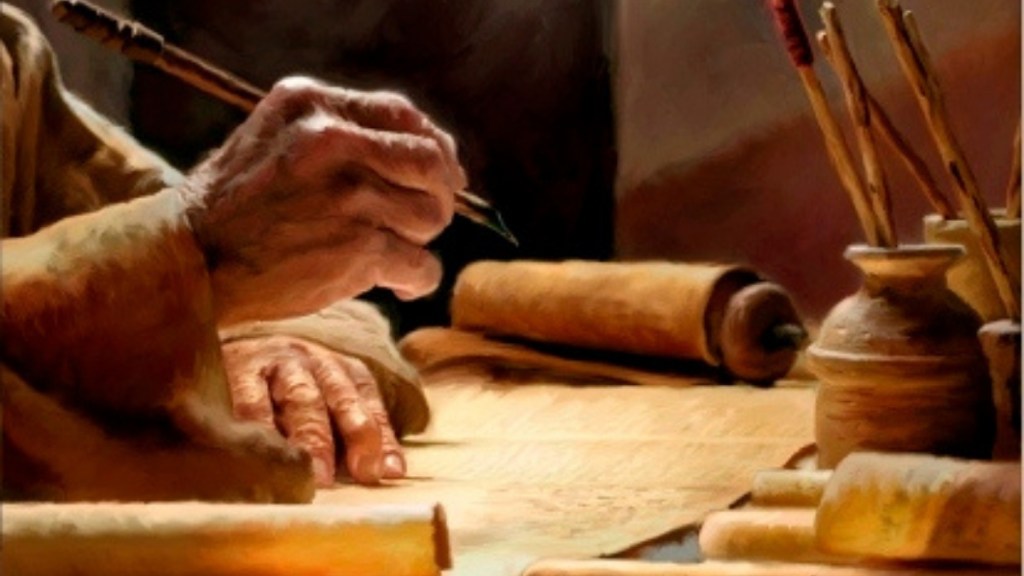
Scribes [in Greek: γραμματεὺς, grammateus] are unique professions in the ancient time. When most people were illiterate, and the writing material was scarce, the scribes played an essential role in keeping the record and passing down the written history. Being a scribe is not only about the ability to read but also highly specialized skills to write efficiently using ancient materials [stone tablets, animal skins, papyrus]. Most scribes worked for the royal court as they wrote various official documents and recorded the chronicles. Since, in ancient times, the royal officials and the religious leaders were often the same persons, the scribes also were tasked to write and copy sacred texts. 

In the time of Jesus, the Israelite scribes were highly specialized professionals in reproducing Torah scrolls and the prophets’ writings. They would form a small community and write sacred texts together. While they wrote, they would read the text aloud and, thus, avoid unnecessary errors. To copy the holy texts is their sacred duty. But not only reading and writing the text, the scribes also read, discussed and interpreted the meaning of the sacred text. With this privileged access to the sacred text, they also read and taught the Torah to the people of Israel. Scribes did not form a single organized group but joined existing groups like Pharisees, Sadducees and Essenes, or they decided not to be unaffiliated to any group. From here, we know that scribes were not homogenous. Some may disagree with Jesus at some point, but on some issues, they may agree. 

Then, Jesus mentioned ‘the scribes of the Kingdom’, who are these people? At the first level, these are the apostles of Jesus and other disciples. They are the ones who are responsible for writing the New Testament. Matthew and John are apostles, while Mark is the disciple of Peter and Luke is the companion of Paul. They also interpreted and preached the Old Testament as fulfilled by Jesus Christ.

However, at the second level, the scribes are all of us. Nowadays, we have easy access to the Bible. We are called not only to hear and read the word of God in the scriptures but also to understand it more profoundly and share it with others. While some people are taking the more prolonged and more intense study of the scriptures, like priests, bible scholars, and catechists, all of us are also called to take part in the scribes’ responsibility. 

I am happy that more Catholics are taking an interest in Bible Study. Some take a formal classes or attend seminars. Some make commitments to read Bible every day. Yet, scribes are not only someone who read and study the sacred text but also one who share and preach it. Thus, the challenge is how we are to share the word of God and take part in the mission of the Scribes of the Kingdom.

Valentinus Bayuhadi Ruseno, OP

The Kingdom of God

16th Sunday in Ordinary Time [A]

July 23, 2023

Matthew 13:24-43

One of the most fundamental themes of Jesus’s preaching is the Kingdom of God [in Matthew, it is called ‘the kingdom of heavens’]. Yet, what is the Kingdom of God? Where is this Kingdom? Why is it central to Jesus’ preaching and mission? 

What is the Kingdom of God? A kingdom is precisely a kingdom because it possesses a king or monarch as its highest authority. If we change its supreme leader into a president or prime minister, it ceases to be a kingdom and turns into something else, like a republic. Thus, the presence of a king in the Kingdom of God is non-negotiable. Who, then, is the king of the Kingdom of God? The answer is obvious: God Himself. Since Jesus is our God, then it is not hard to say that Jesus is the king of the Kingdom of God. Many new testament passages speak of this Kingdom of Jesus (see Eph 5:5; 2 Pet 1:11). Jesus himself acknowledged that He is the king of this Kingdom (see Luk 22:30).

Now, after we know the king of this Kingdom, we need to determine who the subjects are. After all, a king is not a king without the people whom he governs. Many will instantly answer that the members of the Kingdom are all who believe in Jesus. Yet, it is not as simple as that. If we observe other kingdoms or nations, to be a citizen of a particular Kingdom or country is not enough that we ‘believe’ that he is a citizen. He must undergo required procedures that make him a citizen, like processing certain legal documents, etc. More than that, it is imperative for a citizen to obey the law of the country. Otherwise, he will be punished accordingly.

Therefore, it is the same with the Kingdom of God. To become part of the Kingdom, we must undergo the required procedure. In the case of the Kingdom of God, it is the sacrament of baptism (see John 3:3-5). Yet, to be a good citizen of the Kingdom, we must not stop a baptism. We are expected to know and follow the laws of the Kingdoms. We are called to obey the words of Jesus, our king. We cannot call ourselves good Christians, good citizens of the Kingdom of Heaven, if we keep breaking the laws.

Another aspect of the Kingdom of Heaven that we must not overlook is that it is not yet ‘perfect’. Some may think that since it is the Kingdom of God, it must be super powerful, full of good things, and has no suffering. Yet, Jesus reminds us through His parables that God allows bad things to inflict the Kingdom of God on earth. God is like the landowner who allows the weed to grow together with the wheat in his field. Some may expect the Kingdom to grow strong like a cedar seed that will develop into a strong and majestic one. Yet, Jesus told us that the Kingdom is like a mustard seed, the smallest seed that will grow into ugly shrubs.

Through Jesus’ parables, we must not be surprised if bad things are happening even after we become citizens of the Kingdom. We are expected not to be shocked to experience pain and suffering as members of the Kingdom. God allows these bad things to happen as part of His plan for us.

Valentinus Bayuhadi Ruseno, OP

Sang Penabur dan Jalan-Nya yang Misterius

Hari Minggu ke-15 dalam Waktu Biasa [A]
16 Juli 2023
Matius 13:1-23

Ada yang aneh dengan perumpamaan Yesus ini. Penabur itu melakukan sesuatu yang tidak patut dicontoh sebagai seorang petani. Penabur itu menyia-nyiakan benihnya. Ia membiarkan benih-benih itu jatuh ke jalan setapak, tanah berbatu, dan semak duri, tempat-tempat yang pasti akan membunuh benih ini. Jika benih-benih ini adalah sumber hidup petani, maka, dia sedang membunuh dirinya sendiri. Mengapa penabur melakukan sesuatu yang tampaknya tidak berguna dan bahkan bodoh?

Untuk menemukan jawabannya, kita harus memahami tujuan dari perumpamaan-perumpamaan Yesus. Banyak dari kita percaya bahwa perumpamaan adalah cerita sederhana yang digunakan Yesus untuk menyampaikan dan menyederhanakan ajaran-Nya. Itulah sebabnya seorang teolog mendefinisikan perumpamaan sebagai ‘ajaran-ajaran surgawi dalam cerita-cerita duniawi’. Sampai batas tertentu, definisi ini benar, tetapi tidak menangkap keseluruhan tujuan perumpamaan. Ketika Yesus ditanya, “mengapa Ia mengajar dalam perumpamaan? Yesus menjawab, “Itulah sebabnya Aku berkata-kata dalam perumpamaan kepada mereka, sebab mereka melihat tetapi tidak melihat, mendengar tetapi tidak mendengar dan tidak mengerti (Mat. 13:13).” Yesus menggunakan perumpamaan bukan untuk mengungkapkan ajaran-Nya, tetapi justru untuk menyembunyikan ajaran-Nya. Mengapa? Yesus menjelaskan bahwa dengan menggunakan perumpamaan, hanya mereka yang percaya kepada Yesus yang akan mengerti perumpamaan tersebut dan mempelajari pesannya, sementara mereka yang tidak percaya, hanya akan bingung.

Sekarang, bagaimana kita memahami penabur yang tampaknya menyia-nyiakan benihnya? Sekali lagi, kuncinya adalah iman kepada Yesus. Kita diundang untuk membaca perumpamaan ini dari sudut pandang iman. Jika berbagai jenis tanah melambangkan kondisi jiwa kita, dan benihnya adalah firman Tuhan, maka siapakah penaburnya? Bagi kita, orang-orang percaya, jawabannya sudah jelas. Penaburnya adalah Allah sendiri. Sekarang, jika kita mengetahui semua makna dari karakter dan elemen-elemen perumpamaan ini, kita dapat lebih memahami cerita ini. Sama seperti sang penabur di perumpamaan, Allah menyampaikan firman-Nya bukan hanya kepada satu jenis jiwa, tetapi kepada semua jiwa. Mengapa? Karena Dia mengasihi semua jiwa, dan ingin agar semua jiwa datang kepada keselamatan. Allah mengasihi semua orang, bahkan mereka yang melakukan hal-hal yang jahat, mereka yang tidak mengenal-Nya, dan mereka yang membenci-Nya.

Dia mengirimkan sinar matahari dan hujan bagi kita semua, meskipun kita tidak bersyukur. Dia menyediakan banyak hal baik dalam hidup kita, meskipun kita menganggapnya remeh. Pada akhirnya, Dia mengutus Yesus, Firman-Nya yang menjadi manusia, untuk menyelamatkan kita yang berdosa. Karena begitu besar kasih-Nya akan dunia ini, sehingga Ia telah mengutus Anak-Nya yang tunggal, supaya setiap orang yang percaya kepada-Nya tidak binasa, melainkan beroleh hidup yang kekal (Yohanes 3:16). Allah, sang penabur ilahi, tidak mengukur segala sesuatu dengan ukuran ekonomi duniawi, tetapi mengasihi kita dengan cuma-cuma.

Namun, kita tidak boleh lupa bahwa kita juga harus melakukan bagian kita. Kita diundang untuk mengubah jiwa kita menjadi tanah yang subur. Mungkin, pada awalnya, pikiran dan hati kita keras, atau penuh dengan batu keraguan, atau penuh dengan duri kemarahan. Namun, Tuhan memberi kita kebebasan dan juga rahmat pertobatan untuk mengubah hati kita menjadi tanah yang subur di mana Firman Tuhan dapat bertumbuh. Sebagian dari kita mungkin memiliki hati yang subur, tetapi kita tidak boleh lalai, melainkan terus menyuburkan tanah kita agar firman Tuhan dapat berbuah berlimpah.

Jenis tanah seperti apakah kita sekarang? Apakah kita mengenali karya Allah dalam hidup kita? Apa yang kita lakukan untuk menerima firman Tuhan dan membiarkan firman itu bertumbuh dan berbuah?

Valentinus Bayuhadi Ruseno, OP