
Why Mary was Assumed into Heaven?

The Assumption of the Blessed Virgin Mary

August 15, 2024 [B]

Luke 1:39-56

Today, the Church is celebrating the great feast of the Assumption of our Blessed Virgin Mary. Through this celebration, the Church reminds us that Mary, the mother of our Lord, when the course of her life ended, was assumed both her soul and body into the heavenly glory. Yet, a question may arise: why did Mary have to go up into heaven with her soul and body immediately after her death, while the rest of us must wait until the final judgment? Is it unfair?
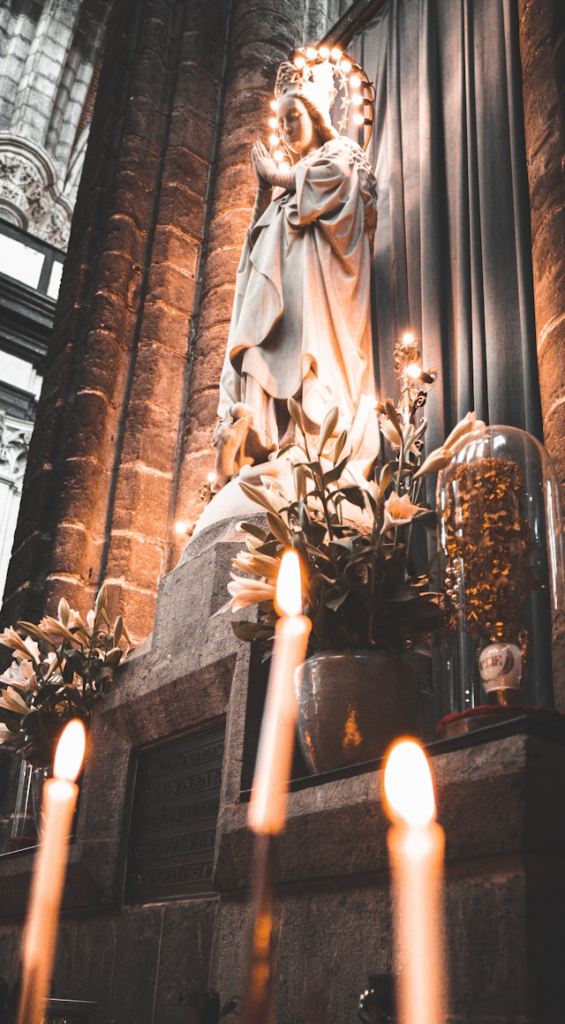
The reason is love. St. Thomas Aquinas teaches that love seeks the union with the beloved (see ST. I.II. q.28 a.1). In a simple way, when we love someone, we wish that we are always close to that person, and we are closer, we can have more opportunity to love. The more we love the more we are united, the more we are united, the more we love. A good example would be loving parents. They always desire to be close to their children because they can love them even more by protecting, providing, and educating them.

So also, those who love God seek to be with and please God. When we initially love God, we begin spending time in prayer and attending the Eucharist every Sunday. We start reading the Bible and learning about our faith. Yet, as we grow in love, we spend more time with the Lord, in prayers, hear the Mass more often, and are involved in ministries and community. However, we realize also that our unity with God is not perfect in this world. We need to work or go to school. We need to take care of our family. We need to attend to endless worldly affairs. Our hearts and love are divided.

However, one person loves God totally and undividedly, even in this world. She is Mary. Her life is wholly dedicated to loving Jesus, even from before His birth to the very end, the cross. She is never separated from Jesus in her life on earth. And thus, when she passed from this earth, her immense love, perfected by God’s grace, drew not only her soul but also her body into that union with God.

Mary’s assumption teaches us that union with God in heaven begins with our love here on earth. The more we love God here on earth, the easier we are drawn to heaven. Yet, how do we love God more if we also must take care of earthly matters? Indeed, we cannot pray all the time, but we can always please God by doing good and avoiding sins in everything we do. Through good moral life, we are united with God even daily. Though we are not always aware of God every second, we know that our lives and actions are oriented to God.

Surabaya

Valentinus Bayuhadi Ruseno, OP

Guide questions:

What do you have in mind when you hear the Assumption of Mary? What do you understand about this Marian dogma? What are the other three Marian dogmas? Do you have any special relationship with Mary? How do you see her?

How do you love God? How intense is your love for God? How do you improve your love for God? Do you pray often? How do you pray? Do you live a good moral life? Do you please God in your daily actions? Are you aware of God’s laws? Is there any sin that you are struggling with now?

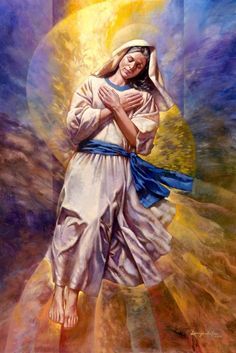
Kenapa Maria Diangkat ke Surga?

Santa Perawan Maria Diangkat ke Surga

15 Agustus 2024 [B]

Lukas 1:39-56

Hari ini Gereja merayakan hari raya Maria Diangkat ke Surga. Melalui perayaan ini, Gereja mengingatkan kita bahwa Maria, bunda Tuhan kita, ketika perjalanan hidupnya berakhir di bumi, jiwa dan raganya diangkat ke dalam kemuliaan surgawi. Namun, sebuah pertanyaan mungkin muncul: mengapa Maria harus naik ke surga dengan jiwa dan raganya segera setelah kematiannya, sementara kita semua, harus menunggu sampai penghakiman terakhir? Bukankah ini sedikit tidak adil?

Alasannya adalah kasih. Santo Thomas Aquinas mengajarkan bahwa kasih mencari persatuan dengan yang dikasihi (lihat ST. I.II. q.28 a.1). Secara sederhana, ketika kita mengasihi seseorang, kita berharap agar kita selalu dekat dengan orang tersebut, dan dengan menjadi dekat, kita dapat memiliki lebih banyak kesempatan untuk mengasihi. Semakin kita mengasihi, semakin kita dipersatukan, dan semakin kita dipersatukan, semakin kita mengasihi. Contoh yang baik adalah orang tua yang baik. Mereka selalu ingin dekat dengan anak-anak mereka karena dengan dekat, mereka dapat lebih mengasihi anak-anak mereka dengan cara melindungi, menyediakan, dan mendidik anak-anak mereka.

Demikian juga, mereka yang mengasihi Allah berusaha untuk bersama dengan Allah. Ketika kita mulai mengasihi Allah, kita mulai meluangkan waktu untuk berdoa dan menghadiri Ekaristi setiap hari Minggu. Kita mulai membaca Alkitab dan belajar tentang iman kita. Ketika kita bertumbuh dalam kasih, kita menghabiskan lebih banyak waktu dengan Tuhan, lebih banyak waktu dalam doa, lebih sering mendengarkan Misa, terlibat dalam pelayanan dan dalam komunitas. Namun, kita juga menyadari bahwa kesatuan kita dengan Tuhan tidaklah sempurna di dunia ini. Kita perlu bekerja atau bersekolah. Kita perlu mengurus keluarga kita. Kita perlu mengurus urusan duniawi yang tak ada habisnya. Hati dan kasih kita pun terbagi.

Namun, ada satu orang yang mengasihi Allah secara total dan tidak terbagi bahkan di dunia ini. Dia adalah Maria. Hidupnya sepenuhnya didedikasikan untuk mengasihi Yesus, bahkan sejak sebelum kelahiran-Nya hingga akhir hayat-Nya di kayu salib. Dia tidak pernah terpisah dari Yesus dalam kehidupannya di dunia. Dan dengan demikian, ketika ia meninggal dunia, kasihnya yang luar biasa, yang disempurnakan oleh rahmat Allah, tidak hanya menarik jiwanya tetapi juga tubuhnya ke dalam persatuan dengan Allah.

Diangkatnya Maria ke surga mengajarkan kepada kita bahwa persatuan dengan Allah di surga dimulai dengan kasih kita di bumi. Semakin kita mengasihi Allah di bumi ini, semakin mudah kita ditarik ke surga. Namun, bagaimana kita dapat mengasihi Allah lebih dalam jika kita juga harus mengurus hal-hal duniawi? Memang, kita tidak dapat berdoa setiap saat, tetapi kita dapat selalu menyenangkan hati Allah dengan berbuat baik dan menghindari dosa dalam segala hal yang kita lakukan. Kita juga dapat mengasihi Allah melalui kasih terhadap sesama. Melalui kehidupan moral yang baik, kita dipersatukan dengan Tuhan bahkan dalam kehidupan sehari-hari. Meskipun kita tidak selalu sadar akan Tuhan setiap saat, kita tahu bahwa hidup dan tindakan kita berorientasi pada Tuhan.

Surabaya

Valentinus Bayuhadi Ruseno, OP

Pertanyaan-pertanyaan panduan:

Apa yang ada di benak Saya ketika Saya mendengar Maria Diangkat ke Surga? Apa yang Saya pahami tentang dogma Maria ini? Apakah tiga dogma Maria yang lain? Apakah Saya memiliki hubungan khusus dengan Maria?

Bagaimanakah Saya mengasihi Allah? Seberapa kuatkah kasih Saya kepada Allah? Bagaimana Saya meningkatkan kasih Saya kepada Allah? Apakah Saya sering berdoa? Bagaimana cara Saya berdoa? Apakah Saya menjalani kehidupan moral yang baik? Apakah Saya menyenangkan hati Allah dalam tindakan Saya sehari-hari? Apakah Saya mengetahui hukum-hukum Allah? Apakah ada dosa yang sedang Saya hadapi sekarang?

See Mary, See Jesus

The Solemnity of the Assumption of Mary

August 15, 2020

Luke 1:39-45

assumption of mary 2Often, we, Catholics, are accused of overemphasizing Mary in our faith, liturgy, and even our daily lives. The usual objections are: “Why do we should see Mary if we can go directly to Jesus? Why should there be Mary between you and Jesus?”

These kinds of objections follow from the underlying presupposition that salvation is only about Jesus and me. We just need Jesus, and the rest are obstacles to Jesus. We do not need the Church, the saints, and especially Mary. These are excess baggage that has to be removed so that we can fly quickly to God. While we might be saved with this faith, but this is a narrow, individualistic, and even pompous view of faith, and more fundamentally, it is not kind of faith that God of the Bible teaches us.

In the Bible, God lays down the foundation for our salvation which is through His family. The primary keyword is covenant [or even translated as testament]. It is a solemn agreement to unite two parties into a family. God invited Adam, Noah, Abraham, Moses, and David and their families to be part of God’s family and salvation may be available for these people. And in the fullness of time, Jesus, the Son of God, forged a new and eternal covenant with God on behalf of humanity and entire cosmos. We are saved through the family of Jesus, the kingdom of God.

If we call God as our Father, then we are brothers and sisters in the family of God. If we are brothers and sisters, we have responsibility for one another’s salvation. The saints ceaselessly love and pray for us because they are our holy brethren in heaven, and want us to join them. Their presence does not in any way hinder our gaze on Jesus because precisely the more we see them, the more we see God’s perfection. If we can appreciate the mountains or oceans as work of God’s power and beauty, the more we shall appreciate the saints as supernatural masterpieces of God.

Chief among the saints is Mother Mary. She is the type-A of a human perfected by God’s grace. The more we see Mary, who she is and what she has become, the more we come closer to God in awe and adoration. If God can do great things to Mary, He will do the same to us. If God can redeem Mary perfectly, He will redeem us as well. If God can bring Mary to heaven, He will bring us also to heaven. And as the great sister in faith, she has even the utmost responsibility to bring us closer to God. She prays for us the hard; even she prays harder for those people who hate her.

St. Luke masterfully narrates how Mary, as the new ark of the covenant, brings Jesus in her womb to Elisabeth and John the Baptist. We also notice Elizabeth does not separate the two. When she sees Mary, she recognizes the Lord, and when she is aware of God’s presence, she acknowledges the sacred bearer, Mary. Through Jesus who is in Mary, Elizabeth and John are able to discover their authentic joy.

Valentinus Bayuhadi Ruseno, OP

Lihat Maria, Lihat Yesus

Hari Raya Pengangkatan Maria

16 Agustus 2020

Lukas 1: 39-45

dormitionSeringkali, kita, umat Katolik, dituduh terlalu menekankan Maria dalam iman, liturgi, dan bahkan kehidupan kita sehari-hari. Keberatan yang biasa kita dengar adalah: “Mengapa saya harus lewat Maria jika saya dapat langsung kepada Yesus? Mengapa harus ada Maria di antara saya dan Yesus?” Jenis-jenis keberatan ini berasal dari asumsi dasar bahwa keselamatan adalah hanya tentang saya dan Yesus. Kita hanya membutuhkan Yesus, dan sisanya adalah penghalang bagi Yesus. Kita tidak membutuhkan Gereja, orang-orang kudus, dan khususnya Maria. Ini adalah “kelebihan bagasi” yang harus disingkirkan agar kita bisa terbang dengan mudah kepada Tuhan.
Meskipun kita mungkin diselamatkan dengan iman semacam ini, tetapi iman semacam ini adalah sempit, individualistis dan bahkan angkuh. Lebih mendasar lagi, imam seperti ini  bukanlah jenis iman yang diajarkan Tuhan dalam Alkitab kepada kita.

Di dalam Alkitab, Tuhan meletakkan dasar untuk keselamatan kita yaitu melalui keluarga-Nya. Kata kunci dasarnya adalah perjanjian [Bahasa Ibrani “berit” dan Inggris “covenant”]. Ini adalah kesepakatan yang agung untuk menyatukan dua pihak berbeda menjadi satu keluarga. Tuhan memanggil Adam, Nuh, Abraham, Musa dan Daud untuk menjadi bagian dari keluarga Tuhan dan keselamatan tersedia bagi bangsa Israel. Dan dalam kepenuhan waktu, Yesus, Putra Allah, membuat perjanjian baru dan kekal dengan Allah demi umat manusia dan seluruh ciptaan. Kita diselamatkan melalui keluarga Yesus, kerajaan Allah.

Jika kita menyebut Tuhan sebagai Bapa kita, kita adalah saudara dan saudari dalam keluarga Tuhan. Jika kita adalah saudara dan saudari, kita memiliki tanggung jawab untuk keselamatan satu sama lain. Di sini kita melihat peran penting Gereja sebagai keluarga Allah, bahkan mereka yang telah mendahului kita, yakni para kudus. Para santo-santa tak henti-hentinya mengasihi dan berdoa bagi kita karena mereka adalah saudara kita yang penuh tanggung jawab di surga, dan ingin kita bergabung dengan mereka. Kehadiran mereka sama sekali tidak menghalangi pandangan kita kepada Yesus karena justru semakin kita melihat mereka, semakin kita melihat kesempurnaan Tuhan. Jika kita bisa menghargai gunung atau lautan sebagai karya kuasa dan keindahan Tuhan, kita akan semakin menghargai orang-orang kudus sebagai mahakarya supernatural Tuhan.

Terdepan di antara orang-orang kudus adalah Bunda Maria. Dia adalah contoh paling kongkret dari manusia yang disempurnakan oleh rahmat Tuhan. Semakin kita melihat Maria, semakin kita dekat dengan Tuhan dalam kekaguman dan pujian. Jika Tuhan dapat melakukan hal-hal besar kepada Maria, Dia akan melakukan hal yang sama kepada kita. Jika Tuhan dapat menebus Maria dengan sempurna, Dia akan menebus kita juga. Jika Tuhan dapat membawa Maria ke surga, Dia akan membawa kita juga ke surga. Dan sebagai saudari yang hebat dalam iman, dia bahkan memiliki tanggung jawab yang paling besar untuk membawa kita lebih dekat kepada Tuhan. Dia berdoa untuk kita dengan sangat semangat, bahkan dia berdoa lebih semangat lagi untuk orang-orang yang membencinya.

St. Lukas dengan lihat menceritakan bagaimana Maria, sebagai tabut perjanjian baru, membawa Yesus di dalam rahimnya kepada Elisabet dan Yohanes Pembaptis. Kita perhatikan juga Elizabeth tidak memisahkan keduanya. Ketika dia melihat Maria, dia mengenali Tuhan, dan ketika dia menyadari kehadiran Tuhan, dia mengakui pembawa suci, Maria. Melalui Yesus yang hadir melalui Maria, Elizabet dan Yohanes menemukan sukacita sejati.

Valentinus Bayuhadi Ruseno, OP

Magnify

The Solemnity of the Assumption of Mary – August 15, 2019 – Luke 1: 39-56

blessed virgin mary 2Today the Church is celebrating the solemnity of the Assumption of Mary. Rooted in the Scriptures and Tradition, the Church firmly believes that Mary was assumed into heaven body and soul after she completed her life here on earth. This belief is crystallized in the form of Dogma or the highest teaching of the Church. As a dogma, the Assumption requires the assent of faith from the faithful. The assumption itself is not the sole Marian Dogma. There are four dogmas related to her: Mary is the Mother of God, ever-virgin, immaculately conceived, and assumed into heaven. No other human, except Jesus, has accumulated that much honor in the Church and no other men or women have blessed conditions like hers.
However, we are mistaken if we think that all the Dogmas are about the goodness of Mary. When we are celebrating the Dogmas of Mary, we are not merely praising that Mary is good, gentle, and holy, but it is primarily about God and how through Mary, we are thanking God for His mercy toward Mary and all the wonders. Looking at Mary, we cannot but thank God for His mercy on her and His wonders done to her.

In the Gospel today, we listen to the song of Mary is traditionally called the Magnificat [Luk 1:46ff]. In her song,  Mary praises the Lord for the mighty deeds He has done to her and Israel. Mary herself acknowledges who she is, “God’s lowly servant.” She never lets pride get in her mind, but instead, she chooses to recognize what God has done to her that “God has looked with favor on her” and “God has raised the lowly.” Mary realizes that she was nothing without God.

The title is from the first Latin word that appears in the canticle, “Magnificat anima mea Dominum.”  The original Greek is “μεγαλύνω” [megaluno], to make great. The idea is like the magnifying glass that intensifies the light and the heat of the sun, and thus, emits powerful energy. When I was a little boy, my friends and I used to play together outside. One time, a friend brought a magnifying glass. We were amazed that it had another function aside from making a small object looked big. It was able to gather the light and heat of the sun and to focus it into a single spot. It became so intense and hot that it may burn what it touched. Then, when we saw the ants nearby, we started burning them using the magnifying glass!

Mary knows well that she is not the source of light, and she is the receiver. Yet, Mary does not merely receive it and keeps it to herself. Mary also is aware that she does not simply mirror that only reflect the light. Mary sees herself as “magnifying glass.” When she receives the light, she makes sure that light will shine even more brightly, intense, and powerful. Through Mary, the light of Christ becomes more intense, powerful, and penetrating. When we intently look at Mary, we cannot but see God Himself.

The Dogma of the Assumption, indeed all Marian dogmas, points to Mary, who points to God. Following her example, we are also called to make our lives as a signpost that points to God. But more than passive signpost, we need to learn to actively magnify God’s glory and mercy through our lives.

Valentinus Bayuhadi Ruseno, OP

Maria dan Tuhannya

Hari Raya Maria Diangkat ke Surga – 17 Agustus 2019 – Lukas 1: 39-56

blessed virgin mary 1Hari ini Gereja sedang merayakan hari raya Maria Diangkat ke Surga. Berakar dalam Kitab Suci dan Tradisi, Gereja dengan kuat percaya bahwa Maria diasumsikan ke dalam tubuh dan jiwa surga setelah dia menyelesaikan hidupnya di bumi ini. Keyakinan ini terkristalisasi dalam bentuk Dogma atau ajaran tertinggi Gereja. Sebagai dogma, Asumsi membutuhkan persetujuan iman dari umat beriman. Asumsi itu sendiri bukan satu-satunya Dogma Marian. Ada empat dogma yang berkaitan dengannya: Maria adalah Bunda Allah, selalu perawan, dikandung dengan sempurna, dan diasumsikan ke surga. Tidak ada manusia lain, kecuali Yesus, yang mengumpulkan begitu banyak kehormatan di Gereja dan tidak ada pria atau wanita lain yang memberkati kondisi seperti miliknya.

Namun, kita salah jika kita berpikir bahwa semua Dogma adalah tentang kebaikan Maria. Ketika kita merayakan Dogma-Maria, kita tidak hanya memuji bahwa Maria itu baik, lembut, dan suci, tetapi ini terutama tentang Tuhan dan bagaimana kita berterima kasih kepada Tuhan atas rahmat-Nya yang tercurah kepada Maria. Melihat Maria, kita tidak bisa tidak berterima kasih kepada Tuhan atas rahmat-Nya atas dia dan keajaiban-keajaiban yang dilakukan padanya.

Dalam Injil hari ini, kita mendengarkan kidung Maria yang secara tradisional disebut Magnificat [Luk 1:46 dst]. Dalam kidung tersebut, Maria memuji Tuhan atas perbuatan-perbuatan besar yang telah dilakukan-Nya kepadanya dan Israel. Maria sendiri mengakui siapa dirinya, “hamba Tuhan yang rendah.” Dia tidak pernah membiarkan kesombongan masuk ke dalam benaknya, tetapi sebaliknya, dia memilih untuk mengakui apa yang telah Tuhan lakukan kepadanya bahwa “Tuhan telah melakukan perbuatan-perbuatan besar kepadanya.” Maria menyadari bahwa dia bukan apa-apa tanpa Tuhan.

Kata Magnificat adalah dari kata Latin pertama yang muncul di kidung tersebut, “Magnificat anima mea Dominum.” Bahasa Yunani aslinya adalah “μεγαλύνω” [megaluno], berarti untuk membuat besar. Idenya seperti kaca pembesar yang mengintensifkan cahaya dan panas matahari, dan dengan demikian, memancarkan energi yang kuat. Ketika saya masih kecil, teman-teman saya dan saya biasa bermain bersama di luar. Suatu kali, seorang teman membawa kaca pembesar. Kami kagum bahwa kaca tersebut memiliki fungsi lain selain membuat benda kecil tampak besar. Itu bisa mengumpulkan cahaya dan panas matahari dan memfokuskannya ke satu tempat. Itu begitu kuat dan panas sehingga bisa membakar apa yang disentuhnya. Kemudian, ketika kami melihat semut di sekitar kami, kami mulai membakar mereka menggunakan kaca pembesar!

Maria tahu betul bahwa dia bukan sumber cahaya, dan dia adalah penerima. Namun, Maria tidak hanya menerimanya dan menyimpannya untuk dirinya sendiri. Maria juga sadar bahwa dia bukanlah sekadar cermin yang hanya memantulkan cahaya. Maria melihat dirinya sebagai “kaca pembesar.” Ketika dia menerima cahaya, dia memastikan bahwa cahaya akan bersinar lebih terang, intens, dan kuat. Melalui Maria, terang Kristus menjadi lebih kuat, dahsyat dan berdaya guna. Ketika kita dengan penuh perhatian melihat Maria, kita tidak bisa tidak melihat Tuhan sendiri yang lebih megah dan mulia.

Dogma Maria diangkat ke surga, dan juga dogma-dogma Maria yang lain, menunjuk ke Maria, yang menunjuk kepada Tuhan. Mengikuti teladannya, kita juga dipanggil untuk menjadikan hidup kita sebagai rambu yang menunjuk kepada Allah. Tetapi lebih dari sekadar rambu-rambu yang pasif, kita perlu belajar untuk secara aktif meningkatkan kemuliaan dan belas kasihan Tuhan melalui hidup kita.

Valentinus Bayuhadi Ruseno, OP

Dominic, the Light of the Church

Feast of St. Dominic de Guzman – Founder of Order of Preachers

August 8, 2019

dominic 3Today, we are celebrating the feast of St. Dominic de Guzman. St. Dominic was born around 1170 in Caleruega, Old Castile, Spain. As a saint, he was not that famous as his counterpart, St. Francis of Assisi, perhaps because he did not write any book or writings that would echo his spirituality. Maybe this is the reason why we do not have a solid and systematic understanding of Dominican Spirituality.
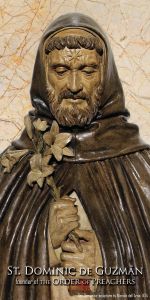
By tradition, St. Dominic is called as the light of the Church. And why? St. Dominic was living in the time where the Church was facing enemies from without and conflicts from within. The Heretics, especially the Albigentians, were attacking the Church restlessly, and the Church was weakened by her dogmatically unprepared and timid priests. Many Catholics were confused, and nobody was defending the true faith to them. It was a dark period for the Church.

Dominic, who loved his Church deeply responded to the call of his time and offered his life to enlighten souls living in the dark and to bring back to the lost sheep to the Church’s fold. Yet, to achieve that end, he had to be in deep relationship with Jesus, the true Light of the World. Thus, his life of prayers and mortification were extraordinary. Rather than to take rest, he spent a night in vigil, refused to take good food, and slept on the floor. Dominic also understood that to explain faith, he must both study and live by the Gospel. He became poor, just like Jesus was poor for the sake of the Kingdom. Dominic became preacher, just like Jesus was preacher par excellence. Dominic offered himself as a “lantern,” a weak instrument yet brings light that both shines brightly and illumines clearly in the dark. He is the light of the Church because he bore the Light of the World.

The Dominicans always have an intimate bond with Mary, the Mother of God. One of the reasons why we are close to her is that we participate in her mission also to bear the Truth and to reflect the same Light. The song of Mary that Luke recorded is traditionally called the Magnificat [Luk 1:46ff]. The title is from the first Latin word that appears in the canticle, “Magnificat anima mea Dominum.” The original Greek is “μεγαλύνω” [megaluno], to make great. The idea is like the magnifying glass that intensifies the light and the heat of the sun, and thus, emits powerful energy. Mary is not the source of the light, and she is the receiver. Yet, Mary does not passively reflect the light, but she actively magnifies it. Through Mary, the light of Christ becomes more intense, powerful, and penetrating.

Following the footsteps of Dominic and our Lady, we are also called to bear the Light of Christ and to magnify it. In the words of St. Thomas Aquinas, “Better to illuminate than merely to shine… [S.T. II.II. 188].”

                Valentinus Bayuhadi Ruseno, OP

Dominikus, Sang Cahaya Gereja

Pesta St. Dominikus de Guzman – Pendiri Ordo Pewarta

8 Agustus 2019

Stampita Front Dominikus(1)Hari ini, kita merayakan pesta St. Dominikus de Guzman. St. Dominikus dilahirkan sekitar tahun 1170 di Caleruega, Kastilia, Spanyol. Sebagai seorang kudus, ia tidak setenar rekannya, Santo Fransiskus dari Assisi, mungkin karena ia tidak menulis buku atau meninggalkan tulisan apa pun yang akan menggemakan spiritualitasnya. Mungkin inilah alasan mengapa kita tidak memiliki pemahaman yang solid dan sistematis tentang Spiritualitas Dominikan.
Menurut tradisi, St. Dominikus disebut sebagai cahaya Gereja. Dan mengapa? St. Dominikus hidup di zaman ketika Gereja menghadapi musuh dari luar dan konflik dari dalam. Kaum Bidaah, khususnya kaum Albigentian, menyerang Gereja tanpa henti, dan Gereja dilemahkan oleh para imam tidak siap secara intelektual maupun secara mental. Banyak orang Katolik yang bingung, dan tidak ada yang menerangkan iman yang benar kepada mereka. Itu adalah masa yang gelap bagi Gereja.

Dominikus, yang sangat mencintai Gereja-Nya, menanggapi panggilan zamannya dan memberikan hidupnya bagi pencerahan jiwa-jiwa yang hidup dalam kegelapan dan untuk membawa kembali kepada domba-domba yang hilang ke kandang Gereja. Namun, untuk mencapai tujuan itu, ia harus berada dalam hubungan yang mendalam dengan Yesus, Sang Terang Dunia yang sejati. Karena itu, kehidupan doanya dan mati raganya sangat luar biasa. Alih-alih beristirahat, ia menghabiskan malam dalam vigili, menolak untuk makan makanan enak, dan tidur di lantai. Dominikus juga mengerti bahwa untuk menjelaskan iman, ia harus belajar dengan tekun dan menghidupi Injil. Ia menjadi miskin, sama seperti Yesus miskin demi Kerajaan Allah. Dominikus menjadi pengkhotbah, sama seperti Yesus adalah pengkhotbah sejati. Dominikus mempersembahkan dirinya sebagai “lentera,” sebuah instrumen yang lemah namun membawa cahaya yang bersinar terang dan menerangi dengan jelas dalam gelap. Dia adalah cahaya bagi Gereja karena dia membawa dalam dirinya Sang Terang Dunia.

Para putra-putri St. Dominikus selalu memiliki ikatan mendalam dengan Maria, Bunda Allah. Salah satu alasan mengapa kita dekat dengannya adalah karena kita berpartisipasi dalam misinya yang juga membawa Terang Kebenaran dan merefleksikan Cahaya yang sejati. Nyanyian Maria yang ditulis dalam Injil Lukas secara tradisional disebut sebagai Magnificat [Luk 1:46]. Judul ini berasal dari kata Latin pertama yang muncul di kidung tersebut, “Magnificat anima mea Dominum.” Bahasa Yunani aslinya adalah “μεγαλύνω” [megaluno], secara harafiah berarti membuat menjadi besar. Idenya seperti kaca pembesar yang mengintensifkan cahaya dan panas matahari, dan dengan demikian, memancarkan energi yang kuat dan dapat membakar. Maria bukanlah sumber cahaya, tetapi sang penerima. Namun, Maria tidak secara pasif merefleksikan cahaya, tetapi dia secara aktif mengumpulkannya dan menjadikan lebih terfokus. Melalui Maria, terang Kristus menjadi lebih kuat, bertenaga dan berdaya guna.

Mengikuti jejak Dominikus dan Bunda Maria, kita juga dipanggil untuk membawa Terang Kristus dan membagikan-Nya di dalam bentuk yang lebih dahsyat dan penuh daya. Dalam kata-kata St Thomas Aquinas, “Lebih baik untuk menerangi daripada hanya untuk bersinar … [S.T. II. II. 188]. “

Valentinus Bayuhadi Ruseno, OP

Gifts of Mercy

laying of handsOne of the greatest as well as most humbling realization is that my life and existence is a gift from God. All that exist, from the sub-atomic particle to the purest seraphim owe their being from the Lord. If St. Thomas Aquinas defines justice as to give what is due, then existence is neither due to me nor to all of us. I cannot demand the Lord that He should create me to be the handsomest of all, the richest of all, and the brightest of all. Not even I can ask from Him to possess a face like a Korean actor! Then why did God create me?

The answer lies beyond the justice of God, and what is beyond his justice? It is His Mercy. If His justice asks for “tooth for a tooth” and “eye for an eye”, His Mercy enables one to “give to the one who asks of you, and do not turn your back on one who wants to borrow. (Matt. 5:42)”. If justice is to “love your neighbor and hate your enemy,” (Matt. 5:43), mercy is to “love your enemies, and pray for those who persecute you (Matt. 5:44 NAB).” If God simply exercises His justice, I would not have had my being, but a God is “gracious and merciful, slow to anger and abounding in love and fidelity (Exo 34:6).” And I am here now, alive and kicking, because of God’s mercy. It is a gift precisely because it does not come from my merit and achievement, but freely given.

However, the first gift of life is not the only gift He grants me. The precious gifts keep coming: the gift of family, the gift of faith, the gift of (Dominican) vocation.

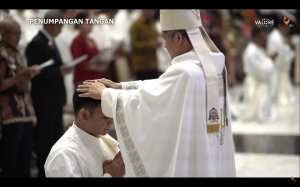
This series of precious gifts are leading me to another even more precious gift: the gift of priesthood. Looking into myself, I am aware that I am far from worthy. I have been sinful man, a broken in many possible ways, and I have hurt a numberless people. Often, I am ungrateful for tremendous gifts and blessing God has showered me. And yet, here I am, quoting the motto of Pope Francis, “miserando atque eligendo” – by God’s merciful choice, in front of the great mystery of faith. As I am ordained by the laying hands of Most. Rev. Antonius Subianto, OSC, DD, I will be, as Bishop Robert Barron would point out, “the bearer of the divine mystery”. This gift does not simply add some sacramental works in my sleeves, but it transforms my very being and identity into the image and likeness of Christ the Head [in persona Christi Capitis]. I participate in the identity and mission of the bishops and fellow priests as bridge-maker [pontifex] between God and humanity, to allow the people of God to embrace the divine mystery.

Every time I celebrate Eucharist [thanksgiving], I shall give thanks to the Lord for the gifts of Mercy. As I have received the gifs, it is now my turn to share these gifts to others so that people of God may feel His Mercy. At the heart of the Eucharist is the thanksgiving over the most precious gift of all, the body and blood of Jesus Christ, being blessed, broken and shared. As I receive this precious gift, my lips proclaim the Word of God, and my hands lift the bread of life and the chalice of salvation, I shall offer my life, like the life of Jesus, to be broken and shared to nourish the people of God.

However, despite tremendous power and privilege the ordination brings, I keep confessing that I am weak, sinful, and not worthy. Thus, as I begin this new chapter of my life, I implore for God’s Mercy and yours.


Grace Abounds All the More

Conversion of St. Paul, the Apostle [January 25, 2019] Mark 16:15-18

st. paul conversion 2Today we are celebrating the feast of the conversion of St. Paul, the Apostle. St. Paul is one of the greatest names in our Church. Many churches are named after him, like one of the major Basilica in Rome, St. Paul outside the Wall. Not only churches but also many Christians are named after him, including our brothers in the house of formation, Bro. John Paul Sontillano, Bro. Paulus Gabriel Rambang Ngawan, and our former formator, Fr. Pablo Tiong.

Paul is an apostle and yet, he was not part of the 12 apostles. It is through a special revelation, he was called by Jesus and sent to preach the Gospel to all nations, thus, he was called also as the apostle to the nations or of the Gentiles. Indeed, he was doing his job very well, as he preached zealously, traveled tirelessly, and founded many local churches in Asia and Europe, like in Corinth, Thessaloniki, and Galatia. Thirteen of his letters addressed to these communities or to his co-workers like Timothy and Titus, have become part of the New Testament, considered inspired, and thus, the Word of God. And from his letters, the Church has shaped her teachings, doctrines, and orthodoxy, like the primacy of love in Christian living in 1 Cor 13, that love is patient, love is kind, love never fails. Or, in 1 Cor 11, we discover Paul condemns those who failed to celebrate the Eucharist worthily, rooted in the doctrine of the Real Presence of Jesus Christ in the Eucharist. Paul was so inspiring that he inspires St. Luke, the evangelist to devote half of his Acts of the Apostles, to the story and journey of St. Paul.

However, this is only half of the story. Before Paul, there was Saul. Saul was zealous Pharisee who hated Jesus and His followers so much. He went door to door just to arrest Christian, put them in jail, and persecuted them. Young Saul also consented to the murder of the first martyr, Stephen. The Acts of Apostles 9:1 described him as someone who breathes threats and murders. Saul was a dark character with much violence and anger.

However, the Good News of salvation for Saul: no matter dark, violent and broken Saul was, God, is more powerful than all these ugly things. God’s grace, mercy, and love can transform the persecutor of Christ into the vessel of grace. That is why we are celebrating the conversion of St. Paul, not only about St. Paul but the conversion. It is not about Paul’s greatness, achievement, and holiness, but it is God.

Like Paul, we all have our own darkness and brokenness, some may come from broken family, some having a broken family, some have traumatic experiences, some losing people we love in a painful way, some are victims of abuses, some struggling with sickness, with anger, with depression, with poverty or other problems. We are still wrestling with our sinful attitudes and tendencies. Yet, the Good News Paul received is also the same Good News we receive. All of these ugly things have not the last word on us. Our God is stronger than all of this ugliness of life.

As St. Paul himself says, “When sin abounds, grace abounds all the more!” (Rom 5:20)

St. Paul, the apostle, pray for us.

Deacon Valentinus Bayuhadi Ruseno, OP