Is Jesus a king?

Solemnity of Jesus Christ, the King of Universe
November 20, 2022 [C]
Luke 23:35-43

As we end our liturgical year, the Church is celebrating the solemnity of Jesus the King. Yet, the real question is what kind of king Jesus is? Is He like present day king of England or emperor of Japan, a head of state, a symbol of a nation, yet his power is limited by the constitutions? Is Jesus like ancient kings who wielded limitless power, and their words were laws of the country? So how do we understand the kingship of Jesus and how is it to be the citizen of Jesus’ kingdom?

To answer this, we need to go back to the time of Jesus and even to the Old Testament. In the Old Testament, there is a great king that becomes the model of all kings. His name is David. He was not only a formidable warrior, but also brilliant general who led Israel into many victories. He was a respected and popular leader who united the twelve tribes of Israel, even when he was still thirty (see 2 Sam 5:4). He made Jerusalem as both the political and religious capital of Israel. However, more importantly, he was a righteous king. As a king, he loved the Lord God, and lived according to His Laws. It is true that he abused his power, and committed several grave sins, but he repented and went back to the Lord.

Unfortunately, his successors did not follow his footsteps. They worshiped other gods and involved in various corrupted and immoral practices. Because of this, the kingdom of Israel was declining and eventually destroyed. Israelites were exiled, and many tribes were lost. However, God did not abandon His people, and promised through His prophets that a king like David will come (like in Isa 11, Mic 5 and many others).

Now, is Jesus the promised king like His forefather, David? Like David, Jesus came from the tribe of Judah. Like David, Jesus was born in Bethlehem. Like David who united the twelve tribes of Israel, Jesus chose twelve apostles to be ‘the judge of the tribes of Israel’ (see Luk 22:30). Like David who made Jerusalem as his capital, Jesus made Jerusalem as His destination. Yet, the differences are also glaring. Unlike David, Jesus was neither warrior nor general. Unlike David, Jesus practically held no political and economic power. Unlike David who sat on the majestic throne, Jesus was nailed to the cross.

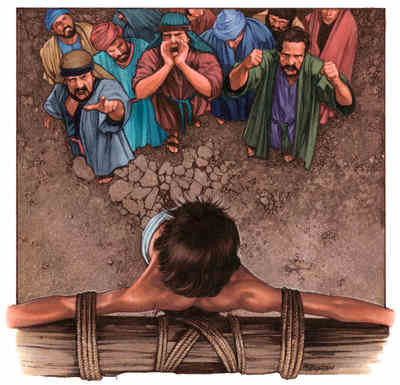
On the cross, Jesus was more like a criminal, slave, and loser. He is the antithesis of all kings. Everyone around Him mocked him, as a useless savior, and impostor king. Yet, in this darkest moment, one of the criminals crucified with Jesus, by divine inspiration, recognized who Jesus was, and asked the single most important question in his life: “Jesus, remember me when you come into your kingdom (Luk 23:42).” Then, Jesus promised him paradise.

This is Jesus. He is the king who gives the true paradise, not a paradise built by economic, political powers. Jesus may not free us from sufferings, but as king, He suffers with us. He is a king who does not give us weapons nor earthly benefits, but gives us a power to love radically and rebuild our broken world. He may not send hellfire to our enemies, but He gives the grace to forgive, and to transform our anger into peace.

If we, then, recognize Jesus as our king, it is naturally follows that we shall live according to His Laws as well as make Him as the primary model. Just the ancient Israel relied on David, so we shall depend on Jesus, our king. As earthly kings provide freedom to their people, we shall trust in Jesus, our victory.

Roma
Valentinus Bayuhadi Ruseno, OP

Be Wise for the Eternal Life

25th Sunday in Ordinary Time [C]
September 18, 2022
Luke 16:1-13

Jesus’ parables are not as simple as they appear. In the previous chapter (Luk 15), we listen to Jesus’ three parables, that are, the lost sheep, the lost coin, and the lost sons. At first, they seem ordinary stories with usual lesson, yet as we go deeper, we realize they contain values that even go beyond the human logic (see previous Sunday’s reflection). Now, we encounter another Jesus’ parable that challenges our normal human way of doing things: parable of dishonest steward.

There is a steward who had been entrusted by his master to take care of his master’s house and possession, and yet, instead doing his job, he prefers to squander his master’s wealth and betrays his master’s trust. Angered master fires his useless servant. Yet, upon this impending judgment, the servant realizes that he is not able to dig, meaning he cannot labor in the farmland or at the construction sites. He is also ashamed to become a beggar. Then, he engineers a way out. He calls all his master’s debtors and cut into half all their debts by manipulating their letter of agreement. By doing this, he is doing a favor to them and making them as their friends. This is to secure way to survive after his expulsion. Surely this is manipulation and corruption, and yet he is praised for doing so. What’s going on?

Firstly, Jesus is not making the steward as the model of literal imitation. He is not asking us to steal other’s people wealth and involve ourselves in corrupt practices. Through this parable, Jesus employs ‘compare and contrast’ technique. The lesson looks like this: if a wicked man knows how to manipulate wealth and money to save his life on earth, so we, the followers of Christ, should be wise enough to use wealth and possession to clear our path to heaven.

Jesus also adds the sense of urgency in His parable. The steward was desperate for his life and how he transformed his attachment to wealth to a means to his earthly salvation. Thus, we are called to free ourselves to this attachment to earthly possessions and use our wealth to make desperate attempts for our eternal salvation. As children of light, we should make eternal life as our end, and the rest will be means to it.

Surely, eternal life is coming from the Lord only, and we can never bribe God to open the door of heavens. Yet, the Lord also wills that we freely participate in His work of redemption. One of the ways is to properly use the material blessings to help us grow in holiness, to assist other people and to support the evangelization mission of the Church. From the parables of chapter 15, we have seen the Lord who loves us and look for us even with efforts beyond human logic, and now, we are called to throw everything to respond to His love.

Rome
Valentinus Bayuhadi Ruseno, OP

Why the Gate is Narrow

21st Sunday in Ordinary Time [C]
August 21, 2022
Luke 13:20-33

Jesus says that the gate to salvation is narrow, and it is difficult to enter. Simply put, it is hard to be saved. His answer is a pessimistic to the deepest desire we have in our hearts. If St. Paul says that God desires that all men and women be saved [1 Tim 2:4], then why does Jesus teach that the gate is narrow? If Jesus teaches God so loved the world that he gave his only Son, so that everyone who believes in him may not perish but may have eternal life, [John 3:16], why now does Jesus says that many will not be able to enter. If He knows that many will not pass through the door of salvation, why does Jesus have to die and open the door? Does Jesus contradict himself?

Jesus neither contradicts Himself nor tells us a lie. God indeed loves us and desires our salvation. Jesus does sacrifice Himself to save all of humanity, and open the gate of paradise for all us. The reason why the gate of heaven looks narrow, it is because the gate of hell is even bigger and more enticing. Jesus makes it clear that some people fail to enter because they persist in their evil deeds.

The way to hell is indeed more alluring. Satan has the best marketing and promotion team, and he and his army know well how to manipulate us. Satan recognizes that humans are attracted to ‘instant pleasures’, and he readily disguises evil with pleasures. Why do some married couples are not faithful despite knowing that it is terrible sin? It is because the affair is full of excitements. Why do people commit abortion despite awareness that it is killing a baby? For it gives an instant escape. Why do people steal despite knowing that it heavily harms other people? For it offers us an instant wealth.

The way to hell is even wider because Satan makes us believes that sinful behaviors are not evil and in fact, something to celebrate. Some people are proud when they aborted their babies, and say, ‘my body, my right’. Some people are cheering when they are changing their partners so casually. Some people are encouraging us to look for happiness in new age movements and occultism, and say, ‘new ways to happiness’.

Jesus clarifies further that it is not enough to ‘eat with Jesus’ and ‘hear His teachings’ to be saved. We may go to the Church, we may be baptized as Catholics, and we may receive the communion, but if we continue to dwell in sinful lives, we may endanger our souls. We may attend prayer meetings and shout to the top our lungs, ‘Jesus is Lord’, we may even preach the Gospel, but if we keep living in sin, we may lose heaven.

Jesus truly dies for us and God indeed loves us, but we need to strive harder for heaven. We are invited to make daily decisions to repent and to integrate God in our lives. The gate of heaven is as small as the confessional door, but it is infinitely more precious that the gate of hell.

Valentinus Bayuhadi Ruseno, OP

The Supremacy of Love

15th Sunday in Ordinary Time
July 10, 2022
Luke 10:25-37

The scholars of the Law [Greek: nomicos] were representing the intellectual elite in Jewish society at the time of Jesus. While the rest of Jewish people were struggling to fill their stomach and living in bare necessity, this group had a rare access to good education. We may reasonably suspect that the scholars were affluent enough to read and study the Torah extensively and undisturbed. Compared to the ordinary Jews, they were experts with the details and interpretation of the Law. No wonder, they could easily develop the vice of pride.


Luke described the scholar as one who ‘stood up’ and ‘test’ Jesus. Clearly, he came out with his intellectual superiority and confronted Jesus to prove that he was far better than Him. He might think, “Son of carpenter; he knows nothing!” But, his pride brought him nothing but defeat. He attacked Jesus with the most difficult question he had in his arsenal. “Teacher, what must I do to inherit eternal life?” Yet, Jesus was aware of his intention, and Jesus returned the question to the sender. The scholar could not resist himself and answer his prepared answer. You shall love the Lord, your God, with all your heart, with all your being, with all your strength, and with all your mind, and your neighbor as yourself (Deu 6:5).” Perhaps, he was expecting Jesus would not agree, and the debate would ensue. Yet, Jesus did agree.
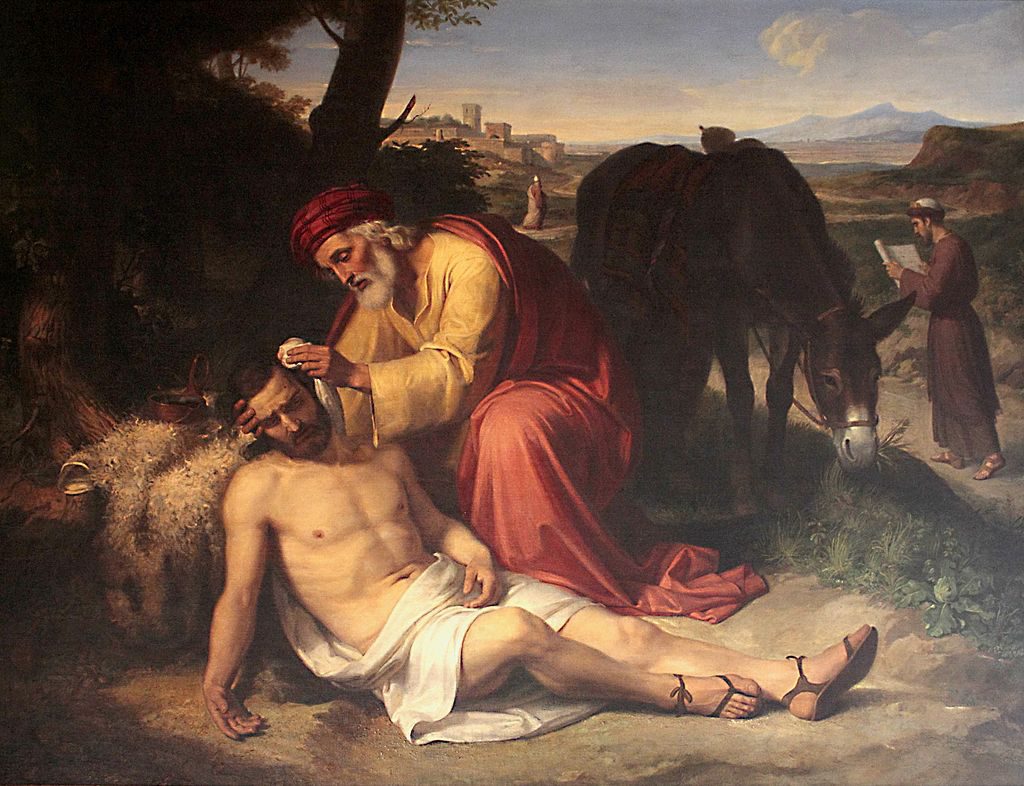
Refusing to accept his defeat, the scholar made a last-ditch attempt to justify himself. He asked Jesus who is this ‘neighbor’ he had to love. With His ingenuity and wisdom, Jesus then presented him one of the loveliest parables ever told: the Good Samaritan. The Samaritans are literally neighbors of Jewish people, but through centuries of hatred, they have become sworn enemies. Yet, unlike the priest and the Levite who were expert in the Law and served in the Temple daily, the Samaritan knew what it means to be merciful.
To love means to love radically. To love means to do good even to those who do not deserve our love. Yet, the genius of Jesus is not only to force the scholar to acknowledge his defeat, but He allowed the scholar to reflect on his life’s deeper purpose as a Jew.
At times, we are so confident with ourselves. We feel we know a lot. We engage in discussion and debate on various issues in the Church and society. We learn theology, spirituality and leadership, and we feel we are better than the rest of Church. We serve a particular ministry for so long, that we look down at newcomers in the group. Unconsciously, we become like this scholar of the Law who stands up and puts other into test. I confess also at times, I manifest this prideful attitude. When I teach, I often project myself as the all-knowing teacher and throw the hardest questions to my students. It gives a sense of pleasure when I know I am the only one who can answer the questions. Lord, have mercy on me!
Yet, Jesus reminds us today a simple yet fundamental truth: pride only brings defeat, only humility can bring us eternal life. And this humility can be best practiced in love. The true test of our faith, knowledge, and spirituality is charity.

Valentinus Bayuhadi Ruseno, OP

Jesus’ Prayers on the Cross

Palm Sunday of The Lord’s Passion
April 10, 2022
Luke 22:14 – 23:56

Every Palm Sunday, we listen to the Passion Narrative of Jesus Christ. Since we are in the liturgical year C, we hear from the Gospel of Luke, and it is notedly the longest among the four Gospel. If we try to compare the passion narratives of the four Gospels, we will discover basic similarities, but also some obvious nuances. What makes Luke’s account unique?

photocredit: Grant Witthy

Surely, there are several unique stories in Luke, but one outstanding character of Jesus is that Luke consistently describes Jesus as someone who loves to pray. In short, Jesus always prays, especially in His important moments of His life. He prays when John is baptizing Him. He is praying while in the desert for forty days. He prays at the mountain when He is transfigured. He prays in the Garden of Gethsemane. Even, Jesus prays when he is the cross.

Luke even gives us a window to what Jesus expresses to His Father. Jesus’ first prayer in the cross is ‘Father, forgive them, for they do not know what they are doing [Luk 23:34].’ We remember that His close friend denies Him, another betrays Him, and others are running away from Him. He is accused falsely and tortured brutally. He receives treatment worse than animals. He is even going to die like the worst criminals, in the most agonizing and humiliating way possible. Yet, despite all these, He prays for all of them, and gives His forgiveness. Jesus does not only teach ‘to love one’s enemies’ or ‘to pray for those who persecute you’. Jesus truly walks the talk.
Jesus does not stop there. When one of the thieves is asking for Jesus’ forgiveness. Jesus does not only forgive, but He also promises Him paradise. Despite the terrible situations, Jesus does not only pray, but also blesses a man who needs its most. Lastly, Jesus closes His earthly with another prayer, “Father into your hands I commends my spirit.” This time, Jesus recites Psalm 31:6. His entire life has been an obedience to God’s will, and it is proper that He ends it with giving His spirit peacefully to His Father.
Certainly, there are so much to learn and reflect from these three prayers of Jesus. Yet, one thing we can learn from here is Jesus teaches us how to face life full of sorrow and sufferings. Our lives may be difficult, but it does not mean we have to become bitter and vengeful. The first step is to pray. Instead, uttering curses and hatred, we bring our problems and sufferings into prayers. ‘Cast all your worries upon him because he cares for you [1 Pet 5:7]’. The second step is to forgive and to seek forgiveness. One of the reasons why life is so bitter is because we refuse to forgive. To forgive is not about forgetting, but it is about to let go our hatred and resentment, and let God fills us with His peace. The third step is to be grateful. Is it possible to be grateful? When we offer our sufferings to God and to unite them with Christ’s suffering, our trials and sorrow even can become blessing for others. Then, we know we know that our sufferings are never useless. We have always a reason to be grateful.

Valentinus Bayuhadi Ruseno, OP

The Holy Name of God

3rd Sunday of Lent [C]

March 19, 2022

Exodus 3:1-15

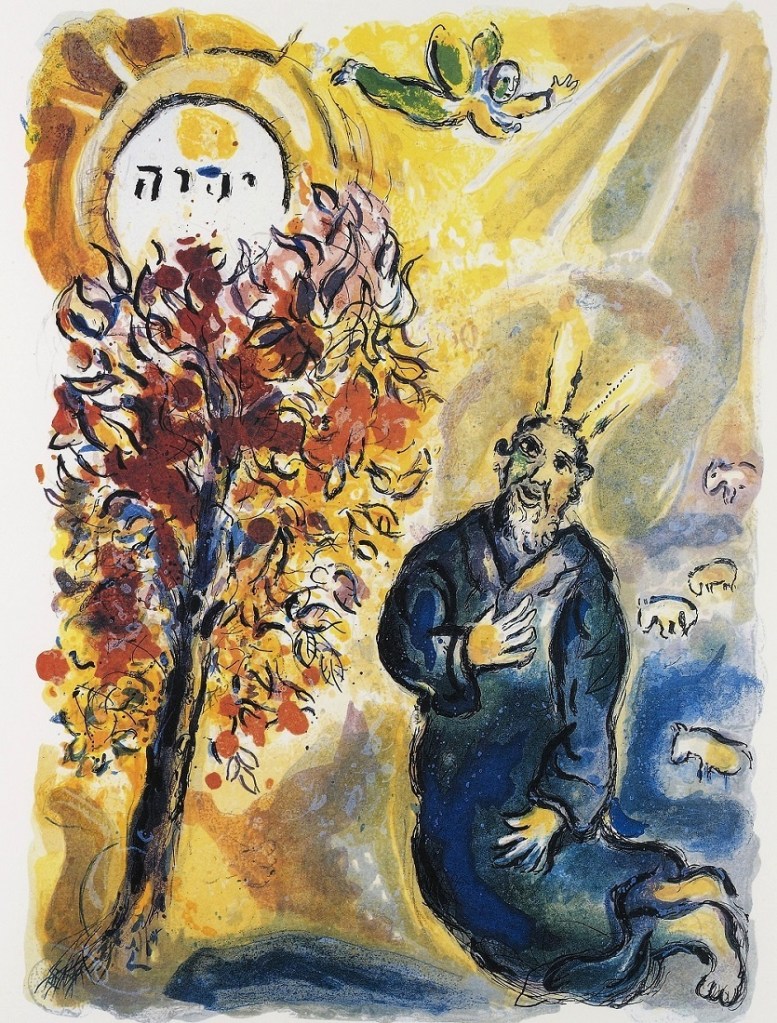
One historic moment in the history of salvation is the revelation of God’s personal name. Moses was just a murderer and fugitive who could have spent his entire life as a shepherd in Midian. Yet, God has another plan for him. He manifested Himself as the burning fire, yet not consuming its surrounding bush. A marvellous sight indeed! Moses was curious, and God called him and introduced Himself as the God of Abraham, Isaac, and Jacob. Moses recognized these names as his revered forefathers. Perhaps this was the first time Moses remembered the God of his forefathers after years.

Then, God called Moses for a mission. He was to lead His people free from slavery and bring them to the Promised Land. God had listened to the sufferings of His people and remembered the promise He made to Abraham. Before accepting God’s mission, Moses asked the name of God, and the reason was that the elders and the people of Israel seemed not to know His name. In the past, Jacob asked the name of God, but He refused. Yet, this time, God decided to reveal His sacred name. But why?

One of the reasons is that there were many gods in Eygpt, and to distinguish the true and one God from the false gods, His personal and unique name becomes necessary to be known. Another reason is that the people of Israel had lived in Egypt for so long, and they lived like the Egyptians, including worshipping the gods of the Egyptians. Thus, God had to reveal His name to make a clear break from the old habits and false idols. This was the only name worthy of all honour, glory and worship. So, Who is His name?

The first revelation is ‘I AM WHO AM’ or ‘I AM’ [Exo 3:14]. A strange name! Yet, this name reveals the deepest identity of God, who He is in Himself. The word ‘To BE’ here is the same word used in ‘Let there BE light’. This name of God unveils that God is the Eternal Existence Himself and the source of all other existences, both in the heavens and on the earth.

We own our existence to Him, and we cannot exist without Him. God is involved in our lives, not in incidental manners, like someone who helps us do our jobs or aids us in our daily needs. He is with us at the most fundamental level. He is ever active in supporting our very existence. Without Him, we are going back to nothingness. Thus, we are literally nothing without Him. The act of bringing us into reality and sustaining us is not other than the act of love. No wonder John, in his letter, declared that God is love.

Every time we call the name of God, we remember that we exist, live and breathe because of Him. Every moment of our lives is the concrete evidence of His love, and every moment of our lives is the perfect opportunity to offer thanksgiving.

Valentinus Bayuhadi Ruseno, OP

From Transfiguration to Calvary

Second Sunday of Lent [C]
March 12, 2022
Luke 9:28b-36

Every second Sunday of Lent, the Church chooses the event of Transfiguration for our Gospel reading. During this moment, Jesus, together with three trusted disciples, went up to the mountain, and there, he was transfigured or changed appearance. He was radiating a divine glory, and His face turned to be a bright light. The two most outstanding persons in the Old Testament, Moses and Elijah, appeared and accompanied Jesus. He was manifesting His divine nature to the three disciples, and it was an overwhelmingly joyful moment. Simon did not want the experience to pass and offered to build tents there. The question is that why does the Church choose this reading for this season of Lent?

The answer lies on the topic that Moses, Elijah and Jesus were discussing: Jesus’ exodus. When we hear the word exodus, the first thing that comes to mind is that the Israelites under Moses escaped the slavery of Egypt. The Israelites passed through the Reed Sea, the desert from Egypt and eventually entered the Promised Land. Their final destination was the city of Jerusalem.
Then, why did Jesus speak about His exodus?
The reason is that Jesus is the new Israel, and as the old Israel passed through exodus, Jesus had to undergo His exodus. However, unlike the old Israel that started their exodus in Egypt, Jesus began His exodus in Jerusalem. Unlike the old Israel that was not faithful to God in the desert and worshipped idols, Jesus was obedient to His Father through suffering and death. Unlike the old Israel who entered the promised Land with many lost battles, Jesus rose from the death and won definitively against Satan and His kingdom. Unlike the old Israel who went up to the earthly city of Jerusalem, Jesus gloriously ascended to the heavenly Jerusalem.
After the event of Transfiguration, Jesus no longer stayed in Galilee but steadily moved toward the city of Jerusalem. This is why we have this reading for the season of Lent. As Jesus journeyed to His exodus in Jerusalem, we are also walking with Jesus in this season of Lent toward the Paschal Triduum: from the Mount of Transfiguration to the mount of Calvary.
The story of Transfiguration in the context of Lent gives us a precious lesson. Like Peter, we like to linger in the glorious moments of our lives. Yet, Jesus teaches that our real glory has to pass exodus. Our Egypt, our starting point, is none other than our old and sinful selves. Any moment of glory without dying to ourselves is fake, fickle and even addictive. It is undoubtedly not easy because we are craving for the feeling of pleasure, and when we get used to it, the harder it is to detach ourselves. Through the disciple of Lent, fasting, prayer and almsgiving, we are learning how to die to our desire to enjoy instant gratifications. When we can adequately order our worldly desires, the more our hearts desire for God, and the moment we are one with God, we find our true joy.

Valentinus Bayuhadi Ruseno, OP

Yesus, sang Setan, dan Sabda Allah

Minggu Prapaskah ke-1 [C]
6 Maret 2022
Lukas 4:1-13

Minggu Prapaskah ke-1 [C]
6 Maret 2022
Lukas 4:1-13

Pada Minggu pertama Prapaskah, Gereja selalu memberikan bacaan Injil tentang Yesus di padang gurun selama 40 hari. Ada beberapa alasan untuk pilihan ini. Pertama, karena Yesus tinggal selama empat puluh hari di padang gurun, kita juga diundang untuk memasuki padang gurun Prapaskah selama 40 hari. Kedua, karena Yesus berpuasa dan berdoa di padang gurun, kita juga dipanggil untuk berpuasa dan berdoa selama masa Prapaskah ini. Ketiga, Yesus mengajar kita bagaimana melawan iblis dan godaannya. Karena saat ini kita berada di Tahun Liturgi C, kita dapat belajar dari kisah Yesus di padang gurun dari sudut pandang Lukas. Salah satu yang menonjol dalam perdebatan antara Yesus dan sang iblis adalah bagaimana firman Tuhan digunakan.

Pada Minggu pertama Prapaskah, Gereja selalu memberikan bacaan Injil tentang Yesus di padang gurun selama 40 hari. Ada beberapa alasan untuk pilihan ini. Pertama, karena Yesus tinggal selama empat puluh hari di padang gurun, kita juga diundang untuk memasuki padang gurun Prapaskah selama 40 hari. Kedua, karena Yesus berpuasa dan berdoa di padang gurun, kita juga dipanggil untuk berpuasa dan berdoa selama masa Prapaskah ini. Ketiga, Yesus mengajar kita bagaimana melawan iblis dan godaannya. Karena saat ini kita berada di Tahun Liturgi C, kita dapat belajar dari kisah Yesus di padang gurun dari sudut pandang Lukas. Salah satu yang menonjol dalam perdebatan antara Yesus dan sang iblis adalah bagaimana firman Tuhan digunakan.

Yesus menghadapi tiga godaan Iblis. Ini adalah tiga area di mana pribadi manusia secara rohani lemah. Yang pertama adalah godaan kedagingan, dan hal ini menyerang keinginan kita untuk kenikmatan badani seperti makanan dan hubungan suami-istri. Yang kedua adalah godaan keserakahan, dan hal ini mengeksploitasi keinginan kita untuk memiliki hal-hal yang kita lihat. Terakhir tapi paling mematikan, adalah godaan keangkuhan. Godaan ini membingungkan cinta-diri yang sejati dengan perilaku narsistik. Godaan ini adalah yang terburuk karena keangkuhan akhirnya menyedot kita ke dalam gagasan palsu bahwa kita bisa menjadi tuhan-tuhan kecil.

Ini adalah godaan yang Iblis lemparkan kepada Yesus. Godaan kedagingan diluncurkan ketika Yesus lapar dan diminta untuk mengubah batu dan roti. Godaan keserakahan dimulai ketika Yesus dibawa untuk melihat keajaiban dunia dan ditawarkan untuk memiliki semuanya. Terakhir, godaan keangkuhan dimulai ketika Yesus diundang untuk memamerkan kuasa-Nya karena Dia memiliki otoritas untuk memerintahkan para malaikat.

Tentu saja, iblis gagal total. Namun, yang lebih menarik adalah cara Yesus melawan iblis. Setiap kali iblis melancarkan serangan, Yesus dengan bijak membalasnya dengan kutipan dari Perjanjian Lama. Sungguh, Firman Tuhan adalah senjata ampuh melawan serangan dan godaan iblis. Jadi, penting bagi kita untuk mengenal Alkitab kita dan mempelajarinya dengan baik.

Namun, itu bukan akhir dari cerita karena iblis pun menggunakan ayat Alkitab. Dia mengutip bagian dari Mazmur 91, “Dia akan memerintahkan malaikat-malaikat-Nya tentang kamu, untuk menjaga kamu… [Mzm 91:11]”. Apa yang lebih luar biasa adalah bahwa Mazmur 91 secara tradisional digunakan untuk pengusiran setan. Iblis menggunakan kata-kata yang digunakan untuk mengusirnya! Bagaimana ini mungkin? Pasalnya, iblis menggunakan ayat alkitab di luar konteks dan hanya sesuai dengan tujuannya, yaitu menjebak Yesus.

Dari kisah ini, kita mendapat pelajaran berharga. Kata-kata Kitab Suci, bila digunakan dengan cara yang tidak tepat dan hanya sesuai dengan tujuan kita, menjadi alat Iblis. Kita dipanggil untuk meneladani Yesus dalam menjalankan firman Tuhan. Hanya jika kita benar-benar membaca Alkitab dalam konteks yang tepat dan dalam relasi kasih dengan Tuhan, ini benar-benar menjadi Firman Tuhan yang penuh kuasa.

Valentinus Bayuhadi Ruseno, OP

Jesus, the devil, and the Word of God

1st Sunday of Lent [C]
March 6, 2022
Luke 4:1-13

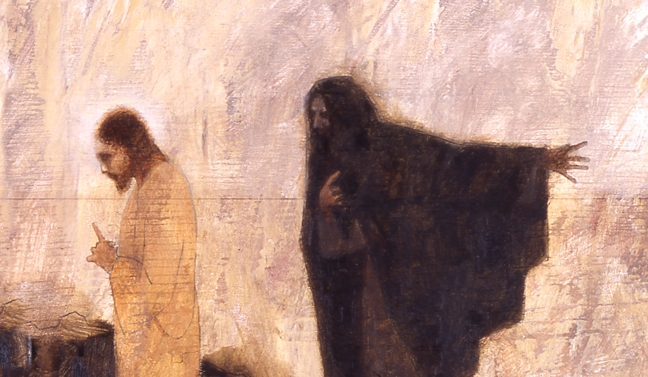
On the first Sunday of Lent, the Church always gives the Gospel reading on Jesus in the desert for 40 days. There are several reasons for this choice. Firstly, as Jesus stayed for forty days in the desert, we are also invited to enter the desert of Lenten season for 40 days. Secondly, as Jesus fasted and prayed in the desert, we are also called to fast and pray during this season of Lent. Thirdly, Jesus teaches us how to fight against the devil and his temptation. Since we are currently in the Liturgical Year C, we can learn from the story of Jesus in the wilderness from Luke’s perspective. One is prominent in the debate between Jesus and the devil is how the word of God is used.

Jesus is facing three devil’s temptations. The traditions call the three Concupiscences. These are three areas where human persons are spiritually weak. The first is the lust of the flesh, and it attacks our desire for bodily pleasures like food and sexual relationship. The second is the lust of eyes, and it exploits our desire to possess the things we see. Lastly but most deadly is pride. This confuses genuine self-love with narcissistic behaviors. This is the worst because pride eventually sucks us into the false idea that we can become a god without God.

These are the temptations that the devil throws into Jesus. The lust of the flesh is launched when Jesus is hungry and asked to turn stone and bread. The lust of the eye is commenced when Jesus is brought to see the worldly wonders and offers to have them all. Lastly, the temptation of pride is initiated when Jesus is invited to show off His power as He has the authority to command the angels.

Surely enough, the devil fails miserably. Yet, what is more, interesting is the way Jesus resists the devil. Every time the devil launches an attack, Jesus wisely counters it with the quotations from the Old Testaments. Indeed, the Word of God is a powerful weapon against the assault and temptation of the devil. Thus, we need to know our Bible and learn them by heart!

Yet, that is not the end of the story because even the devil uses the Bible verse. He quotes parts of Psalm 91, “He will command his angels concerning you, to guard you… [Psa 91:11]”. What is more remarkable is that Psalm 91 is traditionally used for exorcism. The devil is using the very words that used to expel him! How is this possible? The reason is that the devil uses the bible verse out of context and only to suit his purpose: to trap Jesus.

From this story, we learn a valuable lesson. The words of Scriptures, when misused way and only to fit our purpose, are become the instruments of the devil. We are called to imitate Jesus in living the word of God. Only if we indeed read the Bible in its proper context and a loving relationship with God, they truly become the powerful Word of God.

Valentinus Bayuhadi Ruseno, OP

Four Parables of Jesus

8th Sunday in Ordinary Time
February 27, 2022
Luke 6: 39-45

photocredit: Kris Sevinc

We continue to listen and reflect on Jesus’ teaching on the mount. Two Sundays ago, Jesus inaugurated His teaching with the Beatitudes, and last Sunday, Jesus taught us about loving our enemies. Today, Jesus is giving us four short parables to ponder. These are parables of the blind guide, the teacher and the disciple, a wooden beam and a splinter, and the good and bad trees. Now, we may ask: why does Jesus offer His disciples these parables, and what is the unifying theme?
The usage of a parable is not unique to Jesus. In the Old Testament, prophets often used the same technique to teach a lesson and challenge the sinners to repent. One of the famous parables in the Old Testament is the parable of the little ewe. Using this parable, prophet Nathan indirectly criticized David as the rich man who stole Uriah’s little ewe. Like His Old Testament’s predecessors, Jesus is using the parables with the same purposes. He invites His disciples to think more profoundly and warn them of dangers.
From the parable of the blind guide, Jesus reminds His disciples not to fall into spiritual blindness caused by the sin of pride. Following Jesus and being close to Jesus can make us feel that we know and act better than the rest of humanity. We begin to assume the role of guide and boss and tell other people what to do with their lives.
The third parable of Jesus, the parable of a wooden beam and splinter, is closely related to the first one, and indeed a hyperbolic way to criticize Jesus’ disciples who are blinded by pride and thus, unable to evaluate ourselves properly. Pride causes us to feel superior and easily see others as someone who always needs corrections. Yet, sometimes, pride moves us also in the opposite direction. Unable to correctly see ourselves, we possess low self-esteem and see ourselves as inferior to others. This is also dangerous for our personal and spiritual growth.
Does it mean that we cannot guide and correct other people? Not at all. Jesus allows us to correct others, and, in Mat 18, Jesus commands us to correct our brothers who are in errors. Yet, the primary pre-condition is that we must correct ourselves first or open our spiritual eyes before we guide others. Thus, the second parable plays a crucial role. To counter this pride, Jesus offers the parable of a disciple and his teacher. Jesus reminds His followers of the virtue of humility and strives to be a good disciple. Before telling other people what to do because we know everything, we should first be a good disciples, humble followers, and empathic listeners of Jesus and each other.
The fourth parable completes Jesus’ teaching through parables. Jesus comes to form the hearts, and thus, a genuine disciple of Jesus strives to fill his heart with good things. It would be useless if we appear ‘pious’ but, inside, we are dirty. It is hypocrisy. Unless we have a good heart, our acts and words are empty and signs of pride. Only from the goodness of our hearts we bring goodness also to others.

Valentinus Bayuhadi Ruseno, OP