
Theophilus

Third Sunday in Ordinary Time [C]
January 23, 2022
Luke 1:1-4; 4:14-21

One unique thing to Luke is that he addressed his Gospel [and his Acts of the Apostles] to the most excellent Theophilus. Who is this Theophilus? We are not entirely sure, and this name has been a subject of debates and discussions for centuries. However, there are several things we may extract from the Gospel’s texts.

photocredit: Tim Wilsmith

The first thing is that he was honorably addressed as ‘the most excellent’ [in Greek, ‘kratiste’]. This is an honorific title for a high Roman government official or a high nobleman during those times. Thus, Theophilus was someone politically powerful and wealthy. But why did Luke have to mention this affluent man? Most probably, it is because Theophilus is the one who supported Luke in the effort of writing his Gospel and Acts. The production of writing in ancient times is an extremely costly undertaking. Unlike papers in our time, parchment [from the animal skins] and papyrus [imported from Egypt] were not cheap raw materials for writing. Quality ink was not easy to get as well. Sometimes, authors had to hire a professional scribe to write correctly on a papyrus. Luke also indicated that he researched reading earlier gospels [most probably Mark and Matthew] and interviewing the eyewitnesses [perhaps Blessed Virgin Mary]. These efforts could cost a fair amount of money as well. No wonder experts say that to produce one single copy of a gospel may cost more than 2,000 USD. Theophilus has been instrumental in the production of Luke’s Gospel.

The second information we have about him is that Theophilus was most probably a Christian or at least a Catechumen. Luke wrote the purpose of his Gospel is ‘so that you may know the truth concerning the things about which you have been instructed [Luk 1:4].’ The word ‘instructed’ in Greek is ‘katekeo,’ the root word of catechism and catechesis. Theophilus has received some sort of catechism or teaching concerning the Catholic faith, but he wanted to know more, especially the certainty of the foundation of his faith.

How did the Gospel of Luke impact Theophilus? We are never sure, but we are confident that the Gospel has influenced millions of people tremendously. One more interesting is that the name Theophilus means the friends of God [theos + philios]. This Gospel is not just addressed to the historical figure called Theophilus, but to all of us, who are friends and lovers of God. Thus, reading carefully and prayerfully this Gospel deepens our love and friendship with the Lord. Luke’s Gospel has been acclaimed as one of the most beautifully composed books. From the stories like the prodigal son and the lost sheep, we discover more about the unparalleled mercy of God to us. From Luke also, we got the heartwarming stories of Mary as the first and most faithful disciple.

We all are called to be a Theophilus. Someone who dares to spend our time, energy, and other resources to know the certainty of our faith. And from this certainty, we are invited into loving friendship with the Lord.

Valentinus Bayuhadi Ruseno, OP

Rahasia Pernikahan yang Bahagia

Minggu ke-2 Masa Biasa [C]
16 Januari 2022
Yohanes 2:1-11

Saya benar-benar beruntung dapat mengunjungi kota Kana di Galilea tepat sebelum pandemi covid-19 merajalela. Di sana, saya berkesempatan memimpin pembaruan ikrar janji nikah pasangan-pasangan yang ikut dalam perziarahan. Salah satunya adalah orang tua saya, dan tentu saja, itu adalah saat yang cukup membuat saya canggung. Namun, saya sangat bersyukur ketika saya menyadari kesetiaan mereka, melalui suka dan duka kehidupan pernikahan, tetapi yang terpenting, saya bersyukur atas rahmat Tuhan yang berkerja dalam hidup mereka.

Masyarakat modern kita ditandai oleh banyaknya pasangan suami istri yang menghadapi masalah pelik pernikahan dan juga orang-orang muda yang tidak lagi melihat pernikahan sebagai bagian mendasar dari kehidupan mereka. Perceraian menjadi normal baru, dan perselingkuhan merajalela. Kekerasan dalam rumah tangga mewarnai media berita dan media sosial kita. Ada pasangan-pasangan menolak untuk memiliki anak atau hanya menyerahkan anak kecil mereka ke babysitter. Beberapa orang bahkan menolak sama sekali pernikahan, dan menganggap pernikahan dan keluarga sebagai beban dan ‘penjara’. Beberapa lebih memilih hewan peliharaan daripada membesarkan keluarga manusia yang nyata.

Pernikahan dan membesarkan anak tentunya tidak mudah, tetapi itu sangat penting bagi masa depan kita sebagai umat manusia. Namun, hal ini bukan hanya masalah kelansungan kita sebagai spesies, tetapi juga merupakan rencana Tuhan bagi kita untuk berpartisipasi dalam kepenuhan hidup. Jika kita melihat lebih dekat pada Alkitab, kita akan menemukan tempat sentral dari pernikahan di dalam Kitab Suci. Kisah penciptaan memuncak dengan pria dan wanita menjadi satu dalam perjanjian pernikahan. Mukjizat pertama Yesus terjadi dalam konteks pernikahan dan bagi pasangan yang sedang menikah. Buku terakhir dari Alkitab, Kitab Wahyu, berakhir dengan pesta pernikahan Anak Domba.

Lalu, bagaimana kita mengatasi masalah-masalah besar yang menimpa pernikahan? Tentu banyak hal yang perlu kita lakukan, namun ada satu cara mendasar yang tidak boleh kita lewatkan. Injil memberitahu kita bahwa masalah kekurangan anggur dihindari karena pasangan itu mengundang Yesus, dan ibu-Nya. Maria memperhatikan masalah serius yang ada dan meminta Putranya untuk campur tangan. Yesus melakukan mukjizat-Nya yang pertama, dan bukan hanya masalah anggur terpecahkan, tetapi mereka juga mendapatkan anggur terbaik. Semua ini terjadi bahkan tanpa disadari oleh pasangan yang berpesta tersebut tersebut.

Ini adalah pelajaran berharga dari Pernikahan Kana. Sudahkah kita mengundang Yesus dan sang Bunda-Nya ke dalam pernikahan dan keluarga kita? Apakah kita mengandalkan Tuhan dalam upaya kita membesarkan anak-anak kita? Sudahkah kita mendekatkan satu sama lain kepada Tuhan? Jika kita membawa Tuhan dalam pernikahan dan keluarga kita, saya percaya bahwa Tuhan telah melakukan hal-hal yang luar biasa bahkan tanpa kita sadari.

Kembali ke Injil ini, kepala pelayan memuji pengantin pria karena anggur terbaik yang bertahan sampai akhir. Ketika pernikahan dan keluarga kita berhasil melewati badai kehidupan, kita diundang untuk menyadari bahwa anggur terbaik adalah dari Tuhan. Pernikahan yang bahagia terdiri dari pasangan yang bersyukur.

Valentinus Bayuhadi Ruseno, OP

The Secret of Happy Marriage

2nd Sunday in Ordinary Time [C]
January 16, 2022
John 2:1-11

I was truly fortunate that I could visit Cana in Galilee just before the covid-19 pandemic. There, I had the opportunity to officiate the renewal of marriage vows of the couples who participated in the pilgrimage. One of them was my parents, and indeed, it was an awkward moment for me. Yet, I was full of gratitude as I recognized their faithfulness to one another through the thick and thin of marriage life, but most of all, I am grateful for God’s grace in their life.

Our modern societies are marked by countless married couples facing complex problems and young people who do not see marriage as a fundamental part of their lives. Divorce becomes the new normal, and infidelity is rampant. Domestic violence colors our news outlets and social media. Couples refuse to have children or hand over their little children to babysitters. Some people even decline to commit to married life and consider marriage and family a burden and ‘prison.’ Some choose pets rather than raising a real human family.

Marriage and rearing children are not easy, but they are critical to our survival to our future as a human race. Yet, it is not only for us as species, but it is also God’s plan for us to participate in the fullness of life. If we look closely at the Bible, we will discover the central place of marriage within the Scriptures. The story of creation culminates with the man and the woman becoming one in a marriage covenant. The first miracle of Jesus took place within the context of marriage and for the sake of the married couples. The final book of the Bible, the Revelation, ends with the wedding feast of the Lamb.

How, then, do we counter these herculean problems that beset marriage? Indeed, there are many things we need to do, yet, there is one fundamental way we must not miss. The Gospel tells us that the lack of wine was averted because the couple invited Jesus and His mother. Mary noticed the looming serious problem and requested her Son to intervene. Jesus did His first miracle, and not only problem solved, but they got the best wine. All this happened even without the couple being aware of it.

This is a precious lesson from the Wedding of Cana. Have we invited Jesus and His mother into our marriage and family? Do we rely on God in our effort to raise our children? Do we bring one another closer to God? If we bring God into our marriage and family, I believe that God has done marvelous things even without noticing it.

Going back to the story, the steward praised the groom for the best wine that lasted to the end. When our marriages and families succeed through the storms of life, we are invited to recognize that the best wine is from the Lord. Happy marriages consist of grateful couples.

Valentinus Bayuhadi Ruseno, OP

The Meaning of Jesus’ Baptism

The Baptism of the Lord [C]
January 9, 2022
Luke 3:15-16, 21-22

Jesus’ Baptism is the starting point of Jesus’ public ministry. This explains why the Church always opens the ordinary season of the liturgical years with the story of Jesus’ Baptism in the Jordan. However, the question that I often face is ‘Why did Jesus need to be baptized?” If Jesus is God and sinless, why did He has to undergo John’s Baptism of repentance?”

The Church answered this question a long time ago. The Catechism of the Catholic Church states, “The baptism of Jesus is on his part the acceptance and inauguration of his mission as God’s suffering Servant. He allows himself to be numbered among sinners; he is already “the Lamb of God, who takes away the sin of the world”. Already he is anticipating the “baptism” of his bloody death… [CCC 536].”

To elaborate more on the Church’s teaching, Jesus’ Baptism shows His solidarity with us, sinners. Though He was not a sinner, He shared the lot of sinners. During the Incarnation, Jesus takes upon Himself our weak and limited human nature. Yet, it does not stop there. He also shares our suffering and death. Jesus’ Baptism in Jordan anticipates His true ‘baptism’ on the cross. Once again, this shows to us how God loves us to the end. When Jesus loves, He gives it all.

From here, we discover that why we are baptized is not because this is a long family tradition imposed upon us, but it is our participation in the Baptism and life of Christ. If Jesus’ Baptism is a sign of His solidarity with weak human beings, our Baptism is the sign of our unity with our brothers and sisters, especially those suffering. If Christ’s Baptism is anticipation of His Suffering and Death, our Baptism is our death to old life and selfishness. If Jesus’ Baptism is a sign of His sacrificial love, our Baptism shall propel us to love God and our neighbours totally.

Some of us got baptized when we were little children, and perhaps, we do not recall what happened. We do not get the feeling, and because of that, we want to repeat the whole process with more dramatic effects. Some wish to be submerged into a deep pool, and some want to be baptized in the Jordan River. Some only accept their Baptism as something good if they feel the sudden rush of the Holy Spirit. Yet, the sacrament of Baptism is not about our feelings; in fact, it is not about us. True Baptism makes us Christians, ‘little Christs’, and we are called to live like one. What matters is not how we feel about our Baptism, but how we live our Baptism.

The Church teaches us that sacramental Baptism is once and for all. When we are baptized, all our sins are forgiven, we are transformed into God’s children, and we become parts of Christ’s body, the Church. Baptism begins our salvation, but it does not end there. What is even more important is how we live our Baptism, how we participate in the life and mission of Christ, and how we love as Jesus loves.

Valentinus Bayuhadi Ruseno, OP

The Magi are We

The Solemnity of the Epiphany [C]

January 2, 2022

Matthew 2:1-12

The season of Christmas reaches its culmination in the feast of Epiphany. Epiphany comes from a Greek word that means ‘to appear.’ Thus, the feast is celebrating the appearance of Jesus to the nations represented by the Magi. We are not sure who these Magi are, but the traditions have that they are wise men from the East, most probably from Persia or present-day Iran. The bible does not give us the exact number, let alone the names, but the tradition calls them Baltazar, Gaspar, and Melchior.

photocredit: Jonathan Meyer

If we try to go back to the beginning of Matthew, we will discover the genealogy of Jesus Christ. Matthew begins with Abraham, the patriarch of Israel, David, the greatest king of Israel, and Joseph, a simple yet righteous Jewish man. Matthew demonstrates to us that Jesus is the fulfillment of God’s promise to Abraham, David, and Israel. He is coming as the Jewish Messiah. A Catholic philosopher and theologian, Peter Kreeft, summarizes the Gospel of Matthew as ‘A Gospel from a Jew, for the Jews about the Jewish Messiah.’

Yet, the same evangelist presents us with a large picture. Though Jesus was coming from the line of David and raised as a Jewish man as a devout Israelite family, Jesus was not an ‘exclusivist’ Messiah. Jesus is the Anointed One of the Jewish people only, but He is the Savior for all the world. This identity is manifested in the visit of the Magi.

The three Magi are not Israelites, and in fact, they might worship other gods. Yet, they knew that deep inside, something is still missing. In their human wisdom, they keep on searching for the truth that will satisfy their deepest longing. Their research and investigation prompt them to look for a newborn king. When they finally see the baby Jesus, they prostrate themselves in the act of adoration and worship and acknowledge that this baby is not just an ordinary king of a small nation in the Middle East. He is the king of kings.

We are the Magi. Most of us are not Jewish people, let alone coming from the line of David, but we are looking for something or someone that will fill our deepest desire. However, we are much fortunate than the Magi. They need to learn and gain wisdom through the years, and sometimes, they stumble into errors because of human weakness. God gives a much clearer direction toward truth and salvation by becoming a man. He is the way, the truth, and the life [John 14:6]. His word is a lamp to our feet and a light unto our path [Psa 119:105]. His body is real food, and His blood is real drink, and we who partake in Him shall have life [John 6:51-57].

Compared to the Magi, with Jesus and His Church, we have a highway to true blessedness. Now, the real question is whether we are humble enough like the Magi to acknowledge that we need God and commit ourselves to walk in His way?

Valentinus Bayuhadi Ruseno, OP

Orang Majus adalah Kita

Hari Raya Penampakan Tuhan [C]

2 Januari 2022

Matius 2:1-12

Masa Natal mencapai puncaknya pada hari raya Epifani. Kata Epifani sendiri berasal dari kata Yunani yang berarti ‘penampakan’. Dari nama ini, kita bisa menyimpulkan bahwa Epifani merayakan penampakan Yesus ke bangsa-bangsa yang diwakili oleh orang-orang Majus. Kita tidak yakin siapa sebenarnya orang Majus ini, tetapi tradisi mengatakan bahwa mereka adalah orang bijak dari Timur, kemungkinan besar dari Persia atau Iran saat ini. Alkitab tidak memberi kita jumlah pastinya, apalagi namanya, tetapi tradisi mengatakan bahwa mereka adalah Baltazar, Gaspar dan Melchior.

photocredit: Rod Long

Jika kita mencoba kembali ke awal Injil Matius, kita akan menemukan silsilah Yesus Kristus. Matius mulai dengan Abraham, bapa bangsa Israel, lalu Daud, raja terbesar Israel dan hingga pada Yusuf, seorang pria Yahudi yang sederhana namun benar. Matius menunjukkan kepada kita bahwa Yesus adalah penggenapan janji Allah kepada Abraham, kepada Daud, dan kepada Israel. Dia datang sebagai Mesias Yahudi. Seorang filsuf dan teolog Katolik, Peter Kreeft, merangkum Injil Matius sebagai ‘Sebuah Injil dari seorang Yahudi, untuk orang-orang Yahudi tentang Mesias Yahudi’.

Namun, penginjil yang sama memberi kita gambaran yang jauh lebih besar. Meskipun Yesus berasal dari garis keturunan Daud dan dibesarkan sebagai orang Yahudi oleh keluarga Israel yang taat, Yesus bukanlah Mesias yang ‘eksklusif’. Yesus bukan hanya Mesias untuk orang-orang Yahudi saja, tetapi Dia adalah Juruselamat bagi seluruh dunia. Identitas ini diwujudkan dalam kunjungan orang-orang Majus.

Ketiga orang Majus itu bukan orang Israel, dan kenyataannya, mereka mungkin tidak menyembah Allah yang benar. Namun, mereka tahu bahwa jauh di lubuk hati, ada sesuatu yang masih hilang. Dalam kebijaksanaan manusiawi, mereka terus mencari kebenaran yang akan memuaskan kerinduan terdalam mereka. Penelitian dan penyelidikan mereka mendorong mereka untuk mencari raja yang baru lahir. Ketika akhirnya mereka melihat bayi Yesus, mereka sujud menyembah sang bayi, dan mengakui bahwa bayi ini bukan hanya raja biasa dari sebuah bangsa kecil di Timur Tengah. Dia adalah raja dari segala raja, dan Dia hadir bagi semua orang yang dengan tulus mencari-Nya.

Kita adalah orang Majus. Sebagian besar dari kita bukan orang Yahudi, apalagi berasal dari garis keturunan Daud, tetapi kita sedang mencari sesuatu yang akan memenuhi keinginan terdalam kita. Namun, kita jauh lebih beruntung daripada orang Majus. Mereka perlu belajar dan mencari kebijaksanaan selama bertahun-tahun, dan terkadang, mereka tersandung ke dalam kesalahan karena kelemahan manusia.

Dengan menjadi manusia, Tuhan memberikan arah yang lebih jelas menuju kebenaran dan keselamatan. Dialah jalan, kebenaran dan hidup [Yohanes 14:6]. Firman-Nya adalah pelita bagi kaki kita dan terang bagi jalan kita [Mzm 119:105]. Tubuh-Nya adalah sungguh-sungguh makanan, dan darah-Nya adalah sungguh-sungguh minuman, dan kita yang mengambil bagian di dalam Dia akan memiliki hidup [Yohanes 6:51-57].

Dibandingkan dengan orang Majus, kita seperti memiliki jalan toll menuju kebahagian yang sejati. Sekarang, pertanyaan sebenarnya adalah apakah kita mau rendah hati seperti orang Majus untuk mengakui bahwa kita membutuhkan Tuhan dan berkomitmen untuk berjalan di jalan-Nya?

Valentinus Bayuhadi Ruseno, OP

The Joy of Two Women

4th Sunday of Advent [C]
December 19, 2021
Luke 1:39-45

Mary was going to the place of Elizabeth in haste. But, why did she have to go in haste? Mary was full of excitement and joy Mary because she knew that her beloved relative had received the miracle from God. Elizabeth who called barren, was pregnant with a child. Mary was full of joy as she would like to witness this mighty deed of God.

STRUB, Jakob o Hans_La Visitacion, c.1505_ 382 (1929.21)/ Stitched Panorama

The excitement and joy were shared by Elizabeth when Mary arrived and greeted her. By the Holy Spirit’s guidance, Elizabeth recognized who Mary is. She is not just another relative, but Mary is the blessed among women because she was with God-made-man. Thus, Elizabeth dared to call her the mother of her Lord. Mary’s encounter with Elizabeth is also the first encounter between two great protagonists in the Gospel: Jesus and John the Baptist, between the Messiah and the one who prepares His way. Elizabeth immediately felt that the baby in her womb was leaping for joy upon hearing Mary’s greetings. Joy and excitement are not being shared by Mary and Elizabeth, but by John.

However, behind excitement and joy, there were great dangers and uncertainties. Mary was pregnant without a man. According to Torah [Deu 22:20], she could have been stoned and died. If she survived the death, Mary would bear the stigma and shame for her entire life. Elizabeth’s situation was not much better. As a woman who was already advanced in age, pregnancy and the process of deliverance could be extremely risky and even leading to death. Things just do not look good for these two mothers.

Yet, despite these terrible possibilities, both Mary and Elizabeth chose to rejoice and be full of excitement. What are the reasons? Firstly, both Mary and Elizabeth believed in the word and plan of God. Elizabeth herself said, “Blessed are you who believed that was spoken to you by the Lord would be fulfilled.” Both Mary and Elizabeth both understood that God’s plan for them was not always readily comprehensible and often involved great sufferings. Mary was facing the real possibility of stoning, and Elizabeth may not survive the childbearing, but both believed that God’s will is always the best plan for them. Joy springs after Mary and Elizabeth die to their own selves and let God’s will live in their wombs. Joy is always a pure gift, and these women are amazingly strong to open their hearts to God’s works.

Secondly, Mary and Elizabeth do not work alone. Another reason Mary visited Elizabeth is to accompany and assist her in the days of pregnancy and birth. Mary as a much younger and stronger relative opted to give her best supports in Elizabeth’s life-giving moment. We may argue that Elizabeth safely gave birth to John because Mary was giving her helping hands. At the same time, Elizabeth as an elder relative of Mary, strengthened and comforted Mary in this troubled time. Both survived and flourished because of God’s grace and also their love and care for one another.

Mary and Elizabeth are strong women because they rely on each other. Mary and Elizabeth are the happiest women because they give themselves up to God.

Valentinus Bayuhadi Ruseno, OP

Rejoice Always

Third Sunday of Advent [C]
December 12, 2021
Luke 3:10-18
Phil 4:4-8

The third Sunday of Advent is well known as Gaudete Sunday, or the rejoicing Sunday. The lovely Sunday takes its root from St. Paul’s letter to the Philippians, our second reading for the mass. St. Paul reminds the Christians in Philippi to rejoice always [Phil 4:4]. Thus, Gaudete Sunday invites us to possess that lasting joy, and must not be gloomy while we are preparing ourselves for the coming of our Lord, Jesus Christ.

photocredit: kelly sikk

if we try to closely reflect St. Paul’s words, we will discover something utterly amazing. St. Paul is not simply advising us to rejoice from time to time, but he commands us to rejoice all the time! How is it possible? Sadness and sorrow are inevitable parts of our lives. We are sad when we experience failures, we mourn when we lose someone important in our lives, and we feel the pain when we are hurt. It seems that St. Paul was overly optimistic about life. Yet, Paul simply teaches the truth. On a deeper level, sorrow and joy are not contradictory. For Paul, we can have a profound joy despite our sadness and sufferings.

If we try to examine Paul’s life, we will have a better understanding of what he means. Paul used to be the archenemy and persecutor of the Church, but after he encountered Jesus, he repented and became a zealous apostle of Christ. Was his life getting better after following Jesus? Not at all! Paul himself shared many hardships he had to endure for the sake of Christ and His body. Often, he got stoned, bitten, and imprisoned. When he was traveling, he endured the scourging sun and the freezing nights. Sometimes, he faced betrayals and false brothers. Yet, most of all, he had to take care of his flocks with all their problems and stubbornness.

His final ordeal was when he was under house arrest in Rome. He was waiting for his trial before Caesar, and the future was bleak as Nero the mad man was the emperor. He was in the chain and a Roman soldier constantly watched over him. Yet, despite this, he wrote a letter to the Philippians and asked them to rejoice always. How is it even possible?

The secrets are within the same letter. After commanding the Philippians to rejoice always, St. Paul asked for two things: do not worry about anything and to pray in thanksgiving always. Firstly, Paul was indeed in terrible situations, but he was not worried because he entrusted his life to God. He had faith that God would take care of him well. Secondly, Paul offered everything to the Lord in his prayer. More remarkably, he gave thanks always in his prayers. Paul even was able to appreciate ‘bad things’ in his life as an opportunity to praise the Lord. This is the secret of joy according to St. Paul. Do not worry, pray and be grateful!

What is more fascinating is that the word thanksgiving used by Paul in Greek is ‘eucharistia’. This reminds us of all that at the core of our worship is thanksgiving. Everytime we worship the Lord in the mass, we throw away our anxiety, offer our lives, and give thanks for everything we have received. Thus, joy is the inevitable result of our worship.

Valentinus Bayuhadi Ruseno, OP
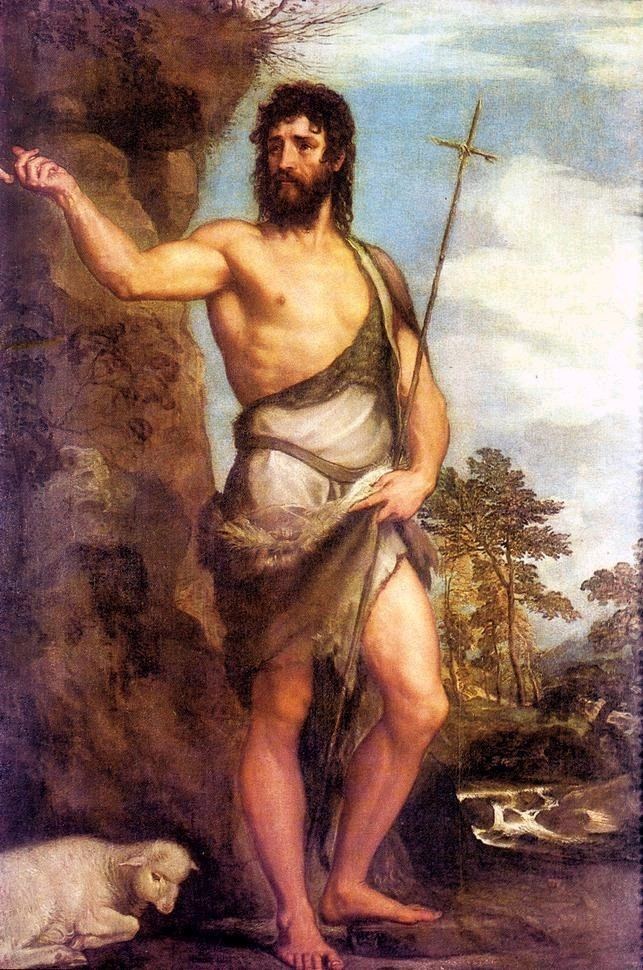
Kenapa Yohanes Membaptis

Minggu Adven Kedua [C]
5 Desember 2021
Lukas 3:1-6

Pada Minggu Adven kedua, kita bertemu dengan sosok Yohanes Pembaptis. Dia adalah salah satu tokoh yang paling menonjol dan berpengaruh dalam Injil. Keempat penginjil menyebut dia dan sering menggambarkan dia sebagai orang yang tak kenal takut yang bahkan berani menantang orang yang paling berkuasa di Galilea, Herodes Antipas. Dari padang gurun Yudea, ia datang dan memposisikan diri pada tempat strategis di lembah Yordan. Tempat adalah jalan utama yang menghubungkan Yerusalem dengan seluruh Israel, dan Yohanes memanfaatkan momen itu untuk menyatakan kedatangan Mesias. Kita bisa membayangkan suaranya yang kuat menggelegar di seluruh lembah dan mengguncang setiap hati yang mendengarkan.

Mesias akan datang, dan jalan-Nya harus dipersiapkan. Namun, kita tidak mempersiapkan kedatangan-Nya dengan karpet merah, karangan bunga, atau parade musik besar. Dia tidak akan datang dan menyelami para pejabat dan disambut dengan perjamuan pesta. Dia tidak membutuhkan persiapan eksternal tetapi menuntut transformasi internal. Maka, Yohanes berteriak dengan suara nyaring, “Bertobatlah!”

Satu pertanyaan mungkin membuat kita bertanya-tanya: mengapa Yohanes membaptis orang? Membaptis berarti membasuh diri dengan air, dan dalam tradisi Yahudi, ini adalah sebuah ritual Yahudi yang umum untuk membersihkan diri dari kenajisan. Para peziarah Yahudi akan membasuh diri sebelum mereka memasuki Bait Allah Yerusalem, dan ada banyak kolam kecil untuk tujuan ini yang disebut ‘mikvah’ di kota Yerusalem. Satu tradisi mengatakan bahwa Yohanes berasal dari sekte Yahudi bernama Essenes. Kelompok ini terkenal karena kepatuhan mereka yang ketat terhadap Hukum Musa. Bahkan, mereka memiliki standar ekstrim dalam hal menjaga diri dari kenajisan, dan mereka akan melakukan ritual pembasuhan bahkan beberapa kali sehari. Jika tradisi ini benar, Yohanes tahu betul betapa pentingnya pembaptisan dengan air.

Namun, Yohanes tidak hanya mengulangi ritual pentahiran Yahudi yang lama. Dia merevolusi hal ini. Yohanes membaptis orang dengan air sebagai tanda eksternal dari pertobatan internal. Bagi Yohanes, tidak ada gunanya jika orang pergi ke Bait Allah dan melakukan berbagai ritual, tetapi hati mereka jauh dari Tuhan.

Yohanes Pembaptis mengingatkan inti Adven: persiapan rohani untuk kedatangan Yesus. Kita menyadari bahwa Adven adalah masa persiapan untuk kedatangan Kristus, tetapi seringkali kita tidak tahu bagaimana mempersiapkannya. Terkadang, kita menghabiskan waktu dan uang kita untuk membeli hadiah, menyiapkan dekorasi Natal, dan merencanakan liburan. Terkadang, kita sibuk berlatih untuk Misa Natal, atau mempersiapkan diri untuk pesta dan perayaan. Namun, jika kita lupa mempersiapkan diri secara rohani, kita bisa kehilangan segalanya.

Warna liturgi Adven adalah ungu, dan ungu yang sama yang kita gunakan pada masa Prapaskah. Jika ungu di Prapaskah berarti warna pertobatan, ungu Adven memiliki karakter yang sama. Ketika Yohanes Pembaptis mengingatkan orang-orang untuk mempersiapkan jalan bagi Mesias dengan perubahan hati, Gereja juga memanggil kita untuk mempersiapkan kedatangan Tuhan kita dengan pertobatan dan latihan rohani.

Valentinus Bayuhadi Ruseno, OP
[JANGAN LUPA SUBSCRIBE DAN SHARE YA UNTUK MENDUKUNG KARYA RM. BAYU, OP]

The Reason behind John’s Baptism

Second Sunday of Advent [C]
December 5, 2021
Luke 3:1-6

On the second Sunday of Advent, we encounter John the Baptist. He is one of the most prominent and impactful figures in the Gospel. The four evangelists mentioned him and often described him as a fearless man who even dared to challenge the most powerful man in Galilee, Herod Antipas. From the desert, he went and positioned himself in a strategic position in the Jordan valley. That was the major passageway that connected Jerusalem with the rest of Israel, and John seized the moment to preach the coming of Messiah. We could imagine his strong voice thundered throughout the valley and shook every heart who listened.

photocredit: John Applegate

The Messiah is coming, and His way must be prepared. Yet, one does not prepare His arrival with a red carpet, a flower garland, or a grand musical parade. He will not come and check the honor guards. He does not need external preparation but demands internal transformation. Thus, John shouted with a loud voice, “Repent!”

One question may keep us wondering: why did John baptize people? To baptize means to wash with water and washing oneself with water was a common Jewish ritual to cleanse oneself from ritual uncleanliness. Jewish pilgrims would wash themselves before they entered the Temple of Jerusalem, and there were many small pools for this purpose called ‘mikvah’. One tradition recognized that John was coming from a Jewish sect named Essenes. This group was famous for its strict adherence to the Law of Moses. In fact, they had an extreme measure when it came to ritual purity, and they would take a ritual bath several times a day. If this tradition is true, John knew too well how important baptism was.

However, John did not simply repeat the old Jewish purification ritual. In fact, He revolutionized it. John baptized people with water as an external sign of internal repentance. For John, it would be useless if people go to the Temple and perform various rituals, but their hearts are far from the Lord.

John the Baptist brings to mind the core of Advent: the spiritual preparation for the coming of Jesus. We recognize that Advent is the season of preparation for Christ’s coming, but often, we do not know how exactly to prepare. Sometimes, we are spending our time and money to buy gifts, to prepare Christmas decorations, and to plan for holidays. Sometimes, we are busy practicing for Christmas services, or ready ourselves for parties and celebrations. Yet, if we forget to prepare spiritually, we may lose everything.

The liturgical color of Advent is purple, and the very same purple that we use in the Lenten season. If the purple in Lent means the color of repentance, the purple of Advent has the same character. As John the Baptist reminded the people of his time to prepare the way for the Messiah by change of hearts, the Church also calls us to prepare the coming of our Lord with repentance and spiritual exercises.

Valentinus Bayuhadi Ruseno, OP