

Reflection on the 8th Sunday in Ordinary Time [March 3, 2019] Luke 6:39-45

These past three Sundays, we have been listening on the series of Jesus’ teachings given at the Plain [Luk 6:20-49]. Two Sundays ago, we read about the Beatitudes. This is the set of conditions that leads us to true happiness and blessedness. Last Sunday we discover some practical steps to achieve this Beatitude, like we shall love our enemies. And this Sunday, we find the heart of Jesus’ teachings: it is the formation of the heart.
In our contemporary world, the heart generally symbolizes the source of affection, passion and love. Filipinos love basketball, and they give their best support every time their national team compete in international tournaments. Their battle cry is “Laban! Puso!” literally translated as “Fight! Heart!” Surely, the heart here refers to the burning passion to overcome enormous challenges during the ball game.
When a lady is not sure whether to accept or not a man to be her boyfriend, we often advise her to follow her “heart”. When she has a new boyfriend and is in love, she calls him as her “sweetheart”. But, when she suddenly loses her boyfriend because of unexpected betrayal, she suffers an immense “broken heart”. Because of this traumatic experience, she refuses to love anymore, and she now possesses “the heart of stone.” Surely, a lot of hearts!
However, the word “Heart” in Bible has a slightly different meaning from our common understandings. Heart in the Bible is not just the source of our emotional life, but the center of the human life, vitality and personality. It is also the seat of human intellect, judgment and conscience. Thus, when Jesus says “A good person out of the store of goodness in his heart produces good…” it does not simply mean that person has the emotions that support him in doing good. It means a person has a fundamental judgement, stable attitude and permanent character to choose and do good, despite the contrary feelings he has. Good-hearted person can do good even person he hates. For Jesus, heart is not only affection, but it is also action.
In the context, the formation of the heart means the formation of the entire human person. Jesus understands that unless we possess the characters of a good man or woman, we are just staging a play, and become hypocrites [meaning actors] before other people.
How are we going to form our hearts? Jesus gives us a hint as He says, “from the fullness of the heart the mouth speaks.” The question then is: what fills our hearts? It is evil and wicked things, or good and holy things?
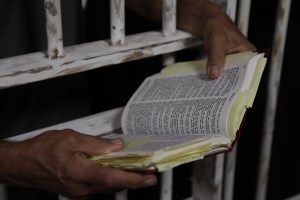
I am currently assigned in General Santos City, Mindanao, Philippines, and one of the highlights of my stay is when I visit and celebrate mass with the female inmates in the city jail. At first, I was hesitant and afraid to interact with them as I perceived them as being “criminals”. These are women with “wicked hearts”. But, I was totally wrong. When I prayed with them, I witnessed women prayed earnestly and deeply in faith. I met this woman, just call her Mary, and I listened to her story. She has been in the prison for five years, and due to ineffective justice system, her trial is still on going. She is a single mother with five children. She was caught using drugs, and she admitted it to escape from the reality of harsh life. She was crying as she narrated her story. And, I asked her what made endure her terrible situation. She simply answered, “I have God in my heart.”
We are living in much better condition than Mary, but do we have God in our heart? What fills our heart? Do we fill our hearts with Godly things? Do we allow God to reign in our hearts?
Deacon Valentinus Bayuhadi Ruseno, OP
 Tiga hari Minggu terakhir ini, kita telah mendengarkan serangkaian ajaran Yesus yang diberikan di Dataran [Luk 6]. Dua Minggu yang lalu, kita membaca tentang Sabda Bahagia. Ini adalah serangkaian kondisi yang menuntun kita menuju kebahagiaan dan berkat sejati. Minggu lalu kita mendapatkan beberapa langkah praktis untuk mencapai Sabda Bahagia ini. Dan hari Minggu ini, kita menemukan inti dari ajaran Yesus: ini adalah pembentukan hati manusia.
 Minggu lalu, kita mendengarkan ajaran Yesus Kristus tentang Sabda Bahagia. Ini adalah serangkaian kondisi yang menuntun seseorang menuju hidup berkat atau kebahagiaan sejati. Minggu ini, kita menemukan langkah-langkah praktis tentang cara mencapai kebahagiaan sejati ini. Minggu lalu, kita belajar bahwa Sabda Bahagia Yesus adalah kebalikan dari tatanan kebahagiaan duniawi. Bagi dunia, menjadi tamak akan kekayaan, berpengaruh, terkenal, dan kuat secara seksual adalah syarat untuk kebahagiaan. Yesus membalik tatanan ini dan mengatakan bahwa mereka yang murah hati, berbelas kasih dan murni hatinya adalah mereka yang benar-benar bahagia.
 We listen today the Beatitude, but unlike the famous Beatitude from the Gospel of Matthew, we have today from the Gospel of Luke. Unlike from Matthew who has eight sayings of blessedness, Luke has four blessedness and for four “woes”. The most striking difference is while Matthew seems to emphasize “the poor in spirit”, Luke wants us to understand poverty in a more literal sense.
 Kita mendengarkan hari ini tentang Sabda Bahagia, tetapi tidak seperti Sabda Bahagia yang terkenal dari Injil Matius, kita sekarang mendengarkan dari Injil Lukas. Tidak seperti Matius yang memiliki delapan ucapan berkat, Lukas memiliki empat berkat dan empat “celaka”. Perbedaan yang paling mencolok adalah ketika Matius tampaknya menekankan “orang miskin di hadapan Allah atau miskin dalam roh”, Lukas menekankan kemiskinan dalam arti yang lebih harfiah.
 This Sunday, we listen to the vocation stories of great men in the Bible. From the first reading, we learn how Isaiah was called by God to be His prophet to Judah. In the Temple of Jerusalem, he saw the Lord God surrounded by His seraphim. Isaiah was terrified and said that he had unclean lips. An angel then placed a burning ember on his tongue to remove his wickedness. God, then said, “Whom shall I send?” Isaiah replied with confidence, “Here I am, send me!”
 Minggu ini, kita mendengarkan kisah panggilan tokoh-tokoh besar dalam Alkitab. Dari bacaan pertama, kita belajar bagaimana Yesaya dipanggil oleh Allah untuk menjadi nabi-Nya bagi Kerajaan Yehuda. Di Kuil Yerusalem, ia melihat Tuhan Allah dikelilingi oleh serafim-Nya. Yesaya sangat ketakutan dan berkata bahwa dia memiliki bibir yang najis. Seorang malaikat kemudian menaruh bara api di lidahnya untuk menghilangkan dosanya. Tuhan lalu berkata, “Siapa yang akan Kuutus?” Yesaya menjawab dengan percaya diri, “Ini aku, utuslah aku!”
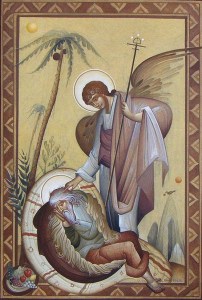 In today’s Gospel, Jesus compares Himself with the Israelite greatest prophets, Elijah and Elisha. But, who are these two prophets? For many Catholics, we are not familiar with these two prominent figures in the Old Testament, and thus, we often do not appreciate why Jesus deliberately cites their names.
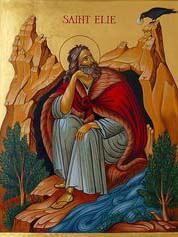 Yesus membandingkan diri-Nya dengan nabi-nabi besar Israel, Elia dan Elisa. Tetapi, siapakah kedua nabi ini? Bagi banyak orang Katolik, kita tidak begitu mengenal kedua tokoh terkemuka ini dalam Perjanjian Lama ini, dan karena itu, kita sering tidak menghargai mengapa Yesus dengan sengaja menyebut nama mereka.
 In Medio Ecclesiae