

First Sunday of Advent [B]
November 29, 2020
Mark 13:33-37
 We are entering a joyful season of Advent. The first Sunday of Advent is also the beginning of the liturgical year of the Catholic Church. Advent is from the Latin word “adventus” meaning “the coming.” From this name alone, we can already deduce the purposes of this lovely season. It is to prepare us for the coming of Jesus, yet we must not forget that the Church teaches us that there are two comings. The first coming is two thousand years ago in Bethlehem, as a baby at Mary’s hands. The second coming is Jesus’ arrival at the end of time as the glorious king and the judge.
Our Gospel points to this fundamental truth of the second coming. Jesus will surely come, but He does not give us the timetable, and thus, we need to be prepared and be watchful. The illustration Jesus presents is a master who is travelling abroad. In ancient times, travelling is stunning different from our time. Nowadays, with the advances of technologies and modern transport systems, we can determine even the exact location of a particular train and even an airplane. We are used to following a fixed schedule of travel itineraries. However, the ancient people knew nothing about the internet or GPS, and travelling was often hard to endure. People who needed to cross the sea may get stranded because of the unpredictable storms. Some people had to spend weeks in a town because the winter was unbearably chilling for travellers. Paul, the apostle to the gentiles, knew well how punishing travelling was. Robbers ambushed him, his ship was capsized several times, and he had to spend hours on the sea. The master will come, but nobody knows when, and thus, the servants have to be watchful.
Humanity is living in a time of great sadness and fear. We are still battling the covid-19 that kills thousands, renders countless people jobless, and changes the way we live and interact. Aside from this tiny virus, we are constantly scared by possible global catastrophe caused by nuclear wars, global warming, even zombies and alien attacks. Yet, this season of Advent gives us a reason for hope. Despite everything, Jesus will surely come, and He remains in control.
We learn from the advent wreath. This tradition attached to advent season comes from northern Europe, who knew well how dark and cold winter could be, especially in December. Unlike us, who live in tropical, our brethren living near the arctic zone sometimes experience brutal winter. They are living in freezing temperatures and often without sunlight. These gloomy and dark conditions may affect our mental health. However, our brothers and sisters refused to give up and look for the sign of hope. They discovered the evergreen leaves that decline to wither and found out that small light shines brighter in the dark. This advent wreath points to us Christ, our Hope. Every time we enter the season of Advent, we are assured that there is always hope, even in the face of our world’s brokenness.
Valentinus Bayuhadi Ruseno, OP
photocredit: joanna kosinka
 Kita memasuki masa Adven. Minggu pertama Adven juga merupakan awal tahun liturgi Gereja Katolik. Adven sendiri berasal dari kata Latin “adventus” yang berarti “kedatangan”. Dari nama ini saja kita sudah bisa menyimpulkan tujuan dari masa liturgi yang satu ini. Masa Adven mempersiapkan kita bagi kedatangan Yesus, namun kita tidak boleh lupa bahwa Gereja mengajarkan kita bahwa ada dua kedatangan Yesus. Kedatangan pertama terjadi dua ribu tahun yang lalu di Bethlehem, sebagai bayi kecil di tangan Maria. Kedatangan kedua adalah kedatangan Yesus di akhir zaman sebagai raja dan hakim yang mulia.
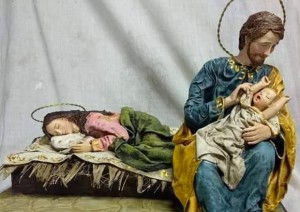 A few days ago, a nativity scene went viral. The image is called “Let Mom Rest”. The prominent character of this scene is that Joseph is taking care of the baby Jesus while Mary is resting. This image presents to us untouched yet powerful aspects of Jesus’ birth and thus, Christmas. Often, we focus our attention on Jesus with Mary, His mother. We honor Mary because of her willingness to carry Jesus on her womb despite so many dangers and difficulties and to remain a faithful disciple of Jesus till the end. However, the image brings us to another important character that we often overlook, St. Joseph, as the man of faith.
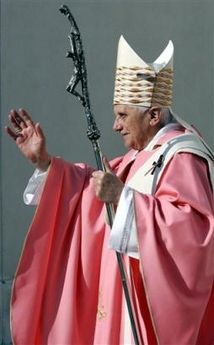 Today, we are going to see something different in the Church. Yes, the priests are not wearing a purple vestment, but a rose liturgical vestment. It is not because the priests are mistaken or want to make a fashion statement. It is because we are entering the third Sunday of Advent, also known as, the Gaudete Sunday. “Gaudete” is a Latin word meaning “rejoice!”. This color also symbolizes the joyful atmosphere. But, why do we need to celebrate Gaudete Sunday?
 Hari ini, kita akan melihat sesuatu yang berbeda di Gereja. Ya, para imam tidak mengenakan jubah ungu, tetapi jubah liturgis berwarna merah muda. Itu bukan karena para imam salah memakai baju atau ingin tampil trendi. Ini karena kita memasuki hari Minggu ketiga Adven, juga dikenal sebagai, hari Minggu Gaudete. “Gaudete” adalah kata Latin yang berarti “bersukacitalah!”. Warna merah muda ini juga melambangkan suasana sukacita. Tapi, mengapa kita perlu merayakan Minggu Gaudete?
 John the Baptist is a prominent figure in four Gospels, and he powerfully appears before Jesus begins His public ministry. But, who is this John the Baptist? His name is simply John, and the Church calls him the Baptist to distinguish him from other John in the Bible like John the son of Zebedee, one of Jesus’ disciples. John the Baptist is the miracle son of Zacharia and Elizabeth in their old days. And since Elizabeth and Mary, the mother of Jesus, are relatives, John and Jesus are closely related to each other.
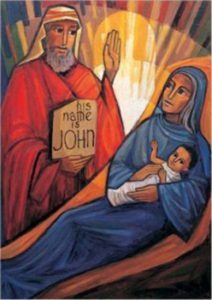 Yohanes Pembaptis adalah tokoh terkemuka dalam keempat Injil, dan Yohanes muncul sebelum Yesus memulai pelayanan dan karnya-Nya. Tetapi, siapakah Yohanes Pembaptis ini? Namanya Yohanes, dan Gereja memanggilnya sebagai Pembaptis untuk membedakannya dari Yohanes lainnya dalam Alkitab seperti Yohanes putra Zebedeus, salah satu murid Yesus. Yohanes Pembaptis adalah putra Zakharia dan Elisabet yang terlahir di masa tua mereka. Dan karena Elizabeth dan Maria, ibu Yesus, masih saudara, Yohanes dan Yesus saling berhubungan erat.
 We are entering the season of Advent. This time marks the beginning of the new liturgical year of the Church. The season itself is a preparation for us to welcome the Christmas, the coming of Jesus Christ. The word Advent is coming from the Latin word “Adventus” that simply means “arrival.” The dominant liturgical color will be purple that signifies hope and joyful expectation of the coming of our Savior.
 Kita memasuki masa Adven. Waktu ini menandai awal tahun liturgi Gereja yang baru. Masa itu sendiri adalah persiapan bagi kita untuk menyambut Natal, kedatangan Yesus Kristus. Kata Adven berasal dari kata Latin “Adventus” yang berarti “kedatangan.” Warna liturgi yang dominan adalah ungu yang menandakan harapan penuh sukacita akan kedatangan Juruselamat kita.
 In Medio Ecclesiae