

Fourth Sunday of Advent [December 23, 2018] Luke 1: 46-56
“Blessed are you who believed that what was spoken to you by the Lord would be fulfilled.” (Lk. 1:45)
 Today’s Gospel is truly beautiful. We have two protagonists. They are women, and they are both pregnant. Who are they? Mary and Elizabeth. Yet, why is the story beautiful? It is just natural for women to get pregnant. Unless we need to go closer to the stories and place ourselves in the shoes of Mary and Elisabeth, we can never see the true beauty of their story.
First, Mary, she is young, and at the same time, she is pregnant with no husband. St. Joseph is indeed the husband of Mary, but he is not the father of the baby. Perhaps, in our time, if a woman gets pregnant and yet without a husband, this is an unfortunate event, but life goes on for both the woman and child. however, if we go back to the time of Mary, way back two thousand years ago, that woman would be a great disgrace her family and community. She would be expelled from the community, and sometimes, they would be also stoned to death. Mary understands that when she accepts the will of God, to be the mother of Jesus, she faces death. Indeed, death is the future of Mary.
Second, Elizabeth. Elizabeth has a husband, so nobody will stone her, but her situation is also difficult. She is too old to get pregnant. Once I asked my medical doctor-friends, why is it risky to get pregnant if you are old? One said that as we grow old, so does our body and our muscles. With weaker muscles, a mother will have a difficult time during the process of giving birth, and this can be very dangerous to the baby and the mother. I said further, why not caesarian? They said that it is also difficult if not deadly. As we grow old, our hearts weaken. If we place ourselves under the knife, with weaker hearts, there is a big possibility that we will not wake up. Like Mary, death may be the future of Elizabeth.
If Mary and Elizabeth know that it is dangerous and even deadly to be pregnant, why are they still following the will of the Lord?
The answer is at the very name of Elizabeth and her husband Zechariah. Zachariah is from the Hebrew word “Zakar”, meaning to remember. Meanwhile, Elizabeth is formed two Hebrew words, Eli and Sabbath, meaning God’s oath or promise. So if we combine the two names, Zachariah-Elizabeth, they mean “God remembers His promise” or “God fulfills His promise.”
Elizabeth knows it is deadly to have John in her womb, but she still follows the will of God, because she is aware the baby was a fulfillment of God’s promise. Mary from Nazareth, the north part of Israel, travels to Judea, the south of Israel, in haste. But, why in haste? Mary is excited, and she wishes to witness how God fulfills His promise to Elizabeth. The moment Mary sees Elizabeth; she knows that the baby inside her womb is also a fulfillment of God’s promise.
Every child, indeed every on us is the fulfillment of God’s promise. Mary and Elizabeth never see the babies in their wombs as mere inconveniences in their lives or unplanned garbage that can be disposed of. Yet, to accept these babies as gifts of God, Mary and Elizabeth have to be courageous because they are going to sacrifice a lot including their own lives. Elizabeth and Mary are brave women and mothers.
The questions are for us: Who among us is not coming from a woman’s womb? We are all here because of a mother. Indeed, not all mothers are perfect. Some of them are not rich, some are having attitude problems, some are not good examples. Yet, the mere fact we are here now, one woman in our life, against all odds, has decided to courageously accept us as a gift, as the fulfillment of God’s promise. To all mothers, thank you very much.
Deacon Valentinus Bayuhadi Ruseno, OP
 Injil hari ini benar-benar indah. Kita memiliki dua protagonis. Mereka adalah wanita, dan mereka berdua sedang hamil. Siapa mereka? Maria dan Elizabeth. Namun, mengapa cerita mereka indah? Tentunya, wajar bagi wanita untuk hamil. Hanya dengan melihat lebih dekat kisah mereka berdua, kita baru bisa melihat keindahan sejati dari kisah mereka.
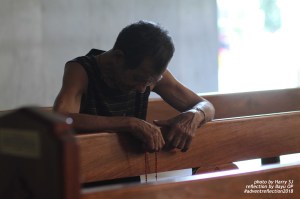 The second question that Archbishop Socrates Villegas of Lingayen-Dagupan asked us during our ordination was, “Are you broken enough?” Once again his question raised eyebrows and was, indeed, counter-intuitive. We want to be flawless, whole and perfect. We desire to achieve more in life, to be wealthy, healthy and pretty. We wish to be socially accepted, respected and gain certain prominence. We want to become somebody, and not nobody. We like others to call us as the famous doctors, the creative entrepreneurs, or successful lawyers. Or for us, people in the Church, we like people to consider us well-sought preachers, generous and builder-priests, or skillful and well-educated sisters.
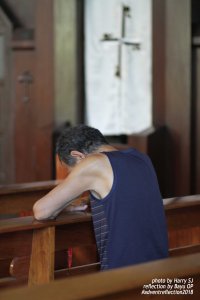 Pertanyaan kedua yang diajukan uskup agung Socrates Villegas dari Lingayen-Dagupan saat saya ditahbiskan adalah, “Apakah kamu sudah cukup terpecah dan remuk?” Sekali lagi pertanyaannya ini mengherankan. Kita ingin menjadi utuh dan sempurna. Kita ingin mendapatkan lebih banyak dalam hidup, menjadi kaya, sehat dan cantik. Kita ingin diterima secara sosial, dan dihormati dan memiliki pencapaian yang dapat dibanggakan. Kita ingin menjadi seseorang. Kita ingin orang lain menyebut kita sebagai dokter terkenal, pengusaha kreatif, atau pengacara yang sukses. Atau bagi kita, orang-orang yang melayani di Gereja, kita suka orang-orang menganggap kita sebagai pengkhotbah yang disukai, imam pembangun, atau suster yang terampil dan berpendidikan.
 During my ordination, Archbishop Socrates Villegas of Lingayen-Dagupan asked this question to us who would receive the sacred order, “Are you weak enough?” The question was mind-blogging and unexpected because often we have strength, power, and talents as our favorite subjects, and even obsession. We like to show to the world that we are achievers and conquerors. We parade our good education, high-earning job, or a beautiful face. The ‘superior’ mentality does not only affect the lay people traversing in the ordinary world, but also people dressed in white walking through the corridors of the Church. The clergy, as well as religious men and women, are not immune to this hunger for approval and sense of worthiness.
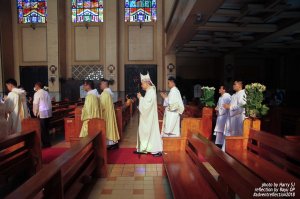 Saat pentahbisan saya, Uskup Agung Socrates Villegas dari Lingayen-Dagupan bertanya kepada saya, “Apakah kamu cukup lemah?” Pertanyaannya tidak terduga dan bahkan membalikan nalar karena sering kita merasa bahwa kekuatan dan talenta yang kita miliki adalah hal yang penting dalam hidup kita, dan menunjukan siapa diri kita sesungguhnya sebagai milik kita. Kita ingin menunjukkan kepada dunia bahwa kita adalah orang yang berprestasi. Kita memamerkan bahwa kita memiliki pendidikan yang baik, pekerjaan yang berpenghasilan tinggi, atau rupa yang cantik. Mental ‘superior’ ini tidak hanya mempengaruhi orang awam yang bergulat dalam kehidupan sehari-hari, tetapi juga orang-orang berjubah yang putih berjalan di koridor Gereja. Para klerus, serta biarawan dan biarawati, tidaklah kebal terhadap hasrat untuk mendapatkan persetujuan dan rasa kelayakan.
 I have been in the Dominican formation for more than 12 years, and if I add four years of my minor seminary formation in Indonesia, it stretches to 16 years! It is insanely long that it occupies a more than half of my life. If we believe that everything has a purpose, I can ask myself, “what is the point of this extremely lengthy formation?” Why should I stay through thick and thin of formation life, through hours of assiduous study, through various programs, through daily rigor of prayer life?
 Saya telah berada di formasi Ordo Dominikan di Filipina selama lebih dari 12 tahun, dan jika saya menambahkan empat tahun formasi seminari kecil saya di Indonesia, totalnya sampai 16 tahun! Ini sangat panjang karena lebih dari separuh hidup saya berada di formasi. Jika kita percaya bahwa semuanya memiliki tujuan, saya bertanya pada diri sendiri, “apa tujuan dari formasi yang sangat panjang ini?” Mengapa saya harus tetap berada dalam kehidupan formasi dengan suka dan dukanya? Mengapa saya harus menghabiskan banyak waktu dalam belajar? Mengapa saya harus bertekun dalam doa?
 Luke has a poignant and unique way in narrating the story of the Annunciation. He deliberately places the story of Zachariah and of Mary side by side, and lets his readers see both stories in comparison. The first story speaks of a holy man who serves in the Temple. Zachariah is a symbol of the ideal Israelite who stands at the center of the holy ground. The second story speaks of an ordinary woman who lives in Nazareth, a small town far from the center. In a patriarchal society, Mary is a symbol of the poor and marginalized Israelite who is pushed to the peripheries. Angel Gabriel appears to both, and God does marvelous deeds for both. Yet, the Annunciation to Mary turns to be far more excellent. The Angel greets Mary with the title of honor, the highly favored one, while the angel does not even greet Zachariah. The Angel makes Zachariah mute because of his doubt, but he assures Mary when she is confused. The conception of John the Baptist is done through natural means, while the conception of Jesus in the womb of Mary takes place through the supernatural way. Zachariah and Elizabeth represent the outstanding God’s marvel in the Old Testament like when God opened the womb of Sarah, the wife of Abraham, and Hannah, the mother of Samuel, despite their old age and barrenness. Yet, what happens to Mary surpasses and outshines these Old Testament miracles.
 Lukas memiliki cara yang tajam dan unik dalam menulis kisah tentang Penerimaan Kabar Sukacita. Dia dengan sengaja menempatkan kisah Zakharia dan Maria secara berdampingan, dan membiarkan pembacanya melihat kedua cerita itu dalam perbandingan. Kisah pertama berbicara tentang seorang imam yang suci yang melayani di Bait Allah. Zakharia adalah simbol dari orang Israel ideal yang berdiri di pusat peribadatan bangsa Israel. Kisah kedua berbicara tentang seorang wanita sederhana yang tinggal di Nazaret, sebuah desa kecil yang jauh dari pusat pemerintahan dan keagamaan. Dalam masyarakat patriarki, Maria adalah simbol dari bangsa Israel yang miskin dan terpinggirkan dan terdorong ke pinggiran. Malaikat Gabriel menampakkan diri kepada keduanya, dan Tuhan melakukan perbuatan yang luar biasa bagi keduanya. Namun, Kabar Sukacita bagi Maria ternyata jauh lebih baik. Pertama, sang Malaikat menyapa Maria dengan gelar kehormatan, “Engkau yang dikaruniai”, sementara sang malaikat tidak menyapa Zakharia sama sekali. Kedua, sang malaikat membuat Zakharia bisu karena keraguannya, tapi dia meyakinkan Maria saat Maria bertanya-tanya. Ketiga, pembuahan Yohanes Pembaptis terjadi secara alamiah, sementara Yesus di dalam rahim Maria terjadi melalui cara yang supernatural. Zakharia dan Elizabeth mewakili karya besar Tuhan dalam Perjanjian Lama seperti ketika Tuhan membuka rahim Sarah, istri Abraham, dan Hannah, ibu Samuel, meskipun sudah tua dan mandul. Namun, apa yang terjadi pada Maria melampaui segala mukjizat Perjanjian Lama ini.
 In Medio Ecclesiae