
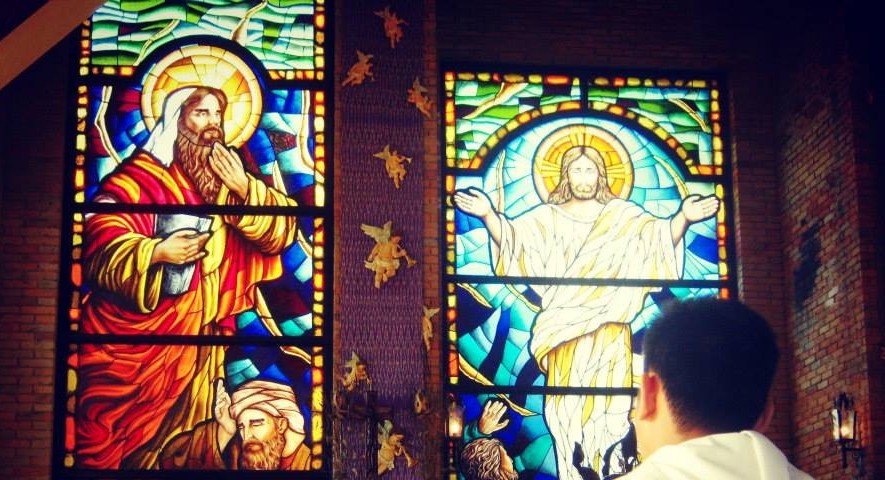
3rd Sunday of Advent [December 17, 2017] John 1:6-8, 19-28
“John came as a witness to testify to the light , so that all might believe through him. (Joh 1:7)”
 In the Fourth Gospel, John the Baptist has an important role. It is not only to baptize, but to become a witness. He is to witness to the light, to the true Messiah, to Jesus Christ. When the priests, Levites, and Pharisees from Jerusalem, come to him , and interrogate him to clarify his identity, he makes it clear that he is not the Messiah, not even the prophet, but rather enigmatically saying “a voice that cries in the desert.” It seems it is an easy thing to do for John. Questions are thrown at him, and he simply gives straight and confident answers. Yet, looking deeper into the reality, it is actually the opposite.
John the Baptist is a highly popular and influential man. He is able to draw many people from all corners of Palestine. People listen to him and ask to be baptized. He is a charismatic preacher that changes many Jews’ lives. When afforded with so much success and praise, it is easier for John to see himself as the best and main actor. He could have said to the priests, “I am the light, the Messiah. See how many people follow and gather around me!” He has become the epitome of successful preacher and minister. Yet, he does not claim the praise to himself , but points to the true light and Messiah.
Our modern society may be scandalized by John the Baptist’s attitude. Our societies are driven by success and achievement. We are taught to think positive, to feel good about ourselves, to shun failures. We are trained to reach our dreams, to compete to become the best , and to believe in our abilities. Books, articles, and videos about self-help, success-coaching, positive thinking, effective leadership and efficient management are flooding in our book stores , televisions, and internet. I need to admit also that I am using a time-management method “Pomodoro” to help me finish this reflection. We are living in the world that is confident of itself and believe that we can achieve anything. The sky is the limit!
No wonder if the value of our contemporary society is in conflict with John’s. We might say John should not think himself too low, he should have more self-esteem, or he should not be too pessimistic. Yet, this is not about John having low self-esteem or being too shy. John’s humble act is prophetic, not only for his own time , but also to our days. His testimony points to a radical recognition that God is the source of all our goodness and to God alone, all these perfections shall go back. I am not saying that many motivational materials produced by our generation are not good. They are in fact helpful to bring out the best of us. Yet, the danger is when we begin to think that we can do things on our own. With so many achievements, the present world begins to believe that God is not necessary, and we start playing God. We destroy the environment, manipulate human lives, and abuse ourselves. At the bottom of all of these is pride.
John’s life becomes a witness to the true light, to the true source of all goodness. His prophetic action reminds us of what matters most in our lives. The invitation for us now is not only to become humble by recognizing God’s presence in all our achievements , and give thanks to Him. Yet, like John, we and our lives are to become a sign that points to God himself. It is no longer about us, but God who works in me.
Br. Valentinus Bayuhadi Ruseno , OP
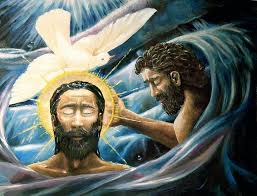 Dalam Injil Keempat, Yohanes Pembaptis memiliki peran penting: bukan hanya untuk membaptis, tapi untuk menjadi saksi. Dia bersaksi tentang sang Terang, sang Mesias sejati, Yesus Kristus. Ketika para imam dan orang-orang Farisi dari Yerusalem datang kepadanya dan menginterogasinya untuk mengklarifikasi identitasnya, dia menjelaskan bahwa dia bukanlah Mesias, bahkan bukan seorang nabi, namun dia berseru, “Akulah suara orang yang berseru-seru di padang gurun: Luruskanlah jalan Tuhan! (Yoh 1:23)” Sepertinya hal ini adalah hal mudah untuk Yohanes lakukan. Pertanyaan diajukan kepadanya, dan dia memberikan jawaban secara lugas dan percaya diri. Namun, melihat lebih dalam pada realitas zamannya, hal yang dilakukannya tidaklah semudah yang kita bayangkan.
 Today, we read the beginning of the Gospel according to Mark. Among the evangelists, only Mark explicitly introduces his work as the “Gospel”. The English word “Gospel” simply means the Good News, or in original Greek, “Evangelion.” Commonly, we understand a gospel as a written account of the life and words of Jesus Christ. The Church has recognized four accounts as canonical or true Gospel. We have Gospel according to Matthew, Mark, Luke, and John.
 Hari ini, kita membaca permulaan dari Injil menurut Markus. Di antara para penginjil, hanya Markus yang secara eksplisit memperkenalkan karyanya sebagai “Injil”. Kata “Injil” berarti “Kabar Baik”, atau dalam bahasa Yunani, “Evangelion”. Biasanya, kita memahami sebuah Injil sebagai karya tertulis tentang hidup dan sabda Yesus Kristus. Gereja telah menetapkan empat karya sebagai Injil kanonik. Kita memiliki Injil menurut Matius, Markus, Lukas dan Yohanes.
 The Season of Advent has begun. This season marks the beginning of the new Church’s liturgical year as well as of the four Sundays preparation for Christmas. A curious mind may ask: why the liturgical year has to be opened by the season Advent? Why not Christmas, Lenten or Easter seasons?
 Masa Adven telah dimulai. Masa ini menjadi tanda dimulainya tahun liturgi Gereja dan juga empat hari Minggu persiapan menuju Natal. Kita mungkin bertanya, “Mengapa tahun liturgi harus dibuka oleh masa Adven? Mengapa tidak Natal, Prapaskah atau Paskah?”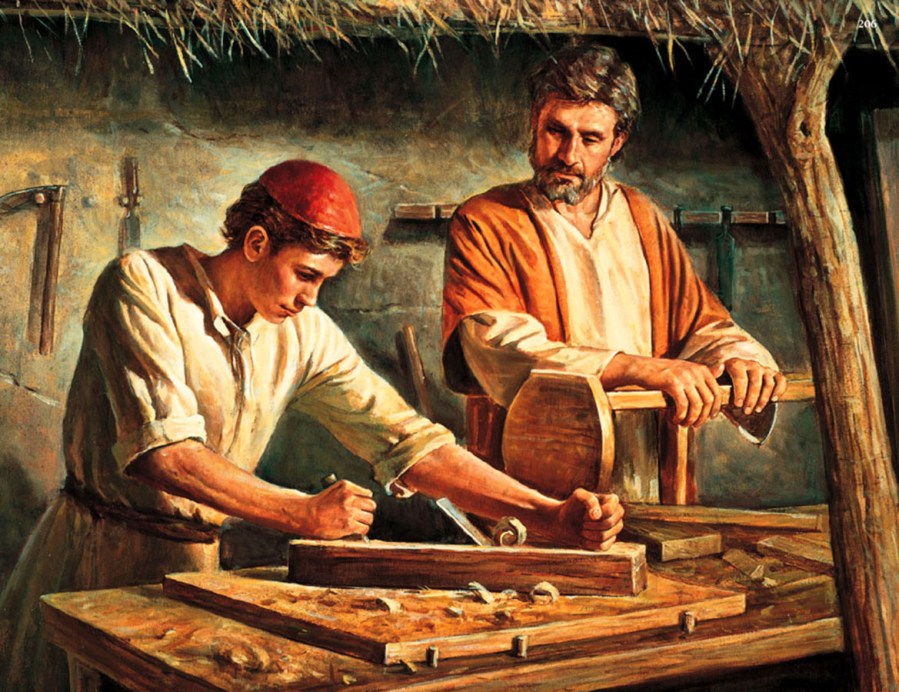
 If there is one important person in the life of Jesus, but gets very little attention, this person is no other than Joseph, Jesus’ foster father. He was absent in the Gospel of Mark. In John, he was mentioned only by name. In Luke, his presence was felt, but he was overshadowed by Mary and her unique mission. Only in Matthew, Joseph had a more active role in the beginning of Jesus’ life. Yet, again, he remained a voiceless character, and simply disappeared as Jesus began his mission. Still, Joseph had significantly influenced the life of Jesus.
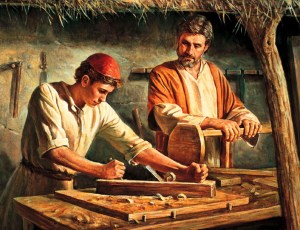 Jika ada satu orang penting dalam hidup Yesus, tetapi hanya mendapat sedikit perhatian, orang ini tidak lain adalah Yusuf, ayah angkat Yesus. Ia tidak disebut dalam Injil Markus. Dalam Injil Yohanes, hanya namanya yang muncul. Dalam Injil Lukas, kehadirannya mulai terasa, tapi Maria lebih mendapat perhatian. Hanya dalam Injil Matius, Yusuf memiliki peran yang lebih aktif pada awal hidup Yesus. Sayangnya, ia tetap karakter tak bersuara, dan akhirnya menghilang saat Yesus memulai karya-Nya. Namun, bukan berarti Yusuf tidak penting dalam membentuk karakter Yesus.
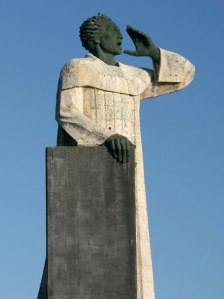
 The truth is born out of a conversation. Genuine conversation is coming from our ability to listen. And listening to one another is not easy because it presupposes great humility. The turning point of St. Dominic de Guzman, the founder of the Order of Preachers, was inside the pub. He had an overnight conversation with the innkeeper, an Albigensian whose religion denied the goodness of creation. This long yet open dialogue did not only bring the innkeeper back to the Catholic faith, but also led Dominic to discover his mission in life. This encounter revealed the truth both for the innkeeper and Dominic.
 In Medio Ecclesiae