
Kemuliaan Sejati

Minggu ke-5 Prapaskah [B]
21 Maret 2021
Yohanes 12: 20-33
njil Yohanes biasanya dibagi menjadi dua divisi utama: Buku Tanda-Tanda [bab 1-12] dan Buku Kemuliaan [Bab 13-21]. Buku Tanda-Tanda berfokus pada pelayanan publik Yesus dan juga tujuh ‘tanda’ Yesus. Dalam Injil Yohanes, ‘Tanda’ adalah istilah teknis untuk mukjizat. Tanda-tanda Yesus ini dimulai dengan mengubah air menjadi anggur di Kana dan mencapai puncaknya dengan membangkitkan Lazarus dari kematian. Sedangkan Buku Kemuliaan menjelaskan kepada kita bagaimana Yesus ‘dimuliakan’. Buku kedua dimulai dengan Yesus dan murid-murid-Nya di Ruang Atas dan berpuncak pada sengsara, wafat, dan kebangkitan-Nya.

Injil hari ini diambil dari Yohanes bab 12, dan bab ini berfungsi sebagai transisi antara Buku Tanda-Tanda ke Buku Kemuliaan. Ini juga mengapa Gereja memilih bacaan ini: untuk mempersiapkan kita memasuki Minggu Palma Sengsara Yesus dan Pekan Suci.

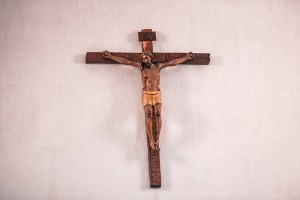
Satu pelajaran berharga yang dapat kita lihat dalam Injil hari ini adalah bagaimana Yesus memandang sengsara dan kematian-Nya. Tidak dapat disangkal, Yesus akan disalibkan dan wafat dengan cara yang mengerikan. Penyaliban adalah hukuman mengerikan yang hanya diperuntukkan bagi penjahat kelas berat dan pemberontak terhadap bangsa Romawi. Penyaliban ini mengerikan karena tujuannya adalah untuk memperpanjang penderitaan yang terhukum sebelum mereka menemui ajalnya. Di kayu salib, orang diperlakukan lebih rendah daripada hewan. Ini adalah kematian mengerikan yang Yesus akan rangkul.

Namun, dalam Injil Yohanes, Yesus tidak sekedar melihat penyaliban-Nya sebagai peristiwa manusia belaka tetapi sebagai penyelenggaraan ilahi. Yesus menyebut penyaliban-Nya sebagai kemuliaan Anak Manusia. Pandangan Yesus ini tidak hanya membalikkan perspektif salib tetapi secara radikal mentransformasinya. Penyaliban-Nya, bagi Yesus bukan hanya sesuatu yang baik atau positif, tetapi itu adalah puncak kemenangan dari hidup-Nya. Yesus menyatakan bahwa salib adalah waktu penghakiman terhadap iblis, penguasa dunia [Yoh 12:31]. Yesus juga mengklaim bahwa salib adalah saat orang-orang dari segala bangsa berkumpul menjadi satu dan menerima keselamatan [Yoh 12:32].

Apakah ini berarti Yesus mengabaikan sisi kemanusiaan-Nya dan menekan emosi-Nya sebelum menderita di kayu salib? Tentu tidak! Yesus juga mengenali dan menghidupi emosi manusiawi-Nya. Kita tahu bahwa Yesus menghadapi kengerian kematian-Nya di dalam sakratul maut di taman Getsemani, namun walaupun penuh pergulatan, Yesus tetap teguh untuk melakukan kehendak Bapa dan untuk mengasihi sampai akhir.

Dari sini, kita dapat mendapatkan pelajaran yang sangat berharga dari Yesus. Dalam mengikuti Kristus, kita mungkin menghadapi pencobaan dan kesulitan dalam hidup, namun kita diajak untuk percaya pada penyelenggaraan Tuhan, dan kita dapat merangkul penderitaan kita sebagai momen kemuliaan kita. Percaya pada penyelenggaraan Tuhan bukan berarti lari dari kenyataan hidup, tetapi sebaliknya, hal ini mengandaikan bahwa kita merangkul seluruh kemanusiaan kita.

Kita selalu bisa belajar dari kehidupan para kudus kita. Sebagai contoh, St Agatha dapat dengan mudah lolos dari kematian, tetapi dia menolak untuk menyangkal Kristus dan menantang siksaan dan kematian yang mengerikan. Para penyiksanya memotong payudaranya, dan dia dibakar hidup-hidup. Di mata dunia, kematiannya tidak masuk akal, tetapi bagi mereka, yang berbagi dalam penderitaan Kristus, dan dengan demikian, berbagi dalam Kemuliaan-Nya.

Valentinus Bayuhadi Ruseno, OP

photocredit: manuel-asturias

Climbing the Mountain

Second Sunday of Lent [B]

February 28, 2021

Mark 9:2-11

Mountain is a special place in the Bible. It is a place where God meets His people. In the Old Testament, there are many instances where mountains become a pivotal point of salvation history. After the great flood that cleansed the world, the Ark of Noah landed on Mount Ararat, and there, Noah offered sacrifice to God [see Gen 8:4]. Abraham was asked by God to offer his son Isaac on Mount Moriah. Just right before the sacrifice, the angel of God prevented Abraham and God recognized Abraham’s faith [see Gen 22]. When Moses was tending the flock of his father-in-law, Moses saw a burning bush yet was not consumed, and there, on the mount of Horeb, God called Moses to save Israelites from the Egyptians [see Exo 3]. After the liberation from Egypt, Moses and the Israelites the Law and established a covenant with God on the mount of Sinai [see Exo 24:18].

Jesus’ important life events took place in the Mountains. There is the mountain of temptation, where the devil brought Jesus and offered Him the worldly glories. There is the mountain of prayer, where Jesus spent His solitude with the Father. There is the mountain of teaching, where Jesus taught the most remarkable lessons like Beatitudes and love for enemies. There is a mountain of Transfiguration, where Jesus manifested His divine glory. There is the mountain of the cross, or Golgotha, where Jesus gave His life for our salvation. Lastly, there is the mountain of ascension, where Jesus went back to the heavens and sent His disciples to preach and baptize all the nations.

One distinctive feature in the Mount of Transfiguration is that he invited three disciples: Peter, James, and John. There are many reasons why these three were selected. St. Ambrose of Milan, representing the Fathers of the Church, believed that these three were chosen because of Peter who received the kingdoms’ keys, John, to whom was committed our Lord’s mother, and James who first suffered martyrdom. Meanwhile, St. Thomas Aquinas, a Middle age theologian, argued that James was the first martyr, John was the most beloved, and Peter was the one who loves Jesus most. However, we can also see it in a simple way. These three were disciples who were ready to follow Jesus and climb the high mountain.

Climbing the mountain is a challenging mission. One has to make necessary preparation without being excessive. Climbing requires physical stamina as well as mental toughness. As the climbing progresses, the persons’ authentic characters will be revealed. Facing difficulty, one can be very selfish or selfless. Confronting challenges, one can march with courage or retreat in fear. In a dire situation, one can exhibit decisive leadership or get panicked and lose his way. Peter, James, and John were up for the challenge, and they persevered to see the transfigured Jesus.

Often Jesus calls us to climb a mountain with Him. Sometimes, we climb the mountain of prayer as we need to face many hurdles in our prayer life. Occasionally, we need to climb the mountain of teaching because we are struggling with the Church’s particular teachings. Sometimes, we climb the mountain of Calvary, and we need to carry our cross, and on the top, we find no consolation but the death of the Savior.

Yet, the good news is that Jesus, who invited us to climb the mountain, is also walking with us. As we walk with Jesus, He guides us, strengthens us, and forms us. If we are faithful in mountains of temptations and Calvary, we will participate in His Transfiguration, resurrection, and ascension.

Valentinus Bayuhadi Ruseno, OP

photocredit: Tim Foster

Mendaki Gunung Tuhan

Minggu Kedua Prapaskah [B]

28 Februari 2021

Markus 9: 2-11

Gunung adalah tempat khusus di dalam Kitab Suci. Ini adalah tempat dimana Tuhan bertemu dengan umat-Nya. Dalam Perjanjian Lama, ada banyak contoh di mana gunung menjadi titik penting dalam sejarah keselamatan. Setelah banjir besar yang membersihkan dunia, Bahtera nabi Nuh mendarat di Gunung Ararat dan di sana, Nuh mempersembahkan korban kepada Tuhan [lihat Kejadian 8: 4]. Abraham diminta oleh Tuhan untuk mempersembahkan putranya, Ishak, di Gunung Moria. Tepat sebelum pengorbanan, malaikat Tuhan mencegah Abraham dan Tuhan menerima iman Abraham [lihat Kejadian 22]. Ketika Musa sedang menggembalakan kawanan bapa mertuanya, Musa melihat semak bernyala tapi tidak habis terbakar, dan di sana, di gunung Horeb, Tuhan memanggil Musa untuk menyelamatkan bani Israel dari Mesir [lihat Keluaran 3].

Peristiwa-peristiwa penting dalam hidup Yesus terjadi di Pegunungan. Ada gunung pencobaan, di mana iblis membawa Yesus dan memperlihatkan kemuliaan duniawi kepada-Nya. Ada gunung doa, di mana Yesus menghabiskan waktu tenang-Nya dengan Bapa. Ada gunung pengajaran, di mana Yesus mengajarkan pelajaran-pelajaran agung-Nya seperti Sabda Bahagia dan mengasihi musuh. Ada gunung Transfigurasi, di mana Yesus menunjukkan kemuliaan ilahi-Nya. Ada gunung salib, atau Golgota, tempat Yesus memberikan hidup-Nya untuk keselamatan kita. Terakhir, ada gunung kenaikan, di mana Yesus kembali ke surga dan mengutus murid-murid-Nya untuk mewartakan Injil dan membaptis semua bangsa.

Kembali ke gunung tansfigurasi. Salah satu ciri khas dalam gunung transfigurasi adalah bahwa Yesus mengundang tiga murid-Nya: Petrus, Yakobus dan Yohanes. Ada banyak alasan mengapa ketiganya dipilih. St Ambrosius dari Milan, mewakili para Bapa Gereja, percaya bahwa ketiganya dipilih karena Petrus yang menerima kunci kerajaan, Yohanes, yang menjadi komitmen ibu Tuhan kita, dan Yakobus yang pertama kali mati sebagai martir. Sementara itu, St Thomas Aquinas, seorang teolog Abad Pertengahan, berpendapat bahwa Yakobus adalah martir pertama, Yohanes adalah murid yang paling dikasihi dan Petrus adalah murid yang paling mengasihi Yesus. Namun, kita bisa melihat juga dari cara yang sederhana. Ketiganya adalah murid-murid yang siap mengikuti Yesus dan mampu mendaki gunung yang tinggi.

Mendaki gunung adalah misi yang berat. Seseorang harus membuat persiapan yang matang tanpa berlebihan. Mendaki membutuhkan stamina fisik serta ketangguhan mental. Saat pendakian berlangsung, karakter asli orang tersebut akan terungkap. Menghadapi kesulitan, seseorang bisa menjadi sangat egois, tetapi juga bisa rela berkorban. Menghadapi tantangan, seseorang dapat maju terus dengan keberanian atau mundur dalam ketakutan. Dalam situasi yang mengerikan, seseorang dapat menunjukkan kepemimpinan yang tegas atau menjadi panik dan tersesat. Petrus, Yakobus dan Yohanes siap untuk tantangan itu, dan mereka bertahan untuk melihat Yesus yang berubah rupa.

Seringkali Yesus memanggil kita untuk mendaki gunung bersama-Nya. Terkadang, kita mendaki gunung doa karena kita harus menghadapi banyak rintangan dalam kehidupan doa kita. Terkadang, kita perlu mendaki gunung pengajaran karena kita bergumul dengan ajaran-ajaran tertentu Gereja. Kadang-kadang, kita mendaki gunung Kalvari, dan kita perlu memikul salib kita, dan di puncaknya, kita tidak menemukan penghiburan selain kematian sang Juruselamat.

Namun, kabar baiknya adalah Yesus yang mengundang kita mendaki gunung, juga berjalan bersama kita. Saat kita berjalan dengan Yesus, Dia membimbing kita, menguatkan kita dan membentuk kita. Jika kita setia di gunung godaan dan golgota, kita juga akan ikut serta dalam mendaki gunung transfigurasi, kebangkitan dan kenaikan-Nya.


Valentinus Bayuhadi Ruseno, OP

Forty Days in the Wilderness

First Sunday of Lent [B]

February 21, 2021

Mark 1:12-15

Why did Jesus have to stay in the wilderness for 40 days? The answer is not difficult. He was reperforming what the Israelites did when they were liberated from Egypt. The Israelites stayed for 40 years in the wilderness before they entered the promised land. Yet, there is one more thing! Mark gives us a small, however important detail: in the wilderness, Jesus was staying with the beasts. Why so? If there is one man closely connected to the beasts in the scriptures, he is no other than Adam. Jesus is the new Israel who endured the harsh conditions of the desert and the new Adam who faced the onslaught of the devil.
Jesus entered the wilderness for forty days, and He was tested there by the harsh conditions of the Judean desert. Not only facing the barrenness of the desert, but Jesus was also confronting the devil himself. From here alone, we can draw a strong connection between the Israelites in the wilderness and Jesus, as well as Adam and Jesus. Like the old Israel who struggled with their own ego, Jesus was also enduring human weakness. Like Adam was facing the tempter, the devil tempted Jesus. However, there are significant differences.

While the Israelites murmured and complained, Jesus faithfully fasted and prayed. While the Israelites were grumbling for the food and Adam ate the forbidden fruit, Jesus rejected Satan’s temptation to change stone to bread. While the Israelites were losing faith and worshipping the demon in the form of the golden calf, and Adam wanted to be like God, Jesus refused to bow down to the devil despite all the worldly glory it offered. While the Israelites losing hope in the promised land and Adam blamed the woman, Jesus remained steadfast and refused to test God. Jesus is the new Israel and the new Adam. While the old Israel faltered and Adam succumbed to the trials and temptations, Jesus emerged victorious. Jesus corrected and perfected ancient Israel and old Adam.

We are the body of Christ, and we are part of the new Israel. As Jesus enters the wilderness, so we are going to our spiritual battle. However, we can only become triumphant when we are holding on to God and participating in Christ. The devil is much stronger than us, and without God, we march for sure defeat.

How are we going to win against this spiritual battle? Jesus gives us the answer: fasting-abstinence, almsgiving, and prayer. Fasting makes us hungry, yet it makes us realize that not all our bodily desires need to be fulfilled immediately. Almsgiving may hurt our pockets, but it opens us to the truth that we live meaningfully by giving, not hoarding things. Prayer may be a waste of time, but it offers us the most fundamental reality that we are nothing without God. We are part of the new Adam and the new Israel, and only in Him, we achieve our real victory.


Valentinus Bayuhadi Ruseno, OP

photo credit: nathan-mcbride

Jesus, Healer of Our Souls

Fifth Sunday in Ordinary Time [B]

February 7, 2021

Mark 1:29-39

Jesus cannot be separated from His healing ministries. Some of the healings are remarkable, like the healing of a woman with the hemorrhage and Jarius’ daughter [Mark 5:321-43]. They are astonishing because these are practically impossible cases. The woman has suffered for twelve years without sign of hope, and Jarius’ daughter is as good as dead. Yet, Jesus does heal not only those with grave illness but also those with curable sickness.

Jesus is at the house of Simon, and He discovers that Simon’s mother-in-law has a fever. Fever is a symptom that points to an infection, from ordinary flu to covid-19. In the case of Simon’s mother-in-law, we can safely assume that she has a curable sickness. Without proper rest and treatment, she will get back to her usual activities. Yet, despite this fact, and even without a particular request from the person, Jesus decides to heal her anyway. Jesus understands that sickness, no matter insignificant it is, remains improper in our lives. To be a healthy person is God’s plan for us.

If we see our lives, we quickly recognize that getting sick is part of our life. Sickness becomes a constant reminder that our bodies are limited and fragile. Indeed, we have an immune system, but often this potent protection is not enough. With the pandemic caused by covid-19, we realize that human beings are not powerful as we think. As we struggle to find the cures, the virus, bacteria, and other sickness causes are also evolving and getting deadlier. The illness causes pain and suffering, and these weaknesses remind us of our death. Yet, despite this realization, deep down, we know that sickness is not the real deal, and it is a privation rather than perfection. We desire to be healthy. We fight to be healthy, and only by being healthy, we may achieve our potentials.

This is why we go to the doctors if we are sick, hit the gym, do other exercises, and live a healthy lifestyle. It is the same reason that the persons with the gift of healing are sought for. It is the same reason that many people want to see Jesus. 

We may ask, why does not Jesus heal all of us? The answer might not be that simple, but we can say that Jesus first comes to heal our broken relationship with God. He saves us from our sins. His miraculous healings are signs of this redemption. Even in His providential way, God can use our illness and suffering to make us even spiritually closer to Him. St. Dominic de Guzman is known to have very rigid mortification practices, and a witness said that a cord of chains was tied in his tight and just removed when he died. Mortification is one of the favorites ways of the saints to seek God. They do not want that their healthy bodies become a hindrance to seek God. Meanwhile, Beato Carlo Acutis, who got sick of leukemia, a severe illness that eventually took his life, offered his suffering to the Lord. He said, “I offer all the suffering I will have to suffer for the Lord, for the Pope, and the Church.”

Jesus brings us healing to our souls and bodies. Yet, in His providential care, our bodily weakness can lead us even closer to God.

Valentinus Bayuhadi Ruseno, OP

photo credit: jonathan-borba

Yesus, Penyembuh Jiwa Kita

Minggu Kelima dalam Masa Biasa [B]

7 Februari 2021

Markus 1: 29-39

Yesus tidak dapat dipisahkan dari pelayanan penyembuhan-Nya. Beberapa kisah kesembuhan merupakan kejadian yang luar biasa seperti kesembuhan seorang wanita dengan pendarahan dan juga anak perempuan Jarius [Markus 5: 321-43]. Penyembuhan ini adalah mujizat karena kasus-kasus yang dihadapi Yesus adalah hal-hal mustahil disembuhkan pada zaman-Nya. Sang wanita telah menderita pendarahan selama dua belas tahun tanpa harapan, dan putri Jarius sebenarnya sudah meninggal. Di sisi lain, Yesus tidak hanya menyembuhkan orang yang sakit parah, tapi juga mereka yang sakitnya tergolong tidak membahayakan.

Yesus ada di rumah Simon, dan Dia melihat bahwa ibu mertua Simon sedang demam. Demam adalah gejala yang biasanya terjadi karena adanya infeksi, bisa karena flu biasa hingga covid-19. Dalam kasus ibu mertua Simon, kita dapat berasumsi bahwa dia mengalami penyakit yang sebenarnya tidak berat. Dengan istirahat dan obat yang tepat, sang ibu mertua akan kembali beraktivitas dengan normal. Namun, walaupun sakitnya tergolong tidak membahayakan dan bahkan tanpa permintaan khusus dari sang wanita, Yesus memutuskan untuk menyembuhkannya. Yesus memahami bahwa penyakit, entah seberapa kecilnya, tetap sebuah hal yang tidak tepat bagi hidup kita. Menjadi orang yang sehat adalah rencana Tuhan bagi kita.

Jika kita melihat hidup kita, kita dengan mudah menyadari bahwa sakit adalah bagian dari hidup kita. Penyakit selalu menjadi pengingat bahwa tubuh kita terbatas dan rapuh. Memang, kita memiliki sistem kekebalan, tetapi seringkali perlindungan alami ini tidak cukup. Dengan pandemi yang disebabkan oleh Covid-19, kita menyadari bahwa manusia tidak sekuat yang kita pikirkan. Saat kita berjuang untuk menemukan berbagai obat dan alat-alat kesehatan, virus, bakteri, dan penyebab penyakit lainnya juga berkembang dan semakin mematikan. Penyakit menyebabkan rasa sakit dan penderitaan, dan kelemahan ini mengingatkan kita pada kematian kita. Namun, terlepas dari realisasi ini, jauh di lubuk hati, kita tahu bahwa penyakit ini adalah sesuatu yang tidak wajar, sebuah kekurangan, bukan kesempurnaan. Kita ingin sehat, kita berjuang untuk menjadi sehat dan hanya dengan sehat, kita dapat mencapai potensi kita sebagai manusia.

Inilah alasan mengapa kita pergi ke dokter jika kita sakit, kita melakukan olahraga lain, dan kita menjalani gaya hidup sehat. Inilah alasan yang sama yang dicari orang dengan karunia kesembuhan. Ini adalah alasan yang sama mengapa banyak orang ingin disembuhkan Yesus.

Kita mungkin bertanya, mengapa Yesus tidak menyembuhkan kita semua? Jawabannya tidak mudah, tetapi kita dapat mengatakan bahwa Yesus pertama-tama datang untuk menyembuhkan hubungan kita yang rusak dengan Allah Bapa. Dia menyelamatkan kita dari dosa-dosa kita, sebuah penyakit rohani. Kesembuhan ragawi adalah tanda-tanda penebusan ini. Bahkan dalam misteri penyelenggaraan-Nya, Tuhan dapat menggunakan penyakit dan penderitaan kita untuk membuat kita semakin dekat secara rohani dengan-Nya. Kita bisa belajar dari para kudus.

St. Dominikus de Guzman dikenal melakukan mati raga yang sangat berat. Seorang saksi mata mengatakan bahwa tali rantai diikat erat-erat di pahanya dan baru dilepas ketika dia meninggal. Mortifikasi atau mati raga adalah salah satu cara favorit orang-orang kudus untuk mencari Tuhan. Mereka tidak ingin tubuh mereka yang sehat menjadi penghalang untuk mencari Tuhan. Sementara itu, Beato Carlo Acutis yang sakit leukemia, penyakit yang sangat menyakitkan yang akhirnya merenggut nyawanya, mempersembahkan penderitaannya kepada Tuhan. Dia berkata, “Saya mempersembahkan semua penderitaan yang harus saya derita untuk Tuhan, untuk Paus, dan Gereja”

Yesus memberi kita kesembuhan bagi jiwa dan raga kita. Namun, dalam misteri penyelenggaraan-Nya, kelemahan tubuh kitapun dapat membawa kita lebih dekat kepada Tuhan.

Valentinus Bayuhadi Ruseno, OP

photocredit: Jonathan-borba

Yesus, Anak Domba Allah kita

Minggu Kedua Masa Biasa [B]

17 Januari 2021

Yohanes 1: 35-42

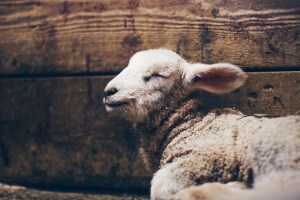
Yohanes Pembaptis menyebut Yesus sebagai ‘Anak Domba Allah.’ Jika kita menghadiri perayaan Ekaristi, kita akan selalu mendengar ungkapan ini. Tepat sebelum komuni, imam akan memegang roti dan anggur yang telah dikonsekrir, dan memperlihatkan kepada kita semua, lalu berkata, “Lihatlah Anak Domba Allah, Lihatlah Dia yang menghapus dosa dunia. Berbahagialah kita yang diundang ke perjamuan-Nya!”
Saya seorang Katolik sejak kecil dan saya tidak dapat mengingat lagi kapan saya mendengar Anak Domba Allah ini untuk pertama kalinya. Namun, saya tidak pernah bertanya mengapa Yesus dipanggil seperti itu. Mungkin, itu hanyalah salah satu gelar Yesus. Namun, Saya secara bertahap mempelajari kebenaran yang indah ini saat saya masuk seminari dan mendalami pembelajaran teologi dan Kitab Suci.

Jika kita menempatkan diri kita pada posisi para murid yang hidup di Palestina abad pertama, kita akan melihat betapa dalamnya gelar ini. Ketika para murid mendengar ‘Anak Domba Allah yang menghapus dosa dunia,’ mereka dengan mudah mengerti apa yang dimaksud oleh Yohanes Pembaptis.

Pertama, domba adalah hewan korban utama di Bait Allah Yerusalem. Setiap hari anak domba disembelih dan dipersembahkan kepada Tuhan. Khususnya pada hari raya Paskah, ribuan ekor domba dibawa ke Bait Allah dan dikorbankan. Meskipun pengorbanan anak domba bukan satu-satunya cara untuk menyembah Tuhan yang benar, ini berfungsi sebagai cara beribadah yang utama. Dengan menyebut Yesus sebagai Anak Domba Allah, kita mengakui bahwa penyembahan yang benar dan utama kepada Allah terjadi di dalam Yesus.

Kedua, salah satu hari raya Yahudi terpenting adalah hari raya Paskah. Ini merayakan kebebasan dari perbudakan bani Israel dari Mesir. Salah satu ciri utama dari perayaan ini adalah anak domba yang dikorbankan. Kitab Keluaran memberikan rincian bagaimana Paskah pertama harus diperingati. Anak domba berumur satu tahun yang tidak bercacat harus disembelih. Darahnya ditempatkan di tiang pintu rumah orang Israel dan tubuhnya yang dipanggang akan dimakan [lihat Keluaran 12]. Untuk menerima Yesus sebagai Anak Domba Allah, kita menyadari bahwa kita diselamatkan oleh pengorbanan dan darah Yesus, dan kita juga perlu makan tubuh-Nya.

Ketiga, satu nubuat yang menghubungkan seorang manusia dengan seekor domba berasal dari Yesaya. Nabi besar ini berbicara tentang sosok misterius ‘hamba Tuhan yang menderita.’ Hamba Allah ini akan menebus Israel, tetapi Dia harus menanggung penderitaan dan kematian yang hebat, meskipun tidak bersalah. Sang Nabi menulis, “Dia dianiaya, tetapi dia membiarkan diri ditindas dan tidak membuka mulutnya seperti anak domba yang dibawa ke pembantaian… [Yes 53: 7]. ” Dengan menerima Yesus sebagai Anak Domba Allah, kita menerima Yesus sebagai Penebus kita yang menderita dan wafat bagi kita.

Sekarang, kita telah mengenali Yesus sebagai Anak Domba Allah, kita perlu melakukan apa yang dilakukan para murid pertama: mereka ‘tinggal’ bersama Dia. Para murid tidak hanya mengenal dan menerima Yesus, tetapi mereka mengikuti dan tinggal bersama-Nya. Tidaklah cukup bagi kita untuk melihat Yesus sebagai Anak Domba, tetapi kita diundang untuk tinggal bersama-Nya, untuk menjadi murid-Nya yang sejati.


Valentinus Bayuhadi Ruseno, OP

photocredit: Daniel Sandvik

Jesus, Our Lamb of God

2nd Sunday of Ordinary Time [B]

January 17, 2021

John 1:35-42

John the Baptist identified Jesus as the ‘Lamb of God.’ If we are attending the celebration of the Eucharist, we cannot miss hearing this phrase. Just before the communion, the priest will hold the consecrated bread and wine, and present them to the faithful, then saying, “Behold the Lamb of God, Behold Him who takes away the sin of the world. Happy are those invited to the supper of the Lamb!”

I am a cradle Catholic, and I could no longer remember when I heard this Lamb of God for the first time. Yet, I never bother asking why Jesus is called such because it does not make much sense. Perhaps, it is just another fancy title of Jesus. I gradually learn this beautiful truth as I go deeper into my theology study and scriptures.

If we put ourselves in the shoes of the disciples who were living in the first century Palestine, we will see a lot more going on. When the disciples heard ‘the Lamb of God who takes away the sin of the world,” they quickly understood. It was undoubtedly mind-blowing, but they were expecting to hear that.

Firstly, a lamb was a primarily sacrificial animal in the Jerusalem temple. Every day lambs were slaughtered and offered to God. Especially during the feast day of Passover, thousands of lambs were brought to the Temple and sacrificed. It was a massive display of devotion to behold. Though the lamb’s sacrifice is not the only way to worship the true God, it serves as the ordinary way of worship. By calling Jesus the Lamb of God, we acknowledge that God’s true worship takes place in Jesus.

Secondly, one of the most important Jewish feasts is Passover. It celebrates the freedom from the slavery of God. One of the central features of this celebration is the sacrificed lamb. The Book Exodus gives the details of how the Passover has to be commemorated. An unblemished one-year-old lamb has to be slaughtered. Its blood was placed on the Jewish household doorpost, and its roasted body shall be eaten [see Exo 12]. To accept Jesus as the Lamb of God, we recognize that the sacrifice and blood of Jesus save us, and we need to eat also His body.

Thirdly, one prophesy that connects a person, and a lamb is from Isaiah. The great prophet spoke about the mysterious figure of ‘suffering servant of God.’ This man shall redeem Israel, but He has to endure great suffering and death, despite being innocent.  The prophet wrote, “He was oppressed, and he was afflicted, yet he did not open his mouth; like a lamb that is led to the slaughter… [Isa 53:7].” By receiving Jesus as the Lamb of God, we accept Jesus as our Redeemer who has to suffer and die for us.

Now, we have recognized Jesus as the Lamb of God; we need to do like the first disciples did: they remained with Him. The disciples did not merely know and accept Jesus, but they followed and stayed with Him. It is not enough for us to see Jesus as the Lamb, but we are invited to remain with Him, to become His true disciples.

Valentinus Bayuhadi Ruseno, OP

photo credit: Daniel Sandvik

Baptism and the Cross

Baptism of the Lord

January 10, 2021

Mark 1:7-11

Baptism of the Lord is one of the defining moments in the life of Jesus. The synoptic gospels [Matthew, Mark, and Luke] writes this event, though with their own perspective and emphasis. We are in the liturgical year B, and thus, we are listening from the Gospel of Mark. Mark’s version is noticeably the shortest, but it does not mean it does not deliver a powerful message. The Baptism of Jesus in the River Jordan is a turning point in Jesus’ life. After this Jesus will be in the desert for 40 days, tempted by the devil, but he will prevail. Then, from this, Jesus will begin His public ministry and unreservedly move toward Jerusalem, to Cross, Death, and Resurrection.

Often, we ask, “why should John baptize Jesus?” We are well aware that John’s baptism is an outward sign of inner repentance. If a person repents, it means that the person has been living a sinful life. Does it mean that Jesus is a sinful man, He asks for John’s baptism? Surely, Jesus who is God, is perfectly sinless, but the question remains, “why should Jesus be baptized?”  Mark does not give us a straight answer, yet the Church offers us the reason. Catechism of the Catholic Church states, “The baptism of Jesus is on his part the acceptance and inauguration of his mission as God’s suffering Servant. He allows himself to be numbered among sinners… Already he is anticipating the “baptism” of his bloody death… [CCC 536].”

Simply put, Jesus’ baptism speaks of this solidarity with us sinners, and this solidarity does not stop in the symbolic baptism of John, but this will find its fulfillment in the cross. As sinners, we deserve to die, but it is God who dies for us. The Church’s answer is beautiful, but is it truly in the mind of the evangelists, especially Mark?

When Jesus is baptized, Mark describes the sky as ‘torn apart’ and a voice came, “You are my Son, the Beloved…” The Greek word for ‘tearing apart’ is ‘schizo,’ and the same word is employed again by Mark when he recounts the happening in the Temple when Jesus died on the cross: the giant curtain that separates the holy place and the holiest place inside the Jerusalem temple [see 15:38]. Meanwhile, Mark also recounts a Roman centurion proclaims that Jesus is truly the Son of God, after witnessing remarkable events during Jesus’ death. From here, we can draw an interesting insight. With this basic pattern between what happens in baptism and in the cross, Mark is telling us that these two events are indeed related. The Baptism points to the Cross, and the Cross is the fulfillment of the Baptism.

It reveals the reason why the Father is so ‘so well pleased with His Son.’ The reason is through baptism, Jesus signals to all of us His eagerness to do His Father’s will. Though Jesus is sinless, He takes up our burden of sin and dies for us as proof of the Father’s love for us.

If in His baptism, Jesus accepts the cross, we, as the baptized Christians, are also called to carry our crosses. As we share Christ’s cross and carry it faithfully, we can hope to love radically. As we love deeply, we may hope for our salvation.


Valentinus Bayuhadi Ruseno, OP

Pembaptisan Yesus dan Salib

Pembaptisan Tuhan

10 Januari 2021

Markus 1: 7-11

Baptisan Tuhan adalah salah satu momen yang menentukan dalam hidup Yesus. Injil sinoptik [Matius, Markus dan Lukas] menulis peristiwa ini, meskipun dengan perspektif dan penekanan yang berbeda. Karena kita berada di tahun liturgi B, kita mendengarkan dari Injil Markus. Versi Markus memang terlihat paling pendek, tetapi bukan berarti tidak menyampaikan pesan yang mendalam. Pembaptisan Yesus di sungai Yordan adalah titik balik dalam kehidupan Yesus. Setelah ini Yesus akan berada di padang gurun selama 40 hari dan dicobai oleh iblis. Kemudian, dari sini, Yesus akan memulai pelayanan publik-Nya, dan bergerak menuju Yerusalem, menuju Salib, Kematian dan Kebangkitan.

Seringkali, kita bertanya, “mengapa Yohanes harus membaptis Yesus?” Kita menyadari bahwa baptisan Yohanes adalah tanda lahiriah dari pertobatan batiniah. Jika seseorang menerima pembaptisan Yohanes, itu berarti orang tersebut membutuhkan pertobatan, dan berarti dia orang berdosa. Apakah ini berarti bahwa Yesus adalah orang yang berdosa, karena Dia meminta baptisan Yohanes? Yesus yang adalah Allah, tidak berdosa. Lalu, “mengapa Yesus tetap dibaptis?” Markus tidak memberi jawaban eksplisit, namun Gereja memberi kita alasannya. Di dalam Katekismus Gereja Katolik tertulis, “Baptisan Yesus adalah penerimaan dan pengukuhan misinya sebagai Hamba Allah yang menderita. Dia membiarkan dirinya terhitung di antara orang-orang berdosa … Dia sudah mengantisipasi ‘baptisan’ dari kematiannya yang berdarah … [KGK 536]. ”

Sederhananya, baptisan Yesus berbicara tentang solidaritas dengan kita para pendosa, dan solidaritas ini tidak berhenti pada baptisan Yohanes, tetapi ini akan menemukan pemenuhannya di kayu salib. Sebagai orang berdosa, kita pantas mati, tetapi Tuhanlah yang mati untuk kita. Pengertian Gereja ini sungguh indah, tetapi apakah ini benar-benar ada di benak para penginjil, terutama Markus?

Ketika Yesus dibaptis, Markus menggambarkan langit ‘terbelah’ dan suara terdengar, “Engkaulah Anak-Ku yang Kukasihi , kepada-Mulah Aku berkenan.” Kata Yunani untuk ‘membelah’ adalah ‘schizo,’ dan kata yang sama digunakan lagi oleh Markus ketika dia menceritakan kejadian di Bait Allah ketika Yesus wafat di kayu salib: tirai raksasa yang memisahkan tempat suci dan tempat tersuci di dalam Bait Suci Yerusalem, terbelah [lih. 15:38]. Sementara itu, Markus juga menceritakan seorang perwira Romawi yang menyatakan bahwa Yesus adalah benar-benar Putra Allah setelah menyaksikan kejadian luar biasa saat kematian Yesus. Dengan pola dasar antara apa yang terjadi di saat pembaptisan dan di kayu salib, Markus ingin mengatakan kepada kita bahwa kedua peristiwa ini memang terkait. Baptisan menunjuk ke Salib, dan Salib adalah penggenapan dari Baptisan Yesus.

Dari sini, kita tahu kenapa Bapa ‘berkenan kepada Putra-Nya.’ Ini karena melalui pembaptisan-Nya, Yesus memberi tanda kepada kita semua bahwa Dia akan melakukan kehendak Bapa-Nya yakni menuju Salib dan Kebangkitan. Meskipun Yesus tidak berdosa, Dia memikul beban dosa kita dan mati untuk kita sebagai bukti kasih Bapa bagi kita.

Jika dalam baptisan-Nya, Yesus menerima salib, kita sebagai umat Kristiani yang telah dibaptis juga dipanggil untuk memikul salib kita. Saat kita berpartisipasi di salib Kristus dan memikulnya dengan setia, kita bisa berharap untuk mengasihi lebih dalam. Saat kita mengasihi lebih dalam, kita bisa berharap untuk keselamatan kita.


Valentinus Bayuhadi Ruseno, OP