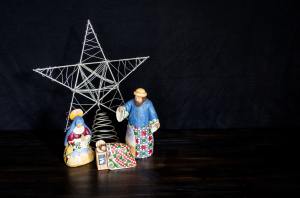
Emmanuel

Christmas – Mass during the Night [B]

December 24, 2020

Luke 2:1-14

Christmas is one of the most beautiful and joyous times of the year. Christmas is the time to gather with the families and friends and to have an exchange of gifts. Christmas is the time to put up Christmas trees, place Nativity scenes, and play Christmas songs. Surely, Christmas is the time when families once again go to the church together.

However, this year, things do not go as we want them to be. The pandemic caused by Covid-19 continues to plague our societies, and it significantly affects how we do things and relate with one another. Some of us can no longer go home because of our nature of professions or travel restrictions. Some of us will not attend the beautiful Christmas vigil liturgy because the Church remained closed. Some of us have no special meals on the table because the poor economy hits us hard. For some of us, it is just a lonely and sad Christmas because some of our family members are sick or even have passed away.

Is this still a Christmas? In these difficult situations, all the more, we are invited to reflect on the mystery of Incarnation. The drama of salvation begins with a little baby with His poor parents. Joseph was David’s son, yet he was no more than a poor carpenter, who cannot even provide a decent place for his wife to give birth. Mary was a young mother who had to endure unimaginable shame and various threats to her life. And, at the center of Christmas is the baby boy who is God and yet chose to be born in the most unworthy place of all, a cave filled with animals. He did not opt for much grander places like a royal palace or a magnificent castle. He did not decide to be wrapped with a purple royal garment, but a simple linen cloth. He did not select a golden and comfortable bed, but an unhygienic stone manger.

Looking at the circumstances, Jesus’ birth is not that impressive, but this is what makes the mystery of Incarnation touch every human heart. He did not come as an imposing and authoritarian king like Augustus. He did not come as a shrewd military leader like Julius Caesar. He did not come as a smart politician like Herod. God comes to us as the weakest baby in the humblest place. He is a God who radically loves us and wills to embrace even our weak nature.

Christmas reminds us that Jesus is with us when we are broken by economic conditions; Jesus is with us when we cannot be with our loved ones. Jesus is with us when we are losing our family members. The first Christmas points to us that God does not always spare us from suffering, but He promises to be with us in these terrible times.

One of my friends just lost his father due to Covid-19. It was sudden and untimely death. And what made it very painful is they could not give the last farewell for him as the remain brought immediately to the cemetery. When I had a chance to talk to him, I discovered he could accept the death, and then I asked him the reason. He narrated to me that before his father was admitted to the hospital, he gave his father a brown scapular. He also learned that his father passed away when he was praying the rosary. He believed that his father was not alone when he died; God is with him. Indeed, Jesus is the Emmanuel: God is with us.

Merry Christmas!

Valentinus Bayuhadi Ruseno, OP

photocredit: debby hudson
Immanuel

Malam Natal [B]

24 Desember 2020

Lukas 2: 1-14

Natal adalah salah satu masa terindah dan menggembirakan. Natal adalah waktu untuk berkumpul dengan keluarga dan para sahabat, dan juga bertukar hadiah. Natal adalah waktu memasang pohon Natal, merancang Gua Natal, dan memutar lagu-lagu Natal. Pastinya, Natal adalah saat keluarga pergi ke gereja bersama-sama.

Namun, tahun ini, banyak hal tidak berjalan seperti yang kita inginkan. Pandemi yang disebabkan oleh Covid-19 terus menghantam masyarakat kita, dan memengaruhi secara signifikan cara kita melakukan sesuatu dan berelasi satu sama lain. Beberapa dari kita tidak bisa lagi pulang karena profesi kita atau pembatasan perjalanan. Beberapa dari kita tidak akan dapat menghadiri liturgi malam Natal yang indah karena Gereja tetap tutup. Beberapa dari kita tidak memiliki makanan spesial di atas meja karena ekonomi yang buruk memukul kita dengan keras. Bagi sebagian dari kita, ini adalah Natal yang dingin dan menyedihkan karena beberapa anggota keluarga kita sakit atau bahkan telah meninggal dunia.

Apakah ini masih Natal? Dalam situasi sulit ini, semakin kita diundang untuk merenungkan misteri Inkarnasi. Drama keselamatan dimulai dengan seorang bayi kecil dengan orang tua-Nya yang miskin. Yusuf adalah putra Daud, namun dia tidak lebih dari seorang tukang kayu yang sederhana, yang bahkan tidak dapat menyediakan tempat yang layak bagi istrinya untuk melahirkan. Maria adalah seorang ibu muda, yang harus menanggung rasa malu yang tak terbayangkan dan berbagai ancaman terhadap hidupnya. Dan, di tengah Natal adalah bayi laki-laki yang adalah Tuhan sendiri, tetapi memilih untuk dilahirkan di tempat yang paling tidak layak, sebuah gua yang dipenuhi dengan binatang. Dia tidak memilih tempat yang sangat megah seperti istana atau kastil yang megah. Ia tidak memilih untuk dibungkus dengan pakaian kerajaan berwarna ungu, melainkan kain linen sederhana. Dia tidak memilih tempat tidur emas dan nyaman, tetapi palungan batu yang tidak higienis.

Melihat keadaannya, kelahiran Yesus memang tidak terlalu mengesankan, tapi inilah yang membuat misteri Inkarnasi menyentuh hati setiap manusia. Dia tidak datang sebagai raja yang mendominasi dan otoriter seperti kaisar Agustus. Dia tidak datang sebagai pemimpin militer yang lihai seperti Julius Caesar. Dia tidak datang sebagai politikus yang cerdas seperti Herodes. Tuhan datang kepada kita sebagai bayi terlemah di tempat yang paling rendah. Dia adalah Tuhan yang sangat mengasihi kita, dan ingin merangkul bahkan kodrat kita yang lemah kita.

Natal mengingatkan kita bahwa Yesus menyertai kita ketika kita bergulat dengan kondisi ekonomi; Yesus menyertai kita saat kita tidak bisa bersama orang yang kita cintai. Yesus menyertai kita saat kita kehilangan anggota keluarga kita. Natal pertama menunjukkan kepada kita bahwa Tuhan tidak selalu melepaskan kita dari penderitaan, tetapi Dia berjanji untuk selalu menyertai kita di saat-saat yang sulit ini.

Salah satu teman saya baru saja kehilangan ayahnya karena Covid-19. Hal ini adalah kematian yang tiba-tiba dan terlalu cepat. Yang membuatnya sangat menyakitkan adalah mereka tidak bisa memberikan perpisahan terakhir karena jenazah segera dikubur. Ketika saya memiliki kesempatan untuk berbicara dengannya, saya melihat dia sudah dapat menerima kepergian ayahnya. Sayapun menanyakan alasannya. Dia menceritakan kepada saya bahwa sebelum ayahnya dirawat di rumah sakit, dia dapat memberikan skapulir coklat kepada ayahnya. Dia juga mengetahui bahwa ayahnya meninggal ketika dia berdoa rosario. Dia percaya bahwa ayahnya tidak sendirian ketika dia meninggal, Tuhan menyertainya. Sungguh, Yesus adalah Imanuel, Tuhan beserta kita.

Selamat Natal!

Valentinus Bayuhadi Ruseno, OP

photocredit: debby hudson

Rejoice Always!

Gaudete Sunday. 3rd Sunday of Advent [B]

December 13, 2020

John 1:6-8, 19-28

This Sunday is special. We are still in the season of Advent, and yet we see a different liturgical color. It is a rose color [not pink!]. This beautiful color symbolizes joy and hope, and it is in line with the spirit of the third Sunday of Advent, the Gaudete Sunday. Gaudete is a Latin word meaning “Rejoice!” The name is rooted in the introit or the opening antiphon of the Mass, from Phil 4:4-5, “Rejoice in the Lord always; again I will say, Rejoice. 5 Let your gentleness be known to everyone. The Lord is near” In the second reading, St Paul reiterates the motif, “Rejoice always. Pray without ceasing. In all circumstances give thanks, for this is the will of God for you in Christ Jesus. [1 The 5:16].”

Yet, the real question is, “Is the Church too naïve in inviting us to rejoice in these difficult times?” This deadly and fast-spreading virus covid-19 has devastated practically the entire planet. While it does not physically destroy the earth like a nuclear bomb, it does kill countless people. It slows down the economy and forces many governments, even the strongest, to panic and struggle. The number of victims keeps increasing, and there is no sign of abating. Indeed, we are going to have a different experience of Christmas this year. Indeed, covid-19 is not the only thing that makes our day so bad. Personal issues, family problems, conflicts in the community, and many other things are still haunting our lives. How do you expect us to rejoice? If we examine the words of St. Paul in 1 Thes 5:16, we discover that to rejoice is not an option, but God’s will for us! It gives us more reason to ask how it is possible?

The key is to understand joy neither as a simple absence of pain nor bodily and emotional pleasure. The Greek word is “kaire” and Angel Gabriel uses the same word to address Mary [Luk 1:28]. If we look at the life of Mary, she does not have a fairy-tale-kind life. Her life will turn upside-down, a sword will pierce her soul, and she will see her son die on the cross. Nothing pleasurable and sensational about that! Yet, she says, “My spirit rejoices in God my savior [Luk 1:47]! Mary is able to discover something precious despite tons of ugly things in her life. She discovers Jesus.

In 1 The 5:16, rejoice cannot be separated from unceasing prayer and giving thanks in all circumstances. That is another key. Through prayer, we are connected to God, and in prayer, we learn to see God and His plan in our lives. Sometimes, we can only see good things in good time, but the Gospel has told us the opposite: there is God in the dirty manger, and even there is God on the horrible cross. When we see God in these broken pieces of lives, we cannot but give thanks. And, when we are always grateful, we are inspired to rejoice.  That is the spirit of Christmas, and we are trained in the school of Gaudete Sunday.


Valentinus Bayuhadi Ruseno, OP


Mark and His Gospel

Second Sunday of Advent [B]

December 6, 2020

Mark 1:1-8

On the second Sunday of Advent, we are reading from the beginning of the Gospel of Mark. After all, this is the beginning of liturgical year B, and it is fitting to start with the first chapter of Mark. Yet, unlike Matthew and Luke, Mark has neither infancy narratives nor the childhood stories of Jesus. Mark commences his Gospel with John the Baptist, who announces the repentance and the coming of Christ.
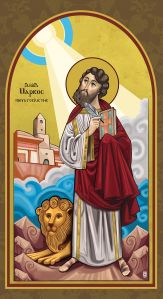
Mark, among the four gospels, is arguably the least popular. This happens for understandable reasons. Mark is the shortest Gospel, and it has only 16 chapters and around fifteen thousand Greek words. [Matthew has around twenty-three thousand while Luke has twenty-five thousand]. Many stories in Mark are also found in Matthew and Luke, but many materials in Matthew or Luke are absent in Mark. Thus, people who read Matthew tend to skip Mark because they believe they have read Mark. This is certainly unfortunate because Mark has its characters and emphasis.

Mark is action-oriented Gospel. It immediately starts with a man of action, John the Baptist. Mark presents Jesus as someone who always in the move and is active. Mark does not write much about Jesus’ preaching but focuses on what Jesus does. He preaches the good news, heals the sick, exorcises the demons, does miracles, calls disciples, and travels a lot. Mark’s Gospel is also fast-paced, yet, despite the fast-moving events, Mark often paints more details in his accounts, like the Gerasene demoniac story [Mar 5:1-20].

The traditional symbol for Mark is a lion. He acquires this symbol because his Gospel starts with John, who boldly preaches repentance, just like a lion. Yet, the Gospel of Mark itself displays the character of a lion: it delivers his point powerfully and effectively. Mark was not the twelve disciples of Jesus, and he might be an eyewitness, especially when Jesus was arrested [Mark 14:51]. The Acts of Apostles calls him John Mark, a companion of Paul and Barnabas in their missionary journey. Still, unfortunately, Mark became a source of disagreement between Paul and Barnabas [Act 15:39]. Yet, he finally reconciled with Paul [Col 4:10]. Along the way, he turned to be the companion and disciple of St. Peter in Rome [1 Pet 5:13]. Later, in the early second century, Papias, bishop of Hierapolis, testified that Mark was the interpreter of Peter and wrote down Peter’s teachings of Jesus. Because of Peter’s authority, we understand why Mark’s Gospel was selected as one of the canonical gospels.

What can we learn from Mark and his Gospel, especially this season of Advent? Mark gives us an example that we can approach Jesus in our unique characters. While Mark is writing about Jesus, he does not have to compose like John. Like Mark, we do not have to be someone else in loving God. While the saints serve as role models, we are invited to love Him with our unique personalities and ways. While we are united in one Church, our personalities do not disappear but rather enhanced in serving one another. Unless we recognize who we are fundamentally in Christ, we are going to fail to love authentically.

Valentinus Bayuhadi Ruseno, OP

photocredit: samantha-sophia

Markus dan Injilnya

Minggu Kedua Adven [B]

6 Desember 2020

Markus 1: 1-8

Pada Minggu kedua Adven, kita membaca dari awal Injil Markus. Kita ingat bahwa ini adalah awal dari tahun liturgi B sehingga awal Injil Markus adalah bacaan yang tepat. Namun, tidak seperti Matius dan Lukas, Markus tidak memiliki narasi kelahiran maupun kisah masa kecil Yesus. Markus memulai Injilnya dengan Yohanes Pembaptis yang mewartakan pertobatan dan kedatangan Kristus.

Markus di antara keempat Injil, bisa dibilang paling tidak populer. Mengapa? Markus adalah Injil terpendek dan hanya memiliki 16 bab dan sekitar lima belas ribu kata Yunani. [Matius memiliki sekitar dua puluh tiga ribu sedangkan Lukas memiliki dua puluh lima ribu]. Banyak cerita dalam Markus juga ditemukan dalam Matius dan Lukas, tetapi banyak materi dalam Matius atau Lukas tidak ada dalam Markus. Jadi, orang yang membaca Matius cenderung melewatkan Markus karena mereka yakin mereka telah membaca Markus. Hal ini tentunya sangat disayangkan karena Markus memiliki karakter dan penekanan tersendiri.

Markus adalah Injil yang berorientasi pada tindakan. Injil ini dimulai dengan Yohanes Pembaptis, “man of action”. Markus menampilkan Yesus sebagai seseorang yang selalu bergerak dan aktif. Markus tidak banyak menulis tentang pengajaran Yesus, tetapi berfokus pada apa yang Yesus lakukan. Yesus memberitakan kabar baik, menyembuhkan orang sakit, mengusir setan, melakukan mukjizat, memanggil murid dan mengunjungi banyak tempat. Injil Markus juga bergerak cepat, namun, meskipun bergerak cepat, Markus sering menuliskan lebih banyak detail dalam ceritanya di bandingkan Matius atau Lukas, seperti kisah orang yang dirasuki roh jahat di Gerasa [Mar 5: 1-20].

Lambang tradisional Markus adalah seekor singa. Dia memperoleh simbol ini karena Injilnya dimulai dengan Yohanes yang dengan berani memberitakan pertobatan, layaknya seekor singa. Namun, Injil Markus sendiri menampilkan karakter seekor singa: Injil ini menyampaikan pesannya dengan kuat dan efektif. Markus sendiri bukanlah dua belas rasul Yesus, dan ada kemungkinan bahwa dia adalah menjadi saksi mata, terutama ketika Yesus ditangkap [Markus 14:51]. Dari Kisah Para Rasul, nama lengkapnya adalah Yohanes Markus yang pada awalnya adalah rekan Paulus dan Barnabas dalam perjalanan misionaris mereka. Namun, sayangnya, Markus menjadi sumber ketidaksepakatan antara Paulus dan Barnabas [Kis 15:39]. Akhirnya dia berdamai dengan Paulus [Kol 4:10]. Markus kemudian menjadi pendamping dan murid St. Petrus di Roma [1 Pet 5:13]. Menurut kesaksian Papias, uskup Hierapolis, pada awal abad kedua, Markus adalah penerjemah dari St. Petrus dan menuliskan ajaran Petrus tentang Yesus secara akurat tapi tidak secara kronologis. Karena otoritas Petrus inilah, Injil Markus dipilih sebagai salah satu Injil kanonik.

Apa yang dapat kita pelajari dari Markus dan Injilnya terutama pada masa Adven ini? Markus memberi kita teladan bahwa kita dapat melayani Yesus dengan kepribadian kita yang unik. Saat Markus menulis tentang Yesus, dia tidak menulis seperti Yohanes. Saat Lukas mengutip Markus, dia tidak sekedar menjiplak Markus, tetapi menulis dengan gayanya sendiri. Seperti Markus, kita tidak harus menjadi orang lain dalam mengasihi Tuhan. Sementara para kudus memberikan teladan, kita diundang untuk mengasihi Dia dengan kepribadian dan cara kita yang unik dan terbaik. Saat kita menjadi bagian dalam satu Gereja, kepribadian kita tidak hilang, melainkan ditingkatkan dalam melayani satu sama lain. Kecuali kita mengenali siapa kita secara fundamental di dalam Kristus, kita akan gagal untuk mengasihi secara otentik.

Valentinus Bayuhadi Ruseno, OP


King of Mercy

The Solemnity of Our Lord Jesus Christ, King of the Universe [A]

November 22, 2020

Matthew 25:31-46

To be the subject of a king is a foreign experience for many of us. I was born in Indonesia, and our country is a republic, and we espouse democracy to elect our leader. Some of us are citizens of kingdoms like Great Britain, Belgium, Thailand, and Japan, but the kings or queens here are serving under the constitution. When we speak of absolute monarchs, we are reminded of the powerful ancient kingdoms like Assyrian, Babylonian, and Persian empires. Here, the king’s words are the highest law, and disobedient to the king’s wish is acts of treason. Surprisingly, we still have some existing absolute monarchs in our time, like Brunei, Saudi Arabia, and the Vatican!

Today we are celebrating the solemnity of Jesus Christ, the King of the Universe. Yet, it is a bit difficult to imagine Christ as a king. He never wears a crown except for thorns. He never sat on the throne except for the cross. And, He never possessed an army except for a bunch of coward disciples.  Is Jesus truly a king? The answer is an absolute yes. Jesus, as the king, is one of the dominant topics in the Gospels. Angel Gabriel announces to Mary, “the Lord God will give to him [Jesus] the throne of his ancestor David. He will reign over the house of Jacob forever, and of his kingdom there will be no end. [Luk 1:32-33]” One of the criminals crucified with Jesus cries, “Jesus, remember me when you come into your kingdom. [Luk 23:42]” And throughout His public ministry, Jesus is tirelessly proclaiming and building the kingdom of God.

In today’s Gospel, Jesus reveals that he is not just an ordinary king, not just a king among many kings. He is the king of kings, and only He can bring people to eternal life and everlasting damnation. We are reminded that since Jesus is the king of the universe, we are all His subjects. However, whether we are good subjects or bad ones, we still have to choose. Like with other kingdoms, we still need to at least two basic things: acknowledging Jesus as our king and being His loyal servant.

The good news is that He does not require us, His subjects, to wage war against other countries or pay taxes! He is the king of mercy, and thus, His order is: do the Works of Mercy. In the Catholic tradition, there are seven corporal works of mercy. These are: to feed the hungry, give water to the thirsty, clothe the naked, shelter the homeless, visit the sick, visit the imprisoned, and bury the dead. The seven corporal works of mercy are not complete with the seven spiritual works of mercy. These are: to instruct the ignorant, counsel the doubtful, admonish the sinners, bear patiently those who wrong us, forgive offenses, comfort the afflicted, and pray for the living and the dead.

Doing these are not always easy, but it is necessary because it proves our loyalty to the great king. Negligence to do works of mercy brings a serious consequence: to be expelled from the kingdom. The choice is ours, and the time is now.

Valentinus Bayuhadi Ruseno, OP

photocredit: robert nyman

Raja Belas Kasih

Hari Raya Tuhan kita Yesus Kristus, Raja Semesta Alam [A]

22 November 2020

Matius 25: 31-46

Menjadi abdi seorang raja adalah pengalaman asing bagi banyak dari kita. Saya lahir di Indonesia, dan negara kita adalah republik dan kita menjunjung demokrasi sebagai cara untuk memilih pemimpin kita. Mungkin kita pernah ke negara kerajaan seperti Inggris, Belgia, Thailand, dan Jepang, tetapi raja atau ratu di sini juga berdasarkan konstitusi atau undang-undang dasar. Ketika kita berbicara tentang monarki absolut, kita diingatkan tentang kerajaan kuno yang kuat seperti kerajaan Asyur, Babel, dan Persia. Di sini perkataan raja adalah hukum tertinggi, dan tidak mematuhi keinginan raja adalah tindakan pengkhianatan. Sebenarnya, kita masih memiliki beberapa monarki absolut yang ada di zaman kita, seperti Kerajaan Brunei, Arab Saudi dan Vatikan!

Hari ini kita merayakan Hari Raya Yesus Kristus, Raja Semesta Alam. Namun, agak sulit membayangkan Kristus sebagai seorang raja. Dia tidak pernah memakai mahkota kecuali dari duri. Dia tidak pernah duduk di singgasana kecuali salib. Dan, Dia tidak pernah memiliki pasukan kecuali sekelompok murid-murid yang pengecut. Apakah Yesus benar-benar seorang raja? Jawabannya ya! Faktanya, Yesus sebagai raja adalah salah satu topik dominan dalam Injil. Malaikat Gabriel menyatakan kepada Maria, “…Dan Tuhan Allah akan mengaruniakan kepada-Nya takhta Daud, bapa leluhur-Nya,  dan Ia akan menjadi raja atas kaum keturunan Yakub sampai selama-lamanya dan Kerajaan-Nya tidak akan berkesudahan [Luk 1: 32-33].” Salah satu penjahat yang disalibkan bersama Yesus berseru, “Yesus, ingatlah akan aku, apabila Engkau datang sebagai Raja [Luk 23:42].” Dan sepanjang pelayanan publik-Nya, Yesus tanpa lelah mewartakan dan membangun kerajaan Allah.

Dalam Injil hari ini, Yesus mengungkapkan bahwa dia bukan hanya raja biasa, bukan hanya raja di antara banyak raja. Dia adalah raja dari segala raja, dan hanya Dia yang dapat membawa orang ke kehidupan kekal atau maut yang abadi. Kita diingatkan bahwa karena Yesus adalah raja alam semesta, kita semua adalah abdi-Nya. Namun, kita tetap harus memilih, apakah kita abdi yang baik atau buruk. Seperti halnya kerajaan lainnya, kita masih melakukan setidaknya dua hal dasar: mengakui Yesus sebagai raja kita dan menjadi abdi-Nya yang setia.

Kabar baiknya adalah untuk menjadi abdi-Nya yang setia, Dia tidak menuntut kita untuk berperang melawan negara lain, atau bahkan membayar pajak! Dia adalah raja belas kasih, dan dengan demikian, perintah-Nya adalah: lakukan karya-karya Belas Kasih. Dalam tradisi Katolik, ada tujuh karya belas kasih jasmani. Ini adalah: memberi makan yang lapar, memberi air kepada yang haus, memberi pakaian bagi yang telanjang, melindungi para tunawisma, mengunjungi yang sakit, mengunjungi yang dipenjara, dan menguburkan yang meninggal. Tujuh karya belas kasih jasmani tidak lengkap tanpa tujuh karya belas kasih rohani. Ini adalah: Menasihati orang yang ragu-ragu, mengajar orang yang belum tahu, menegur pendosa, menghibur orang yang menderita, mengampuni orang yang menyakiti, menerima dengan sabar orang yang menyusahkan, dan berdoa untuk orang yang hidup dan mati.

Melakukan hal-hal ini tidak selalu mudah, tetapi perlu karena itu membuktikan kesetiaan kita kepada sang raja agung. Kelalaian melakukan perbuatan belas kasih membawa konsekuensi serius: diusir dari kerajaan. Pilihan ada di tangan kita dan waktunya sekarang.

Valentinus Bayuhadi Ruseno, OP

photocredit: Arturo Rey

The Master’s Trust

33rd Sunday in Ordinary Time

November 15, 2020

Matthew 25:14-30

The original meaning of talent is not God’s given ability, but a unit of weight and value, normally gold and silver. More importantly, talent is a huge amount of money. One talent is equal to around six thousand denarii. If one denarius is the wage of ordinary daily labor, one talent means six thousand days of works or approximately seventeen to twenty years of work.

To seek the value of this parable, we need to discover the surprising twists in the story. This time, I would like to invite you all to focus on the master of the servants. The master is giving a total of 8 talents to his three servants [literally slaves]. If we pause a moment, we begin to realize how fantastic amount of money they receive. The act of giving presupposes either two things: either the master is unimaginable rich that he does not care really about these talents, or he is utterly generous and trusting. I believe it is the second reason.

To entrust these talents entails grave risks. One possibility is that the servants may fail in their trading, and thus, the master may lose his money. Another chance is the servants may run away with talents, and therefore, the master may lose both his money and his servants. Yet, despite these nightmarish possibilities, the master is firm in his decision. He trusts his servants, and it pays off. Except for his lazy servant, the master earns double!

From this, we learn a precious lesson. The best way to expand our talent is by sharing it with others. The usual way to develop our talents is by practicing it often. However, this method does not bring us exponential growth. Yet, by sharing the talents, the possibility of growth is unimaginable. Yet again, the parable is not simply about talents, but the relationship between the master and the servants, on the trust and faith of the master and gratitude of the servants. Indeed, the ability to recognize the master’s trust produces gratitude, and gratitude propels the servants to do their best.

One probable reason that the servant becomes lazy is that he fails to recognize his master’s trust and focuses on the smallness of his talent. Ironically, one talent is still a huge amount of wealth! Thus, instead of gratitude, envy creeps in, and laziness prevails. We also notice that the servant is not losing the talent, but he still receives the punishment. Though the talent is not missing, the trust of the master has been lost. And when this trust’s lost, everything is lost.

Learning from this parable, we are called to have that ability to recognize God’s “trust” and love in us. Different talents we have are just a simple manifestation of this love. Slaves as we are, we do not deserve anything from God, but God has given us superabundantly. From this realization, only gratitude shall naturally flow. But, if we miss the point, we may fall into many other sins: envy, anger, slander, or simply laziness. Again, it is not about the talents we have, but the trust and love God has in us.


Valentinus Bayuhadi Ruseno, OP


Foolish Virgins

32nd Sunday in Ordinary Time

November 8, 2020

Matthew 25:1-13

A wedding ceremony is one of the most beautiful events in many cultures and societies. This includes the Jewish community in the first century AD Palestine. For the Hebrew people living in the time of Jesus, the wedding ceremony has two stages. The first one is the exchange of vows or betrothal. The couple is officially married, and they are recognized as husband and wife in the eyes of the Jewish community. Yet, they are going to wait for around one year before they are living together. The husband will prepare for the house as well as the reception celebration that may last for seven days.
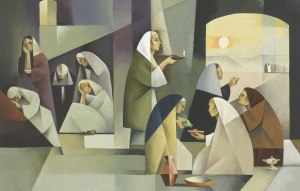
The second stage is the wedding party. It begins with the groom fetch the bride from her ancestral house, and bring her to his home with a procession of dance and music. Since the procession usually takes place in the evening, fire and torches are indispensable. The ten virgins are part of the wedding ceremony which we may call today as the bridesmaids. They may be some of the close friends of the bride and even relatives of the couples. They are stationed not far from the wedding place to welcome the married couple. Since there is no internet and GPS, the ten virgins may not be able to locate precisely where the procession is, but they are expected to be ready.

It is interesting to see the attitude of the five foolish virgins. In Greek, the virgins are called as “moros” where we get the English word moron. It is undoubtedly a harsh word. Jesus applies the same word after His sermon on the Mount and points to people who listen to His preaching without practising them, “like a foolish man who built his house on sand [Mat 7:26].” Yet, if we observe, what we see that the virgins are doing foolish things. Not only they fail to prepare for the unexpected arrival of the groom, but they also look for the oil in the middle of the night. They are not living in the modern era where we can easily purchase it at the 24-hour convenient stores. The merchants are expectedly unavailable, and we can imagine how they rushingly search the vendors, and frantically knock their doors. This may cause unnecessary inconveniences and bring absolute shame to the couples. This may be the reason also why the wedding’s host refuses to admit these five foolish virgins.

This parable of Jesus gives us a potent reminder not to become foolish in living our lives as Christians. We are given a particular role and mission in our lives. Some of us are called to be married couples and parents.  Some of us are serving as priests or religious men and women. Some of us are teachers of the faith; some of us are leaders of the community, and others are servants. In whatever role we are, Jesus asks us to be wise in doing our ministries and demands us not to do foolish things as to scandalize others or even cause others unnecessary suffering.

If we, as Christians, act foolishly, we bring shame, not only to ourselves but Christ Himself. But, if we think and produce wise deeds, we bring glory to the Lord, and more people will praise our God.


Valentinus Bayuhadi Ruseno, OP

Kebodohan

Minggu ke-32 di Masa Biasa

8 November 2020

Matius 25: 1-13

Upacara pernikahan adalah salah satu acara terindah di banyak budaya dan masyarakat. Ini termasuk di masyarakat Yahudi di Palestina abad pertama Masehi. Bagi orang Ibrani yang hidup pada zaman Yesus tersebut, upacara pernikahan memiliki dua tahap. Yang pertama adalah pertukaran janji. Pasangan tersebut sudah menikah secara resmi, dan mereka diakui sebagai suami dan istri di mata komunitas Yahudi. Namun, mereka akan menunggu sekitar satu tahun sebelum mereka bisa hidup bersama. Sang suami akan mempersiapkan rumah mereka serta perayaan pesta nikah yang mungkin berlangsung selama 7 hari lamanya.

Tahap kedua adalah pesta pernikahan. Ini dimulai dengan pengantin pria menjemput sang istri dari rumah keluarganya, dan membawanya ke rumahnya dengan prosesi tarian dan musik. Karena prosesi biasanya berlangsung pada malam hari, api dan obor sangat diperlukan. Sepuluh gadis ini adalah mungkin beberapa teman dekat dari pengantin wanita dan bahkan kerabat dari pasangan tersebut. Mereka ditempatkan tidak jauh dari tempat pernikahan untuk menyambut pasangan suami istri tersebut. Karena tidak ada internet dan GPS, kesepuluh perawan mungkin tidak dapat mengetahui posisi prosesi tersebut dengan tepat, tetapi mereka diharapkan siap kapanpun pasangan ini datang.

Mari kita perhatikan sikap dari lima gadis yang bodoh ini. Dalam bahasa Yunani, kelima gadis ini disebut “moros” di mana kita mendapatkan kata dalam bahasa Inggris “moron”. Itu pasti kata yang keras. Namun, jika kita amati dengan seksama, apa yang dilakukan perawan ini sungguh bodoh dan ceroboh. Bukan hanya gagal mempersiapkan kedatangan pengantin, mereka juga mencari minyak di tengah malam. Mereka tidak hidup di era modern di mana kita dapat dengan mudah membeli barang-barang di toko seperti indomart atau alfamart. Kita bisa membayangkan bagaimana mereka dengan tergesa-gesa mencari pedagang, dan dengan panik mengetuk pintu toko atau rumah mereka. Hal ini dapat menyebabkan ketidaknyamanan dan bahkan kegaduhan yang tidak perlu dan menimbulkan rasa malu bagi sang pasangan. Ini mungkin juga menjadi alasan mengapa tuan rumah menolak untuk menerima lima gadis bodoh ini.

Perumpamaan Yesus ini memberi kita peringatan yang kuat untuk tidak menjadi bodoh dalam menjalani hidup kita sebagai orang Kristiani. Kita diberi peran dan misi tertentu dalam hidup kita. Beberapa dari kita dipanggil untuk menjadi pasangan suami-istri dan orang tua, dan beberapa dari kita melayani sebagai imam atau rohaniawan seperti para suster. Beberapa dari kita adalah pendidik iman, beberapa dari kita adalah pemimpin komunitas dan yang lainnya terlibat dalam berbagai pelayanan. Dalam peran apapun kita miliki, Yesus meminta kita untuk bijak dalam melakukan hidup dan pelayanan kita, dan menuntut kita untuk tidak melakukan hal-hal bodoh dan bahkan menyebabkan penderitaan yang tidak perlu bagi orang lain.

Jika kita, sebagai orang Kristiani, bertindak bodoh, kita tidak hanya mempermalukan diri kita sendiri, tetapi juga Kristus sendiri. Tapi, jika kita menghasilkan perbuatan bijak, kita membawa kemuliaan bagi Tuhan, dan lebih banyak orang akan memuji Tuhan kita.

St. Josemaria Escriva pernah berkata, “wajah murung, tidak sopan, tampil konyol, tidak ramah. Itukah caramu berharap untuk mengispirasi orang lain untuk mengikuti Kristus?”


Valentinus Bayuhadi Ruseno, OP