

Baptism of The Lord [A]
January 11, 2026
Mat 3:13-17
One question that often baffles some of us is: why did Jesus need be baptized by John the Baptist? John himself proclaims that his baptism is a sign of repentance. Those who come to him must first acknowledge their sinfulness and unworthiness, making the baptism of water a visible sign of turning away from sins. Yet, we know that Jesus is sinless [Heb 4:15; 1 Pet 2:22]. How do we understand Jesus’ baptism?
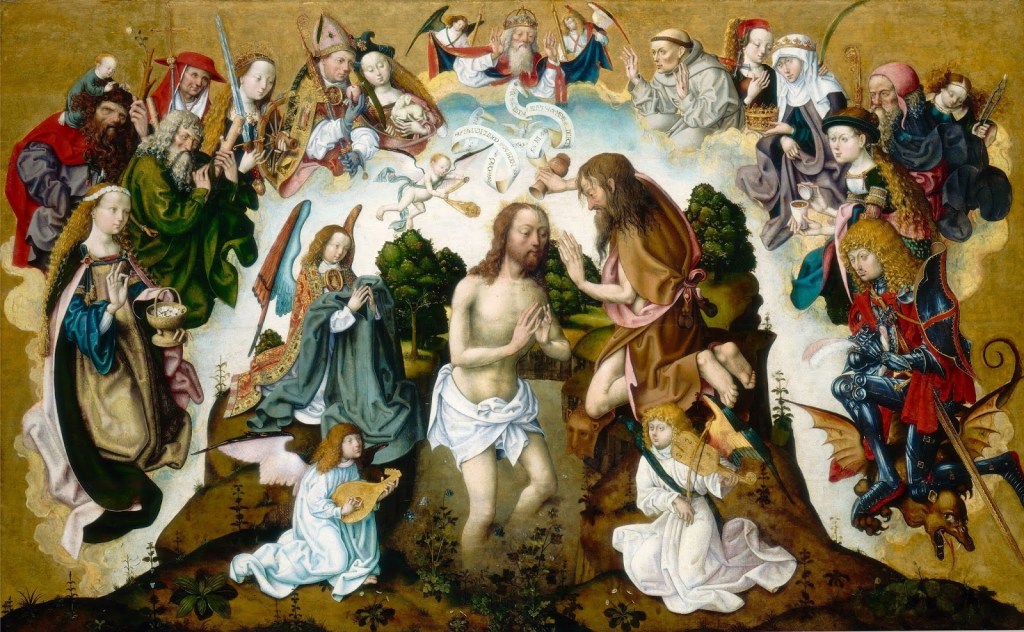
The same question has also puzzled many great Christian thinkers through the ages. While it is impossible to list every interpretation here, St. Proclus, a 5th-century Patriarch of Constantinople, offers a profound insight. In his homily in “Holy Theophany,” he invites us to witness a paradox, “Come then and see new and astounding miracles: The Sun of righteousness washing in the Jordan, fire immersed in water, God sanctified by the ministry of man.” In essence, St. Proclus saw the baptism of Jesus not as a necessity for forgiveness, but as a “miracle of humility.”
When an Israelite came to John to be baptized, it was certainly an act of humility, an acknowledgment before God of their sinfulness and a willingness to repent. However, when the divine Jesus is baptized by the human John, it goes beyond ordinary humility; it is an extraordinary humility, miraculous in nature. St. Proclus teaches that while this astonishing humility was present at Jesus’ birth, the Baptism differs from Christmas. The Nativity was a hidden miracle, but the Baptism was a public event, witnessed by the multitudes, where God the Father openly declared He was pleased with His Son’s act of self-emptying.
This offers a vital lesson for all of us: it is through divine humility that we receive salvation and are sanctified. In His humility, the Son became man and placed Himself under the care of Joseph and Mary. In His humility, Jesus was baptized by John, becoming one with the people He came to save. In His humility, Christ patiently endured the cross, accepting death as the perfect sacrifice for our redemption. Jesus perfectly loves the Father; from this profound love, humility is born; from this extraordinary humility, obedience is engendered; and through Jesus’ obedience throughout His life, we are saved.
We see the necessity of this virtue in the life of St. Philip Neri, a well-loved saint of Rome. The Pope once asked him to investigate a nun who allegedly received visions from the Lord and performed miracles. On his way to her convent, rain poured down heavily, turning the streets to mud. The holy man continued his journey, though his clothes were drenched and his boots caked in mud. Upon his arrival, the nun greeted him, excited to share her visions with such a famous priest. However, the first thing St. Philip asked was for her to help him remove his soiled boots. She was infuriated, scolding him and declaring that such a request was too demeaning for a spiritual woman like her.
St. Philip immediately returned to the Vatican. He reported to the Pontiff, “Holy Father, she is not a saint.” When the Pope asked how he could reach such a conclusion so quickly, Philip replied, “She has no humility. And where there is no humility, there can be no sanctity.”
As Jesus teaches us this lesson today, let us ask the Lord for this same gift, that we may follow His example and truly grow in holiness.
Rome
Valentinus Bayuhadi Ruseno, OP
Do I tend to separate myself from others I consider “lesser” or “sinful”? Do I view humility as a weakness that damages my reputation, or do I view it as a divine strength that I should actively seek? If I find it hard to be obedient to God or lawful authority, is it actually because I am lacking the humility and love that must come first?


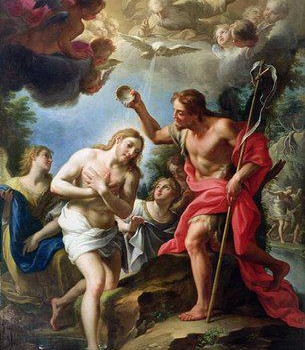
 Baptism of the Lord is one of the defining moments in the life of Jesus. The synoptic gospels [Matthew, Mark, and Luke] writes this event, though with their own perspective and emphasis. We are in the liturgical year B, and thus, we are listening from the Gospel of Mark. Mark’s version is noticeably the shortest, but it does not mean it does not deliver a powerful message. The Baptism of Jesus in the River Jordan is a turning point in Jesus’ life. After this Jesus will be in the desert for 40 days, tempted by the devil, but he will prevail. Then, from this, Jesus will begin His public ministry and unreservedly move toward Jerusalem, to Cross, Death, and Resurrection.
 Baptisan Tuhan adalah salah satu momen yang menentukan dalam hidup Yesus. Injil sinoptik [Matius, Markus dan Lukas] menulis peristiwa ini, meskipun dengan perspektif dan penekanan yang berbeda. Karena kita berada di tahun liturgi B, kita mendengarkan dari Injil Markus. Versi Markus memang terlihat paling pendek, tetapi bukan berarti tidak menyampaikan pesan yang mendalam. Pembaptisan Yesus di sungai Yordan adalah titik balik dalam kehidupan Yesus. Setelah ini Yesus akan berada di padang gurun selama 40 hari dan dicobai oleh iblis. Kemudian, dari sini, Yesus akan memulai pelayanan publik-Nya, dan bergerak menuju Yerusalem, menuju Salib, Kematian dan Kebangkitan.
 One question that always baffles attentive readers of the Scriptures is that why should Jesus be baptized by John the Baptist? John himself proclaimed that his baptism is a sign of repentance. Those who are baptized by John must first acknowledge their sinfulness and unworthiness, and baptism of water becomes the visible token of turning away from sins and promise of a new and better life. Yet, we all know that Jesus is sinless [Heb 4:15; 1 Pet 2:22]. Does it mean Jesus is sinful? Is John the Baptist greater than Jesus?
 Satu pertanyaan yang selalu membingungkan para pembaca Kitab Suci adalah mengapa Yesus harus dibaptiskan oleh Yohanes Pembaptis? Yohanes sendiri menyatakan bahwa baptisannya adalah tanda pertobatan. Mereka yang dibaptiskan oleh Yohanes harus terlebih dahulu mengakui keberdosaan dan ketidaklayakan mereka, dan baptisan air menjadi tanda nyata berpaling dari dosa dan memulai kehidupan yang baru dan lebih baik. Namun, kita semua tahu bahwa Yesus tidak berdosa [lih. Ibr 4:15; 1 Pet 2:22]. Apakah ini berarti Yesus berdosa? Apakah Yohanes Pembaptis lebih besar dari Yesus?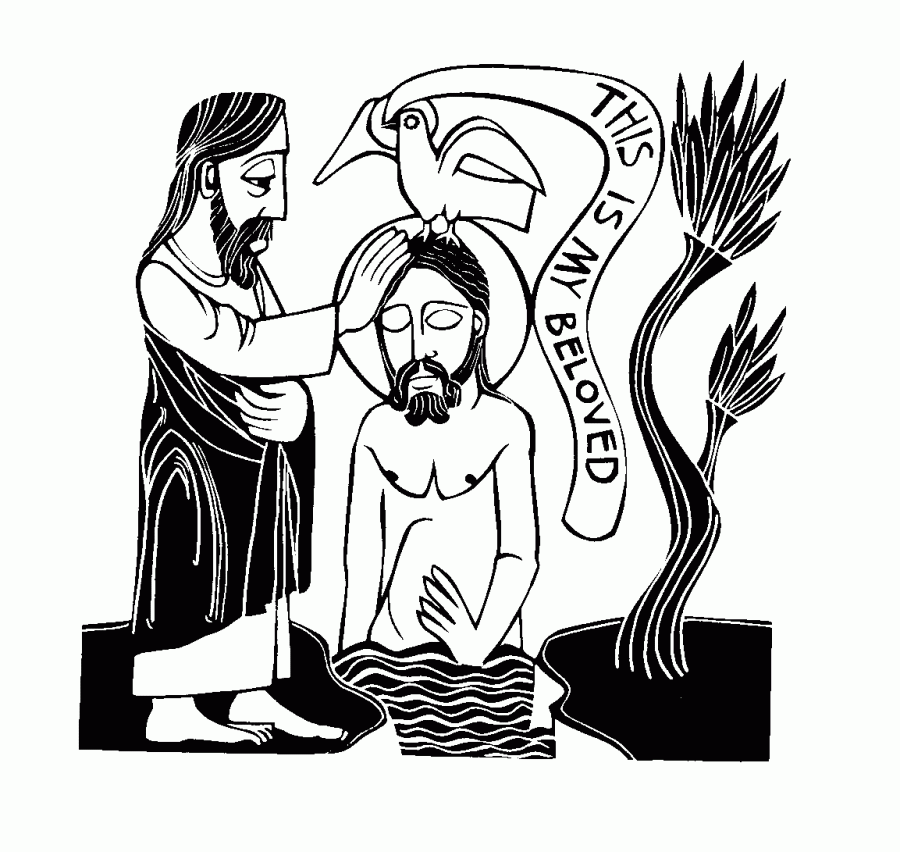
 In Medio Ecclesiae