

5th Sunday of Lent [B]
March 21, 2021
John 12:20-33
 Traditionally, the Gospel of John is divided into two major divisions: the Book of Sign [chapter 1-12] and the Book of Glory [Chapter 13-21]. The book of Sign focuses on the public ministry of Jesus and presents the seven signs of Jesus. In John’s Gospel, Sign is a technical term for a miracle. Jesus’ signs begin with changing water into wine in Cana and reaching its culmination in raising Lazarus from the dead. Meanwhile, the book of Glory tells us how Jesus is glorified. The second part starts with Jesus and his disciples in the Upperroom and culminates in His Passion, death, and resurrection.
Today’s Gospel is coming from John chapter 12, and this chapter serves as a transition between the Book of Signs to the Book of Glory. This is also why the Church selected this reading: to prepare us to enter the Passion Sunday or the Holy Week.
One powerful lesson that we can see in today’s Gospel is how Jesus perceived His Passion and death. Undeniably, He would be crucified and die a horrible death. Crucifixion is a monstrous punishment reserved only for heinous criminals or violent rebels against the Romans. Crucifixion is dreadful because its purpose is to prolong the agony of the condemned before they met their death. On the cross, people are treated even lower than the animals. This is the kind of death that Jesus embraced.
Yet, in John’s Gospel, he did not see His crucifixion as a mere human event but divine providence. Jesus calls His crucifixion the glorification of the Son of Man. Jesus’ view does not only reverse the perspective of the cross but radically transform it. His crucifixion is not just something good or positive, but it is the victorious summit of His life. Jesus declared that the cross is the time of a judgment against the devil, the ruler of the world. Jesus also claimed that the cross is when people from all nations gather as one and receive salvation.
Does it mean Jesus simply dismisses His human side and acts ridiculously tough before the suffering of the cross? Jesus also recognized and admitted His human emotions. We know that Jesus manly faces the horror of His death in the garden of Gethsemane, yet when Jesus was firm to do the Father’s will and to love until the end.
From here, we can learn a profound lesson from Jesus. In following Christ, we might face trials and hardship in life, yet trusting in God’s providence, we can embrace them as our moment of glorification. Trusting in God’s providence is not running from the harsh realities of life, but in fact, it presupposes that we embrace all our humanity. It is not running but resolutely accepting it.
We can always see the lives of our saints. St. Agatha could easily escape death, but she refused to deny Christ and braved the horrifying tortures and death. Her torturers cut her breasts, and she was burned alive. In the eyes of the world, her death was senseless, but for them, it is sharing in the suffering of Christ, and thus, sharing in His Glory.
Valentinus Bayuhadi Ruseno, OP
Photocredit: marcio-chagas
 njil Yohanes biasanya dibagi menjadi dua divisi utama: Buku Tanda-Tanda [bab 1-12] dan Buku Kemuliaan [Bab 13-21]. Buku Tanda-Tanda berfokus pada pelayanan publik Yesus dan juga tujuh ‘tanda’ Yesus. Dalam Injil Yohanes, ‘Tanda’ adalah istilah teknis untuk mukjizat. Tanda-tanda Yesus ini dimulai dengan mengubah air menjadi anggur di Kana dan mencapai puncaknya dengan membangkitkan Lazarus dari kematian. Sedangkan Buku Kemuliaan menjelaskan kepada kita bagaimana Yesus ‘dimuliakan’. Buku kedua dimulai dengan Yesus dan murid-murid-Nya di Ruang Atas dan berpuncak pada sengsara, wafat, dan kebangkitan-Nya.
 Today’s Gospel presents us with one of the most cryptic sayings of Jesus, “Just as Moses lifted up the serpent in the desert, so must the Son of Man be lifted up, so that everyone who believes in him may have eternal life.” To unpack this, we cannot but go back to the Old Testament, especially the Book of Numbers.
 Injil hari ini memberi kita salah satu perkataan Yesus yang paling sulit dimengerti, “sama seperti Musa meninggikan ular di padang gurun, demikian juga Anak Manusia harus ditinggikan, supaya setiap orang yang percaya kepada-Nya beroleh hidup yang kekal.” Untuk memahami perkataan ini, kita perlu kembali ke Perjanjian Lama, terutama Kitab Bilangan.
 We, modern readers, often misunderstand today’s Gospel. This particular Jesus’ story becomes a basis for some to refuse the church building and parish vicinities for non-religious activities, however good its intention is. I personally agree that the inside of the Church’s building is a place set aside for worship and prayer. This is the sacred ground for people to encounter God and experience heaven.
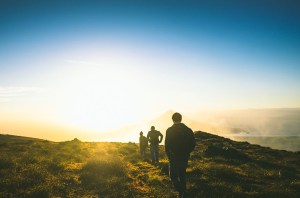 Mountain is a special place in the Bible. It is a place where God meets His people. In the Old Testament, there are many instances where mountains become a pivotal point of salvation history. After the great flood that cleansed the world, the Ark of Noah landed on Mount Ararat, and there, Noah offered sacrifice to God [see Gen 8:4]. Abraham was asked by God to offer his son Isaac on Mount Moriah. Just right before the sacrifice, the angel of God prevented Abraham and God recognized Abraham’s faith [see Gen 22]. When Moses was tending the flock of his father-in-law, Moses saw a burning bush yet was not consumed, and there, on the mount of Horeb, God called Moses to save Israelites from the Egyptians [see Exo 3]. After the liberation from Egypt, Moses and the Israelites the Law and established a covenant with God on the mount of Sinai [see Exo 24:18].
 Gunung adalah tempat khusus di dalam Kitab Suci. Ini adalah tempat dimana Tuhan bertemu dengan umat-Nya. Dalam Perjanjian Lama, ada banyak contoh di mana gunung menjadi titik penting dalam sejarah keselamatan. Setelah banjir besar yang membersihkan dunia, Bahtera nabi Nuh mendarat di Gunung Ararat dan di sana, Nuh mempersembahkan korban kepada Tuhan [lihat Kejadian 8: 4]. Abraham diminta oleh Tuhan untuk mempersembahkan putranya, Ishak, di Gunung Moria. Tepat sebelum pengorbanan, malaikat Tuhan mencegah Abraham dan Tuhan menerima iman Abraham [lihat Kejadian 22]. Ketika Musa sedang menggembalakan kawanan bapa mertuanya, Musa melihat semak bernyala tapi tidak habis terbakar, dan di sana, di gunung Horeb, Tuhan memanggil Musa untuk menyelamatkan bani Israel dari Mesir [lihat Keluaran 3].
 Why did Jesus have to stay in the wilderness for 40 days? The answer is not difficult. He was reperforming what the Israelites did when they were liberated from Egypt. The Israelites stayed for 40 years in the wilderness before they entered the promised land. Yet, there is one more thing! Mark gives us a small, however important detail: in the wilderness, Jesus was staying with the beasts. Why so? If there is one man closely connected to the beasts in the scriptures, he is no other than Adam. Jesus is the new Israel who endured the harsh conditions of the desert and the new Adam who faced the onslaught of the devil.
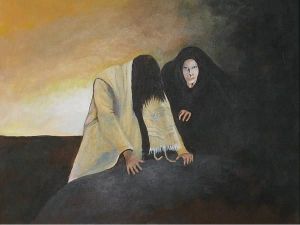 Mengapa Yesus harus tinggal di padang gurun selama 40 hari? Jawabannya tidak sulit. Dia mengulangi apa yang dilakukan orang Israel ketika mereka dibebaskan dari perbudakan Mesir. Orang Israel tinggal selama 40 tahun di padang gurun sebelum mereka memasuki tanah perjanjian. Namun, ada satu hal lagi! Markus memberi kita detail kecil namun penting: di padang gurun, Yesus tinggal bersama binatang-binatang. Kenapa demikian? Jika ada satu orang yang hidup bersama para binatang di dalam kitab suci, dia tidak lain adalah Adam. Yesus bukan hanya Israel baru yang menanggung kondisi keras padang gurun, tetapi juga Adam baru yang menghadapi serangan setan.
 In Medio Ecclesiae