

Baptism of the Lord
January 10, 2021
Mark 1:7-11
 Baptism of the Lord is one of the defining moments in the life of Jesus. The synoptic gospels [Matthew, Mark, and Luke] writes this event, though with their own perspective and emphasis. We are in the liturgical year B, and thus, we are listening from the Gospel of Mark. Mark’s version is noticeably the shortest, but it does not mean it does not deliver a powerful message. The Baptism of Jesus in the River Jordan is a turning point in Jesus’ life. After this Jesus will be in the desert for 40 days, tempted by the devil, but he will prevail. Then, from this, Jesus will begin His public ministry and unreservedly move toward Jerusalem, to Cross, Death, and Resurrection.
Often, we ask, “why should John baptize Jesus?” We are well aware that John’s baptism is an outward sign of inner repentance. If a person repents, it means that the person has been living a sinful life. Does it mean that Jesus is a sinful man, He asks for John’s baptism? Surely, Jesus who is God, is perfectly sinless, but the question remains, “why should Jesus be baptized?” Mark does not give us a straight answer, yet the Church offers us the reason. Catechism of the Catholic Church states, “The baptism of Jesus is on his part the acceptance and inauguration of his mission as God’s suffering Servant. He allows himself to be numbered among sinners… Already he is anticipating the “baptism” of his bloody death… [CCC 536].”
Simply put, Jesus’ baptism speaks of this solidarity with us sinners, and this solidarity does not stop in the symbolic baptism of John, but this will find its fulfillment in the cross. As sinners, we deserve to die, but it is God who dies for us. The Church’s answer is beautiful, but is it truly in the mind of the evangelists, especially Mark?
When Jesus is baptized, Mark describes the sky as ‘torn apart’ and a voice came, “You are my Son, the Beloved…” The Greek word for ‘tearing apart’ is ‘schizo,’ and the same word is employed again by Mark when he recounts the happening in the Temple when Jesus died on the cross: the giant curtain that separates the holy place and the holiest place inside the Jerusalem temple [see 15:38]. Meanwhile, Mark also recounts a Roman centurion proclaims that Jesus is truly the Son of God, after witnessing remarkable events during Jesus’ death. From here, we can draw an interesting insight. With this basic pattern between what happens in baptism and in the cross, Mark is telling us that these two events are indeed related. The Baptism points to the Cross, and the Cross is the fulfillment of the Baptism.
It reveals the reason why the Father is so ‘so well pleased with His Son.’ The reason is through baptism, Jesus signals to all of us His eagerness to do His Father’s will. Though Jesus is sinless, He takes up our burden of sin and dies for us as proof of the Father’s love for us.
If in His baptism, Jesus accepts the cross, we, as the baptized Christians, are also called to carry our crosses. As we share Christ’s cross and carry it faithfully, we can hope to love radically. As we love deeply, we may hope for our salvation.
Valentinus Bayuhadi Ruseno, OP
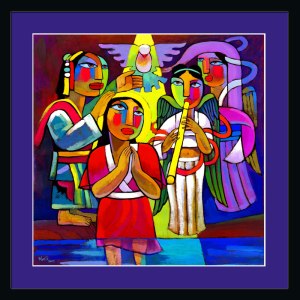 Baptisan Tuhan adalah salah satu momen yang menentukan dalam hidup Yesus. Injil sinoptik [Matius, Markus dan Lukas] menulis peristiwa ini, meskipun dengan perspektif dan penekanan yang berbeda. Karena kita berada di tahun liturgi B, kita mendengarkan dari Injil Markus. Versi Markus memang terlihat paling pendek, tetapi bukan berarti tidak menyampaikan pesan yang mendalam. Pembaptisan Yesus di sungai Yordan adalah titik balik dalam kehidupan Yesus. Setelah ini Yesus akan berada di padang gurun selama 40 hari dan dicobai oleh iblis. Kemudian, dari sini, Yesus akan memulai pelayanan publik-Nya, dan bergerak menuju Yerusalem, menuju Salib, Kematian dan Kebangkitan.
 The Christmas season ends with the feast of Epiphany of the Lord or the Feast of the Three Kings. However, if we read the Gospel carefully, we will discover that one who visited Jesus is magi, and the word “king” is not used to describe them. The Gospel of Matthew also reveals neither their number nor names. St. Matthew only speaks of three gifts offered: gold, frankincense and myrrh.
 Masa Natal diakhiri dengan hari raya Penampakan Tuhan Yesus atau juga dikenal sebagai Pesta Tiga Raja. Namun, jika kita membaca Injil dengan cermat, kita akan menemukan bahwa orang yang mengunjungi Yesus adalah orang majus, dan kata ‘raja’ tidak digunakan untuk mendeskripsikan mereka. Injil Matius juga tidak menyebutkan berapa atau nama mereka. St. Matius hanya berbicara tentang tiga hadiah yang dipersembahkan: emas, kemenyan dan mur.
 We are celebrating the feast of the Holy Family, and indeed, we are celebrating not only the family of Jesus, Mary, and Joseph but every human family. Through this liturgical celebration, the Church is inviting us to recognize the importance and the value of our family. Not only acclaiming the fundamental worth of family, but we are also invited to embrace and celebrate family lives.
 Kita merayakan pesta Keluarga Kudus, namun kita tidak hanya merayakan keluarga Yesus, Maria dan Yusuf, tetapi setiap keluarga di dunia. Melalui perayaan liturgi hari ini, Gereja mengundang kita untuk menyadari pentingnya dan berharganya keluarga kita. Tidak hanya menghargai nilai dasar keluarga, kita diundang untuk merangkul dan merayakan kehidupan keluarga.
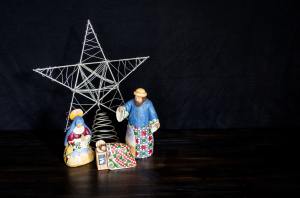 Natal adalah salah satu masa terindah dan menggembirakan. Natal adalah waktu untuk berkumpul dengan keluarga dan para sahabat, dan juga bertukar hadiah. Natal adalah waktu memasang pohon Natal, merancang Gua Natal, dan memutar lagu-lagu Natal. Pastinya, Natal adalah saat keluarga pergi ke gereja bersama-sama.
 Christmas is fast approaching, and the Church is inviting us to reflect on the story of the Annunciation. Allow me to once more focus on the Blessed Virgin’s Fiat. To appreciate her answer to God’s will and plan, we need to see at least two things. Firstly, it is her historical and social context. Secondly, it is the language analysis of her response.
 Natal semakin dekat dan Gereja mengundang kita sekali lagi untuk merenungkan kisah Kabar Sukacita. Izinkan saya untuk sekali lagi fokus pada “Fiat” atau jawaban Ya Perawan Maria [Fiat sendiri berasal dari bahasa Latin, artinya “terjadilah”]. Untuk mengerti lebih dalam jawaban Maria atas kehendak dan rencana Tuhan, kita perlu melihat setidaknya dua hal. Pertama, konteks sejarah dan sosialnya, dan kedua adalah analisis bahasa dari tanggapan Maria.
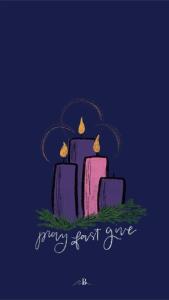 This Sunday is special. We are still in the season of Advent, and yet we see a different liturgical color. It is a rose color [not pink!]. This beautiful color symbolizes joy and hope, and it is in line with the spirit of the third Sunday of Advent, the Gaudete Sunday. Gaudete is a Latin word meaning “Rejoice!” The name is rooted in the introit or the opening antiphon of the Mass, from Phil 4:4-5, “Rejoice in the Lord always; again I will say, Rejoice. 5 Let your gentleness be known to everyone. The Lord is near” In the second reading, St Paul reiterates the motif, “Rejoice always. Pray without ceasing. In all circumstances give thanks, for this is the will of God for you in Christ Jesus. [1 The 5:16].”
 In Medio Ecclesiae