Cold Yet Blessed Christmas

Nativity of Our Lord [C]
December 25, 2024
Luke 2:1–14

One privilege I had as a priest was the opportunity to study in Rome, and one unforgettable experience was celebrating Christmas in this eternal city. A striking difference from my home country was immediately apparent: Christmas in Rome is cold. Coming from a country near the equator, where the temperature remains relatively constant throughout the year, experiencing December as winter (with temperatures ranging from 8°C to -1°C) was a stark contrast. As I celebrated Christmas in this chilly season, my first thought was that it must have been a similarly cold winter in Bethlehem when Jesus was born.

Some skeptics argue that it’s unlikely Jesus was born in December, claiming it would have been too cold for shepherds to keep watch over their sheep in the open fields. While December is indeed winter in Israel, it’s not so cold as to prevent people from staying outside. A quick online search reveals that nighttime temperatures in Bethlehem-Jerusalem average around 7–8°C. After all, sheep are typically kept outdoors, and the shepherds, familiar with these conditions, would have been well-prepared to endure the chilly environment.

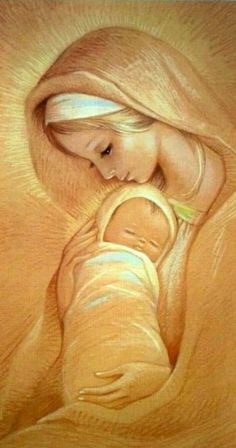
The shepherds may have been prepared for the cold, but what about the baby Jesus? While winters in Israel are milder than in many European countries, the fact remains that winter in Bethlehem is cold and chilling. The first sensation baby Jesus likely felt upon leaving the warmth of Mary’s womb was the cold. Certainly, Mary and Joseph would have done their utmost to protect and keep Him warm, but the low temperatures could not be completely avoided. This chill would have been even more pronounced given that Jesus was not born in a modern, comfortable maternity ward but in a humble place for animals – a cave, as tradition tells us.

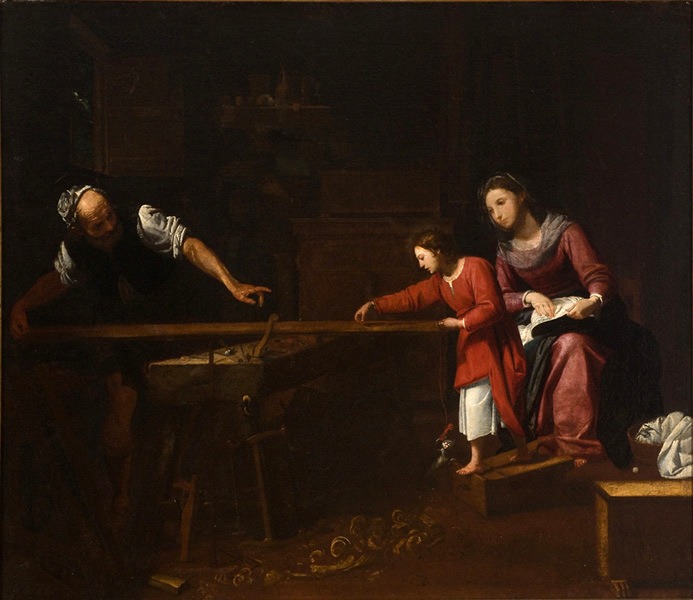
Yet, this very humility is at the heart of Christmas: Emmanuel, God-with-us. Our God is not a distant deity hidden away in the heavens, occasionally sending angels to interact with us. He is intimately present, becoming one of us, human. From the moment of His conception, He felt, experienced, and endured everything we are and do. The coldness of that Christmas night was only the beginning. Jesus would come to know hunger and thirst, pain and sorrow, just as we do. He also embraced the warmth and love of Mary and Joseph. He grew and learned to live as we do. He knows who we are because He has become one of us.

It’s true that we often pray for the Lord to remove our suffering, pain, and sorrow, yet it seems these struggles persist. In His divine wisdom, God allows our suffering, though we may not always understand the reasons. However, through the mystery of Christmas, we are assured of one profound truth: Jesus knows our pain. He shares in it and bears it with us. This is our Gospel, this is our Christmas.

Rome

Valentinus Bayuhadi Ruseno, OP

Merry and Blessed Christmas!

Why John the Baptist?

Second Sunday of Advent [C]

December 8, 2024

Luke 3:1-6

On the second Sunday of Advent, the Church presents St. John the Baptist as a model for preparing the way for Jesus. But why is John always chosen as the example? The answer lies in the fact that John is one of the most significant figures in the Bible, exemplifying how we should prepare for the coming of Christ. Especially in the Gospel of Luke, we see that John precedes Jesus and prepares His way in three important stages. So, what are these three stages?

1) Through John’s Birth. John was the son of Zechariah, a priest, and Elizabeth. Since Elizabeth and Mary of Nazareth were relatives, this makes John and Jesus family. In Luke’s account, John’s birth is portrayed as an answer to his parents’ prayers. His birth is a miracle, as it occurred when Zechariah and Elizabeth were old and considered barren. This miraculous birth prefigures an even greater one—the birth of Jesus. While John was conceived despite his parents’ old age, Jesus was conceived without the involvement of any man. John’s birth fulfils God’s promises in the Old Testament (such as to Abraham and Sarah, Gen 17-18; Elkanah and Hannah, 1 Sam 1:1-20), while the birth of Jesus inaugurates the New Testament era.

2) Through John’s Preaching. Today’s Gospel speaks of John preaching a baptism of repentance for the forgiveness of sins (Luke 3:3). This fulfills the prophecy of Isaiah, which foretold that a great prophet would prepare the way for the Lord (Isaiah 40:3). John teaches that the best way to prepare for the coming of the Lord is through repentance. Without repentance, our Advent and Christmas celebrations will be shallow. There’s little meaning in decorating our homes or enjoying festive meals with loved ones if we do not first seek to reform our lives.

3) Through John’s Death. John’s death comes at the hands of Herod’s executioners. He had condemned Herod, the ruler of Galilee, for living in sin—taking his brother’s wife and divorcing his own wife. This angered Herod and his wife. When the opportunity arose, Herod, to please his wife, ordered John’s execution (Luke 9:7-9; Mark 6:14-29; Matthew 14:1-12). John was beheaded because he faithfully preached the truth, calling for repentance. Jesus, too, would eventually be crucified for preaching the truth of the Gospel and calling the Jewish leaders in Jerusalem to repentance. The lesson is not just about how John died, but about how he lived—faithfully preaching the truth, even at the cost of his life. We are also invited not only to reform our own lives but to encourage others to repent, even in the face of rejection.

John is Jesus’ predecessor—in his birth, his preaching, and his death. Through his entire life, John prepared the way for Jesus. This is why John is one of the best models in the Bible for us to follow during this season of Advent.

Rome

Valentinus Bayuhadi Ruseno, OP

Reflection Questions:

  • Inspired by John the Baptist, how will you prepare yourself this Advent?
  • What lessons can you draw from John’s example?
  • Like John, are you willing to invite your family, relatives, and friends to repentance and help bring them closer to Jesus?

Jesus, Our King

Solemnity of Christ the King [B]

November 24, 2024

John 18:33b-37

In today’s world, the concept of kingship might feel weird and even obsolete. Many of us live in democratic societies, where we elect persons we like to be our leaders and choose someone else when we feel they are no longer fit for the office. We value our freedom and ensure our leaders will not take our freedom. The pomp and grandeur of royalty—palaces, castles, robes, and noble ceremonies—are often viewed as relics of the past. Yet, as Christians, we are called to reflect on and embrace the kingship of Jesus. How can we truly appreciate Jesus’ identity as our King?

First, Jesus, the King who serves. Yes, Jesus is King, but unlike any other. Gabriel, the archangel, announced his royal birth, “He will reign over the house of Jacob forever, and of his kingdom there will be no end (Luk 1:33).” Yet, Jesus revealed how He was going to be a king, “For the Son of Man came not to be served but to serve, and to give his life a ransom for many (Mar 10:45).” Here, the roles are reversed. Instead of demanding service from His subjects, Jesus serves His people with unparalleled humility. His ultimate act of service was offering Himself on the cross for our salvation. Even now, as the risen King in heaven, Jesus continues to serve by interceding for us before the Father (Heb 7:25).

Second, Jesus, the King of the universe. Though Jesus was born as a Jew and prophesied as the Messiah of Israel, His dominion is universal. After His resurrection, Jesus told His disciples, “All authority in heaven and earth has been given to me. (Mat 28:18)” Jesus is not only King of all men but also of all things. From the biggest stars to the smallest sub-atomic particle and even realities that modern science has yet to discover, all are within His governance and providence. Not only visible realities but also invisible beings are under Jesus. Then again, since Jesus’ kingship is about service, Jesus also serves all things by sustaining their existence, otherwise, all things will collapse to nothingness.

Third, Jesus is our King. Jesus’ kingship is not distant or abstract—it is deeply personal. As the King of all creation, He governs everything for our good because He knows and loves each of us dearly. The intricate design of the universe, from the laws of physics to the fine-tuned conditions that allow life on earth, reflects His loving care. Our bodies, composed of countless atoms and cells, are held together under His command. The visible cosmos and even spiritual beings are under His commands to protect and lead us to true happiness.

While we are often consumed with our daily concerns, the King is taking care of us through His governance of the universe, both visible and invisible. His kingship is nothing but love, service and care.

Rome

Valentinus Bayuhadi Ruseno, OP

Questions for reflections:

What is your concept of a king? Do you see Jesus as a king? What kind of King? Or, are you more comfortable with other titles of Jesus, such as the good shepherd? Do we follow Jesus our King? How do we serve our King? Do we obey Him, or do we rebel against Him? Do we also care for other creations because they serve the same King as us? Do we thank the angels for guarding us?

We and the Saints

33rd Sunday in Ordinary Time [B]
November 17, 2024
Mark 13:24-32

When someone asks if we want to go to heaven, we quickly say, “Yes!” But if asked if we want to become saints, our enthusiasm often fades. This is surprising because everyone in heaven is a saint. To be a saint means to be in heaven. So why do we separate the idea of heaven from being a saint?

At least, there are three reasons:

  1. Misunderstanding the Catholic Faith: Some of us may not fully understand our faith. We might think there are two groups in heaven: well-known saints like the Blessed Mother, St. Joseph, St. Dominic, and St. Francis, and a second group of non-saints. We assume saints are only those who have been officially recognized and celebrated with feast days. But this is not true. All people in heaven are saints, even if we don’t know their names. That’s why we celebrate All Saints’ Day, honoring every person who by God’s grace has reached heaven. One of those saints could be a relative or ancestor!
  2. Thinking It’s Too Hard to Be a Saint: We read stories about saints and feel like we could never be as good as them. Saints seem perfect—extremely lovely, always praying, and some even performed miracles. And martyrs faced painful deaths for their faith. This level of holiness feels impossible for us because we are aware of our weaknesses and sins. But here’s the truth: saints didn’t become holy by their efforts alone; they depended on God’s grace. They were imperfect humans, like all of us, who allowed God’s love to transform them.
  3. Fear of Death: We might think that becoming a saint means we must die first, and we do not want to die! However, not all death is physical and biological. We need to die also to ourselves. This means letting go of worldly attachments and sinful desires.

In today’s Gospel, Jesus speaks about His return in glory and the signs that will come before it—darkened skies, a dim moon, and falling stars. This can mean the end of an era or even the end of the world. Yet, this can also tell us a deeper lesson: the world we know is temporary, destructible, and if we cling too tightly to it, we will lose everything. We need to choose: will we die to this world and live for God, or die with this world, and losing God.

We ask God to help us dying to ourselves, letting go of the world, and live more for Christ. Then, whenever Jesus comes, we will be ready to stand before Him, truly alive, just like the saints in heaven.

Rome

Valentinus B. Ruseno, OP

Questions for Reflection:

What do we think heaven is like? How do we view the saints and their roles in our lives? Do we want to become saints, or are we too attached to the world? What are the things we cling to in this life? How are we preparing for Jesus’ coming?

The Faith of the Poor Widow

32nd Sunday in Ordinary Time [B]

November 10, 2024

Gospel: Mark 12:38-44

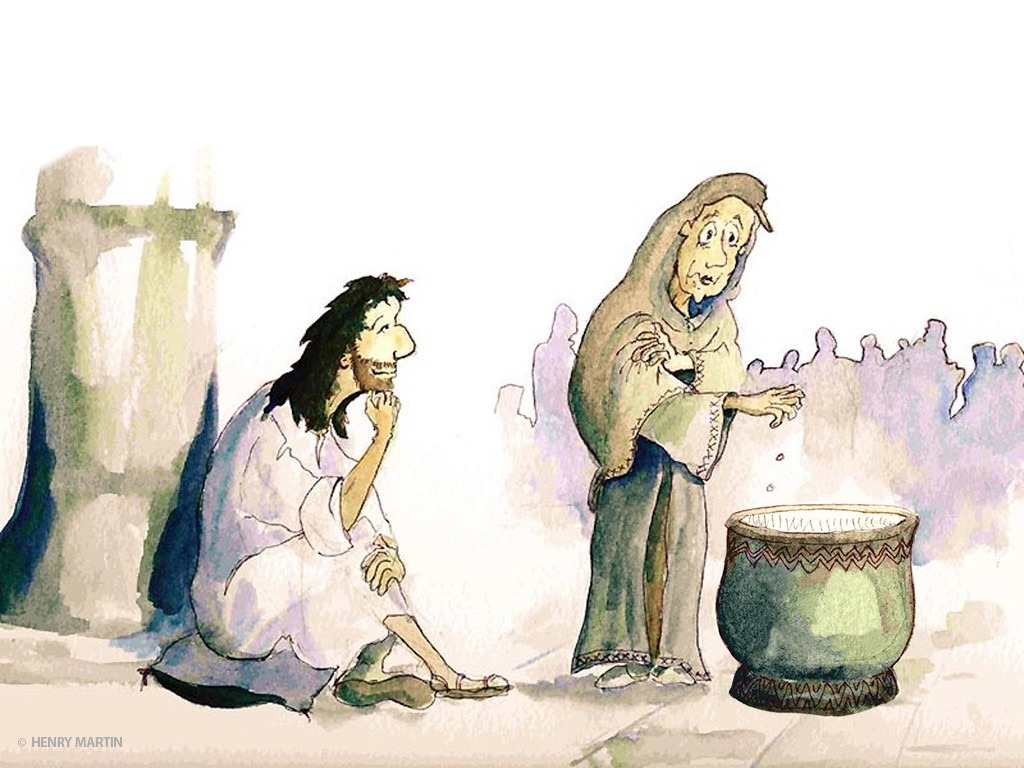
In the Gospel of Mark, Jesus commends a poor widow who gives her last two small coins to the Temple. He points out why her act is so remarkable: “Out of her poverty, she gave everything she had, all she had to live on” (Mark 12:44). Jesus admires her because, despite her extreme poverty, she displays extraordinary generosity. But there’s a deeper message here. What is it?

We need to ask, “Why is this widow poor?” In Jesus’ time, widows were among the most vulnerable, especially if they had no family to support and protect them. Because of this, God instructed the Israelites to care for widows (see Deu 14:29 and Isa 1:17). Yet, in this Gospel passage, there is a clue to why this widow has been pushed into poverty. Before praising the widow, Jesus condemns the scribes not just for seeking popularity, but for a more sinister reason, “They devour widows’ houses” (Mark 12:40).

How did the scribes take advantage of widows? There are a few possibilities:

Firstly, Abuse of Legal Authority. The scribes, experts in Jewish law, were trusted as legal advisors or trustees, especially for widows who needed help managing their affairs after their husbands’ death. Afterall, these scribes were men of God! Sadly, some of them abused this trust, using their legal knowledge to manipulate proceedings for personal gain, sometimes even committing fraud.

Secondly, Predatory Lending. Some scribes engaged in predatory lending practices. Under the guise of providing financial help, they would lend money to widows and gradually entrap them in severe debt. When the widows couldn’t repay these debts, they were forced to give up their homes and possessions, ultimately becoming destitute.

While we don’t know the exact way the widow in this story was exploited, we do know she suffered injustice. Despite this, her response is remarkable. Instead of feeling embittered or blaming God, she remains generous and devoted. Even in her suffering, she loves God with all her heart, strength, and life. Why? Because her faith rests in God Himself, not in flawed human representatives like the scribes. While people can fail or act unjustly, God does not. She believes God is watching her, and indeed, Jesus is watching her actions and recognizing her faith and sacrifice.

This story opens our eyes to harsh realities that can exist even within religious institutions. Yet, the widow’s example also teaches us how to respond to these challenges without losing our faith.

Reflection Questions:

Do we help bring people closer to God, or do we push them away? Do we use our position and knowledge to assist others or to take advantage of them? When bad things happen, do we blame God or maintain our trust in Him? Do we stand against injustice and wrongdoing within our communities and Church, or do we remain silent?

Rome

Valentinus Bayuhadi Ruseno, OP

The Confession of Bartimaeus

30th Sunday in Ordinary Time [B]

October 27, 2024

Mark 10:46-52

Bartimaeus is a blind man, and his life is full of suffering. The ancient world was a cruel place to live and even merciless for people with disabilities. In some ancient cultures, babies born with physical imperfections were abandoned in the forest or thrown into the ravine. They were cursed and would bring a curse to people around them. If people with disabilities survived childhood, they grew marginalized, bullied and mocked. Bartimaeus was begging, and it was the only option left to survive. The city gates of Jericho were the ideal places because many people would traverse these passages.

However, despite being blind and poor, Bartimaeus was the first to call Jesus the son of David. The title “Son of David” is unique because several important prophecies in the Old Testament point to the Son of David. The famous one is from 2 Samuel 7, which says that God will establish the kingdom of the Son of David forever (v.13). Similar prophecies can also be found in Isaiah 9:6-7 and Jeremiah 23:5-6.

Deep in his heart, Bartimaeus knew that Jesus fulfilled the prophecies that would be the King of Israel forever. Ironically, no other disciples called Jesus with this important title. It takes a blind man to see the truth. Then, Jesus affirmed Bartimaeus’ confession and granted him the miracle of sight. The story ends with Bartimaeus following Jesus. Perhaps this is why Mark was able to write the story of Bartimaeus. He remained a follower of Jesus even after Jesus’ death and resurrection, and his name was known to the early Church.

Bartimaeus is one of the few characters who recognized Jesus’ true identity in the Gospel of Mark. The irony is that these characters are not followers of Jesus. Unclean spirits called Jesus ‘the holy one of God’ (Mr 1:24). The Roman centurion, an enemy of the Jews, acknowledged Jesus as the son of God (15:39). The Syrophoenician woman, a gentile, addressed Jesus as Lord (7:28). The only disciple who recognized Jesus’ true identity was Simon Peter when he confessed Jesus is the Christ or Messiah (8:29). Yet, Peter also failed to understand what he was confessing as Jesus rebuked him for having wrong idea of Jesus’ Messianic identity.

Through Bartimaeus and other characters, Mark gives us an important lesson. Yes, we are followers of Christ. Yes, we are baptized. Yes, we go to the Church every Sunday. Yet, it does not mean we see who Jesus is. We may confess Jesus is God, but do we love Him with all our heart, soul, and strength, or do we worship other gods like money, pleasure, and fame?  We may say that Jesus is Lord and King, but do we live according to the words and commands of our King, or do we just do whatever we want to do? We acclaim Jesus as our Savior, but do we live as someone who is saved and redeemed, or do we remain enslaved by sins?

Though Bartimaeus is physically blind, he has faith that enables him to see who Jesus truly is, and this saves him. We may have healthy physical eyes, but do we have true faith to see Jesus and follow Him?

Rome

Valentinus Bayuhadi Ruseno, OP

Jesus our High Priest

29th Sunday in Ordinary Time [B]

October 20, 2024

Heb 4:14-16

The letter to the Hebrews calls Jesus our high priest. As Catholics, we are not foreign to the word ‘priest’ since they are our liturgy or worship leaders. Yet, the author of the letter to the Hebrews does not call Jesus just as another priest but as the high priest. Why does the author of this letter address Jesus as this title? What makes a high priest different from other priests? What is it for us?

Firstly, we need to clarify the word’ priest.’ While it is true that a priest is appointed to oversee worship, he has one specific responsibility that only he can execute. In the Bible and many ancient civilizations, the most essential part of ritual worship is the sacrifice. Commonly, the sacrifice consists of offering something precious to God. In ancient agrarian societies, animals like lambs and crop yields like wheat grains may serve as sacrificial offerings. In the case of animal sacrifice, the ritual begins with the people handing the animal to the priest, and then the priest will slaughter the animal by separating the blood and the body. After this, the priest brings the animal to the altar to be burned as a symbol that God has accepted the sacrifice. In this sense, a priest serves as a mediator between God and the people.

The leader among the priests is called ‘high priest.’ The Hebrew word for high priest is כֹּהֵן גָּדוֹלkohen gadol, literally means “great priest.” In Greek, the high priest is ἀρχιερεύς, archiereus, and it can be translated as “the first priest.” Obviously, the high priest has to lead the other priests and manage the entire worship system. Yet, his fundamental function is to be the primary mediator between God and the people. Thus, only he can officiate the most solemn worship. In the Bible, only the high priest can offer the holy sacrifice on the day of atonement (Yom Kippur) and enter the holy of holies to atone for the nation’s sins (see Lev 16).

With this biblical background, we can better understand why the author of the letter to the Hebrews calls Jesus our high priest. Jesus is the supreme mediator between God the Father and us. Moreover, Jesus is far more perfect than other high priests because He is divine. Yet, Jesus is also fully human, experiencing all sufferings and various human problems and weaknesses. Because of this, He knows precisely our struggles and failures. But, most of all, our high priest also becomes the perfect sacrifice to Father as He offers Himself on the cross. Then, when we approach Jesus in humility, we can be hopeful that Jesus will accept us because He knows us, and finally, He will bring us to the Father and may receive mercy.

Questions for reflection:

How do we look at our priests in our parish/church? Do we recognize them as people who bring us closer to God? Do we know that the Eucharist is a sacrifice of Jesus Christ and, thus, our true worship of God? What sacrifice do we bring to the Eucharist? What makes us unable to approach Jesus? Shame, fear, anger, disappointment, resentment, inadequacy?

Consecrated Life

28thSunday in Ordinary Time [B]

October 13, 2024

Mark 10:17-30

The Church understands the story of Jesus and the rich man as one of the biblical foundations of vocation to consecrated life. Yet, what is consecrated life? How does this story become an inspiration for us?

The consecrated life is a radical way of life to follow Jesus. In our present time, we quickly recognize these men and women as people who wear religious habits, remain celibate (unmarried), and live inside communities like monasteries or convents. The word ‘consecrate’ here means to be separated or set aside for a particular purpose. The men and women are consecrated because they are ‘separated’ to love God more radically. But why do they have to live this kind of life? To answer this, we need to look closely at the story of Jesus and the rich man.

A man recognized that something fundamental was lacking in his life. When Jesus was coming, his heart knew that Jesus knew the answer. He rushed to Jesus and asked Him how to inherit eternal life. Jesus pointed out the commandments, especially those related to the love of neighbors (do not kill, do not steal, do not bear false witness, and honor your parents). Immediately, the man told Jesus he had been faithful to these laws. Jesus, then, looked at him intently and loved him for his courage to approach Him. Jesus knew that man had never broken the commandments, but he had also not fulfilled the first and most important commandment, “You shall love the Lord your God with all your heart and with all your soul and with all your might (Deu 6:5).”

However, Jesus did not just say this truth plainly but rather reformulated it into something more concrete and radical: “You shall love Me (Jesus) with all your heart, with all your soul, and with all your might!”  This call is radical because it required the man to abandon all that he had and walk with Jesus on His way to the cross. It is radical because Jesus’ invitation goes against the prevalent understanding of that time that to be rich is a sign of God’s blessing (see Deut 28:1–14; Prov 10:22). This is radical because all our time, energy, attention, indeed our lives, are for Jesus.

This man never killed or stole, perhaps went to synagogue every Sabbath, and occasionally went to Jerusalem to offer sacrifices at the Temple. But, deep inside, he was called to love God totally. Yet, when Jesus offered him the opportunity, he shied away because he had many possessions. Will this man be condemned? Indeed, he will not be punished and will remain the inheritor of eternal life. But he also cannot fulfill his deepest desire to love God radically.

In the present time, this radical following of Jesus manifests in men and women who totally give themselves to Jesus and the Church. These men and women do not get married, so their time may be devoted to prayers and service. They work or receive money not to be rich but simply to support their lives and ministry. Finally, they freely give up their freedom to love God and His people. Yet, the Church understands this vocation is not for everyone.

Rome

Valentinus Bayuhadi Ruseno, OP

Questions for reflections:

Do we love God totally and radically? Do we love God first, or do we love ourselves first? What hinders us from loving God? Money, wealth, professions, fame, hobby, or other things? Are we called into the consecrated life? Are we ready to answer yes to Jesus’ calling?

Why did Moses allow divorce?

27th Sunday in Ordinary Time [B]

October 6, 2024

Mark 10:2-16

The Pharisees once again put Jesus to the test. This time, they asked the question of divorce. However, Jesus did something unexpected. He ‘changed’ the law of divorce. Why did Jesus “erase” the law of divorce?

Jesus responded by inquiring about the foundation of this law of divorce. The Pharisees pointed to Moses as the source of the law as he allowed divorce by giving a certificate of divorce to the wife (see Deu 24:1). Then, immediately, Jesus fired back, “For your hardness of heart he wrote you this commandment. But from the beginning of creation, ‘God made them male and female.’” (Mar 10:5-6) Jesus made clear that divorce is not the will of God, but Moses was forced to permit it because of “the hardness of heart.” But what is this hardness of heart?

We recall that the Israelites in the time of Moses were so used to the ancient Egyptian practices including divorce. In ancient Egypt, marriage was primarily a private and cultural event, not religious. The couple themselves governed marriage. They would divorce their partner if they no longer saw their marriage viable. But divorce was not the only solution. If a man found his first wife no longer attractive, he could marry another wife without divorcing the first woman.

When God liberated Israelites from Egypt, God reintroduced His will that marriage is holy and part of God’s plan for men and women. Marriage was not just biologically or culturally driven but divinely instituted. Thus, God decreed that marriage must be monogamous and indissoluble. Yet, introducing God’s original plan to the ancient Israelites proved difficult. Indeed, the Israelites were physically liberated from Egypt, but their mentality remained enslaved. The Israelites were somehow able to accept monogamous marriage, but to add another requirement, that is, ‘no divorce’ was too much and too soon. Moses knew that the Israelites would commit more rebellions, and even men would kill their wives to get rid of them. Thus, Moses conceded that divorce should be allowed if the women were sufficiently protected through the divorce certificate.

Now, hundreds of years after Moses, God deemed the time has come to bring the original will of God into marriage. Thus, Jesus came not to ‘change’ the divorce law but to reintroduce God’s authentic will. Moreover, Jesus also brought the Holy Spirit to re-create human hearts, from the heart of stones into the heart of flesh. Now, the choice is ours. Will we follow God’s will in our lives and marriage by relying on His graces, or will we instead become stubborn and follow our own design?

Rome

Valentinus Bayuhadi Ruseno, OP

Questions for reflection

How do we understand marriage? Is it a biological necessity, social convention, or divinely instituted? How do we feel about marriage? Is it a burden, obligation, or a blessing? What do we want to achieve in marriage? Is it pleasure, welfare, comfort, or holiness? What do we do when we encounter difficulty in marriage? Do we see marriage without divorce as a curse or a path to heaven?

Sin and God’s Love

26th Sunday in Ordinary Time

September 29, 2024

Mark 9:38-48

Some people do not talk about sin. Some think that sins are no longer relevant in the modern world. The concept is a restriction on human freedom and creativity. Others see it as the Church’s invention to control its faithful, primarily through fear. Those who sin will be punished in hell! Others perceive that to talk about sin is incompatible with God, which is love. For some priests and preachers, the topic even becomes taboo to preach. Yet, this is all a misunderstanding. The proper understanding of sin will bring us a full appreciation of God’s love. Then how must we understand the concept of sin?

Firstly, the basic understanding of sin is a violation of God’s law, and God made His laws not to limit our freedom but rather the opposite. They are to protect us from harm, danger, and disasters. Every violation of God’s law brings catastrophic consequences. It destroys ourselves, others, and the world. Abortion kills innocent babies, destroys the holy vocation of motherhood, and treats sacred women’s bodies as mere tools. Masturbation seems less of a problem since it is something ‘personal’. But masturbation leads to mental health problems as we carve more and more dopamine (pleasure hormone) to satisfy us. Again, this causes us to see other people as mere tools to give us pleasure. By following God’s laws, we are not only avoiding harm in our lives but also walking on the path of happiness.

Secondly, sin is the contradiction of God’s love. God is love, and He loves us beyond our imagination. As divine Lover, He wills the best things happen to us, and He wills us to be united with Him as the only one who can satisfy our infinite desire. However, true love does not coerce and gives freedom to choose and love Him. Robots can obey all our orders, but there is no love since robots do not have freedom. A Labrador can abide by us and give us affectionate dog hugs, but this is not true love but a dog’s instinct to cling to his owner for survival. We have that true freedom. Unfortunately, we abuse our freedom to choose something much lesser than God and, thus, violate His laws. Therefore, sin is a radical choice to turn away from God. Hell is not God’s punishment but rather our decision to be separated from God, our true happiness.

Therefore, reading the Gospel, we immediately recognize that if there is one thing that Jesus hated the most, it is sin. He knows well what sin is and what it does to us humans. Adam and Eve sinned, and they brought the entire human race into a spiral of madness and despair. Jesus came to this world to get forgiveness of sin and to show God’s love on the cross so that we may be moved into repentance. Jesus loves sinners and not their sins in the sense that He wills them to embrace God’s forgiveness.

Therefore, preaching about sin and repentance and praying for sinners participates in Jesus’ mission and God’s love. But if we shy away from preaching repentance and even promote a fallacious concept of sin, we may deserve to be ‘thrown into the sea with miles stone’.

Surabaya

Valentinus Bayuhadi Ruseno, OP

Questions for reflection:

How do we understand the concept of sin? Do we speak about sins and repentance, or do we try to avoid it? Do we continue to evaluate and correct ourselves? Do we visit the sacrament of confession often? Do we invite others to reflect God’s love and repentance?