

Solemnity of Corpus Christi
June 22, 2025
Luke 9:11b-17
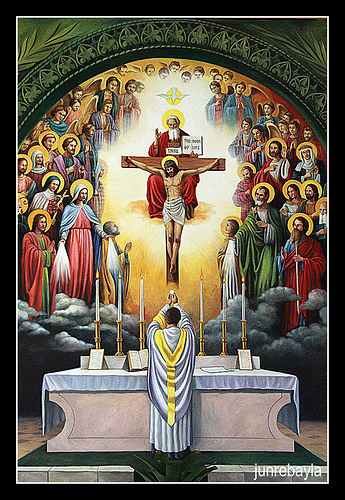
The Solemnity of Corpus Christi celebrates the Eucharist, the real presence of Jesus Christ in the Holy Mass. Since it is a celebration of the Eucharist, the Solemnity of Corpus Christi is intrinsically linked to Maundy Thursday, when Jesus instituted the Eucharist at the Last Supper. If Corpus Christi is fundamentally connected to Maundy Thursday, then it is also tied to the entire Easter Triduum. Jesus’ real presence is not only associated with the Last Supper but also with His Cross and Resurrection. But, how are Corpus Christi related to the Cross and Resurrection?

Jesus’ Body and Blood are, in essence, the sacrifice of the Cross (Jn 1:29; Eph 5:2). In the Old Testament, offering sacrifices was the divinely ordained way of worship. The Book of Leviticus describes various types of sacrifices, such as the burnt offering (holocaust), the sin offering, and the peace offering (communion sacrifice) (Lev 1–5). Jesus perfectly fulfills all these Old Testament sacrifices. He surrendered Himself completely on the Cross as the perfect holocaust (Heb 10:5-10). He died to save us from our sins, just as a sin offering does (2 Cor 5:21). Moreover, His Body and Blood are received by His people, much like the communion sacrifice—a type of offering that was partly given to God, partly consumed by the priest, and partly shared by the worshippers, symbolizing communion between God and His people (Eph 2:14-16).
However, Corpus Christi is also connected to His Resurrection. The Body and Blood of Christ that we receive in the Eucharist are not merely ordinary flesh but the glorified and resurrected Body of Christ. Ordinary human bodies are weak, limited, and subject to decay after death. Yet, Jesus’ resurrected body is full of grace and life-giving power—a body that transcends time and space, moves between heaven and earth, and can transform its appearance into bread and wine. This is why, in John 6:54-55, Jesus confidently declares: “Those who eat my flesh and drink my blood have eternal life, and I will raise them up on the last day; for my flesh is true food and my blood is true drink.”
The Feast of Corpus Christi reveals that Jesus, the Son of the living God, gave up everything—His life, His divinity, and His humanity—for us as the ultimate sign of His radical love. Yet Corpus Christi does not end with the Eucharist. As we carry Jesus in our lives, we are also called to share our bodies with one another in love. In fact, as human beings, the greatest expression of love is through our bodies. Married couples give themselves to each other until death separates them. Parents sacrifice their bodies for their children so they may live and grow. Religious men and women dedicate their bodies to the Church and the people of God. Just as Jesus said, “This is my body which is given for you,” we also do the same, “This is my body which is given in love!”
The Eucharist is truly central to our lives—not only because it provides perfect and acceptable worship to the Father, but also because it grants us the grace to share our bodies with others. Only by sharing our humanity in love do we find true happiness, and this is made possible through the grace we receive in the Eucharist.
Rome
Valentinus Bayuhadi Ruseno, OP
Guide Questions:
What are our understanding about the Eucharist? How often do we participate in the Eucharist and receive the Body and Blood of Christ? How do we express our reverence and love when we receive the Eucharist? How do we use our bodies to love?

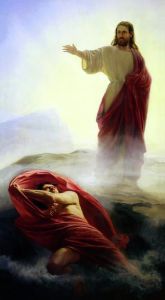
 Why did Jesus have to stay in the wilderness for 40 days? The answer is not difficult. He was reperforming what the Israelites did when they were liberated from Egypt. The Israelites stayed for 40 years in the wilderness before they entered the promised land. Yet, there is one more thing! Mark gives us a small, however important detail: in the wilderness, Jesus was staying with the beasts. Why so? If there is one man closely connected to the beasts in the scriptures, he is no other than Adam. Jesus is the new Israel who endured the harsh conditions of the desert and the new Adam who faced the onslaught of the devil.
 Jesus performed His first exorcism in the Gospel of Mark. Reading the context, we discover that Jesus was teaching in the synagogue, and the people recognized Him teaching with authority. When Jesus taught with authority, it does not merely mean He preached with eloquence and chrism, but His teachings manifested in powerful signs, like healings and exorcism.
 Yesus melakukan pengusiran setan atau eksorsisme pertama-Nya dalam Injil Markus. Membaca konteksnya, kita menemukan bahwa Yesus sedang mengajar di sinagoga dan orang-orang mengenali Dia mengajar dengan otoritas. Ketika Yesus mengajar dengan otoritas, ini tidak hanya berarti Dia berkhotbah dengan kefasihan dan krisma, tetapi ajaran-Nya dimanifestasikan dalam tanda-tanda yang nyata dan menakjubkan, seperti penyembuhan dan pengusiran setan.
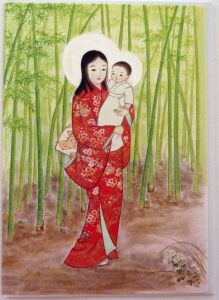 Today the Church is celebrating the solemnity of the Assumption of Mary. Rooted in the Scriptures and Tradition, the Church firmly believes that Mary was assumed into heaven body and soul after she completed her life here on earth. This belief is crystallized in the form of Dogma or the highest teaching of the Church. As a dogma, the Assumption requires the assent of faith from the faithful. The assumption itself is not the sole Marian Dogma. There are four dogmas related to her: Mary is the Mother of God, ever-virgin, immaculately conceived, and assumed into heaven. No other human, except Jesus, has accumulated that much honor in the Church and no other men or women have blessed conditions like hers.
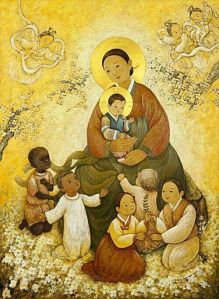 Hari ini Gereja sedang merayakan hari raya Maria Diangkat ke Surga. Berakar dalam Kitab Suci dan Tradisi, Gereja dengan kuat percaya bahwa Maria diasumsikan ke dalam tubuh dan jiwa surga setelah dia menyelesaikan hidupnya di bumi ini. Keyakinan ini terkristalisasi dalam bentuk Dogma atau ajaran tertinggi Gereja. Sebagai dogma, Asumsi membutuhkan persetujuan iman dari umat beriman. Asumsi itu sendiri bukan satu-satunya Dogma Marian. Ada empat dogma yang berkaitan dengannya: Maria adalah Bunda Allah, selalu perawan, dikandung dengan sempurna, dan diasumsikan ke surga. Tidak ada manusia lain, kecuali Yesus, yang mengumpulkan begitu banyak kehormatan di Gereja dan tidak ada pria atau wanita lain yang memberkati kondisi seperti miliknya.
 The distinctive mark of being Christian is the Holy Trinity. We share the claim of monotheism [only one God] with other prominent religions, yet our belief in one God in three divine persons enables us to stand unique among others. Doubtless, our God is one, yet the same undoubtedly, there are three persons in this one God. The Father is different from the Son and the Holy Spirit. The Son is also unique. And, the Holy Spirit maintains His personal identity. Yet, they remain always one! How is this possible?!
 In Medio Ecclesiae