

The Solemnity of the Epiphany [C]
January 2, 2022
Matthew 2:1-12
The season of Christmas reaches its culmination in the feast of Epiphany. Epiphany comes from a Greek word that means ‘to appear.’ Thus, the feast is celebrating the appearance of Jesus to the nations represented by the Magi. We are not sure who these Magi are, but the traditions have that they are wise men from the East, most probably from Persia or present-day Iran. The bible does not give us the exact number, let alone the names, but the tradition calls them Baltazar, Gaspar, and Melchior.

If we try to go back to the beginning of Matthew, we will discover the genealogy of Jesus Christ. Matthew begins with Abraham, the patriarch of Israel, David, the greatest king of Israel, and Joseph, a simple yet righteous Jewish man. Matthew demonstrates to us that Jesus is the fulfillment of God’s promise to Abraham, David, and Israel. He is coming as the Jewish Messiah. A Catholic philosopher and theologian, Peter Kreeft, summarizes the Gospel of Matthew as ‘A Gospel from a Jew, for the Jews about the Jewish Messiah.’
Yet, the same evangelist presents us with a large picture. Though Jesus was coming from the line of David and raised as a Jewish man as a devout Israelite family, Jesus was not an ‘exclusivist’ Messiah. Jesus is the Anointed One of the Jewish people only, but He is the Savior for all the world. This identity is manifested in the visit of the Magi.
The three Magi are not Israelites, and in fact, they might worship other gods. Yet, they knew that deep inside, something is still missing. In their human wisdom, they keep on searching for the truth that will satisfy their deepest longing. Their research and investigation prompt them to look for a newborn king. When they finally see the baby Jesus, they prostrate themselves in the act of adoration and worship and acknowledge that this baby is not just an ordinary king of a small nation in the Middle East. He is the king of kings.
We are the Magi. Most of us are not Jewish people, let alone coming from the line of David, but we are looking for something or someone that will fill our deepest desire. However, we are much fortunate than the Magi. They need to learn and gain wisdom through the years, and sometimes, they stumble into errors because of human weakness. God gives a much clearer direction toward truth and salvation by becoming a man. He is the way, the truth, and the life [John 14:6]. His word is a lamp to our feet and a light unto our path [Psa 119:105]. His body is real food, and His blood is real drink, and we who partake in Him shall have life [John 6:51-57].
Compared to the Magi, with Jesus and His Church, we have a highway to true blessedness. Now, the real question is whether we are humble enough like the Magi to acknowledge that we need God and commit ourselves to walk in His way?
Valentinus Bayuhadi Ruseno, OP

 The Christmas season ends with the feast of Epiphany of the Lord or the Feast of the Three Kings. However, if we read the Gospel carefully, we will discover that one who visited Jesus is magi, and the word “king” is not used to describe them. The Gospel of Matthew also reveals neither their number nor names. St. Matthew only speaks of three gifts offered: gold, frankincense and myrrh.
 Masa Natal diakhiri dengan hari raya Penampakan Tuhan Yesus atau juga dikenal sebagai Pesta Tiga Raja. Namun, jika kita membaca Injil dengan cermat, kita akan menemukan bahwa orang yang mengunjungi Yesus adalah orang majus, dan kata ‘raja’ tidak digunakan untuk mendeskripsikan mereka. Injil Matius juga tidak menyebutkan berapa atau nama mereka. St. Matius hanya berbicara tentang tiga hadiah yang dipersembahkan: emas, kemenyan dan mur.
 We are celebrating the feast of the Holy Family, and indeed, we are celebrating not only the family of Jesus, Mary, and Joseph but every human family. Through this liturgical celebration, the Church is inviting us to recognize the importance and the value of our family. Not only acclaiming the fundamental worth of family, but we are also invited to embrace and celebrate family lives.
 Kita merayakan pesta Keluarga Kudus, namun kita tidak hanya merayakan keluarga Yesus, Maria dan Yusuf, tetapi setiap keluarga di dunia. Melalui perayaan liturgi hari ini, Gereja mengundang kita untuk menyadari pentingnya dan berharganya keluarga kita. Tidak hanya menghargai nilai dasar keluarga, kita diundang untuk merangkul dan merayakan kehidupan keluarga.
 Christmas is one of the most beautiful and joyous times of the year. Christmas is the time to gather with the families and friends and to have an exchange of gifts. Christmas is the time to put up Christmas trees, place Nativity scenes, and play Christmas songs. Surely, Christmas is the time when families once again go to the church together.
 Natal adalah salah satu masa terindah dan menggembirakan. Natal adalah waktu untuk berkumpul dengan keluarga dan para sahabat, dan juga bertukar hadiah. Natal adalah waktu memasang pohon Natal, merancang Gua Natal, dan memutar lagu-lagu Natal. Pastinya, Natal adalah saat keluarga pergi ke gereja bersama-sama.
 The journey of the three wise men from the East embodies the deepest human longing for a meaningful life and true happiness. Balthazar, Melchior and Gaspar, as the tradition called them, were neither Jews nor baptized Christians. In Greek ancient manuscripts of the Gospel, the word used to describe them is ‘magos’, meaning ‘someone with magical power’ or ‘magicians’, and practicing magic is detestable in the eyes of the Jews (2 Cro 33:6). Though we cannot be sure what kind of magic they crafted, but one thing is sure that they read the sign of times and followed the star. Because of this, they were instantaneously accused as one of those astrologers, star-readers who predict the human behaviors and the future, but I would argue that they were actually early astronomers instead astrologers. Like ordinary seamen who gazed the stars and hoped that they would guide them home, the magi did look at the star and believed that they would navigate their way to the true end.
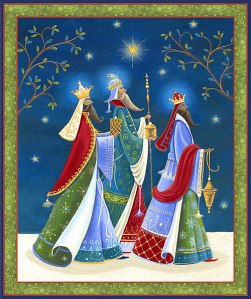 Perjalanan tiga orang bijak dari Timur menjadi symbol dari kerinduan terdalam manusia untuk kehidupan yang bermakna dan kebahagiaan sejati. Balthazar, Melchior dan Gaspar, sebagaimana tradisi menyebut mereka, bukanlah orang Yahudi ataupun Kristiani. Dalam naskah kuno Yunani dari Injil, kata yang digunakan untuk mendeskripsikan mereka adalah ‘magos’, yang berarti ‘seseorang dengan kekuatan magis’ atau ‘penyihir’, dan melakukan magis/sihir adalah kejahatan di mata orang-orang Yahudi (2 Taw 33:6). Meskipun kita tidak bisa memastikan apakah mereka sungguh penyihir apa bukan, satu hal yang pasti bahwa mereka membaca tanda-tanda zaman dan mengikuti sang bintang. Karena itu, mereka sering dituduh sebagai astrolog, pembaca bintang untuk memprediksi perilaku manusia dan masa depan, hal yang dilarang banyak agama, tapi saya berpendapat bahwa mereka sebenarnya adalah astronom. Seperti pelaut yang menatap bintang-bintang dan berharap bahwa bintang-bintang ini akan membimbing mereka pulang, orang majus ini juga melihat bintang dan percaya bahwa mereka akan berjalan di jalan yang benar.
 In Medio Ecclesiae