
The Magi

The Epiphany of the Lord [January 7, 2018] Matthew 2:1-12

“Then they opened their treasures and offered him gifts of gold, frankincense, and myrrh. (Mat 2:11)”

magi shadowBalthazar, Melchior, and Gaspar, as the tradition called them, were neither Jews nor baptized Christians. In Greek ancient manuscripts of the Gospel, the word used to describe them is ‘magos’, meaning ‘someone with magical power’ or ‘magicians’, and practicing magic is detestable in the eyes of the Jews (2 Chro 33:6).  Even the Catholic Church herself prohibits our engagement with any kind of magic (CCC 2116). Yet, we cannot be sure what kind of magic they craft, but one thing is certain that these Magi read the sign of times and follow the star. Because of this, they are called as one of those ancient astrologers, star-readers who predict the human behaviors and the future.

Surprisingly, today’s Gospel presents these three Magi as our protagonists. Why should these practitioners of magic turn to be the good guys here? If we examine closely the story of the Gospel, we discover that these Magi stand in contrast with Herod together with his chief priests and scribes. Unlike the Magi who are reading the star to find the new-born king, Herod and his religious associates are examining the Scriptures to locate the Messiah. Indeed, the Scriptures, as the Word of God, is the lawful means to seek Jesus. Unfortunately, despite its valid method, Herod’s intention is to annihilate Jesus, his threat to his throne. Herod embodies those people who use the Scriptures to achieve his own agenda, to confuse the people and to destroy God. Meanwhile the Magi, despite their illegitimate method, sincerely seek Jesus, the true King, and indeed, God leads them to Jesus.

The encounter with Jesus brings real transformation. The Magi offer Jesus gold, frankincense, and myrrh. Traditionally, the three gifts are symbols of kingship, priesthood and suffering of Jesus, but further studies suggest that the three gifts are the usual items used for practicing magic in the ancient time. Thus, when the Magi offer the three gifts, this symbolizes their giving-up of their old profession. When they see the true King, they have found the true meaning of life, the fullness of happiness. They realize that their former profession, powerful it might be, is not true. Their journey has come to a conclusion, and it is the time for them to decide whether to stay in their old way or to embrace Christ fully. And, they made the right choice.

The story of the Magi reminds me of the story of Bartolo Longo. Growing up in the troubled time of Italy and the Church, young Bartolo loses faith in Papacy, and entered a satanic group. He goes all the way and he becomes the satanic priest. Yet, despite the power and wealth he gains from the devil, he continues to be restless. Deep inside, he longs for the true peace. Driven by his desire for truth, and helped by his friend and a Dominican priest, he returns to the faith that he has abandoned. He becomes an ardent devotee of our Lady and zealous promoter of the rosary. He initiates the restoration of a dilapidated church in Pompey, and places the image of Our Lady of the Rosary. Through his effort, now the church has become a revered pilgrim site in Italy. His holiness is acknowledged by the Church, and he is beatified in 1980 by John Paul II.

Like the Magi and Bartolo Longo, are we ready to recognize Christ as our true happiness? Are we willing to look for Jesus in our lives’ journey? And, when the moment comes, are we willing to give up our former lives and to embrace Jesus fully?

Br. Valentinus Bayuhadi Ruseno , OP


Majus

Hari Raya Penampakan Tuhan [7 Januari 2018] Matius 2:1-12

“Merekapun membuka tempat harta bendanya dan mempersembahkan persembahan kepada-Nya, yaitu emas, kemenyan dan mur (Mat 2:11)”

three magiMenurut tradisi, nama tiga orang Majus adalah Balthazar, Melchior, dan Gaspar. Dalam bahasa Yunani, kata yang digunakan untuk Majus adalah ‘magos’, yang berarti ‘seseorang dengan kekuatan magis atau sihir’, dan mempraktekkan ilmu magis adalah sebuah kesalahan besar di mata orang-orang Yahudi (2 Taw 33: 6). Bahkan Gereja Katolik sendiri melarang kita memiliki kontak dengan praktek magis atau sihir apa pun (Katekismus 2116). Namun, kita tidak bisa memastikan bentuk magis apa yang digunakan oleh orang Majus ini, tapi satu hal yang pasti bahwa mereka membaca tanda zaman dan mengikuti bintang. Karena itu, mereka bias disebut sebagai astrolog kuno, pembaca bintang yang memprediksi perilaku manusia dan masa depan.

Anehnya, Injil hari ini mempersembahkan ketiga orang Majus ini sebagai protagonis. Mengapa para praktisi magis ini bisa menjadi orang baik di sini? Jika kita memeriksa dengan seksama kisah Injil, kita menemukan bahwa orang-orang Majus ini dikontraskan dengan Herodes bersama dengan imam-imam kepala dan ahli-ahli Tauratnya. Berbeda dengan orang Majus yang membaca bintang untuk menemukan raja yang baru lahir, Herodes dan para pembantunya meneliti Kitab Suci untuk menemukan Mesias. Memang, Kitab Suci, sebagai Firman Allah, adalah cara yang benar untuk mencari Yesus. Sayangnya, meski memiliki metode yang benar, maksud Herodes adalah untuk memusnahkan Yesus, yang merupakan ancaman terhadap takhtanya. Herodes menjadi lambang bagi orang-orang yang menggunakan Kitab Suci untuk mencapai agendanya sendiri, untuk membingungkan orang-orang dan untuk menghancurkan Tuhan. Sementara orang Majus, terlepas dari metode yang tidak benar, dengan tulus mencari Yesus dan sungguh, Tuhan membawa mereka kepada Yesus.

Pertemuan dengan Yesus membawa transformasi yang nyata. Orang Majus menawarkan Yesus emas, kemenyan, dan mur. Secara tradisional, ketiga hadiah itu adalah simbol kerajaan, imamat dan penderitaan Yesus, namun penelitian lebih lanjut menunjukkan bahwa ketiga hadiah itu adalah barang yang biasanya digunakan untuk mempraktekkan sihir di zaman kuno. Jadi, ketika orang Majus menawarkan tiga hadiah, ini melambangkan penyerahan profesi lama mereka. Ketika mereka melihat Raja sejati, mereka telah menemukan arti sebenarnya dari kehidupan dan kebahagiaan. Mereka menyadari bahwa profesi lama mereka walaupun memberi mereka kekuatan, tidaklah benar. Perjalanan mereka telah sampai pada puncaknya, dan inilah saatnya bagi mereka untuk memutuskan apakah akan bertahan dengan cara lama atau untuk menerima Kristus sepenuhnya. Dan, mereka membuat pilihan yang tepat.

Kisah orang Majus mengingatkan saya akan kisah Bartolo Longo. Tumbuh dalam masa sulit di Italia dan Gereja, Bartolo muda kehilangan kepercayaan pada Paus, dan memasuki sebuah kelompok pemuja setan, sampai pada akhirnya, dia menjadi imam dari kelompok tersebut. Namun, terlepas dari kekuatan dan kekayaan yang ia dapatkan dari setan, ia terus resah. Jauh di lubuk hatinya, ia merindukan kedamaian sejati. Didorong oleh keinginannya untuk mendapatkan kebenaran, dan dibantu oleh seorang imam Dominikan, dia kembali ke iman yang telah ditinggalkannya. Dia menjadi seorang yang mencintai Bunda Maria dan promotor rosario yang penuh semangat. Dia memulai pemulihan gereja yang rusak di kota Pompey, dan menempatkan lukisan Maria Ratu Rosario di sana. Melalui usahanya, kini gereja tersebut telah menjadi situs peziarahan yang dihormati di Italia. Kekudusannya diakui oleh Gereja, dan dia dibeatifikasi pada tahun 1980 oleh Yohanes Paulus II.

Seperti orang Majus dan Bartolo Longo, apakah kita siap untuk mengenali Kristus sebagai kebahagiaan sejati kita? Apakah kita bersedia untuk mencari Yesus dalam perjalanan hidup kita? Dan, ketika saatnya tiba, apakah kita rela melepaskan hidup kita yang lama dan untuk merangkul Yesus sepenuhnya?

Frater Valentinus Bayuhadi Ruseno, OP

Why still Going to the Church on January 1?

Solemnity of Mary, Mother of God [January 1, 2018] Luke 2:16-21

mother of godSome of us may wonder why the Church places the celebration of the solemnity of Mary, the Mother of God on January 1, or on the New Year. One may guess that the Church wants us to attend mass on the first day of the year, so as to start the year right. For those who wish to have a long holidays, it might be pretty a kill joy, but for some of us who wish to be blessed for the entire year, it is a nice thought. Yet, surely there is something deeper than that.

Mary as the Mother of God is the most ancient and foundational among the other Marian dogmas (there are four Marian dogmas). As early as second century AD, Christians in Egypt have prayed to Mary, and called her as the holy mother of God. The prayer is known as “Sub Tuum Praesidium” or “We fly to your patronage”, a prayer that is still being prayed daily by us, the Dominicans. At the council of Ephesus in 431, in effort to defend the humanity of Jesus, the Church proclaimed Mary as the Mother of God as definitive and bonding for all Christians of all time.

For non-Catholics, to call Mary as the mother of God is pretty idolatrous. If God has a mother, Mary must be the highest goddess of all! The Catholics must fall back to polytheism as they worship Mary like the ancient Greeks offered incense to Hera, the supreme goddess of Olympus. But, for the well-informed Catholics, the title ‘Mother of God’ does not point to the divinity of Mary, and in fact, we never consider Mary as another supreme being. She is human just every one of us, but she is so blessed because the Word was made flesh through her (Luk 1:31). Thus, in simple logic, we may say that Mary is the mother of Jesus and Jesus is God, therefore, Mary is the Mother of God.

Now, any true Marian teaching always sheds us more light on Jesus and brings us closer to God. If a woman becomes a mother because the child she bears, then it is fitting to place this solemnity of the Mother of God in close proximity to the Birth of Jesus or Christmas. No wonder, the Church honors her motherhood exactly at the Octave (8th day) of Christmas, which happens to fall on January 1. This connection between Mary the mother and baby Jesus is reflected also on today’s Gospel who speaks of the birth of Jesus.

Perhaps we are just lazy to attend the Mass today, especially we have many other plans. We rather choose to be caught in the festive atmosphere of New Year. Yet, it is also the day that we reconnect with brilliant Church Fathers who defend this teaching, with many Christian martyrs who choose to die for this truth, and with countless devout Christians who honor the Mother of God. If we begin New Year with a lot of resolutions, why don’t we make honoring Mary, as Jesus honors His mother, as our resolution?

Br. Valentinus Bayuhadi Ruseno, OP

Behind the Holy Family

Feast of the Holy Family [December 31, 2017] Luke 2:22-40

“They took him up to Jerusalem to present him to the Lord (Luk 2:22 NAB)”

holy family 1Today, the Church is celebrating the feast of the Holy Family. Saint Joseph and the Blessed Virgin Mary are man and woman regarded as the holiest among mortals. And the center of their family is Jesus, the Son of God. They are not only one holy family among others, but they are the perfection of the Holy Family. Looking at our own families, we realize we are nothing to compare to this Holy Family. We are called to be holy like them, but we continue to struggle and fail. Nobody among us is immaculately conceived like the Virgin Mary. No woman among us gives birth to the Son of God through the power of the Holy Spirit. Many of us surely love to sleep, but who among us like St. Joseph, receive genuine appearance of the Angel in our dream? Despite our best efforts, we keep hurting each other, failing each other, and are far from the ideal example of the Holy Family.
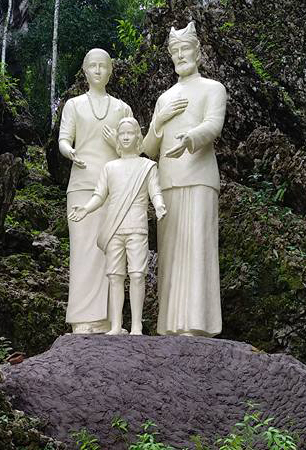
However, the point of the Holy Family is not so much on the goodness of individual members. It is not about the greatness of Mary who is blessed among women. It is not about the righteousness of Joseph who faithfully follows the Law of Moses. Yet, it is about the grace and mercy of God, and how they open themselves to these gifts of God. If we examine carefully the Bible and the socio-historical context of the first century Palestine, we discover that Joseph and Mary are hardly capable and prepared parents for Jesus. Despite coming from David’s clan, Joseph is a poor carpenter from Nazareth. Mary is a very young woman, and just barely ready for pregnancy, let alone for childbearing and child-raising. God makes a very risky choice to entrust His only Son to this couple.

Joseph is indeed a righteous man because he knows and lives by the Law of Moses, yet when he learns that Mary is with a child that is not his, he must have felt betrayal and deep pain. To satisfy his anger, he could have openly accused Mary of adultery and let the public stone her, but his mercy prevails, he decides to secretly divorce Mary as to save her life and the baby. However, adding salt to the wound, the Angel orders Joseph to take Mary as his wife. This means Joseph will have to acknowledge the child as his own, and he will live with a dishonor as one who violates a virgin before the marriage. The same thing with Mary. Despite her inability to understand the virginal conception of Jesus, she is aware that having a child outside marriage means shame and even death. Thus, this means their lives become easier. Hardly! Simeon warns Mary that a sword will pierce her soul. Mary will see her own son treated like an animal and crucified. Joseph has to work harder to provide for Jesus and Mary, and continue to bear the stigma. Holy spouses do not have a convenient life even with Jesus in their midst. Yet, both Mary and Joseph agree to the plan of God, and let the grace of God fill their lives, and this makes them holy.

We realize that building a holy family is a tough vocation. Like Joseph and Mary, we are going to face difficult problems, from financial instability to personal disagreements, and relying on our own strength, we will surely fall. Yet, like Mary and Joseph, we open ourselves to the grace of God, because when God calls us to holiness in the family, He surely will bring us all to the perfection.

Dasar dari Keluarga Kudus

Pesta Keluarga Kudus [31 Desember 2017] Lukas 2: 22-40

“Mereka membawa Dia ke Yerusalem untuk menyerahkan-Nya kepada Tuhan (Luk 2:22).”

holy familyHari ini, Gereja merayakan Pesta Keluarga Kudus. Santo Yusuf dan Perawan Maria adalah pria dan wanita adalah paling kudus di antara manusia, dan pusat keluarga mereka adalah Yesus, Putra Allah. Sungguh tidak ada keluarga lain yang dapat menyamai keluarga kudus yang satu ini. Melihat keluarga kita sendiri, kita sadar bahwa kita tidak ada apa-apanya dibandingkan dengan Keluarga Kudus ini. Benar bahwa kita semua dipanggil untuk menjadi kudus seperti mereka, tapi kita terus bergulat dan gagal. Tidak ada di antara kita yang dikandung tanpa noda seperti Perawan Maria. Tidak ada wanita di antara kita yang melahirkan Putra Allah melalui kuasa Roh Kudus. Banyak dari kita pasti suka tidur, tapi siapa di antara kita seperti St. Yusuf, yang menerima kabar dari Malaikat Allah dalam mimpi kita? Terlepas dari upaya terbaik kita, kita terus saling menyakiti, gagal, jatuh, dan jauh dari contoh ideal Keluarga Kudus.
Namun, kekuatan yang sesungguhnya dari Keluarga Kudus tidaklah terletak pada kebaikan Yusuf atau Maria. Ini bukan tentang kehebatan Maria yang diberkati di antara wanita. Ini bukan tentang ketaatan Yusuf yang dengan setia mengikuti Hukum Musa. Namun, ini adalah karena rahmat dan belas kasih Allah, dan bagaimana mereka membuka diri mereka terhadap rahmat Allah ini. Jika kita meneliti dengan saksama Alkitab dan konteks sosio-historis Palestina pada abad pertama, kita menemukan bahwa Yusuf dan Maria adalah orang tua yang sesungguhnya tidak mampu untuk Yesus. Meskipun datang dari klan Daud, Yusuf adalah seorang tukang kayu miskin dari Nazaret. Maria adalah wanita yang sangat muda, dan hampir tidak siap untuk hamil, apalagi untuk melahirkan dan mengasuh anak.

Yusuf memang orang yang taat karena dia tahu dan hidup menurut hukum Musa, namun ketika dia mengetahui bahwa Maria mengandung anak yang bukan miliknya, pastilah dia merasa dikhianati dan sangat terluka. Untuk memuaskan kemarahannya, dia bisa secara terbuka menuduh Maria melakukan perzinahan dan membiarkan masyarakat merajam dia, namun akhirnya, dia memutuskan untuk secara diam-diam menceraikan Maria dan menyelamatkan nyawanya dan bayinya. Namun, tidak hanya itu, Malaikat memerintahkan Yusuf untuk mengambil Maria sebagai istrinya. Ini berarti Yusuf harus mengakui anak itu sebagai miliknya sendiri, dan dia akan hidup dengan penghinaan sebagai orang yang bersetubuh dengan perawan sebelum menikah. Hal yang sama dengan Maria. Meskipun dia tidak dapat memahami tentang bayinya yang ada di rahim, dia sadar bahwa memiliki anak di luar nikah berarti aib dan bahkan kematian. Dengan kehadiran Yesus bukan berarti hidup mereka menjadi lebih mudah. Simeon memperingatkan Maria bahwa pedang akan menembus jiwanya. Maria akan melihat anaknya sendiri diperlakukan seperti binatang dan disalibkan. Yusuf harus bekerja lebih keras untuk menyediakan bagi Yesus dan Maria, dan terus menanggung aib di tengah masyarakat. Pasangan kudus sesungguhnya tidak memiliki kehidupan yang nyaman bahkan dengan Yesus di tengah-tengah mereka. Namun, baik Maria maupun Yusuf menerima rencana Allah, dan membuka diri terhadap kasih karunia Allah yang memenuhi hidup mereka, dan inilah yang membuat mereka sungguh kudus.

Kita menyadari bahwa membangun keluarga kudus adalah panggilan yang sulit. Seperti Yusuf dan Maria, kita akan menghadapi masalah yang sulit, mulai dari ketidakstabilan finansial sampai kepribadian yang berbeda, dan bergantung pada kekuatan kita sendiri, kita pasti jatuh. Namun, seperti Maria dan Yusuf, kita membuka diri terhadap anugerah Tuhan, karena ketika Tuhan memanggil kita dalam kekudusan dalam keluarga, Dia pasti akan membawa kita kepada kesempurnaan dan buah berlimpah.

Frater Valentinus Bayuhadi Ruseno, OP

Christmas and the Love of God

The Nativity of the Lord [December 25, 2017] John 1:1-18

 “And the Word became flesh and made his dwelling among us, and we saw his glory, the glory as of the Father’s only Son, full of grace and truth. (Joh 1:14)”

John-Word-made-fleshChristmas is one of the most joyous events in the Church and the world. But, what makes us happy this Christmas? Is it only about partying? Is it all about buying gifts? Is it about family gathering? Is it about fulfilling our obligation of going to the Church? Is there something more than these? Immersed in many celebrations, merriment, spending, and holidays, we often forget the main reason behind Christmas. We all know Christmas is the birthday of Jesus Christ, but what is the meaning and significance of this birth for us? Let us stop for a while and reflect on the Gospel of John.
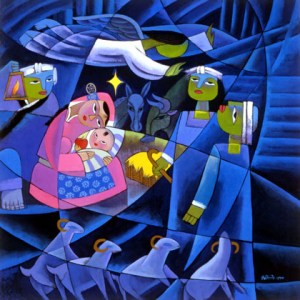
John describes the birth of Jesus in just one line, “and the Word was made flesh and dwell among us.” It is a short yet powerful line, but demands an explanation. “…was made flesh” means that the Word becomes a totally human being. He breathes the air we breathe, feels what we feel, and works for a living just many of us. He is human like us in all respect except sin (see Heb 4:15).

Yet, this man is also fundamentally different from us, because he is the Word. Who is this Word?  At the beginning of his Gospel, John the evangelist gives us an extremely brief but potent description of the Word. He was with God since the beginning, and the Word was God. With boldness, John the evangelist proclaims that this Word is God the Son, the second divine person of the Holy Trinity. He has existed with the God the Father in eternity, and only through Him, all creations come to existence. In the Annunciation, this all-powerful Word became man, and in Christmas day, He was born in Bethlehem.

It is true that Christmas accounts of Luke and Matthew are more vivid and details as compare to John. Matthew has the three Magi, and Luke has the angels and shepherds. Yet, despite its brevity, only John connects Christmas to the divine Word. Christmas reaches its deepest meaning when we are able to appreciate the Word, the God the Son, decides to be born as man. Then why does God choose to be a man, fragile, prone to pain and suffering, and mortal like us?

The only answer is love. God is love (1 Jn 4:8) and God so loves us, that He gives only Son for us. God is madly in love with us, to the point that He becomes one of us, and by becoming a man, we may feel His love in a most radical manner. We can discuss various theories of love at length, but unless we put into actions, love is meaningless. So thus, the love of God is manifested in the most concrete manner as He becomes man. We might do not understand why this kind of love, but God is like a mother who is so in love with her newly born baby, will do anything to ensure his wellbeing even to the point of sacrificing her own life. Christmas is indeed one of the happiest events because here we are able to feel and appreciate the love of God in a most radical way. It is the gift of love, and only true love that can make us truly happy.

Br. Valentinus Bayuhadi Ruseno, OP

Natal dan Kasih Tuhan

Hari Raya Natal [25 Desember 2017] Yohanes 1: 1-18

Firman itu telah menjadi manusia, dan diam di antara kita, dan kita telah melihat kemuliaan-Nya, yaitu kemuliaan yang diberikan kepada-Nya sebagai Anak Tunggal Bapa, penuh kasih karunia dan kebenaran. (Yoh 1:14)”

nativity_he-qiNatal adalah salah satu hari yang paling menggembirakan di dalam Gereja. Tapi, apa yang membuat kita gembira Natal ini? Apakah karena banyak pesta? Apakah karena kita menerima banyak hadiah? Apakah karena kita bisa berkumpul dengan keluarga? Terlarut dalam banyak perayaan, kegembiraan, belanja, dan liburan, kita sering melupakan alasan utama di balik Natal. Tentunya, kita semua tahu Natal adalah hari kelahiran Yesus Kristus, tapi apa arti sesungguhnya kelahiran ini bagi kita? Mari kita berhenti sejenak dan merenungkan Injil Yohanes.

Yohanes Penginjil menggambarkan kelahiran Yesus hanya dalam satu kalimat, “dan Firman itu telah menjadi manusia dan tinggal di antara kita.” Ini adalah kalimat yang sangat pendek namun penuh daya. Firman menjadi manusia sejati. Dia menghirup udara yang kita hirup, merasakan apa yang kita rasakan, dan bekerja untuk mencari nafkah seperti halnya banyak dari kita. Dia adalah manusia seperti kita dalam segala hal kecuali dosa (lihat Ibr 4:15).

Namun, manusia ini juga sangat berbeda dengan kita, karena dia adalah Firman. Siapakah Firman ini? Pada awal Injilnya, Yohanes penginjil memberi kita deskripsi Firman yang sangat singkat tetapi penuh kekuatan. Firman bersama Tuhan sejak awal, dan Firman itu adalah Tuhan. Dengan keberanian, Yohanes penginjil menyatakan bahwa Firman ini adalah Allah Putra, pribadi ilahi yang kedua dari Tritunggal Mahakudus. Dia telah ada bersama dengan Allah Bapa dalam kekekalan, dan hanya melalui Dia, semua ciptaan ada. Saat Maria menerima Kabar Sukacita, Firman yang Maha Kuasa ini menjadi manusia, dan pada hari Natal, Dia lahir di Betlehem.

Memang benar bahwa kisah kelahiran Yesus di Lukas dan Matius lebih hidup dan panjang dibandingkan dengan Yohanes. Matius memiliki tiga orang Majus, dan Lukas memiliki malaikat dan gembala. Namun, meski singkat, hanya Yohanes yang menghubungkan Natal dengan sang Firman. Natal mencapai makna terdalamnya saat kita dapat menemukan sang Firman, Putra Allah, yang memutuskan untuk dilahirkan sebagai manusia. Lalu mengapa Tuhan memilih untuk menjadi seorang manusia, rapuh, rentan terhadap rasa sakit dan penderitaan, dan fana seperti kita?

Satu-satunya jawabannya adalah cinta kasih. Tuhan adalah kasih (1 Yoh 4: 8) dan Tuhan sangat mengasihi kita, sehingga Dia memberi Putra-Nya bagi kita. Tuhan sangat mencintai kita, sampai-sampai Ia menjadi salah satu dari kita, dan dengan menjadi seorang manusia, kita dimungkinkan merasakan kasih-Nya dengan cara yang paling radikal. Kita bisa membahas berbagai teori cinta dengan panjang lebar, tapi tanpa tindakan nyata, cinta kasih itu tidak ada artinya. Jadi, cinta kasih Tuhan diwujud nyatakan dengan cara yang paling konkret saat Ia menjadi manusia. Kita mungkin tidak mengerti mengapa Ia mencintai kita seperti ini, tapi Tuhan seperti seorang ibu yang sangat mencintai bayi yang baru lahir, akan melakukan apapun untuk memastikan kesejahteraan sang bayi, bahkan sampai mengorbankan nyawanya sendiri. Natal memang merupakan salah satu peristiwa terindah karena disini kita bisa merasakan dan menghargai kasih Tuhan dengan cara yang paling radikal. Itu adalah karunia cinta kasih, dan hanya cinta sejati yang bisa membuat kita benar-benar bahagia.

Frater Valentinus Bayuhadi Ruseno, OP

Christmas: Not Caesar, but Jesus

Christmas Eve. December 24, 2016. Luke 2:1-14

“She gave birth to her firstborn son. She wrapped him in swaddling clothes and laid him in a manger, because there was no room for them in the inn. (Luk 2:7)”

christmas-1The story of Nativity of Jesus Christ began with a great person in ancient time. He was Caesar Augustus. He was considered to be one of the greatest Roman Emperors because during his reign, he was able to establish peace and prosperity within his territory. The people adored him and worshiped him as the Savior and the Son of God. He was the hero of the ancient world, but fortunately, he was not the hero of Christmas.
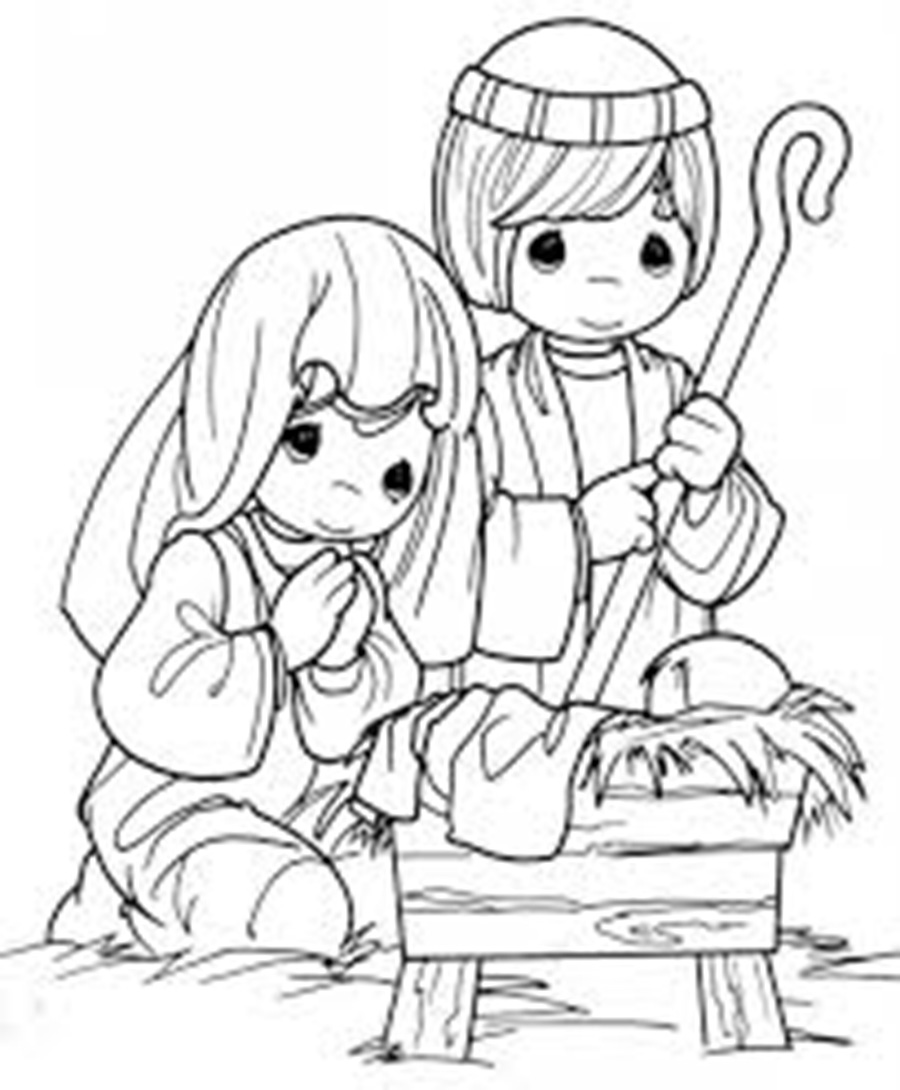
From the great Roman world, we are brought to the small village Bethlehem. Here in this almost insignificant place, we meet the simple and poor couple from another small town, Nazareth in Galilee. They are Joseph, the righteous carpenter, and his expecting young wife, Mary. But, there is no room in the inn, perhaps because the inn is full of people, or because people do not want to receive the poor couple who might not be able to pay the rent. Consequently, Mary has to give birth at the place of animals and simply places her firstborn baby on the manger. This is the story of a lowly couple at the most wretched place on earth. Yet, this is actually our story of real Christmas.

Our salvation is not found in the strongest fortified palace, neither on riches nor prosperity. Our happiness lies in the most unlikely place: at the poor manger in the smallest town of Bethlehem. Our salvation comes not from the greatest emperor with his achievements and honor, but from a meek and defenseless baby. And this is the Good News of the first Christmas.

It is a good news for us because we can be truly happy even without all the new clothes, new gadgets, and all gifts coming from the Malls or shopping centers. It is a good news for us because we can be hopeful even if we are still struggling with so many problems in life, financial difficulties, health issues, relationship meltdowns, and more. God chooses to be born into the families torn by separations. Jesus is born inside war-torn places like in Aleppo in Syria and Mosul in Iraq. Christ is born in poor shanties, amidst the people who never taste an even decent Christmas Eve’s meal.

When Fr. Timothy Radcliffe, OP, former Master of the Order of Preachers, once visited the Dominican sisters in northern Rwanda. It was just after the civil war, generally between the Hutus and Tutsis. The place was frightening and anytime armed groups might ambush them. The sisters’ convent was also marked with bullets holes, sign of battle and skirmish. Inside the convent were the sisters, both the Hutus and Tutsis, and many have lost their family members during the war. Fr. Timothy was there on Christmas Eve, and despite the pain and fear, the entire community decided to celebrate the Eucharist and the birth of Christ together.  In tears yet in joy, the baby was born among them and baby Jesus becomes the sign of hope for a better future.

Christmas shakes our belief in many Caesar we hold dearly, Caesar of wealth, Caesar of power, Caesar of fame. In Christmas, we are reminded that God became man and embraced all our limitations, our sorrow, and pains, and points to a future hope for all of us.

Br. Valentinus Bayuhadi Ruseno, OP