

Fifth Sunday in Ordinary Time [B]
February 7, 2021
Mark 1:29-39
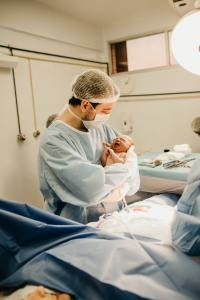 Jesus cannot be separated from His healing ministries. Some of the healings are remarkable, like the healing of a woman with the hemorrhage and Jarius’ daughter [Mark 5:321-43]. They are astonishing because these are practically impossible cases. The woman has suffered for twelve years without sign of hope, and Jarius’ daughter is as good as dead. Yet, Jesus does heal not only those with grave illness but also those with curable sickness.
Jesus is at the house of Simon, and He discovers that Simon’s mother-in-law has a fever. Fever is a symptom that points to an infection, from ordinary flu to covid-19. In the case of Simon’s mother-in-law, we can safely assume that she has a curable sickness. Without proper rest and treatment, she will get back to her usual activities. Yet, despite this fact, and even without a particular request from the person, Jesus decides to heal her anyway. Jesus understands that sickness, no matter insignificant it is, remains improper in our lives. To be a healthy person is God’s plan for us.
If we see our lives, we quickly recognize that getting sick is part of our life. Sickness becomes a constant reminder that our bodies are limited and fragile. Indeed, we have an immune system, but often this potent protection is not enough. With the pandemic caused by covid-19, we realize that human beings are not powerful as we think. As we struggle to find the cures, the virus, bacteria, and other sickness causes are also evolving and getting deadlier. The illness causes pain and suffering, and these weaknesses remind us of our death. Yet, despite this realization, deep down, we know that sickness is not the real deal, and it is a privation rather than perfection. We desire to be healthy. We fight to be healthy, and only by being healthy, we may achieve our potentials.
This is why we go to the doctors if we are sick, hit the gym, do other exercises, and live a healthy lifestyle. It is the same reason that the persons with the gift of healing are sought for. It is the same reason that many people want to see Jesus.
We may ask, why does not Jesus heal all of us? The answer might not be that simple, but we can say that Jesus first comes to heal our broken relationship with God. He saves us from our sins. His miraculous healings are signs of this redemption. Even in His providential way, God can use our illness and suffering to make us even spiritually closer to Him. St. Dominic de Guzman is known to have very rigid mortification practices, and a witness said that a cord of chains was tied in his tight and just removed when he died. Mortification is one of the favorites ways of the saints to seek God. They do not want that their healthy bodies become a hindrance to seek God. Meanwhile, Beato Carlo Acutis, who got sick of leukemia, a severe illness that eventually took his life, offered his suffering to the Lord. He said, “I offer all the suffering I will have to suffer for the Lord, for the Pope, and the Church.”
Jesus brings us healing to our souls and bodies. Yet, in His providential care, our bodily weakness can lead us even closer to God.
Valentinus Bayuhadi Ruseno, OP
photo credit: jonathan-borba
 Yesus tidak dapat dipisahkan dari pelayanan penyembuhan-Nya. Beberapa kisah kesembuhan merupakan kejadian yang luar biasa seperti kesembuhan seorang wanita dengan pendarahan dan juga anak perempuan Jarius [Markus 5: 321-43]. Penyembuhan ini adalah mujizat karena kasus-kasus yang dihadapi Yesus adalah hal-hal mustahil disembuhkan pada zaman-Nya. Sang wanita telah menderita pendarahan selama dua belas tahun tanpa harapan, dan putri Jarius sebenarnya sudah meninggal. Di sisi lain, Yesus tidak hanya menyembuhkan orang yang sakit parah, tapi juga mereka yang sakitnya tergolong tidak membahayakan.
 We are celebrating the feast of the Holy Family, and indeed, we are celebrating not only the family of Jesus, Mary, and Joseph but every human family. Through this liturgical celebration, the Church is inviting us to recognize the importance and the value of our family. Not only acclaiming the fundamental worth of family, but we are also invited to embrace and celebrate family lives.
 Christmas is one of the most beautiful and joyous times of the year. Christmas is the time to gather with the families and friends and to have an exchange of gifts. Christmas is the time to put up Christmas trees, place Nativity scenes, and play Christmas songs. Surely, Christmas is the time when families once again go to the church together.
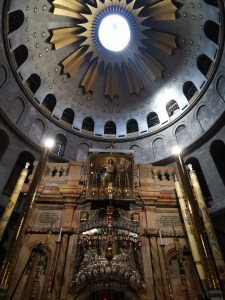 Today is the day of resurrection. Today is the day Jesus has conquered sin and death. Today is the day of our victory. No wonder among the liturgical celebration of the Church, Easter is the grandest, the longest and the most spectacular. It is the time that the churches are flooded with the faithful. It is the time that parishioners got involved in many activities, practices, and services. It is the time when families gather and celebrate. It is the time the priests receive more blessings!
 Hari ini adalah hari kebangkitan Yesus. Hari ini adalah hari Yesus mengalahkan dosa dan maut. Hari ini adalah hari kemenangan kita. Tidak mengherankan di antara perayaan liturgi Gereja, Paskah adalah yang termegah, terpanjang dan paling spektakuler. Inilah saatnya gereja dibanjiri oleh umat beriman. Inilah saatnya umat paroki terlibat dalam banyak kegiatan, persiapan, dan pelayanan. Inilah saatnya keluarga berkumpul dan merayakan. Inilah saatnya para imam menerima lebih banyak berkat!
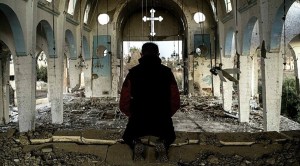 At the heart of Jesus’ teaching in the Mount is the formation of the heart. However, the heart in the Bible is not limited to our affective side or emotions. It also stands for the center of intellectual capacity and freedom. The heart is the seat of life itself, and thus, represents who the man or woman is.
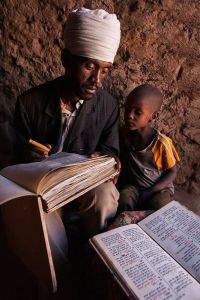 We begin the ordinary time of the liturgical year. In the Church, we have three cycles of the liturgical year: A, B, and C. every year, we have a different set of readings. In year A, the Gospel readings are mainly from the Gospel of Matthew, meanwhile, year B is from Mark and year C is from Luke. The Gospel of John does not have its separate year, but the readings from John are scattered through the years, especially in the Easter season.
 Kita memulai masa biasa pada tahun liturgi ini. Di Gereja Katolik, kita memiliki tiga siklus tahun liturgi: A, B, dan C. Di setiap tahun, kita memiliki serangkaian bacaan yang berbeda. Pada tahun A, bacaan Injil terutama dari Injil Matius, sementara tahun B dari Markus dan tahun C dari Lukas. Injil Yohanes tidak memiliki tahun yang khusus, tetapi bacaan dari Yohanes tersebar di sepanjang tahun, terutama di masa Paskah.
 In Medio Ecclesiae