

Fourth Sunday of Lent [March 31, 2019] Luke 15:1-3, 11-32
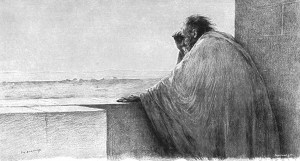 The Parable of the Prodigal Son is one of the most moving stories of Jesus and has been regarded as the all-time favorite. Why? I guess one of the reasons is the story of the Prodigal Son is also our story.
Let us look at some details of the parable especially the father and the younger son. The son demands his inheritance while his father is still alive and well. That’s a no-no! It simply means the son wishes his father’s death, and wills that he is no longer part of the family [see Sir 33:20-24]. The offended father has the authority to discipline the ungrateful son, but he does not! Because of his tremendous love for the son, he allows the son to get what he wants. Like the son, we often offend the Lord, wishing to be away from Him. We choose “the inheritance”, the good things God created like wealth, power, and pleasure above and over Him. We keep abusing His love and kindness, knowing that He is a Good Father.
However, the younger son’s action has a terrible consequence. The farther he is away from his father, the more pitiful his life becomes. The inheritance without the true owner is nothing but a passing shadow. The Jewish young man loses everything, and even becomes the caretaker of pigs, the very animal Jews hate! He becomes so low to the point of eating what the pigs eat. Like the younger son, without God, we become miserable. Yes, we may become richer, more powerful and famous, but we have lost our souls. We never become truly happy because these pleasurable things without God are mere addiction.
The son comes to his sense when he remembers his father and his life with him. Even the father is far away, it does not mean he is idle. He is drawing his lost son through good memories they share. No matter far we are from God, He is constantly pulling us back to Him through His mysterious ways. Yet, it remains our choice to heed the voice of our conscience but ignore it and plunge ourselves further into sin.
The parable also speaks about the father who is patiently waiting, looking forward to the day that his son returns home. The moment he sees his son from distance, without a second thought, he runs toward his son and embraces him and kisses him. The son never thinks that he deserves to be his son once more, and just wants to be treated like a servant. But, mercy precisely is to receive something we do not deserve. The father receives back his young man as his child.
Allow me to close this simple reflection with a story. In 1988, a terrible earthquake hit Armenia. In just four minutes, buildings crumbled, and thousands died. A man immediately ran to a school where his son studied. He had promised to his son that he would be there to fetch him. He saw that the school was now piles of rubbles. He rushed to the site where the class used to be. He started digging barehandedly. Some people tried to help him but stopped afterward. Some people discouraged him, saying, “It is useless. They are dead!” He refused to give up, and continue digging for hours. Then after more than 30 hours of searching, he heard a small voice from the rubble. He shouted, “Arman!” and he heard a response, “Father!” His boy was still alive, and together with him were other pupils. That day, the man had saved 14 children who got trapped. Arman told his friends, “I told you, my father will come no matter what!”
The parable of the Prodigal Son is so beautiful because it does not only reflect who we are but also reveals who our God is. He is a merciful Father who refuses to give up hope on us, however desperate we have become.
Deacon Valentinus Bayuhadi Ruseno, OP
 Perumpamaan tentang Anak yang Hilang adalah salah satu kisah Yesus yang paling mengharukan dan telah dianggap sebagai yang paling disukai. Mengapa? Saya kira salah satu alasannya adalah kisah Anak yang Hilang adalah kisah hidup kita juga.
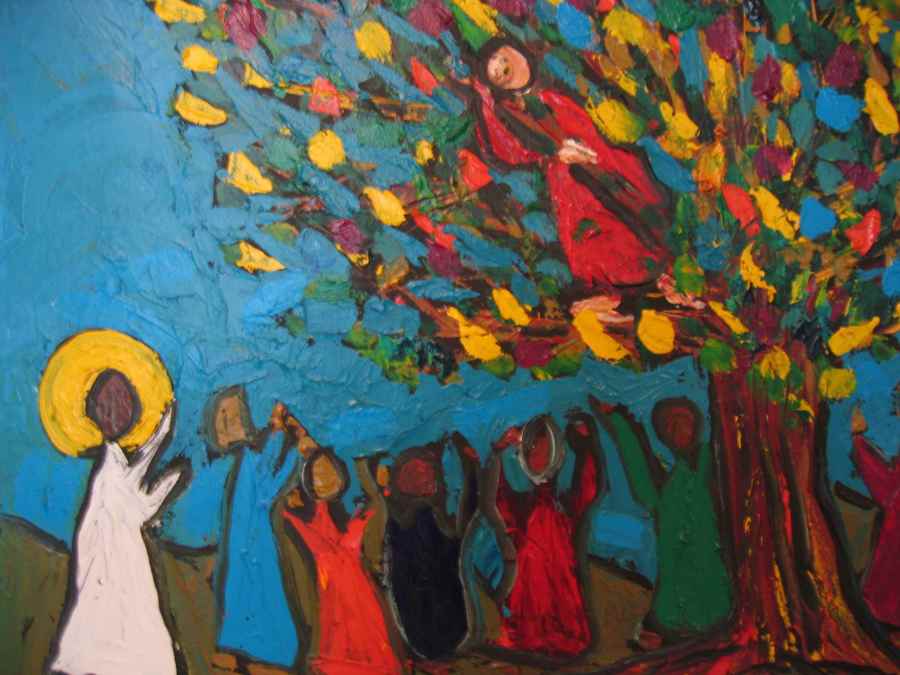
 It normally takes around three years for a fig tree to reach its maturity and fruition. If it does not produce fruit by that time, it is not likely to bear fruit at all. The owner has a reasonable right to cut the tree, but through the effort of the gardener, it is given another chance. Like the fig tree, through the effort of our Chief Gardener, the new Adam of eternal Eden, Jesus Christ, we are given another chance to change and be fruitful.
 Biasanya membutuhkan waktu sekitar tiga tahun bagi pohon ara untuk mencapai masa dewasa dan berbuah. Jika tidak menghasilkan buah pada saat ini, kemungkinan besar pohon ara tersebut tidak akan berbuah sama sekali. Tentunya, Sang pemilik memiliki hak untuk menebang pohon tersebut dan menanam pohon baru. Tetapi, melalui upaya sang tukang kebun, pohon ara diberi kesempatan baru. Seperti pohon ara, melalui upaya Sang Tukang Kebun kita, Adam yang baru di taman Eden yang abadi, Yesus Kristus, kita diberi kesempatan baru untuk berubah dan berbuah.
 When I was assigned to the hospital to serve as a chaplain, I witnessed the rise of diabetic cases as well as its terrifying effects on the patients. In simple term, diabetes is a condition in a person who can no longer naturally manage their blood sugar. In more serious cases, the body loses its natural ability to heal its wounds. In the beginning, it was a small open wound, yet since the body no longer heals, the infections set in, and this leads into gangrene or the death of the body’s tissues. I accompanied some patients who were struggling with this situation and witnessed how their fingers or even foot were darkened and deformed. When the ordinary treatment no longer worked, the amputation became the only merciful option as to prevent the spread of infections. As a chaplain, accompanying these patients was one of my toughest missions in the hospital.
 Ketika saya bertugas pelayanan di rumah sakit di Manila, saya menyadari bahwa kasus diabetes berkembang secara pesat, dan juga efeknya yang menakutkan bagi para pasien. Secara sederhana, diabetes adalah suatu kondisi pada seseorang yang tidak lagi dapat secara alami mengelola gula darahnya. Dalam kasus yang lebih serius, tubuh kehilangan kemampuan alami untuk menyembuhkan luka-lukanya. Pada awalnya adalah luka yang kecil, namun karena tubuh tidak lagi bisa meyembuhkan, infeksi-infeksi pun berkembang, dan ini mengarah pada gangren atau kematian jaringan-jaringan tubuh. Saya menemani beberapa pasien yang bergulat dengan situasi ini, dan menyaksikan bagaimana jari atau bahkan kaki mereka menghitam dan berubah bentuk. Ketika pengobatan biasa tidak lagi bekerja, amputasi menjadi satu-satunya pilihan untuk mencegah penyebaran infeksi. Sebagai seorang frater yang bertugas di rumah sakit, mendampingi pasien-pasien ini adalah salah satu misi terberat saya di rumah sakit.


 In Medio Ecclesiae