
Tough Love

Reflection on the 28th Sunday in Ordinary Time [October 14, 2018] Mark 10:17-30

Jesus, looking at him, loved him and said to him, “You are lacking in one thing. Go…follow me.” (Mk. 10:21)

agape crossWe discover at least three instances in the Bible in which Jesus explicitly expresses that He loves someone. The first instance is that Jesus loves the young rich man who seeks the eternal life (Mrk 10:21). The second is Jesus loves Martha, Mary, and Lazarus (Jn 11:5). The third is Jesus’ love for His disciples, especially His beloved disciple (Jn 13:34).

In these three accounts, Jesus’ love is not simply an emotional kind of affection. It is not the love that causes an adrenalin rush, heart’s palpitation, and an explosion of imagination. It is not fickle love that comes in the morning but dies in the afternoon. The love of Jesus is a love rooted in free will and firm decision. No wonder the Greek word used to describe this love is “agape.” Neither it is “eros,” an emotional and sexual love, nor “philia,” an affection for friends. St. Thomas Aquinas succinctly yet powerfully describes “love” as willing the good of the others. When Jesus loves them, Jesus freely chooses that the good things may happen in their lives even though this means Jesus has to forgo His own goodness and benefits. It is the tough love that entails giving up oneself, sacrifice and even pain. It is the love that thrives even when life has turned sour, and feelings have become bitter.

Going back to the story of the rich young man who asks Jesus on how to inherit the eternal life, he is basically a good guy. He has done a lot of good deeds and been faithful to God and the Law of Moses. Jesus Himself gives him score nine out of ten. Only one thing is still lacking. When Jesus invites the young man to sell what he has, to give them to the poor, and follow Jesus, the man goes away sad. Why? The Evangelist gives us the answer: he has many “ ktemata ,” landed properties. This guy is not ordinarily rich, but super rich. Perhaps, the young man thinks that eternal life is something that can be added to his properties, something that is acquired by doing good and avoiding evil or something that can make him even richer. Yet, this is not eternal life, but a mere shopping in the mall.

Eternal life is a gratuitous gift from God given to those whom He loves. This young man is truly blessed because Jesus loves him. The eternal life is just a step away from this good young man. Yet, though the gift is free, it is never cheap. Jesus wants the young man to follow Him because He wishes to teach the young man how to love like Him. Jesus wants him to will the good of the others, and this begins with selling his precious properties and helping the poor. Here comes again the paradox of love: unless we give ourselves for others, we never have ourselves fully. In the words of St. Francis of Assisi, “For it is in giving that we receive, it is in pardoning that we are pardoned, and it’s in dying that we are born to eternal life.”

I have been in the formation for more than 16 years, more than half of my life. I used to get frustrated because I have done well and fulfilled the requirements, and yet the ordination never comes. However, I realize that I was thinking like the rich young man. I forget that the vocation, as well as ordination, are gifts, not reward. This perspective frees me from my pride and makes me humble and grateful. Jesus loves me, and He loves me tough .

Jesus loves us and yet, it is not an easy and pampering love. It is tough love. It is love that challenges us to grow beyond; it is love that dares us to remain in truth, it is love that propels us to love like Jesus.

Br. Valentinus Bayuhadi Ruseno, OP

.
Kasih yang Tangguh

Renungan untuk Minggu ke-28 pada Masa Biasa [14 Oktober 2018] Markus 10: 17-30

“Yesus memandang dia dan menaruh kasih kepadanya…” (Markus 10:21)

agapeKita menemukan setidaknya tiga episode dalam Alkitab di mana Yesus secara eksplisit menyatakan bahwa Dia mengasihi seseorang. Yang pertama adalah Yesus yang mengasihi Marta, Maria, dan Lazarus (Yohanes 11: 5). Yang kedua adalah kasih Yesus bagi murid-murid-Nya (Yohanes 13:34). Yang ketiga dan menjadi fokus kita hari ini adalah Yesus yang mengasihi orang muda kaya yang mencari kehidupan kekal (Mrk 10:21).
Dalam ketiga kisah ini, kasih Yesus bukan sekadar kasih sayang yang emosional. Bukan cinta yang menyebabkan meningkatnya kadar adrenalin dan jantung yang berdebar-debar. Bukan cinta yang yang datang di pagi hari tetapi lenyap di sore hari. Kasih Yesus adalah kasih yang berakar dalam kehendak bebas dan keputusan yang tegas. Kata Yunani yang digunakan untuk menggambarkan kasih ini adalah “agape.” Bukan “eros”, cinta emosional dan seksual, ataupun “philia,” kasih sayang di antara sahabat. St. Thomas Aquinas secara ringkas dan tepat menjelaskan “kasih” sebagai menghendaki yang baik bagi sesama. Ketika Yesus mengasihi mereka, Yesus dengan bebas memilih bahwa hal-hal yang baik dapat terjadi dalam kehidupan mereka meskipun ini berarti Yesus harus melupakan diri-Nya sendiri. Ini adalah cinta kasih yang kuat yang memerlukan pengorbanan diri, komitmen dan bahkan rasa sakit. Ini adalah kasih yang tumbuh subur bahkan ketika hidup semakin hambar dan pahit.

Kembali lagi ke kisah pemuda kaya yang bertanya kepada Yesus tentang bagaimana cara mewarisi kehidupan kekal, pada dasarnya dia adalah pria yang baik. Dia telah melakukan banyak perbuatan baik dan setia kepada Tuhan dan Hukum Musa. Yesus sendiri memberinya nilai sembilan. Hanya satu hal yang masih kurang. Ketika Yesus mengajak pemuda itu untuk menjual apa yang dia miliki, memberikannya kepada orang miskin, dan mengikuti Yesus, sang pemuda pun meninggalkan Yesus dengan sedih. Mengapa? Penginjil memberi kita jawaban: ia memiliki banyak “ktemata,” atau properti. Pemuda ini tidak hanya kaya, tapi super kaya. Mungkin, sang pemuda itu berpikir bahwa kehidupan kekal adalah sesuatu yang dapat ditambahkan ke dalam barang-barang koleksinya, sesuatu yang bisa diperoleh dengan melakukan hal-hal baik dan menghindari kejahatan, atau sesuatu yang dapat membuatnya semakin kaya. Namun, ini bukanlah hidup yang kekal, tetapi hanya shopping di mal.

Kehidupan kekal adalah karunia dari Tuhan yang diberikan kepada mereka yang Dia kasihi. Sang pemuda ini sejatinya sungguh diberkati karena Yesus mengasihi dia. Hidup yang kekal sudah ada dalam jangkauannya. Namun, meskipun karunia itu cuma-cuma, itu tidak berarti murahan. Yesus ingin agar pemuda itu mengikuti Dia karena Dia ingin mengajarkan pria muda itu bagaimana mengasihi. Yesus ingin dia melakukan kebaikan bagi orang lain, dan ini dimulai dengan menjual properti berharganya dan membantu orang miskin. Di sinilah terletak paradoks kasih: kecuali kita memberikan diri kita untuk sesama, kita tidak pernah akan mendapatkan diri kita yang sepenuhnya. Dalam kata-kata Santo Fransiskus dari Asisi, “Karena dalam memberi yang kita menerima, dalam mengampuni, kita diampuni, dan  dalam kematian, kita dilahirkan kembalik dalam hidup yang kekal.”

Saya telah menjalani di formasi selama lebih dari 16 tahun, lebih dari separuh hidup saya! Saya sempat frustrasi karena saya telah memenuhi berbagai persyaratan dengan baik, namun tahbisan tidak kunjung datang. Namun, saya menyadari bahwa saya sebenarnya berpikir seperti orang muda yang kaya. Saya lupa bahwa panggilan, serta tahbisan, adalah karunia, bukan hak atau upah. Perspektif ini membebaskan saya dari keangkuhan dan membuat saya rendah hati dan selalu bersyukur. Yesus mengasihi saya, dan Dia mengasihi saya dengan tegar.

Yesus mengasihi kita namun, ini bukan kasih yang mudah dan memanjakan. Ini kasih yang tangguh dan tegar. Ini adalah kasih yang menantang kita untuk tumbuh; itu adalah kasih yang menantang kita untuk tetap hidup dalam kebenaran, itu adalah kasih yang mendorong kita untuk mengasihi seperti Yesus.

Frater Valentinus Bayuhadi Ruseno, OP

The Death of Priesthood

(a reflection of a religious brother for three Filipino priests who recently martyred)

June 17, 2018

paez ventura niloThe Catholic Church in the Philippines is once again in profound grief after one of her priests was mercilessly murdered. Fr. Richmond Nilo, from the diocese of Cabanatuan was shot several times just before he celebrated the mass at a chapel in Zaragoza, Nueva Ecija. His body was laying on the floor at the foot of the image of Blessed Virgin, soaked with blood. Another disturbing and painful image. He becomes the third priest losing his life in a bloody attack in the past six months. On December 4, 2017, Fr. Marcelito Paez was ambushed in Jean, Nueva Ecija. Just a few weeks ago on April 29, Fr. Mark Ventura was also gunned down moment after celebrating the mass. We may also include Fr. Rey Urmeneta who was attacked by a hit man in Calamba, Laguna. He sustained a bullet in his body, yet he survived death.

Several weeks ago I wrote an emotional reflection on the death of Fr. Ventura (see “A Death of Priest) and I would never hope that I would write another one. Yet, just sometime after the priest was buried without justice being served, Fr. Nilo lost his life in the line of duty. Surely, this is not the first time a priest is killed in the Philippines. The history has witnessed the killing of both Filipino and foreign priests in this land, but to lose three lives in just six months is truly alarming. I was asking myself, “Are we now living in the perilous time for priests? Is to become a priest a dangerous vocation? What’s the point of becoming a priest if it brings nothing but persecution and death?” We have left everything for Christ, our family, our future. Should we give up our lives in this heinous manner as well?

These questions are valid, yet these questions also, I realize, spring from fear. Many priests and even seminarians, myself included, have lived in the comfort of our seminaries, parishes or convents. Provided with readily available basic necessities, with individual rooms, with good-quality education, with other facilities and even amenities, we are actually living as middle-class bachelors. These privileges are meant to make us better and well-formed priests for the service of the people, but getting used to these facilities, we often lose sight of their primary purpose. Our priesthood is called as the ministerial priesthood because the ordained priests are to serve the people of God, but sometimes, the priests end up being served by the people of God. At times, the virus of clericalism and careerism infect our minds. Ordinations and positions in the Church are seen as promotions, career, or prestige. A better position means better perks! If the priesthood is just another way to make us rich, we have lost the priesthood even before we die! The death of a priest is terrible sorrow, but the death of priesthood in our hearts is tragedy!

Bishop Pablo David, DD of Caloocan, Metro Manila, reminds seminarians who are aspiring to become priests, that if the deaths of the priests gave them discouragement, rather than inspiration, it is better for them to forget the priesthood and leave the seminary as soon as they can. Bishop David notes that they are not helpless victims, but rather martyrs that bravely choose to face the dangerous consequence of preaching the Gospel and working for justice.

Since the beginning of Christianity, to become Christians and especially priests are dangerous vocations because we follow Christ in His way of the Cross. Yet, the martyrdom of the three priests turns out to be a shock therapy that wakes us up from our comfortable slumber. It is a call for many of us, seminarians, religious, and priests to ask what the purpose of our priesthood is. Have we died every day to ourselves? Are we ready to give up our lives to God and His people? Are we ready to follow Christ till the end?

Br. Valentinus Bayuhadi Ruseno, OP

Kematian Tiga Imam

(refleksi seorang frater atas kematian tiga romo di Filipina)

17 Juni 2018


paez ventura niloGereja Katolik di Filipina sekali lagi berduka setelah salah satu imamnya dibunuh. Rm. Richmond Nilo, dari keuskupan Cabanatuan ditembak beberapa kali sebelum dia merayakan misa di sebuah kapel di Zaragoza, Nueva Ecija. Tubuhnya terbaring di lantai di kaki patung Santa Perawan, bersimbah darah. Sebuah peristiwa yang sungguh menyakitkan. Dia menjadi imam ketiga yang kehilangan nyawanya dalam serangan berdarah dalam enam bulan terakhir di Filipina. Pada 4 Desember 2017, Rm. Marcelito Paez ditembak saat dia sedang mengadakan perjalanan di Jean, Nueva Ecija. Baru beberapa Minggu yang lalu pada 29 April, Rm. Mark Ventura juga ditembak mati setelah merayakan misa. Juga bisa kita mungkin doakan juga Rm. Rey Urmeneta yang diserang oleh pembunuh bayaran di Calamba, Laguna. Dia terkena peluru, dan harus dirawat intensif, namun dia selamat dari kematian.

Beberapa Minggu yang lalu saya menulis sebuah refleksi emosional tentang kematian Rm. Ventura (lihat “Kematian Seorang Imam) dan saya tidak akan pernah berharap bahwa saya akan menulis lagi tentang ini. Namun, hanya beberapa saat setelah sang imam dimakamkan tanpa keadilan, Rm. Nilo kehilangan nyawanya saat menjalankan tugas sucinya. Tentunya, ini bukan pertama kalinya seorang imam dibunuh di Filipina. Sejarah telah menyaksikan pembunuhan imam di negeri ini, tetapi kehilangan tiga nyawa hanya dalam kurun waktu enam bulan benar-benar mengkhawatirkan. Beberapa pertanyaan tersirat dalam benak saya, “Apakah kita (secara khusus umat di Filipina) sekarang hidup dalam waktu yang berbahaya bagi para imam? Apakah menjadi imam adalah panggilan yang berbahaya? Apa gunanya menjadi seorang imam jika hal ini tidak membawa apa pun kecuali penganiayaan dan kematian?” Kita telah meninggalkan segalanya bagi Kristus, keluarga kita, masa depan kita. Haruskah kita menyerahkan hidup kita dengan cara yang keji ini?

Pertanyaan-pertanyaan ini benar adanya, tetapi saya sadari bahwa pertanyaan-pertanyaan ini juga muncul dari rasa takut. Banyak imam dan bahkan seminaris, termasuk saya, telah hidup dalam kenyamanan seminari, paroki, atau biara kita. Dilengkapi dengan berbagai kebutuhan dasar, dengan kamar individu yang nyaman, dengan pendidikan berkualitas, dengan fasilitas lainnya, kita sebenarnya hidup sebagai bujangan kelas menengah atas. Hak-hak istimewa ini tentunya dimaksudkan untuk membuat kita menjadi imam yang lebih baik dalam pelayanan, tetapi terbiasa dan dimanjakan dengan fasilitas-fasilitas ini, kita sering kehilangan tujuan utama dari imamat suci. Imamat adalah sakramen yang ditujukan untuk pelayanan karena itu, imam ditahbiskan untuk melayani umat Allah secara khusus kebutuhan rohani mereka. Namun, alih-alih melayani, para imam akhirnya yang dilayani oleh umat Allah. Kadang-kadang, virus klerikalisme dan karierisme menginfeksi pikiran kita. Pentahbisan dan posisi di Gereja dilihat sebagai promosi, karier, atau prestise. Posisi yang lebih baik berarti tunjangan yang lebih baik! Jika imamat hanyalah sebuah cara untuk membuat kita kaya, kita telah kehilangan imamat bahkan sebelum kita mati! Kematian seorang imam adalah sebuah duka, tetapi kehilangan imamat adalah sebuah tragedi.

Uskup Pablo David, DD dari Caloocan, Metro Manila, mengingatkan para seminaris yang bercita-cita menjadi imam, bahwa jika kematian para imam ini memberi mereka keputusasaan, bukan inspirasi, lebih baik bagi mereka untuk melupakan imamat dan meninggalkan seminari sesegera mungkin. Uskup David menyatakan bahwa tiga imam ini bukanlah korban yang tidak berdaya, tetapi para martir yang dengan berani memilih untuk menghadapi konsekuensi berbahaya dari memberitakan Injil dan bekerja untuk keadilan.

Sejak permulaan agama Kristiani, menjadi seorang Kristiani dan terutama imam adalah panggilan yang berbahaya karena kita mengikuti Kristus di jalan salib-Nya. Namun, kematian ketiga imam ini ternyata merupakan terapi kejut yang membangunkan kita dari tidur yang nyaman. Ini adalah seruan bagi banyak dari kita, para seminaris, religius, dan imam untuk melihat kembali apa tujuan dari imamat kita. Apakah kita mati setiap hari pada diri kita sendiri? Apakah kita siap menyerahkan hidup kita kepada Tuhan dan umat-Nya? Apakah kita siap mengikuti Kristus sampai akhir?


Frater Valentinus Bayuhadi Ruseno, OP

The Death of a Priest

(for +Fr. Mark Anthony Ventura)

Sixth Sunday of Easter [May 6, 2018] John 15:9-17

mark venturaWe are living in the part of the world that violence and death have become our daily consumption. Every day, people’s lives are forcibly snatched away for unbelievably trivial reasons. Parents kill their babies. Brothers murder their brothers. Friends manipulate and sell their friends. Some of us used to go down on the street and cry for justice. Yet, many of us are just busy with daily pressing concerns like works, study and chores. We become numb or blind to the soil that has been painted red by the blood of our brothers and sisters. The life, precious in the eyes of God, turns out to be cheap at the hands of men.
However, few days ago, I was deeply troubled by the news of a young priest brutally murdered. His name is Fr. Mark Ventura, and he was just 37 years old when he was merciless gunned down. His life was taken moments after he celebrated his morning mass in Cagayan, Philippines. He was still inside the small chapel, had given his blessing to children and suddenly, an unidentified man shot him. His advocacy for justice and peace in his place may be the reason why he lived so short.

His death is less dramatic than of Archbishop Oscar Romero of San Salvador. The holy bishop was killed right after consecration of the body and blood of Christ, and he fell to the ground, his blood was mingled with the blood of Christ. Another bishop, a Dominican Bishop Pierre Claverie, OP of Oran, Algeria suffered the same fate. The terrorists planted a bomb in his car, and its explosion did not only kill Bishop Pierre, but also his young Muslim friend and driver. In a bloody scene, his flesh was mixed with the flesh of his Muslim friend. Yet, that is beside the point. Witnessing Fr. Mark’s body laying soulless on the ground and soaked with blood, is not only deeply disturbing, but is also deeply hurtful. It is enormously disturbing because it gives us the chilling effect that if these evil men could mercilessly kill a priest, the herald of forgiveness and mercy, now they may kill anyone who stands on their way. Yet, his death is also painful because his death is also our death as the People of God. His white soutane soiled and colored by blood, is our white garment we wore during our baptism. His lifeless hands used to bless the people and consecrate the holy hosts and wine, are also our hands that raise our children and build our society. His silenced mouth used to proclaim the Good News, to forgive sins, and to denounce evil, are also our mouth that receive the Holy Communion and teach wisdom to our children. The murder of Fr. Mark is a murder of a priest, and symbolically it is the killing of all of us, Christians.

The way of the priesthood is what some of us choose, the way that often provides us with earthly comforts, and unexpected bonuses; the way that catapults us from a rug to a rich kid; and the way that showers us with fame, success, and glory. Yet, it is the same way that confronts us with the face of evil; the way that challenges us to be at the side of the victims and to denounce injustice; and the way that gets us persecuted, mocked and killed. The choice is ours. To end my humble reflection, let me quote Archbishop Oscar Romero, “A church that doesn’t provoke any crises, a gospel that doesn’t unsettle, a word of God that doesn’t get under anyone’s skin, a word of God that doesn’t touch the real sin of the society in which it is being proclaimed — what gospel is that?”


Br. Valentinus Bayuhadi Ruseno, OP


Kematian Seorang Imam

Minggu Paskah ke-6 [6 Mei 2018] Yohanes 15:9-17

mark venturaKita hidup di belahan dunia dimana kekerasan dan kematian telah menjadi konsumsi sehari-hari kita. Setiap hari, kehidupan manusia secara paksa dirampas karena alasan yang sangat sepele. Orang tua membunuh bayi mereka. Saudara menghabisi saudara. Sahabat memanipulasi dan memanfaatkan sahabat. Beberapa dari kita mungkin turun ke jalan dan menuntut keadilan. Namun, banyak dari kita terlalu sibuk dengan kegiatan sehari-hari, karena kita harus bekerja, belajar dan menjalankan tugas-tugas lainnya. Kita menjadi mati rasa atau buta terhadap tanah yang telah menjadi merah oleh darah saudara-saudari kita. Kehidupan, berharga di mata Tuhan, ternyata sangat murah di tangan manusia.

Namun, beberapa hari yang lalu, saya sangat terganggu oleh berita seorang imam muda yang dibunuh secara brutal. Namanya adalah Mark Antony Ventura, dan dia baru berusia 37 tahun ketika dia tanpa belas kasih ditembak mati. Hidupnya diambil beberapa saat setelah ia merayakan misa paginya di Cagayan, Filipina. Dia masih di dalam kapel kecil, sedang memberikan berkatnya kepada anak-anak, dan tiba-tiba, seorang pria tak dikenal datang dan menembaknya. Alasan kepada dia dihabisi belum jelas, namun advokasinya untuk keadilan dan kedamaian mungkin menjadi alasan utama.

Kematiannya mengingatkan akan kematian Uskup Agung Oscar Romero dari San Salvador. Uskup kudus ini dibunuh tepat setelah mengkonsekrasikan tubuh dan darah Kristus, dan saat dia jatuh ke tanah, darahnya bersatu dengan darah Kristus. Uskup lainnya, seorang Dominikan, Pierre Claverie, OP dari Oran, Aljazair mengalami nasib yang serupa. Para teroris meletakan bom di mobilnya, dan ledakannya tidak hanya membunuh Bishop Pierre, tetapi juga sahabat dan sopirnya yang beragama Islam. Dalam kejadian berdarah itu, dagingnya bersatu dengan daging teman Muslimnya.

Menyaksikan tubuh romo Mark yang terbaring tanpa nyawa di tanah dan bersimbah darah, tidak hanya sangat mengusik hati nurani, tetapi juga sangat menyakitkan. Hal ini sangat mengusik hati nurani karena memberi kita efek mengerikan bahwa jika orang-orang jahat ini bisa tanpa ampun membunuh seorang imam, duta pengampunan dan belas kasih, sekarang mereka bisa menghancurkan siapa saja yang menghalangi di jalan mereka. Namun, kematiannya juga menyakitkan karena kematiannya adalah juga kematian kita sebagai Umat Tuhan. Jubah putihnya yang bercampur tanah dan bersimbah darah, adalah pakaian putih kita yang kita kenakan saat kita dibaptis. Tangannya yang tidak lagi bernyawa, yang pernah memberkati orang-orang dan menguduskan roti dan anggur suci, adalah juga tangan kita yang membesarkan anak-anak kita dan membangun masyarakat. Mulutnya yang terbungkam yang pernah mewartakan Kabar Baik, mengampuni dosa, dan mengutuk kejahatan, adalah juga mulut kita yang menerima hosti kudus dan mengajarkan kebijaksanaan kepada anak-anak kita. Pembunuhan romo Markus adalah pembunuhan seorang imam, dan secara simbolis ini adalah pembunuhan kita semua, umat Allah.

Jalan imamat adalah jalan yang saya dan beberapa dari kita telah pilih. Ini adalah jalan yang sering memberi kita kenyamanan duniawi, dan bonus tak terduga. Ini adalah jalan yang menghujani kita dengan ketenaran, kesuksesan, dan kemuliaan. Namun, ini adalah jalan yang sama yang menghadapkan kita dengan wajah kejahatan. Ini adalah jalan yang yang menantang kita untuk berada di sisi para korban dan membela keadilan. Ini adalah jalan yang membuat kita dianiaya, diejek dan bahkan dibunuh. Pilihannya adalah milik kita. Untuk mengakhiri renungan kecil ini, izinkan saya mengutip Uskup Agung Oscar Romero, “Sebuah gereja yang tidak memprovokasi krisis apa pun, sebuah Injil yang tidak mengusik hati nurani, sebuah Firman Tuhan yang tidak ada masuk ke dalam jiwa siapa pun, sebuah Injil yang tidak berhadapan dengan dosa nyata dari masyarakat di mana Injil itu diwartakan – Injil macam apakah itu? ”

Br. Valentinus Bayuhadi Ruseno, OP

Ocean

 19th Sunday in Ordinary Time. August 13, 2017 [Matthew 14:22-33]

 “O you of little faith, why did you doubt?”  (Mat 14:31)

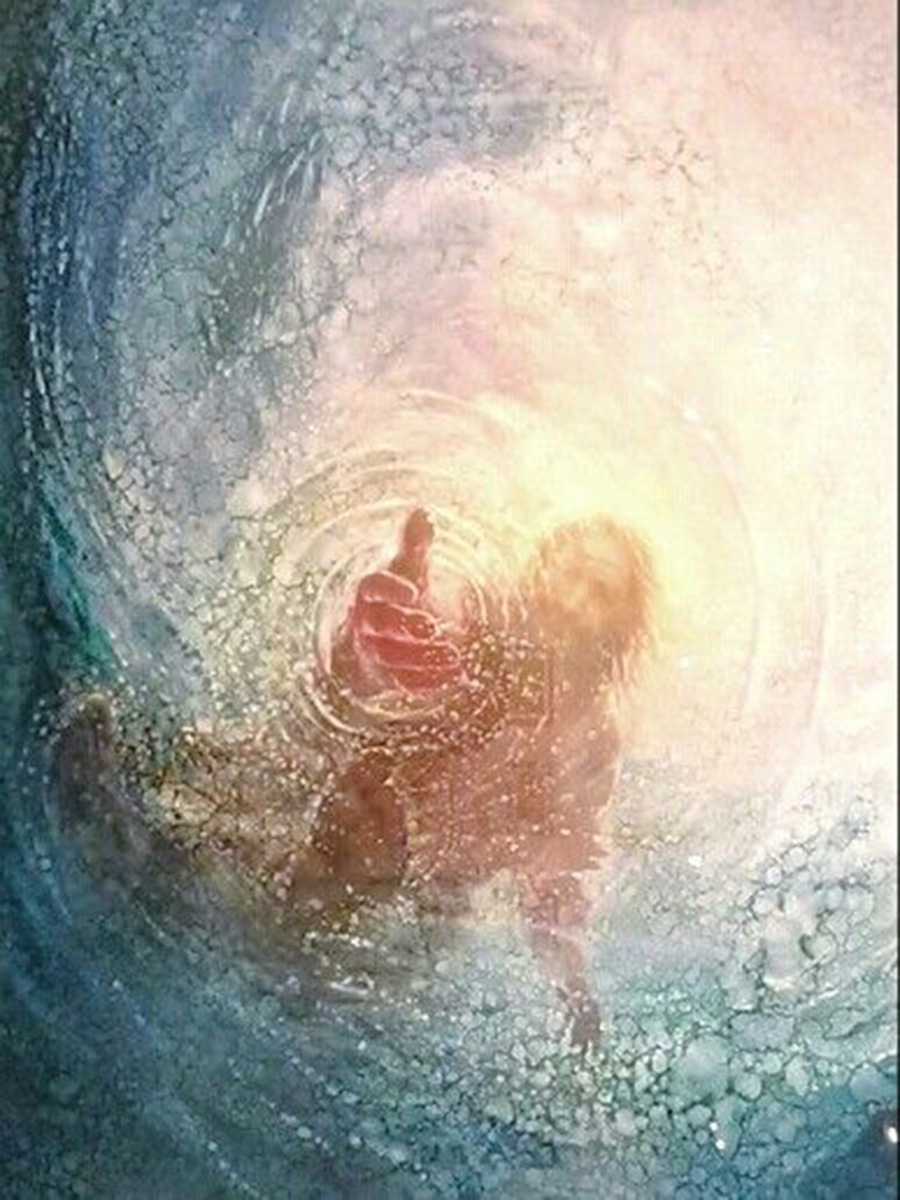
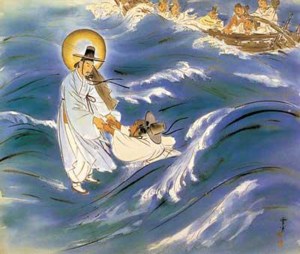
jesus rescues peter - korea Ocean is a gift to humanity. For many of us, ocean means a great variety of seafood, a place to spend our vacation. When we imagine a vast sea with beautiful beach, we are ready to enjoy swimming, snorkeling or diving. However, for millions of fishermen and seafarers, sea simply means life as they depend their lives and their families on the generosity of the sea, the resources it offers, and the works it generates. Unfortunately, the sea is not always merciful. The sea is home to powerful storms and with its giant waves that can even engulf the biggest of ships. With the effects of global warming, massive sea pollution and destructive ways of fishing, it is getting hard to get a good catch. Novelist Ernest Hemingway in his book “The Old Man and the Sea” narrates a life of fisherman who after risking his life to catch a giant fish, brings home nothing but a fishbone as his catch was consumed by other fishes. Majority of fishermen who continue struggling with lingering debt and difficulty to get fuel for their boats, become poorer by the day. These make fishermen and seafarers a perilous profession.
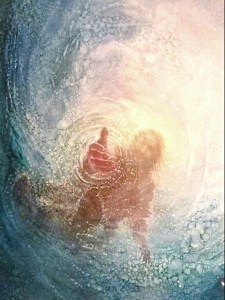
The Sea of Galilee is not a sea at all, but technically a lake. Certainly, it is a lot safer than the open sea, but the Gospels constantly tell us that the lake can be deadly sometimes even to seasoned fishermen like Peter and other apostles. Like Peter and the apostles, Filipino Dominican missionaries to Babuyan group of islands at the northern tip of the Philippines know well what it means to be at the mercy of the ocean. To go to their mission stations, they have to cross a sea strait by a small boat for around 4 to 8 hours. It might be a tiny strait, but it is a wild and dangerous one because it connects to two great seas, the Pacific Ocean on the east and South China Sea or West Philippine Sea on the west. When the sea is rough and the boat is hit and tossed by the giant waves, it is the time when our missionaries and all others in the boat to pray, and perhaps it is their sincerest prayer ever. When at the mercy of the ocean, we begin to realize that what matters most in life is actually life itself, and as only this life that we hold dear, everything else seems to be trivial and passing.

However, there comes the paradox. In the midst of raging ocean, holding on to fragile life, we begin to be closest to the creator of life Himself. The mighty sea washes away those things that stand between us and God. All those things that add layers upon layers to our lives are swept away. As we achieve wealth, physical beauties, educational attainments, physical beauties, possessions and honor, we tend to be full of ourselves, and become more independent from God who grants us those blessings. Like Peter, our faith becomes little, relying too much on ourselves. Then, when the storm comes and we begin to sink, we realize that all those achievements will not save us.

What are those things in our lives that stand between us and God? Are we like Peter, a man of little faith? What are the stormy sea experiences in our lives? How do you encounter God in these stormy sea experience?

 Br. Valentinus Bayuhadi Ruseno, OP


Lautan

Minggu Biasa ke-19  [13 Agustus 2017] Matius 14: 22-33

“Hai orang yang kurang percaya, mengapa engkau bimbang?” (Mat 14:31)

jesus rescues peter 2Laut adalah anugerah bagi umat manusia. Bagi banyak dari kita, laut berarti berbagai macam seafood, dan tempat untuk menikmati liburan. Bila kita membayangkan lautan luas dengan pantai yang indah, kita siap untuk berenang, snorkeling atau menyelam. Namun, ini jauh berbeda bagi jutaan nelayan dan pelaut. Laut berarti kehidupan karena mereka menggantungkan hidup mereka dan keluarga mereka pada laut, baik sumber daya yang dimiliki dan perkerjaan yang dihasilkan. Sayangnya, laut tidak selalu berarti kehidupan. Laut adalah tempat bagi badai-badai dahsyat dan gelombang-gelombang raksasa yang bahkan bisa menelan kapal-kapal terbesar yang pernah dibangun manusia. Dengan efek pemanasan global, polusi laut yang masif dan cara-cara penangkapan ikan yang merusak alam, sekarang semakin sulit bagi nelayan sederhana untuk mendapatkan tangkapan yang baik. Penulis Ernest Hemingway dalam bukunya “The Old Man and the Sea” menceritakan tentang kehidupan nelayan tua yang setelah mempertaruhkan nyawanya untuk menangkap ikan raksasa, tidak membawa pulang apapun kecuali tulang ikan karena tangkapannya dihabisi oleh ikan-ikan lain. Mayoritas para nelayan terus berjuang dengan hutang dan sulitnya mendapatkan bahan bakar untuk perahu mereka. Merekapun menjadi semakin miskin dari hari ke hari. Hal ini membuat nelayan dan pelaut adalah profesi yang berbahaya.

Danau Galilea bukanlah lautan. Tentunya, ini jauh lebih aman daripada laut terbuka, namun Injil mengatakan bahwa danau ini bisa mematikan bahkan bagi nelayan berpengalaman seperti Petrus dan rasul lainnya. Seperti Petrus dan para rasul di tengah badai, para Dominikan Filipina yang menjadi misionaris ke kepulauan Babuyan di ujung utara Filipina tahu betul apa artinya berada pada belas kasihan lautan. Untuk menuju ke tempat misi mereka, mereka harus menyeberangi selat dengan perahu sekitar 4 sampai 8 jam perjalanan. Ini mungkin sebuah selat kecil, tapi ini adalah selat yang ganas dan berbahaya karena menghubungkan Samudra Pasifik ke timur dan Laut Cina Selatan ke barat. Saat laut di selat ini dalam kondisi yang tidak baik, maka perahu-perahu dihantam dan dipermainkan oleh ombak-ombak raksasa. Inilah saat misionaris kita dan semua yang ada perahu tersebut tidak dapat melakukan apapun kecuali berdoa, dan mungkin ini adalah doanya yang paling tulus yang pernah mereka daraskan dalam hidup mereka. Ketika berada pada belas kasihan samudera, kita mulai menyadari bahwa apa yang paling penting dalam hidup adalah hidup itu sendiri, dan karena hanya hidup ini yang paling penting, segala sesuatu yang lain sepertinya sepele dan tidak banyak artinya.

Namun, di sinilah muncul sebuah paradoks. Di tengah laut yang ganas, berpegangan pada hidup yang rapuh, kita menjadi paling dekat dengan pencipta kehidupan sendiri. Laut yang dasyat menyapu bersih segala hal yang berdiri di antara kita dan Tuhan. Semua hal yang menambahkan berbagai lapisan pada kehidupan kita tersapu bersih. Seiring semakin banyaknya pencapaian kita, kekayaan, pencapaian pendidikan, keindahan fisik, berbagai barang dan kehormatan, kita cenderung semakin penuh dengan diri kita sendiri, dan menjadi lebih mandiri dari Tuhan yang memberi berkat-berkat itu. Seperti Petrus, iman kita menjadi kecil, terlalu bergantung pada diri kita sendiri. Kemudian, saat badai datang, ketika kita mulai tenggelam, kita menyadari bahwa semua pencapaian kita ini tidak akan menyelamatkan kita.

Apakah di dalam hidup kita yang berdiri di antara kita dan Tuhan? Apakah kita seperti Petrus, orang yang iman kecil? Apa pengalaman badai laut dalam hidup kita? Bagaimana kita menjumpai Tuhan dalam pengalaman laut yang penuh badai ini?

Frater Valentinus Bayuhadi Ruseno, OP

Love, not for the Fainthearted

7th Sunday in Ordinary Time (Year A). February 19, 2017 [Matthew 5:38-48]

“Love your enemies, and pray for those who persecute you, (Mat 5:44)”

john-paul-n-ali-agcaLove is not for the fainthearted. It is difficult to love, even those whom we are supposed to love naturally and easily. At times, we feel regret in having committed ourselves in marriage to someone who turns out to be moody, demanding and no longer attractive. Sometimes, we want to kick out our children who become too stubborn and rebellious. Sometimes, we also think that we enter the wrong Congregation or convent.


However, Jesus wants us to go beyond, and even love our enemies. If we have a hard time to love those who are close to our hearts, how is it possible to love our enemies? How are we going to love those who bully us in the office or in the school? Is it viable to be kind to people who spread malicious gossips about us? Why should we be nice to those who have cheated us and even exploited us? Do we need to forgive those who have abused us and left us a permanent traumatic experience?

Though it is extremely difficult to love, even almost impossible, Jesus is not out his mind when He asks us to love our enemies. He knows who we are, away better than we know ourselves. We were created in the Image of God.  St. John reminds us that God is love (see 1 John 4:8). Therefore, we were made in the image of love. It is our identity to love, and only in loving, do we find our happiness. Yet, again how do we love people we hate?

When Jesus commands to love, the Gospel deliberately chooses the word ‘agape’ for love. In Greek, Agape is slightly different from the other kinds of love like philia and eros. If philia and eros are the love that is born out of our natural affections for someone, agape basically comes from the power of the will, courage, and freedom. It is easier to love someone when we like them, but we were not created only in the image of philia and eros, we are the image of Agape. We have a built-in ability in us to love even despite the unpleasant and repugnant feelings.

St. Thomas Aquinas put in quite succinctly that ‘to love is to will the good in others’. We do not have to feel good about the person, in order to do good to the person. In the Church’s Tradition, we have various acts of charity and works of mercy, and all of these cannot be simply based on emotions. Many dioceses and parishes in the Philippines are actively helping the rehabilitation of drug-addicts in the communities. Nobody likes junkies, some even want them dead, but why do the Churchmen and women continue to help them, despite criticism? Because Jesus wants us to love them, and it is possible with our freedom to do good to them.

True love is difficult and not for the fainthearted. It demands courage, strength, sacrifice. Yet, without love, what is the point of living? Danny Thomas, an actor, and producer, said, “All of us are born for a reason, but all of us don’t discover why. Success in life has nothing to do with what you gain in life or accomplish for yourself. It’s what you do for others.”john-paul-n-ali-agca

 Br. Valentinus Bayuhadi Ruseno, OP


Fire of Jesus

20th Sunday in Ordinary Time. August 14, 2016 [Luke 12:49-53]

“I have come to set the earth on fire, and how I wish it were already blazing! (Luk 12:49)”

pentecost 1In the midst of all super-advanced digital gadgets and nano technologies, making fire seems rather archaic and a bit useless. Why will we set a fire and cause pollution, if we have energy-saving LED lamp in our house? However, making fire is the earliest and one of the most significant human invention. Fire revolutionized the lives of our ancestors and gave us substantial advantages over other creatures. Fire brings warm and comfort in chilling and unforgiving weathers. Fire protects us from bigger and fiercer predators. Fire provides light that shed off the darkness. Fire also is needed to forge other inventions and technologies, like various tools and weapons.

Yet, fire also may cause us serious headaches. Almost every year, fire sets ablaze parts of Borneo rain forest and emits global-scale smoke. Fire also is a serious problem in densely populated cities like Manila. A firefighter once conducted a seminar in our seminary. He said that it just takes less than one minute for fire to burn an entire body of a little kid. Thus, fire has become the symbol of both powerful force of nature and human ingenuity. It may bring heavy destructions as fire burns and consumes almost everything. Yet, it also gives creativity, hope and future to humanity.

When Jesus said he brought fire to the world, Luke used the Greek word ‘phur’, meaning ‘wild fire’. Now, we may understand that Jesus came to the world to bring not a warming and delightful fire, but massive transformative energy and power. This fire can consume our past and wicked ways. Yet, more importantly, this fire energizes and empowers us to be creative in our preaching and in Christian life. On the day of Pentecost, the Holy Spirit came into the form of tongues of fire. This same fire emboldened the fearful disciples in the Upper room and moved them to preach the Good News with freshness. They made a creative breakthrough as they began to speak in the different languages of their hearers.

Saints are people who are blazed by Christ’ fire. Their lives exemplify the ever-fresh and transformative Spirit. When St. Dominic de Guzman saw the need to preach the Gospel to bring back the Albigensian heretics in Southern France, he established the first preaching religious Order in the Church. When the first Spanish Missionaries came to the Philippine Islands, one of their main preoccupations was how to understand the local languages and cultures, so that their preaching may be easily understood by the native Filipinos. As early as the 16th century, the Dominican friars had produced grammar books and dictionaries of Philippine languages like Tagalog, Bisaya, and Ivatan.

It is His desire to set the world in fire, but has the fire of Christ touched our lives? Have the Eucharist and Sacrament of reconciliation renewed us? Do we feel that energy to engage in the proclamation of the Good News, or we are just fine with Sunday masses? Do we have the perseverance amidst trials of life? Do we allow the Spirit to animate our lives?

Br. Valentinus Bayuhadi Ruseno, OP