

Fourth Sunday of Lent [A]
March 15, 2026
1 Samuel 16:1b, 6-7, 10-13a
Continuing our journey through the great figures of the Old Testament, the Fourth Sunday of Lent brings us to King David.
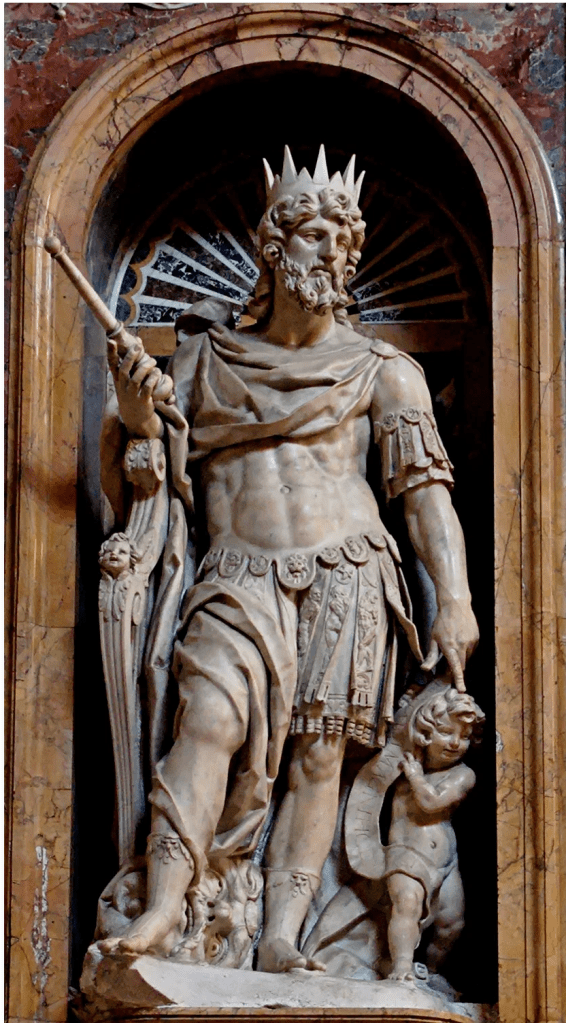
David is undoubtedly one of the most pivotal characters in the biblical canon. He was a shrewd warrior who defeated the bigger, stronger and more experienced Goliath with a single sling stone (1 Sam 17:45-47). As a brilliant military strategist, he was victorious in nearly every campaign (2 Sam 8:6), and as a charismatic statesman, he successfully unified the twelve tribes of Israel (2 Sam 5). Furthermore, David demonstrated profound mercy, famously refusing to harm King Saul despite having the opportunity to do so (1 Sam 24:6). Finally, we remember him as the “sweet singer of Israel,” the inspired poet whose Psalms (such as 23 and 51) we continue to recite today.
However, despite these unrivaled achievements, David’s story starts with a humble beginning. As the youngest son of Jesse from the small village of Bethlehem, David was initially overlooked by Samuel, the prophet. Samuel’s human eyes were fixed on David’s elder brothers, who possessed more impressive physical statures and military experience. Yet, God sees what man does not; He chose the inexperienced shepherd boy. Upon his anointing, the Spirit of the Lord rushed upon David (1 Sam 16:13), and from that moment forward, his success was a testament to God’s favor.
Unfortunately, David’s string of successes eventually birthed a sense of pride. He began to believe he was invincible, acting as though he were above everyone. This hubris led to his fall into lust with Bathsheba and the subsequent calculated murder of her husband, Uriah (2 Sam 11). This grave sin necessitated a stern rebuke from the prophet Nathan. Later, David erred again by conducting a census—likely to measure his own military might rather than trusting in divine protection. This act of pride forgotten that victory comes from the Lord alone, leading to divine judgment (2 Sam 24). In both instances, however, David’s deep love for God was revealed through his sincere repentance, recognizing his humble beginning. Sadly, as king, his personal failings inevitably brought consequences upon his family and the nation.
The life of David offers us a vital spiritual lesson. Like him, we all begin from a place of humility and weakness. Any “success” we achieve—be it professional advancement, physical health, or flourishing relationships—is fundamentally a gift from God. This is equally true of our spiritual lives. Our ministries and the fruits of our prayer are movements of the Spirit, not personal trophies.
Yet, pride often poisons the heart. We begin to credit our own “genius” or effort for our successes, clinging to our achievements and demanding recognition. This is the threshold of our downfall. When we focus solely on maintaining our status, we become paralyzed by the fear of failure. We lose our spirit of gratitude and replace it with complaint and resentment. We may even find ourselves manipulating others to preserve our image of success, leading to a state of spiritual misery.
Like David, we are reminded that only true repentance can restore our orientation toward the Lord, who is the sole author of our salvation. Only when we remember our humble beginning and recognize God’s role in our lives, we find true happiness.
Rome
Valentinus Bayuhadi Ruseno, OP
Guide Questions:
How does God bring us high fro our humble beginning? When we experience a “win” in our career, family, or ministry, do we instinctively offer a prayer of gratitude, or do we begin to rely on your own “genius”? When we face failure or realize we have manipulated a situation to look better than we are, do we hide in your misery, or do we have the courage to let God rebuke and restore us?

 In Medio Ecclesiae