
Rekan Kerja Yesus

Minggu ke-18 dalam Waktu Biasa [A]

2 Agustus 2020

Matius 14: 13-21

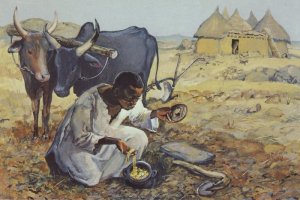
five bread n two fishMukjizat penggandaan roti adalah salah satu dari sedikit kisah yang muncul dalam keempat Injil. Ini mungkin karena kebenaran mukjizat itu sendiri yang mengesankan dan membekas di hati para rasul. Meskipun alur ceritanya sama, setiap Penginjil telah memberikan penekanan mereka sendiri. Hari ini kita memusatkan perhatian pada Injil Matius dan penekanannya yang khas.

Salah satu penekanan ini adalah peran khusus para murid. Tentu saja, tanpa Yesus, tidak akan ada mukjizat sama sekali, tetapi Yesus memastikan bahwa murid-murid-Nya juga akan berpartisipasi dalam pekerjaan ajaib-Nya, tetapi yang luar biasa adalah para murid menanggapi dengan baik ajakan Yesus ini. Mari kita lihat beberapa detail penting dari cerita ini.

Pertama, inisiatif datang dari para murid. Para murid sebenarnya memperhatikan kondisi orang-orang yang mengikuti Yesus, dan mereka kelelahan dan kelaparan. Mereka mengusulkan solusi praktis untuk situasi ini: mengirim mereka pergi untuk mencari makanan. Mereka mungkin datang dengan rencana seperti itu karena alasan yang mulia. Mereka ingin guru mereka yang lelah serta orang-orang mendapatkan istirahat setelah hari mengajar dan penyembuhan yang panjang. Namun, mereka lupa bahwa Yesus sendirilah yang beristirahat, seperti yang pernah dikatakan-Nya, “datang kepadaku, kamu yang lesu dan berbeban berat,  Aku akan memberimu kelegaan [Mat 11:28].” Bagi Yesus, inisiatif itu patut dipuji, tetapi Dia tidak puas dengan solusinya. Karena itu, Dia berkata kepada mereka, “Kamu memberi mereka makan sendiri.”

Kita bisa membayangkan wajah para murid. Mereka saling memandang dan bingung. Namun, bukannya menolak permintaan Yesus sebagai sesuatu yang absurd, mereka malah melakukan sesuatu yang luar biasa. Mereka menawarkan kepada Yesus apa yang mereka miliki. Ini sedikit dan jauh dari cukup, namun tetap merupakan persembahan yang tulus. Dari sini, kita sudah dapat mendeteksi bahwa para murid telah berubah. Mereka telah mengikuti Guru mereka selama beberapa waktu dan mereka telah menyaksikan banyak mukjizat Yesus, mendengarkan banyak ajaran-Nya dan melihat betapa Yesus dengan sabar mengasihi orang-orang. Mereka telah tumbuh seperti Yesus. Mereka memiliki iman bahwa Yesus dapat melakukan hal yang mustahil, dan mereka menjadi lebih berbelas kasih seperti Yesus saat melihat orang yang menderita.

Tidak mengherankan bahwa setelah Yesus memberkati dan memecahkan roti, Dia memilih untuk memberikannya kepada para murid. Dia percaya sekarang bahwa para murid akan menjalankan misi-Nya untuk peduli dan mengasihi orang-orang. Memang, mereka dengan setia membawa roti tersebut kepada orang-orang. Mukjizat ini adalah langkah pertama namun penting bagi Yesus dan murid-murid-Nya, karena tak lama lagi, Yesus akan mempercayakan murid-murid ini untuk membawa Yesus sendiri kepada umat-Nya dalam Ekaristi.

Yesus pasti dapat melakukan mukjizat sendiri, dan sebagai Tuhan, Dia tidak membutuhkan bantuan siapa pun. Namun, karena kodrat-Nya adalah kasih, Dia ingin agar orang-orang yang Dia kasihi menjadi kasih sama seperti Dia. Yesus mengundang para murid untuk berpartisipasi dalam mukjizat kasih-Nya, dan agar mereka dapat belajar untuk mengasihi lebih dalam. Ketika Yesus membagikan hidup-Nya kepada mereka, para murid sebagai rekan kerja misi-Nya, pada akhirnya akan membagikan diri mereka dan mengasihi sampai akhir.

Itulah bagaimana Yesus membentuk kita sebagai murid-Nya. Dia mengundang kita untuk berpartisipasi aktif dalam kehidupan dan misi-Nya. Ini adalah misi untuk memberi makan, untuk peduli dan untuk mengasihi umat-Nya. Inilah keindahan iman dan agama kita. Ini bukan iman yang pasif dan tidak berdaya, namun iman yang benar-benar hidup, dibagikan dan memperkaya, iman yang tumbuh menjadi harapan dan harapan disempurnakan menjadi kasih.

Valentinus Bayuhadi Ruseno, OP
The True Treasure

17th Sunday in Ordinary Time [A]

July 26, 2020

Matthew 13:44-52

parable of hidden treasureThe parables of the hidden treasure and of fine pearl are among the shortest yet loveliest parables of Jesus. Finding a fine pearl or a hidden treasure is surely an exciting discovery.  We can naturally share the joyful experience. Yet, the key to unlock the secrets of the parables is to spot the surprising twists. If we find a treasure, we instinctively grab it and bring it home.  If the treasure is exceedingly huge and many, we can grab some and use them to buy the land. It is a bit reckless to sell everything first and then buy the land. What if the owner of the land suddenly refused to give up the land? The same goes for the purchase of the fine pearl. Sometimes a businessman would make a risky investment to gain more profit. Yet, to throw everything for a pearl is a bit of foolishness. The merchant still needs money to sustain his daily life and business, and what if the investment fails?
Through two parables, Jesus teaches His disciples that His kingdom is immensely precious, and in order to achieve it, we have to give up everything. We cannot cheat or steal it. We have to merit it in the right way. The teaching itself is not something novel in the gospel of Matthew. Back in chapter 10, Jesus tells that those who love their parents more than Jesus, is not worthy of Jesus. It is all or nothing for Jesus. It is the same with His kingdom.

Is it possible to give up everything for Jesus and His Kingdom? The answer depends whether we consider the Kingdom as something truly precious for us. The merchant, for example, may recognize that it is a fine pearl, but if he does not see it as extremely precious, he will not sell everything he has to buy that pearl. To simply know is existentially different from accepting it as precious. One remains in the mind and the other goes down to the heart. We may recognize that Jesus is our Savior and Lord, but do we value Him and make Him as our top priority? We may be aware that the Church is the Kingdom of God, but do we hold her a precious? Do we give up everything for Jesus and His body, the Church?

How do we make something precious? When we love someone or something, we value them. When they are valuable, we treasure them. When they are our treasures, there our hearts are. We see a little child. She loves her toys. These become valuable to her. And as her valuables, she spends her time with them and takes care of them. When we love our work, we value it and we make it our priority. When we love our family, we treasure them, and we exert our time and effort to make them happy.

We may be baptized as a Catholic and our parents teach us that Jesus is our Lord. We may study in Catholic schools and go to the Church from time to time. But, do we love Jesus and His Church? Are Jesus is valuable and precious to us that we are willing to surrender everything for Him? Do we treasure Jesus and place our hearts in Him?

Valentinus Bayuhadi Ruseno, OP

Jesus the Sower

15th Sunday in Ordinary Time [A]

July 12, 2020

Matthew 13:1-23

Processed with VSCO with e1 preset

In today’s Gospel, we observe the reaction of the disciples after Jesus spoke His first parable. They were puzzled and confused. Why? because Jesus took a sudden change of method. In previous chapters, Jesus taught them plainly, like in the sermon of the Mount [Mat 5-7], and His teachings were as clear as broad daylight. Yet, Jesus made an unexpected turn that makes many people, and including His disciple lost. What really happened?

To understand the parable, we need to see that parable has been used even before Jesus, in the Old Testament. One of the classic examples is the parable of the prophet Nathan addressed to king David [See 1 King 12]. King David has done unthinkably grave sin by committing adultery with Bathsheba and orchestrating the murder of her husband, Uriah. Then, prophet Nathan confronted David, yet indirectly by narrating him a parable. It was about a rich man who forcefully robbed a ewe of a poor man. Listening to the story, David was infuriated and declared that the rich man should die. Then, Nathan dropped the bomb: “David, you are the rich man!” Fortunately, David was a kindhearted and faithful king, and he repented when he was reminded.

That is the power of a parable. It is an indirect and concealed message to make people think deeper about themselves. Jesus began to talk in parables as Jesus realizes that the opposition of the Pharisees and the scribes were worsening, and many people who just want to be entertained rather than to follow Jesus.

Thus, the parable of the sower expresses the real condition of Jesus’ ministry. The elders and the Pharisees were like the pathway. They heard Jesus’ preaching, but still chose to be under the influence of darkness, and sought to destroy Jesus. Many people were like the rocky ground because they simply looked for Jesus to satisfy their needs. Others were like soil filled with thorns because they followed Jesus for a time, but when the trials came, they abandoned Jesus. Lastly, the rich soil was the disciples.

The parable of the sower is not reflecting different kinds of hearers of Jesus during His time, but it is also revealing the reality of our time. Some of us are like the pathway, perhaps we were baptized Catholics, but we never live as such, and still living in sin. Some of us are like rocky ground. We treat Jesus and His Church as a place of entertainment, and we simply look for ourselves rather than God. Some of us are like soil filled with thorns. We are elated of being Christians, but we do not go deeper in our faith, and when the trials or doubts hit, we easily leave the Lord. And hopefully, many of us are like rich soil. We do our best to receive God’s Word and see to it that it will grow and bear fruits.

The good news is the word of God is exceedingly powerful that even it can bear fruit is the rocky ground. Yet, the initial grace is free but it is not cheap, and we need our part. It is our mission to transform even the rocky ground into the rich soil for the Lord.

Valentinus Bayuhadi Ruseno, OP

Yesus Sang Penabur

Minggu ke-15 dalam Masa Biasa [A]

12 Juli 2020

Matius 13: 1-23

child confessionDalam Injil hari ini, kita mengamati reaksi para murid setelah Yesus berbicara perumpamaan-Nya yang pertama. Mereka bingung dan heran! Mengapa? Karena Yesus tiba-tiba mengubah metode pengajaran-Nya. Dalam bab-bab sebelumnya, Yesus mengajar mereka dengan jelas, seperti dalam khotbah di Bukit [Mat 5-7], dan ajaran-Nya sangat mudah dimengerti walaupun kadang sulit untuk dilaksanakan. Namun, Yesus membuat perubahan tak terduga yang membuat banyak orang dan termasuk murid-Nya tak paham dengan mengunakan perumpamaan. Apa yang sebenarnya terjadi?

Untuk memahami perumpamaan Yesus, kita perlu melihat bahwa perumpamaan telah digunakan bahkan sebelum Yesus, secara khusus dalam Perjanjian Lama. Salah satu contoh klasik adalah perumpamaan dari nabi Natan yang ditujukan kepada raja Daud [Lihat 1 Raja 12].

Raja Daud telah melakukan dosa yang sangat besar dengan melakukan perzinaan dengan Batsyeba dan merencanakan pembunuhan suaminya, Uria. Kemudian, nabi Nathan mengecam Daud, namun secara tidak langsung dengan menceritakan sebuah perumpamaan. Ini tentang seorang pria kaya yang dengan paksa merampak anak domba seorang pria miskin. Mendengarkan cerita itu, Daud geram dan menyatakan bahwa orang kaya itu harus mati. Kemudian, Nathan membuka kartunya, “Daud, kamu adalah orang kaya itu!” Untungnya, Daud adalah raja yang baik hati dan setia, dan dia bertobat ketika dia ditegur.

Itulah kekuatan perumpamaan. Ini adalah pesan tersembunyi yang tidak langsung untuk membuat orang berpikir lebih dalam tentang diri mereka sendiri. Yesus mulai berbicara dalam perumpamaan ketika Yesus menyadari bahwa pertentangan dari orang-orang Farisi dan penatua semakin memburuk, dan banyak orang yang hanya ingin dihibur daripada mengikuti Yesus.

Dengan demikian, perumpamaan tentang penabur mengungkapkan kondisi nyata dari pewartaan Yesus. Para penatua dan orang-orang Farisi seperti jalan setapak. Mereka mendengar khotbah Yesus, tetapi masih memilih untuk berada di bawah pengaruh kegelapan, dan berusaha untuk menghancurkan Yesus. Banyak orang seperti tanah berbatu karena mereka hanya mencari Yesus untuk memuaskan kebutuhan mereka. Yang lain seperti tanah yang dipenuhi duri karena mereka mengikuti Yesus untuk sementara waktu, tetapi ketika pencobaan datang, mereka meninggalkan Yesus. Terakhir, tanah subur adalah para murid.

Perumpamaan tentang penabur tidak mencerminkan berbagai jenis pendengar tentang Yesus selama masa-Nya, tetapi juga mengungkapkan realitas zaman kita. Sebagian dari kita seperti jalan setapak, mungkin kita dibaptis Katolik, tetapi kita tidak pernah hidup seperti itu, dan masih hidup dalam dosa. Beberapa dari kita seperti tanah berbatu. Kita memperlakukan Yesus dan Gereja-Nya sebagai tempat hiburan, dan kita hanya mencari diri sendiri daripada Tuhan. Sebagian dari kita seperti tanah yang dipenuhi duri. Kita gembira menjadi orang Kristen, tetapi kita tidak masuk lebih dalam iman kita, dan ketika pencobaan atau keraguan melanda, kita dengan mudah meninggalkan Tuhan. Dan semoga, banyak dari kita seperti tanah subur. Kita melakukan yang terbaik untuk menerima Firman Tuhan dan memastikan bahwa itu akan tumbuh dan menghasilkan buah.

Kabar baiknya adalah firman Tuhan sangat berdayaguna sehingga bahkan dapat berbuah adalah tanah yang berbatu-batu sekalipun. Rahmat sungguh cuma-cuma tetapi tidak murahan, dan kita perlu melakukan bagian kita. Adalah misi kita untuk mengubah tanah berbatu menjadi tanah yang subur bagi Tuhan.

Valentinus Bayuhadi Ruseno, OP

Yoke of Jesus

14th Sunday in Ordinary Time [A]

July 5, 2020

Matthew 11:25-30

finding cross 2From the previous two Sundays, we learn that Jesus lays down the cost of following Him, how to become His disciples. And they are extremely tough. One has to follow Jesus wherever He goes. One must love Jesus above anyone else. One must be ready to suffer persecutions and hardships, carry his cross, and give up his life for Jesus. It is Jesus or nothing at all. However, following Jesus is not all about hardship and sacrifice. Today we hear that to walking with Him, we receive certain “perks” that others cannot even dare to offer.

Today’s Gospel is one of my personal favorites. Here, Jesus is presenting His other side. Last Sundays, we witness Jesus, who is firm and resolve in following the Father’s will, and He demands the same thing from His disciples. Now, He is showing Himself as one who is gentle and humble. He even promises to give rest to those who come to Him. Yet, there is an interestingly powerful point that Jesus makes: that in order to have rest, we need to carry the yoke of Jesus. A yoke is a device placed on the shoulders to carry weight. For Jesus, rest is not throwing away the yoke. We need to carry our yoke, our daily responsibilities, and mission in life. Yet, despite carrying the yoke, it will be easy. How is that possible?

We remember that Jesus is a carpenter’s son and Himself a carpenter. He knows well that a yoke that does not fit the shoulder will only add more burden and hurt. Yet, the yoke that is designed perfectly to fit the shoulder, will feel easy and even comfortable. This is the yoke of Jesus, a yoke that fits each of us.

The second point is that there is a kind of yoke that can be shouldered by two animals or persons, “a double yoke.” I do believe that this is a kind of yoke that Jesus offers to us. Why double yoke? Because Jesus will bring together yoke with us. He shoulders the yoke with us. And when we feel exhausted, that’s the time He takes over and we find rest.

But, wait, there is more! In the Gospel of Matthew, twice Jesus instructs His disciples to carry something in their shoulders. The first one is to carry the cross [Mat 10:38, and the second thing is the yoke [Mat 11:29]. Jesus seems to make a real connection between the two: His yoke is our cross. If this is true, then the implication is massive. Our daily cross is actually easy because it perfectly fits us and even, Jesus is carrying it with us. I do believe most of the time, it is Jesus who carries our crosses. At first, Jesus sounds exceedingly tough with His nearly impossible demands, especially to carry our cross, but looking our Gospel deeper, we realize that most the time, it is Jesus who shoulders our crosses. That is the reason only His cross, we find the true rest and consolation.

If we find ourselves still burdened and exhausted with our lives, we may ask: Are we carrying the cross of Jesus? Are we bringing the yoke alone and relying solely on our strength? Are we shouldering unnecessary burdens that should be unloaded a long time ago?

Valentinus Bayuhadi Ruseno, OP

Kuk Yesus

Minggu ke-14 dalam Waktu Biasa [A]

5 Juli 2020

Matius 11: 25-30

jesus carry crossDari dua hari Minggu sebelumnya, Yesus menunjukkan apa yang harus kita serahkan untuk menjadi murid-Nya. Dan hal-hal yang harus kita lepaskan demi Yesus sanggatlah sulit. Kita harus mengikuti Yesus ke mana pun Dia pergi. Kita harus mengasihi Yesus lebih dari yang lain bahkan orang tua kita. Kita harus siap untuk menderita, menanggung  kesulitan, memikul salib, dan menyerahkan hidup bagi Yesus. Pilihannya adalah Yesus atau tidak sama sekali. Namun, mengikuti Yesus tidak semua tentang kesulitan dan pengorbanan. Hari ini kita mendengarkan bahwa menjadi murid-Nya, kita menerima “hal-hal baik” yang hanya Yesus bisa berikan.
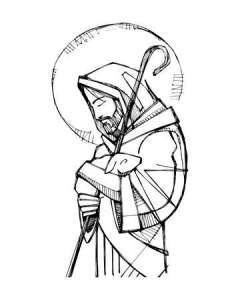
Injil Hari Ini adalah salah satu favorit pribadi saya. Di sini, Yesus menunjukkan sisi yang lain. Hari Minggu terakhir, kita menyaksikan Yesus, yang teguh dan teguh dalam mengikuti kehendak Bapa, dan Dia menuntut hal yang sama dari para murid-Nya. Sekarang, Dia menunjukkan diri-Nya sebagai orang yang lembut dan rendah hati. Dia bahkan berjanji untuk memberi kelegaan atau istirahat kepada mereka yang datang kepada-Nya. Namun, ada satu hal menarik dari apa yang Yesus katakan: bahwa untuk beristirahat, kita perlu memikul kuk Yesus. Kuk adalah alat yang diletakkan di atas bahu untuk membawa beban. Bagi Yesus, istirahat bukanlah membuang kuk. Kita perlu memikul kuk kita, tanggung jawab kita sehari-hari, dan misi dalam hidup. Namun, meski membawa kuk, justru kita akan mendapatkan kelegaan. Bagaimana mungkin?

Kita ingat bahwa Yesus adalah putra seorang tukang kayu dan dia sendiri seorang tukang kayu. Dia tahu betul bahwa kuk yang tidak pas di bahu hanya akan menambah beban dan membuat sakit. Namun, kuk yang dirancang sempurna dan pas dengan bahu akan terasa mudah dan bahkan nyaman diangkat. Ini adalah kuk Yesus, kuk yang cocok untuk kita masing-masing, karena Dia adalah tukang kayu yang baik.

Poin kedua adalah bahwa ada semacam kuk yang bisa dipikul oleh dua binatang secara bersamaan, atau kita sebut “kuk ganda.” Saya percaya bahwa ini adalah jenis kuk yang ditawarkan Yesus kepada kita. Mengapa kuk ganda? Karena kita tidak pernah sendirian membawa kuk ini, dan Yesus akan membawa kuk bersama kita. Dan ketika kita merasa lelah, itulah saatnya Dia mengambil alih dan kita menemukan istirahat dan kelegaan.

Dalam Injil Matius, Yesus memerintahkan murid-murid-Nya untuk membawa dua hal di pundak mereka. Yang pertama adalah memikul salib [Mat 10:38], dan yang kedua adalah kuk [Mat 11:29]. Yesus tampaknya membuat hubungan nyata antara keduanya: kuk-Nya adalah salib kita. Jika ini benar, maka implikasinya sangat besar. Salib harian kita sebenarnya tidak seberat yang kita duga karena sangat cocok untuk kita dan bahkan, Yesus membawanya bersama kita. Saya percaya bahwa dalam banyak momen dalam hidup kita, Yesuslah yang membawa salib kita. Pada awalnya, Yesus terdengar sangat tegas dengan tuntutan-Nya yang hampir mustahil, terutama untuk memikul salib kita, tetapi melihat Injil kita lebih dalam, kita menyadari bahwa tidak hanya salib kita ini pas buat kita, Yesus juga yang memikul salib kita. Itulah alasan kenapa memanggul salib-Nya, kita menemukan istirahat dan penghiburan sejati.

Jika kita menemukan diri kita masih terbebani dan kelelahan dengan hidup kita, kita bisa bertanya: Apakah kita memikul salib Yesus atau salib yang lain? Apakah kita membawa kuk sendirian dan hanya mengandalkan kekuatan kita? Apakah kita memikul beban yang tidak perlu yang seharusnya diturunkan sejak lama?

Valentinus Bayuhadi Ruseno, OP

Why Sheep?

Fourth Sunday of Easter [A]

May 3, 2020

John 10:1-10

Today is the fourth Sunday of Easter and good shepherd 5traditionally it is also called as the Good Shepherd Sunday. This is for an obvious reason. The Gospel reading tells us about Jesus who introduces Himself as the gate of the sheepfold and the Good Shepherd. The other readings also point the image of God as the good shepherd, like the world-renown psalm 23, “the Lord is my shepherd.”
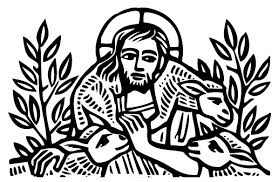
The gospel of John has no parables like the other three gospels, but John has something else. The gospel gives us the seven “I AM” statements.  “I am the bread of life.” (John 6:35, 41, 48, 51); “I am the light of the world.” (John 8:12); “I am the door of the sheep.” (John 10:7,9); “I am the resurrection and the life.” (John 11:25); “I am the good shepherd.” (John 10:11, 14); “I am the way, the truth, and the life.” (John 14:6); “I am the true vine.” (John 15:1, 5). These statements reveal the particular ways Jesus relates with us His disciples. If Jesus is the bread of life, we cannot live without consuming Him. If He is the light, we cannot see and find our way home.

When Jesus proclaims that He is the door of the sheep and the good shepherd, this assumes that Jesus treats us as His sheep. The question is why sheep? Why not cuter animals like Persian cats or Shih Tzu? Why not something useful like German shepherd or horse? Ok, sheep can be useful also as farm animal. Lamb and mutton are one of the finest meats, and the wool can turn to be expensive cloth. But, does Jesus consider us as sheep because our cuteness or usefulness?

Together with goats, sheep is are one of the domesticated animals. Humans have farmed sheep for the last ten thousand years. In the Palestine at the time of Jesus, sheep is a very common animal, and despite working as carpenter, it is not difficult for Jesus to observe the life of shepherd and its flocks. What makes sheep different from goat is that sheep has no built-in self-defense mechanism. Unlike the goats, they are equipped by sturdy horns and can be aggressive when attacked. Sheep are basically defenseless and thus, they depend heavily on the shepherds to protect them.

We might raise our eyebrow and reject the idea that we are helpless like the sheep. Afterall, humans are on the top of animal kingdom because our intelligence and physical prowess.  Indeed, this is true, if we only limit ourselves to biological or natural aspect of our humanity. If we consider our spiritual life, we are no better than a sheep. Without God’s protection and His angels’, we are just punching bags of the evil spirits. Without God’s laws and guidance, we do nothing but harm ourselves. More importantly, without God, we cannot be saved.

In the final analysis, borrowing the words of Bishop Robert Barron, Christianity is the religion of salvation, and not self-help. No matter good we are, we cannot reach heaven without God’s grace. Our actions are only meaningful as far as it is aided by God’s love. The image of the sheep leads us to humble and grateful realization of who we are. We are nothing without God, yet no matter spiritually weak and defenseless we are, God remains faithful to us and will lead the green pasture because He is our Good Shepherd.

Valentinus Bayuhadi Ruseno, OP

Mengapa Domba

Minggu Paskah keempat [A]

3 Mei 2020

Yohanes 10: 1-10

good shepherd 4Hari ini adalah hari Minggu Paskah keempat dan secara tradisional juga disebut sebagai Minggu Gembala yang Baik. Bacaan Injil berbicara tentang Yesus yang memperkenalkan diri-Nya sebagai pintu gerbang domba dan juga Gembala yang Baik. Mazmur tanggapan diambil dari mazmur 23 yang menyatakan bahwa “Tuhanlah gembalaku.” St. Petrus dalam Suratnya mengatakan bahwa kita adalah domba-Nya yang hilang, tetapi sekarang telah kembali kepada Yesus sang Gembala [lih. 1 Pet 2:25].
Injil Yohanes tidak memiliki perumpamaan seperti ketiga Injil lainnya, tetapi Yohanes memiliki hal lain. Injil ini memberi kita tujuh pernyataan “AKU ADALAH”. “Aku adalah roti kehidupan.” (Yoh 6:35, 41, 48, 51); “Aku adalah terang dunia.” (Yoh 8:12); “Aku adalah pintu domba.” (Yoh 10: 7,9); “Aku adalah kebangkitan dan hidup.” (Yoh 11:25); “Aku adalah gembala yang baik.” (Yoh 10:11, 14); “Aku adalah jalan, kebenaran, dan kehidupan.” (Yoh 14: 6); “Aku pohon anggur yang benar.” (Yoh 15: 1, 5). Pernyataan-pernyataan ini mengungkapkan cara-cara istimewa Yesus berhubungan dengan kita para murid-Nya. Jika Yesus adalah roti kehidupan, kita tidak dapat hidup tanpa memakan Dia. Jika Dia adalah terang, kita tidak dapat melihat dan menemukan jalan pulang.

Ketika Yesus menyatakan bahwa Dia adalah pintu domba dan gembala yang baik, ini mengasumsikan bahwa Yesus memperlakukan kita sebagai domba-Nya. Pertanyaannya adalah mengapa domba? Mengapa tidak binatang yang lebih lucu seperti kucing Persia atau Shih Tzu? Mengapa bukan sesuatu yang bermanfaat seperti anjing German shepherd atau kuda? Ok, domba bisa bermanfaat juga sebagai hewan ternak. Daging domba adalah salah satu daging terbaik, dan wolnya bisa menjadi kain mahal. Tetapi, apakah Yesus menganggap kita sebagai domba karena keimutan atau kegunaan kita?

Bersama dengan kambing, domba adalah salah satu hewan paling awal yang telah didomestikasi. Manusia telah memelihara domba sejak sepuluh ribu tahun. Di Palestina pada zaman Yesus, domba adalah hewan yang sangat umum, dan meskipun bekerja sebagai tukang kayu, tidak sulit bagi Yesus untuk mengamati kehidupan gembala dan kawanan ternaknya. Apa yang membuat domba berbeda dari kambing adalah bahwa domba tidak memiliki mekanisme pertahanan diri. Kambing di sisi lain dilengkapi dengan tanduk yang keras dan bisa menjadi agresif ketika diserang. Domba pada dasarnya tidak berdaya dan karena itu, mereka sangat bergantung pada gembala untuk melindungi mereka.

Kita mungkin menolak gagasan bahwa kita tidak berdaya seperti domba. Bagaimanapun, manusia berada di puncak kerajaan hewan karena kecerdasan dan kecakapan fisik kita. Memang, ini benar, jika kita hanya membatasi diri pada aspek biologis atau alami dari kemanusiaan kita. Namun, jika kita mempertimbangkan kehidupan rohani kita, kita tidak lebih baik dari domba. Tanpa perlindungan Tuhan dan para malaikat-Nya, kita hanya menjadi bulan-bulanan roh jahat. Tanpa hukum dan petunjuk Tuhan, kita hanya membahayakan diri kita sendiri. Lebih penting lagi, tanpa Tuhan, kita tidak bisa diselamatkan.

Meminjam kata-kata Uskup Robert Barron, Kekristenan adalah agama keselamatan, dan bukan “self-help religion”. Betapa pun baiknya kita, kita tidak dapat mencapai surga tanpa rahmat Tuhan. Tindakan kita hanya bermakna sejauh itu dibantu oleh kasih Tuhan. Gambaran domba membawa kita pada kesadaran tentang siapa kita. Kita bukan apa-apa tanpa Tuhan, namun walaupun kita lemah secara rohani dan tidak berdaya, Tuhan tetap setia kepada kita dan akan memimpin padang rumput hijau karena Dia adalah Gembala Baik kita.

Valentinus Bayuhadi Ruseno, OP

Ignoring Jesus

Second Sunday of the Ordinary Time [A]

January 19, 2020

John 1:29-34

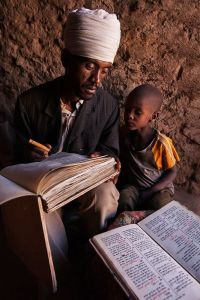
reading the bibleWe begin the ordinary time of the liturgical year. In the Church, we have three cycles of the liturgical year: A, B, and C. every year, we have a different set of readings. In year A, the Gospel readings are mainly from the Gospel of Matthew, meanwhile, year B is from Mark and year C is from Luke. The Gospel of John does not have its separate year, but the readings from John are scattered through the years, especially in the Easter season.

The first reading is usually taken from the Old Testament and it is thematically related to the Gospel. While the second reading is coming from the letters of the apostles like St. Peter, St. John and the letter to the Hebrews, yet the majority of the second reading comes from letters of St. Paul. The second readings have their own sequence and it is not necessarily thematically related to the Gospel. The reason behind why we have this kind of liturgical setting is that to help us, the regular mass-goers, to read the Scriptures together with the Church. If we are faithfully attending the mass every Sunday, or even every day, and attentive to the readings, we will have a good grasp of the Scriptures and especially the life and works of Jesus.

However, not all the Scriptures are there in the Mass. If we go every day to participate in the Eucharist for three years, we only listen to around 30 percent of the Bible. We still have 70 percent to complete the Bible! Thus, it is highly recommended that we take the initiative to read the Bible on our own. Three to four chapters a day, and hopefully, within a year, we are able to read the entire Bible cover to cover.

I guess one of the “great sickness” of Catholics nowadays is the ignorance of the Scriptures. When I ask some Catholics whether they have the Bible, they unanimously answer that they have a Bible, and in fact, they have a collection of Bible coming from different countries. However, when I inquire whether they read the Bible regularly, only a few would confidently reply that they do.

The task of reading the Bible is getting difficult in our time because young generations or the millennials and generation Z, despite their high education, prefer to playing electronic gadgets rather than to read books, and printed materials become an obsolete. Yes, it is easy now to install a Bible on our cellphone but to spend time to read it is another thing. With so many other competing applications in our handheld device, reading the Word of God is easily relegated to the sideline.

St. Jerome reminds us that ignorance of Scriptures is ignorance of Christ. Indeed, it is too easy to say “I love Jesus”, but in reality, we are ignoring Him because we never read or attentively listen to the Scriptures. St. Paul in the beginning of his letter to the Corinthians reminds us that we are called to saints or holy. And holiness for Paul is nothing but living in Christ, but how we can live in Christ, if we do not know Christ, worse ignore him? Reading a Bible on a daily basis can become a simple yet concrete act of loving Jesus, and in fact, the way to holiness as we become more and more like Christ.

Valentinus Bayuhadi Ruseno, OP

Mengabaikan Yesus

Minggu Kedua dari Masa Biasa [A]

19 Januari 2020

Yohanes 1: 29-34

joseph marie lagrangeKita memulai masa biasa pada tahun liturgi ini. Di Gereja Katolik, kita memiliki tiga siklus tahun liturgi: A, B, dan C. Di setiap tahun, kita memiliki serangkaian bacaan yang berbeda. Pada tahun A, bacaan Injil terutama dari Injil Matius, sementara tahun B dari Markus dan tahun C dari Lukas. Injil Yohanes tidak memiliki tahun yang khusus, tetapi bacaan dari Yohanes tersebar di sepanjang tahun, terutama di masa Paskah.

Bacaan pertama biasanya diambil dari Perjanjian Lama dan secara tematis terkait dengan bacaan Injil. Sementara bacaan kedua berasal dari surat-surat para rasul seperti St. Petrus, St. Yohanes dan surat kepada orang-orang Ibrani, namun mayoritas bacaan kedua berasal dari surat-surat St. Paul. Bacaan kedua memiliki urutannya sendiri dan tidak harus secara tematis terkait dengan Injil. Alasan di balik mengapa kita memiliki pengaturan liturgi semacam ini adalah untuk membantu kita untuk membaca Kitab Suci bersama dengan Gereja. Jika kita dengan setia menghadiri misa setiap hari Minggu, atau bahkan setiap hari, dan memperhatikan bacaan, kita akan memiliki pemahaman umum yang baik tentang Kitab Suci dan khususnya kehidupan dan karya Yesus.

Namun, tidak semua Alkitab ada dalam tahun liturgi ini. Jika kita pergi setiap hari untuk berpartisipasi dalam Ekaristi selama tiga tahun, kita hanya mendengarkan sekitar 30 persen dari Alkitab. Kita masih memiliki 70 persen untuk menyelesaikan Alkitab! Karena itu, sangat disarankan agar kita mengambil inisiatif untuk membaca Alkitab sendiri. Tiga hingga empat bab sehari, dan semoga, dalam waktu satu tahun, kita dapat membaca seluruh Alkitab.

Salah satu “penyakit berat” yang menjakiti umat Katolik dewasa ini adalah ketidaktahuan akan Kitab Suci. Ketika saya bertanya kepada beberapa orang Katolik apakah mereka memiliki Alkitab, mereka dengan mantab menjawab bahwa mereka memiliki Alkitab, dan pada kenyataannya, mereka memiliki lebih dari satu Alkitab di rumah. Namun, ketika saya menanyakan apakah mereka membaca Alkitab secara teratur, hanya sedikit yang akan menjawab dengan yakin.

Tugas membaca Alkitab semakin sulit di zaman kita karena generasi muda atau genarasi milenial dan generasi Z, meskipun berpendidikan tinggi, lebih suka bermain gadget elektronik daripada membaca buku. Ya, sekarang mudah untuk menginstal Alkitab di ponsel kita, tetapi meluangkan waktu untuk membacanya adalah hal lain. Dengan begitu banyak aplikasi lain yang bersaing dalam perangkat genggam kita, membaca Firman Tuhan dengan mudah dikesampingkan, dan bahkan kadang-kadang kita lupa ada Kitab Suci di HP kita.

St. Heronimus mengingatkan kita bahwa mengabaikan Kitab Suci adalah sama saja dengan mengabaikan Kristus. Memang, sangat mudah untuk mengatakan “Aku cinta Yesus”, tetapi dalam kenyataannya, kita mengabaikan Dia karena kita tidak pernah membaca atau mendengarkan dengan penuh perhatian Kitab Suci. Santo Paulus di awal surat pertamanya kepada jemaat Korintus mengingatkan kita bahwa kita dipanggil untuk orang-orang kudus. Dan kekudusan bagi Paulus tidak lain adalah hidup di dalam Kristus, tetapi bagaimana kita dapat hidup di dalam Kristus, jika kita tidak mengenal Kristus, lebih buruk mengabaikannya? Membaca Alkitab setiap hari dapat menjadi tindakan sederhana namun konkret untuk mengasihi Yesus, dan pada kenyataannya, jalan menuju kekudusan saat kita menjadi semakin mirip Kristus.

Valentinus Bayuhadi Ruseno, OP