
See Mary, See Jesus

The Solemnity of the Assumption of Mary

August 15, 2020

Luke 1:39-45

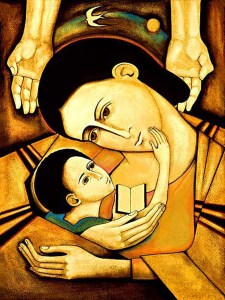
assumption of mary 2Often, we, Catholics, are accused of overemphasizing Mary in our faith, liturgy, and even our daily lives. The usual objections are: “Why do we should see Mary if we can go directly to Jesus? Why should there be Mary between you and Jesus?”

These kinds of objections follow from the underlying presupposition that salvation is only about Jesus and me. We just need Jesus, and the rest are obstacles to Jesus. We do not need the Church, the saints, and especially Mary. These are excess baggage that has to be removed so that we can fly quickly to God. While we might be saved with this faith, but this is a narrow, individualistic, and even pompous view of faith, and more fundamentally, it is not kind of faith that God of the Bible teaches us.

In the Bible, God lays down the foundation for our salvation which is through His family. The primary keyword is covenant [or even translated as testament]. It is a solemn agreement to unite two parties into a family. God invited Adam, Noah, Abraham, Moses, and David and their families to be part of God’s family and salvation may be available for these people. And in the fullness of time, Jesus, the Son of God, forged a new and eternal covenant with God on behalf of humanity and entire cosmos. We are saved through the family of Jesus, the kingdom of God.

If we call God as our Father, then we are brothers and sisters in the family of God. If we are brothers and sisters, we have responsibility for one another’s salvation. The saints ceaselessly love and pray for us because they are our holy brethren in heaven, and want us to join them. Their presence does not in any way hinder our gaze on Jesus because precisely the more we see them, the more we see God’s perfection. If we can appreciate the mountains or oceans as work of God’s power and beauty, the more we shall appreciate the saints as supernatural masterpieces of God.

Chief among the saints is Mother Mary. She is the type-A of a human perfected by God’s grace. The more we see Mary, who she is and what she has become, the more we come closer to God in awe and adoration. If God can do great things to Mary, He will do the same to us. If God can redeem Mary perfectly, He will redeem us as well. If God can bring Mary to heaven, He will bring us also to heaven. And as the great sister in faith, she has even the utmost responsibility to bring us closer to God. She prays for us the hard; even she prays harder for those people who hate her.

St. Luke masterfully narrates how Mary, as the new ark of the covenant, brings Jesus in her womb to Elisabeth and John the Baptist. We also notice Elizabeth does not separate the two. When she sees Mary, she recognizes the Lord, and when she is aware of God’s presence, she acknowledges the sacred bearer, Mary. Through Jesus who is in Mary, Elizabeth and John are able to discover their authentic joy.

Valentinus Bayuhadi Ruseno, OP
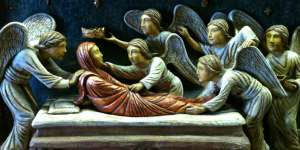
Lihat Maria, Lihat Yesus

Hari Raya Pengangkatan Maria

16 Agustus 2020

Lukas 1: 39-45

dormitionSeringkali, kita, umat Katolik, dituduh terlalu menekankan Maria dalam iman, liturgi, dan bahkan kehidupan kita sehari-hari. Keberatan yang biasa kita dengar adalah: “Mengapa saya harus lewat Maria jika saya dapat langsung kepada Yesus? Mengapa harus ada Maria di antara saya dan Yesus?” Jenis-jenis keberatan ini berasal dari asumsi dasar bahwa keselamatan adalah hanya tentang saya dan Yesus. Kita hanya membutuhkan Yesus, dan sisanya adalah penghalang bagi Yesus. Kita tidak membutuhkan Gereja, orang-orang kudus, dan khususnya Maria. Ini adalah “kelebihan bagasi” yang harus disingkirkan agar kita bisa terbang dengan mudah kepada Tuhan.
Meskipun kita mungkin diselamatkan dengan iman semacam ini, tetapi iman semacam ini adalah sempit, individualistis dan bahkan angkuh. Lebih mendasar lagi, imam seperti ini  bukanlah jenis iman yang diajarkan Tuhan dalam Alkitab kepada kita.

Di dalam Alkitab, Tuhan meletakkan dasar untuk keselamatan kita yaitu melalui keluarga-Nya. Kata kunci dasarnya adalah perjanjian [Bahasa Ibrani “berit” dan Inggris “covenant”]. Ini adalah kesepakatan yang agung untuk menyatukan dua pihak berbeda menjadi satu keluarga. Tuhan memanggil Adam, Nuh, Abraham, Musa dan Daud untuk menjadi bagian dari keluarga Tuhan dan keselamatan tersedia bagi bangsa Israel. Dan dalam kepenuhan waktu, Yesus, Putra Allah, membuat perjanjian baru dan kekal dengan Allah demi umat manusia dan seluruh ciptaan. Kita diselamatkan melalui keluarga Yesus, kerajaan Allah.

Jika kita menyebut Tuhan sebagai Bapa kita, kita adalah saudara dan saudari dalam keluarga Tuhan. Jika kita adalah saudara dan saudari, kita memiliki tanggung jawab untuk keselamatan satu sama lain. Di sini kita melihat peran penting Gereja sebagai keluarga Allah, bahkan mereka yang telah mendahului kita, yakni para kudus. Para santo-santa tak henti-hentinya mengasihi dan berdoa bagi kita karena mereka adalah saudara kita yang penuh tanggung jawab di surga, dan ingin kita bergabung dengan mereka. Kehadiran mereka sama sekali tidak menghalangi pandangan kita kepada Yesus karena justru semakin kita melihat mereka, semakin kita melihat kesempurnaan Tuhan. Jika kita bisa menghargai gunung atau lautan sebagai karya kuasa dan keindahan Tuhan, kita akan semakin menghargai orang-orang kudus sebagai mahakarya supernatural Tuhan.

Terdepan di antara orang-orang kudus adalah Bunda Maria. Dia adalah contoh paling kongkret dari manusia yang disempurnakan oleh rahmat Tuhan. Semakin kita melihat Maria, semakin kita dekat dengan Tuhan dalam kekaguman dan pujian. Jika Tuhan dapat melakukan hal-hal besar kepada Maria, Dia akan melakukan hal yang sama kepada kita. Jika Tuhan dapat menebus Maria dengan sempurna, Dia akan menebus kita juga. Jika Tuhan dapat membawa Maria ke surga, Dia akan membawa kita juga ke surga. Dan sebagai saudari yang hebat dalam iman, dia bahkan memiliki tanggung jawab yang paling besar untuk membawa kita lebih dekat kepada Tuhan. Dia berdoa untuk kita dengan sangat semangat, bahkan dia berdoa lebih semangat lagi untuk orang-orang yang membencinya.

St. Lukas dengan lihat menceritakan bagaimana Maria, sebagai tabut perjanjian baru, membawa Yesus di dalam rahimnya kepada Elisabet dan Yohanes Pembaptis. Kita perhatikan juga Elizabeth tidak memisahkan keduanya. Ketika dia melihat Maria, dia mengenali Tuhan, dan ketika dia menyadari kehadiran Tuhan, dia mengakui pembawa suci, Maria. Melalui Yesus yang hadir melalui Maria, Elizabet dan Yohanes menemukan sukacita sejati.

Valentinus Bayuhadi Ruseno, OP

Magnify

The Solemnity of the Assumption of Mary – August 15, 2019 – Luke 1: 39-56

blessed virgin mary 2Today the Church is celebrating the solemnity of the Assumption of Mary. Rooted in the Scriptures and Tradition, the Church firmly believes that Mary was assumed into heaven body and soul after she completed her life here on earth. This belief is crystallized in the form of Dogma or the highest teaching of the Church. As a dogma, the Assumption requires the assent of faith from the faithful. The assumption itself is not the sole Marian Dogma. There are four dogmas related to her: Mary is the Mother of God, ever-virgin, immaculately conceived, and assumed into heaven. No other human, except Jesus, has accumulated that much honor in the Church and no other men or women have blessed conditions like hers.

However, we are mistaken if we think that all the Dogmas are about the goodness of Mary. When we are celebrating the Dogmas of Mary, we are not merely praising that Mary is good, gentle, and holy, but it is primarily about God and how through Mary, we are thanking God for His mercy toward Mary and all the wonders. Looking at Mary, we cannot but thank God for His mercy on her and His wonders done to her.

In the Gospel today, we listen to the song of Mary is traditionally called the Magnificat [Luk 1:46ff]. In her song,  Mary praises the Lord for the mighty deeds He has done to her and Israel. Mary herself acknowledges who she is, “God’s lowly servant.” She never lets pride get in her mind, but instead, she chooses to recognize what God has done to her that “God has looked with favor on her” and “God has raised the lowly.” Mary realizes that she was nothing without God.

The title is from the first Latin word that appears in the canticle, “Magnificat anima mea Dominum.”  The original Greek is “μεγαλύνω” [megaluno], to make great. The idea is like the magnifying glass that intensifies the light and the heat of the sun, and thus, emits powerful energy. When I was a little boy, my friends and I used to play together outside. One time, a friend brought a magnifying glass. We were amazed that it had another function aside from making a small object looked big. It was able to gather the light and heat of the sun and to focus it into a single spot. It became so intense and hot that it may burn what it touched. Then, when we saw the ants nearby, we started burning them using the magnifying glass!

Mary knows well that she is not the source of light, and she is the receiver. Yet, Mary does not merely receive it and keeps it to herself. Mary also is aware that she does not simply mirror that only reflect the light. Mary sees herself as “magnifying glass.” When she receives the light, she makes sure that light will shine even more brightly, intense, and powerful. Through Mary, the light of Christ becomes more intense, powerful, and penetrating. When we intently look at Mary, we cannot but see God Himself.

The Dogma of the Assumption, indeed all Marian dogmas, points to Mary, who points to God. Following her example, we are also called to make our lives as a signpost that points to God. But more than passive signpost, we need to learn to actively magnify God’s glory and mercy through our lives.

Valentinus Bayuhadi Ruseno, OP

Maria dan Tuhannya

Hari Raya Maria Diangkat ke Surga – 17 Agustus 2019 – Lukas 1: 39-56

blessed virgin mary 1Hari ini Gereja sedang merayakan hari raya Maria Diangkat ke Surga. Berakar dalam Kitab Suci dan Tradisi, Gereja dengan kuat percaya bahwa Maria diasumsikan ke dalam tubuh dan jiwa surga setelah dia menyelesaikan hidupnya di bumi ini. Keyakinan ini terkristalisasi dalam bentuk Dogma atau ajaran tertinggi Gereja. Sebagai dogma, Asumsi membutuhkan persetujuan iman dari umat beriman. Asumsi itu sendiri bukan satu-satunya Dogma Marian. Ada empat dogma yang berkaitan dengannya: Maria adalah Bunda Allah, selalu perawan, dikandung dengan sempurna, dan diasumsikan ke surga. Tidak ada manusia lain, kecuali Yesus, yang mengumpulkan begitu banyak kehormatan di Gereja dan tidak ada pria atau wanita lain yang memberkati kondisi seperti miliknya.

Namun, kita salah jika kita berpikir bahwa semua Dogma adalah tentang kebaikan Maria. Ketika kita merayakan Dogma-Maria, kita tidak hanya memuji bahwa Maria itu baik, lembut, dan suci, tetapi ini terutama tentang Tuhan dan bagaimana kita berterima kasih kepada Tuhan atas rahmat-Nya yang tercurah kepada Maria. Melihat Maria, kita tidak bisa tidak berterima kasih kepada Tuhan atas rahmat-Nya atas dia dan keajaiban-keajaiban yang dilakukan padanya.

Dalam Injil hari ini, kita mendengarkan kidung Maria yang secara tradisional disebut Magnificat [Luk 1:46 dst]. Dalam kidung tersebut, Maria memuji Tuhan atas perbuatan-perbuatan besar yang telah dilakukan-Nya kepadanya dan Israel. Maria sendiri mengakui siapa dirinya, “hamba Tuhan yang rendah.” Dia tidak pernah membiarkan kesombongan masuk ke dalam benaknya, tetapi sebaliknya, dia memilih untuk mengakui apa yang telah Tuhan lakukan kepadanya bahwa “Tuhan telah melakukan perbuatan-perbuatan besar kepadanya.” Maria menyadari bahwa dia bukan apa-apa tanpa Tuhan.

Kata Magnificat adalah dari kata Latin pertama yang muncul di kidung tersebut, “Magnificat anima mea Dominum.” Bahasa Yunani aslinya adalah “μεγαλύνω” [megaluno], berarti untuk membuat besar. Idenya seperti kaca pembesar yang mengintensifkan cahaya dan panas matahari, dan dengan demikian, memancarkan energi yang kuat. Ketika saya masih kecil, teman-teman saya dan saya biasa bermain bersama di luar. Suatu kali, seorang teman membawa kaca pembesar. Kami kagum bahwa kaca tersebut memiliki fungsi lain selain membuat benda kecil tampak besar. Itu bisa mengumpulkan cahaya dan panas matahari dan memfokuskannya ke satu tempat. Itu begitu kuat dan panas sehingga bisa membakar apa yang disentuhnya. Kemudian, ketika kami melihat semut di sekitar kami, kami mulai membakar mereka menggunakan kaca pembesar!

Maria tahu betul bahwa dia bukan sumber cahaya, dan dia adalah penerima. Namun, Maria tidak hanya menerimanya dan menyimpannya untuk dirinya sendiri. Maria juga sadar bahwa dia bukanlah sekadar cermin yang hanya memantulkan cahaya. Maria melihat dirinya sebagai “kaca pembesar.” Ketika dia menerima cahaya, dia memastikan bahwa cahaya akan bersinar lebih terang, intens, dan kuat. Melalui Maria, terang Kristus menjadi lebih kuat, dahsyat dan berdaya guna. Ketika kita dengan penuh perhatian melihat Maria, kita tidak bisa tidak melihat Tuhan sendiri yang lebih megah dan mulia.

Dogma Maria diangkat ke surga, dan juga dogma-dogma Maria yang lain, menunjuk ke Maria, yang menunjuk kepada Tuhan. Mengikuti teladannya, kita juga dipanggil untuk menjadikan hidup kita sebagai rambu yang menunjuk kepada Allah. Tetapi lebih dari sekadar rambu-rambu yang pasif, kita perlu belajar untuk secara aktif meningkatkan kemuliaan dan belas kasihan Tuhan melalui hidup kita.

Valentinus Bayuhadi Ruseno, OP

Trinity and Us

The Solemnity of the Most Holy Trinity [May 27, 2018] Matthew 28:16-20

“Go, therefore, and make disciples of all nations, baptizing them in the name of the Father, and of the Son, and of the Holy Spirit, (Matt. 28:19)”

big bang
photo by Harry Setianto, SJ

This Mystery of Trinity is rightly called the mystery of all the mysteries because the Holy Trinity is at the core of our Christian faith. Yet, the fundamental truth we believe is not only extremely difficult to understand, but in fact, it goes beyond our natural reasoning. How is it possible that we believe in three distinct Divine Persons, the Father, the Son and the Holy Spirit, and yet they remain One God? Some of the greatest minds like St. Augustine, St. Thomas Aquinas and Pope Emeritus Benedict XVI have attempted to shed a little light on the mystery. However, in the face of such immense truth, the best explanations would seem like a drop of water in the vast ocean.


I have no illusion that I could explain the mystery better than the brightest minds of the Church, but we may reflect on its meaning in our ordinary lives. The joyful Easter season ended with the celebration of the Pentecost Sunday last week, and we resume the liturgical season of the year or simply known as the ordinary season. As we begin once again the ordinary season, the Church invites us to celebrate the Solemnity of the Most Holy Trinity or the Trinity Sunday. The Church seems to tell us that the unfathomable mystery of Trinity is in fact intimately closed to our day-to-day living, to our daily struggles and triumphs, to our everyday pains and joys. How is our faith in the greatest mystery of all connected to our ordinary and mundane lives?

We often have false images of God. We used to think that God or Trinity is the greatest person (or three persons) among things that exist He is like a universal CEO that manages things from an undisclosed location or a super big and powerful being that controls practically everything. Yet, this is not quite right. He is not just one among countless beings. God is the ground of our existence. He is the very reason why anything exists rather than nothing. Thus, the act of creation is not what happened at the Big Bang 13.7 billion years ago. It is fundamentally God’s gift of existence to us. To be created means that we do not necessarily exist. Every single moment of our life is God’s gratuitous gift.

The Scriptures reveals the mystery of our God. He is not solitary and self-absorbed God, but our God is one God in three divine persons. Our God is a community founded on creative mutual love and constant self-giving. Therefore, our creation is not a mere accident, but God’s creative act and His gift of love. We exist in the world because God cannot but love us and wants us to share in the perfect life of the Trinity. St. Thomas Aquinas rightly says that we only believe two fundamental teachings, two credibilia : first, God exists, and second, we are loved in Jesus Christ.

We often take for granted our lives and immerse in daily concern of life; we rarely ask what the purpose of this life is. Yet, it does not diminish the truth that God lovingly sustains our existence and cares for us, even to the tiniest fraction of our atom. Whether we are busy doing our works, focus on our family affairs, or simply enjoying our hobbies, God is intimately involved. Thus, apart from God, our lives, our daily toils, and concerns, our sorrows and joys are meaningless and even revert to nothingness. Celebrating the Trinity Sunday means to rejoice in our existence as a gift, and to glorify God who is immensely loving and caring for us.

Br. Valentinus Bayuhadi Ruseno, OP

Allah Tritunggal dan Kita

Hari Raya dari Tritunggal Mahakudus [27 Mei 2018] Matius 28: 16-20

Pergilah, jadikanlah semua bangsa murid-Ku dan baptislah mereka dalam nama Bapa dan Anak dan Roh Kudus. (Mat. 28:19)”

star gazing
photo by Harry Setianto, SJ

Hari ini kita merayakan Misteri Tritunggal Mahakudus. Misteri ini tepat disebut misteri dari semua misteri karena Tritunggal Mahakudus merupakan inti dari iman Kristiani kita. Namun, kebenaran mendasar ini tidak hanya sangat sulit untuk dimengerti, tetapi juga pada kenyataannya, melampaui penalaran manusiawi kita. Bagaimana mungkin kita bisa percaya pada tiga Pribadi Ilahi yang berbeda, Bapa, Putra dan Roh Kudus, namun mereka tetap satu Allah? Beberapa tokoh besar seperti St. Agustinus, St. Thomas Aquinas dan Paus Emeritus Benediktus XVI telah berusaha untuk memberi sedikit cahaya pada misteri ini. Namun, dihadapan kebenaran maha besar ini, penjelasan terbaik pun akan tampak seperti setetes air di samudra raya


Saya sendiri tidak memiliki ilusi bahwa saya dapat menjelaskan misteri ini dengan baik, tetapi kita mungkin merefleksikan bersama maknanya dalam kehidupan sehari-hari kita. Masa Paskah yang penuh sukacita berakhir dengan perayaan hari Pentakosta Minggu lalu, dan kitapun melanjutkan masa biasa tahun liturgi. Ketika kita melanjutkan masa biasa, Gereja mengundang kita untuk merayakan Hari Raya Tritunggal Mahakudus. Gereja tampaknya mengajarkan kita bahwa misteri Trinitas yang melebihi segala nalar sebenarnya sangat dekat dengan kehidupan sehari-hari kita sebagai manusia, dengan perjuangan kita sehari-hari, dengan rasa sakit dan sukacita kita sehari-hari. Bagaimana iman kita dalam misteri terbesar dari semua misteri ini dapat terhubung dengan kehidupan sehari-hari dan bahkan duniawi kita?

Kita sering memiliki gambaran salah tentang Tuhan. Kita kadang berpikir bahwa Tuhan atau Allah Tritunggal adalah pribadi terbesar (atau tiga pribadi terbesar) di antara hal-hal yang ada. Dia seperti seorang CEO universal yang mengelola semua hal dari lokasi yang dirahasiakan atau makhluk super besar dan super kuat yang mengendalikan hampir segalanya. Namun, gambaran ini tidak sepenuhnya benar. Ia bukan sekedar “satu” di antara makhluk yang tak terhitung jumlahnya. Tuhan adalah dasar dari segala yang ada. Dia adalah alasan mengapa sesuatu ada, daripada tidak ada sama sekali. Jadi, penciptaan bukanlah yang terjadi pada “Big Bang” 13,7 miliar tahun lalu. Penciptaan pada dasarnya adalah karunia keberadaan dari Allah bagi kita. Menjadi makhluk ciptaan berarti keberadaan kita tidak mutlak. Kita ada fana. Namun, saat kita tahu bahwa kita sungguh ada di dunia, kita menyadari bahwa setiap saat dalam hidup kita adalah karunia Tuhan.

Kitab Suci mengungkapkan misteri Allah kita. Dia bukan Tuhan yang menyendiri dan mementingkan diri sendiri, tetapi Tuhan kita adalah satu Tuhan dalam tiga pribadi ilahi. Tuhan kita adalah komunitas yang berdasarkan pada kasih hidup dan kreatif dan pada pemberian diri yang total dan konstan. Oleh karena itu, perciptaan kita bukanlah sekedar ketidaksengajaan semata, tetapi tindakan kreatif Allah dan karunia kasih-Nya. Kita ada karena kita adalah bagian dari rencana kasih-Nya. Kita ada di dunia karena Tuhan tidak dapat tidak mengasihi kita dan ingin kita berbagi dalam kehidupan yang sempurna dalam Tritunggal. St Thomas Aquinas pun mengatakan bahwa kita hanya percaya dua ajaran dasar, dua “credibilia”: pertama, Tuhan itu ada, dan kedua, kita dikasihi dalam Yesus Kristus.

Kita sering menerima begitu saja hidup kita dan terlarut dalam masalah sehari-hari; kita jarang bertanya apa tujuan dan makna kehidupan ini. Namun, hal ini tidak mengurangi kebenaran bahwa Tuhan dengan penuh kasih menopang keberadaan, bahkan sampai ke bagian terkecil dari atom kita, dan peduli kepada kita, setiap detik dari hidup kita. Apakah kita sibuk melakukan pekerjaan, fokus pada urusan keluarga, atau hanya menikmati hobi, Tuhan terlibat dan memperhatikan. Jadi, terlepas dari Tuhan, hidup kita, kerja harian kita, dan kekhawatiran, kesedihan dan sukacita kita tidak ada artinya dan bahkan kembali ke ketiadaan. Merayakan Tritunggal Mahakudus berarti bersuka-cita dalam keberadaan kita sebagai karunia, dan memuliakan Tuhan yang sangat mengasihi kita.

Frater Valentinus Bayuhadi Ruseno, OP

Why still Going to the Church on January 1?

Solemnity of Mary, Mother of God [January 1, 2018] Luke 2:16-21

mother of godSome of us may wonder why the Church places the celebration of the solemnity of Mary, the Mother of God on January 1, or on the New Year. One may guess that the Church wants us to attend mass on the first day of the year, so as to start the year right. For those who wish to have a long holidays, it might be pretty a kill joy, but for some of us who wish to be blessed for the entire year, it is a nice thought. Yet, surely there is something deeper than that.
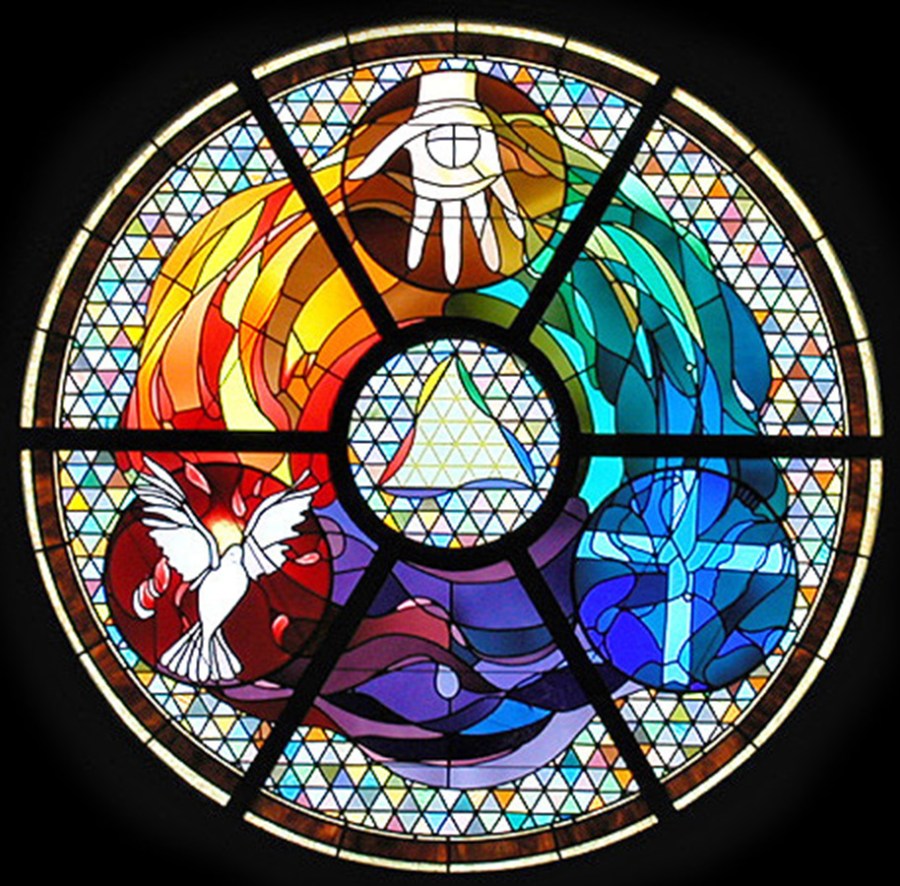
Mary as the Mother of God is the most ancient and foundational among the other Marian dogmas (there are four Marian dogmas). As early as second century AD, Christians in Egypt have prayed to Mary, and called her as the holy mother of God. The prayer is known as “Sub Tuum Praesidium” or “We fly to your patronage”, a prayer that is still being prayed daily by us, the Dominicans. At the council of Ephesus in 431, in effort to defend the humanity of Jesus, the Church proclaimed Mary as the Mother of God as definitive and bonding for all Christians of all time.

For non-Catholics, to call Mary as the mother of God is pretty idolatrous. If God has a mother, Mary must be the highest goddess of all! The Catholics must fall back to polytheism as they worship Mary like the ancient Greeks offered incense to Hera, the supreme goddess of Olympus. But, for the well-informed Catholics, the title ‘Mother of God’ does not point to the divinity of Mary, and in fact, we never consider Mary as another supreme being. She is human just every one of us, but she is so blessed because the Word was made flesh through her (Luk 1:31). Thus, in simple logic, we may say that Mary is the mother of Jesus and Jesus is God, therefore, Mary is the Mother of God.

Now, any true Marian teaching always sheds us more light on Jesus and brings us closer to God. If a woman becomes a mother because the child she bears, then it is fitting to place this solemnity of the Mother of God in close proximity to the Birth of Jesus or Christmas. No wonder, the Church honors her motherhood exactly at the Octave (8th day) of Christmas, which happens to fall on January 1. This connection between Mary the mother and baby Jesus is reflected also on today’s Gospel who speaks of the birth of Jesus.

Perhaps we are just lazy to attend the Mass today, especially we have many other plans. We rather choose to be caught in the festive atmosphere of New Year. Yet, it is also the day that we reconnect with brilliant Church Fathers who defend this teaching, with many Christian martyrs who choose to die for this truth, and with countless devout Christians who honor the Mother of God. If we begin New Year with a lot of resolutions, why don’t we make honoring Mary, as Jesus honors His mother, as our resolution?

Br. Valentinus Bayuhadi Ruseno, OP

The Revelation of Love

Solemnity of the Most Holy Trinity. June 11, 2017 [John 3:16-18]

 “For God so loved the world that he gave his only Son, so that everyone who believes in him might not perish but might have eternal life (Joh 3:16)”

holy trinityToday, we are celebrating the Mystery of the Most Holy Trinity. This Mystery is rightly called the mystery of all the mysteries because the Holy Trinity is at the core of our Christian faith. Yet, the fundamental truth we believe is not only extremely difficult to understand, but in fact, it goes beyond our natural reasoning.  How is it possible that we believe in three distinct Divine Persons, the Father, the Son and the Holy Spirit, and yet they remain One God? Many great minds have tried to explain, but at the face of such immense truth, the best explanations would seem like a drop of water in the infinite ocean. Yet, we believe it precisely because the mystery is not coming from the human mind, but is revealed to us by God Himself.

The clearest experience of the Trinity in the Scriptures will be coming from St. Matthew. Jesus said to the disciples, “Go, therefore, and make disciples of all nations, baptizing them in the name of the Father, and of the Son, and of the Holy Spirit (Mat 28:19).” We observe that we are baptized for salvation only in “one name”. Surely this one name refers to one God himself. Yet, within this one Holy Name, there are three persons: the Father, the Son and the Holy Spirit.

St. Paul, the apostle to the Gentiles, often uttered blessings in the name of Holy Trinity. In his second letter, he greeted and blessed the Corinthians, saying “The grace of the Lord Jesus Christ and the love of God and the fellowship of the Holy Spirit be with all of you (13:13).” The same practice was also followed by St. Peter. In his first letter, he greeted the fellow Christians, “in the foreknowledge of God the Father, through sanctification by the Spirit, for obedience and sprinkling with the blood of Jesus Christ: may grace and peace be yours in abundance (1:2). It is true that the term Trinity is not in the Bible because the word was coined to facilitate our understanding, but as we have read, the Holy Scriptures revealed the truth and reality of the Holy Trinity.

If then the Holy Trinity is indeed revealed by God Himself, what is the point of having faith in the Holy Trinity then?  The answer may be discovered in today’s Gospel. The identity of God is love (see 1 Jn 4:6). The Father loves the Son totally, and the Son loves the Father radically, and the love that unites the Father and the Son is the Holy Spirit. In love, there is the beautiful dynamic of the three loves. Love is one, yet it is three. Now, it makes sense why God so loved the world and sent His only Son for our salvation. All because God is love.

If God is love and He wants to share His love and life with us, we have to get ready to enter that love. And the best way to prepare ourselves is that we need to become love itself. We need to be more loving, forgiving and generous. In short, we have to be more and more like the Trinity. As St. John of the Cross said, “In the twilight of life, God will not judge us on our earthly possessions and human successes, but on how well we have loved.”

Br. Valentinus Bayuhadi Ruseno, OP


Pewahyuan Kasih

Hari Raya Tritunggal Mahakudus. 11 Juni 2017 [Yohanes 3: 16-18]

“Karena begitu besar kasih Allah akan dunia ini, sehingga Ia telah mengaruniakan Anak-Nya yang tunggal, supaya setiap orang yang percaya kepada-Nya tidak binasa, melainkan beroleh hidup yang kekal. (Yoh 3:16)”

Holy Trinity21Hari ini, kita merayakan Misteri Tritunggal Mahakudus. Misteri ini disebut sebagai misteri dari semua misteri karena Tritunggal Mahakudus merupakan inti dari iman Kristiani kita. Namun, kebenaran mendasar yang kita percaya ini tidak hanya sangat sulit untuk dipahami, namun pada kenyataannya, melampaui penalaran alamiah kita. Bagaimana mungkin kita mempercayai tiga Pribadi Ilahi yang berbeda, Bapa, Putra dan Roh Kudus, namun tetap satu Tuhan? Banyak pemikir besar seperti St. Agustinus dan St. Thomas Aquinas telah mencoba menjelaskan, namun saat berhadapan dengan kebenaran yang begitu besar, penjelasan terbaik pun sepertinya setetes air di samudera raya. Namun, kita percaya justru karena misteri itu tidak berasal dari manusia, namun diwahyukan kepada kita oleh Tuhan sendiri.
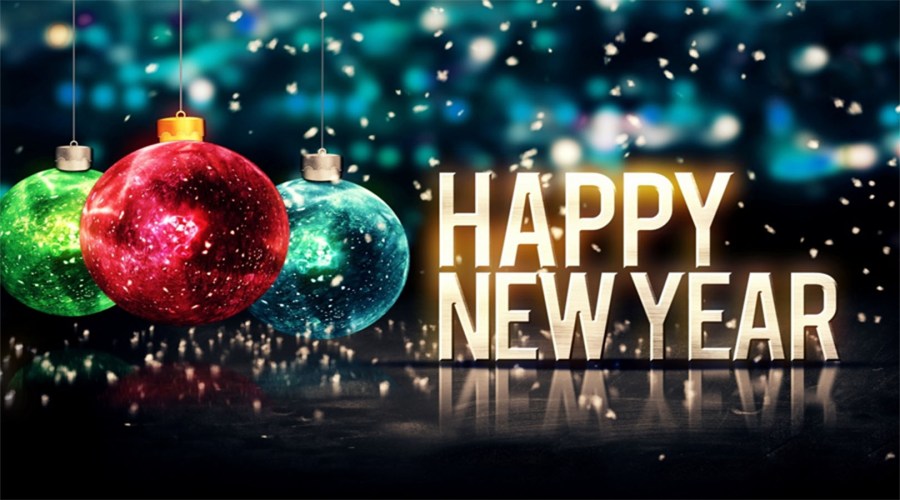
Pernyataan yang paling jelas tentang Trinitas dalam Kitab Suci datang dari St. Matius. Yesus berkata kepada murid-murid, “Karena itu pergilah, jadikanlah semua bangsa murid-Ku dan baptislah mereka dalam nama Bapa dan Putra dan Roh Kudus (Mat 28:19).” Kita mengamati bahwa kita dibaptis untuk keselamatan hanya dalam “satu Nama”. Tentunya satu nama ini mengacu pada satu Tuhan Allah. Namun, di dalam satu Tuhan, ada tiga pribadi: Bapa, Putra dan Roh Kudus.

Santo Paulus, rasul bagi bangsa-bangsa, sering mengucapkan berkat dalam nama Tritunggal Mahakudus. Dalam suratnya yang kedua, dia memberkati jemaat di Korintus, dengan mengatakan “Kasih karunia Tuhan Yesus Kristus, dan kasih Allah, dan persekutuan Roh Kudus menyertai kamu sekalian (13:14).” Praktik yang sama juga Diikuti oleh Santo Petrus. Dalam surat pertamanya, dia menyapa sesama dan memberkati semua jemaat, …sesuai dengan rencana Allah, Bapa kita, dan yang dikuduskan oleh Roh, supaya taat kepada Yesus Kristus dan menerima percikan darah-Nya. Kiranya kasih karunia dan damai sejahtera makin melimpah atas kamu (1:2).” Memang benar bahwa istilah Trinitas tidak ada dalam Alkitab karena kata ini dibentuk untuk memudahkan pemahaman kita, namun seperti yang telah kita baca, Kitab Suci mewahyukan kebenaran dan realitas Tritunggal Mahakudus.

Jika kemudian Tritunggal Mahakudus memang diwahyukan oleh Tuhan sendiri, apa gunanya memiliki iman kepada Tritunggal Mahakudus? Jawabannya bisa ditemukan pada Injil hari ini. Identitas Allah adalah kasih (lihat 1 Yoh 4: 6). Bapa mengasihi Putra sepenuhnya, dan Putra mengasihi Bapa secara radikal, dan kasih yang mempersatukan Bapa dan Putra adalah Roh Kudus. Dalam kasih, ada dinamika indah dari tiga kasih. Kasih itu satu, tapi tiga. Sekarang, masuk akal mengapa Tuhan sangat mengasihi dunia dan mengutus Putra Tunggal-Nya untuk keselamatan kita. Semua karena Tuhan itu kasih.

Jika Tuhan itu kasih dan Dia ingin berbagi kasih-Nya dan kehidupan-Nya dengan kita, kita harus bersiap untuk memasuki kasih tersebut. Dan cara terbaik untuk mempersiapkan diri kita adalah kita perlu menjadi kasih itu sendiri. Kita harus belajar untuk lebih mengasihi, memaafkan dan bermurah hati. Singkatnya, kita harus menjadi terus seperti Trinitas. Seperti yang dikatakan oleh St. Yohanes dari Salib, “Di akhir kehidupan kita, Allah tidak akan mengadili kita berdasarkan harta duniawi dan kesuksesan manusiawi kita, namun seberapa baik kita telah mengasihi.”

Frater Valentinus Bayuhadi Ruseno, OP

Real New Year

Solemnity of Mary Mother of God. January 1, 2017 [Luke 2:16-21]

“And Mary kept all these things, reflecting on them in her heart (Luk 2:19).”

mary-mother-of-godToday, the world is celebrating its new beginning. Many of us are going to the parties, watching fireworks, and dancing and singing. Surely, nothing is wrong with those. Yet, today, the Church decides to go against the tide and celebrates something else, or someone else: Mary the Mother of God. To make it worse, today is a holiday of obligation, meaning we need to go to the mass whether we like or not.  I remember attending the Eucharistic mass on January 1 in my own parish, and the priest never dropped a single greetings of a Happy New Year to the congregation. What a kill-joy!

We may ask, “Why do we still need to celebrate this solemnity at the beginning of the year?”  Firstly, it is just fitting to remember Mary as the mother of Jesus within the context of Christmas. Thus, exactly a week after the birth of Christ, we honor the woman who has offered her womb, her body and her whole life to God. Secondly, we are reminded that the true beginning is not only something marked in our calendar, or with outward celebrations. The real beginning takes place inside minds and hearts. Like in the process of pregnancy and birthing, initially, the change is not obvious. It happens inside the silent womb, and it takes some time before the embryo grows bigger and makes its presence felt. The process is difficult, hard to understand, and oftentimes painful. Yet, within that womb is a life that carries with it a future, unpredicted, yet exciting and hopeful.

When the Angel Gabriel announced the News to Mary, she was troubled and confused. But, she was certain that her life was in great danger. Unlike some modern societies wherein unmarried women who get pregnant are just normal, the ancient Jewish community was ready to punish such women. Mary was with a child practically outside of marriage, and she had to bear with all the consequences, There could be a great shame to her family, her future husband, Joseph, and herself. The baby might be called a bastard son for his entire life. And finally, she with her baby could be stoned to death. Yet, her faith in God was greater than her fear. She courageously carried in her womb, the little baby that would be the future of the world.

Ten years ago, in 2006, the Dominican mission in Indonesia began in utter simplicity. We were only two Indonesian priests, Frs. Adrian and Robini, and a Filipino counterpart, Fr. Terry and a lay missionary, Ms. Jemely. We had practically nothing. No institution, no house, no money. We even stayed at a little and simple quarter inside a Diocesan seminary in Borneo. We had to work hard just to support our daily lives and we relied on the generosity of many people. Nobody among us was sure what future will bring, but we had faith in God. Now, after 10 years, we have grown significantly. We have two stable houses in Pontianak and Surabaya. Now we are ministering to the multitude of people through various apostolates. Of course, young and talented people come and join our way of life.

Mary teaches us to have faith in God because for Him, nothing is impossible. The future may be uncertain, frightening and dark, but ‘… the One who began a good work in you will continue to complete it until the day of Christ Jesus (Phil 1:6).’ This is the spirit of the true New Year, the soul of real change, the faith that animates us to move forward.

Bro. Valentinus Bayuhadi Ruseno, OP