

29th Sunday in Ordinary Time [C] – October 20, 2019 [Luke 18:1-8]
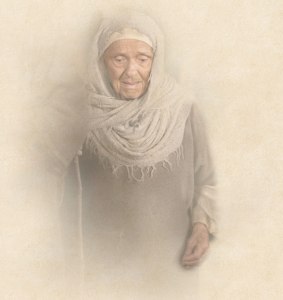 The widows are one of the most disfranchised groups in ancient Israel. In those times, women, in general, were considered to be less human. Every time a Jewish man in first-century Palestine woke up, he would pray and thank the Lord for he was not born as a Gentile, a slave or a woman. Often, women were treated as the properties of the patriarchs. While adult men were working outside the house, women were expected to stay behind to take care of the children and the household. Since many women were supported by their husbands, being a widow means loss of both financial foothold and honor. They were lucky if they had mature sons who would take care of them, but those widows without sons were the most pitiful.
However, Jesus comes to bring a fresh air of transformation. Especially, the Gospel of Luke, Jesus allows women to seize the center stage, and be protagonists. Jesus calls both men and women to follow Him and become His disciples. Jesus even allows Himself to be supported by the women [Luk 8:1]. Jesus has a close friendship with Martha and Mary [Luk 10:38-42]. Jesus places women as the main character of his parables like the story of the lost coin [Luk 15:8-10]. Today’s parable is even mind-blogging. Jesus presents a widow, representing the weakest group in the Jewish community, who is persistently pushing her cause against a corrupt judge, the most powerful person in the society. Beyond any expectation, the widow won her cause!
From this parable, we may learn several lessons. Firstly, the key to success is perseverance. While the context of our parable is on how we to pray, the value of perseverance can be applied also in many aspects of our life, like study, work, friendship, relationship, family life, and happiness. If we want to succeed, we need to be persistence and persevering. There is a saying attributed to Thomas Edison, “Success is one percent of inspiration, and ninety-nine perspiration.” Another one is by Isaac Newton, “If I have ever made any valuable discoveries, it has been owing more to patient attention, than to any other talent.” However, the problem with this view is that it is all about my persistence, my success, my glory. It is just too narrow and self-centered.
The second lesson we can draw from this parable is that Jesus empowers the women of His time and allows them to take leading roles. By doing this, Jesus introduces a wider understanding of salvation. When we encounter the word “salvation”, the first that comes to our mind is the salvation from sin, from sickness or from evil spirits. While this understanding is true, it does not capture the bigger mission of Jesus. Salvation also means to lead back into God’s original plan for the world. In the beginning, men and women were created equal in dignity despite their different roles and characters. It was because of sin that men and women were facing each other as enemies. Jesus is building the Kingdom of God, where men and women become truly the image of God. Yet, this is not easy because it is not only about our individual success and happiness. Thus, we need a lot of perseverance because if we want to follow Jesus and His mission of the Kingdom for all, we need to go even against our own selfish interest.
Valentinus Bayuhadi Ruseno, OP
 Para janda adalah salah satu kelompok yang paling terpinggirkan di Israel kuno. Pada masa itu, wanita pada umumnya dianggap sebagai manusia yang lebih rendah. Setiap kali seorang pria Yahudi di Palestina abad pertama bangun, dia akan berdoa dan bersyukur kepada Tuhan karena dia tidak dilahirkan sebagai orang bukan Yahudi, budak atau wanita. Seringkali, perempuan diperlakukan sebagai properti para kepala keluarga. Sementara para pria dewasa bekerja di luar rumah, para perempuan diharapkan tetap tinggal untuk menjaga anak-anak dan rumah. Karena banyak perempuan yang tergantung pada suami mereka, menjadi janda berarti kehilangan pijakan ekonomi dan kehormatan. Mereka beruntung jika mereka memiliki putra yang dewasa yang akan merawat mereka, dan ini membuat para janda tanpa putra adalah yang paling menyedihkan.
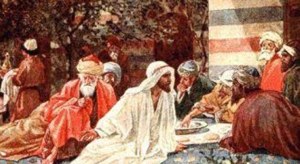 In the time of Jesus, Jews had their own special way of dining. Instead of sitting or standing the Jews would recline on a low table where food and wine are served. Reclining was the sign of free man in Greco-Roman culture. The slaves stood and served the guests. Aside reclining posture, their place in the dining table indicated their importance to the host. The closer they were to the host, the more significant they were to the host. Thus, persons sitting beside the host were expected to be the most important guests.
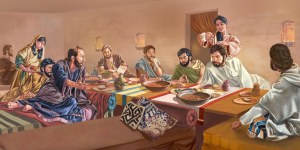 Pada zaman Yesus, orang-orang Yahudi memiliki cara unik saat perjamuan makan. Alih-alih duduk seperti biasanya, orang-orang Yahudi akan merebahkan diri pada kursi panjang dan menyenderkan tubuh mereka pada meja yang cukup rendah di mana makanan dan anggur yang disajikan. Di dalam budaya Yunani-Romawi kuno, cara makan seperti ini adalah tanda orang yang bebas, sedangkan budak akan berdiri dan melayani para tamu. Selain merebahkan diri, posisi mereka di meja perjamuan akan menunjukkan seberapa pentingnya mereka bagi tuan rumah. Semakin dekat mereka dengan tuan rumah, semakin pentinglah dia bagi sang tuan rumah. Dengan demikian, orang yang duduk di samping tuan rumah adalah tamu yang paling penting.
 In Medio Ecclesiae