Isaac’s Faith

2nd Sunday of Lent [B}

February 25, 2024

Gen 22:1-18

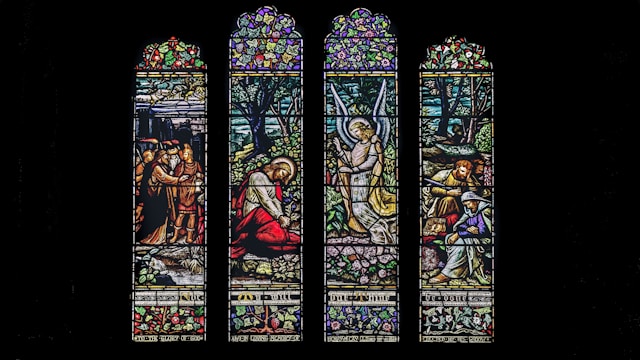
Isaac’s binding is one of the Bible’s most dramatic and intense stories. From this story, the Church sees that Isaac is the type of Christ. Isaac and Jesus were both the sons of the fulfillment of God’s promise. Both were born in the miraculous conditions. Isaac and Jesus were the sacrifices of their fathers. Yet, Isaac’s sacrifice was halted because his sacrifice would be fulfilled in Jesus on the cross. However, though typological analysis is beautiful, some questions remain unanswered. How did Isaac feel when he knew that he was about to sacrifice? Was he forced or freely giving himself? What was his motive?

Whether or not Isaac was forced as a sacrifice revolves around this age during the event. Many imagine that Isaac was still a small child, and thus, Abraham forcibly tied him and made him ready for the sacrifice. Yet, the text suggests that he was no longer a small child because he carried on his shoulder the wood for the sacrifice. Since wood was not for simple fire but a ritual sacrifice, Isaac must have brought a significant amount. Indeed, it was a job for a strong young man. Thus, we can conclude that Isaac was not forced because, as a young man, he had the physical power to resist the aging Abraham. Isaac was freely giving himself as a sacrifice and, perhaps, asked Abraham to bind him.

Yet, the question remains: Why did Isaac feel? Why did he offer himself? Unfortunately, the text of the Bible does not give us a window into Isaac’s heart. Yet, putting ourselves in the place of Isaac, it is not difficult to feel the great distress, sorrow, and fear. He was a young man with many years to come, and yet he was about to lose his life at that moment. He was not only facing death but a violent death. In fact, unlike his father, he had little to ponder about God’s will since he knew about it just a few moments before the sacrifice. Why?

The story usually focuses on the faith of Abraham, who obeyed God’s will and gave up his only son. God Himself blessed Abraham for his steadfast faith (see Gen 22:16-17). Yet, the story is also about Isaac’s faith. In the Bible, Isaac is considered a minor character among Israel’s patriarchs compared to Abraham and Jacob. He has fewer stories and often takes a more passive role. Yet, the story has proved that Isaac is a man of great faith. In fact, without his faith, Abraham would not have received the blessing.

Isaac’s faith is mature and profound. Amid extreme anguish and debilitating fear, he remained steadfast and believed that God would eventually turn things well. His faith also helped him to recognize that his life was a sacrifice to God. As he offered himself as a sacrifice, God’s blessing came to Abraham. Isaac’s faith is not only about ‘believing in God’s existence, not only about passive reception of situations but actively participating in God’s will.

How do we react in the face of uncertain situations and suffering? Fear, anxiety, or anger? What is faith to us? A mere belief in God, a passive surrender to avoidable situations, or proactively seeking God’s will? Do we also offer our lives as sacrifices to God so that others may receive blessings?

Valentinus Bayuhadi Ruseno, OP

The Desert

1st Sunday of Lent [B]

February 18, 2024

Mark 1:12-15

What do we imagine when we hear the word ‘desert’? The image in our mind may vary depending on our experience and knowledge of the desert. Yet, we agree that the desert is barren, plagued by an unfriendly climate, and not a suitable place for humans to live. Then, why does the Spirit lead Jesus to the desert? Why do we need to experience desert moments?

When we have an image of a desert, we can think of a fertile garden as its opposition. The Bible gives us these two images, a garden, and a desert, as two contrasting places. Adam and Eve originally lived in the perfect garden, with everything provided. They had the best food and safest place; most of all, God was with them. Yet, they fell, and they had to leave the garden. They began their journey in a ‘desert’ where they had to work hard to earn their livings, where many dangers lurked, and death was their final destination.

Then, why did Jesus follow the Spirit to the desert? The answer is that Jesus is in the desert for us to find Him. Even the desert may become a holy place because our Saviour is there and blesses this place. Yes, the desert is a dangerous place, and even the evil spirits are lurking to snatch us away from God, yet Jesus is also there. His presence makes even the ugliest place on earth a beautiful and holy ground.

The presence of God in the desert is not even something new. Interestingly, the word desert in Hebrew is מדבר (read: midbar) and can be literally translated as ‘the place of the word.’ Indeed, the desert is where the Israelites endured many hardships and were tested, yet it is also where God manifested Himself and made a covenant with Israel through Moses. In fact, through the desert experience, God disciplined and formed His people.

Our natural inclination is to avoid a desert, whether a natural geographical place or a symbol of our difficult moments in life. We don’t want to experience pain and sickness, we hate to endure financial and economic difficulties, and we detest difficult relationships in our family or community. We want to be blessed, to be in the Paradise. Yet, we must not fear to walk through our deserts because Jesus is there. Indeed, our hardships can exhaust us and become the devil’s opportunity to tempt us hard, yet with Jesus, these experiences can be a means of holiness.

In the season of Lent, the Church teaches us to fast, to pray more frequently, and to increase our acts of charity. These practices invite us into the desert to feel hunger, experience discomfort, and enjoy fewer things that give us pleasure. Yet, paradoxically, when we enter voluntarily and faithfully this difficult desert of Lent, we may find Christ even there, and we are renewed in holiness.

Rome

Valentinus Bayuhadi Ruseno, OP

For God’s Glory and Human Salvation

Sixth Sunday in Ordinary Time [B]

February 11, 2024

Mark 1:40-45

1 Cor 10:30 – 11:1

Towards the end of his letter to the Corinthians, St. Paul reminded us of two basic purposes of every disciple of Christ. The first one is, “…whatever you do, do all to the glory of God (1 Cor 10:31).” The second one is, “…in everything I do, not seeking my own advantage, but that of many, that they may be saved (1 Cor 10:33).” If we summarize these two verses, St. Paul said that in everything we do, we do for the glory of God and the salvation of others.

However, is it possible to do everything for God’s glory and others’ salvation? Many of us are busy working and occupied with many other things, and often, we just barely remember the presence of God, let alone praise and thank Him. Some of us even are struggling to attend Sunday Masses. Does it mean that we are failing in this regard?

We must remember that St. Paul did not instruct us to ‘say glory to Go’ but rather ‘do everything for God’s glory.’ It is not only about singing praise or uttering from our months “glory to God, glory to God” the whole day. But, fundamentally, it is to choose to do things pleasing to God, even the ordinary and routinary things. In our works, we give glory to God when we do honest jobs. Even as we watch something on the television or our gadgets, we can do it for God’s glory when we avoid seeing things that lead us to sins and choose to engage in what is truly beneficial. Certainly, we cannot give glory to God if we are idle or wasting our time on useless things.

The second purpose is to do everything so that others may find salvation. It is a wrong attitude if we are only focused on our salvation. Our faith is not selfish and individualistic but community-oriented and loving faith. Our salvation depends on the salvation of our neighbors, also. That is a Catholic faith, a faith for universal salvation. A man’s fundamental mission is to bring his wife closer to God. Parents’ salvation hinges on the growth of their children’s holiness.

But are we responsible for the salvation of all? Yes, we are called to preach the Gospel to all, but we are mainly responsible for those close to us, like family or community members. Yet, St. Paul also made a clear message, “Give no offense to Jews or to Greeks or to the church of God (1 Cor 10:32).” Though we are not actively responsible for the salvation of all, we are expected not to cause harms or scandals that may push people away from God. We are always witnesses and disciples of Christ in the world.

Lastly, these two basic missions instructed by St. Paul are the concretization of the most fundamental laws taught by Jesus: to love God and to love our neighbors (see Mat 22:37-38). In everything we do, we do it for the glory of God and the salvation of souls.

Rome

Valentinus Bayuhadi Ruseno, OP

Preaching the Gospel

5th Sunday in Ordinary Time [B]

February 5, 2024

Mark 1:29-39

Often, we believe that the task of preaching the Gospel is only for the bishops, the priests, and the deacons, or for the religious brothers and sisters or lay catechists. Yet, this is only partially true. The truth is that each baptized person has a responsibility. Yes, you and me! But How do we preach if we don’t have the talents or capacity to do that?

Firstly, we must recognize that to preach the Gospel is an essential part of our identity as Christians. To be Christian means we become the image of Christ, or ‘the other Christ’. In today’s Gospel, Jesus made it clear that His mission is to preach the Gospel. He refused to stop in one town and enjoy the praises of the people, but rather, He had to go to other places and preach. If Jesus is committed Himself in announcing the Good News, then we, as His image, are called to reflect this commitment also. A true Christian is one who faithfully preaches the Gospel.

Jesus recognizes this mission as part of His identity and hands it down to His Church as a commandment. After His resurrection, He instructed His disciples, “Go therefore and make disciples of all nations, baptizing them in the name of the Father and of the Son and of the Holy Spirit, and teaching them to obey everything that I have commanded you (Mat 28:19-20).” Again, this mission is not optional but a must for every disciple of Jesus.

The Church understands this mission, and thus, she teaches us, “Lay people also fulfill their prophetic mission by evangelization, “that is, the proclamation of Christ by word and the testimony of life… (CCC 905).” St. Thomas Aquinas, a theologian, wrote, “To teach to lead others to faith is the task of every preacher and of each believer (STh. III,71,4 ad 3).”

Yet, how do we preach if we do not have a talent and gift? Firstly, we recognize that they are kinds of preaching particularly entrusted to the clergy, like in the liturgy. The reason is that the Church wants to ensure that preaching in this sacred venue will be done solemnly and according to orthodoxy. However, there are many other opportunities for lay people to preach, and even, in fact, there are contexts in which only lay people can bring the Gospel: marriage and family.

In the family context, men and women are bound not only by their baptism to preach the Gospel but also by their marriage’s promises. Husband and wife bring each other closer to God, and parents educate their children to love God and train them in holiness. This mission requires no special talent or training but time and commitment. We spend time praying together as a family at home or in the church. We teach our children basic prayers. We offer a good role model to our children. We bring our children to our parish for baptism and other sacraments and receive various faith instructions from the priests and catechists.

The mission to preach the Gospel is not only essential to our identity as disciples of Christ, and even our salvation depends on it. Let St. Paul’s words be our motto, “Woe to me if I don’t preach the gospel (1 Cor 9:16).”

Rome

Valentinus Bayuhadi Ruseno, OP

The unclean spirits

Fourth Sunday in Ordinary Time [B]

January 28, 2024

Mark 1:21-28

One of the highlights of Jesus’ ministry is the exorcism of the unclean spirits. Mark, the evangelist even, does not hesitate to write that expelling the unclean spirits is part of Jesus’ teaching with authority. Jesus’ authority does not only affect His human hearers but also controls the unclean spirits. Yet, who are these unclean spirits? Why does Jesus have authority over them? And how do they affect our lives?

Based on the revelation and the tradition, the Church teaches that these spirits are also God’s creation. By nature, they are spirits or angels. As a spirit, they are creatures without a body, and since they are not affected by material limitations, they are naturally superior to us humans. However, unlike the good angels that use their power to help humans, these spirits do the opposite. They wish to harm men and women. That’s why they are called the evil spirits.

If God is good, why did God create evil beings? In the beginning, God created them as good spirits. Yet, as creatures with freedom, they made a definitive choice to go against their Creator. Their rebellion against God made them fall from grace, and thus, they were called ‘the fallen angels.’ (see CCC 391-395)

Then, why do the unclean spirits obey Jesus? The answer is straightforward. Jesus is their Creator. Jesus’ authority is reflected in the Greek word chosen when Jesus drives away the demons, ‘φιμοω’ (read: phimoo). Ordinarily, this word is translated as ‘be quiet,’ but literally, it means ‘to put a muzzle.’ It is like a farmer who places a muzzle on the mouth of his rowdy ox and thus puts it under submission. The idea is that Jesus is extremely powerful to the point that He could easily put evil spirits that are beyond human comprehension under His control.

One interesting fact also is that Mark does not call these fallen angels ‘evil spirits’ but rather ‘unclean spirits’ (πνευμα ἀκάθαρτον – pneuma akatarton). In the Jewish context, to be unclean means to be ritually unfit for God. Something or someone impure cannot enter the Temple of God and, thus, cannot offer worship and become far from God. These spirits are unclean precisely because they are not fit for God and, thus, far from Him.

We can also see the uncleanliness as an effect of the evil spirits. One who is under the dominion of the evil spirits becomes unclean and, thus, is far from God. One who lives in sin and, thus, distant from God is under the influence of evil spirits to a certain extent. From here, we can understand that Jesus’ mission to drive out the unclean spirits is an integral part of His mission to make people holy and to unite people with God.

The discussion on the evil spirits is certainly vast and intriguing, but it suffices to say that Jesus is infinitely superior to the evil spirits. Therefore, to live with and in Jesus is the only way to drive away the unclean ones. It is also true that as we go closer to Jesus, the evil spirits will double their efforts, and in this situation, all the more we must cling to Jesus.

Rome

Valentinus Bayuhadi Ruseno, OP

What is Gospel?

Third Sunday in Ordinary Time [B]

January 21, 2023

Mark 1:14-20

Jesus began His ministry by preaching, “The time has been fulfilled, the kingdom is at hand; repent and believe in the Gospel!” Yet, the question is, ‘What is the Gospel we need to believe in?’ Indeed, it is not the four written Gospels (Matthew, Mark, Luke, and John) since these were written years after Jesus’ death and resurrection. So, what is the Gospel here?

The most basic understanding of the Gospel is ‘the good news.’ It comes from the Greek word ‘ευαγγελιον’ (read: Evangelion). This word itself is composed of two elements: ‘ευ’ meaning ‘happy’ or ‘good,’ then ‘αγγελιον’ meaning ‘news.’ In the time of Jesus, the word ‘ευαγγελιον’ is not just any good news like “I passed the exam” or “I received a bonus.” The word is an imperial technical term to point to the emperor’s major victory or to the emperor’s birthday celebration. Every time ‘ευαγγελιον’ was announced, there would be great joy among the people because the enemy had been defeated, and now the residents of the empire may live in peace.

Jesus used the same imperial vocabulary but adjusted its content to His purpose. It was no longer about the good news about the Roman empire but about the Kingdom of God. It was no longer about the emperor’s glory but now about Jesus. Those living at that time may respond differently to Jesus’ Gospel. One could consider Jesus insane, delusional, or a liar, and thus, His Gospel was nothing but a laughable lie. Others might see Jesus as subversive; thus, His Gospel was a call to rebellion against the Roman empire. We recall also that this subversive understanding of the Gospel was later used to accuse Jesus before Pilate. Jesus was ‘the king of the Jews’ against the Roman emperor.

However, Jesus proved these assumptions were simply incorrect. Jesus did not preach empty words; He taught with authority and performed mighty miracles. Even the demons were obedient to His words. He was not also a revolutionary political fighter because His Kingdom is not of this world (see John 18:36), and how He refused to be made king by his supporters (see John 6:15). Jesus’ Kingdom is the Kingdom of God of holiness. The only way to enter is repentance (metanoia). The word metanoia presupposes a change of ‘mind’ or ‘lifestyle’ from a life of sins and far from God into a life according to God’s law and, thus, life with God.

Thus, from this perspective, we can say that ‘believe in the Gospel’ means that we believe in the Kingdom of God and Jesus, the king of the Kingdom, who saves us from sins and brings us back to God. And the way to believe is none other than repentance. To say, “I believe in Jesus,” yet we keep stealing other people’s money, is just nonsense. To say, “I trust in God,” but we keep breaking His laws and commandments, is useless. ‘

Another interesting fact! The actual Greek Mark used for ‘believe’ is ‘πιστεύετε’ (pisteuete), and grammatically, it is imperative mode in the present tense. In ancient Greece, this imperative presence means a command to do something, not one time but continuously. Thus, Mark wants to emphasize that belief is a continuous process rather than a one-time action. Belief in Jesus is something that is growing and dynamic rather than static.

Rome

Valentinus Bayuhadi Ruseno, OP

Name and Holiness

2nd Sunday in the Ordinary Time [B]

January 14, 2024

John 1:35-42

At the beginning of John’s Gospel, we encounter three acts of naming. Firstly, when John the Baptist saw Jesus, he called Him ‘The Lamb of God’. Then, after staying for a day with Jesus, Andrew called Him the ‘Messiah’ or ‘Christ’ [meaning: the anointed one]. Lastly, after Jesus encountered Simon, Andrew’s brother, He named him ‘Cephas’ in Aramaic, or ‘Petros’ in Greek [meaning: rock]. Why the act of naming is important in the Gospel?

We recall that the act of naming fundamentally belongs to God. God is omnipotent, and so, with every name God uttered, that name became a reality, from nothing to something. “God said, ‘Let there be light!’ And, there was light.” Every time God named and created something, the ever-greater goodness took place. On the final day, God named ‘the seventh day’ as ‘holy.’ Holiness is when a name becomes a reality and that reality reaches its fullness and perfection according to God’s plan.

The Holy Spirit inspired John the Baptist to name Jesus as the Lamb of God. This brings forth the reality that Jesus would be ‘slaughtered’ and ‘consumed’ to save His people from the slavery of sin, like the Passover lamb that was slaughtered and eaten to protect the Israelites from death and liberate them from slavery in Egypt. The Holy Spirit also inspired Andrew to name Jesus as the Messiah. This reveals the reality that Jesus is the promised Anointed one who would fulfill the promises and prophecies of the Old Testament, especially as the King of the New Israel. Jesus’ name is holy because precisely in His name, God’s redemption plan reached its full reality. After all, He is the Word that was made flesh (see John 1:14).

When Jesus called Simon and gave him a new name, ‘Cephas,’ the new reality came into existence. Simon would become the rock where Jesus’ Church rested. Obviously, Simon was impulsive, short-tempered, and even cowardly. Yet, since Jesus named him, the name was part of Jesus’ divine plan. Jesus knew Simon was weak; Jesus allowed Simon to falter, yet Jesus also transformed and empowered him. The name that Jesus had planted at their first encounter finally became a full reality when Simon offered his life as a martyr of Christ in the city of Rome.

We believe that we exist not because of random chance, utterly unplanned, but because of God’s divine plan. We are in the world not only because of biological processes but because God gives us a name, from nothingness to reality. Indeed, God allows us to experience suffering and even failures, yet this is also part of His plan to make us holy.

Holiness is when the names God gave us become more and more reality. How? Like Simon, we do our best to follow His will in our lives, be more patient in suffering, and avoid anything that strays from Him.

Rome

Valentinus Bayuhadi Ruseno, OP

The Magi and the Truth

The Epiphany of the Lord
January 7, 2024
Matthew 2:1-12 [B]

The Christmas season ends with the feast of Epiphany. This ancient feast is associated with the story of the Magi from the East who visited the child Jesus in Bethlehem. The story is a fitting conclusion to the Christmas season since the Magi represented the nations of the world who came and worshiped the newborn king. Jesus was born not only to be the Messiah of the Jews but also the Savior of the nations.

The identity of the Magi remains largely a mystery. The earliest depiction in the Basilica of the Nativity in Bethlehem presented them dressed in Persian clothes (presently Iran). But, some fathers of the Church believed that they were Chaldeans (now Iraq). Others still argued that they were coming from northern Syria because they were thought to be the descendants of Baalam (see Num 22). Finally, we are not really sure. The Bible describes them as ‘Magos’; in the Bible itself, ‘Magos’ has ambiguous meanings. The word Magos can be negatively associated with a sorcerer, one who practiced magic and even to earn money and fame (see Acts 13:6). Yet, the term can also be translated as a sage or wise man, one who dedicated himself in search of Truth.

The Church’s traditions tend to see the Magi as the wise men from the East. These were people who offered their lives in search of the Truth. Yet, living two millennia before us, they did not enjoy the fruits of scientific revolutions and methods. They had to rely on limited resources and information, often mixed with myths and superstitions. They did not have chemistry yet, but rather alchemy (protoscience that aims to transform one material into something else like gold or medicine). They did not yet understand astronomy principles but contended with astrology (a pseudo-science that reads the celestial bodies and how they relate to human fates). The majority of their literature probably dealt with magic rather than true science.

However, despite their limitations, God recognized their sincere effort and thus led them to the Truth himself through the star. After all, God placed in their hearts the profound thirst for Truth. They proved their commitment as they left their palaces’ comfort and embarked on a long, dangerous journey. We are also not sure what Baltazar, Melchior, and Gaspar (as the tradition calls them) truly experienced when they discovered Jesus, the Truth. We are confident that the Magi are the symbols of humanity in search of Truth for God Himself.

Like the Magi, God also created us as beings that possess a fundamental hunger for Truth. Unfortunately, this hunger for Truth does not find its fulfillment because of sins. The sin of laziness poisons our desire for Truth and chains us in our comfort zones. The sin of lust turns our desire for Truth into carnal desire. The sin of pride makes us believe that we already possess the Truth and we do not need God’s grace. Learning from the Magi, we recognize that sciences are also parts of God’s providence to lead us into ultimate Truth to Himself.

Rome
Valentinus Bayuhadi Ruseno, OP

Wives, Husband and Family in God’s Plan

Feast of the Holy Family of Jesus, Mary and Joseph

December 31, 2023

Luke 2:22-40

“Wives, be subordinate to your husbands, as is fitting in the Lord [Col 1:18].” To us, modern readers, the words of St. Paul raise our eyebrows. How come St. Paul instructed women to be subjected and even slaves to men? Were not men and women created equal in dignity? Is St. Paul anti-women or even a misogynist?

To answer these objections, we must understand the historical context of St. Paul and the Church in Colossae. In the Greco-Roman society of the first century AD, women were basically the household property of men. They were primarily responsible for producing legitimate heirs to their husbands and were expected to care for the house. They were to obey their husbands in all respects. Indeed, there were strong and dominant women, but these were exceptions. Even for the women of nobility, though they enjoyed rare lives of luxury, they also turned out to be political tools. They were offered as brides to secure political alliances and the families’ economic security.

Reading St. Paul in this context, his letter is, in fact, revolutionary. In the section of the instructions to the Christian families (see Col 3:18-21), St. Paul did not write, “Husbands, tell your wives that they need to be your subjects!” Instead, he addressed his female readers directly and made his instructions clear to them. This writing style unearthed Paul’s fundamental understanding of the relationship between men and women: wives stand on equal ground with their husbands. What is even more remarkable is that St. Paul mentioned the women first and the men second. This was unheard of! St. Paul transgressed the cultural limitations to preach, “For as many of you as were baptized into Christ have put on Christ. There is neither Jew nor Greek, there is neither slave nor free, there is neither male nor female; for you are all one in Christ Jesus [Gal 3:27-28].”

Now, how do we understand Paul’s word, ‘be subordinate’? St. Paul used the original Greek word ‘ὑποτάσσω’ (read: hupotasso). It literally means ‘to be assigned under.’ So, the wives are assigned under the husbands. Yet, it does not mean that women are lower in human dignity and status in the family. St. Paul understood that the human family is also a form of human community, and any human community need ‘order’ to flourish. A leader is a responsible person who ensures that the order works properly and, thus, generates the greatest good for everyone in the community. In a family context, St. Paul recognized the husband is the leader of an order called family.

St. Paul further clarified this ‘subordination’ by his instruction to the husbands, “Husbands, love your wives, and avoid any bitterness toward them.” For Paul, family is an order of love. Yes, the men are the heads of families, but they are not tyrants but the leaders of love. Men who are naturally stronger physically are expected to protect and provide for the family. Paul expected husbands to give up their lives for their families, as Christ gave His life for the Church (see Eph 5:25). Thus, ‘ὑποτάσσω’ means that wives are under the radical love of husbands.

We recognize that Paul’s ideal is not always happening. Because of our weakness and the devil’s attack, we fall into sin, and we fail to become a good husband or wife. Yet, we must not lose hope because this is God’s plan for us, and we continue to strive in holiness through God’s grace.

Rome

Valentinus Bayuhadi Ruseno, OP

The Joy of Christmas

The Nativity of our Lord (Christmas)

December 25, 2023

Luke 2:1-14

Merry Christmas!

The Lord is born, and there is a great joy in heaven and earth. However, what is the reason behind this joy of Christmas? There is joy not because we can gather with our family and relatives and have a good Christmas party. The joy is not because we have gifts and bonuses, nor because we travel and have our vacations. So, what is behind this joy?

Christmas is the day that our Savior is born. This birth is not just a natural biological process involving a man and a woman. This birth is a supernatural event that takes its root from God’s love for us, pitiful sinners. God had countless options to redeem us, yet He chose the most intimate way. God the Father sent His Son, and the Son took His second nature, that is, human nature in the Virgin Mary. In this way, God becomes intimately close to us, thus, His title, Immanuel, God-with-us. He is with us not only in spiritual or mystical manners but in the most humanly possible. He is a baby Mary could feed, Joseph could embrace, and shepherds could see.

However, Christmas is the cause of rejoicing not only in a theological sense but also because it is a strong reminder for all of us. We are living in a changing culture and mindset. Many couples no longer want to have children. Indeed, there are some valid reasons, such as economic hardship that makes it impossible to raise children or certain medical conditions that can be dangerous for the mothers. Yet, many also consider having children a burden, and thus, want only to have the fun things in marriage but get away with the difficult parts, including raising children.

However, Christmas reminds us that while it is true that having children carries its own hardship, it also brings joy. It is true that after receiving Jesus, Mary and Joseph did not get a better life; in fact, they had to endure more suffering. Yet, Mary and Joseph celebrated the birth of the Son of God. We must not forget that the countless angelic community sang glory to the Lord in heaven, and on earth, the shepherds rushed to joyfully greet Mary and Joseph [see Luk 2].

Getting pregnant is indeed a painful and laborious process, and educating our children can often be economically and emotionally challenging. Yet, God also provides abundant joy for parents. There is immense and indescribable joy when the mother sees her newborn baby for the first time. When the parents lovingly interact with their babies, the bodies intensely produce ‘positive’ hormones like oxytocin and dopamine. A friend who recently had a baby recounted her joy every time she noticed simple yet significant growth in her baby. There is joy when the baby begins to pronounce words clearly. There is joy when the baby starts recognising and distinguishing her parents’ faces from others.

Christmas teaches us that there is great joy in heaven when a baby is conceived and born because this baby is a potential citizen of heaven. Now, it is our joy to bring our children entrusted to us to God and share the fullness of life with Him.

Rome

Valentinus Bayuhadi Ruseno, OP