Full of Grace

4th Sunday of Advent [B]

December 24, 2023

Luke 1:26-38

‘Full of Grace’ is the most iconic title of the Blessed Virgin Mary. Every time we recite ‘Hail Mary,’ we immediately recognize that the first title after the name of Mary is full of grace. Not only is it her most recognized title, but it is also the most ancient. Even it goes back to the Bible, the first chapter of Luke’s Gospel. The angel Gabriel appeared and greeted Mary, ‘Hail, full of grace!’ (Luk 1:28). However, if we carefully read this passage, the title ‘Full of Grace’ is not there. What did the angel say to Mary? Why do we have ‘Full of Grace’ in the first place?

The title ‘Full of Grace’ appears in the Vulgate version of the Bible. Vulgate is the Latin Bible translation done by St. Jerome in the early fifth century. In Latin, it is ‘gracia plena’. Since Latin is the official language of the Roman Catholic Church, ‘gracia plena’ became the standard title of Blessed Virgin Mary and got translated into different languages. When ‘Hail Mary’ and the holy rosary became the most popular devotion in the Catholic world, the title ‘full of grace’ could no longer be separated from Mary, the mother of Jesus. But what is written in the Bible?

What St. Luke wrote in Greek is ‘κεχαριτωμένη’ (read: kecharitomene), and it literally means ‘one who has been graced’ or ‘one who has received grace.’ So, is St. Jerome mistaken? Not really. St. Jerome decided not to make a literal translation but rather a more poetic one, and by this choice, St. Jerome wanted to draw our attention to the total and continuous presence of grace in the life of Mary. Yet, why is the title ‘κεχαριτωμένη’ extremely important for Mary and us?

Firstly, we need to understand the meaning of the word ‘grace .’In Greek, it is ‘χάρις’ (read: Charis), and its most fundamental meaning is ‘gift’ or ‘favor .’Yet, in the New Testament, the word grace does not simply mean any gift, like birthday or graduation gifts, but it is the ultimate and the most important gift. Grace refers to God’s gift of salvation. The salvation is not only from sins and death but also for God. When we are saved, not only are our sins forgiven, but we are also enabled to share the divine life of the Holy Trinity. Grace is the gift of salvation, the gift of holiness, and the gift of heaven. (for a fuller discussion, see CCC 1996-2007)

Mary is wholly unique because she is the first person who has received grace even before our Lord was crucified and resurrected, and in fact, before He was born. The reality of grace perfectly manifested in her. It is not that Mary was worthy but that she was chosen. She did not earn it, but grace was given freely. It is not because of Mary’s plan but God’s providence. Yet, the moment of Annunciation also shows us that grace is free but never cheap. Though grace has filled her since the beginning, Mary still has to make the free choice to accept the grace and make it fruitful in her life. Thus, she said, “May it be done to me according to your word!” Mary’s yes to God’s grace is not only a one-time action but a lifetime commitment, even in the face of the cross.

Our Savior has died, risen for us, and poured out His grace for our redemption. Yet, like Mary, we must choose freely to accept the grace in our lives; through it, we flourish in God’s friendship. This is why we avoid sins, go to the mass regularly and devoutly, or do works of mercy. Not because we want to earn salvation, but to grow in God’s grace and express our thanks for the grace freely given.

Rome

Valentinus Bayuhadi Ruseno, OP

Rejoice, Pray, and Give Thanks

Gaudete Sunday. 3rd Sunday of Advent [B]

December 17, 2023

John 1:6-8, 19-28

In this Gaudete Sunday, St Paul teaches, “Rejoice always. Pray without ceasing. In all circumstances, give thanks, for this is the will of God for you in Christ Jesus. [1 The 5:16].” St. Paul gives us three fundamental characteristics of Christians: to rejoice always, pray ceaselessly, and give thanks in all things. St. Paul reminds us that these characters are not an option but God’s will for us. Yet, how can we be joyful amid suffering? How can we pray when we are occupied with our duties and work? How can we give thanks in times of trial?

The key is that we cannot rely on our power but on God’s grace that empowers us to do these three impossible tasks. Through God’s grace, we are empowered to rejoice always, even amid difficult times. Rejoice [Greek ‘χαίρω’ – chairo] is neither simply a fleeting emotion nor happiness that comes from externally induced substance. To rejoice is an action we choose to do. This action flows from the realization that God is in control of every event of our lives. Even in the most painful moments, God allows those to occur because He has a good purpose for us. Indeed, God does not tell us in advance His plans, making it complicated. Yet, the Holy Spirit comes and bestows us faith and hope in Him and His providence.

God’s grace also enables us to thank the Lord every moment. To be grateful and to rejoice are, in fact, closely connected, just like two sides of the same coin. We can give thanks in all circumstances because the Holy Spirit helps us to see that everything we do and experience has a purpose. And, when everything we do, we do for the love of God. This act became a blessing and a cause of joy. The word for give thanks in Greek is ‘εὐχαριστέω’ [eucharisteo], and it has the same root as the word Eucharist. Thus, every time we celebrate the Eucharist, we offer our sacrifice of Jesus Christ and our lives as thanksgiving to God.

Lastly, how do we pray without ceasing? To spend a little time for prayer every day is already difficult. Does it mean we have to resign from our jobs, abandon our responsibilities in the family, and enter seclusion to pray? Indeed, there are better things to do than this. To pray unceasingly can be done at least in two ways. Firstly, we pray as a community of believers, the Church, one body of Christ. Thus, when we cannot pray this time, other brothers and sisters in other places will pray for us and on our behalf. Since millions of Catholics pray worldwide, our prayers are unbroken and unstoppable.

Secondly, we rely on the Holy Spirit to pray for us. St. Paul himself told us, “Likewise the Spirit helps us in our weakness; for we do not know how to pray as we ought, but the Spirit himself intercedes for us with sighs too deep for words (Rom 8:26-27).” We ask the Holy Spirit to be present and sanctify every activity of our day, and before we rest, we offer our day to the Lord.

Rejoice always, pray ceaselessly, and give thanks in all things!

Rome

Valentinus Bayuhadi Ruseno, OP

Hope and Dream

2nd Sunday of Advent [B]

December 10, 2023

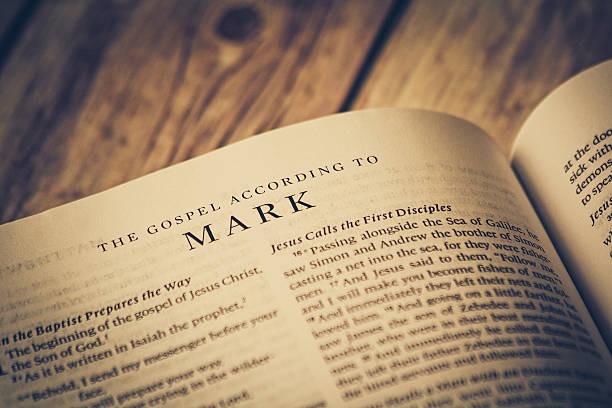
Mark 1:1-8

What are your dreams and hopes in life? The answers can be extremely diverse. Students dream of finishing their studies and graduating from their schools with honors. Others wish to work in big companies or have respectable businesses. Others hope to achieve high-level careers or acquire cozy properties and flashy cars. Yet, we can also dream for other people, like parents, who wish their children to grow healthy and succeed.

Why do we have hopes and dreams and hopes? Unlike animals, we not only wish to survive but also want to become a much better version of ourselves. Our material and biological composition alone cannot explain this ability to hope. There is something beyond this body and this world. Pope Benedict XVI beautifully offers us an answer through his encyclical Spe Salvi, “Man was created for greatness—for God himself; he was created to be filled by God. But his heart is too small for the greatness to which it is destined. It must be stretched.” The reason that God has given us these immortal souls and through our dreams and hopes, we are enlarging our souls and eventually being ready, through the help of grace, to receive God.

Advent is the season of hope because this season teaches us to hope rightly. We can learn from our Gospel. St. Mark opened his Gospel by presenting John the Baptist, who announced the true hope of Israel, that the Lord is coming. During this time, Israelites lived through extremely harsh times under the Roman Empire. The taxes were choking their necks, the Roman-appointed rulers like Herod were cruel, and some Jews were stealing and scamming fellow poorer Jews. At this time, it was easy to fall into despair and stop hoping, or they developed a delusion that the Messiah would come as a military leader that would lead them to bloody victory against their oppressors. John told them to keep hoping because the Lord was coming, but he also reminded them that the best preparation was not political nor military ways but repentance. For, God of Israel is neither a god of war, nor a god of wealth, nor a god of politics, but He is the God of holiness.

We live in a much better time than the ancient Israelites, yet terrible things can always diminish or even corrupt our capacity to hope. Economic difficulties, broken relationships, and failures to achieve our dreams are to name a few. We may live depressed, hopeless, and in survival mode, no different from many animals. Or, we may grow delusions and false expectations. We falsely expect God to be a magician, so we go to the Church and pray because God will grant us anything we wish. We also may fall into the temptation to utilize evil and unjust ways to realize our dreams.

The season of Advent teaches us to hope and dream. The season introduces us to the biggest dream in our lives: to be saints, that is, to welcome God, and to be with God. We must dare to hope despite countless challenges and failures, yet we shall see our hopes and dreams into building blocks to stretch our souls to receive God.

Rome

Valentinus Bayuhadi Ruseno, OP
The Third Coming

First Sunday of Advent [B]

December 3, 2023

Mark 13:33-37

We are entering the Advent season, and the new liturgical year of the Church has begun. Advent itself is from the Latin word ‘Adventus,’ and it literally means ‘the coming.’ In light of the Scriptures and Tradition, the Church teaches two arrivals of Christ. His first coming was in Bethlehem around two millennia ago, and the second coming of Jesus will be at the final judgment as the king of kings and the judge of all. This liturgical season reminds and prepares us for both comings of Jesus. However, there is another coming of Christ, also called the third coming of Christ. What does it mean? And, how does the third coming of Christ connect the other two comings?

Before we answer this question, we shall reflect more deeply on the relationship between the first and second coming of Christ because how Jesus came for the first time should give us precious lessons in preparing ourselves for His second coming. How did Jesus come for the first time? He was born of Mary, a humble virgin married to Joseph, a poor carpenter, and neither to the powerful family of Herod nor to the ruling dynasty of Caesar. He was born in the most unworthy place, a dirty cave in Bethlehem, and not in a royal palace or a first-class hospital. He was born as the weakest human being, a baby, and not coming down from the skies like a superhero. The first coming teaches us a precious lesson that Jesus is present in the humblest places, among the simple people, and at the most unexpected moments. As Jesus arrived in Bethlehem most unexpectedly, so also, He will come for the final moment in His second coming.

As many people failed to recognize the first arrival of the Messiah, we might also fail to be ready for this last judgment. Then, how shall we do to anticipate His coming down from the heavens? This truth leads us to “the third coming of Christ.” What is it? The third coming refers to Jesus’ coming and presence among us in our daily lives, albeit in the most unexpected ways. In the Advent season, we prepare ourselves for the second coming of Christ by reflecting on His first coming and, thus, recognizing and welcoming ‘His third coming’ in our lives. The more we can discover Christ in His third coming, the more we are prepared for His final appearance.

Then, what are the manifestations of the third coming of Christ? The first and foremost is the holy Eucharist. Here, Jesus is truly and really present, yet we need great faith to perceive Him, who appears in the forms of bread and wine. He is also present in the words of the Holy Scriptures. The Church firmly believes that the Bible is the Word of God in the written form. By reading and meditating, we encounter Jesus, who speaks to us. St. Paul also teaches us that the Church is the body of Christ. Thus, encountering Christ cannot be done without encountering His body, the Church. However, it is also true that often, it is the most difficult to see Christ in the Church because some members of the Church are far from Christ-like. Yet, this has become an excellent opportunity to perform acts of charity and be Christ-like. Lastly, we encounter Christ in our unfortunate brothers and sisters, as Jesus said, “Amen, I say to you, whatever you did for one of these least brothers of mine, you did for me (Mat 25:40).”

Rome

Valentinus Bayuhadi Ruseno, OP
Preparation for the End Time

The Solemnity of Our Lord Jesus Christ, King of the Universe

November 26, 2023

Matthew 25:31-46

The solemnity of the Christ of the King of the Universe reminds us that the end time is real and will surely come to all of us. This is the moment when Jesus will come again as the King of kings and the supreme judge of all. For the righteous, heaven is ready to welcome them, and for the evildoers, hell is binding them forever. Then, many of us are obsessed with the question, “When is He coming?” With wars and conflicts raging around the globe, with deadly natural calamities, and with sickness that scourges the entire earth, many believe the end is near. Yet, to ask when is to ask the wrong question.

In the Gospel, Jesus did not reveal when He would come. The time is not important for Jesus; rather, ‘how to face the second coming’ is critical for Jesus. Why? It is useless if we recognize the time of the second coming, yet we must learn how to face the judgment. And, sometimes, when we recognize the time, instead of making a long and consistent preparation, we procrastinate and hope that our last-minute and instant effort will suffice. Therefore, Jesus and other writers of the New Testament consistently tell us that the time will come like a thief in the night. And if the question of the time of the final judgment still bothers us, we shall recall Jesus’ words, “So do not worry about tomorrow, for tomorrow will bring worries of its own. Today’s trouble is enough for today (Mt 6:34).”

So, How do we prepare for the second coming? St. John of the Cross sums it up nicely: “At the evening of our lives, we will be judged by love alone.” From the light of the Gospel, the Church recognizes this ‘love’ manifests itself in the works of mercy, especially to our unfortunate brothers and sisters. Jesus listed at least six acts: to feed the hungry, to give drink to the thirsty, to shelter the homeless, to clothe the naked, to take care of the sick, and to visit those who are imprisoned. The Church adds the seventh act, that is, to bury the dead. This takes inspiration from Joseph Arimathea, who took care of Jesus’s burial and even offered his family’s new tomb.

The Church does not only limit the word ‘poor’ to the bodily, economic, and social poor but also extends to the spiritually poor. Thus, the Church also teaches seven spiritual works of mercy: to counsel the doubtful, to instruct the ignorant, to admonish the sinner, to comfort the sorrowful, to bear wrongs patiently, to forgive offenses willingly, and to pray for the living and the dead.

Interestingly, we don’t have to leave our homes to do the works of mercy. Husband and wife can patiently bear each other’s weaknesses and learn to forgive one another. Parents can feed their hungry children, buy them clothes for protection, and provide a good living place. Parents can also provide their children with a quality education, correct them when they commit mistakes, and console them in their moments of failure. Children can pray for their parents, especially those who have passed away.

This is our Good News. Christ our King has chosen charity as the path of holiness and made our families the first step to heaven.

Rome

Valentinus Bayuhadi Ruseno, OP

The Real Talent

33rd Sunday in Ordinary Time [A]

November 19, 2023

Matthew 25:14-30

Talent is one of the few biblical words that has become part of our modern languages. Talent connotes a God-given ability or a natural, unique skill, and it needs to be fully developed. Harnessing our talents may contribute to the progress of society. In fact, talents have become a well-sought commodity in our society. Companies only hire talented employees. Schools are marketed as venues of talent development. TV shows like ‘American Got Talent’ or other similar programs flood our contemporary culture and shape our understanding of talents. To be successful means to have fully developed talents!

Unfortunately, this modern understanding of talent has also reshaped our behaviors as Church members. As Christians, we are expected to use our talents to serve. We may participate in various roles in the liturgy, like as choir members, lectors, or altar servers. Not only in the liturgy, we can also use our talents to serve in various communities and organizations. In fact, this limited sense of talent also affects how we see priests and other religious figures. Talented priests are either charismatic preachers or capable leaders in the parishes. Then, what will happen to many of us who do not have these ‘talents’ fit to serve in the Church? Are we not successful in the Church if we do not have talents?

To answer this, we must go back to the biblical understanding of talent. The Greek word ‘τάλαντον’ (read: talanton) is a Greek monetary unit (also a unit of weight) with an extremely high value. In the time of Jesus, a silver talent was worth approximately six thousand denarii. If a denarius is equal to a daily wage, then a talent means six thousand daily wages. How do we understand the talent in the Gospel, then? We are sure that talent is something precious, and when used correctly, it can grow and even multiply. Yet, Jesus also linked talents with our eternal salvation or damnation. Thus, talent must not only be something related to natural abilities that are useful for our lives on earth but rather something spiritual that is beneficial for our souls and salvation.

No wonder, if we read Fathers of the Church and other spiritual authors, we will see a different understanding of talent. St. Thomas Aquinas, in his commentary of St. Matthew, saw talent as the gift of graces. While it is true that Christians have different capacities to receive spiritual gifts, each of us has the most basic gift of faith, hope and charity. Furthermore, we are expected to grow in these spiritual gifts and to recognize them if we wish to please our Lord and the giver of these talents.

 While St. Jerome recognized it as the Gospel. Different persons receive different intensities of the Gospel message depending on our capacity, but everyone must live and share the Gospel. Some of us who have received five talents of the Gospel are tasked to proclaim it loud and clear to many people. Some of us who receive one talent of the Gospel are called to share it with the closest persons in our lives, like our families and close friends.

Indeed, this is Good News. We thank the Lord for the natural talents we have, but far more critical is how we receive and share our spiritual talents for the salvation of souls.

Rome

Valentinus Bayuhadi Ruseno, OP

Wise for Heaven

32nd Sunday of the Ordinary Time [A]

November 12, 2023

Matthew 25:1-12

Wisdom is necessary to enter the Kingdom of God. Through today’s parable, Jesus contrasted two categories of people. The five wise virgins represent the first group; the second class represents the five foolish virgins. Though Jesus used the first-century Jewish wedding in Israel as its model, the parable does not simply speak of the ordinary wedding. Jesus taught about the final judgment, and wisdom is one of the essential characteristics that makes us able to enter the eternal banquet. What does it mean to be wise?

The Greek word that Matthew used is ‘φρόνιμος’ (read: phronimos). This word can be translated in English as wise or prudent. This word denotes clarity of one’s end and proper preparation and anticipation to achieve this goal. The term ‘φρόνιμος’ also signifies our ability to utilize appropriate means to solve difficulties encountered as well as to reach the finish line. Matthew also used this word on several occasions. “Everyone then who hears these words of mine and does them will be like a wise man (φρόνιμος) who built his house upon the rock (Mt 7:24).” Also, “Who then is the faithful and wise servant (φρόνιμος), whom his master has set over his household, to give them their food at the proper time (Mt 24:45)?” These two other verses also are closely connected to our salvation.

Throughout our lives, we are educated on how to be wise in dealing with this world, survive against challenges in this life, and grow and flourish as human beings. Yet, there is more than just this earthly life; from this parable, Jesus teaches us to be wise for eternal life. At the same time, we must not be foolish like the five virgins. Yes, the five virgins neither waste the oil unnecessarily nor intentionally run away from their duty. They must be good friends of the bride and groom, and they do not cause severe troubles that can disturb the wedding. Yet, it is not enough just sitting and waiting but doing nothing to keep the light alive and burning. For us, it is not enough to avoid mortal sins but to do nothing to keep the light of charity alive. Do not be foolish to think that it is enough to enter the Kingdom by believing in Jesus Christ but doing nothing to fulfill His commandment of love.

To be wise for the Kingdom means the understanding that we are created for heaven (not only for this world), and we must do what is necessary to reach this destination. This means to make daily and practical choices that lead us closer to Jesus. This can be done through simple daily sacrifices for our children or being patient with other’s weaknesses. We are also called to pray when possible and celebrate the Eucharist worthily each Sunday. We can also perform acts of kindness even to strangers. Again, the seven corporal and spiritual works of charity can be our simple guide to be wise for the Kingdom.

Rome

Valentinus Bayuhadi Ruseno, OP

The Crisis of Fatherhood

31st Sunday of the Ordinary Time [A]

November 5, 2023

Matthew 23:1-12

One of the greatest crises in our time is the crisis of fatherhood. In various societies, many children live and grow up without their fathers. Many surveys and studies have pointed out this reality affected especially the western countries. Yet, the virus is also penetrating other countries that possess strong family cultures. The absence of a father in the family severely affects the children’s behaviours. Children without fathers tend to grow into persons with various mental issues and problems with society. Now, in the Gospel, Jesus said, “Call no one father on earth… (Mat 23:9).” In our context, Jesus’ words are intriguing. Why did Jesus not allow us to call anyone father while our societies need fathers more than ever?

Before we go deeper into Jesus’ words, we will delve first into the necessity of the real presence of the fathers in the families. Father has many essential and irreplicable roles, yet if we must sum up, there are two most fundamental duties. The Bible speaks of these two characters in the book of Genesis, “The Lord God took the man and put him in the garden of Eden to serve (עבד) it and guard (שׁמר) it. (Gen 2:15)” From this verse, God assigned Adam two critical responsibilities: serve and guard the garden. Since the garden is where Adam and Eve lived, the garden symbolizes the home and family of Adam. Like Adam, every man who enters fatherhood receives these two essential duties.

To serve (עבד – read: abad) can be understood as providing its necessary things so that the family may function adequately and even flourish. It is not enough for a father to provide material needs to his children, but also emotional and, most importantly, spiritual. Many men work hard for their families, but when they return home, they spend their time with themselves rather than with the children. Many men are indeed good providers but tend to neglect the faith growth of their children. Many men even have a misconception that emotional and spiritual needs are only the jobs of women. Yet, the way women and men love are different, and the children need both to grow healthily. To serve means also to teach true values and morality, and often, these are best taught by examples, not only by words.

To guard (שׁמר – read: shamar) means to protect from danger, both that are external and internal, both physical and spiritual. Often, it is easy to protect the family from external and visible forces because we can easily perceive the threats. But, to guard against the invisible enemies is much more difficult. The unseen dangers can come in the form of false ideas or wrong moral teachings. Fathers need truth and clarity to distinguish between the right and the wrong. Fathers also need a balance of firmness and gentleness when they give corrections and discipline. Children without discipline tend to grow into weak and indecisive adults, while children raised in violence tend to become rebellious men and women.

When Jesus said, “Call no one father on earth except the Father in heaven.” Jesus did not prohibit all men from being called fathers. Instead, Jesus reminded us that all men do not automatically become a father when they have children (both physically and sacramentally). Unless they follow the examples of the heavenly Father, they do not deserve the title ‘father’. To serve and to guard are two things that every father must do, and we have our Father in heaven as our inspiration and model.

Rome

Valentinus Bayuhadi Ruseno, OP

True Love and How We Know It

30th Sunday in Ordinary Time [A]
October 29, 2023
Matthew 22:34-40

Love is arguably the most used but also the most misunderstood and even misused. Some people use this word to manipulate others and get what they want. Men or women can say, ‘Don’t you love me?’ to keep their partners in a toxic and abusive relationship. Some others will easily utter, ‘This is because we love each other,’ to justify their sinful behaviors. For the ‘love’ of their country and race, some men persecute another ethnic group and burn their villages. For the ‘love’ of God and religion, some men blow themselves up and kill innocent people, including children. Yet, this is not the real love, and surely not what Jesus meant when He taught the commandment of love. So, what does Jesus mean by true love?

To answer the question, we need to understand first our gospel today. To understand it, we need a bit of context. When the Pharisees asked Jesus about the greatest commandment in the Law, they expected Jesus to select one from among various regulations and commandments in the Law of Moses. Jewish traditions counted there are 613 precepts in the Law of Moses. From among many possible answers, Jesus chose, “You shall love the Lord your God with all your heart, and with all your soul, and with all your mind.” For many of us Christians, Jesus’ answer seems to be revolutionary and breaks away from the Law of Moses. We often think that the Old Testament is about the Ten Commandments, but the New Testament is about the Law of Love. Yet, this is far from the truth.

Jesus’ answer is straight from the heart of the Old Testament. His answer is from Deut 6:4-6. In Jewish tradition, it is called ‘Shema’. These verses are sacred for the Israelites, and they would recite these words several times a day as their basic prayer. We may think of ‘Shema’ as a prayer of Our Father in the Catholic Church. However, Jesus did not stop there. He also added the second greatest commandment, “You shall love your neighbor as yourself.” Again, this is also coming from the Old Testament (see Lev 19:18).

What is revolutionary about Jesus’ answer is not about the sources of His statements but the true orientation of all precepts in the Law of Moses. We do all things because of our love of God. At the same time, Jesus’ greatest commandment clarifies and gives proper orientation on how we love others. The love for others is the essential manifestation of the love for God and is made for the love for God (see CCC 1822). A simple way to do this is by asking the question, “Is my action pleasing to God?” If the answer is not, surely our action is not a true love.

Therefore, we cannot use ‘love’ as a justification for our sinful behaviors and lifestyles. We cannot say that we love someone, but in reality, we bring them far from God. It is also totally false to kill innocent people in the name of love for God.

Rome

Valentinus Bayuhadi Ruseno, OP

Render to God what belongs to God

29th Sunday in Ordinary Time [A]
October 22, 2023
Matthew 22:15-21

“Render therefore to Caesar the things that are Caesar’s, and to God the things that are God’s (Mt 22:21).” Many people understand Jesus’ words as His approval to pay taxes and, thus, to support and honor duly elected or appointed leaders of governments. Though many of us are not comfortable knowing that our hard-earned money is deducted, we can comfort ourselves with the knowledge that our money is used to fund the various governments’ projects. Hopefully, these projects are for the welfare of the people. Indeed, there is nothing wrong with seeing Jesus’ statement in this light, yet we must remember the second half of Jesus’ words.

Jesus also said that we must render to God what belongs to God. Does it mean we must pay ‘taxes’ to God just like we submit it to the government? Surprisingly, the answer is yes. We must remember that we are not just citizens of the kingdoms or nations of this world but also the citizens of the Kingdom of God. To become a good citizen of a country, we must contribute to the development of the country. Typically, we do this by paying taxes, but we are also expected to obey the laws of the land and be involved in various good practices. So, it is the same with a good citizen of the Kingdom of God. We also contribute to the Kingdom of God by obeying the laws of the Kingdom and offering what belongs to God. Then the question is, ‘What belongs to God that we need to render to God?’ What is the currency of the Kingdom of God? To answer this, we must go back to today’s Gospel.

When Jesus was dealing with the Pharisees who attempted to entrap Him, He took a Roman coin. He showed it to those around Him and asked, “Whose image and inscription are there?” They readily answered, “Caesar.” Then, He said, “render to Caesar what belongs to Caesar…” The basis of ownership is the presence of “image.” The coin belongs to Caesar because it bears his image. Thus, paying tax is simply giving back to the coins that, since the beginning, belonged to Caesar and the Roman Empire. Yet, Jesus did not stop there. He taught also, “render to God what belongs to God.” And what belongs to God? The answer is those who possess the image of God. Going back to Genesis 1:26, we discover that we were created in the image of God, and therefore, we belong to God. The only currency of the Kingdom of God is our souls, our lives.

However, we must also remember that our obligation to God surpasses our obligations to men. If we do not pay our taxes and disobey the country’s laws, we may be in trouble with the government. However, if we do not give what is God’s to God, we may lose our souls forever. While the first concerns our survival, the second concerns our eternal destiny.

Do we live our lives as a pleasing offering to God by avoiding sinful lifestyles? Do we offer our daily works, our daily efforts for the glory of God? Do we unite spiritually our bodies with the Body of Christ in the Eucharist to be the worthiest sacrifice?

Rome

Valentinus Bayuhadi Ruseno, OP