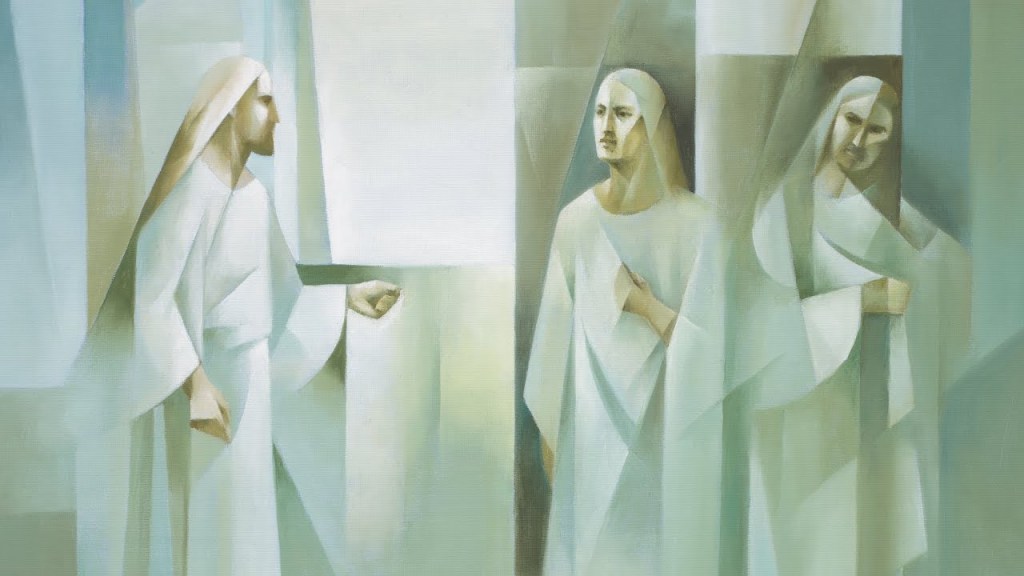
The Real Talent

33rd Sunday in Ordinary Time [A]

November 19, 2023

Matthew 25:14-30

Talent is one of the few biblical words that has become part of our modern languages. Talent connotes a God-given ability or a natural, unique skill, and it needs to be fully developed. Harnessing our talents may contribute to the progress of society. In fact, talents have become a well-sought commodity in our society. Companies only hire talented employees. Schools are marketed as venues of talent development. TV shows like ‘American Got Talent’ or other similar programs flood our contemporary culture and shape our understanding of talents. To be successful means to have fully developed talents!

Unfortunately, this modern understanding of talent has also reshaped our behaviors as Church members. As Christians, we are expected to use our talents to serve. We may participate in various roles in the liturgy, like as choir members, lectors, or altar servers. Not only in the liturgy, we can also use our talents to serve in various communities and organizations. In fact, this limited sense of talent also affects how we see priests and other religious figures. Talented priests are either charismatic preachers or capable leaders in the parishes. Then, what will happen to many of us who do not have these ‘talents’ fit to serve in the Church? Are we not successful in the Church if we do not have talents?

To answer this, we must go back to the biblical understanding of talent. The Greek word ‘τάλαντον’ (read: talanton) is a Greek monetary unit (also a unit of weight) with an extremely high value. In the time of Jesus, a silver talent was worth approximately six thousand denarii. If a denarius is equal to a daily wage, then a talent means six thousand daily wages. How do we understand the talent in the Gospel, then? We are sure that talent is something precious, and when used correctly, it can grow and even multiply. Yet, Jesus also linked talents with our eternal salvation or damnation. Thus, talent must not only be something related to natural abilities that are useful for our lives on earth but rather something spiritual that is beneficial for our souls and salvation.

No wonder, if we read Fathers of the Church and other spiritual authors, we will see a different understanding of talent. St. Thomas Aquinas, in his commentary of St. Matthew, saw talent as the gift of graces. While it is true that Christians have different capacities to receive spiritual gifts, each of us has the most basic gift of faith, hope and charity. Furthermore, we are expected to grow in these spiritual gifts and to recognize them if we wish to please our Lord and the giver of these talents.

 While St. Jerome recognized it as the Gospel. Different persons receive different intensities of the Gospel message depending on our capacity, but everyone must live and share the Gospel. Some of us who have received five talents of the Gospel are tasked to proclaim it loud and clear to many people. Some of us who receive one talent of the Gospel are called to share it with the closest persons in our lives, like our families and close friends.

Indeed, this is Good News. We thank the Lord for the natural talents we have, but far more critical is how we receive and share our spiritual talents for the salvation of souls.

Rome

Valentinus Bayuhadi Ruseno, OP

Wise for Heaven

32nd Sunday of the Ordinary Time [A]

November 12, 2023

Matthew 25:1-12

Wisdom is necessary to enter the Kingdom of God. Through today’s parable, Jesus contrasted two categories of people. The five wise virgins represent the first group; the second class represents the five foolish virgins. Though Jesus used the first-century Jewish wedding in Israel as its model, the parable does not simply speak of the ordinary wedding. Jesus taught about the final judgment, and wisdom is one of the essential characteristics that makes us able to enter the eternal banquet. What does it mean to be wise?

The Greek word that Matthew used is ‘φρόνιμος’ (read: phronimos). This word can be translated in English as wise or prudent. This word denotes clarity of one’s end and proper preparation and anticipation to achieve this goal. The term ‘φρόνιμος’ also signifies our ability to utilize appropriate means to solve difficulties encountered as well as to reach the finish line. Matthew also used this word on several occasions. “Everyone then who hears these words of mine and does them will be like a wise man (φρόνιμος) who built his house upon the rock (Mt 7:24).” Also, “Who then is the faithful and wise servant (φρόνιμος), whom his master has set over his household, to give them their food at the proper time (Mt 24:45)?” These two other verses also are closely connected to our salvation.

Throughout our lives, we are educated on how to be wise in dealing with this world, survive against challenges in this life, and grow and flourish as human beings. Yet, there is more than just this earthly life; from this parable, Jesus teaches us to be wise for eternal life. At the same time, we must not be foolish like the five virgins. Yes, the five virgins neither waste the oil unnecessarily nor intentionally run away from their duty. They must be good friends of the bride and groom, and they do not cause severe troubles that can disturb the wedding. Yet, it is not enough just sitting and waiting but doing nothing to keep the light alive and burning. For us, it is not enough to avoid mortal sins but to do nothing to keep the light of charity alive. Do not be foolish to think that it is enough to enter the Kingdom by believing in Jesus Christ but doing nothing to fulfill His commandment of love.

To be wise for the Kingdom means the understanding that we are created for heaven (not only for this world), and we must do what is necessary to reach this destination. This means to make daily and practical choices that lead us closer to Jesus. This can be done through simple daily sacrifices for our children or being patient with other’s weaknesses. We are also called to pray when possible and celebrate the Eucharist worthily each Sunday. We can also perform acts of kindness even to strangers. Again, the seven corporal and spiritual works of charity can be our simple guide to be wise for the Kingdom.

Rome

Valentinus Bayuhadi Ruseno, OP

The Crisis of Fatherhood

31st Sunday of the Ordinary Time [A]

November 5, 2023

Matthew 23:1-12

One of the greatest crises in our time is the crisis of fatherhood. In various societies, many children live and grow up without their fathers. Many surveys and studies have pointed out this reality affected especially the western countries. Yet, the virus is also penetrating other countries that possess strong family cultures. The absence of a father in the family severely affects the children’s behaviours. Children without fathers tend to grow into persons with various mental issues and problems with society. Now, in the Gospel, Jesus said, “Call no one father on earth… (Mat 23:9).” In our context, Jesus’ words are intriguing. Why did Jesus not allow us to call anyone father while our societies need fathers more than ever?

Before we go deeper into Jesus’ words, we will delve first into the necessity of the real presence of the fathers in the families. Father has many essential and irreplicable roles, yet if we must sum up, there are two most fundamental duties. The Bible speaks of these two characters in the book of Genesis, “The Lord God took the man and put him in the garden of Eden to serve (עבד) it and guard (שׁמר) it. (Gen 2:15)” From this verse, God assigned Adam two critical responsibilities: serve and guard the garden. Since the garden is where Adam and Eve lived, the garden symbolizes the home and family of Adam. Like Adam, every man who enters fatherhood receives these two essential duties.

To serve (עבד – read: abad) can be understood as providing its necessary things so that the family may function adequately and even flourish. It is not enough for a father to provide material needs to his children, but also emotional and, most importantly, spiritual. Many men work hard for their families, but when they return home, they spend their time with themselves rather than with the children. Many men are indeed good providers but tend to neglect the faith growth of their children. Many men even have a misconception that emotional and spiritual needs are only the jobs of women. Yet, the way women and men love are different, and the children need both to grow healthily. To serve means also to teach true values and morality, and often, these are best taught by examples, not only by words.

To guard (שׁמר – read: shamar) means to protect from danger, both that are external and internal, both physical and spiritual. Often, it is easy to protect the family from external and visible forces because we can easily perceive the threats. But, to guard against the invisible enemies is much more difficult. The unseen dangers can come in the form of false ideas or wrong moral teachings. Fathers need truth and clarity to distinguish between the right and the wrong. Fathers also need a balance of firmness and gentleness when they give corrections and discipline. Children without discipline tend to grow into weak and indecisive adults, while children raised in violence tend to become rebellious men and women.

When Jesus said, “Call no one father on earth except the Father in heaven.” Jesus did not prohibit all men from being called fathers. Instead, Jesus reminded us that all men do not automatically become a father when they have children (both physically and sacramentally). Unless they follow the examples of the heavenly Father, they do not deserve the title ‘father’. To serve and to guard are two things that every father must do, and we have our Father in heaven as our inspiration and model.

Rome

Valentinus Bayuhadi Ruseno, OP

True Love and How We Know It

30th Sunday in Ordinary Time [A]
October 29, 2023
Matthew 22:34-40

Love is arguably the most used but also the most misunderstood and even misused. Some people use this word to manipulate others and get what they want. Men or women can say, ‘Don’t you love me?’ to keep their partners in a toxic and abusive relationship. Some others will easily utter, ‘This is because we love each other,’ to justify their sinful behaviors. For the ‘love’ of their country and race, some men persecute another ethnic group and burn their villages. For the ‘love’ of God and religion, some men blow themselves up and kill innocent people, including children. Yet, this is not the real love, and surely not what Jesus meant when He taught the commandment of love. So, what does Jesus mean by true love?

To answer the question, we need to understand first our gospel today. To understand it, we need a bit of context. When the Pharisees asked Jesus about the greatest commandment in the Law, they expected Jesus to select one from among various regulations and commandments in the Law of Moses. Jewish traditions counted there are 613 precepts in the Law of Moses. From among many possible answers, Jesus chose, “You shall love the Lord your God with all your heart, and with all your soul, and with all your mind.” For many of us Christians, Jesus’ answer seems to be revolutionary and breaks away from the Law of Moses. We often think that the Old Testament is about the Ten Commandments, but the New Testament is about the Law of Love. Yet, this is far from the truth.

Jesus’ answer is straight from the heart of the Old Testament. His answer is from Deut 6:4-6. In Jewish tradition, it is called ‘Shema’. These verses are sacred for the Israelites, and they would recite these words several times a day as their basic prayer. We may think of ‘Shema’ as a prayer of Our Father in the Catholic Church. However, Jesus did not stop there. He also added the second greatest commandment, “You shall love your neighbor as yourself.” Again, this is also coming from the Old Testament (see Lev 19:18).

What is revolutionary about Jesus’ answer is not about the sources of His statements but the true orientation of all precepts in the Law of Moses. We do all things because of our love of God. At the same time, Jesus’ greatest commandment clarifies and gives proper orientation on how we love others. The love for others is the essential manifestation of the love for God and is made for the love for God (see CCC 1822). A simple way to do this is by asking the question, “Is my action pleasing to God?” If the answer is not, surely our action is not a true love.

Therefore, we cannot use ‘love’ as a justification for our sinful behaviors and lifestyles. We cannot say that we love someone, but in reality, we bring them far from God. It is also totally false to kill innocent people in the name of love for God.

Rome

Valentinus Bayuhadi Ruseno, OP

Render to God what belongs to God

29th Sunday in Ordinary Time [A]
October 22, 2023
Matthew 22:15-21

“Render therefore to Caesar the things that are Caesar’s, and to God the things that are God’s (Mt 22:21).” Many people understand Jesus’ words as His approval to pay taxes and, thus, to support and honor duly elected or appointed leaders of governments. Though many of us are not comfortable knowing that our hard-earned money is deducted, we can comfort ourselves with the knowledge that our money is used to fund the various governments’ projects. Hopefully, these projects are for the welfare of the people. Indeed, there is nothing wrong with seeing Jesus’ statement in this light, yet we must remember the second half of Jesus’ words.

Jesus also said that we must render to God what belongs to God. Does it mean we must pay ‘taxes’ to God just like we submit it to the government? Surprisingly, the answer is yes. We must remember that we are not just citizens of the kingdoms or nations of this world but also the citizens of the Kingdom of God. To become a good citizen of a country, we must contribute to the development of the country. Typically, we do this by paying taxes, but we are also expected to obey the laws of the land and be involved in various good practices. So, it is the same with a good citizen of the Kingdom of God. We also contribute to the Kingdom of God by obeying the laws of the Kingdom and offering what belongs to God. Then the question is, ‘What belongs to God that we need to render to God?’ What is the currency of the Kingdom of God? To answer this, we must go back to today’s Gospel.

When Jesus was dealing with the Pharisees who attempted to entrap Him, He took a Roman coin. He showed it to those around Him and asked, “Whose image and inscription are there?” They readily answered, “Caesar.” Then, He said, “render to Caesar what belongs to Caesar…” The basis of ownership is the presence of “image.” The coin belongs to Caesar because it bears his image. Thus, paying tax is simply giving back to the coins that, since the beginning, belonged to Caesar and the Roman Empire. Yet, Jesus did not stop there. He taught also, “render to God what belongs to God.” And what belongs to God? The answer is those who possess the image of God. Going back to Genesis 1:26, we discover that we were created in the image of God, and therefore, we belong to God. The only currency of the Kingdom of God is our souls, our lives.

However, we must also remember that our obligation to God surpasses our obligations to men. If we do not pay our taxes and disobey the country’s laws, we may be in trouble with the government. However, if we do not give what is God’s to God, we may lose our souls forever. While the first concerns our survival, the second concerns our eternal destiny.

Do we live our lives as a pleasing offering to God by avoiding sinful lifestyles? Do we offer our daily works, our daily efforts for the glory of God? Do we unite spiritually our bodies with the Body of Christ in the Eucharist to be the worthiest sacrifice?

Rome

Valentinus Bayuhadi Ruseno, OP

Secret of Happiness

28th Sunday in Ordinary Time [A]

October 15, 2023

Matthew 22:1-14

Phil 4:12-14, 19-20

St. Paul ended his letter to the Philippians by sharing one of his greatest secrets, “I have learned, in whatever state I am, to be content …I have learned the secret of facing plenty and hunger, abundance and want. (Phil 4:12).” St. Paul is giving away the secret of facing all situations in his life, which leads him to happiness. Then, what is his secret of happiness?

Often, we believe that happiness means that we get what we want. We are happy when we earn a lot of money or material possessions. We would be thrilled if we got the latest smartphone or could buy a brand-new car. We are ecstatic when we succeed in our work, business, or relationship. Those actively engaging in the Church are pleased when we know our ministries and apostolates bear fruits. Yet, this is different from what St. Paul means by happiness. The word he used is ‘αὐτάρκης’ (autarkes), and this word means ‘contented, sufficient.’ Joy is not possessing all we desire but being contented with what we have.

Moreover, the apostle wrote, “I know how to be abased, and I know how to abound (Phil 4:12).” He reminded us that not only do we have to know how to endure and persevere in times of hardships and trials, but also to navigate our ways in time of abundances. On previous Sundays, I have written about St. Paul’s advice in times of suffering, but St. Paul also had advice for us living in abundance. Certainly, there is nothing wrong with this enjoyment of earthly things and success, but these things also may lead us to greed and pride.

Greed. Since these earthly possessions provide us comfort and pleasure, they may trap us into inordinate attachment toward these temporary things. We become addicted to the fun they induce and want more and more of it. Then, we turn to be enslaved as we justify all means to achieve these worldly things. We cheat, we steal, and even we manipulate others. St. Paul himself warns us, “The love of money is the root of evil (1 Tim 6:10).”

Pride. Abundance may lead to another very dangerous vice, that is pride. As we gain many things through hard work, we begin to think we are solely responsible for these achievements. We think highly of ourselves and look down on others. We forget that what we have are God’s blessings and rely solely on our strength.

So what is St. Paul’s secret to true happiness? He wrote, “I can do all things in Him who strengthens me. [Phil 4:13]” Yes, the Lord strengthens us to persevere in the time of trials, but we must be “in Christ” also in the time of abundance. What does it mean? Firstly, to be in Christ in a time of abundance means we put humility to recognize that our success and possessions are primarily God’s blessings. This is a remedy against pride. Secondly, to be in Christ in a time of abundance means always considering whether our actions will please Jesus. Will stealing money be pleasing to Jesus? Will excessive spending be pleasing to Jesus? This is a remedy against greed. In short, if we want to be happy, live in Christ, live a holy life.

We can do all things, both in times of suffering and abundance, in Him who strengthens us.

Rome

Valentinus Bayuhadi Ruseno, OP

Have no Anxiety

27th Sunday in Ordinary Time [A]
October 8, 2023
Matthew 21:33-43
Phil 4:6-9

At the end of his letter, St. Paul commanded the Church in Philippi to have no anxiety. His advice seems friendly and comforting, yet if we look carefully, St. Paul was not simply giving counsel but a command. “Have no anxiety!” Yet, is it possible to be free from anxiety? What is anxiety? Does it serve any purpose in our lives? And, what was St. Paul’s advice to handle anxiety?

Kelly Sikkema

Anxiety is a natural response to stress or a perceived threat. Anxiety triggers both psychological and physiological reactions. Anxiety causes a complex emotional state characterized by uneasiness, fear, nervousness, and even anger and excitement. Physically, anxiety may lead to palpitation, breaking into a cold sweat, muscle tension, stomachache, and many others. Anxiety itself is not harmful and can serve a good purpose. Anxiety encourages us to prepare ourselves better when facing complex and unexpected situations. Yet, often, anxiety tends to be excessive, paralyzing, and may even lead to mental disorders. Then, when our mental health has suffered because of excessive anxiety, the best course will be consulting experts like competent psychiatrists. Yet, when the level of anxiety is within the healthy range of emotions, St. Paul’s advice may greatly benefit us in moderating our anxiety. So, what are St. Paul’s counsels for us?

Firstly, St. Paul wrote, “Finally, brethren, whatever is true, whatever is honorable, whatever is just, whatever is pure, whatever is lovely,… think about these things (Phil 4:8).” In short, St. Paul advised us to think of good things, rather than to focus on the worse possible outcomes. St. Paul recognized that the essential factor that causes and sustains anxiety is what we perceive and keep entertaining in our thoughts. The Greek word for anxiety is ‘μεριμνάω’ (- merimnao), and this word may be related to the Greek word ‘μνήμη’ (mneme), which means memory. What we keep in our memories will affect us both psychologically and physically. Amazingly, this fact is not far from modern psychiatry, which identifies that our cognitive function plays an essential role in anxiety.

Yet, it is not only about ‘thinking positive,’ but to see lives through the lens of faith. St. Paul also said that to counter excessive anxiety, we must offer our concerns to God in prayers and be grateful (see Phil 4:6). Yes, facing problems and difficulties may cause anxiety. Still, by bringing them to God in our prayers, we learn to trust that God will take care of us. More importantly, we need to learn from St. Paul. When writing this letter, he was in chains, persecuted, and facing the possibility of execution. These conditions were severe causes of heavy anxiety for Paul. Yet, Paul was thankful and even rejoicing in his conditions. Why? He knew well that even his sufferings were part of God’s providence and would be eventually beneficial for the Church (see Col 1:24; Phil 1:21). Thus, he did not drown himself in anxiety or run away by denying the faith. He courageously embraced his situations and offered his thanksgiving to God.

In conclusion, there are two things to counter excessive anxiety: think of the good things and have faith in God’s care for us.

Valentinus Bayuhadi Ruseno, OP

Repentance and Salvation

26th Sunday in Ordinary Time [A]
October 1, 2023
Matthew 21:28-32

From the Βiblical context, we can easily understand the meaning of the parable of two sons. The son who initially refused to obey his father but eventually changed his heart symbolizes the Jewish society’s public sinners, like the tax collectors and prostitutes. They were indeed sinners, but finally, they repented when they heard the preaching of John and Jesus. The son who initially said yes to his father but, in reality, did not go to the vineyard is representing the elders and leaders of Israel. They heard the preaching of both John and Jesus, but they refused to listen and even persecuted them.

The parable is simple and easily understood, but what is at stake is our eternal salvation. The message is clear: everyone must repent and obey God’s will. Whether the people committing grave sins or claiming themselves as faithful and religious, all have to strive for holiness. However, this parable is not only for the elders and leaders of Israel in the time of Jesus, but for us, who call Jesus Lord, go to the Church every Sunday, and even involve many ministries.

We may ask, “Is it not enough to be baptized Catholic?” Is it not good enough to attend mass every Sunday? Do our ministries have any meanings before God? Surely, these are important in our Christian life and also part of doing the will of God. Yet, the Pharisees and the Jewish elders during the time of Jesus were doing more or less the same things. They were circumcised as babies and learned how to read Torah since childhood. They went to synagogues on the Sabbath and also offered sacrifices when they were in Jerusalem. They may also be involved in many religious activities in their communities. What we do are not particularly different from the Pharisees! So, what shall we do?

Learning from the parable, the key element is doing the will of the Father and His will that we turn away from sins (or repentance) and turn ourselves to God (or holiness). Yes, we are baptized Catholic, but are we convinced that Catholic faith is a saving faith? Yes, we go to the Church every Sunday, but do we worship the true God or go to the Church to look for personal comfort and benefits? Yes, we are active in many communities and ministries, but what is the point if we become proud of ourselves and arrogant toward others who cannot serve like us? Yes, we call ourselves followers of Christ, but perhaps we are secretly clinging to sinful behaviors.

So what shall we do? Repentance can be done every moment. In Catholic tradition, we have a daily examination of conscience, and when done correctly, it helps us to be aware of our actions and motives. Secondly, spiritual readings enrich our souls. We can choose from the Bible, lessons from the saints, or the Catechism of the Catholic Church. Thirdly, we go to the confession regularly. We must not let sins pile up in our hearts and gradually dull our conscience. The sacrament of confession grants forgiveness and sharpens our sense of what is pleasing to God and what is not. Surely, there are other things we can do, but fundamentally, unless we truly repent from our hearts, we might lose our eternal salvation.

Rome

Valentinus Bayuhadi Ruseno, OP

Life is Christ

25th Sunday in Ordinary Time [A]
September 24, 2023
Matthew 20:1-16a
Phil 1:20c-24, 27a

Today, St. Paul wrote a disturbing line, “I long to depart this life and be with Christ, for that is far better [Phil 1:23].” Did the great saint want to end his life?

We must understand the context of St. Paul’s letter to the Philippians to answer this question. The letter to the Christians in Philippi is one of Paul’s prison letters. If we recall the life of this great apostle, we know that Paul was persecuted and arrested by his fellow Jews who opposed his preaching of the Gospel. During his trials, Paul used his privilege as a Roman citizen to appeal his case to Caesar. Thus, he was transported to Rome, the capital of the empire. While he was waiting for Caesar to hear his appeal, he was under house arrest, and he was literally in chains. Yet, he was allowed to continue preaching the Gospel and sending letters to different communities. One of the letters is to the Philippians [see Phil 1:14]. Paul could be proclaimed innocent, but there was also a big possibility that Caesar placed him on death row.

From this context, we recognize that Paul was completing nothing about suicide but rather his martyrdom. While suicide is willfully taking one’s own life, martyrdom is death brought by hatred of faith. However, what is interesting is how St. Paul reacted to his martyrdom. He was not afraid, not overly anxious, and undoubtedly not depressed. On the contrary, he was full of joy. If we read the letter to the Philippians, we quickly feel that the general atmosphere of the letter is joy. Paul even wrote, “Rejoice always in the Lord, I say, Rejoice! [Phil 4:4]. Now, this is highly puzzling. How could St. Paul rejoice when he was persecuted and facing imminent death?

Firstly, we need to recognize that here, Paul did not have a mental problem that made him unable to feel pain or regulate his emotions. If we read his other letters, Paul articulated his emotions well. He was angry when he needed to correct and to grieve when his children did not live according to the Gospel. So, why joy amid suffering and in the face of death?

The answer is that Paul has seen the actual worth of Jesus Christ. Paul wrote, “I regard everything as loss because of the surpassing value of knowing Christ Jesus my Lord. I have suffered the loss of all things for his sake, and I regard them as rubbish [Phil 3:8].” Paul has the correct hierarchy of priorities in his life. Everything, including life itself, should be in Christ and for Christ. Thus, Paul, who has given everything for Christ and lived in Christ, rejoices in the face of death because he knew he could finally be united with Christ.

Paul gives us a life hack to salvation: know the value of Christ, which is eternal. We need to set our priorities right. Yes, material wealth is substantial, food and shelter are essential, and education is necessary, but these are means to live in Christ and for Christ. We may lose money or material belongings, which is okay, but if we lose Christ, we may also lose our salvation and eternal joy despite our earthly success. Thus, rejoice because, for us, life is Christ and death is gain.

Valentinus Bayuhadi Ruseno, OP

Myths about Forgiveness

24th Sunday in Ordinary Time [A]

September 17, 2023

Matthew 18:21-35

There are three myths about forgiveness that we often hear. Here, we try to debunk these myths and go deeper into the meanings of genuine forgiveness. 

To forgive is to forget.

This is the most repeated line about forgiveness. We are told that the best way to forgive is to forget about the events that hurt us as well as the persons who offended us. Yet, this is not forgiveness but rather a convenient escape. In fact, the more we try to forget it, the more it hurts us. Violent efforts to suppress our painful memories lead to mental and spiritual problems. True forgiveness is to face and embrace our painful memories and confront people who have hurt us. The path to forgiveness often takes months and even years to find true peace.

To forgive is for the weak people.

Nothing is far from the truth than this statement. Our natural feelings when we are wronged are anger, hatred, and bitterness; because of these feelings, our natural tendency is to take revenge or run away. The bigger the pain, the more powerful is the tendency. This is why to do the opposite (to forgive) needs an enormous force of mind and courage of will. To forgive is only for the strong. Another point is that we need to distinguish between revenge and justice. While revenge seeks to destroy our enemies by inflicting the most extensive damage possible, justice is ‘to give/receive one’s due.’ Justice seeks reparation, repentance, and reconciliation.

To forgive is stupid.

The usual imagination when we forgive is that we allow people to keep abusing us. In short, we become ‘doormat’ of others. Yet, this is not true forgiveness but cowardice. Real forgiveness starts with justice and courage. Forgiveness also includes repentance of those who harm us. Repentance may come in different forms. The best example will be the case of John Paul II and Ali Acka. The Holy Pope forgave Ali, but Ali still needed to serve his sentence in prison. People who hurt us sometimes refuse to change their behaviors, so we must raise the victim’s mentality and not allow ourselves to be abused repeatedly. 

To err is human, but to forgive is divine.

The last part is not a myth but the truth. Humanly speaking, forgiving is extremely difficult because our natural tendency is to take revenge or run away. Thus, we need the help of grace to rise above our human weakness. We remember that “God has forgiven us and that is why we forgive.” Therefore, living in grace is necessary for forgiveness. We ask for graces through our regular participation in the Eucharist and the sacrament of reconciliation. We ask the Lord also for strength in our prayers, as well as we pray for those who hurt us for their repentance. To seek support and advice from our trusted friends and capable professionals is also crucial because God may make them His instruments in helping us. 

Valentinus Bayuhadi Ruseno, OP