Fraternal Correction: The greatest work of Charity

23rd Sunday in Ordinary Time [A]

September 10, 2023

Matthew

To correct our brothers and sisters who are not living according to the Laws of God is an act of mercy and love. In Catholic tradition, fraternal correction is essential to the seven-spiritual works of mercy. Why correcting others is considered to be an act of mercy and love? Why is it difficult to do? Here, I share my reflection on why a fraternal correction is necessary, but at the same time most challenging, as well as some tips to do this act of charity.

To correct our brothers and sisters is a work of mercy and love because we want their souls to be saved from the fire of hell and to enjoy eternal life with God. Thus, together with evangelization, which is to bring people to know and come closer to Christ, fraternal correction is considered the most excellent work of charity. Because we love them, we grieve when our brothers and sisters go astray from the Lord’s way. Thus, we show our love and remind them to return to the Lord. 

However, though correcting our brothers and sisters is noble and merciful, it is one of the most challenging things to perform. There are several reasons for this. Firstly, ignorance. We are simply ignorant of Christian basic morality. Since we do not know, we can correct others. This is a big problem because many of us do not have the full knowledge yet about the Laws of God. Yet, it is also the easiest to solve because proper instructions and catechesis will significantly help us.

 Secondly, fear. Our love is not strong enough, and fear possesses us. We are afraid to confront our brothers because we hate hurting their ‘feelings.’ Sometimes, we are afraid that we might break our amicable relationship. We do not like to have ‘enemies.’ Thus, we condone their wrongdoings by keeping quiet. Now, this is dangerous because not only will our brothers lose their souls,  but we are also losing our souls because now we become the accomplices. We commit the sin by omission.

Thirdly, relativism. The virus of relativism is a subtle yet very dangerous plague to Christianity. Christians believe in one God and one moral Law coming from Him, but relativism says the opposite: there is neither absolute truth nor universal moral standard. A relativist person will say, ‘That act may be wrong according to my standard, but it may be true according to his.’ Thus, we refuse to correct others’ sinful behaviors because we ‘respect’ their perspective. This is even more dangerous because it destroys our proper understanding of Christianity and confuses many others.

Here are some tips for fraternal correction. Firstly, we must have a solid knowledge of Catholic morality. If we are doubtful, we consult the catechism of the Catholic Church or good and capable priests near you. We must remember that fraternal correction deals primarily with sinful behaviors and false doctrines. Of course, we may correct them in other aspects of their lives. Secondly, we can start with our loved ones, those closest to us. We do it with gentleness and patience. As Jesus said, we do it first privately so as not to be seen by others, and we might become prideful. Thirdly, if our correction faces strong resistance, we read ‘Ezekiel 33’ (our first reading). Though seeing our loved ones far from God is frustrating, we must also trust God’s providence.

Valentinus Bayuhadi Ruseno, OP 

Our Perfect Sacrifice

22nd Sunday in Ordinary Time

September 3, 2023

Roman 12:1-2

Matthew 16:21-27

Any true worship in the Bible comes in the form of offering sacrifice. What is a sacrifice? Sacrifice takes place when we offer something precious to God, and in ancient societies, cattle are considered to be precious possessions. Abel offered the firstlings of his flock, their fat portions [see Gen 4:4]. After the flood, Noah built an altar, and sacrificed animals that were pleasing to the Lord [see Gen 8:20]. At the feet of Sinai, Moses slaughtered oxen as sacrifices to the Lord as the covenant between God and Israelites was established [See Exo 24:4-5]. Yet, at times, non-bloody sacrifices are also offered. Melchizedek brought bread and wine as offerings [see Gen 14:18]. The entire book of Leviticus regulates the sacrificial worship of the Israelites. 

If the Eucharist is our worship, then what do we offer as a sacrifice in the Eucharist? Surely, it is neither animals nor any earthly things. Our sacrifice in the Eucharist is Jesus [see 1 Cor 5:7]. Since Jesus is divine and sinless, He becomes the perfect sacrifice, and consequently, the Eucharist is the perfect worship. 

However, if we see part of the Eucharist carefully, we encounter a sentence that the priest utters, “pray brethren, that my sacrifice and yours, may be acceptable to God, the almighty Father.”  This is intriguing because this sentence tells us that the faithful attending the Eucharist have a different sacrifice from the priest’s offering. If the sacrifice offered by the priest is the Body and Blood of Christ, then what is the sacrifice of the people?

St. Paul helps us answer this question. In his letter to the Romans, he wrote, “I appeal to you therefore, brothers and sisters, by the mercies of God, to present your bodies as a living sacrifice, holy and acceptable to God, which is your spiritual worship [Rom 12:1; second reading].” Our sacrifices are our bodies and our lives. And, we offer our lives in the Eucharist and we unite them to the sacrifice of Jesus Christ, this becomes our spiritual worship. 

Yet, Paul is also appealing that we offer not any kind of body, but holy and pleasing to the Lord. Thus, it is our duty to keep our lives from sins and things that are unpleasant to God. We cannot say that it is enough to believe in Christ, but we are not obeying His laws. We cannot claim that it is enough to go to the Church every Sunday but do evil on the other days. Every day is an opportunity to make our lives pleasing to the Lord.

Lastly, we need to remember that suffering is also part of our lives. Thus, if we endure unavoidable sufferings with patience, this too can be part of our living sacrifice that is pleasing to God. In the Eucharist, our lives and our sufferings are offered as our living sacrifice and since it is pleasing to God, our lives transformed into blessings. Now, we know why God allows suffering in our lives. This is why Jesus rebuked vehemently Peter for preventing Him from bearing the cross and dying. In Christ, eventually, sufferings may even become blessings.

Valentinus Bayuhadi Ruseno, OP

Pope: Leader and Father

21st Sunday in Ordinary Time [A]
August 27, 2023
Matthew 16:13-20

The Catholic Church is known for her distinctive features and teachings, like belief in the Holy Trinity, the real presence of Jesus Christ in the Eucharist, the Bible as the written Word of God, and the veneration of the Blessed Virgin Mary and other saints. Yet, one feature stands out because it is not only teachings, things, or rites but a living person. This is the Pope. Most of the earth’s population arguably recognizes modern-day popes, like St. John Paul II, Benedict XVI, and Francis. What are the roles of the pope? Why is the pope central to the Catholic Church?

Indeed, I cannot do justice here. I want to focus on the pope as our leader and father. Every human community needs leaders, and this includes the Catholic Church. While it is true that the real founder and head of the Catholic Church is Jesus Christ, He entrusted the role of leading and shepherding to man and his successors. This is why Jesus gave Peter the keys to the Kingdom of Heaven. Why keys? Our first reading provides us with the answer [Is 22:19-23]. Here, through the prophet Isaiah, the Lord appointed Eliakim, son of Hilkiah, as the master of the palace. This was the highest position in the Kingdom, just second to the king himself. We can liken him to Prime Minister, who takes charge on the king’s behalf. How do we know that he is the master of the palace? He has the key to the house of David. Thus, like Eliakim, Peter received the keys to the Kingdom. Therefore, he is the master of the palace of Jesus Christ.

Then, why do we call the leader of the Catholic Church as Pope? The word pope comes from the Latin’ Papa,’ meaning ‘father.’ Then, why do we call him ‘father’ or ‘Papa’? Again, the answer goes back to the Old Testament, to Eliakim. As the master of the palace, Eliakim shall be the father to the inhabitants of Jerusalem. Therefore, like Eliakim, Peter shall be the father to the inhabitants of the Kingdom. While the leadership role is often clearly defined, the role of a father is often misunderstood. A father is a head figure in the family. Thus, Catholic Church is not only an organization but fundamentally a family.

A father protects and provides for his family. Thus, the pope is responsible for protecting the faithful from dangers, especially spiritual threats like false doctrines. He also provides for our spiritual needs, like Eucharist, prayers, and exhortations. Father is also a man who educates and disciplines his children. Therefore, the pope is expected to raise us in true faith and correct us if we begin to go astray. Indeed, a pope cannot take care of us individually. Still, he can lead and educate us through his representatives, especially bishops and parish priests.

One more thing that we must never forget is that the pope is also a frail human. We see Peter, who kept failing, then we may encounter some popes who do not meet our expectations. Indeed, it must be a difficult situation for the Church, but all the more, we need to pray for our leader and father.

Valentinus Bayuhadi Ruseno, OP

A Woman Called Dog

20th Sunday in Ordinary Time [A]

August 20, 2023

Matthew 15:21-28

Today’s gospel is genuinely puzzling. How could Jesus act so harshly toward a woman in distress? Why did Jesus have to call her ’a dog’? Where was Jesus’ compassion and mercy?

A bit of historical context may help us. Jesus and His disciples were going toward the district of Tyre and Sidon. These two ancient cities were outside Israel’s territory to the north (presently in Lebanon). The primary purpose of coming to this area was to rest. The constant ministries in Palestine drained the energy, and they needed rest. So, we can imagine Jesus and His followers were exhausted after the various ministries and long journeys, but suddenly, a Canaanite woman came and disturbed their peace.

The typical reaction would be to ask the woman to leave, and this is precisely what the disciples suggested to Jesus. Yet, Jesus did not send her away nor ignore her but instead started a dialogue. We may recognize that Jesus has a particular plan for this woman. But what is His goal for her?

Firstly, Jesus told her that He came for the lost sheep of the house of Israel, meaning His priority would be the Israelites and not the Gentiles. Yet, the woman refused to give up and even kneel before Jesus. Interestingly, the Greek word used is ‘προσκυνέω’ (proskuneo), and this word can be translated as ‘to worship.’ Despite the apparent rejection, she stepped up her determination and even worshiped Jesus. Looking at her reaction, Jesus also came with stronger words, “It is not fair to take the children’s bread and throw it to the dogs (Mt 15:26)” Again, the woman refused to yield. Unexpectedly, she was neither angry nor insulted. Instead, she said, “Yes, Lord, yet even the dogs eat the crumbs that fall from their masters’ table (Mt 15:27).” Because of her great love for her daughter and her trust in Jesus, it did not bother her to be associated to ‘dogs’ and even content with the leftovers. Hearing her answers, Jesus proclaimed that she had great faith and would receive her request.

Yet, a question lingers. Is it truly an insult to call the woman ’a dog’? It is interesting to notice that the Greek word used is ‘κυνάριον’ (kunarion), and it is not just any dog, but a little household dog. Yes, it is a dog, but it is a part of the family and often well-loved. While it is true that the Gentiles were not Jesus’ priority yet, they were very close to His heart. Now, aware of this, ‘kunarion’ can be either an insult or a term of endearment. Fortunately, the woman decided to see this term not as an insult but as an opportunity to get closer to Jesus.

We recognize now that Jesus was making the woman the model of faith in the face of trials and difficulties. Through her, Jesus demonstrated that God’s apparent silence to our request is, in fact, God’s plan for us. Without the test of faith, we will not grow in our relationship with God. Test of faith is part of God’s pedagogy. It is how He trained His beloved ones. He tested Abraham, challenged Moses, and allowed David to endure persecution. It is our privileged to be tested by God.

Valentinus Bayuhadi Ruseno, OP

Elijah and the Lord God

19th Sunday in Ordinary Time [A]

August 13, 2023

Matthew 14:22-33

1 Kgs 19:9-13a

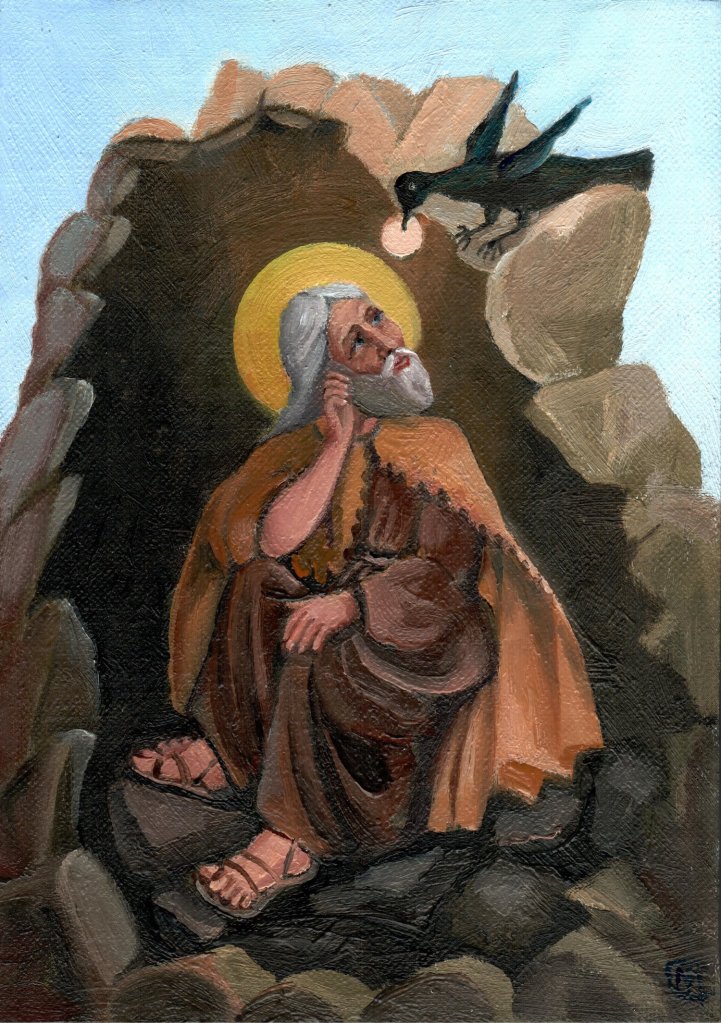
Elijah is considered one of the greatest prophets of the Old Testament. His name means the Lord is God (a combination of ‘El’ and ‘YHWH’), and this speaks volumes of his mission to defend the worship of the true God, to oppose vehemently idolatry and to constantly remind Israelites of their covenant with their God. He courageously criticized even kings and queens. He was also renowned as a mighty prophet who performed many miracles.

One of his greatest showdowns is the contest on Mount Carmel (see 1 King 18). He challenged the prophets of Baal to call out to their god and ask it to pour down rain because the land had experienced a long drought. This trial is to prove who is the real God, the Lord or Baal. Around 400 prophets of Baal accepted the challenge and performed all sorts of rituals but to no avail. Elijah even mocked them. He said something like, “Your god must be asleep or going on vacation”. Then, when his turn came, he did a simple ritual and called the Lord God. His prayer was answered, and the rain suddenly fell from the sky. Feeling victorious, Elijah slaughtered all the Baal prophets.

This event enraged Jezebel, wife of Ahab, king of Israel, and as the avid support of Baal, she ordered that Elijah be seized and executed. Unexpectedly, Elijah, the mighty prophet of God and miracle worker, became afraid and ran away. Tired of running, he asked the Lord to take his life. Yet, the Lord sent His angel to feed him. He continued his journey to Mount Horeb in Sinai. There, he encountered the Lord, but not in the way he expected. The Lord was not in the great wind, earthquakes, or powerful fire but the calm whisper sound. Indeed, God was in the least expected place. However, after Elijah realized God’s presence and spoke with Him, Elijah was back on his feet and walked back to Israel to continue his missions.

The life of Elijah teaches us several precious lessons. Often like Elijah, we became afraid, intimidated and unsure of our lives and missions in the face of danger and suffering. We tend to forget the great things the Lord has done through our hands. We have this ‘spiritual amnesia’. We ignore the truth that the Lord who has been with us in the past is also the same Lord who will be with us in the future. Even trials and pains are part of His providence.

The second lesson is also precious. God can often be found in the places and times we do not expect. Surely, God is present in the Eucharist and our prayers. Yet, the Lord is hidden in the ordinary people we meet daily. Jesus is there in simple acts of kindness and love we receive. God is there when we can be faithful to our day-to-day commitment to our spouse and children. Despite our struggles, the Lord is there when we keep doing good things for others.

Valentinus Bayuhadi Ruseno, OP

Transfiguration and the Cross

Feast of Transfiguration [A]
August 6, 2023
Matthew 17:1-9

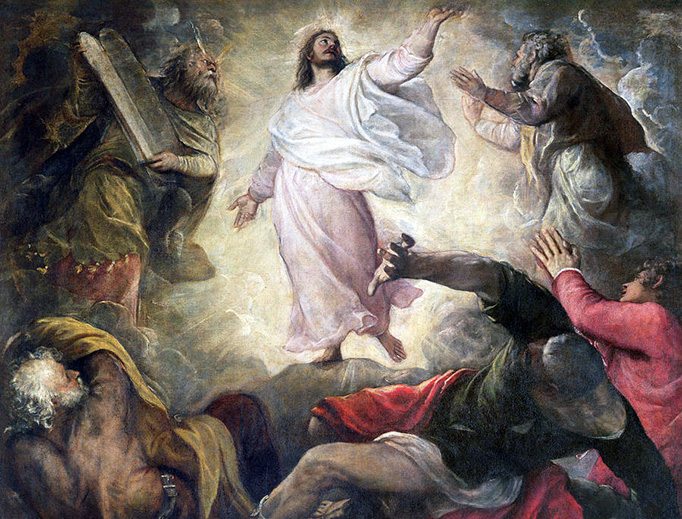
Today the Church is celebrating the event of Transfiguration. This is an extraordinary event in the life of Jesus in which Jesus transfigured or manifested His divine nature to His chosen disciples, Peter, James and John. His appearance became dazzling white, majestic and divine, and the most prominent figures of the Old Testament, Moses and Elijah, also showed up. Moses and Elijah witnessed the Lord in the mountain during their time. Now, they witnessed the same Lord in the mount of TransfigurationTransfiguration. To see Jesus in His divinity must be a phenomenal experience for Peter, James and John. Surely, Peter wanted to savor the experience forever, and thus, he offered to build a tent so they could stay as long as possible in that beatific moment.

However, Jesus had another plan and returned to His ordinary human appearance. Jesus then went down from the mount and walked toward Jerusalem. There, He embraced His cross, brutal suffering and horrifying death. He was treated as the worst criminal and abandoned by His closest disciples. Perhaps, some disciples were disappointed and losing hope, and some were angry and frustrated. Even Peter, James and John seemed to forget the glorious experience of Transfiguration. James ran away. Peter even denied Him. Only John stayed and accompanied the mother of Jesus at the foot of the cross. Yet, this is precisely the point of TransfigurationTransfiguration. The divine Jesus on the mount transfiguration is the same dying Jesus on the Mount of Calvary. The most beautiful Jesus on the cloud, accompanied by Moses and Elijah, is the tortured Jesus on the cross flanked by two criminals.

Transfiguration teaches us precious lessons. Like the disciples, we often want to stay with Jesus when Jesus is in His luminous moments. Yet, when Jesus is crucified and looks miserable, we fail to see Him, run away and even deny Him. We forget that He is the same Jesus. We can easily recognize Jesus and thank Him when our lives are blessed with financial stability, good health, or successful careers. And naturally, we tell the Lord we want to stay forever in these glorious moments. Yet, do we see Jesus when our lives are hard? Perhaps, like the apostles, we are angry, frustrated, and blaming Jesus.

So, how are we able to see Jesus on the cross? We need to learn from the apostle John, and how can John see Jesus and stay faithful? John could see Jesus on the cross because he was not alone. He was seeing Jesus together with Jesus’ mother. He was learning from the example of Mary, who was standing at the cross of His Son. If we want to see Jesus on the cross and stay faithful to Him, we must be with His mother and learn from her. Do we invite Mary when our lives are hard? Do we pray the rosary in times of trials?

However, Mary does not only stand for her person but also the Church. Do we recognize that we are part of the Church, the Body of Christ? Do we allow the Church to accompany us as we walk through our difficult times? Do we help and support others also in our community or parish?

Valentinus Bayuhadi Ruseno, OP

The Scribes of the Kingdom

17th Sunday in Ordinary Time [A]

July 30, 2023

Matthew 13:44-52

The Scribes are often perceived as the bad guys. Together with the Pharisees and the elders, the scribes are often arguing and disagreeing with Jesus. Yet, interestingly, Jesus mentions the scribes of the kingdom of God. So, what is precisely the scribes? Are they the bad guys or the good guys? What does Jesus mean by ‘the Scribes of the Kingdom’?

Scribes [in Greek: γραμματεὺς, grammateus] are unique professions in the ancient time. When most people were illiterate, and the writing material was scarce, the scribes played an essential role in keeping the record and passing down the written history. Being a scribe is not only about the ability to read but also highly specialized skills to write efficiently using ancient materials [stone tablets, animal skins, papyrus]. Most scribes worked for the royal court as they wrote various official documents and recorded the chronicles. Since, in ancient times, the royal officials and the religious leaders were often the same persons, the scribes also were tasked to write and copy sacred texts. 

In the time of Jesus, the Israelite scribes were highly specialized professionals in reproducing Torah scrolls and the prophets’ writings. They would form a small community and write sacred texts together. While they wrote, they would read the text aloud and, thus, avoid unnecessary errors. To copy the holy texts is their sacred duty. But not only reading and writing the text, the scribes also read, discussed and interpreted the meaning of the sacred text. With this privileged access to the sacred text, they also read and taught the Torah to the people of Israel. Scribes did not form a single organized group but joined existing groups like Pharisees, Sadducees and Essenes, or they decided not to be unaffiliated to any group. From here, we know that scribes were not homogenous. Some may disagree with Jesus at some point, but on some issues, they may agree. 

Then, Jesus mentioned ‘the scribes of the Kingdom’, who are these people? At the first level, these are the apostles of Jesus and other disciples. They are the ones who are responsible for writing the New Testament. Matthew and John are apostles, while Mark is the disciple of Peter and Luke is the companion of Paul. They also interpreted and preached the Old Testament as fulfilled by Jesus Christ.

However, at the second level, the scribes are all of us. Nowadays, we have easy access to the Bible. We are called not only to hear and read the word of God in the scriptures but also to understand it more profoundly and share it with others. While some people are taking the more prolonged and more intense study of the scriptures, like priests, bible scholars, and catechists, all of us are also called to take part in the scribes’ responsibility. 

I am happy that more Catholics are taking an interest in Bible Study. Some take a formal classes or attend seminars. Some make commitments to read Bible every day. Yet, scribes are not only someone who read and study the sacred text but also one who share and preach it. Thus, the challenge is how we are to share the word of God and take part in the mission of the Scribes of the Kingdom.

Valentinus Bayuhadi Ruseno, OP

The Kingdom of God

16th Sunday in Ordinary Time [A]

July 23, 2023

Matthew 13:24-43

One of the most fundamental themes of Jesus’s preaching is the Kingdom of God [in Matthew, it is called ‘the kingdom of heavens’]. Yet, what is the Kingdom of God? Where is this Kingdom? Why is it central to Jesus’ preaching and mission? 

What is the Kingdom of God? A kingdom is precisely a kingdom because it possesses a king or monarch as its highest authority. If we change its supreme leader into a president or prime minister, it ceases to be a kingdom and turns into something else, like a republic. Thus, the presence of a king in the Kingdom of God is non-negotiable. Who, then, is the king of the Kingdom of God? The answer is obvious: God Himself. Since Jesus is our God, then it is not hard to say that Jesus is the king of the Kingdom of God. Many new testament passages speak of this Kingdom of Jesus (see Eph 5:5; 2 Pet 1:11). Jesus himself acknowledged that He is the king of this Kingdom (see Luk 22:30).

Now, after we know the king of this Kingdom, we need to determine who the subjects are. After all, a king is not a king without the people whom he governs. Many will instantly answer that the members of the Kingdom are all who believe in Jesus. Yet, it is not as simple as that. If we observe other kingdoms or nations, to be a citizen of a particular Kingdom or country is not enough that we ‘believe’ that he is a citizen. He must undergo required procedures that make him a citizen, like processing certain legal documents, etc. More than that, it is imperative for a citizen to obey the law of the country. Otherwise, he will be punished accordingly.

Therefore, it is the same with the Kingdom of God. To become part of the Kingdom, we must undergo the required procedure. In the case of the Kingdom of God, it is the sacrament of baptism (see John 3:3-5). Yet, to be a good citizen of the Kingdom, we must not stop a baptism. We are expected to know and follow the laws of the Kingdoms. We are called to obey the words of Jesus, our king. We cannot call ourselves good Christians, good citizens of the Kingdom of Heaven, if we keep breaking the laws.

Another aspect of the Kingdom of Heaven that we must not overlook is that it is not yet ‘perfect’. Some may think that since it is the Kingdom of God, it must be super powerful, full of good things, and has no suffering. Yet, Jesus reminds us through His parables that God allows bad things to inflict the Kingdom of God on earth. God is like the landowner who allows the weed to grow together with the wheat in his field. Some may expect the Kingdom to grow strong like a cedar seed that will develop into a strong and majestic one. Yet, Jesus told us that the Kingdom is like a mustard seed, the smallest seed that will grow into ugly shrubs.

Through Jesus’ parables, we must not be surprised if bad things are happening even after we become citizens of the Kingdom. We are expected not to be shocked to experience pain and suffering as members of the Kingdom. God allows these bad things to happen as part of His plan for us.

Valentinus Bayuhadi Ruseno, OP

The Sower and His Mysterious Way

15th Sunday in Ordinary Time [A]
July 16, 2023
Matthew 13:1-23

There is something strange with Jesus’ parable.
The sower is committing something outrageous as a farmer. The sower is wasting his seeds. He lets the seeds fall into the pathway, Rocky grounds, and thorns, places that will surely kill them. If the seeds are the farmer’s lifeline, he kills himself. Why does the sower do something seemingly useless and even stupid things?

To find the answer, we must understand the purpose of Jesus’ parables. Many believe that parables are simple stories Jesus uses to convey and simplify His teachings. That is why one theologian defined parables as ‘heavenly teachings in worldly stories.’ To a certain extent, it is true, but it does not capture the entire purpose of the parable. When Jesus was asked, ‘Why did He teach in parables?’ Jesus answered, “This is why I speak to them in parables, because ‘they look but do not see and hear but do not listen or understand (Mat 13:13).” Jesus utilized parables not to reveal His teaching, but to conceal His teachings. Why? Jesus made it clear that by using parables, only those who believe Jesus will see through the parables and learn the messages, while those who do not believe will only be puzzled.

Now, how do we make sense of the sower who is seemingly wasting his seeds? Again, the key is belief in Jesus. We are invited to read this parable from the lens of faith. If the different kinds of soils represent the condition of our souls, and the seeds are God’s word, then who will be the sower? For us believers, the answer is obvious. The sower is God Himself. Now, if we know all the meanings of the characters and elements of the parables, we can make more sense of the story. God sends His words not only to one kind of soul but to all souls. Why? Because He loves all souls and wants all souls to come to salvation. God loves us, even those who do evil things, those who do not know Him, and those who hate Him.

He sends His sunlight and rains for all of us, though we are ungrateful. He provides many good things in our lives, even though we take them for granted. Ultimately, He sends Jesus, His Word made flesh, to save us sinners. For He so loved the world so that He sent His only begotten Son, so that who believed in Him may not perish but have eternal life (John 3:16). God, the divine sower, does not measure things in worldly economic terms, but loves us gratuitously.

However, we must forget that we have to do our part also. We are invited to transform our souls into fertile soil. Perhaps, in the beginning, minds and hearts are hard, full of rocks of doubts, or filled with thorns of anger. But God gives us freedom and the grace of repentance to change our hearts into the good ground where the Word of God may grow. Some of us may have a fertile heart, but we must not be negligent but continue to enrich our soils so that the word of God may bear fruits abundantly.

What kind of soils are we now? Do we recognize God’s works in our lives? What do we do to receive the word of God and allow them to grow and bear fruits?

Valentinus Bayuhadi Ruseno, OP

Jesus’ Yoke

14th Sunday in Ordinary Time
July 9, 2023
Matthew 11:25-30

I am incredibly blessed to be given to opportunity to study my doctorate in Sacred Scripture (Biblical Theology) in Rome, at the very heart of the Catholic Church. Let me share why I chose the specific field and how my love for the Word of God began. And it is closely related to today’s Gospel.

When I was still in the Novitiate (the beginning of my religious life), I read this particular verse in which Jesus said, ‘Come to me, all of you who labor and are burdened, and I will give you rest. Take my yoke… for My yoke easy and my burden is light (Mat 11:28-30).” A yoke is an instrument men or animals use, like oxen or donkeys, to carry a burden. The yoke usually is carried on the shoulders. Initially, I imagined that we had our yokes to carry, burdensome. This yoke represents various unnecessary burdens and problems in our lives. Then, Jesus asks us to remove this unnecessary yoke and take up the yoke that Jesus has prepared for us. So, it is essentially about ‘changing’ or ‘transferring’ of the yoke. Jesus’ yoke is lighter than our yokes; therefore, it is lighter and gives us rest.

However, a priest still studying for his doctorate in Sacred Scriptures visited us once. He shared some of his knowledge with us, and at one point, he told us about the yoke. In ancient Palestine (like in many places), there was a type of yoke that two men or animals could carry. The yoke is designed to distribute the burden to both shoulders equally. Thus, when Jesus said, ‘Take my yoke…” Jesus did not simply give us the yoke, but He shares the yoke and carries together with us. Then, when we are tired, Jesus will take much of the burden so that we may find rest.

The priest’s explanation was simple because I am familiar with this type of yoke as I used to see it when I was little. Yet, when he connected to Jesus’ yoke and found rest, it blew my mind and captured my heart. There is something more than what meets the eye. The Word of God is rich and fascinating. If a simple word like ‘yoke’ can have a profound meaning, it must also be true with other words, sentences and realities in the Bible. Then, I began reading a lot of commentaries and explanations on various biblical verses. The more I learn, the more I am drawn into the bottomless yet beautiful mystery. As I progressed in my vocation, I decided to focus my study in this field.

Does the story of Yoke end in my discovery in Novitiate? No! As I entered my theological studies, I discovered one particular catholic theology: the theology of participation. This theology teaches us that God is indeed the principal agent of redemption, but He does not treat us just as passive recipients. He made us active participants in His work of salvation. Yes, Jesus died and rose for us, but we also need to participate in this mystery of redemption by faith, hope and charity.

Then, as I connect it to the ‘yoke,’ the theology of participation makes even more sense. If we carry our yoke by ourselves, it is nothing but dead weight. But, when we participate in the yoke of Christ, our burdens will be lighter and have spiritual value. Yes, we cannot often escape many burdensome situations in our lives, but when we unite them to Jesus’ cross and faithfully carry them, they become spiritual blessings.

What is our daily yoke? Do we carry them alone? Do we offer them to the Lord? Do we participate in Jesus’ Yoke?

Valentinus Bayuhadi Ruseno, OP