Lazarus and the Sacrament of Confirmation

5th Sunday of Lent [A]
March 26, 2023
John 11:1-45

There are seven signs (or miracles) in the Gospel of John. Naturally, the Church has recognized these seven miracles correspond to the seven sacraments. Last Sunday, we have seen that the healing of the man born blind turns out to be the sign to the sacrament of Baptism (see John 9:1-41). Now, we discover another Jesus’ sign-miracle, that is, the raising Lazarus to life. This miracle points to the sacrament of confirmation.

The sacrament of confirmation is often misunderstood and even neglected. There are many reasons for this. Some of us may feel that it is not necessary. We feel that we are already fulfilling sacred obligation when we are baptized, go to the Mass every now and then, and perhaps go to the confession once a year. Other receive an insufficient catechesis, and therefore, our understanding on the sacrament is very limited and even fussy. Others do not want to trouble themselves with another series of catechesis before the Confirmation. Others receive the sacrament without proper catechesis because their weddings are fast approaching. Thus, many see the confirmation as the second-rate sacrament.

However, this is not true at all. The Church continues to teach that this sacrament has indispensable role in the lives of the faithful. In fact, it is the second of the three sacraments of the initiation (together with baptism and Eucharist). To be full and mature member of the Church, we must receive the grace of the Holy Spirit imparted in the sacrament of confirmation. Now, how does today’s Gospel relate to the sacrament?

Firstly, Lazarus, together with Mary and Martha, has a loving friendship with Jesus before the miracle. This condition shows us that Lazarus is the symbol of baptized Christians who live in Christ. Secondly, Lazarus’ death and his going back to life point to the new life in the Spirit. John the Evangelist narrated explicitly that Lazarus has been in the tomb for four days (John 11:17). This is important detail, that is, Lazarus is truly dead, and his soul is no longer with his body. Thus, miracle of Jesus is a divine act that brings back life, uniting body and soul. While it is true that the Holy Spirit is not mentioned, but Jesus’ miracle brings us back to the creation of man where the Spirit of God was active and life-giving.

Finally, the miracle has enduring effects in Lazarus. After his return from the dead, Lazarus becomes a living witness to Jesus’ power and love. Because of Lazarus’ testimony, many come to Jesus and believe in Him. And for the same reason, Lazarus faces persecutions from Jesus’ enemies [see John 12:9-11]. Yet, Lazarus does not coward. He has been through death, but not even death can separate him from the love of Christ.

What happen to Lazarus are also happening in us. When we are baptized, we receive a loving friendship with Christ. Yet, in the sacrament of confirmation, our souls receive the gifts of the Holy Spirit and we become a mature Christians. We are now transformed to be a living witnesses of Jesus Christ and bring more people to God. We also are empowered to endure hardship and persecution because of Christ.

This is why before receiving the sacrament of holy matrimony or the sacrament of holy orders, we need to receive the confirmation. These two are the sacraments of service and witnessing, that bring other closer to holiness. Thus, only mature Christians are fit for this tasks. We are not only called to be Jesus’ friends, but also His brave witnesses to the world, and this sacrament makes us one.

Rome
Valentinus Bayuhadi Ruseno, OP

Healing of the Blind Man and Baptism

4th Sunday of Lent [A]
April 19, 2023
John 9:1-41

There are seven signs (or miracles) in the Gospel of John. Naturally, the Church has recognized these seven miracles corresponds to the seven sacraments entrusted to her. The healing of the man born blind turns out to be the sign to the sacrament of Baptism. Since the basic theme of Lenten season is baptism, the Church does not hesitate to place this reading during this holy season. But, is true that this miracles is related to baptism? And how do we know?

The story begins with Jesus and disciples saw a poor blind man. Then, His disciples start to ask Him, ‘Rabbi, who sinned, this man or his parents, that he was born blind (John 9:2)?’ Jesus’ disciples believe that his sufferings are consequences of his personal sins, or at least his parents. Yet, Jesus immediately teaches them the truth. Jesus points out that neither blind man nor his parents have sinned to cause him blindness. Although sufferings and death are indeed related to sin, but the relation is not linear, but a mystery. The man does not commit personal sins, but he bears the consequence of sin. How is it possible?

The Church recognizes this condition as the original sin. Every descendant of Adam and Eve was born into the world as ‘enemies’ of God. Since we are in the womb of our mothers, we were ‘sinners’, not because we commit any personal sins, but because we are far from God and do not have a spiritual friendship with Him. Thus, because of the original sin, we are susceptible to various sufferings as well as struggling with concupiscence (check also my reflection two weeks ago).

How does Jesus heal this blind man? Jesus spats on the ground and makes clay with the saliva, and smears the clay on his eyes. Finally, He asks the blind man to wash himself with water. Why does Jesus perform such a weird and unhygienic treatment? Jesus performs what God did in the beginning: the creation of man. When God created Adam, He molded a soil of the ground. There is a Jewish tradition that says that God used His own saliva to make soil easier to form. Jesus does the same here. He is bringing the man with blindness into healing by ‘re-creating’ him. Then, the final healing takes place when the man wash himself with water.

What happens to the healed man, takes place also in every person during the baptism. What we see in our eyes is someone is washed with water, but spiritually, God is making us a new creation. All sins, both original and personal sins, are cleansed. Our souls are transformed into the likeness of Christ and are elevated into the adopted children of God. Thus, we call God our Father, not in the metaphorical sense, but in the real one.

Lastly, towards the end of the story, Jesus asks him, ‘Do you believe in the Son of Man?’ Eventually, the man professes his faith in Jesus and worships Him. Faith is integral part of baptism; whether we believe before the baptism (like in the case of adult baptism) or after baptism (in the case of infant baptism). However, baptism is just the beginning, and our faith must also grow.

We are not sure what the man does after the healing he received, but we may believe that he becomes Jesus’s disciple and follow Him. After baptism and initial faith in Jesus, the Church encourages us to continue our journey of holiness. We grow in faith through living in Christ, works of charity, and proper reception of other sacraments.

Rome
Valentinus Bayuhadi Ruseno, OP

The Story of Samaritan Woman

Third Sunday of Lent [A]
March 12, 2023
John 4:5-42

For the third Sunday of Lent, the Church has selected for us the story of Samaritan woman from the Gospel of John. This story does not only appear in the current liturgical year (Year A), but also other years (Year B and C). Why does the Church select this reading for the season of Lent? What makes it very special that every year we are invited to listen and reflect on the story?

The story of the Samaritan woman is a story of repentance. Thus, it is fitting for the season of Lent. Let us go deeper into the story. John the evangelist does not give us the name of this woman as well as her other details, but there is a particular information that stands out. The woman had five husbands, and presently, is living with another man. Again, we don’t have details on this issue. It seems that the woman has lived through cycle of marriage, divorce, and remarriage. For unknown reason, her former husbands kept dismissing her (see Deu 24). Perhaps, there were serious marital issues. Perhaps, there were problems with her personalities as well as her husbands’ characters, that rendered them unable to live in a permanent and healthy relationship. Again, we are not sure, but we may say that she has been through hell, and the experience was deeply painful and traumatic, to the point that she decided to live with a man without a proper marriage. At the same time, she had to avoid her people because of shame, and run away from her God.

At first, to hear that this woman had five marriages sounds unbelievable. Yet, this is not totally impossible. However, what more important is that the Samaritan woman has become a reflection of some of us, or some people close to us. Before I began my study in Rome, I served as an assistant parish priest in Surabaya, Indonesia. Being in the parish of a big city, my ministry was inevitably tied to Catholic marriages and families. I am fortunate that I was given the opportunity to solemnize more than fifty marriages. Yet, unfortunately, I also encountered many couples as they sought help facing their marital problems. As I was listening to their stories, I could not but feel the pain, frustration and sometimes anger. The consequences are deeply painful and traumatic: relationships are fractured, families are broken, and children are suffering.

Fortunately, the story of Samaritan woman does not end in a tragedy. Jesus unexpectedly waited for her and mercifully offered her the forgiveness and a new life. Though she was initially hesitated, she confessed her sins and found the true Messiah. We are not told what happened exactly to her life, but we can assume that she changed her life because she had the new-born courage to face her own people and proclaim Jesus.

As I accompany men and women who are struggling with their marriages, things are tough and painful, but not hopeless. Some couples eventually reconciled, but there are some who face more difficult situations. Yet, despite their challenging situations, many refuse to fall into sinful life, but choose to grow in holiness. I honored to encounter some of them. Despite being abandoned by their spouses, they refuse to retaliate with violence. They also resiste the temptation to live with another man or woman outside of marriage but committed to rise their children alone. They have all the right to become angry and disappointed with God because of their conditions, but they did not allow negative emotions to control them. More remarkably, they decided to serve also in the Church.

Rome
Valentinus Bayuhadi Ruseno, OP

Concupiscence

2nd Sunday of Lent [A]
March 5, 2023
Matthew 17:1-9

Lenten Season is characterized with acts of penance as well as intensified spiritual exercises like fasting and almsgiving. One of the purposes of these activities is to strengthen our spiritual muscles against the weaknesses of the soul or ‘concupiscence’, that is a tendency to fall into sins due to our wounded nature. Yet, why do still have this weakness if we have been redeemed? St. Paul in his letter to Timothy emphatically says, “… the appearance of our savior Christ Jesus, who destroyed death and brought life and immortality to light through the gospel (2 Tim 1:10).”

photocredit: corina rainer

I must admit that we are dealing with mystery of faith. Like other mysteries, the reality of redemption as well as the presence of concupiscence are a reality, but the reasons behind these realities remain largely hidden because these truths are greater than our minds’ capacity. However, it does not mean that we are clueless. Through her theologians and saints, the Church has reflected on the matter for two thousand years, and taught that the consequences for nature, weakened and inclined to evil, persist in man and summon him to spiritual battle (CCC 405).

The presence of concupiscence opens up an opportunity for us to exercise the virtues and to grow in holiness through the practice of spiritual exercises. Thus, even though concupiscence remains after baptism, it is not an insurmountable obstacle to living a holy life, and in fact make our journey a lot more meaningful. With the help of God’s grace, we can resist their disordered desires and grow in holiness.

In today’s gospel, we hear that Jesus was transfigured in the mountain. For Peter, John and James, this was an ecstatic experience overflowing with joy. They did not want to lose this elating experience, and thus, Peter proposed to build tents so that they could stay longer up on the mountain. But, Jesus did not stay long in His divine state, but summoned his disciples to go down and follow Him. Where? After transfiguration, Jesus set His eyes to Jerusalem where His suffering and death awaited. Jesus understood well, ‘there is no resurrection without the cross.’ Concupiscence is one of our crosses here on earth, and it becomes a means to holiness.

One good friend of mine once asked me, “Why did God allow concupiscence to remain in our soul? It could have been better and easier for us if concupiscence had been removed during baptism.” The point was clearly taken. I can imagine that without concupiscence, I would not have to deal with many temptations. Life would be much easier, and the world would be a better place because people would no longer commit evil things out of selfish interests. However, our first parents still sinned even without concupiscence. The absence of concupiscence does not automatically prevent us from falling into sin. In fact, the moment we sin out of our total freedom and without the influence of concupiscence, we will fall extremely hard, just like Adam and Eve. Perhaps to prevent us from experiencing what our first parents had suffered, God allows concupiscence to remain.

Eventually, we still face the mystery, but we believe that even the presence of concupiscence is ultimately for our good.

Rome
Valentinus Bayuhadi Ruseno, OP

Lent, Adam and Jesus

1st Sunday of Lent [A]
February 26, 2023
Matthew 4:1-11

We are now on the first Sunday of Lent. For some of us, the Lenten season is just another routine. We abstain from meat or other things that bring us comfort and fast at least twice a year (Ash Wednesday and Good Friday). We are also asked to spend more time in prayer and encouraged to give more alms. The liturgical color and atmosphere also change in our churches. And in many parishes, confessions are made available. Some of us may not really understand why we must do these things, but since we are Catholics and others are practicing it, we do it too. Some of us may be aware of the reason behind these spiritual exercises because we listen to the catechesis given by the priests or lay catechesis, or explanations given on social media. As a priest, I take every opportunity to educate the faithful on this beautiful season (check also my catechesis and reflections in previous years). Yet, we still wonder why we have to keep doing this every year.

creation of Adam by Michelangelo at Sistine Chapel

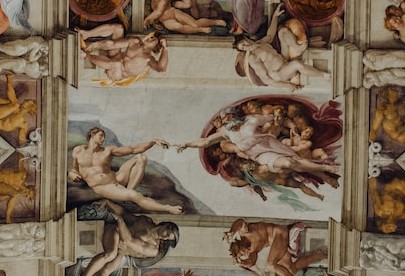
The answer rests on our wounded nature. Speaking about our nature, we cannot but go back to our first parents Adam and Eve. In our first reading, we discover how Adam and Eve were created from the dust of the earth and received the breath of life. Not only that, God placed them in the garden close to Himself. This becomes a symbol that they lived in harmony with God, nature, and themselves. This is the state of original grace. Yet, despite all the privileges, Adam and Eve, the dirt of the earth, dared to defy the Lord of the universe. Truly, their sin merited death. God was merciful, prevented total death, and gave a second chance for man and woman. Unfortunately, sin has wounded their souls and destroyed their original friendship with God. The wounded nature is now weak to temptations and prone to commit more sins.

Regrettably, Adam is not just an isolated individual. He is also the head of humanity. Thus, St. Paul, in his letter to the Romans (our second reading), expressed the truth that the effects of Adam’s sin flow to all humanity. “Therefore, as sin came into the world through one man and death through sin, and so death spread to all men because all men sinned (Rom 5:12).” When we are conceived, we receive a wounded human nature. We are in a state far from God. Our tradition calls this original sin.

However, we are not doomed to hopelessness. St. Paul, also in the same letter, preached the good news that Jesus has saved us and brought us back into the friendship of God, the state of grace. “For if many died through one man’s trespass, much more have the grace of God and the free gift in the grace of that one man Jesus Christ abounded for many (Rom 5:15).”

Then, the question remains: ‘If we are already redeemed, why must we do intensive spiritual exercises in the Lenten season?’ Yes, we have been redeemed, but our souls retain some weaknesses due to the effects of original sin. We still have this tendency to commit sin and disorder. Thus, to strengthen our spiritual muscles against the flesh, the world, and the devil, Jesus gives us these three tips: fast, intensive prayer, and almsgiving. (For why these three actions, see my last year’s reflection.)

Yet, one question remains: ‘Why did God allow concupiscence to remain in our souls despite the work of redemption?’ Wait for the answer next Sunday!

Rome
Valentinus Bayuhadi Ruseno, OP

Winning Your Enemies

7th Sunday in Ordinary Time [A]
February 19, 2023
Matthew 5:38-48

This Sunday, we encounter one of the most controversial of Jesus’ moral teachings. Because of these teachings, we, Christians, are often accused as being weak, stupid, and submissive in face of evil. Yet at the same time, when we try to fight for justice, our opponents readily utilize these verses against us. They accuse us as not being compassionate, loving and forgiving. So, how do we understand this? Does it mean that a wife simply must endure her abuse husband? Does it mean we do close our eyes to evil and injustice around us?


Jesus opens His teaching with quoting the Law of Moses, “An eye for an eye and a tooth for a tooth (see Exo 21:24).” For modern ears, this law sounds cruel and even barbaric, but the real purpose of this law is to prevent excessive retaliation. When someone stole a lamb, he shall return a lamb or its equivalent. His enemies cannot demand his entire house in place of a lamb. The law is to promote sense of justice, to curb unnecessary violence, and escalation.


Then, Jesus transforms this law of Moses by pronouncing a new teaching, “do not resist evil!” For Jesus, we must go beyond seeking an equal retribution. But, does it mean we have to helplessly become a punching bag?
If we look deeper into the Old Testament, we will discover similar teachings like Proverbs 24:29, “Do not say, “I will do to him as he has done to me.” (check also Isa 50:6). Thus, Jesus’ teaching to resist no evil is not unique to Jesus. So, does Jesus truly transform the Law of Moses then?


Jesus’ ground-breaking teaching is not on passively receiving evil, but rather actively conquering evil with goodness. We can understand this if we look carefully Jesus’ examples. “If anyone wants to go to law with you over your tunic, hand him your cloak as well (Mat 5:40).” Tunic (Greek: χιτών, chiton) is usually a simple cloth and worn to cover the body, while clock (Greek: ἱμάτιον, himation) is more expensive garment, and put over the tunic. Thus, Jesus is saying that if someone demands your simple cloth, do not only give the ordinary one, but also the more precious garment. The action will surely puzzle many people, but it also shows our sincerity and effort to end enmity, as well as open the possibility of reconciliation and even friendship.


The real challenge is how to apply Jesus’ teaching in our daily lives. I must admit there is no one-size-fits-all answer. The application depends on your context and our prudence. One good example will be St. John Paul II and Ali Agca. On May 13, 1981, he attempted to assassinate the Pope. He shot several times and wounded the holy man. Miraculously, the Pope escaped death, and survived the evil attempt. Ali was arrested and sentenced to prison. What did Pope John Paul II do to Ali? He forgave Ali and even visited him in prison. The act was daring enough, because Ali might attack the Pope, and kill him for sure. Yet, the meeting was cordial, as both shook hands. Yes, Ali was forgiven, but, does it mean Ali can immediately walk out of prison? Not at all, Ali served his imprisonment for twenty years, because it is justice, but at the same time, the reconciliation takes place.
Being followers of Jesus is truly tough because we do not only look for justice, but also we need to bring our enemies closer to Jesus. Yet, with God’s grace, this is made possible.

Rome
Valentinus Bayuhadi Ruseno, OP
The Laws of the Hearts

6th Sunday in Ordinary Time
February 12, 2023
Matthew 5:17-37

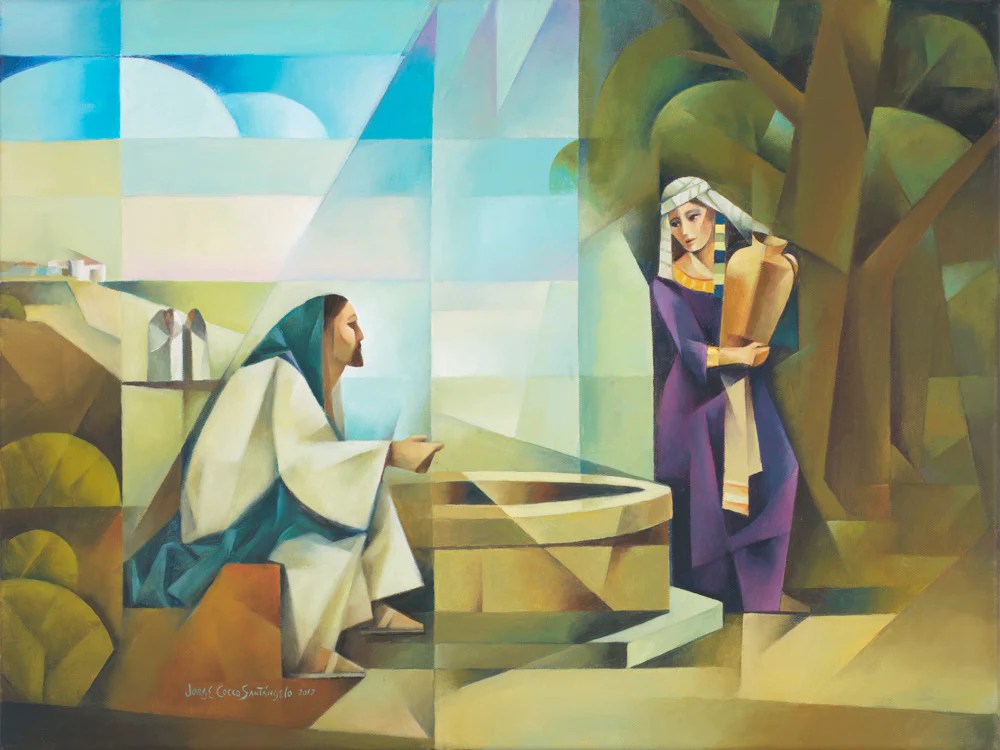
Having heard Jesus’ teachings on the keys to happiness (the Beatitudes) and our identities as the Salt of the Earth and the Light of the World, we are now delving into the heart of Jesus’ moral teachings. Here, Jesus makes it clear that He has come not to abolish the Law and the Prophets, but to fulfil them. Jesus’ teachings are not at odds with the Old Testament, but instead perfect and transform it. Yet, why does Jesus have to transform it?

photocredit: Levi Meir

The first reason is that many laws in the Old Testament were given by God to consecrate and separate the Israelites as a holy nation for the Lord alone. The ancient Israelites were living among the gentiles who worshiped many gods, and lived immoral conducts. The God of Israel is the only true God, and He wanted the Israelites to worship Him alone and live according to His true goodness. Thus, God gave the Ten Commandments, forbidding the worship of other gods (idols) and prohibiting behaviours such as murder, adultery, theft, and other evil practices that were common among the gentiles.

However, God’s laws do not only about morality, but also various details in liturgical life (for example, the Book of Leviticus) and also civil conducts (for example, the Book of Deuteronomy). God’s laws and regulations in the Old Testament are numerous and details. Why are so many rules?

One of the fundamental reasons is the hardness of the hearts. The formation of Israelites as the people of God was proven to be tough process. As they lapsed into previous idolatrous and sinful lifestyles, God placed new and stricter laws. At the same time, God allowed certain concessions like permitting divorce (Deu 24:1-4).

Jesus understands the true purpose behind his Father’s giving of the Law and why the Israelites were given so many laws – because of the hardness of their hearts. Jesus is well aware that without proper heart formation, an increase in rules will be ineffective. Thus, Jesus says, “For out of the heart come evil intentions, murder, adultery, fornication, theft, false witness, slander (Mat 15:19).” Laws and regulations are generally good because they guide us in doing something properly. They also protect us from harms, as well as give clarity in midst of confusion. Yet, no matter how good the laws are, as long as the hearts are hard, the men will always find a way to bend the laws.

So how can we have a renewed and humble hearts? The first and the most important factor is the grace of God. Only God’s grace can make our stony hearts into a living and new hearts (see Eze 36:26). This is why sacramental life is truly fundamental, especially through the participation of the holy Eucharist every Sunday (even better, every day) and regular confessions.

Secondly, hearts are formed by virtues, and virtue is no other than a good habit. Forming good habits can be difficult, but we can always begin with simple, consistent steps. Instead of saying bad words when we are angry, we can pause and choose another better alternative, like saying prayers. We can also explore with other habits.

Lastly, our hearts should be guided by our right reasons. It is wise to seek to understand the reasons behind the laws we follow. Knowing that laws (especially the Laws of God) are there for our goodness make us docile to follow them. God is the perfect Father and He made His Laws for the true maturity of His children.

“O Lord, create a pure and humble hearts in me!”

Rome
Valentinus Bayuhadi Ruseno, OP

You are the Light of the World

5th Sunday of Ordinary Time [A]
February 5, 2023
Matthew 5:13-16

After Jesus opened His sermons in the Mount with the Beatitudes, He proceeded with explaining the identity of His disciples. “You are the light of the world.” Why did Jesus call His disciples as the light of the world? Light is one of the important subjects in the Bible. Going back to the story of creation, one of the first things God created was light. “There will be light! And there was light (Gen..).” Yet again, why light is such essential topic in the Bible?

photocredit: Andrew Bui

It has something to do with human nature itself. Humans are basically the creatures of light. Our lives are dependent of light around us. The most important is the light of the sun, but also lights come from other sources both natural or artificial. We need light to navigate our world. working, moving, reading, using our gadgets are some activities that are dependent of light. Our eyes, are one of the most sophisticated organs in our body, are essentially good receptors of light. Not only light is basic for our navigation and activities, but it is also fundamental for our biological growth and functioning. Proper sun’s light helps in generating some essential chemicals in our body, like vitamin D and hormone dopamine. Some studies show that lack of sun light may cause depression, decrease of cognitive functions and disruption of wake-sleep cycle (circadian rhythm).

God who created us as well as the light, perfectly knew the relation between human beings and light. Thus, Jesus called us light of the world. Like light to our bodies, it is our mission to help others around us to navigate their lives into true happiness (please check my reflection last week on happiness) and grow into genuine maturity and holiness.

But, how do we become a light of the world? Jesus gave the answer, “Let your light so shine before men, that they may see your good works and give glory to your Father who is in heaven (Mat 5:16).” We are expected to do good works for others, and good works can take many different shapes. In Catholic traditions, we have seven corporeal and spiritual works of mercy. These are feeding the hungry, clothing the naked, caring for the sick, instructing others in faith, reminding others to repent from their sins, and praying for the living and dead. We can also start our good works from home and family, like feeding our children with health food, and instructing our children in faith and morality.

However, we must be careful also because being a light, the temptation is to shine and attracted others to ourselves, rather than guide them to Christ. We must be reminded that our light is so that others may ‘give glory to our Father who is in heaven’. The second danger is that we are running out of gas. We felt tired after doing a lot of good works. The solution can be as simple as taking proper rest and sleep, or maybe we need to rearrange our priorities in life. Yet, spirituality, we must remember that the true light is Christ Himself. He said, “I am the light of the world (John 8:12).” We are lights of the world because we are in Christ and participating in and reflecting His light (see Gal 2:20). We shall never forget to unite ourselves in true light through our prayers and the sacraments especially the Eucharist.

Rome
Valentinus Bayuhadi Ruseno, OP

The Beatitudes: True Happiness and Where to Find It

4th Sunday in Ordinary Time [C]
January 29, 2023
Matthew 5:1-12

Jesus began His teaching ministry with the Beatitudes. The Church has recognized that the Beatitudes are not just any teaching of Jesus, but ‘at the heart of Jesus’ preaching’ (see CCC 1716). The Beatitudes are foundational because they answer the most basic longing of any man and woman: desire for happiness. If we want to be genuinely happy, then we need to live the beatitudes.

However, if we read it carefully, we may realize that the instructions in the Beatitudes are counter-intuitive with our desires for happiness. We believe that having more possessions makes happy, but Jesus says that happiness is for the poor in spirit. We want to laugh and feel ‘happy’ but then, Jesus says happiness is for those who mourn. We know that being powerful and having the ability to control others make us feel fulfilled and ‘happy’, but Jesus says happiness is for those are meek, merciful as well as the peacemakers. We desire to be freed from all difficulties in our lives, but Jesus says that happiness is for those are persecuted for the sake of righteousness. Beatitudes does not make any sense.

Again, if we go back to the Old Testament, we discover that if the Israelites are faithful to observe the Law, they will be blessed with land, prosperous harvest and cattle, many children, and protection from the enemies. In fact, if the Israelites are breaking the laws, they will be cursed and thus, losing all these blessings (see Deu 28). Jesus’ Beatitudes is not even in line with these Old Testament’s blessings, but Jesus reverses the order!

What really happen? Is Jesus out of His mind? Fortunately, the Church provides us the answer, “[Beatitudes] take up the promises made to the chosen people since Abraham. The Beatitudes fulfill the promises by ordering them no longer merely to the possession of a territory, but to the Kingdom of heaven… They express the vocation of the faithful associated with the glory of his Passion and Resurrection (CCC 1716-7).”

Through Beatitudes, Jesus teaches us that the true happiness does not stop here on earth but must reach its destination in God alone. As followers of Christ, sometimes we receive an earthly blessing, but sometimes, we experience earthly ‘curses.’ Yet, these are temporal, and not the most important. In fact, material blessings may become a curse if we become addicted to it and do many evil things to acquire them. And our misfortunes and sufferings here on earth may turn to be a spiritual blessing, if we endure patiently and unite them to the Passion of Christ in our prayers.

Does it mean we cannot work to become rich and successful? Surely, we must work and be successful in life, but in the ways that are pleasing to the Lord. If we neither steal, nor cheat, then our works and material possessions are true blessings.

Does it mean we must passively receive our sufferings and injustice? Not at all! We have to do our best also to fight injustice among us and alleviate sufferings. In fact, just be silent in the face of evil is not only stupid, but also makes us a participant in that evil. Yet, we know also that sometimes, there are certain hardships that no matter we do, they remain. These are our crosses, and we shall bring them to Jesus.

Through Beatitudes, Jesus reminds us that our desire for happiness is coming from God, and thus, only God alone can fulfill it.

Rome
Valentinus Bayuhadi Ruseno, OP
John and Jesus

3rd Sunday in Ordinary Time (A)
January 22, 2023
Matthew 4:12-23

Matthew, our Evangelist, indicated that Jesus began His public ministry after John the Baptist was arrested. Why did Jesus take this decision? There are several reasons. The first one is that Jesus fulfilled what John himself has prophesied, “He must increase, but I must decrease (John 3:30).” John was highly popular, and many people followed him and considered him as a prophet of God, but his ministry came to a halt after he was imprisoned because he reprimanded Herod who married his brother’s wife (Mat 14:1-12). As John was no longer able to preach, Jesus came and bring the Good News.

Another interesting reason is that John serves as a mirror to the life and ministry of Jesus. What John did and experienced, would be done and experienced by Jesus, but with much greater scale. John’s conception was miraculous, because Zacharias and Elizabeth were deemed to be too old to have a child. Jesus’ conception was even unparallel because He was conceived by the power of the Holy Spirit and born of the virgin Mary. John had great followers and disciples, and also many people followed Jesus, and some became His close disciples. Both John and Jesus preached repentance, but the distinction is also clear. John preached to prepare the way of the Lord, while Jesus preached to build His Kingdom of God.

John baptized as an outward sign of inner repentance, while Jesus granted true forgiveness of sins. John authenticated his messages through his lifestyle, Jesus proved His Gospel through unprecedented miracles and mastery of the nature force. Both John and Jesus were persecuted and executed because they preached the repentance and truth, and thus, offended the authority. However, Jesus resurrected and ascended into heaven, while John, who is already in heaven, is still waiting for his resurrection of the body.

When I met Fr. Gerard Timoner, our Master of the Order, in Rome, he told me this interesting fact about John and Jesus. John’s birthday is June 24 while Jesus is December 25. What is fascinating is not only the date is six months apart, but also the natural phenomena happening around those dates. John’s birthday is near to summer solstice. It occurs when the tilt of the Earth’s axis is most inclined towards the sun, resulting in the longest period of daylight for the year. Yet, after this solstice, the days are growing shorter and shorter. Meanwhile Christ’s birthday is near winter solstice, the shortest day of the year. Yet, after this solstice, the days are growing longer and longer. These phenomena also fulfil what John said, “He must increase, but I must decrease”

What is for us? As we begin our journey through the Ordinary Season, we are called to be like St. John the Baptist. We are to mirror Christ in our lives. We may have different vocations in this world, like laity, married persons, priests, or religious women, but in our way of life, we are to reflect Christ. Do other people see Jesus when they see us? Do we bring peace, repentance, and truth to others like Jesus does? Are we leading others to Jesus and not be tempted to draw people to ourselves?

Valentinus Bayuhadi Ruseno, OP