Vocations

4th Sunday of Easter [C]
May 8, 2022
John 10:27-30

The fourth Sunday of Easter is famously called ‘the Good Shepherd Sunday’. This reason is that the Gospel is always taken from John chapter 10, and John 10 speaks of Jesus who introduces Himself as the Good Shepherd. This Sunday is also dedicated as ‘Vocations Sunday’. This tradition starts in 1964 when Pope Paul VI instituted the fourth Sunday of Easter as ‘the World Day of Prayer for vocations.’ This is because, in today’s Gospel, we listen, “My sheep hear My voice, and I know them, and they follow Me [John 10:27].”

In the Catholic Church, we understand vocation as the Good Shepherd’s calling to each one of us to follow Him. Thus, the primary vocation is to follow Jesus, stay with Him, and live in Him. In essence, our universal vocation is holiness.

Yet, through the centuries, the Church has recognized several authentic manifestations of this fundamental vocation. The biggest two categories are the laypeople and the clergy. The easiest way to distinguish the two is the sacred ordinations. After the ordination, a man is no longer a layperson, but a member of the clergy. They are three kinds of ordained ministers: the deacons, the priests, and the bishops. The Church teaches that “The ministerial priesthood is a means by which Christ unceasingly builds up and leads his Church [CCC 1547].” The ordained ministers are called to sanctify the people of God by offering the sacraments and teaching the truth of faith.

The second group is the laypeople, and this is the great majority of the Church’s members. Lay people are called to sanctify their lives, families, and societies. Particular to lay people is the vocation to married life and family. In marriage, a husband and a wife become holy when they love each other totally and radically in Christ. Like Christ who offers Himself up for the sake of the Church, the couple is called to give themselves entirely to each other. Meanwhile, parents’ vocation is to sanctify their children. They do not only give their children nutritious food, proper clothing, a strong house, and high-quality education, but also true faith and right morality. Perhaps, not all parents can explain well the faith, but they can always lead through upright examples and genuine witnessing.

Aside from these two grand categories, the Church also has a special vocation. These are people who professed vows. Traditionally, there are three vows: obedience, chastity, and poverty. When men and women make their vows, they become ‘a religious’ and usually they stay together in a community. If a priest has vowed, he will be a religious priest. Meanwhile, a priest without vows is called a diocesan priest because he attaches himself to a particular diocese. When a woman professes vows, she becomes a religious woman or ‘religious sister’. When a layman possesses vows, he turns to be a religious man or ‘religious brother’. With their vows, they dedicate themselves fully to God and for God’s affairs [see 1 Cor 7:32]

How do you know that you are called to a priest or a lay, as a religious sister, or as a married woman? There are no fixed answers for this, but we can use three easy steps.
The first one is recognizing our desire. A simple wish and attraction to a priestly life or religious life is already a seed God planted in us. Don’t waste it!
The second step is to know deeper and weigh different options in prayer. We look for more information and ask people who are living their lives. We may discover different yet interesting options. We also bring this effort in prayer and ask the Lord to guide our decision.
The third and final phase is to decide and commit fully. All vocations are good and ways to holiness. Thus, there is no wrong vocation, yet we can ruin it when we do not give our all to this vocation. It only bears fruits abundantly when we faithfully nurture and love our chosen vocation.

Valentinus Bayuhadi Ruseno, OP
Do You Love Me?

3rd Sunday of Easter [C]
John 21:1-19
May 1, 2022

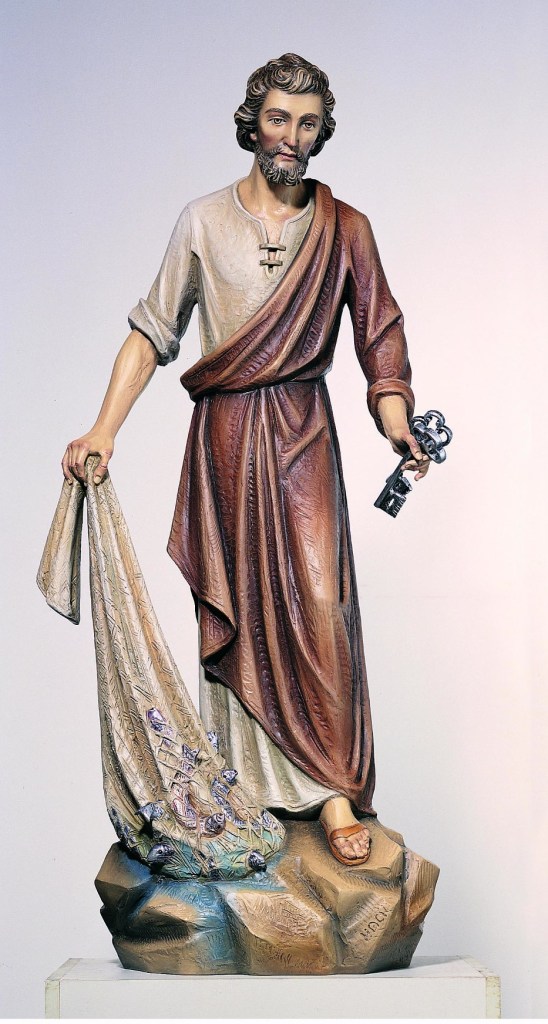
Simon Peter is a total mess. He is impulsive and even perhaps explosive. One time, he tried to remind his Master and thought he was better than Jesus, but immediately, Jesus scolded him and even told him, “get behind me Satan.” At the Gethsemane, Jesus told His disciples that they would desert Him, Simon once again was full of confidence, and said, “Though all become deserters because of you, I will never desert you.” Jesus famously prophesied that Peter would eventually deny Him. Simon immediately countered, “Even though I must die with you, I will not deny you” [Mat 26:31-35]

Unfortunately, Peter was nothing but empty words and promises. When Jesus was arrested and detained in the high priest’s house, Peter was near the charcoal fire and tried to warm himself on a chilling night. While Jesus was thrown into the dungeon, Simon only care about himself and conveniently refused to acknowledge his identity as Jesus’ disciple. When the rooster crowed, Simon remembered what Jesus has said, and he went away and wept bitterly. Peter’s pride was shattered into pieces, and he must have realized that he was nothing but a big failure.

Indeed, Peter could have ended as a total mess, yet Jesus did not give up on him. In Galilee, Peter once again saw his Risen Master, and Jesus had prepared a charcoal fire and fish and bread. Seeing this charcoal, Peter was brought back to that moment he denied the Lord. Peter had chosen his warm and comfort zone in exchange for the Lord. Then, the Lord asked Peter, “Simon, son of John, do you love me more than these?” John the evangelist informs us that Jesus is using the word ‘agape’, a higher and sacrificial love. This question shook Simon’s heart. Peter remembered how he used to say ‘I will sacrifice my life for Jesus’, but it was nothing but empty words. Now, Jesus demanded sacrificial love from Peter. Humbled by his failure, the best answer Simon could give is, ‘You know, I love you, Lord.” Here, Peter used the word ‘filia,’ a friendship friend.

Once again, Jesus demanded a total and radical love. For the second time, Peter could only offer ‘filia’. Simon did not want to repeat the same prideful mistake and knew at that moment, that Simon could only love Jesus as a friend. However, in the third question, Jesus made a dramatic change. Jesus did not longer demand sacrificial love, but rather accommodate Simon’s ability. Jesus asks, ‘do you love as a friend?’ Peter could not contain himself and was sorrowful. Jesus understood Peter’s heart and capacity and forgave and accepted Simon the way he was. Yet, that’s not the end of the story. Simon’s love for Jesus must grow, and the time would come when Peter would love Jesus radically and give himself up for Jesus.

The story of Peter is our story as well. Our lives have been a mess, but Jesus does not give up on us. And, when we are afraid to love Him, Jesus accepts us still. He journeys with us and enables us to grow in love, until the time we can say, “You know Lord, I love you!”

Valentinus Bayuhadi Ruseno, OP

Mercy Conquers All

Second Sunday of Easter [C]
April 24, 2022
John 20:19-31

Pope John Paul II has declared the Second Easter Sunday as the Divine Mercy Sunday. On April 30, 2000, the declaration took place when John Paul II canonized Sr. Faustina Kowalski. Since then, the devotion to the Divine Mercy has grown exponentially worldwide. Nowadays, many of us do not only pray the angelus prayer, but every three in the afternoon, the hour of Jesus’ death, recite the prayer of divine mercy. More and more people make divine mercy chaplet as daily devotion aside from the rosary. Many communities gather together and organize novena to the Divine Mercy. But, do you know what mercy is? And, why does it has to be the 2nd Sunday of Easter?

The Oxford dictionary gives us an exciting definition of mercy: compassion or forgiveness shown toward someone whom it is within one’s power to punish or harm. A story may illustrate this definition of mercy. During one of the Napoleonic wars, one of the young French soldiers deserted the army and fled the battlefield. Unfortunately, he got captured. Knowing that his son would be executed, the mother rushed to see Napoleon. She said to the general, “have mercy on my son!” Napoleon immediately replied, “your son’s crime is so heinous. Justice demands his death, and he does not deserve mercy.” The mother then answered, “It is not mercy if he deserves it!”.

Let’s go back to the Biblical Hebrew language. Mercy is related to the word ‘rahamim,’ which is rooted in the word ‘Rahim’ meaning ‘womb.’ Thus, ‘rahamim’ implies a mother’s feelings and attitude toward her children. We know that we have hurt our mothers too often if we try to reflect on our lives and our relationship with our mothers. Since we live in their wombs until we grow to adulthood, we give them countless headaches and heartaches. Yet, despite the terrible things we have done, our good mothers keep accepting and loving us as their children.

Then, why the second Sunday of Easter? This Sunday, the Church always selects the story of resurrection from John, the evangelist. There are some exciting details. The disciples locked themselves in the room because of fear of the Jews. Yet, more than fearing the Jewish authorities, they dreaded Jesus, who returned and took His vengeance. Yet, Jesus came not to bring punishment but forgiveness. Thus, the first thing He said was ‘Peace’! They have peace because Jesus, who has the power to inflict punishment, decides to have mercy on them.

Yet, Jesus does not stop there. He also breathed the Holy Spirit and gave them the divine authority to forgive sins. To teach the true meaning of mercy and forgiveness, Jesus has to suffer the cross, die, and get buried. Jesus teaches them that the worst things may fall upon Jesus, but this hatred, wrath, and vengeance will not have the last say.

We deserve death and hell with so many sins we have committed, but the resurrection points to us that however terrible we treat Jesus, mercy will always triumph. His forgiveness is always ready to embrace us. We need to do one thing: beg for that mercy.

Valentinus Bayuhadi Ruseno,OP

Jesus Resurrected?

Easter Sunday [C]
John 20:1-9
April 17, 2022

Jesus has risen! Alleluia! This is the foundation of our faith and our salvation. We know for sure that what Jesus said and what He did for us are true. Death is conquered, and the darkness’ power is decisively defeated.

photocredit: Bruno van der Kraan

But, what is the evidence of Jesus’ resurrection? The answer is the empty tomb.
Yet, how do we know for sure that Jesus has indeed risen from the dead? Is an empty tomb enough evidence for His resurrection? Is there a possibility that Jesus’ body was stolen, or Jesus was still alive and was able to escape? Let’s check whether these arguments can hold water.
Firstly, His disciples came at night and stole their master’s body. Then they spread the rumor that Jesus has risen from the dead. At first, this sounds possible, but after closer examinations, we realize that Roman soldiers guarded the tomb. A bunch of fishermen was not just a match for the professional army. At the same time, the disciples were in complete disarray after their master was captured and crucified.

Secondly, the one crucified was not Jesus, which is a case of mistaken identity. This argument is not attainable. Judah played an essential role in ensuring that the one arrested was Jesus, not someone else. Jesus’ trial was done in public, and thus, it was easy to recognize whether the person was Jesus. Plus, the mother and other disciples of Jesus were also present during the crucifixion, and they recognized the one on the cross was Jesus.

Thirdly, Jesus was not dead, and He was able to find His way out of the tomb. This argument is implausible. Jesus was tortured severely and crucified. A soldier pierced His side to verify His death, which alone could deal a mortal blow. Just in case Jesus survived all these ordeals, the tomb would seal Jesus inside, and without proper ventilation and immediate treatment, Jesus would suffocate and die.

Aside from these counterarguments, had Jesus’ resurrection been a lie, it would eventually die down. Many Jewish people believed in the resurrection of the dead, but it will occur at the end of time, not during their lifetime. The Greeks and the Romans thought the idea of resurrection silly. Yet, Jesus’ disciples would gladly die for this truth. Even after horrific forms of torture, they would not give up their belief in the resurrection because it is simply the truth.

Another interesting detail is that the first witnesses of the empty tomb are women. In ancient Jewish society, women’s testimony was not honored. The evangelists could have altered the women’s witnesses with more credible male counterparts. Yet, they did not do that because they could not change the truth that the women were indeed the witnesses of the empty tomb.

There is no other fitting explanation than the resurrection. Jesus has risen, and our faith is not in vain. We have been redeemed, and we know that is true. We rejoice and celebrate for this Jesus’ victory over death.

Valentinus Bayuhadi Ruseno, OP

Jesus’ Prayers on the Cross

Palm Sunday of The Lord’s Passion
April 10, 2022
Luke 22:14 – 23:56

Every Palm Sunday, we listen to the Passion Narrative of Jesus Christ. Since we are in the liturgical year C, we hear from the Gospel of Luke, and it is notedly the longest among the four Gospel. If we try to compare the passion narratives of the four Gospels, we will discover basic similarities, but also some obvious nuances. What makes Luke’s account unique?

photocredit: Grant Witthy

Surely, there are several unique stories in Luke, but one outstanding character of Jesus is that Luke consistently describes Jesus as someone who loves to pray. In short, Jesus always prays, especially in His important moments of His life. He prays when John is baptizing Him. He is praying while in the desert for forty days. He prays at the mountain when He is transfigured. He prays in the Garden of Gethsemane. Even, Jesus prays when he is the cross.

Luke even gives us a window to what Jesus expresses to His Father. Jesus’ first prayer in the cross is ‘Father, forgive them, for they do not know what they are doing [Luk 23:34].’ We remember that His close friend denies Him, another betrays Him, and others are running away from Him. He is accused falsely and tortured brutally. He receives treatment worse than animals. He is even going to die like the worst criminals, in the most agonizing and humiliating way possible. Yet, despite all these, He prays for all of them, and gives His forgiveness. Jesus does not only teach ‘to love one’s enemies’ or ‘to pray for those who persecute you’. Jesus truly walks the talk.
Jesus does not stop there. When one of the thieves is asking for Jesus’ forgiveness. Jesus does not only forgive, but He also promises Him paradise. Despite the terrible situations, Jesus does not only pray, but also blesses a man who needs its most. Lastly, Jesus closes His earthly with another prayer, “Father into your hands I commends my spirit.” This time, Jesus recites Psalm 31:6. His entire life has been an obedience to God’s will, and it is proper that He ends it with giving His spirit peacefully to His Father.
Certainly, there are so much to learn and reflect from these three prayers of Jesus. Yet, one thing we can learn from here is Jesus teaches us how to face life full of sorrow and sufferings. Our lives may be difficult, but it does not mean we have to become bitter and vengeful. The first step is to pray. Instead, uttering curses and hatred, we bring our problems and sufferings into prayers. ‘Cast all your worries upon him because he cares for you [1 Pet 5:7]’. The second step is to forgive and to seek forgiveness. One of the reasons why life is so bitter is because we refuse to forgive. To forgive is not about forgetting, but it is about to let go our hatred and resentment, and let God fills us with His peace. The third step is to be grateful. Is it possible to be grateful? When we offer our sufferings to God and to unite them with Christ’s suffering, our trials and sorrow even can become blessing for others. Then, we know we know that our sufferings are never useless. We have always a reason to be grateful.

Valentinus Bayuhadi Ruseno, OP

Writing on the Sand

5th Sunday of Lent [C]
April 3, 2022
John 8:1-11

Jesus was facing an unsurmountable dilemma when confronted with a woman caught in adultery. The Pharisees demanded that Jesus throw her with a stone, following the Mosaic Law, which reads, “If anyone is caught sleeping with a married woman, both of them must die [Deut 22:22].” However, the flip side was that every Israelite at that time knew that they were not allowed by Roman Law to carry out the death penalty. So, if Jesus had not thrown the stone, He would have been accused of being unfaithful to the Law and not a man of God. However, if Jesus threw stones, He would be dealing with the Romans. What did Jesus do?

Jesus wrote on the ground. What did Jesus write? We don’t know for sure, and quite a lot of opinion has developed over the last thousand years. However, there is one interesting tradition about this. Jesus was fulfilling Jeremiah’s prophecy. About 600 years before Christ, Jeremiah once prophesied that ‘those who have turned away from Thee will be written on the earth because they have forsaken God, the fountain of living waters [cf. Jer. 17:13].’ Jesus was writing the names of those who had put Him to the test, the fountain of living water [cf. John 7:38].

Now it’s Jesus’ turn. Jesus threw this question back at them, “Who is without sin, let him throw the first stone.” Of course, Jesus was sinless, but the Pharisees always clamoured that they were an elite group who lived blemished according to the Mosaic Law and even had an obsession to force others to live Mosaic Law their ways. So it’s as if Jesus was saying, ‘OK, you who claim to be the perfect enforcers of the Mosaic Law, throw the first stone and prove that you are truly faithful to the Torah.’

A surprising thing happened. The Pharisees chose not to throw stones. They would rather disobey the Mosaic law than deal with the Romans. This shows that they are nothing more than opportunists and hypocrites. In front of the crowds, they showed themselves to be lovers of the Law, but they were ready to leave the Law in a disadvantageous situation.

It’s incomplete if we don’t see a little bit of Jesus’ action towards the woman. Jesus didn’t throw stones, but that doesn’t mean Jesus condoned or tolerated what happened. Jesus clearly said, ‘Go, and sin no more.’ Jesus stated that this woman was a grave sin that violated the sanctity of married life. However, Jesus, the God who has the right to forgive, read this woman’s contrite heart. Jesus forgave her. However, Jesus’ forgiveness was not cheap. Jesus demanded a radical change from a life of sin.

Who are we in this story? Are we like the Pharisees who are busy finding fault with others? Are we like those busy showing off, but we run away when we face a tough choice? Are we the ones who wallow in sin and don’t know what to do? Or, are we those who cannot appreciate the grace of God?

Valentinus Bayuhadi Ruseno, OP

The Story of the Elder Son

4th Sunday of Lent [C]
March 27, 2022
Luke 15:1-3, 11-32

The parable of the prodigal is one of the most beautiful and heart-warming stories in the entire Bible. It is, in fact, the longest among Jesus’ parables and loaded with exciting details. While a great deal of the parable is given to the younger son, the story ends with the elder son. Many of us identify with the younger son. We used to live in the life of sin, far from God, and even become the enemies of God. Yet, we felt empty, and our lives go in the wrong direction. Then, going back to our senses, we repent and go back to the Lord. However, not a few identify themselves with the elder son.

Personally, I tend to be sympathetic to the elder son, perhaps because I am also the eldest in the family. I feel that the elder son’s anger is nothing but natural. I will be angry if my younger brothers ask for his inheritance and leave the family behind for a life of dissipation. I will be even more enraged when he suddenly comes back, and my parents will accept him as if nothing happens. At least, he must be disciplined and make reparations for what he has done. It is just and right!

Yet, after I go deeper into the story, I realize some critical details. The elder son is angry, and, in his wrath, he refuses to enter the home. Without realizing it, the elder son does what, the younger son did: leaving his house. Then, He says, “this son of yours!” He could have said, “Father, why do you treat my brother like this!” Without realizing it, the elder son does what the younger son did: distancing and disassociating himself from his father. Another interesting fact is that the elder son says, “I have been working like a slave for you.” Without realizing it, the elder son becomes what, the younger son has been: a slave.

Son though he is, he never considers himself as one, but rather a mere slave. We can see how the elder son only views his brother as another runaway slave and his father as an enslaver. A disobedient slave must be punished severely, and the loyal servant must be rewarded. Therefore, he is distraught. His paradigm is violated. He fails to see from his father’s perspective, and thus, he suffers.

From this story, we see a deeper meaning of metanoia or repentance. Metanoia [change of mind] does not simply mean turning from a life of sin to a life with God. It also means having the mind and heart of God. We are invited to think and act, no longer as slaves fearing punishment, but as mature children of God. Unfortunately, some of us are like the lost firstborn, who see ourselves as nothing more than servants, and we build our relationship with God based on fear, not love. We go to church because otherwise, we will go to hell. We serve because otherwise, we will be cursed. And we begin to see our neighbors as servants who have to follow the rules blindly; otherwise, they will be severely punished. Metanoia means no longer living in fear but as children of God living in love and freedom.

Valentinus Bayuhadi Ruseno, OP

The Holy Name of God

3rd Sunday of Lent [C]

March 19, 2022

Exodus 3:1-15

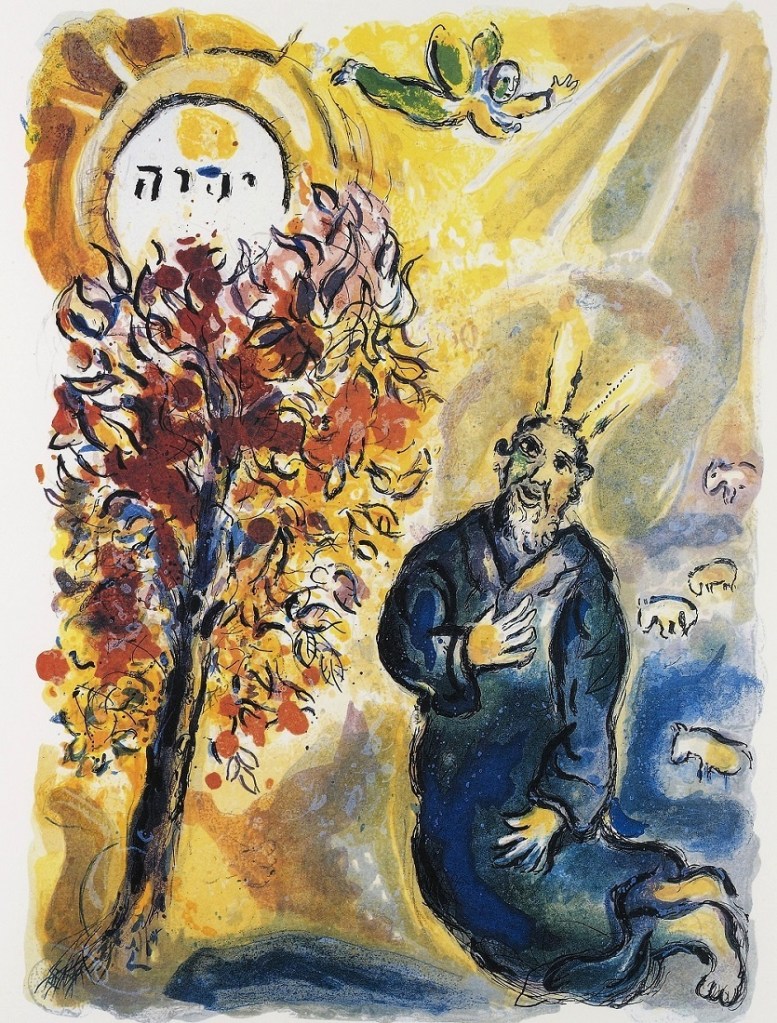
One historic moment in the history of salvation is the revelation of God’s personal name. Moses was just a murderer and fugitive who could have spent his entire life as a shepherd in Midian. Yet, God has another plan for him. He manifested Himself as the burning fire, yet not consuming its surrounding bush. A marvellous sight indeed! Moses was curious, and God called him and introduced Himself as the God of Abraham, Isaac, and Jacob. Moses recognized these names as his revered forefathers. Perhaps this was the first time Moses remembered the God of his forefathers after years.

Then, God called Moses for a mission. He was to lead His people free from slavery and bring them to the Promised Land. God had listened to the sufferings of His people and remembered the promise He made to Abraham. Before accepting God’s mission, Moses asked the name of God, and the reason was that the elders and the people of Israel seemed not to know His name. In the past, Jacob asked the name of God, but He refused. Yet, this time, God decided to reveal His sacred name. But why?

One of the reasons is that there were many gods in Eygpt, and to distinguish the true and one God from the false gods, His personal and unique name becomes necessary to be known. Another reason is that the people of Israel had lived in Egypt for so long, and they lived like the Egyptians, including worshipping the gods of the Egyptians. Thus, God had to reveal His name to make a clear break from the old habits and false idols. This was the only name worthy of all honour, glory and worship. So, Who is His name?

The first revelation is ‘I AM WHO AM’ or ‘I AM’ [Exo 3:14]. A strange name! Yet, this name reveals the deepest identity of God, who He is in Himself. The word ‘To BE’ here is the same word used in ‘Let there BE light’. This name of God unveils that God is the Eternal Existence Himself and the source of all other existences, both in the heavens and on the earth.

We own our existence to Him, and we cannot exist without Him. God is involved in our lives, not in incidental manners, like someone who helps us do our jobs or aids us in our daily needs. He is with us at the most fundamental level. He is ever active in supporting our very existence. Without Him, we are going back to nothingness. Thus, we are literally nothing without Him. The act of bringing us into reality and sustaining us is not other than the act of love. No wonder John, in his letter, declared that God is love.

Every time we call the name of God, we remember that we exist, live and breathe because of Him. Every moment of our lives is the concrete evidence of His love, and every moment of our lives is the perfect opportunity to offer thanksgiving.

Valentinus Bayuhadi Ruseno, OP

From Transfiguration to Calvary

Second Sunday of Lent [C]
March 12, 2022
Luke 9:28b-36

Every second Sunday of Lent, the Church chooses the event of Transfiguration for our Gospel reading. During this moment, Jesus, together with three trusted disciples, went up to the mountain, and there, he was transfigured or changed appearance. He was radiating a divine glory, and His face turned to be a bright light. The two most outstanding persons in the Old Testament, Moses and Elijah, appeared and accompanied Jesus. He was manifesting His divine nature to the three disciples, and it was an overwhelmingly joyful moment. Simon did not want the experience to pass and offered to build tents there. The question is that why does the Church choose this reading for this season of Lent?

The answer lies on the topic that Moses, Elijah and Jesus were discussing: Jesus’ exodus. When we hear the word exodus, the first thing that comes to mind is that the Israelites under Moses escaped the slavery of Egypt. The Israelites passed through the Reed Sea, the desert from Egypt and eventually entered the Promised Land. Their final destination was the city of Jerusalem.
Then, why did Jesus speak about His exodus?
The reason is that Jesus is the new Israel, and as the old Israel passed through exodus, Jesus had to undergo His exodus. However, unlike the old Israel that started their exodus in Egypt, Jesus began His exodus in Jerusalem. Unlike the old Israel that was not faithful to God in the desert and worshipped idols, Jesus was obedient to His Father through suffering and death. Unlike the old Israel who entered the promised Land with many lost battles, Jesus rose from the death and won definitively against Satan and His kingdom. Unlike the old Israel who went up to the earthly city of Jerusalem, Jesus gloriously ascended to the heavenly Jerusalem.
After the event of Transfiguration, Jesus no longer stayed in Galilee but steadily moved toward the city of Jerusalem. This is why we have this reading for the season of Lent. As Jesus journeyed to His exodus in Jerusalem, we are also walking with Jesus in this season of Lent toward the Paschal Triduum: from the Mount of Transfiguration to the mount of Calvary.
The story of Transfiguration in the context of Lent gives us a precious lesson. Like Peter, we like to linger in the glorious moments of our lives. Yet, Jesus teaches that our real glory has to pass exodus. Our Egypt, our starting point, is none other than our old and sinful selves. Any moment of glory without dying to ourselves is fake, fickle and even addictive. It is undoubtedly not easy because we are craving for the feeling of pleasure, and when we get used to it, the harder it is to detach ourselves. Through the disciple of Lent, fasting, prayer and almsgiving, we are learning how to die to our desire to enjoy instant gratifications. When we can adequately order our worldly desires, the more our hearts desire for God, and the moment we are one with God, we find our true joy.

Valentinus Bayuhadi Ruseno, OP

Beyond Ordinary Love

7th Sunday in Ordinary Time [C]
February 20, 2022
Luke 6:27-38

‘To love your enemies’ is considered the most difficult of Jesus’ teachings. It is not only extremely tough, but it is practically impossible. Our natural tendency and feelings are to hate those who hurt us and despise those who harm us. Especially when we are still hurting, we want to get even as soon as possible. We desire our enemies to feel our pains, and the more pain, the better. How is this teaching even possible?

photocredit: Jan Tyson

However, Jesus does not say, ‘like your enemies’, but ‘love them’. The Gospel even specifies that the Greek word for ‘love’ here is ‘agape’. This is a love based not primarily on emotions but free will and commitment. It may be impossible to change our adverse feelings toward someone who hurt us, but it remains possible to decide not to inflict injuries and even do something good for them. Thus, after He says, ‘love your enemies, Jesus further clarifies, ‘do good to those who hate you, bless those who curse you, and pray for those who abuse you.’ To do good, bless, and pray are not feelings of love but acts of love. St. Thomas Aquinas synthesizes this teaching of Jesus and defines love as ‘to will the good of others’

Yet, despite the truth about agape and our God-given ability to perform something against our natural inclination, loving our enemies is just a hard pill to swallow. Though we know the theories, we are also struggling to do it. Then, we are back at our original question: ‘why does Jesus teach something impossible?’

To answer this, we have to see a bigger picture. The teaching to love our enemies is not the only hard saying of Jesus. Through His ministries, Jesus teaches several teachings and commandments that seems unthinkable. Jesus declares that divorce is not the plan of God for man and woman. Jesus reveals that His body is real food and His blood is a real drink, and only by consuming His body and blood we can have eternal life. And, most of all, Jesus unveils the most profound mystery of God, the Trinity, and He Himself is the second person of the Trinity than became flesh. All of these are humanly impossible to do and to believe, but why does Jesus insist on teaching them?

The answer lies in the grace of God. Jesus understands that these are divine revelations, and relying only on human wisdom and strength, we are bound to fail. Thus, the Holy Spirit and His grace supply what is fundamentally lacking in us. Like we cannot believe in Jesus as our Lord unless moved by the Holy Spirit, we will not be able to love our enemies unless the same Holy Spirit empowers us. Jesus knows that His teachings are humanly impossible, but He also gives us the necessary grace to enable us to perform the impossible. Then, loving our enemies is indeed grace-filled love and supernatural love. If we are still finding it hard to love our enemies, perhaps, this is the time to rely more on God’s grace.

Valentinus Bayuhadi Ruseno, OP