

Thirteenth Sunday of the Ordinary Time [C] – June 30, 2019 – Luke 9:51-62
 Today we listen to one of the most demanding and perhaps harsh teachings of Jesus. For those who follow Him, He demands total allegiance, and He shall become no less than their top priority in life. In both Jewish and Christian tradition, to honor our parents is one of the highest commandments. In fact, it is not a mere honoring, but it is to glorify [Hebrew word used is “kabad”] our parents. But, when a man asks Jesus to bury his father, Jesus tells him, “Let the dead bury the dead.” To one who requests to say goodbye to his family, Jesus says, “No one who sets a hand to the plow and looks to what was left behind is fit for the kingdom of God.” Very harsh. Is this truly Jesus whose heart is moved with pity towards the poor people? Is Jesus no longer observing the Ten Commandments?
We may uncover the reason at the beginning of the Gospel reading. Jesus knows the time has come for Him to go to Jerusalem, and He has set His face toward this city that will persecute, torture, and kill Him. The way of the cross has begun, and for those who wish to follow Him, it is no longer the time to be amused by His miracles or to be inspired by His preaching. They who desire to follow Jesus, shall also carry their cross with Jesus, and to walk with Jesus to His Calvary, one cannot but surrender his life to Jesus and make Jesus’s mission as his utmost concern.
However, we need to clarify also Jesus’ remarks that may sound too harsh. When Jesus says, “Let the dead bury the dead,” most probably the parent of that man is still very much alive, and he wishes to follow Jesus after his parent passes away. A subtle excuse not to follow Jesus. When Jesus says, “No one who sets a hand to the plow and looks to what was left behind is fit for the kingdom of God,” Jesus is alluding to the story of Elijah who called Elisha to follow him [1 Kgs 19:19-21]. When a prophet calls, the one summoned must respond immediately. Otherwise, the opportunity is gone for good. Jesus also points to the story of Lot’s wife. When the city of Sodom and Gomorrah were destroyed by God, the angel instructed Lot and his family to run and not to look back, and yet, his wife looked back. She became the pillar of salt [Gen 19:26]. Someone cannot effectively follow God’s words and new life in Christ if he always looks back and attaches himself to the past. Jewish farmers also know well the irony that when one plows the soil and keeps looking back at the result, he will just ruin the entire field. It is when one is focused and determined in his goal and decision, he will get the best result.
There is a story of an angel who appears to John. The angel said, “John, God calls you to serve Him.” John said, “Not now, I am still 18, and I want to focus on my study.” Then, the angel came again after some years. John said, “Not now, I am just 30, and I have my career.” Then, the angel appeared again after some year. John said, “Not now. I am just 40, and I have my family.” Then, the angel returned for the last time when John was 70. John said, “Now, I am ready to answer God’s calling.” The angel responded, “Yes, God calls you, but not to serve Him, but to see Him!”
A Christian who has a lot of excuses for Jesus is not a real Christian. It is only when we follow Him with determination, walk on His way of the cross without excuse, make Him as our top priority, we can humbly say that we are His disciples.
Deacon Valentinus Bayuhadi Ruseno, OP
 Today the Church is celebrating the solemnity of the Body and Blood of Jesus Christ. In many countries like Indonesia, today is the best time for the children who are already prepared to receive their first Holy Communion. I still recall the day I partook of the sacred host and the holy wine. Many of us were around 10 years old, old enough to recognize the presence of Christ in the Eucharist and we were dressed in white. I was wearing long-sleeved white shirt with a tie and black pants. When the priest dipped the white bread into the chalice of wine and said, “the body and blood of Christ”, I said “Amen.” It was my first time to savor the sweetness of wine, and of course, alcoholic beverage!
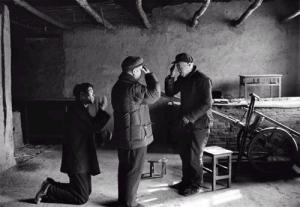 The distinctive mark of being Christian is the Holy Trinity. We share the claim of monotheism [only one God] with other prominent religions, yet our belief in one God in three divine persons enables us to stand unique among others. Doubtless, our God is one, yet the same undoubtedly, there are three persons in this one God. The Father is different from the Son and the Holy Spirit. The Son is also unique. And, the Holy Spirit maintains His personal identity. Yet, they remain always one! How is this possible?!
 Today we are celebrating the great feast of Pentecost, where the Holy Spirit, the third divine person of the Holy Spirit, comes in the form of a tongue of fire and fills the hearts of the disciples. Why do we call this day as Pentecost? Why does the Holy Spirit just come 50 days after Jesus rose from the dead?
 If you are a fan of Marvel universe movies, you will easily remember Thanos, the primary villain with twisted moral conviction. After he swept half of the living beings in the universe with the power of the infinity stones, he went into hiding. Yet, the Avenger found him and forced him to restore the world, but he said it was no longer possible because he has destroyed the stones, because what he did was inevitable, and he said, “I am inevitable”.
 At the Last Supper, after Jesus washed the feet of the disciples, He gives them a new commandment: “love one another as I have loved you”. If there is one single, most beautiful line in the Gospel of John or even in the entire Bible, this would be one of the strongest candidates. However, why does Jesus give us a new commandment?
 Few of us have a direct encounter with a sheep, let alone shepherding sheep. When Jesus says, “My sheep hear my voice.” I thought it was a kind exaggeration. After all the sheep is not that intelligent compared to the Golden Retriever or Labrador who would listen to their owners. However, one time, I watched a video on YouTube about a group of tourists who visited the vast hill in the countryside of Judea where the flock was grazing. They were asked to call the attention of the sheep. One by one, the tourists shouted to the top of their lungs, but they got not even the slightest response. Yet, when the true shepherd came forward and called them out, all the scattered sheep immediately rushed toward the shepherd! It was an eye-opener. Jesus was right. The sheep literally hear the voice of His shepherd.
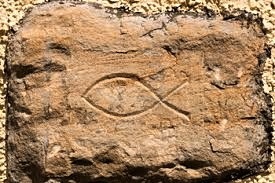 If we observe the Gospel readings of the past days and Sundays, we will notice that most of them are speaking about the risen Christ’s appearances to His disciples. One unnoticeable yet interesting feature in these stories is that of the presence of food.
 Today is the Divine Mercy Sunday. From the Gospel, Jesus institutes the sacrament of reconciliation as He bestows His Holy Spirit upon the Disciples. He grants them the divine authority to forgive (and not to forgive) sins and charges them to be the agents of Mercy. While it is true that only priests can minister the sacrament of confession, every disciple of Christ is called to be an agent of Mercy and forgiveness. Yet, how we are going to be the bearers of Mercy and Forgiveness? I think we need to understand first the dynamic of fear and peace.
 In Medio Ecclesiae