Trinity and Us

The Solemnity of the Most Holy Trinity [May 27, 2018] Matthew 28:16-20

“Go, therefore, and make disciples of all nations, baptizing them in the name of the Father, and of the Son, and of the Holy Spirit, (Matt. 28:19)”

big bang
photo by Harry Setianto, SJ

This Mystery of Trinity is rightly called the mystery of all the mysteries because the Holy Trinity is at the core of our Christian faith. Yet, the fundamental truth we believe is not only extremely difficult to understand, but in fact, it goes beyond our natural reasoning. How is it possible that we believe in three distinct Divine Persons, the Father, the Son and the Holy Spirit, and yet they remain One God? Some of the greatest minds like St. Augustine, St. Thomas Aquinas and Pope Emeritus Benedict XVI have attempted to shed a little light on the mystery. However, in the face of such immense truth, the best explanations would seem like a drop of water in the vast ocean.


I have no illusion that I could explain the mystery better than the brightest minds of the Church, but we may reflect on its meaning in our ordinary lives. The joyful Easter season ended with the celebration of the Pentecost Sunday last week, and we resume the liturgical season of the year or simply known as the ordinary season. As we begin once again the ordinary season, the Church invites us to celebrate the Solemnity of the Most Holy Trinity or the Trinity Sunday. The Church seems to tell us that the unfathomable mystery of Trinity is in fact intimately closed to our day-to-day living, to our daily struggles and triumphs, to our everyday pains and joys. How is our faith in the greatest mystery of all connected to our ordinary and mundane lives?

We often have false images of God. We used to think that God or Trinity is the greatest person (or three persons) among things that exist He is like a universal CEO that manages things from an undisclosed location or a super big and powerful being that controls practically everything. Yet, this is not quite right. He is not just one among countless beings. God is the ground of our existence. He is the very reason why anything exists rather than nothing. Thus, the act of creation is not what happened at the Big Bang 13.7 billion years ago. It is fundamentally God’s gift of existence to us. To be created means that we do not necessarily exist. Every single moment of our life is God’s gratuitous gift.

The Scriptures reveals the mystery of our God. He is not solitary and self-absorbed God, but our God is one God in three divine persons. Our God is a community founded on creative mutual love and constant self-giving. Therefore, our creation is not a mere accident, but God’s creative act and His gift of love. We exist in the world because God cannot but love us and wants us to share in the perfect life of the Trinity. St. Thomas Aquinas rightly says that we only believe two fundamental teachings, two credibilia : first, God exists, and second, we are loved in Jesus Christ.

We often take for granted our lives and immerse in daily concern of life; we rarely ask what the purpose of this life is. Yet, it does not diminish the truth that God lovingly sustains our existence and cares for us, even to the tiniest fraction of our atom. Whether we are busy doing our works, focus on our family affairs, or simply enjoying our hobbies, God is intimately involved. Thus, apart from God, our lives, our daily toils, and concerns, our sorrows and joys are meaningless and even revert to nothingness. Celebrating the Trinity Sunday means to rejoice in our existence as a gift, and to glorify God who is immensely loving and caring for us.

Br. Valentinus Bayuhadi Ruseno, OP

The Holy Spirit of Pentecost

Pentecost Sunday [May 20, 2018] Jn 20:19-23

“We hear them speaking in our own tongues of the mighty acts of God (Acts 2:11)”

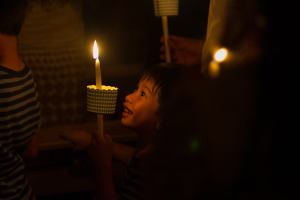
small candle
picture by Harry Setianto SJ

Just a week ago, three churches in Surabaya, Indonesia were attacked by suicide bombers.  Fear immediately seized me knowing the bombing sites were not far from our Dominican community. Some of my good friends were from Surabaya, and they might have been harmed by the senseless explosions. I was somehow able to breathe upon knowing that they were safe, but part of my heart remained deeply hurt because many people, Christians and Moslems, police officers, ordinary citizen, and even children, died and were wounded. These were people with their hopes and dreams, their stories and faith, with family and friends. Yet, the brutal attacks instantly destroyed all. As we are now celebrating the Pentecost, we may ask ourselves: What does it mean to celebrate the outpouring of the Holy Spirit in a world chocked by fear and violence? How do we call ourselves the hopeful Pentecost People in the midst of persecution and death?


On the day of Pentecost, the Holy Spirit does appear in the form of the tongues of fire and rests on each apostle and disciple. They are filled with the Holy Spirit and begin to speak different languages and to proclaim the mighty acts of God to people coming from many nations. From the story, we discover that people from different languages and nations are able to understand, and begin to be one community as they listen to the mighty acts of God. Thus, the mission of the Holy Spirit is to become the principle of connection and unity among people separated by many walls and divisions.

We are coming from different languages, culture, and nations, having diverse upbringings, characters, and value system. We possess different convictions, beliefs, and faith. It is the work of the devil to sow the seed of fear and lies, and with so much fear and misconceptions of the others, it is easier to build higher fences and dig deeper trenches. These are the roots of fundamentalism and radicalism that kills rather than heals.

The Holy Spirit pushes us to go out from ourselves and reach to the others. If we are created in the image of the Holy Trinity, and if the Trinity is three unique divine persons living in the unity of love, we are designed to be unique individuals and yet we are also made as a person with others and for others. The Holy Spirit is like a mother eagle that when the right time comes, will throw its young brood from the cliff and let them learn how to fly gracefully like a mature eagles.

Hours after the bombing, people also flooded the hospitals where the terror victims were treated and offered themselves to be blood donors for the victims. One remarks that blood knows no ethnicity, religion or nation; it only knows type O, A, B or AB! The Holy Spirit works against the work of the devil, the father of lies. Thus, the Holy Spirit empowers us to proclaim the truth and the mighty acts of God. Minutes after the bombing, the social media was flooded by a graphic picture of people killed as to spread fear, but then the Indonesian netizens refused to share further the fear and began to place in their social media accounts hashtag #wearenotafraid.

The heroic stories also emerge. There is Aloysius Bayu, a parish volunteer, who died in the explosion. Had he not stopped the terrorists who tried to enter the church premises, countless people could have died that day. His death does not only end his life but also scatters the life of a woman who expects his husband to come home and a little baby who needs her father. Yet, it is not without hope. It succumbs to fear or anger, Bayu’s friends see his death as a sacrifice that leads to a new hope. One of his friends remarks, “We must not stop going to the Church because of fear. If we stop, Bayu would have died for nothing.” The Holy Spirit does not blind us to the harsh and ugly world we have, but the Holy Spirit empowers us to be brave and work for better future of this world.

Br. Valentinus Bayuhadi Ruseno, OP

Ascension and Mission

The Ascension of the Lord [May 13, 2018] Mark 16:15-20

“Jesus said to them, “Go into the whole world and proclaim the gospel to every creature.” (Mk. 16:15)

father and daughter at beach 2We normally do not want to part away from the people we love. The emotional bond that has grown makes it difficult and painful for us to be away from the persons whom we love. Parents do not want to be separated from their children. Couple hates when they have to be far from each other. Friends cry when they have to go separate ways.

However, Jesus does the opposite when He is ascending into heaven. The resurrected Jesus could have stayed, done more miracles and accompanied the disciples. His permanent physical presence could boost the disciples’ morale, give them comfort and protection. Yet, He chooses to go and leave His disciples on earth. Why does Jesus do that cruel thing?

When we read today’s Gospel closely, Jesus does not simply leave behind His disciples, but He sends them for the mission, “Go to the whole world and preach the Gospel to every creature.” (Mrk 16:15) In fact, the Ascension is more about sending rather than departing. He goes up so that the disciples may go forward. Jesus understands that to stay put means to infantilize the disciples and hinder the disciples to become the men they are meant to be. As they go, they grow to be the persons whom they never expect before. They have faith even more, and to gradually grow in hope and charity. Had Peter stayed behind, he would not have become a leader of the great Church. Had John gone home, he would not have become the elder of the Church in Ephesus and written the Fourth Gospel.

The story of faith begins with a mission. God called Abraham, asked him to go from in his land of Ur, and made his way to Canaan. He became the Father of great nations not in his homeland, his comfort, and his safe zone, but in the dangerous and unknown land. God called Moses and Israelites to go out from the land of Egypt, from the land that gave them cucumber, onion, and garlic. They became people free to worship their only God, not in Egypt, land of thousand gods, but in the land, God has promised them. St. Dominic de Guzman began the Order of Preachers by sending his small and fragile community into various cities. Some brothers doubted others resisted, and few objected his decision. Yet, his decision was proved to be a watershed for the Order. The mission of Order is not to be another ancient stable monastery, but a group of iterant preachers. Dominic’s faith has given birth to the Dominican family that is currently present in more than 100 countries.

I always thank my parents for allowing me to enter the seminary at the tender age of 14. I know it was a tough and painful decision, but their courage has made me a man who I am now. At first, both my parents and I were not sure what would come for me, what my particular mission in life be, but we are sure that I have been sent, from the comfort of my family into the midst of an immensely vast Church. Have we grown and become mature and courageous people? Have we allowed people we love to grow into the person they are meant to be? Have we entrusted ourselves and our loved ones into God’s mission?

Br. Valentinus Bayuhadi Ruseno, OP

The Death of a Priest

(for +Fr. Mark Anthony Ventura)

Sixth Sunday of Easter [May 6, 2018] John 15:9-17

mark venturaWe are living in the part of the world that violence and death have become our daily consumption. Every day, people’s lives are forcibly snatched away for unbelievably trivial reasons. Parents kill their babies. Brothers murder their brothers. Friends manipulate and sell their friends. Some of us used to go down on the street and cry for justice. Yet, many of us are just busy with daily pressing concerns like works, study and chores. We become numb or blind to the soil that has been painted red by the blood of our brothers and sisters. The life, precious in the eyes of God, turns out to be cheap at the hands of men.
However, few days ago, I was deeply troubled by the news of a young priest brutally murdered. His name is Fr. Mark Ventura, and he was just 37 years old when he was merciless gunned down. His life was taken moments after he celebrated his morning mass in Cagayan, Philippines. He was still inside the small chapel, had given his blessing to children and suddenly, an unidentified man shot him. His advocacy for justice and peace in his place may be the reason why he lived so short.

His death is less dramatic than of Archbishop Oscar Romero of San Salvador. The holy bishop was killed right after consecration of the body and blood of Christ, and he fell to the ground, his blood was mingled with the blood of Christ. Another bishop, a Dominican Bishop Pierre Claverie, OP of Oran, Algeria suffered the same fate. The terrorists planted a bomb in his car, and its explosion did not only kill Bishop Pierre, but also his young Muslim friend and driver. In a bloody scene, his flesh was mixed with the flesh of his Muslim friend. Yet, that is beside the point. Witnessing Fr. Mark’s body laying soulless on the ground and soaked with blood, is not only deeply disturbing, but is also deeply hurtful. It is enormously disturbing because it gives us the chilling effect that if these evil men could mercilessly kill a priest, the herald of forgiveness and mercy, now they may kill anyone who stands on their way. Yet, his death is also painful because his death is also our death as the People of God. His white soutane soiled and colored by blood, is our white garment we wore during our baptism. His lifeless hands used to bless the people and consecrate the holy hosts and wine, are also our hands that raise our children and build our society. His silenced mouth used to proclaim the Good News, to forgive sins, and to denounce evil, are also our mouth that receive the Holy Communion and teach wisdom to our children. The murder of Fr. Mark is a murder of a priest, and symbolically it is the killing of all of us, Christians.

The way of the priesthood is what some of us choose, the way that often provides us with earthly comforts, and unexpected bonuses; the way that catapults us from a rug to a rich kid; and the way that showers us with fame, success, and glory. Yet, it is the same way that confronts us with the face of evil; the way that challenges us to be at the side of the victims and to denounce injustice; and the way that gets us persecuted, mocked and killed. The choice is ours. To end my humble reflection, let me quote Archbishop Oscar Romero, “A church that doesn’t provoke any crises, a gospel that doesn’t unsettle, a word of God that doesn’t get under anyone’s skin, a word of God that doesn’t touch the real sin of the society in which it is being proclaimed — what gospel is that?”


Br. Valentinus Bayuhadi Ruseno, OP


The Vine

Fifth Sunday of Easter [April 29, 2018] John 15:1-8

I am the true vine, and my Father is the vine grower. (John 15:1)”

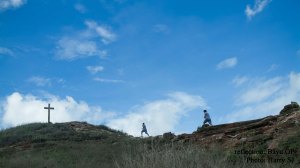
running to crossIf Jesus is a carpenter, why does He speak about the vine in today’s Gospel? Does He have the competency to draw wisdom from a field that is not His expertise? We recall that Jesus grows and lives in Galilee, and in this northern region of Israel, the land is relatively fertile and agricultural industry is thriving. Some archeological findings suggest that in Nazareth, despite being a small village, the community members are engaged in small time farming, grapes press, and winemaking. A young Jesus must have been involved with this farming activities and perhaps even helped in a nearby vineyard. Thus, Jesus does not hesitate to teach wisdom using the imageries coming from the agricultural settings, like parables related to the vineyard (Mat 20:1-16), planting seeds (Mat 13:1-9), wheat and weed (Mat 13:24-30), and harvest (Mat 9:35).

In today’s Gospel, Jesus tells His disciples that He is the true vine and His Father is the vine grower. Like Jesus, the disciples are certainly familiar with grapes plantations and wine production. In fact, for the Jews, drinking wine is not mere merriment, but also an essential part of their ritual Passover meal in which they relive the experience of liberation from Egypt. Thus, the images of the vine, vine grower and vine branches are not only familiar to the disciples, but turn out to be potent means to deliver Jesus’ teaching.

The context of this teaching is Jesus’ Last Supper, and we imagine that as Jesus teaches this truth, the disciples are enjoying their meal and cup of wine. As they are drinking the wine, it is at the back of the disciples’ mind that the high-quality wine comes from superior-quality grapes, and these grapes are produced by the best vineyard with its healthy vine and hardworking vine growers. From the taste of the wine, one can assess not only the value of the wine but also the entire production, from the vineyard (viticulture) to the winemaking (vinification). Through this imagery, Jesus has assured His disciples that He and His Father have done their share in making the branches fruitful, and now it is the free choice of the disciples to bear the fruits. As branches, the only way to produce fruits is to remain united with the true vine.

The instruction of Jesus to remain in Him seems not difficult to follow. But, just hours after the Last Supper, Jesus will be arrested, and the disciples immediately forget everything that Jesus says. Judas betrays Him, Peter denies Him, and the rest run away and hide. Only a few disciples remain with Him, some women disciples, the Beloved Disciple, and His mother. The point is clear now. It is easy to remain with Jesus when things are easy and convenient, but when the things get tough, the disciples are facing an existential question whether to remain in Jesus or to abandon Him.

The question is now given to us. When our lives become desert-like and do not yield expected fruits, are we going to remain in Jesus? A friend told me how he was initially excited to serve the Church by joining an organization. Yet, after some time, he got frustrated by scandalizing attitudes of some members. He realized that the group was no different with other organizations that were plagued by gossips, intrigues, and factionalism. Naturally, I advised him to leave the group and look for a better group, like the Dominicans! Yet, he chose to remain and said to me that this difficult group provides him an opportunity to love Jesus more. Then, I realize that the mere fact that he stays, he has unexpectedly borne much fruits: patience, mercy, and understanding.

The same question now is addressed to us. Shall we remain in Christ in challenging times? Do we stay even when we do not feel the fruits? Do we remain faithful till the end?

Br. Valentinus Bayuhadi Ruseno, OP

photo by Harry Setianto, SJ


The Good Shepherd

Fourth Sunday of Easter [April 22, 2018] Jn 10:11-18

“I am the good shepherd. A good shepherd lays down his life for the sheep. (Jn. 10:11)”

good shepherd
photo by Harri Setianto, SJ

The Bible itself is filled with the good shepherd image. My personal favorite among the psalms is Psalm 23, The LORD is my shepherd; there is nothing I lack.”  Prophet Isaiah who consoles the Israelites in Babylonian Exile, speaks of God who is like a shepherd who gathers back the lost sheep and brings them back home from the land of exile (Isaiah 40:11) Some great leaders of Israel are shepherds. Moses is tending to his father-in-law flocks when he is called by God in the burning bush (Exo 3). David also is taking care of his father’s sheep when Samuel comes and anoints him king (1 Sam 16).  No wonder, Jesus takes the image of Himself and introduces Himself as the Good Shepherd.


 From today’s Gospel, we can learn several characters of a good shepherd. Firstly, Jesus distinguishes between the Good Shepherd and the bad shepherds. The good shepherd owns the flocks and is responsible for their lives. Meanwhile, those bad shepherds do not own the sheep, and they work primarily for the money, not for the sheep. That is why when the danger comes from the predators’ attack or the thieves’ ambush; the hired workers would run and save their own lives rather than to protect their sheep. The prophet Jeremiah criticizes the corrupt and abusive leaders of Israel during his time as he prophesies, “Woe to the shepherds who destroy and scatter the flock of my pasture (Jer 23:1).”

The second character of a good shepherd is he knows well his sheep and call them by name. I used to think that “calling sheep by name” is just exaggerated metaphorical language to show shepherd care to his sheep, but later on, I discover “calling by name” actually literally happens. The sheep in Judea are raised both for wool and for sacrifice. Especially those intended for wool production, the shepherd shall live together with his flock for years. No wonder if he knows well each sheep, its characters, and even its unique physical features. He will call them by name like ‘small-feet’ or ‘large-ears.’ Because of the intimate bond between the two, the sheep were so familiar with the voice of the shepherd and will listen whenever he calls them. It reminds me of our pet-dog in our house. Our family calls it “cipluk,” and my mother and young brother take good care of it. Thus, every time my mother or brother calls its name, cipluk hastens to approach them. Yet, every time I go home and try to call its name, cipluk just won’t give any attention!

The third and more important character is the good shepherd will lay down his life for his sheep. This character seems to be an exaggeration. Why would you die for your sheep? If we recognize that the shepherd has a strong bond with his sheep and takes good care of them, he will have no second thought in defending his sheep from that attack of dangerous predators and robbers. At times, the robbers simply outnumber the shepherd and mercilessly beat the courageous shepherd to the death. The shepherd literally lays down his life for the sheep. This is not uncommon happening in the time of Jesus in Palestine, and in fact, still happening in our time in some parts of the world.

To have the Good Shepherd as our Lord means that we belong to God intimately for better and for worse. He knows each one of us personally, and He will not abandon us when our lives face serious problems and dangers. He will not only care for us as long as we produce “wool,” but He continues to love us even we have not been good sheep. In fact, Jesus lays down His life on the cross, so that we, His sheep, may have life, a life to the fullest. Have we become a good sheep? Do we recognize His voice? Do we listen to Him? Do we truly follow Him?

Br. Valentinus Bayuhadi Ruseno, OP

My Flesh and My Bones

Third Sunday of Easter [April 15, 2018] Luke 24:35-48

Look at my hands and my feet, that it is I myself. Touch me and see, because a ghost does not have flesh and bones as you can see I have.” (Luke 24:39)

adoration
photo by Harry Setianto, SJ

We listen to the last story of risen Christ’s appearance to the disciples in the Gospel of Luke. His presences point to the fact that Jesus still has several missions to accomplish on earth before He ascends into heaven. Particularly in this episode, Jesus is out to dispel the disciples’ doubt on His bodily resurrection. Some disciples may have an idea that Jesus’ appearances are mere illusions as the disciples are coping with a terrible pain of losing and failure. Some others may think that it was just a disembodied spirit or a ghost that appeared like Jesus.


Jesus comes to them and proves that He is neither an illusion coming from their disciples’ mind nor a mere story concocted to give false hope. He shows them his hands and feet and eats a baked fish just like an ordinary and living man does. Even Jesus says that he possesses “flesh and bones.” The disciples who see and touch Jesus’ body would acclaim in their hearts, “This is, at last, the bone of my bones and the flesh of my flesh (Gen 2:23).” From this point, we begin to recognize that Jesus’ bodily resurrection is closely linked to the story of creation in the Book of Genesis.

If we go back to the story of human creation in Genesis 2, we read a beautiful image of God as a potter artist who fashioned humanity from clay with various details of perfection. God also gave the human life as He breathed His life-giving spirit. However, soon after creation, God said that it was not good for the human to be alone. He then made other animals, but no one was proven suitable companion for that human. Thus, God, acting like a surgeon, made the first human sleep, took the rib, and fashioned another human being. When Adam woke up and saw for the first time another being in his likeness, he shouted in joy, “This is, at last, the bone of my bones and the flesh of my flesh (Gen 2:23).” The story of human creation which is highly symbolic reaches its perfection in the creation of man and woman, and how they are going to be suitable and loving partners for each other.

Going back to Gospel of Luke, the story of the appearance of the risen Lord to the disciples turns to be a story of re-creation. After the disciples are disbanded, scattered and cowardly ran away, they are as weak as soil. Jesus gathers them together and fashions them once again as a community. After the disciples are hurt deeply and defeated, they are like a clay pot shattered into pieces. Jesus comes to breathe His Spirit and to bring healing and true peace. After the disciples are disoriented and lost meaning, they are like the lonely and incomplete first Adam. Jesus, the second Adam, continues to love them, and thus, restores their purpose, and fills what is fundamentally lacking in them. Being re-created, the disciples now are suitable partners of Jesus in bringing the message of resurrection and the gospel of love to wounded humanity.

Each one of us is wounded and struggles with many issues. Despite our good effort to become a good Christian, we acknowledge we are as weak as clay. We have been unfaithful to the Lord and each other. The risen Christ does not lose hope in us. He gathers us once again as His people, and in the Eucharist, He shows us His true “flesh and blood.” Partaking in Jesus’ resurrected body means that despite our fragile nature and weaknesses, we have been re-created as His suitable partners to bring the message of hope and fulfill the mission of love. Only in risen Christ, we find our true fulfillment, yet in being one in Jesus means we also continue loving as He loves us to the end.

Br. Valentinus Bayuhadi Ruseno, OP


Jesus’ Shalom

Second Sunday of Easter (Divine Mercy Sunday) [April 8, 2018] John 20:19-31

“Jesus came and stood in their midst and said to them, “Peace be with you.”  (Jn. 20:19)

jesus n people
photo by Harry Setianto SJ

Fear is a natural and basic human emotion. Fear plays an important role in human survival because it alerts us of impending dangers or evil, and moves us to avoidance. The science of anatomy would locate the source of this emotion inside our amygdala, a primitive part of our brain that we share with other animals. Yet, unlike animals that simply flee in the presence of a predator, with our complex brain, we also face a complex kind of fear as we perceive a complex meaning of danger. We do not only fear predators, but we fear also losing our jobs, sickness, and our terror teachers or bosses. We are afraid of height (acrophobia), of small spaces (claustrophobia), and even of banana (Bananaphobia)! Because of our superior mind, our fear is even enlarged as we can anticipate far away dangers or even that does not exist yet. This creates anxiety and worriedness.


In the Gospel, we discover that Jesus’ disciples are afraid. They fear the “Jews.” They may be accused of stealing the body of Jesus by the Roman soldiers and Jewish authorities who discover the empty tomb. Or, simply the disciples are anxious about their future, of what will be of them after the death and the news of Jesus’ resurrection. Shall they disband themselves, go back to their former way lives, or shall they remain together? Will Jesus come and get even with them? Overcome by fear and uncertainty, they lock themselves. They are paralyzed, their hearts shrink, and they glue themselves to safe yet fragile things. Like the disciples, fear freezes us and lock us in our comfort zone. Fear of getting hurt, we stop loving. Fear of failures, we no longer pursue our dreams. Fear of being manipulated, we refuse to help others. Fear of betrayal, we shun commitments.

However, fear does not have the last say. Despite the locked room, the Lord enters in their midst. The first word He says is Peace, in Hebrew, “Shalom.” Then, Jesus shows his wounds to them, a proof that He is truly Jesus, their teacher, who was crucified and risen. Seeing the Lord, joy explodes in their hearts, and they fear no more. Jesus’ Shalom is powerful and empowering. Jesus’ Shalom gives inner strength in the face of uncertain future. Jesus’ Shalom gives the courage to embrace sufferings and trials.

Jesus is truly risen and appears to the disciples, but this does not change the disciples’ situations. Their future remains uncertain. The hostile Jewish authorities still attempt to shut them down. The Roman soldiers may arrest them. They do not know yet how to sustain their small community. Their situations remain bleak, but one thing has changed. They are no longer afraid. With His Shalom in their hearts, Jesus breathes His Holy Spirit on them and sends them on a mission to forgive. As they have been forgiven and received mercy, they become the missionaries of peace, as they bring forgiveness to others. As the stone door of the tomb cannot stop the risen Lord, now the locked doors cannot hinder the empowered disciples.

Jesus’ Shalom is the grace of resurrection for all of us. True that our situations and problems do not change much, but fear can no longer freeze us. We are called to go out from our locked rooms and become the missionaries of peace and mercy. Despite the pain, failure, and frustration, we continue to love, serve and commit because this is who we are, the people who have received Jesus’ Shalom, God’s mercy and the Holy Spirit. We are not afraid because we are Easter People!

Br. Valentinus Bayuhadi Ruseno, OP

Resurrection and Love

Easter Sunday [April 1, 2018] John 20:1-10

… he saw and believed (Jn. 20:8)

light and child
photo by Harry Setianto, SJ

Today is the Easter morn! Today is the day the Lord has risen! Today is the day death has been defeated! Today is the day of resurrection! Yet, how do we understand Jesus’ resurrection and our resurrection? What does it mean when we say that death has been conquered?


We all know that we are going to die. We just do not know when, where and how, but we are sure that death will come. We remain anxious and afraid of the reality of suffering and death. It seems that death has not been defeated? It is true that sometimes death can be a liberation. A pious lady in her fifties once told a priest that she prayed that the Lord would take her when she was still beautiful. Then, the priest remarked, “How come you are still here!”

The usual occasion preachers speak of resurrection is the funeral mass! The resurrection has become a kind of pain reliever for the bereaved families and relatives. We are assured that the death of our beloved ones is not the final destiny. There is the blissful afterlife waiting, and we shall join our Lord in the resurrection. Though our preachers speak the consoling truth, the way we preach it tends to reduce the eternal life as a permanent retirement place, and the resurrection as extremely remote reality. Another priest once admitted that he was not that handsome, and thus he planned that in the day of resurrection, he would quickly snatch the body of handsome Canadian singer, Justin Bieber! The resurrection is only good for the dead, and it does not mean much for us the living. But, resurrection is really for all of us, here and now.

Going back to the first resurrection in the garden, no Gospel describes how the resurrection takes place. It simply cannot. Yet, there is an empty tomb, and Jesus’ body is missing. Peter is greatly puzzled. Mary Magdalene is weeping bitterly. Only one disciple understands. He is the disciple who loves dearly Jesus and whom Jesus loves. Despite death and emptiness, love endures. Through the eyes of love, the disciple is able to see the resurrection.

Love and its relation to the resurrection go back to the story of human creation in the book of Genesis. We are created in the image of God (Gen 1:26). If God is love (1 Jn 4:8), then we are made in the image of love. More than other creatures, we are designed with the ability to love and to receive love. Not only having the ability to love one another, our nature is even gifted with the ability to be loved by God and to love God. No other creation on earth is able to participate in this most beautiful love affair with the Lord. Unfortunately, sin destroys this love relationship with God and seriously damages our ability to love and be loved. The history of humankind turns to be the history of sins, suffering, and death. Husband and wife hurt each other, brothers kill each other, men exploit women, women sell their children, and men destroy nature. We need redemption.

Out of His immense love, God becomes man so that He may begin His work of redemption. This redemption culminates in Jesus’ resurrection. One of the greatest graces of resurrection is our ability to love God and to receive God’s love is restored. Thus, John the Beloved Disciple is able to see through the empty tomb and believe in the risen Lord. Just as the grace of resurrection heals John, so the same grace heal us and restore our ability to love God. In the midst of emptiness of life, we are empowered to see the risen Lord. Despite the absurdity of life, we are enabled to transform our sorrows and pains into the opportunity to love more and serve better. Despite pain and death, love endures.

Blessed Easter! Happy Resurrection!

Br. Valentinus Bayuhadi Ruseno, OP


Ups and Downs of Life

Palms Sunday of the Lord’s Passion [March 25, 2018] Mark 11:1-10; Mk 14:1—15:47

“Though he was in the form of God…Rather, he emptied himself, taking the form of a slave…” (Phil. 2:6-7)

friends
photo by Harry Setianto, SJ

We are celebrating the Palm Sunday of the Lord’s Passion. In today’s celebration, we have the only liturgical celebration in which two different Gospel readings are read. The first Gospel, usually read outside the Church, is about the triumphal entry of Jesus into Jerusalem, and the second Gospel narrates the Passion of Jesus Christ. Reflecting on the two readings, we listen to two different and even opposing themes: triumph and defeat. These are two fundamental themes, not only in the life of Jesus, but in our lives as well.


The triumphal entry into Jerusalem represents our times of success and great joy. It is when we achieve something precious in our lives. These are moments like when we accomplish our studies, when we gain new and promising work, or when we welcome the birth of a family’s newest member. These are the “Up” events of life. While the Passion story speaks of times of defeat and great sorrow. It is when we experience great losses in our lives. There are moments like when we fail decisive examinations or projects, whenwe lose our jobs, or we experience death in the family. These are the “Down” events of life. Passing through these Upsand Downs of life, Jesus teaches us valuable lessons.  In times of triumph, like Jesus riding on the colt, we are challenged to remain humble and grateful. In moments of defeat, like Jesus who embraces His sufferings, we are invited to patiently bear these moments and offer them to the Lord.

However, there is something more than this. If we read the second reading from the letter of Paul to the Philippians (2:6-11), we listen to one of the most beautiful hymns in the New Testament that affirms both the divinity and humanity of Christ. If we believe that Jesus is God become man , then God does not only give us success or allow us to undergo suffering but in Jesus, God experiences what it means to be successful as well as to fail. This point is a radical departure from an image of God that is distant yet controlling, or a kind of a teddy bear that we can hug during crying moments, or a trophy we can parade in our victorious time. Our God is one with us in all our experience of joy and sadness, of triumph and defeat.

In the Book of Genesis chapter 3, we read the first story of human failure. Adam and Eve were deceived by the serpent and disobeyed God. It is true that our first parents failed God, and they had to leave the Garden of Eden. Yet, God did not cease to care for them. God made them garments of skin to cloth them, as to cover their nakedness and give them protection. God prepared them to face the harsh life outside the Garden. However, there is something even more remarkable. After Genesis 3, we will never read again about the Garden and what happens inside, but rather the stories of Adam, Eve and their descendants. Why? Because God did not choose to stay in the Garden, and just watch things through a giant LCD monitor, but rather He followed our first parents and walked with them. He accompanied them, struggled with them, cried with them and shared their happiness. Truly, the Bible is a book about God and His people.

As we enter the Holy Week, may we find time to reflect: How is God sharing in our ups and downs? Have we become a good companion to our friends in their ups and downs? Do we accompany Jesus in his way of the cross and resurrection?

Br. Valentinus Bayuhadi Ruseno, OP