

Second Sunday in the Ordinary Time [January 14, 2018] John 1:35-42
They said to him, “Rabbi, where are you staying?” He said to them, “Come and see.” (Jn 1:38-39)

In the Gospel of John, we will not discover the word “apostle” or one who is sent to preach the Gospel. John the Evangelist consistently calls those who faithfully gather around Jesus as the disciples. Why so? Perhaps, John the Evangelist wants to show us that the most important and fundamental aspect of being a follower of Jesus is truly to be a disciple.
What is a disciple in the time of Jesus? We usually understand a student as one who studies at a particular school with its buildings, facilities and system of learning. Like Br. Bayu is a student of the University of Santo Tomas, and every Monday to Friday, he has to attend classes at the Manila campus. I am expected to learn particular knowledge, like the theology of St. Paul or master certain skills like preaching. At the end of the semester, I need to pass the exams in order to prove that I have learned those set of knowledge or skills. If I fail, I have to take a remedial or retake the subject all over again. Surely, this is a simplistic way of imagining learning in our time, but if we want to be a disciple in the time of Jesus, we have to enter a different world.
When Andrew and Peter become the disciples of Jesus, it does not mean that they will attend lectures of Jesus. They literally follow Jesus wherever Jesus goes. That is why the first question Andrew asks is not how much the tuition fee is or what lesson Jesus will impart, but rather “Rabbi, where are you staying?” because it is clear in the mind of Andrew that if he wants to become a disciple, he has to follow Jesus literally for 24 hours a day, seven days a week. He is going to walk where Jesus goes, eat what Jesus eats, to sleep where Jesus lays His head, to experience what Jesus experiences, the joy, sadness, the suffering, and resurrection! Learning then is not simply about gaining knowledge or skills, but it is about sharing life, giving and receiving life.
It is interesting also to note that Jesus’ response to Andrew is oft-quoted “come and see”, yet in some ancient Greek manuscripts the words used are “erkesthe kai opheste ”. If they are translated literally, it sounds like “come and experience!” To become a disciple is to experience the life of Jesus, to experience Jesus Himself. Surely, it is a total experience of Jesus. Thus, the end of learning is not the grades, but a new life in the likeness of Jesus, the Master. It is the imitation of Christ in the real sense.
However, to become this kind of disciple, the price is also extremely high. To follow and experience Jesus’ life, we need to give up our lives. A life for life. We cannot be the disciples of Jesus only 8 AM to 3 PM, but the rest of the day, we are free. We cannot say that we are disciples of Jesus when we are at the Church only, but not in the workplaces and homes. We become like Jesus both in good times and bad times. The questions now are: Are we willing to sacrifice our old lives? Are we ready to follow Jesus day and night? Are we making our full effort to become like Christ?
Br. Valentinus Bayuhadi Ruseno , OP
 Balthazar, Melchior, and Gaspar, as the tradition called them, were neither Jews nor baptized Christians. In Greek ancient manuscripts of the Gospel, the word used to describe them is ‘magos’, meaning ‘someone with magical power’ or ‘magicians’, and practicing magic is detestable in the eyes of the Jews (2 Chro 33:6). Even the Catholic Church herself prohibits our engagement with any kind of magic (CCC 2116). Yet, we cannot be sure what kind of magic they craft, but one thing is certain that these Magi read the sign of times and follow the star. Because of this, they are called as one of those ancient astrologers, star-readers who predict the human behaviors and the future.
 Some of us may wonder why the Church places the celebration of the solemnity of Mary, the Mother of God on January 1, or on the New Year. One may guess that the Church wants us to attend mass on the first day of the year, so as to start the year right. For those who wish to have a long holidays, it might be pretty a kill joy, but for some of us who wish to be blessed for the entire year, it is a nice thought. Yet, surely there is something deeper than that.
 Today, the Church is celebrating the feast of the Holy Family. Saint Joseph and the Blessed Virgin Mary are man and woman regarded as the holiest among mortals. And the center of their family is Jesus, the Son of God. They are not only one holy family among others, but they are the perfection of the Holy Family. Looking at our own families, we realize we are nothing to compare to this Holy Family. We are called to be holy like them, but we continue to struggle and fail. Nobody among us is immaculately conceived like the Virgin Mary. No woman among us gives birth to the Son of God through the power of the Holy Spirit. Many of us surely love to sleep, but who among us like St. Joseph, receive genuine appearance of the Angel in our dream? Despite our best efforts, we keep hurting each other, failing each other, and are far from the ideal example of the Holy Family.
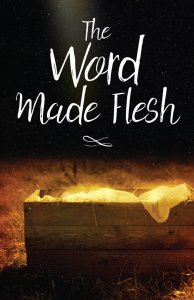 Christmas is one of the most joyous events in the Church and the world. But, what makes us happy this Christmas? Is it only about partying? Is it all about buying gifts? Is it about family gathering? Is it about fulfilling our obligation of going to the Church? Is there something more than these? Immersed in many celebrations, merriment, spending, and holidays, we often forget the main reason behind Christmas. We all know Christmas is the birthday of Jesus Christ, but what is the meaning and significance of this birth for us? Let us stop for a while and reflect on the Gospel of John.
 Luke has a poignant and unique way in narrating the story of the Annunciation. He deliberately places the story of Zachariah and of Mary side by side, and lets his readers see both stories in comparison. The first story speaks of a holy man who serves in the Temple. Zachariah is a symbol of the ideal Israelite who stands at the center of the holy ground. The second story speaks of an ordinary woman who lives in Nazareth, a small town far from the center. In a patriarchal society, Mary is a symbol of the poor and marginalized Israelite who is pushed to the peripheries. Angel Gabriel appears to both, and God does marvelous deeds for both. Yet, the Annunciation to Mary turns to be far more excellent. The Angel greets Mary with the title of honor, the highly favored one, while the angel does not even greet Zachariah. The Angel makes Zachariah mute because of his doubt, but he assures Mary when she is confused. The conception of John the Baptist is done through natural means, while the conception of Jesus in the womb of Mary takes place through the supernatural way. Zachariah and Elizabeth represent the outstanding God’s marvel in the Old Testament like when God opened the womb of Sarah, the wife of Abraham, and Hannah, the mother of Samuel, despite their old age and barrenness. Yet, what happens to Mary surpasses and outshines these Old Testament miracles.
 In the Fourth Gospel, John the Baptist has an important role. It is not only to baptize, but to become a witness. He is to witness to the light, to the true Messiah, to Jesus Christ. When the priests, Levites, and Pharisees from Jerusalem, come to him , and interrogate him to clarify his identity, he makes it clear that he is not the Messiah, not even the prophet, but rather enigmatically saying “a voice that cries in the desert.” It seems it is an easy thing to do for John. Questions are thrown at him, and he simply gives straight and confident answers. Yet, looking deeper into the reality, it is actually the opposite.
 Today, we read the beginning of the Gospel according to Mark. Among the evangelists, only Mark explicitly introduces his work as the “Gospel”. The English word “Gospel” simply means the Good News, or in original Greek, “Evangelion.” Commonly, we understand a gospel as a written account of the life and words of Jesus Christ. The Church has recognized four accounts as canonical or true Gospel. We have Gospel according to Matthew, Mark, Luke, and John.
 Talent is one of the few biblical words that has become part of our modern language. Talent connotes a God-given ability or a natural unique skill, and yet it has not fully developed. Thus, we are called to use and harness our talents in order to achieve our full potentials and contribute to the progress of society. In fact, talents have become well-sought commodity in our society. Companies only hire the talented employees. Schools are marketed as venues of talents development. Our TV channels and social media outlets are filled by shows where we perform, compete and prove that we possess the best talent in singing, dancing, and the like. How our world is now obsessed with talents!
 In Medio Ecclesiae