

Solemnity of Corpus Christi
June 22, 2025
Luke 9:11b-17
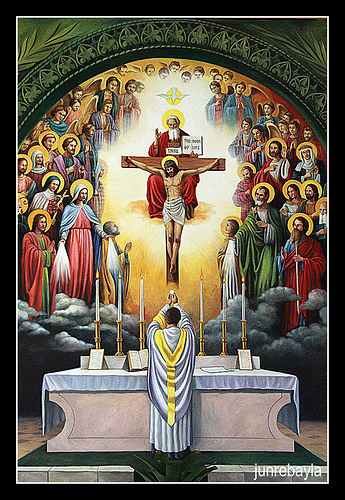
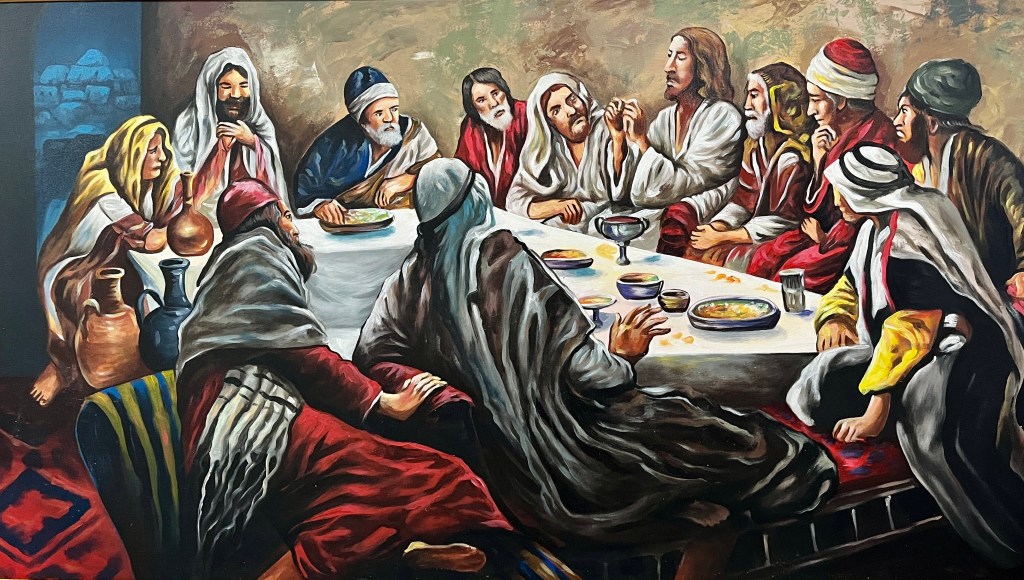
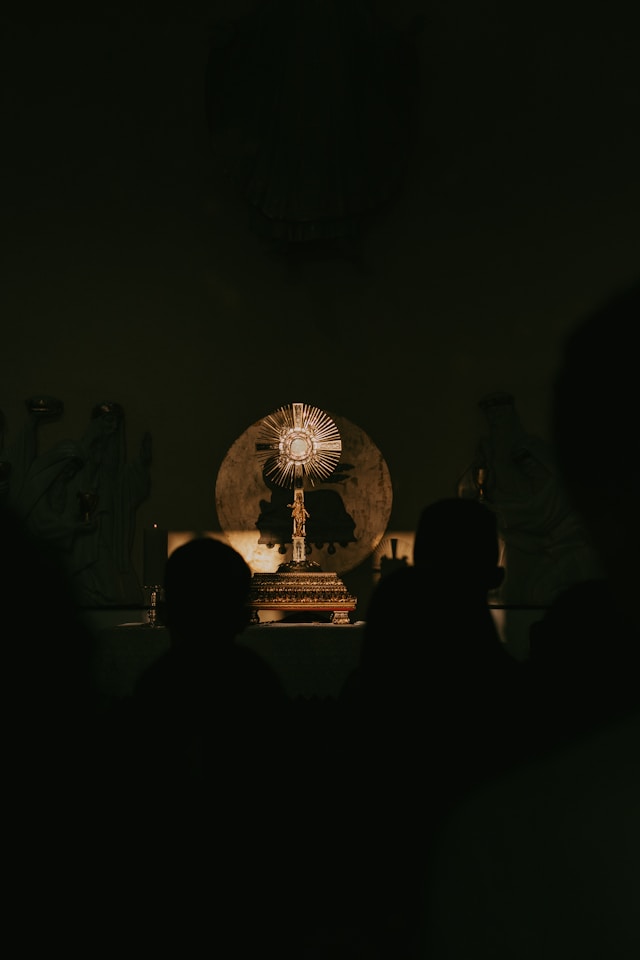
The Solemnity of Corpus Christi celebrates the Eucharist, the real presence of Jesus Christ in the Holy Mass. Since it is a celebration of the Eucharist, the Solemnity of Corpus Christi is intrinsically linked to Maundy Thursday, when Jesus instituted the Eucharist at the Last Supper. If Corpus Christi is fundamentally connected to Maundy Thursday, then it is also tied to the entire Easter Triduum. Jesus’ real presence is not only associated with the Last Supper but also with His Cross and Resurrection. But, how are Corpus Christi related to the Cross and Resurrection?

Jesus’ Body and Blood are, in essence, the sacrifice of the Cross (Jn 1:29; Eph 5:2). In the Old Testament, offering sacrifices was the divinely ordained way of worship. The Book of Leviticus describes various types of sacrifices, such as the burnt offering (holocaust), the sin offering, and the peace offering (communion sacrifice) (Lev 1–5). Jesus perfectly fulfills all these Old Testament sacrifices. He surrendered Himself completely on the Cross as the perfect holocaust (Heb 10:5-10). He died to save us from our sins, just as a sin offering does (2 Cor 5:21). Moreover, His Body and Blood are received by His people, much like the communion sacrifice—a type of offering that was partly given to God, partly consumed by the priest, and partly shared by the worshippers, symbolizing communion between God and His people (Eph 2:14-16).
However, Corpus Christi is also connected to His Resurrection. The Body and Blood of Christ that we receive in the Eucharist are not merely ordinary flesh but the glorified and resurrected Body of Christ. Ordinary human bodies are weak, limited, and subject to decay after death. Yet, Jesus’ resurrected body is full of grace and life-giving power—a body that transcends time and space, moves between heaven and earth, and can transform its appearance into bread and wine. This is why, in John 6:54-55, Jesus confidently declares: “Those who eat my flesh and drink my blood have eternal life, and I will raise them up on the last day; for my flesh is true food and my blood is true drink.”
The Feast of Corpus Christi reveals that Jesus, the Son of the living God, gave up everything—His life, His divinity, and His humanity—for us as the ultimate sign of His radical love. Yet Corpus Christi does not end with the Eucharist. As we carry Jesus in our lives, we are also called to share our bodies with one another in love. In fact, as human beings, the greatest expression of love is through our bodies. Married couples give themselves to each other until death separates them. Parents sacrifice their bodies for their children so they may live and grow. Religious men and women dedicate their bodies to the Church and the people of God. Just as Jesus said, “This is my body which is given for you,” we also do the same, “This is my body which is given in love!”
The Eucharist is truly central to our lives—not only because it provides perfect and acceptable worship to the Father, but also because it grants us the grace to share our bodies with others. Only by sharing our humanity in love do we find true happiness, and this is made possible through the grace we receive in the Eucharist.
Rome
Valentinus Bayuhadi Ruseno, OP
Guide Questions:
What are our understanding about the Eucharist? How often do we participate in the Eucharist and receive the Body and Blood of Christ? How do we express our reverence and love when we receive the Eucharist? How do we use our bodies to love?


 Today’s Gospel presents us with one of the most cryptic sayings of Jesus, “Just as Moses lifted up the serpent in the desert, so must the Son of Man be lifted up, so that everyone who believes in him may have eternal life.” To unpack this, we cannot but go back to the Old Testament, especially the Book of Numbers.
 Injil hari ini memberi kita salah satu perkataan Yesus yang paling sulit dimengerti, “sama seperti Musa meninggikan ular di padang gurun, demikian juga Anak Manusia harus ditinggikan, supaya setiap orang yang percaya kepada-Nya beroleh hidup yang kekal.” Untuk memahami perkataan ini, kita perlu kembali ke Perjanjian Lama, terutama Kitab Bilangan.
 We, modern readers, often misunderstand today’s Gospel. This particular Jesus’ story becomes a basis for some to refuse the church building and parish vicinities for non-religious activities, however good its intention is. I personally agree that the inside of the Church’s building is a place set aside for worship and prayer. This is the sacred ground for people to encounter God and experience heaven.
 In Medio Ecclesiae