


The Solemnity of the Body and Blood of Jesus Christ. June 18, 2017 [John 6:51-58]
“Whoever eats my flesh and drinks my blood has eternal life, and I will raise him on the last day. (Joh 6:51)”
 Eating is essential to our life. Nobody would deny that eating is a matter of life and death, but there is always significant different between a beggar sitting by the gate of St. Domingo church and most of us who can enjoy a full meal three times a day. The beggar will ask himself, “How can I eat today?” While, we will inquire ourselves, “Where am I going to eat today? Is the ambience of the restaurant welcoming? Is the food as tasty as Filipino delicacy? Is the food safe from any cancer-causing substance?” For some, eating is about survival, but for some other, this phenomenon has evolved into something mechanically sophisticated. The society provides us with almost unlimited options of what we are going to eat, and seemingly we are masters of these foods as we possess the authority to choose what we like and shun what we don’t. But, we actually are slowly turning to be slaves of our appetite as we shift our focus not on the essential but on the trivial, like how we satisfy our fickle cravings.
What we eat, how we eat, and where we eat reflect who we are, as well as our society, our world. While we can afford to eat at fine-dining restaurants, yet some of our brothers and sisters can only have one instant noodle for the whole day, it means there is something wrong with us, with our world. Once I watched a movie about two young ladies eating fried chicken in one of the fast food restaurants. They were not able to consume everything and threw the leftover at the garbage can. After some time, a poor man came and took that leftover. He brought that home and served it as the dinner for his small impoverished family. Yet, before they ate, they prayed and gave thanks for the food!
Jesus offered Himself as food in the Eucharist, and this offer becomes the sign of the radical justice and mercy of God. It is mercy because despite nobody of us deserve His most holy body and blood, and attain the fullness of life and the resurrection of the body, He continues to give this profound grace to us. It is justice because He does not discriminate. All of us, whether we are men or women, whether rich or poor, whether healthy or sick, are created in His image and likeness and thus, invited to this sacred banquet. Yes, in the Eucharist, we only receive Jesus in a tiny and tasteless host, yet the small bread that scarcely fills our biological needs, is given to all who are coming to Him seeking rest and joy.
St. Paul in his first letter to the Corinthians rebuked the Christians there. One of the major reasons was that some (presumably rich) Christians refused to share the Eucharistic meal with other (presumably poor) Christians, and they let them without food. “When you meet in one place, then, it is not to eat the Lord’s supper, for in eating, each one goes ahead with his own supper, and one goes hungry while another gets drunk. (1 Cor 11:20-21). For Paul, this was a gross injustice and an offence against the Eucharist, because as Jesus gave His body and blood for all, so Eucharist has to symbolize this God’s radical self-giving.
Are we like the Corinthians who take the Eucharist yet neglect our hungry brothers and sisters around us? Are we living our identity as God’s image, and thus, reflect God’s radical justice? Do we become more like Christ, and manifest His boundless mercy? Do the body and blood of Christ in the Eucharist have effect in us?
Br. Valentinus Bayuhadi Ruseno, OP
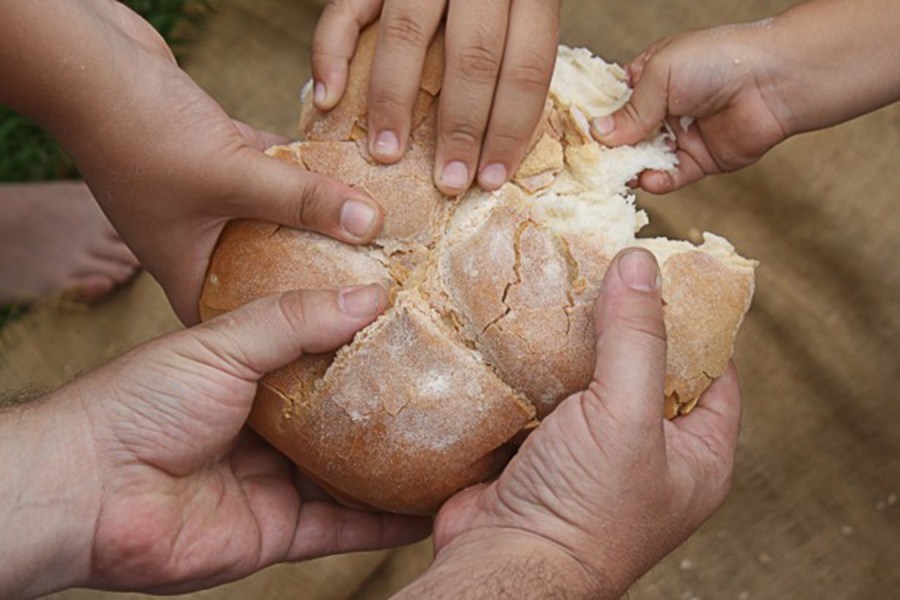
 Tidak ada yang menyangkal bahwa makan adalah masalah hidup dan mati, tapi selalu ada perbedaan yang signifikan antara seorang pengemis yang duduk di gerbang gereja dan kebanyakan dari kita yang dapat menikmati makanan lengkap tiga kali sehari. Pengemis itu akan bertanya pada dirinya sendiri, “Bagaimana saya bisa makan hari ini?” Sementara, kita akan bertanya kepada diri sendiri, “Ke mana saya akan makan hari ini? Apakah suasana restoran nyaman? Apakah makanannya lezat sesuai cita rasa Indonsia? Apakah makanannya aman dari zat penyebab kanker?” Bagi sebagian orang, makan adalah tentang kelangsungan hidup, namun untuk beberapa dari kita, fenomena ini telah berkembang menjadi sesuatu rumit. Pasar memberi kita pilihan yang hampir tak terbatas tentang apa yang akan kita makan, dan tampaknya kita adalah raja dari makanan ini karena kita memiliki kekuasaan untuk memilih apa yang kita sukai. Tapi, kita sebenarnya perlahan berubah menjadi budak nafsu makan kita saat kita mengalihkan fokus bukan pada hal yang esensial tapi pada hal-hal sepele seperti bagaimana kita memuaskan hasrat kita yang terus berubah-ubah.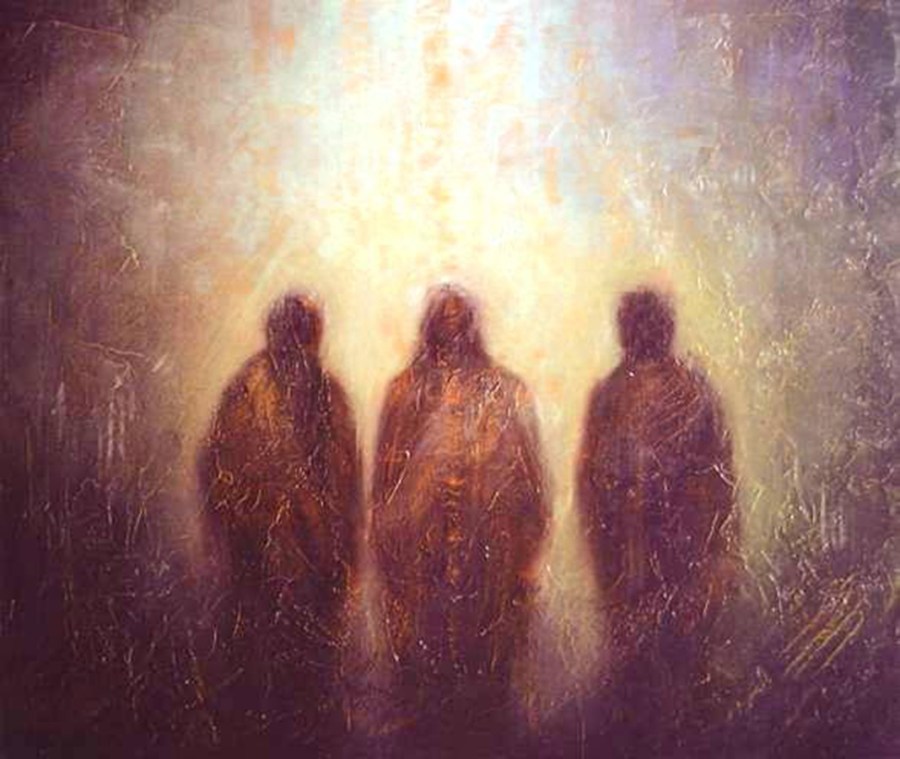
 Luke wonderfully narrated the Journey to Emmaus in such a way that it became a catechetical instruction on the Eucharist. The two disciples were actually running away from Jerusalem. After the death of their master, the situation turned to be dangerous for their lives. They were afraid of the Jewish authorities and their hope and dream of having a Messiah were shattered. Better for them to go away and return to their former lives. Yet, Jesus surprisingly came, healed their wounds, and reappointed them as His apostles. However, let us see some details of today’s Gospel and how this narrative speaks of the Eucharist.
 Lukas menceritakan kisah Perjalanan ke Emaus dengan sedemikian rupa sehingga menjadi sebuah instruksi kateketis tentang Ekaristi. Kedua murid tersebut sebenarnya melarikan diri dari Yerusalem. Setelah kematian guru mereka, situasi berubah menjadi berbahaya bagi kehidupan mereka. Mereka takut pada penguasa Yahudi, dan harapan dan impian mereka untuk memiliki seorang Mesias hancur berantakan. Lebih baik mereka pergi dan kembali ke kehidupan yang dulu. Namun, Yesus dengan mengejutkan datang, menyembuhkan luka-luka mereka, dan menunjuk mereka kembali sebagai rasul-rasul-Nya. Mari kita lihat beberapa rincian Injil hari ini dan bagaimana narasi ini berbicara tentang Ekaristi.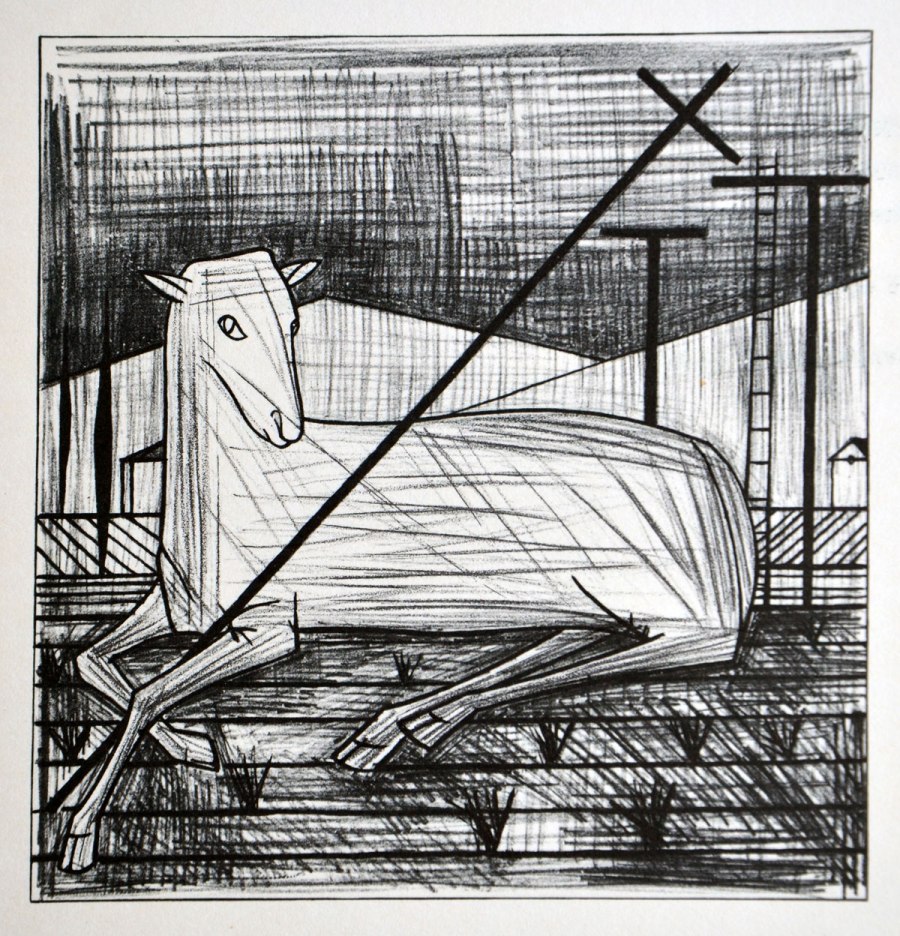
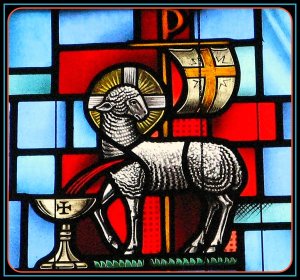
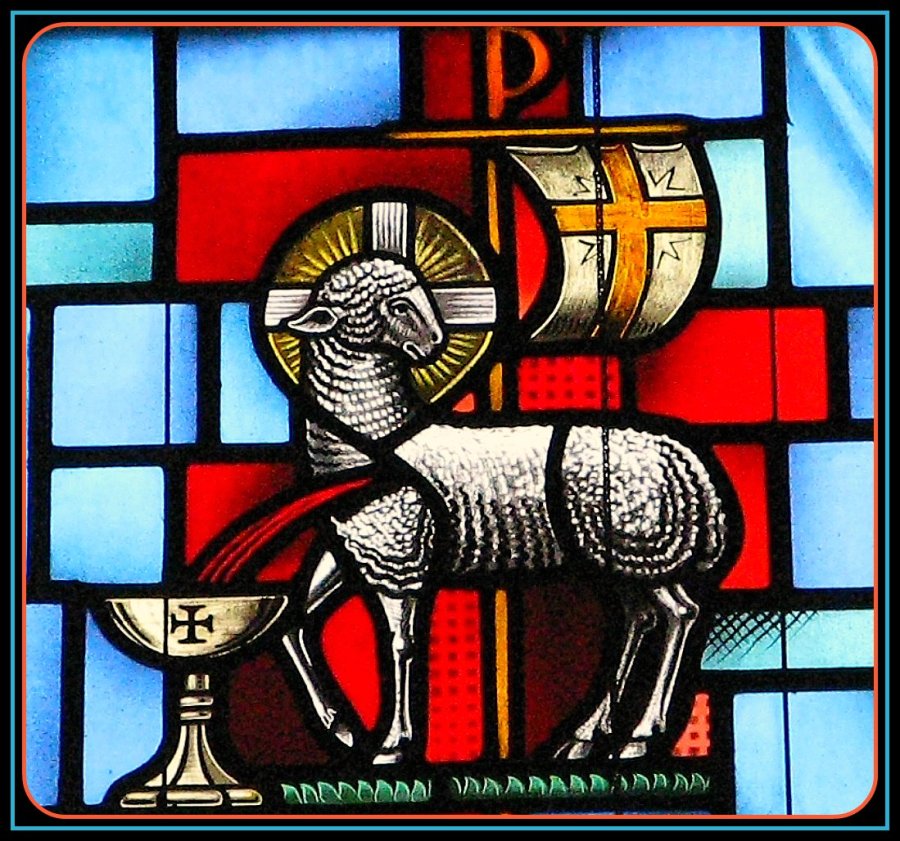
 Yohanes Pembaptis menyebut Yesus sebagai Anak Domba Allah yang menghapus dosa dunia. Gelar ini akhirnya menjadi bagian dari Ekaristi dan kita setia mendaraskan atau menyanyikan ‘Anak Domba Allah’ sebelum kita menerima komuni. Tapi, apa artinya? Mengapa harus anak domba? Bukan orangutan, jerapah atau komodo? Mengapa hewan, bukan tanaman, buah atau ponsel? Untuk membuatnya lebih dimengerti, kita harus kembali ke ritual perjamuan Paskah bangsa Yahudi.
 We are entering the Season of Advent. This season marks the beginning of the new Church’s liturgical year as well as of the four Sundays preparation for Christmas. Advent is from the Latin word ‘Adventus’ meaning ‘arrival’, and thus, this season prepares us for the coming of Christ.
 Kita memasuki masa Adven. Masa ini menandai awal tahun liturgi Gereja yang baru dan juga empat Minggu persiapan Natal. Adven berasal dari kata Latin ‘adventus’ yang berarti ‘kedatangan’, dengan demikian, masa ini mempersiapkan kita untuk kedatangan Kristus.
 Being a disciple is an essential character of Jesus’ followers. In our time, a disciple may mean a student of particular teachers or schools. Like Br. Bayu is a student of the University of Santo Tomas, Manila. In ancient time, especially in Eastern and Jewish tradition, being a disciple has a different understanding. A disciple would not only accept his master’s teachings, but literally follow his Master wherever he would go and stay. Disciples would not only learn on various insight, but also witness and imitate how their master lived his life. They shared their master’s meal, and they were part of their teachers’ joy and sadness. Thus, being a disciple is not only about an intellectual education, but also a holistic formation. It is fundamentally sharing the very life of the master himself.

 In Medio Ecclesiae