
Moses

3rd Sunday of Lent [C]

March 23, 2025

Exodus 3:1-8a, 13-15

Moses is undoubtedly one of the greatest figures in the Old Testament. He led the Israelites out of slavery in Egypt, mediated the Sinaitic covenant, taught God’s laws, and even performed miracles. His life and teachings are recorded in four books of the Bible: Exodus, Leviticus, Numbers, and Deuteronomy. However, when we look deeper into his life, we discover that his story is not solely about greatness and success. Moses also had a dark past.
Moses was born into the Levite clan during a time when Egypt had ordered the killing of all Hebrew baby boys. To save him, his mother devised a plan to place him in a basket on the Nile River, where he was found by an Egyptian princess. She drew him from the water and named him “Moses” (Exodus 2:10). Though an Israelite by birth, Moses was adopted by the princess and raised as part of the royal family, enjoying the privileges reserved for Egyptian nobility.

Moses’ story might have had a “happy ending” had he not involved himself in the struggles of the Hebrew slaves. He could have lived comfortably as an Egyptian official, married an Egyptian woman, raised a family, and enjoyed a peaceful old age. However, he could not ignore the injustice inflicted on his people. In a moment of anger, he killed an Egyptian who was oppressing an Israelite. Moses believed he had hidden his crime, but he was wrong. When he tried to mediate a dispute between two Israelites, they revealed his secret, exposing him as a murderer. His comfortable life was shattered, and he was forced to flee Egypt. Once drawn from the water, Moses now found himself drowning in despair.

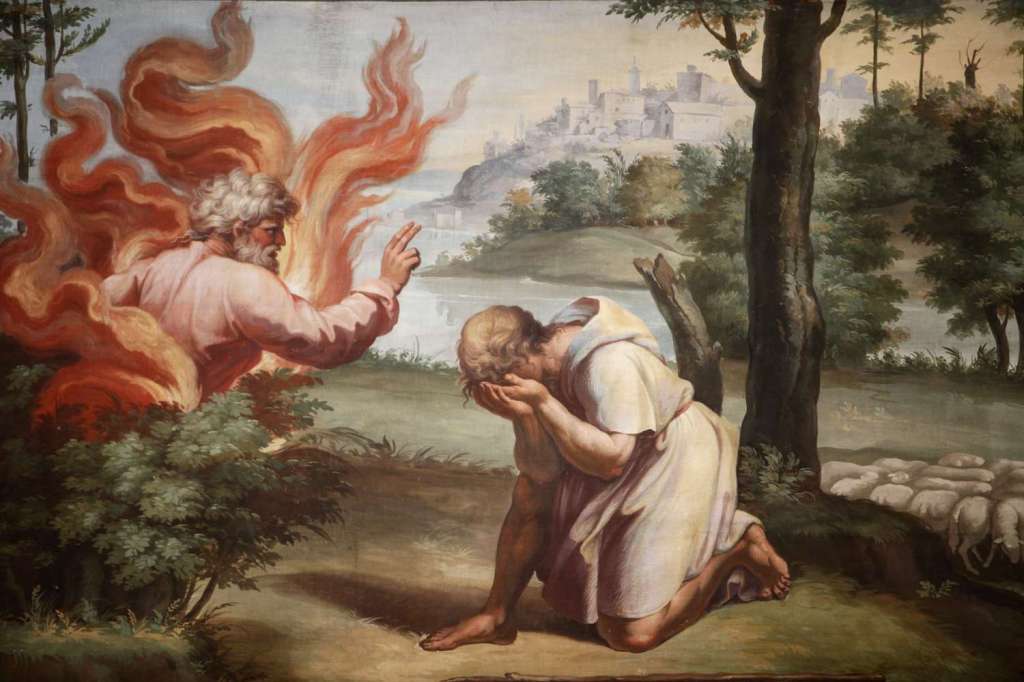
In Midian, Moses started a new life. He protected the daughters of a Midianite priest from harassing shepherds, and as a sign of gratitude, the priest welcomed him and gave him his daughter Zipporah in marriage. This marked Moses’ second life. Though not as luxurious as his life in Egypt, it was peaceful. Yet, when Moses was around 80 years old, God appeared to him in a burning bush and called him to be His instrument in liberating the Israelites from Egyptian slavery. Moses doubted himself deeply. After all, he was a murderer and a fugitive who had betrayed the kindness of the Egyptians, while distrusted his fellow Israelites. He was also old and content with his life in Midian.

Despite Moses’ dark and sinful past—and his current doubts—God insisted on choosing him. Why? Because Moses’ story is ultimately not about Moses but about God, who redeemed Israel through an imperfect man. Yet, Moses was not merely an instrument. As he journeyed with God, he also found his own redemption.

Like Moses, we are far from perfect. We are broken, struggling with sin and disordered attachments. We fail as parents, spouses, children, and friends. We hurt others and ourselves. We doubt our worth and often settle for less. Yet, God insists on bringing out the best in us and invites us to walk with Him to find redemption. In the end, we can only be grateful, for despite our brokenness and imperfections, God makes us beautiful.

Rome

Valentinus Bayuhadi Ruseno, OP

Guide Questions:

What do we remember about Moses?  Do we have something in common with Moses? If so, what is it? Do we have a dark past like Moses? Do we experience failures like Moses? Do we doubt God’s plan for us, as Moses did? What can we learn from Moses as he accepted God’s calling? 

Consecrated

The Feast of Presentation of the Lord [C]

February 2, 2025

Luke 2:22-40

Today, we are celebrating the Feast of the Presentation, commemorating the biblical event when Mary and Joseph presented the newborn Jesus at the Temple in Jerusalem. But why must Jesus be presented at the Temple in the first place?

Joseph and Mary brought Jesus to the Temple because He was Mary’s firstborn. According to the Law of Moses, all firstborn males, whether human or animal, must be consecrated to the Lord (see Exodus 13:1-2; 11-16). The word “consecrated” here means to be made holy (Hebrew: kados), and to be holy means to belong to the Lord. The most common way to consecrate something is through sacrifice, signifying a transition from the ordinary realm to the divine realm.

Certainly, blood sacrifice was only required for livestock animals, such as sheep or goats. These animals were slaughtered and burned at the altar, signifying their transition from this world to the divine realm. However, not all things had to be killed. In the case of working animals, like donkeys, and firstborn humans, they were brought to the Temple and presented to the priest. Then, the owner or parents were required to redeem their firstborn by offering animals to be sacrificed in their place. To redeem Jesus, Joseph and Mary offered a pair of turtledoves or pigeons, a sacrifice commonly offered by the poor.

Why must the firstborn child be consecrated to the Lord? The Book of Exodus (chapter 12) tells us that, just before the Israelites left Egypt, the tenth plague that killed the Egyptian firstborns took place. The Israelite firstborns were spared because of the Passover sacrifice—the unblemished lamb that was slain, its blood placed on the doorposts, and its flesh roasted and eaten. In this way, the Passover lamb was sacrificed to redeem the firstborn Israelites from death.

What is interesting is that Luke never tells us that Jesus was redeemed. Yes, He was presented, and Mary and Joseph did offer sacrificial animals, but the word “redeem” is absent from the story. It seems that Luke deliberately omits this word to emphasize that Jesus is presented as the true firstborn—the Passover Lamb—who will be sacrificed so that we may be redeemed from sin and death.

As Christians, we no longer follow the ritual of consecrating firstborns as outlined in Exodus 13. The reason is that we are all consecrated, or set apart, for the Lord through our baptism. Through His sacrifice on the cross, Jesus is the Passover Lamb (1 Cor 5:7) who saves us from sin and death and redeems us for God. Now, we belong to the Lord, and as God’s possession, we are holy. This is why St. Paul, in his letters (1 Cor 1:2; Eph 1:1; Phil 1:1), does not refer to the Church’s members as Christians but as the “holy ones” or the “saints.” As people consecrated to God, we are called to live holy lives, for God is holy (Lev 11:44).

Rome

Valentinus Bayuhadi Ruseno, OP

Questions for Reflection:

Are we aware that we have been consecrated to the Lord? What does holiness mean? Do we live as holy people of God? How do we live a holy life in our daily routines? Do we help others grow in holiness? If so, how?

The Ten Commandments

3rd Sunday of Lent [B]
March 3, 2024
Exodus 20:1-17

On the third Sunday of Lent, the Church invites us to reflect on the Ten Commandments (our first reading). However, if we read the original Hebrew text, we may find something exciting.
God did not say that He handed down ‘the commandments,’ but instead, He gave ‘the words’ (הַדְּבָרִ֥ים – read: a-debarim). Why did God choose ‘words’ rather than ‘commandments’? After all, the content of what he said was really about laws.

The first answer may return to the creation account (Gen 1). God created the world and humanity with His ‘word,’ and now, in Mount Sinai, God formed Israel as His people with the laws given through His ‘word.’ This parallel points to us that the ‘laws’ passed in Sinai were not new, but God had placed them since the beginning. The ‘ten laws’ were not imposed from outside but an integral part of creation and human persons. God’s design is that by obeying the ‘commandments,’ the Israelites may return to Eden, where they may find their true happiness.

The second answer is that the choice of ‘words’ rather than ‘commandment’ shows the nature of the laws that God gave in Sinai. God did not treat Israelites (and also all of us) like slaves under the regime of terror. He did not force His rules upon us and punished us severely when we disobeyed Him. Yet, God treated us as adult children who can freely embrace these laws because we realize that these ‘laws’ are indeed beneficial for us.

The ‘laws’ are not externally imposed upon us but are following out from our being. Like gravity, it is not something externally added but an integral part of our universe, and so are the ‘ten words.’ We can use our natural reason to discover the laws. Our correct thinking will agree that killing, stealing, and adultery are wrong. Our right mind will support our efforts to honor our parents. And our logical thinking will lead us to one and true God. Since the ‘laws’ are integral to our nature, violating them means we bring harm to ourselves.

The third answer is that ‘words’ are a means of communication. The ten commandments are His words; thus, through them, we may communicate and understand Him better. And, as we get to know God better, we become closer to Him. The Ten Commandments are not a mighty wall to keep us away from God but a bridge connecting us to His immense love.

In this season of Lent, we are invited to reflect deeper into these ‘Ten Words .’We can reflect on each commandment: What is its purpose? What benefits do they bring us? What harm does it cause us when we violate it? What does it tell us about God, who created them?

Rome
Valentinus Bayuhadi Ruseno, OP