

Feast of the Holy Family [C]
December 29, 2024
Luke 2:41-52
Jesus did not appear in the world as a fully grown man out of nowhere, nor did He descend from the sky like an alien. Instead, He chose to be born as a little child into the family of Joseph and Mary. Interestingly, most of the events within this family, spanning more than 30 years, remain hidden. What did Jesus do during this time? Why did He choose to remain hidden during these years?
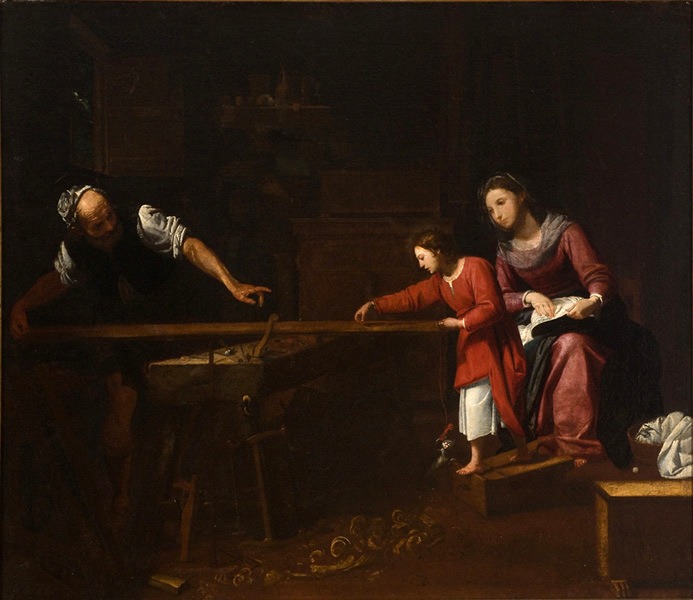
The little information we have comes from St. Luke, who tells us that Jesus submitted to the authority of Joseph and Mary and grew in age and wisdom, much like any other child (Luke 2:52). This implies that Jesus experienced and acted as any Israelite boy or man would in His time. As a baby, Jesus received constant nourishment from Mary. He learned to speak, walk, and play. As a young child, He likely helped Mary with household chores and played with His peers and relatives. When He became strong enough, He helped Joseph with his work and learned the family trade of carpentry. Being a descendant of David, Joseph was likely responsible for teaching Jesus to read, especially the Torah.
As a young man, Jesus continued to assist Joseph in his work. From time to time, they may have travelled to nearby major cities, such as Sepphoris, to work on various building projects. It’s reasonable to believe that Jesus not only learned to read the Torah but also to interpret and teach the Law of Moses under Joseph’s guidance. Young Jesus likely observed His foster father discussing and debating the precepts of the Law with local Pharisees and scribes. Perhaps He even listened as Joseph preached in the synagogue in Nazareth.
From this account, we see that there was nothing outwardly remarkable about the hidden lives of Jesus, Mary, and Joseph. Everything seemed ordinary. Had Jesus been born in our time, He would have grown up doing many of the things we commonly do. However, it would be a mistake to think that what Jesus did in Nazareth was insignificant. Jesus is not only fully human but also fully divine. His divinity sanctifies every aspect of His humanity, including the most ordinary moments of His life. Whatever Jesus did—whether working, eating, or even resting—was holy and salvific.
Through the mystery of the Incarnation, Jesus shared in our humanity. Because of this, we may share in His divinity through grace. Many of us live ordinary lives, punctuated by occasional exceptional moments. Yet, through Jesus and His hidden life, everything we do—even the smallest and most mundane tasks—can become a means of sanctification and salvation when done out of love for God and our neighbors. The little, unseen things we do in our families, schools, and workplaces can sanctify us if we offer them with love. The sufferings and pains we endure can also make us holy when we bear them patiently and without sin. Ultimately, the holiness of ordinary things is made possible when we unite everything we do, endure, and live with the living sacrifice of Jesus in the Eucharist.
Rome
Valentinus Bayuhadi Ruseno, OP
Guide questions:
Do we recognize that Jesus is present even in our daily and ordinary lives? Do we realize that even simple things we do in our lives contribute to our holiness? Do we know that God see even little and hidden acts of love we do for our parents, children and even strangers?



 We are celebrating the feast of the Holy Family, and indeed, we are celebrating not only the family of Jesus, Mary, and Joseph but every human family. Through this liturgical celebration, the Church is inviting us to recognize the importance and the value of our family. Not only acclaiming the fundamental worth of family, but we are also invited to embrace and celebrate family lives.
 Kita merayakan pesta Keluarga Kudus, namun kita tidak hanya merayakan keluarga Yesus, Maria dan Yusuf, tetapi setiap keluarga di dunia. Melalui perayaan liturgi hari ini, Gereja mengundang kita untuk menyadari pentingnya dan berharganya keluarga kita. Tidak hanya menghargai nilai dasar keluarga, kita diundang untuk merangkul dan merayakan kehidupan keluarga.
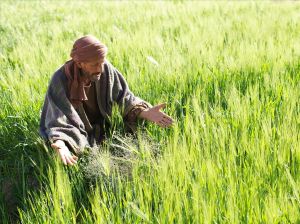 The parable of the wheat and weed is one of a kind. If we survey the details, we are supposed to raise our eyebrows. Firstly, if you become a person who will destroy your opponent’s field of wheat, you know that there are several other effective ways to accomplish that. We can simply set a small fire on the wheat, and the entire field will eventually turn to be an inferno. But, the enemy chose unorthodox tactic: to sow seeds of weed during the planting period. While the weed may disturb the growth of the wheat, they will not sufficiently damage and stop the harvest. So, what is the purpose? What is surprising is that the decision of the field’s owner. When he was notified about the presence of the weed, he immediately knew the culprit, and instead to act promptly and protect their wheat, he decided to allow the weeds to thrive among his wheat.
 Perumpamaan tentang gandum dan ilalang adalah sangat unik. Jika kita meneliti detailnya, kita seharusnya terkejut. Pertama, jika kita menjadi orang yang akan menghancurkan ladang gandum lawan kita, kita tahu bahwa ada beberapa cara lain yang lebih efektif untuk mencapainya. Kita cukup membakar beberapa gandum, dan seluruh ladang pada akhirnya akan berubah menjadi api raksasa. Tetapi, musuh ini memilih taktik yang tidak lazim: menabur benih ilalang selama masa tanam. Sementara ilalang dapat mengganggu pertumbuhan gandum, mereka tidak akan cukup merusak dan menggagalkan panen. Jadi, apa tujuannya? Yang mengejutkan adalah keputusan pemilik ladang. Ketika dia diberitahu tentang keberadaan ilalang, dia segera tahu pelakunya, dan bukannya bertindak cepat untuk melindungi gandumnya, dia memutuskan untuk membiarkan ilalang tumbuh subur di antara gandumnya.
 Dalam banyak budaya seperti di Indonesia, Filipina dan Cina, menghormati orang tua kita adalah hal yang sangat penting. Di Indonesia, untuk mendidik nilai ini, cerita rakyat “Malin Kudang” diajarkan bahkan di sekolah dasar. Intinya, Malin tidak hanya gagal menghormati orang tuanya, tetapi juga sengaja mengabaikan ibunya yang sudah tua. Karena itu, dia dikutuk menjadi batu. Adalah sesuatu yang tidak termaafkan untuk tidak menghormati seseorang yang telah memberikan hidup kita dan mendidik kita untuk hidup.
 In Medio Ecclesiae