

Solemnity of the Most Holy Trinity [A]
June 7, 2020
John 3:16-18
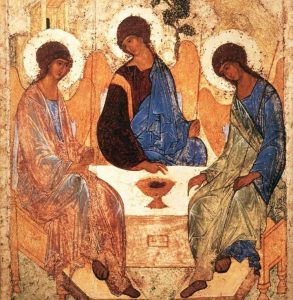 We are re-entering the ordinary season of the Church, and one of the greatest feasts within the ordinary time is the solemnity of the Most Holy Trinity. The Church has placed the celebration of the great feast on Sunday after the Pentecost. The reason may not be that obvious, but if we look at the bigger picture, it is nothing but a natural procession of truth. In Easter, we are celebrating the resurrection of Jesus that cements the divinity of Christ. On the Pentecost, we witness the divinity of the Holy Spirit being affirmed [see last Sunday’s reflection]. Now, we are rejoicing for the Three divine persons in God.
The Trinity Sunday is admittedly the most dreaded by many preachers because many are still at a loss of how to show the beauty of this most profound truth, and others are afraid to explain the Trinity because they may spread erroneous concepts. After all, we are facing the source and summit of all mysteries, the mystery of all mysteries. However, it is not the right excuse not to bring forth the beauty of the Holy Trinity. The preachers have to roll up their sleeves and spend more time in researching and preparing our homilies.
In my reflection, I would like to bring you to the Old Testament. In the Old Testament, the reality of the Trinity is hidden in most parts, and yet the sacred truth comes up in the surprisingly key moments. Let us read Gen 1:1-3, “In the beginning when God created the heavens and the earth, the earth was a formless void and darkness covered the face of the deep, while a wind from God swept over the face of the waters. 3 Then God said, “Let there be light,”; and there was light.” The early Christians like St. Irenaeus of Lyon, immediately saw this as Trinity working as one, God, the Spirit, and the Word. The good news is that the creation is the masterpiece of the Holy Trinity, and to a certain degree, it reflects the perfection of the Trinity.
And wait, something more! In Gen 1:26, when God created the man and the woman, God said, “let us create the man and woman in our image and likeness.” This passage is a bit strange because why God, who is one, suddenly self-refer in plural? The Jewish tradition would interpret that God is addressing His heavenly council, the angels, but again, the Christian tradition instinctively saw them as the three divine persons. The good news is that if we are created in the image of God, and if our God is the Trinity, then we are created in the image of Trinity.
This explains a lot of things. Indeed, we cannot fully comprehend the mystery, but we surprisingly are very close to this mystery. Trinity is both our origin and destiny. As the image of Trinity, we cannot discover real joy by hoarding things to ourselves. We cannot be selfish and truly delighted at the same time. Like the Father and the Son love each other in the Holy Spirit, we are called to give ourselves to others in life.
Why does the Catholic Church fearlessly defend the sacredness of marriage? Because through marriage, the man and woman may give themselves totally to each other in love. Their love is so strong that love can give birth to life. When this new life [children] come to their lives, their love can grow even exponentially. In loving and giving ourselves, we may find the fullness of our identity, the image of Trinity. Indeed, it is tough, but the good news is that we are designed to give love and life. Holy Trinity is our origin, and Holy Trinity is our destiny.
Valentinus Bayuhadi Ruseno, OP
 Kita memasuki kembali masa biasa Gereja, dan salah satu perayaan terbesar dalam masa biasa adalah kesungguhan Tritunggal Mahakudus. Gereja telah menempatkan perayaan besar ini pada hari Minggu setelah Pentekosta. Alasannya mungkin tidak begitu jelas bagi kita, tetapi jika kita melihat gambaran yang lebih besar, itu sebenarnya adalah prosesi kebenaran yang wajar. Di Paskah, kita merayakan kebangkitan Yesus yang mengukuhkan keilahian Kristus, dan pada hari Pentekosta, kita menyaksikan keilahian Roh Kudus ditegaskan [lihat refleksi hari Minggu lalu]. Sekarang, kami bersukacita karena Tiga pribadi Ilahi di dalam Tuhan.
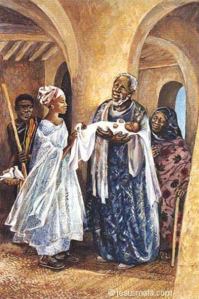 If we are given a chance to choose our parents, what kind of parents will be our choice? Perhaps, some will prefer billionaire parents so that we can sing like Bruno Mars, “I wanna be a billionaire… Buy all of the things I never had… I wanna be on the cover of Forbes magazine, and Smiling next to Oprah and the Queen.” Perhaps some of us want to become the children of a king. So, royal blood is flowing through our vein, and people call us as a prince, princess, or royal highness. Perhaps, we want to be born from Korean megastars, because we want to become the prettiest or the most handsome.
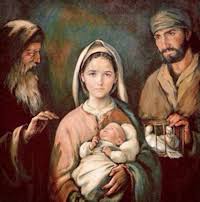 Jika kita diberi kesempatan untuk memilih orang tua kita sendiri, orang tua ideal seperti apa yang akan menjadi pilihan kita? Mungkin, beberapa akan lebih suka orang tua miliarder, supaya hidup terjamin, mendapatkan Pendidikan terbaik, dan masa depan cerah. Mungkin sebagian dari kita ingin menjadi anak-anak raja. Jadi, memiliki darah ningrat, dan orang-orang memanggil kita sebagai pangeran, puteri atau bangsawan. Mungkin kita ingin dilahirkan dari megabintang Korea, karena kita ingin menjadi yang tercantik atau paling tampan.
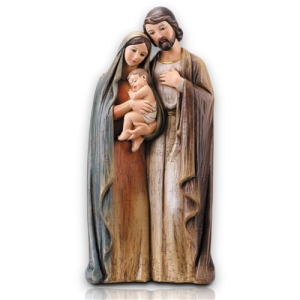 Jika kita diberi pilihan untuk memilih orang tua kita, orang tua seperti apa yang kita inginkan? Mungkin, sebagian dari kita ingin memiliki orang tua yang kaya. Beberapa dari kita mungkin berhasrat untuk memiliki orang tua yang berupa cantik, tampan atau berotak jenius. Beberapa dari kita mungkin ingin dilahirkan dalam keluarga kerajaan dan berpengaruh secara politis. Ini adalah impian-impian kita yang sangat wajar. Namun, yang mengejutkan, ini bukanlah pilihan yang Allah buat ketika Dia memilih orang tua-Nya. Dalam kebijaksanaan-Nya yang indah, Allah memilih Maria dan Yusuf dari Nazaret.
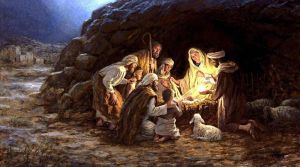 Today is Christmas, the day of Jesus was born in Bethlehem, and it is a traditional practice that in every Church or Christian family, there is a nativity scene. Usually, the baby Jesus was born in a kind of stable or shed, and He was placed on the wooden manger (a place where animals eat). Surely, Mary and Joseph are intently watching on the Baby, while other animals like sheep and cows become the silent witnesses of this most beautiful moment in human history. The scene will not be complete without the shepherds and the angel.
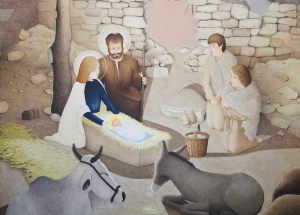 Hari ini adalah Natal, hari Yesus lahir di Bethlehem. Biasanya di setiap Gereja atau keluarga Kristiani, ada sebuah kadang atau gua yang menjadi tempat kelahiran Yesus. Di sini, Bayi Yesus ditempatkan di sebuah palungan kayu (tempat makanan binatang). Tentunya, ada patung Maria dan Yusuf yang dengan penuh perhatian mengawasi sang Bayi, sementara binatang-binatang lain seperti domba dan sapi menjadi saksi bisu dari momen terindah ini dalam sejarah manusia ini. Tentunya, kandang ini tidak akan lengkap tanpa gembala dan malaikat. Tempat kelahiran Yesus ini memang indah dan selalu mengingatkan kita akan kesederhanaan Natal yang sering kita lupakan di tengah hiruk pikuk perayaan Natal dan Tahun Baru.
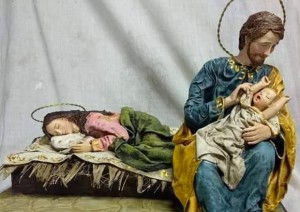 Beberapa hari yang lalu, ada sebuah gambar akan kelahiran Tuhan Yesus menjadi viral. Gambar itu disebut “Biarkan Bunda Beristirahat”. Karakter utama dari gambar ini adalah Yusuf mengendong bayi Yesus sementara Maria beristirahat. Gambaran ini menunjukkan kepada kita aspek yang jarang tersentuh dari kelahiran Yesus. Seringkali, kita memusatkan perhatian kita pada Yesus bersama Maria, ibu-Nya. Kita menghormati Maria karena kesediaannya untuk mengandung Yesus di rahimnya meskipun begitu banyak bahaya dan kesulitan dan untuk tetap menjadi murid Yesus yang setia sampai akhir. Namun, gambar ini membawa kita kepada karakter penting lain yang sering kita abaikan, St Yusuf, sebagai orang beriman.
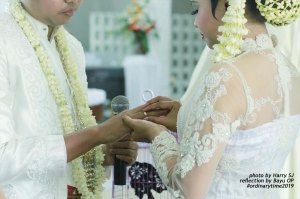 Mary who was once a bride and has passed through the tiny-gritty of a Jewish wedding can sense immediately something goes wrong. The wine is running out. In the Jewish context, wine is an essential ingredient in every joyous occasion, as it is ordained by God to “gladden men’s hearts” (Ps 104:15) The lack of it can spell a disastrous result. It is the source of shame, and even a family dispute.
 In Medio Ecclesiae