

Seventeenth Sunday in Ordinary Time [July 29, 2018] John 6:1-15
Jesus said to Philip, “Where can we buy enough food for them to eat?” (Jn. 6:5)
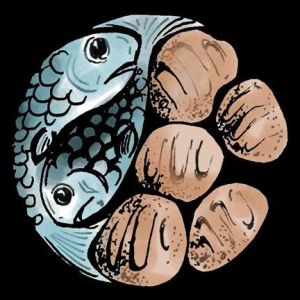
 Unlike the other Gospels, the Gospel of John does not have the story of the Institution of the Eucharist on the Last Supper. However, it does not mean John the evangelist does not write anything about the Eucharist. In fact, John includes the most sublime discourse on the bread of life in his chapter 6. The chapter itself is relatively long, and the Church has distributed it into several Sunday Gospel readings (from today up to August 26). This discourse on the Bread of Life begins with the lovely story of Jesus feeding the multitude.
The story highlights Jesus’ question to Philip, “Where can we buy enough food for them to eat?” (Jn. 6:5) Philip, who seems to be familiar with the place, gives impossibility as an answer, “Two hundred denarii (or two hundred days’ wages) worth of food would not be enough…” (Jn. 6:7) Philip is just realistic, but he misses the mark. Jesus does not ask “how much,” but “where.” Perhaps, if Philip lives in the 21st century, he would direct Jesus to the nearest shopping mall! The point is that Philip would eagerly reduce the entire problem into a financial matter. Philip is not wrong because finance and economy are the backbones of our daily lives and even our survival as species, But money is not the only thing that matters. Philip will later see during the multiplication of the bread, that the “where” is pointing back to Jesus Himself. And as we will see in succeeding of chapter 6, the bread Jesus offers is not meant only for biological and economic benefits, but for eternal life.
I am currently having my clinical pastoral education at one of the hospitals in Metro Manila. One of the sacred missions entrusted to me as a chaplain is to distribute the Holy Communion to the sick. By ministering to the sick, especially through prayer and giving Holy Communion, I am reminded that the physical and biological aspects of our humanity are not the only things to be taken care of. It is true that many patients I have encountered are struggling with financial issues, like how to get the money to pay the hospital bills and expensive medicines. They have to wrestle also with their sickness that sometimes is incurable. I myself am at a loss on how to help them in these pressing concerns. However, often, the patients themselves are the ones who assure me that God will find a way, as He always does. What I do, then, is to affirm and strengthen their faith. Prayer and giving of the Holy Communion are the visible manifestations of Jesus’ real presence among us, and His presence is even more felt by the sick. Like our Gospel’s today, Jesus does not only take care of the physical aspect of our lives, but more fundamentally, He brings us to the deeper reality that our souls all long for. Paradoxically, in their hunger, they discover Jesus.
Being strong and healthy, we often forget this simple truth. Like Philip, we are more concerned with amassing wealth, attaining fame, and achieving success. Even as people serving the Church and the community, we are spending more time in organizing charity events, raising funds, and even arguing among ourselves over trivial matters. We miss the point why we are going to the Church. We miss encountering Jesus. We pray and hope that we are able to answer Jesus’ question rightly to Philip and us, “Where shall we find food for us to eat?”
Br. Valentinus Bayuhadi Ruseno, OP
 Tidak seperti Injil lainnya, Injil Yohanes tidak memiliki kisah tentang penetapan Ekaristi dalam Perjamuan Terakhir. Namun, ini tidak berarti Yohanes penginjil tidak menulis apa pun tentang Ekaristi. Nyatanya, Yohanes menulis tulisan yang paling luhur tentang roti hidup dalam bab 6 Injilnya. Bab itu sendiri relatif panjang, dan Gereja telah distribusikannya ke beberapa bacaan Injil hari Minggu (dari hari ini hingga 26 Agustus). Penjelasan tentang Roti Hidup ini dimulai dengan kisah Yesus yang memberi makan banyak orang.
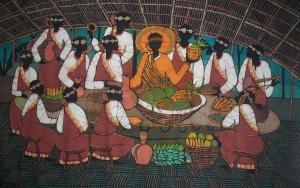
 We often take for granted that we are created as a bodily creature. Our body is integral to our humanity and created by God as something good; we receive our body as a gift. We freely receive our body from our parents, and our parents from their parents and this goes on till we discover God as the source of this gift. Because our body is a gift from God, we are called to honor our body as we honor the Giver of the gift Himself.
 Tubuh kita adalah bagian integral dari kemanusiaan kita dan diciptakan oleh Tuhan sebagai sesuatu yang baik. Tubuh kita adalah sebuah karunia. Dengan cuma-cuma, kita menerima tubuh kita dari orang tua kita, dan orang tua kita dari orang tua mereka dan ini berlangsung terus sampai kita menemukan Tuhan sebagai sumber dari karunia ini. Karena tubuh kita adalah karunia dari Tuhan, kita dipanggil untuk menghormati tubuh kita sebagaimana kita menghormati Sang pemberi karunia.

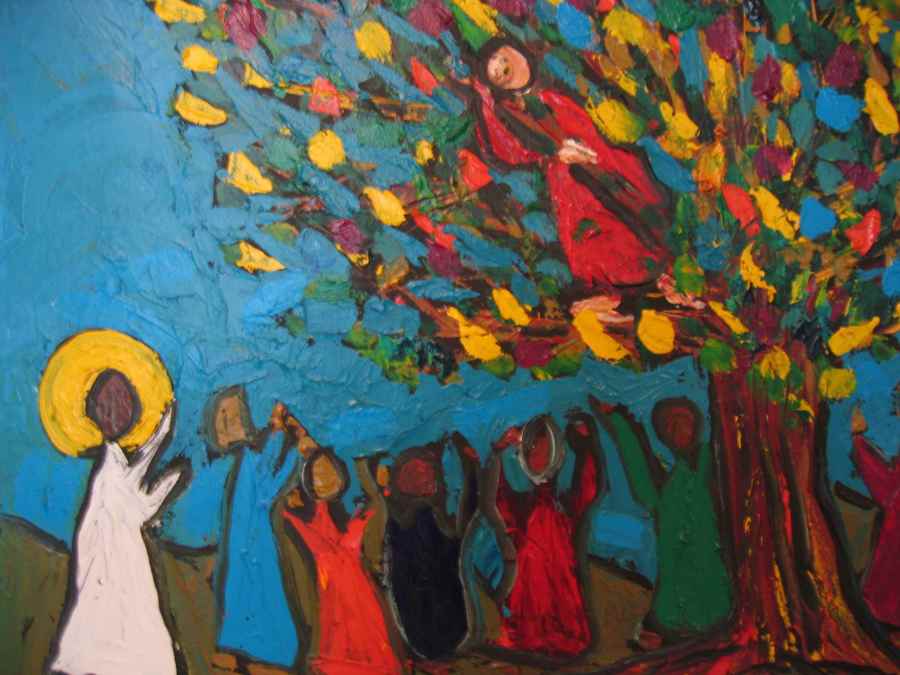


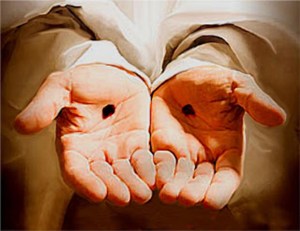 Are we ready to sell everything we have and follow Jesus? Are we prepared to give up our dreams and ambitions for the Kingdom? Are we willing to place our hearts, our treasures where no moth can destroy and no thief can steal?
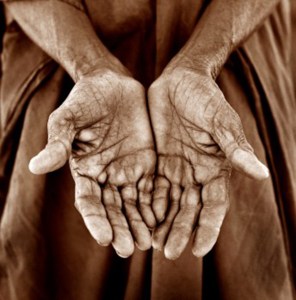 Apakah kita siap untuk menjual semua yang kita miliki dan mengikuti Yesus? Apakah kita siap untuk menyerah mimpi dan cita-cita kita untuk Kerajaan Allah? Apakah kita bersedia untuk menaruh hati kita pada harta yang tidak akan dirusak ngengat dan tidak akan dicuri?
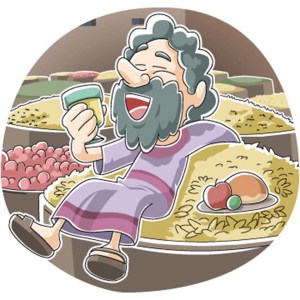 Greed is one of the most sickening sins. It can plague practically anyone, rich and poor, young and old, lay people and even the leaders of the Church. Greed as the inordinate desire for wealth or money. Greed breeds corruption, stealing, cheating and violence. Greed produces injustice and poverty. And injustice and poverty cause nothing but suffering of countless people and permanent destruction to our mother earth.
 Keserakahan dan ketamakan adalah dosa yang sangat menhancurkan. Ketamakan dapat menjangkiti praktis siapa pun, kaya dan miskin, tua dan muda, awam dan bahkan para pemimpin Gereja. Ketamakan dapat dimengerti sebagai hasrat yang tak terkendali untuk memiliki kekayaan atau harta benda. Keserakahan melahirkan berbagai bentuk korupsi, pencurian, penipuan dan kekerasan. Keserakahan menghasilkan ketidakadilan dan kemiskinan. Dan ketidakadilan dan kemiskinan menyebabkan penderitaan bagi jutaan orang dan kerusakan permanen pada bumi ini.
 In Medio Ecclesiae