

2nd Sunday of Lent [A]
March 1, 2026
Gen 12:1-4
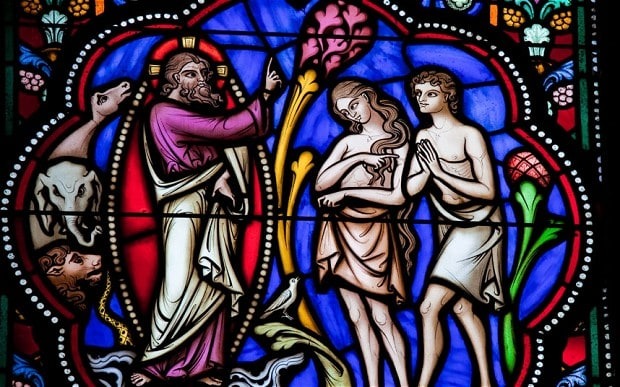
The first readings of the Sundays of Lent offer us a glimpse into the history of salvation, particularly within the Old Testament. Last Sunday, we encountered Adam and Eve, reflecting on their creation and their eventual fall from grace. Today, we meet Abraham, the first patriarch. But why Abraham?

Abraham’s original name was Abram, which literally means “the exalted father.” For much of his life, this name served as a source of irony, perhaps even mockery, since he was elderly and childless. How could he be an “exalted father” with no children to exalt him? It was then that the Lord appeared to Abram. At seventy-five years old, he received a staggering command: leave his homeland for a faraway territory. With this command came a promise: he would become the father of many nations, and through him, blessings
At first glance, this calling might have seemed like another cruel joke in Abram’s life. Though childless, he lived comfortably among his kinsmen and was set to die in his homeland under the protection of familiar “gods.” Yet, the Lord called him out of his comfort zone and into unknown territories where danger and misery often lurked. We cannot know exactly what was in Abram’s mind, but we know his actions: he chose to trust a God he barely knew and put his life on the line. His kinsmen might have thought him delusional or senile. Little did he know that his decision would not only change his life but transform the future of humanity.
Following the Lord is rarely a breeze. While Abram was blessed with great wealth, vast livestock, and hundreds of retainers, even defeating four kings with his 318 trained men (Gen 14). he still lacked a promised heir. When he reached the age of ninety-nine, God changed his name to Abraham, meaning “father of many nations.” Yet, he continued to wait for the one thing that would make that title a reality. Finally, when Abraham was 100 years old, Sarah gave birth to Isaac (Gen 21:5).
However, the story did not end with a simple “happily ever after.” God eventually asked for something unthinkable: that Abraham sacrifice his only son, Isaac (Gen 22). Just as he had obeyed in the beginning, Abraham obeyed again. Fortunately, an angel prevented him from harming Isaac, and the Lord blessed Abraham even more for his faithfulness.
Abraham passed away at the age of 175. While he had other sons, one through Hagar and six through Keturah, their numbers still fell short of the literal “many nations” promised to him. Abraham closed his eyes without seeing the full extent of those nations, yet he did not complain or grow bitter. Abraham was not perfect. At one point, he was dishonest with Pharaoh and acted cowardly by giving up his wife, Sarah, to the King of Egypt (Gen 12:10-20). Yet, despite his imperfections, he fundamentally believed that God would fulfill His word. From Abraham came the Israelites, and from the Israelites, we received Jesus.
Rome
Valentinus Bayuhadi Ruseno, OP
Guide Questions:
In your life right now, what is the “homeland” or comfort zone God might be asking you to leave behind to follow Him more fully? Have you ever felt that God’s promises for your life contradict your current reality? How do you maintain hope when your circumstances seem to “joke” at your faith? How does knowing that God uses imperfect, flawed people to transform the future of humanity change the way you view your own mistakes and shortcomings?

 In Medio Ecclesiae