The Ten Commandments

3rd Sunday of Lent [B]
March 3, 2024
Exodus 20:1-17

On the third Sunday of Lent, the Church invites us to reflect on the Ten Commandments (our first reading). However, if we read the original Hebrew text, we may find something exciting.
God did not say that He handed down ‘the commandments,’ but instead, He gave ‘the words’ (הַדְּבָרִ֥ים – read: a-debarim). Why did God choose ‘words’ rather than ‘commandments’? After all, the content of what he said was really about laws.

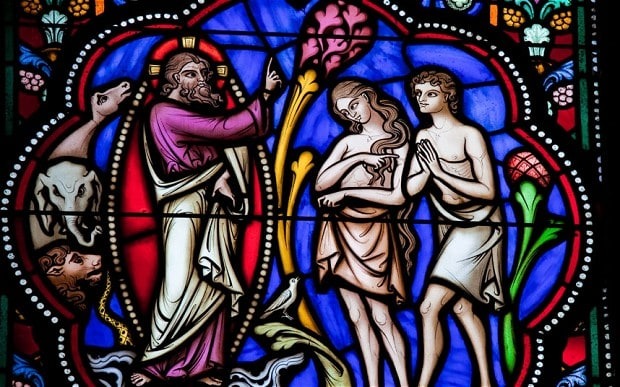
The first answer may return to the creation account (Gen 1). God created the world and humanity with His ‘word,’ and now, in Mount Sinai, God formed Israel as His people with the laws given through His ‘word.’ This parallel points to us that the ‘laws’ passed in Sinai were not new, but God had placed them since the beginning. The ‘ten laws’ were not imposed from outside but an integral part of creation and human persons. God’s design is that by obeying the ‘commandments,’ the Israelites may return to Eden, where they may find their true happiness.

The second answer is that the choice of ‘words’ rather than ‘commandment’ shows the nature of the laws that God gave in Sinai. God did not treat Israelites (and also all of us) like slaves under the regime of terror. He did not force His rules upon us and punished us severely when we disobeyed Him. Yet, God treated us as adult children who can freely embrace these laws because we realize that these ‘laws’ are indeed beneficial for us.

The ‘laws’ are not externally imposed upon us but are following out from our being. Like gravity, it is not something externally added but an integral part of our universe, and so are the ‘ten words.’ We can use our natural reason to discover the laws. Our correct thinking will agree that killing, stealing, and adultery are wrong. Our right mind will support our efforts to honor our parents. And our logical thinking will lead us to one and true God. Since the ‘laws’ are integral to our nature, violating them means we bring harm to ourselves.

The third answer is that ‘words’ are a means of communication. The ten commandments are His words; thus, through them, we may communicate and understand Him better. And, as we get to know God better, we become closer to Him. The Ten Commandments are not a mighty wall to keep us away from God but a bridge connecting us to His immense love.

In this season of Lent, we are invited to reflect deeper into these ‘Ten Words .’We can reflect on each commandment: What is its purpose? What benefits do they bring us? What harm does it cause us when we violate it? What does it tell us about God, who created them?

Rome
Valentinus Bayuhadi Ruseno, OP

The Desert

1st Sunday of Lent [B]

February 18, 2024

Mark 1:12-15

What do we imagine when we hear the word ‘desert’? The image in our mind may vary depending on our experience and knowledge of the desert. Yet, we agree that the desert is barren, plagued by an unfriendly climate, and not a suitable place for humans to live. Then, why does the Spirit lead Jesus to the desert? Why do we need to experience desert moments?

When we have an image of a desert, we can think of a fertile garden as its opposition. The Bible gives us these two images, a garden, and a desert, as two contrasting places. Adam and Eve originally lived in the perfect garden, with everything provided. They had the best food and safest place; most of all, God was with them. Yet, they fell, and they had to leave the garden. They began their journey in a ‘desert’ where they had to work hard to earn their livings, where many dangers lurked, and death was their final destination.

Then, why did Jesus follow the Spirit to the desert? The answer is that Jesus is in the desert for us to find Him. Even the desert may become a holy place because our Saviour is there and blesses this place. Yes, the desert is a dangerous place, and even the evil spirits are lurking to snatch us away from God, yet Jesus is also there. His presence makes even the ugliest place on earth a beautiful and holy ground.

The presence of God in the desert is not even something new. Interestingly, the word desert in Hebrew is מדבר (read: midbar) and can be literally translated as ‘the place of the word.’ Indeed, the desert is where the Israelites endured many hardships and were tested, yet it is also where God manifested Himself and made a covenant with Israel through Moses. In fact, through the desert experience, God disciplined and formed His people.

Our natural inclination is to avoid a desert, whether a natural geographical place or a symbol of our difficult moments in life. We don’t want to experience pain and sickness, we hate to endure financial and economic difficulties, and we detest difficult relationships in our family or community. We want to be blessed, to be in the Paradise. Yet, we must not fear to walk through our deserts because Jesus is there. Indeed, our hardships can exhaust us and become the devil’s opportunity to tempt us hard, yet with Jesus, these experiences can be a means of holiness.

In the season of Lent, the Church teaches us to fast, to pray more frequently, and to increase our acts of charity. These practices invite us into the desert to feel hunger, experience discomfort, and enjoy fewer things that give us pleasure. Yet, paradoxically, when we enter voluntarily and faithfully this difficult desert of Lent, we may find Christ even there, and we are renewed in holiness.

Rome

Valentinus Bayuhadi Ruseno, OP
For God’s Glory and Human Salvation

Sixth Sunday in Ordinary Time [B]

February 11, 2024

Mark 1:40-45

1 Cor 10:30 – 11:1

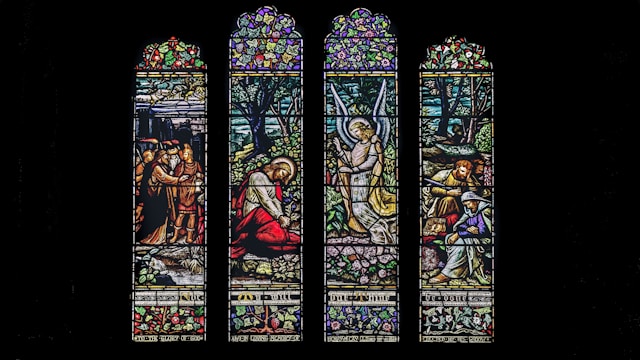
Towards the end of his letter to the Corinthians, St. Paul reminded us of two basic purposes of every disciple of Christ. The first one is, “…whatever you do, do all to the glory of God (1 Cor 10:31).” The second one is, “…in everything I do, not seeking my own advantage, but that of many, that they may be saved (1 Cor 10:33).” If we summarize these two verses, St. Paul said that in everything we do, we do for the glory of God and the salvation of others.

However, is it possible to do everything for God’s glory and others’ salvation? Many of us are busy working and occupied with many other things, and often, we just barely remember the presence of God, let alone praise and thank Him. Some of us even are struggling to attend Sunday Masses. Does it mean that we are failing in this regard?

We must remember that St. Paul did not instruct us to ‘say glory to Go’ but rather ‘do everything for God’s glory.’ It is not only about singing praise or uttering from our months “glory to God, glory to God” the whole day. But, fundamentally, it is to choose to do things pleasing to God, even the ordinary and routinary things. In our works, we give glory to God when we do honest jobs. Even as we watch something on the television or our gadgets, we can do it for God’s glory when we avoid seeing things that lead us to sins and choose to engage in what is truly beneficial. Certainly, we cannot give glory to God if we are idle or wasting our time on useless things.

The second purpose is to do everything so that others may find salvation. It is a wrong attitude if we are only focused on our salvation. Our faith is not selfish and individualistic but community-oriented and loving faith. Our salvation depends on the salvation of our neighbors, also. That is a Catholic faith, a faith for universal salvation. A man’s fundamental mission is to bring his wife closer to God. Parents’ salvation hinges on the growth of their children’s holiness.

But are we responsible for the salvation of all? Yes, we are called to preach the Gospel to all, but we are mainly responsible for those close to us, like family or community members. Yet, St. Paul also made a clear message, “Give no offense to Jews or to Greeks or to the church of God (1 Cor 10:32).” Though we are not actively responsible for the salvation of all, we are expected not to cause harms or scandals that may push people away from God. We are always witnesses and disciples of Christ in the world.

Lastly, these two basic missions instructed by St. Paul are the concretization of the most fundamental laws taught by Jesus: to love God and to love our neighbors (see Mat 22:37-38). In everything we do, we do it for the glory of God and the salvation of souls.

Rome

Valentinus Bayuhadi Ruseno, OP
The unclean spirits

Fourth Sunday in Ordinary Time [B]

January 28, 2024

Mark 1:21-28

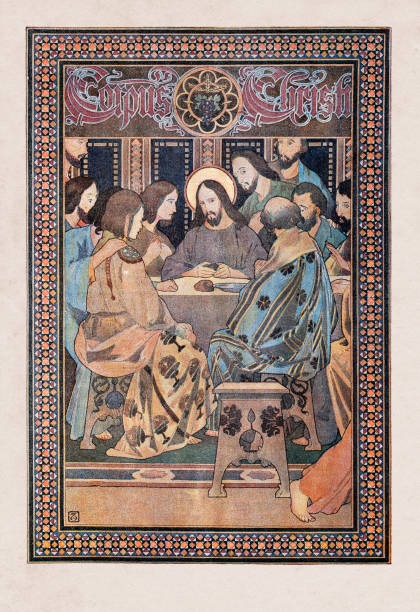
One of the highlights of Jesus’ ministry is the exorcism of the unclean spirits. Mark, the evangelist even, does not hesitate to write that expelling the unclean spirits is part of Jesus’ teaching with authority. Jesus’ authority does not only affect His human hearers but also controls the unclean spirits. Yet, who are these unclean spirits? Why does Jesus have authority over them? And how do they affect our lives?

Based on the revelation and the tradition, the Church teaches that these spirits are also God’s creation. By nature, they are spirits or angels. As a spirit, they are creatures without a body, and since they are not affected by material limitations, they are naturally superior to us humans. However, unlike the good angels that use their power to help humans, these spirits do the opposite. They wish to harm men and women. That’s why they are called the evil spirits.

If God is good, why did God create evil beings? In the beginning, God created them as good spirits. Yet, as creatures with freedom, they made a definitive choice to go against their Creator. Their rebellion against God made them fall from grace, and thus, they were called ‘the fallen angels.’ (see CCC 391-395)

Then, why do the unclean spirits obey Jesus? The answer is straightforward. Jesus is their Creator. Jesus’ authority is reflected in the Greek word chosen when Jesus drives away the demons, ‘φιμοω’ (read: phimoo). Ordinarily, this word is translated as ‘be quiet,’ but literally, it means ‘to put a muzzle.’ It is like a farmer who places a muzzle on the mouth of his rowdy ox and thus puts it under submission. The idea is that Jesus is extremely powerful to the point that He could easily put evil spirits that are beyond human comprehension under His control.

One interesting fact also is that Mark does not call these fallen angels ‘evil spirits’ but rather ‘unclean spirits’ (πνευμα ἀκάθαρτον – pneuma akatarton). In the Jewish context, to be unclean means to be ritually unfit for God. Something or someone impure cannot enter the Temple of God and, thus, cannot offer worship and become far from God. These spirits are unclean precisely because they are not fit for God and, thus, far from Him.

We can also see the uncleanliness as an effect of the evil spirits. One who is under the dominion of the evil spirits becomes unclean and, thus, is far from God. One who lives in sin and, thus, distant from God is under the influence of evil spirits to a certain extent. From here, we can understand that Jesus’ mission to drive out the unclean spirits is an integral part of His mission to make people holy and to unite people with God.

The discussion on the evil spirits is certainly vast and intriguing, but it suffices to say that Jesus is infinitely superior to the evil spirits. Therefore, to live with and in Jesus is the only way to drive away the unclean ones. It is also true that as we go closer to Jesus, the evil spirits will double their efforts, and in this situation, all the more we must cling to Jesus.

Rome

Valentinus Bayuhadi Ruseno, OP

What is Gospel?

Third Sunday in Ordinary Time [B]

January 21, 2023

Mark 1:14-20

Jesus began His ministry by preaching, “The time has been fulfilled, the kingdom is at hand; repent and believe in the Gospel!” Yet, the question is, ‘What is the Gospel we need to believe in?’ Indeed, it is not the four written Gospels (Matthew, Mark, Luke, and John) since these were written years after Jesus’ death and resurrection. So, what is the Gospel here?

The most basic understanding of the Gospel is ‘the good news.’ It comes from the Greek word ‘ευαγγελιον’ (read: Evangelion). This word itself is composed of two elements: ‘ευ’ meaning ‘happy’ or ‘good,’ then ‘αγγελιον’ meaning ‘news.’ In the time of Jesus, the word ‘ευαγγελιον’ is not just any good news like “I passed the exam” or “I received a bonus.” The word is an imperial technical term to point to the emperor’s major victory or to the emperor’s birthday celebration. Every time ‘ευαγγελιον’ was announced, there would be great joy among the people because the enemy had been defeated, and now the residents of the empire may live in peace.

Jesus used the same imperial vocabulary but adjusted its content to His purpose. It was no longer about the good news about the Roman empire but about the Kingdom of God. It was no longer about the emperor’s glory but now about Jesus. Those living at that time may respond differently to Jesus’ Gospel. One could consider Jesus insane, delusional, or a liar, and thus, His Gospel was nothing but a laughable lie. Others might see Jesus as subversive; thus, His Gospel was a call to rebellion against the Roman empire. We recall also that this subversive understanding of the Gospel was later used to accuse Jesus before Pilate. Jesus was ‘the king of the Jews’ against the Roman emperor.

However, Jesus proved these assumptions were simply incorrect. Jesus did not preach empty words; He taught with authority and performed mighty miracles. Even the demons were obedient to His words. He was not also a revolutionary political fighter because His Kingdom is not of this world (see John 18:36), and how He refused to be made king by his supporters (see John 6:15). Jesus’ Kingdom is the Kingdom of God of holiness. The only way to enter is repentance (metanoia). The word metanoia presupposes a change of ‘mind’ or ‘lifestyle’ from a life of sins and far from God into a life according to God’s law and, thus, life with God.

Thus, from this perspective, we can say that ‘believe in the Gospel’ means that we believe in the Kingdom of God and Jesus, the king of the Kingdom, who saves us from sins and brings us back to God. And the way to believe is none other than repentance. To say, “I believe in Jesus,” yet we keep stealing other people’s money, is just nonsense. To say, “I trust in God,” but we keep breaking His laws and commandments, is useless. ‘

Another interesting fact! The actual Greek Mark used for ‘believe’ is ‘πιστεύετε’ (pisteuete), and grammatically, it is imperative mode in the present tense. In ancient Greece, this imperative presence means a command to do something, not one time but continuously. Thus, Mark wants to emphasize that belief is a continuous process rather than a one-time action. Belief in Jesus is something that is growing and dynamic rather than static.

Rome

Valentinus Bayuhadi Ruseno, OP

The Joy of Christmas

The Nativity of our Lord (Christmas)

December 25, 2023

Luke 2:1-14

Merry Christmas!

The Lord is born, and there is a great joy in heaven and earth. However, what is the reason behind this joy of Christmas? There is joy not because we can gather with our family and relatives and have a good Christmas party. The joy is not because we have gifts and bonuses, nor because we travel and have our vacations. So, what is behind this joy?

Christmas is the day that our Savior is born. This birth is not just a natural biological process involving a man and a woman. This birth is a supernatural event that takes its root from God’s love for us, pitiful sinners. God had countless options to redeem us, yet He chose the most intimate way. God the Father sent His Son, and the Son took His second nature, that is, human nature in the Virgin Mary. In this way, God becomes intimately close to us, thus, His title, Immanuel, God-with-us. He is with us not only in spiritual or mystical manners but in the most humanly possible. He is a baby Mary could feed, Joseph could embrace, and shepherds could see.

However, Christmas is the cause of rejoicing not only in a theological sense but also because it is a strong reminder for all of us. We are living in a changing culture and mindset. Many couples no longer want to have children. Indeed, there are some valid reasons, such as economic hardship that makes it impossible to raise children or certain medical conditions that can be dangerous for the mothers. Yet, many also consider having children a burden, and thus, want only to have the fun things in marriage but get away with the difficult parts, including raising children.

However, Christmas reminds us that while it is true that having children carries its own hardship, it also brings joy. It is true that after receiving Jesus, Mary and Joseph did not get a better life; in fact, they had to endure more suffering. Yet, Mary and Joseph celebrated the birth of the Son of God. We must not forget that the countless angelic community sang glory to the Lord in heaven, and on earth, the shepherds rushed to joyfully greet Mary and Joseph [see Luk 2].

Getting pregnant is indeed a painful and laborious process, and educating our children can often be economically and emotionally challenging. Yet, God also provides abundant joy for parents. There is immense and indescribable joy when the mother sees her newborn baby for the first time. When the parents lovingly interact with their babies, the bodies intensely produce ‘positive’ hormones like oxytocin and dopamine. A friend who recently had a baby recounted her joy every time she noticed simple yet significant growth in her baby. There is joy when the baby begins to pronounce words clearly. There is joy when the baby starts recognising and distinguishing her parents’ faces from others.

Christmas teaches us that there is great joy in heaven when a baby is conceived and born because this baby is a potential citizen of heaven. Now, it is our joy to bring our children entrusted to us to God and share the fullness of life with Him.

Rome

Valentinus Bayuhadi Ruseno, OP
Rejoice, Pray, and Give Thanks

Gaudete Sunday. 3rd Sunday of Advent [B]

December 17, 2023

John 1:6-8, 19-28

In this Gaudete Sunday, St Paul teaches, “Rejoice always. Pray without ceasing. In all circumstances, give thanks, for this is the will of God for you in Christ Jesus. [1 The 5:16].” St. Paul gives us three fundamental characteristics of Christians: to rejoice always, pray ceaselessly, and give thanks in all things. St. Paul reminds us that these characters are not an option but God’s will for us. Yet, how can we be joyful amid suffering? How can we pray when we are occupied with our duties and work? How can we give thanks in times of trial?

The key is that we cannot rely on our power but on God’s grace that empowers us to do these three impossible tasks. Through God’s grace, we are empowered to rejoice always, even amid difficult times. Rejoice [Greek ‘χαίρω’ – chairo] is neither simply a fleeting emotion nor happiness that comes from externally induced substance. To rejoice is an action we choose to do. This action flows from the realization that God is in control of every event of our lives. Even in the most painful moments, God allows those to occur because He has a good purpose for us. Indeed, God does not tell us in advance His plans, making it complicated. Yet, the Holy Spirit comes and bestows us faith and hope in Him and His providence.

God’s grace also enables us to thank the Lord every moment. To be grateful and to rejoice are, in fact, closely connected, just like two sides of the same coin. We can give thanks in all circumstances because the Holy Spirit helps us to see that everything we do and experience has a purpose. And, when everything we do, we do for the love of God. This act became a blessing and a cause of joy. The word for give thanks in Greek is ‘εὐχαριστέω’ [eucharisteo], and it has the same root as the word Eucharist. Thus, every time we celebrate the Eucharist, we offer our sacrifice of Jesus Christ and our lives as thanksgiving to God.

Lastly, how do we pray without ceasing? To spend a little time for prayer every day is already difficult. Does it mean we have to resign from our jobs, abandon our responsibilities in the family, and enter seclusion to pray? Indeed, there are better things to do than this. To pray unceasingly can be done at least in two ways. Firstly, we pray as a community of believers, the Church, one body of Christ. Thus, when we cannot pray this time, other brothers and sisters in other places will pray for us and on our behalf. Since millions of Catholics pray worldwide, our prayers are unbroken and unstoppable.

Secondly, we rely on the Holy Spirit to pray for us. St. Paul himself told us, “Likewise the Spirit helps us in our weakness; for we do not know how to pray as we ought, but the Spirit himself intercedes for us with sighs too deep for words (Rom 8:26-27).” We ask the Holy Spirit to be present and sanctify every activity of our day, and before we rest, we offer our day to the Lord.

Rejoice always, pray ceaselessly, and give thanks in all things!

Rome

Valentinus Bayuhadi Ruseno, OP

The Third Coming

First Sunday of Advent [B]

December 3, 2023

Mark 13:33-37

We are entering the Advent season, and the new liturgical year of the Church has begun. Advent itself is from the Latin word ‘Adventus,’ and it literally means ‘the coming.’ In light of the Scriptures and Tradition, the Church teaches two arrivals of Christ. His first coming was in Bethlehem around two millennia ago, and the second coming of Jesus will be at the final judgment as the king of kings and the judge of all. This liturgical season reminds and prepares us for both comings of Jesus. However, there is another coming of Christ, also called the third coming of Christ. What does it mean? And, how does the third coming of Christ connect the other two comings?

Before we answer this question, we shall reflect more deeply on the relationship between the first and second coming of Christ because how Jesus came for the first time should give us precious lessons in preparing ourselves for His second coming. How did Jesus come for the first time? He was born of Mary, a humble virgin married to Joseph, a poor carpenter, and neither to the powerful family of Herod nor to the ruling dynasty of Caesar. He was born in the most unworthy place, a dirty cave in Bethlehem, and not in a royal palace or a first-class hospital. He was born as the weakest human being, a baby, and not coming down from the skies like a superhero. The first coming teaches us a precious lesson that Jesus is present in the humblest places, among the simple people, and at the most unexpected moments. As Jesus arrived in Bethlehem most unexpectedly, so also, He will come for the final moment in His second coming.

As many people failed to recognize the first arrival of the Messiah, we might also fail to be ready for this last judgment. Then, how shall we do to anticipate His coming down from the heavens? This truth leads us to “the third coming of Christ.” What is it? The third coming refers to Jesus’ coming and presence among us in our daily lives, albeit in the most unexpected ways. In the Advent season, we prepare ourselves for the second coming of Christ by reflecting on His first coming and, thus, recognizing and welcoming ‘His third coming’ in our lives. The more we can discover Christ in His third coming, the more we are prepared for His final appearance.

Then, what are the manifestations of the third coming of Christ? The first and foremost is the holy Eucharist. Here, Jesus is truly and really present, yet we need great faith to perceive Him, who appears in the forms of bread and wine. He is also present in the words of the Holy Scriptures. The Church firmly believes that the Bible is the Word of God in the written form. By reading and meditating, we encounter Jesus, who speaks to us. St. Paul also teaches us that the Church is the body of Christ. Thus, encountering Christ cannot be done without encountering His body, the Church. However, it is also true that often, it is the most difficult to see Christ in the Church because some members of the Church are far from Christ-like. Yet, this has become an excellent opportunity to perform acts of charity and be Christ-like. Lastly, we encounter Christ in our unfortunate brothers and sisters, as Jesus said, “Amen, I say to you, whatever you did for one of these least brothers of mine, you did for me (Mat 25:40).”

Rome

Valentinus Bayuhadi Ruseno, OP