
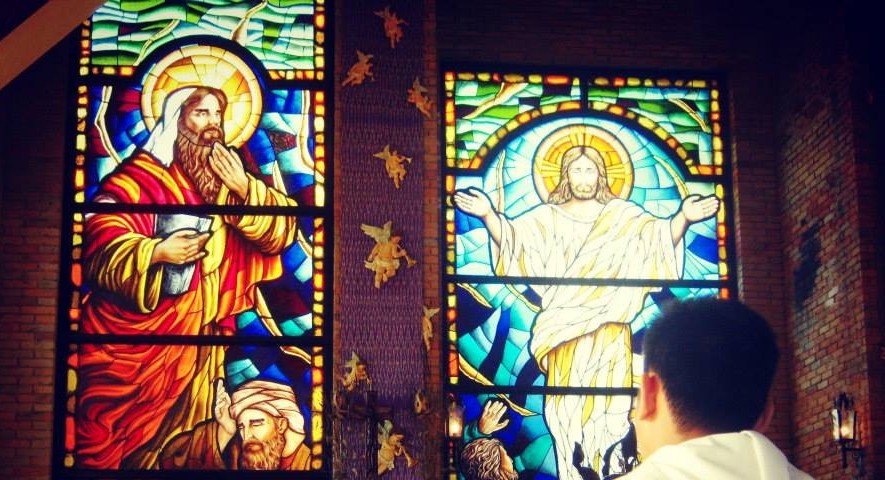
Conversion of St. Paul, the Apostle [January 25, 2019] Mark 16:15-18
 Today we are celebrating the feast of the conversion of St. Paul, the Apostle. St. Paul is one of the greatest names in our Church. Many churches are named after him, like one of the major Basilica in Rome, St. Paul outside the Wall. Not only churches but also many Christians are named after him, including our brothers in the house of formation, Bro. John Paul Sontillano, Bro. Paulus Gabriel Rambang Ngawan, and our former formator, Fr. Pablo Tiong.
Paul is an apostle and yet, he was not part of the 12 apostles. It is through a special revelation, he was called by Jesus and sent to preach the Gospel to all nations, thus, he was called also as the apostle to the nations or of the Gentiles. Indeed, he was doing his job very well, as he preached zealously, traveled tirelessly, and founded many local churches in Asia and Europe, like in Corinth, Thessaloniki, and Galatia. Thirteen of his letters addressed to these communities or to his co-workers like Timothy and Titus, have become part of the New Testament, considered inspired, and thus, the Word of God. And from his letters, the Church has shaped her teachings, doctrines, and orthodoxy, like the primacy of love in Christian living in 1 Cor 13, that love is patient, love is kind, love never fails. Or, in 1 Cor 11, we discover Paul condemns those who failed to celebrate the Eucharist worthily, rooted in the doctrine of the Real Presence of Jesus Christ in the Eucharist. Paul was so inspiring that he inspires St. Luke, the evangelist to devote half of his Acts of the Apostles, to the story and journey of St. Paul.
However, this is only half of the story. Before Paul, there was Saul. Saul was zealous Pharisee who hated Jesus and His followers so much. He went door to door just to arrest Christian, put them in jail, and persecuted them. Young Saul also consented to the murder of the first martyr, Stephen. The Acts of Apostles 9:1 described him as someone who breathes threats and murders. Saul was a dark character with much violence and anger.
However, the Good News of salvation for Saul: no matter dark, violent and broken Saul was, God, is more powerful than all these ugly things. God’s grace, mercy, and love can transform the persecutor of Christ into the vessel of grace. That is why we are celebrating the conversion of St. Paul, not only about St. Paul but the conversion. It is not about Paul’s greatness, achievement, and holiness, but it is God.
Like Paul, we all have our own darkness and brokenness, some may come from broken family, some having a broken family, some have traumatic experiences, some losing people we love in a painful way, some are victims of abuses, some struggling with sickness, with anger, with depression, with poverty or other problems. We are still wrestling with our sinful attitudes and tendencies. Yet, the Good News Paul received is also the same Good News we receive. All of these ugly things have not the last word on us. Our God is stronger than all of this ugliness of life.
As St. Paul himself says, “When sin abounds, grace abounds all the more!” (Rom 5:20)
St. Paul, the apostle, pray for us.
Deacon Valentinus Bayuhadi Ruseno, OP
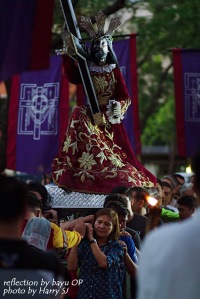 Several years ago, I gave a talk on the introduction to Christology to a group of young Filipino professionals who wished to deepen their spirituality. The first question I asked them as we commenced the short course was, “Who do you say that Jesus is?” The answers were varied. Some gave a dogmatic formula like Jesus is God, one quoted the Bible saying Jesus is the Word made flesh, one expressed boldly that Jesus is Savior and Lord, and the rest shared personal convictions like Jesus is their closest friend, or Jesus is their Shepherd. All these answers were right, but nobody claimed that Jesus is the Christ. Considering that our subject was Christology, we missed the basic Jesus’ title, in Greek, “Christos,” in Hebrew, “Messiah,” and translated into English, the Anointed One. Fortunately, around two thousand years ago, Simon Peter was able to spell the title when Jesus Himself asked the question.
 Beberapa tahun yang lalu, saya memberikan ceramah pengantar Kristologi bagi sekelompok profesional muda Filipina yang ingin memperdalam spiritualitas mereka. Pertanyaan pertama yang saya tanyakan kepada mereka adalah, “Menurut kamu, siapakah Yesus itu?” Jawabannya beragam. Beberapa memberikan formula dogmatis seperti Yesus adalah Allah, ada yang mengutip Alkitab dan mengatakan Yesus adalah Firman yang menjadi daging, seseorang menyatakan dengan berani bahwa Yesus adalah Juruselamat dan Tuhan, dan sisanya berbagi keyakinan pribadi seperti Yesus adalah sahabat terdekat mereka, atau Yesus adalah Gembala mereka. Semua jawaban ini benar, tetapi tidak ada yang mengklaim bahwa Yesus adalah Kristus. Mempertimbangkan bahwa ceramah kami adalah Kristologi, kami sepertinya lupa akan identitas dasar Yesus, dalam bahasa Yunani, “Christos,” dalam bahasa Ibrani, “Mesias,” yang berarti “Yang Diurapi”. Untungnya, sekitar dua ribu tahun yang lalu, Simon Petrus mampu mengucapkan identitas dasar ini ketika Yesus Sendiri menanyakan pertanyaan ini.


 Ash Wednesday is the beginning of the liturgical session of Lent in the Catholic Church. Its name derives from an ancient tradition of the imposition of the ashes. Every Catholic who attends the mass on this day will receive a sign of the cross made of ashes on his or her forehead. The ashes are ordinarily coming from the burned palm leaves blessed at the Palm Sunday of the previous year.
 Rabu Abu adalah awal dari Masa liturgi Pra-paskah di Gereja Katolik. Nama ini berasal dari tradisi kuno di mana setiap orang Katolik yang menghadiri misa pada hari ini akan menerima tanda salib abu di dahinya. Abu ini biasanya berasal dari daun palma yang telah diberkati pada Minggu Palma tahun sebelumnya, dan kemudian dibakar.

 In Medio Ecclesiae