

Second Sunday of Advent [December 10, 2017] Mark 1:1-8
“The beginning of the Gospel of Jesus Christ. (Mar 1:1)”
 Today, we read the beginning of the Gospel according to Mark. Among the evangelists, only Mark explicitly introduces his work as the “Gospel”. The English word “Gospel” simply means the Good News, or in original Greek, “Evangelion.” Commonly, we understand a gospel as a written account of the life and words of Jesus Christ. The Church has recognized four accounts as canonical or true Gospel. We have Gospel according to Matthew, Mark, Luke, and John.
But, what does the Gospel truly mean? Going back to the time of Jesus, Evangelion is actually a technical term for an oral proclamation of the imperial decree that will significantly affect the life of the many people. The messenger will stand in the middle of the public square and announce that the battle has been won decisively, and the city has been saved. It is a good news, indeed a great and joyful news. St. Paul is the first who adopts the term into the Christian world and it signifies the oral proclamation of the saving effects of Jesus’ death and resurrection (see 1 Cor 15:1-4). Thus, when we read that St. Paul proclaims the Gospel, it does not mean he reads the parts of the Gospel according to Mark or John, but rather orally proclaims that we have been saved. The Gospel has to be proclaimed because only by believing and living through the Gospel, we are saved (See Rom 10:13-15).
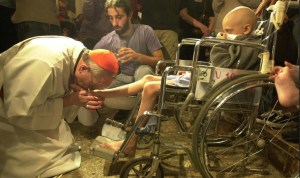
Since we are all baptized, we all have the duty to proclaim the Gospel and work for salvation. Yet, we may ask, “How we are going to preach and save souls if we cannot administer sacraments?” While it is true that sacramental works and preaching in the pulpit are reserved to the deacons, priests, and bishops, all of us are called to preach the Gospel. But how? We remember that we preach the Gospel for the sake of salvation, and the salvation is not limited in a spiritual sense, but in a more holistic one. It is the salvation not only from sins that separate us from God, but the salvation of all aspects of humanity. Jesus does not only forgive sins, He heals the sick, teaches the people, empowers the poor and fights against oppressive systems.
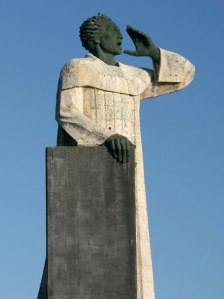
Following His Lord and Master, the Church works for salvation that is holistic. We run a great number of hospitals throughout the world to bring healing to the sick. We manage numerous schools around the globe to educate people and form their characters. Numerous Catholic scientists are involved in many breakthrough types of research. Fr. Georges Lemaitre, a Belgian priest, is the astronomer behind the Big Bang theory. Louis Pasteur, the inventor of pasteurization process, is a lay Catholic who has a strong devotion to the rosary. We build and fight also for the just and peaceful societies. Antonio de Montessinos, a Dominican Spanish friar, was one of the first priests who openly preached against the slavery in America. To show its commitment to justice and peace, Dominican Order has placed its permanent delegate at the United Nations in Geneva and is actively engaged in just and peaceful resolutions on various global issues.
This Advent season is the high time for us to reflect on the meaning of the Gospel, and on how we preach the Gospel in our own particular ways. What are the means we use to preach the Gospel? Do we make preaching the Gospel as our priority? Are we working diligently on our salvation and that of others?
Br. Valentinus Bayuhadi Ruseno , OP
 Hari ini, kita membaca permulaan dari Injil menurut Markus. Di antara para penginjil, hanya Markus yang secara eksplisit memperkenalkan karyanya sebagai “Injil”. Kata “Injil” berarti “Kabar Baik”, atau dalam bahasa Yunani, “Evangelion”. Biasanya, kita memahami sebuah Injil sebagai karya tertulis tentang hidup dan sabda Yesus Kristus. Gereja telah menetapkan empat karya sebagai Injil kanonik. Kita memiliki Injil menurut Matius, Markus, Lukas dan Yohanes.

 In Medio Ecclesiae