
Word of God Fulfilled

Third Sunday in Ordinary Time [January 27, 2019] Luke 1:1-4;14-21

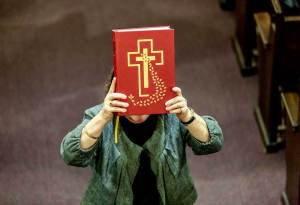
deacon1The synagogue is the place of prayer for the Jews. On the center during the service in the synagogue is the reading of the Hebrew Bible (or what we call the Old Testament) and the explanation of those readings. In the Gospel, we learn that Jesus stands as the leader of the service. First, He stands and reads the Scriptures, and the chosen portion is from the Prophet Isaiah. Then, He sits down, assuming the position of teacher. The Jews in the synagogue are eager to listen to Jesus. However, there is something different in Jesus’ teaching from other Jewish Rabbis. Jesus neither simply expounds the reading from Isaiah, nor makes commentaries on the text. He neither simply discusses the meaning of the readings, nor explains the context of the text. He fulfills what is written in the Scriptures. He says, “Today this scripture passage is fulfilled in your hearing.” (Lk. 4:14)

What Jesus does gives us a fundamental attitude for every Christian: any Christian ministry, prayer and life have to be rooted in as well as the fulfillment of the Word of God. It is true that many of us are not priests, religious or catechists, but laypersons, like parents, professionals, and citizen of the country. Many aspects of our life are not directly dealing with the Bible, like working, eating, sleeping, etc. So, why do we need to allow the Word of God to permeate various aspects of our life?

We remember that in the Book of Genesis, God created the world through His Word. “God said, ‘Let there be light!’ and there was light.” And at the end of the creation story, with His Word, God blessed the world. Every existence in this world, including our life, finds its beginning, meaning, and fulfillment in God’s Word. The air we breathe, the light we see, the sound we hear bear witness to the Word of God. Thus, no matter who we are and what we do, the Word shall inspire, guide, and animate our daily lives. If we allow the Word to take charge, our lives turn to be the fulfillment of the Word of God.

However, how can the Word of God influence our lives if we do not read or hear the Bible? One serious issue among the Catholics is that we seldom read the Bible, and when we attend the Mass, often we are not paying enough attention to the sacred readings. After the reading, we simply respond “Thanks be to God!” while in our hearts, we say, “whatever it means!” We have a Bible in our home, but often it remains hidden, dusty and untouched. This ignorance of the Scriptures does not only affect the lay people but even the clergy and the religious people. Pope Francis in his encyclical Evangelii Gaudium, has lamented of the priests who preach anything but the Word of God. Indeed, this is lamentable.

However, we are not hopeless. More and more lay people now are involved in Biblical apostolate in the parishes or dioceses. Bible Sharing, study and quiz now are something common among the Catholics. In my part, every time I give a talk, I make sure that the participants will bring the Bible and my discussion will be based on the Scriptures. And all of us can begin reading the Bible on our own. We can read five chapters every day, and within a year, we may complete the entire Bible.

Let the Word be the air we breathe, the light we see, the sound we hear, that in the end, we are able to say, “Today the Scripture is fulfilled in your hearing.”

Deacon Valentinus Bayuhadi Ruseno, OP
Firman Tuhan Yang Tergenapi

Minggu ketiga dalam Masa Biasa [27 Januari 2019] Lukas 1: 1-4; 14-21

lector1Sinagoga adalah tempat beribadah bagi orang Yahudi. Jantung dari peribadatan di sinagoga adalah pembacaan Alkitab Ibrani (yang kita sebut Perjanjian Lama) dan penjelasan bacaan-bacaan tersebut. Dalam Injil, kita belajar bahwa Yesus berdiri sebagai pewarta. Pertama, Dia berdiri dan membaca Kitab Suci, dan bagian yang dibaca adalah dari Nabi Yesaya. Kemudian, Dia duduk, yang adalah posisi guru. Orang-orang Yahudi di sinagoga ingin sekali mendengarkan Yesus. Namun, ada sesuatu yang berbeda dari Yesus dari para guru Yahudi lainnya. Yesus tidak hanya menguraikan bacaan dari Yesaya, atau membuat komentar pada teks. Dia tidak hanya membahas makna bacaan, atau menjelaskan konteks teks. Ia menggenapi apa yang tertulis dalam Alkitab. Ia berkata, “Pada hari ini genaplah nas ini sewaktu kamu mendengarnya.” (Luk. 4:14)

Apa yang Yesus lakukan memberi kita sebuah sikap mendasar bagi setiap murid-Nya: setiap pelayanan, doa, dan kehidupan Kristiani berakar pada Firman Allah dan juga menjadi penggenapan dari Firman Allah. Memang benar bahwa banyak dari kita bukan imam, suster atau katekis, tetapi orang awam, seperti kepala keluarga, ibu rumah tangga, para pekerja profesional, dan warga negara. Banyak aspek kehidupan kita yang tidak berhubungan langsung dengan Alkitab, seperti saat kita bekerja, membesarkan anak, dan berekreasi. Jadi, mengapa kita perlu menjadikan Firman Tuhan akar dan pengenapan berbagai aspek kehidupan kita?

Kita ingat bahwa dalam Kitab Kejadian, Allah menciptakan dunia melalui Firman-Nya. “Tuhan berkata, ‘Jadilah terang!’ Dan terang itu ada.” Dan di akhir kisah penciptaan, dengan Firman-Nya lah, Tuhan memberkati dunia ciptaan-Nya. Setiap keberadaan di dunia ini, termasuk kehidupan kita, menemukan permulaan, makna, dan penggenapannya dalam Firman Tuhan. Udara yang kita hirup, cahaya yang kita lihat, suara yang kita dengar memberikan kesaksian akan Firman Allah. Jadi, siapapun kita dan apa yang kita lakukan, Firman Allah akan mengilhami, membimbing, dan menginspirasi kehidupan kita sehari-hari. Jika kita mengizinkan Firman mengambil alih, hidup kita perlahan tapi pasti berubah menjadi penggenapan dari Firman Allah.

Namun, bagaimana Firman Allah dapat memengaruhi kehidupan kita jika kita tidak membaca atau mendengar Alkitab? Satu masalah serius di antara umat Katolik adalah bahwa kita jarang membaca Alkitab, dan ketika kita menghadiri Misa, sering kali kita tidak cukup memperhatikan bacaan-bacaan Kitab Suci. Setelah bacaan, kita hanya menjawab, “Syukur kepada Allah!” Tapi setelah Misa, kita lupa dengan bacaan yang kita dengar. Kita memiliki Alkitab di rumah, tetapi sering kali itu tersembunyi, berdebu, dan tidak tersentuh. Ketidaktahuan akan Kitab Suci ini tidak hanya memengaruhi umat awam, tetapi bahkan para imam dan kaum berjubah. Paus Fransiskus dalam ensikliknya Evangelii Gaudium, menyesali para imam yang dalam homilinya bercerita tentang segala hal kecuali Firman Tuhan.

Namun, kita tidak putus asa. Kabar gembira bagi kita adalah sekarang semakin banyak orang awam terlibat dalam kerasulan Kitab Suci di paroki atau keuskupan. Bible Sharing, Bible Study dan Bible Quiz sekarang adalah sesuatu yang umum di antara umat Katolik. Saya sendiri, setiap kali saya memberi ceramah, saya memastikan bahwa para peserta akan membawa Alkitab dan diskusi saya akan didasarkan pada Kitab Suci. Dan kita semua dapat mulai membaca Alkitab di rumah kita masing-masing. Kita dapat membaca lima bab setiap hari, dan dalam setahun, kita dapat menyelesaikan seluruh Alkitab.

Biarlah Firman menjadi udara yang kita hirup, cahaya yang kita lihat, suara yang kita dengar, dan pada akhirnya, kita dapat mengatakan, “Hari ini Kitab Suci dipenuhi dalam pendengaranmu.”

Diakon Valentinus Bayuhadi Ruseno, OP

Grace Abounds All the More

Conversion of St. Paul, the Apostle [January 25, 2019] Mark 16:15-18

st. paul conversion 2Today we are celebrating the feast of the conversion of St. Paul, the Apostle. St. Paul is one of the greatest names in our Church. Many churches are named after him, like one of the major Basilica in Rome, St. Paul outside the Wall. Not only churches but also many Christians are named after him, including our brothers in the house of formation, Bro. John Paul Sontillano, Bro. Paulus Gabriel Rambang Ngawan, and our former formator, Fr. Pablo Tiong.
Paul is an apostle and yet, he was not part of the 12 apostles. It is through a special revelation, he was called by Jesus and sent to preach the Gospel to all nations, thus, he was called also as the apostle to the nations or of the Gentiles. Indeed, he was doing his job very well, as he preached zealously, traveled tirelessly, and founded many local churches in Asia and Europe, like in Corinth, Thessaloniki, and Galatia. Thirteen of his letters addressed to these communities or to his co-workers like Timothy and Titus, have become part of the New Testament, considered inspired, and thus, the Word of God. And from his letters, the Church has shaped her teachings, doctrines, and orthodoxy, like the primacy of love in Christian living in 1 Cor 13, that love is patient, love is kind, love never fails. Or, in 1 Cor 11, we discover Paul condemns those who failed to celebrate the Eucharist worthily, rooted in the doctrine of the Real Presence of Jesus Christ in the Eucharist. Paul was so inspiring that he inspires St. Luke, the evangelist to devote half of his Acts of the Apostles, to the story and journey of St. Paul.

However, this is only half of the story. Before Paul, there was Saul. Saul was zealous Pharisee who hated Jesus and His followers so much. He went door to door just to arrest Christian, put them in jail, and persecuted them. Young Saul also consented to the murder of the first martyr, Stephen. The Acts of Apostles 9:1 described him as someone who breathes threats and murders. Saul was a dark character with much violence and anger.

However, the Good News of salvation for Saul: no matter dark, violent and broken Saul was, God, is more powerful than all these ugly things. God’s grace, mercy, and love can transform the persecutor of Christ into the vessel of grace. That is why we are celebrating the conversion of St. Paul, not only about St. Paul but the conversion. It is not about Paul’s greatness, achievement, and holiness, but it is God.

Like Paul, we all have our own darkness and brokenness, some may come from broken family, some having a broken family, some have traumatic experiences, some losing people we love in a painful way, some are victims of abuses, some struggling with sickness, with anger, with depression, with poverty or other problems. We are still wrestling with our sinful attitudes and tendencies. Yet, the Good News Paul received is also the same Good News we receive. All of these ugly things have not the last word on us. Our God is stronger than all of this ugliness of life.

As St. Paul himself says, “When sin abounds, grace abounds all the more!” (Rom 5:20)

St. Paul, the apostle, pray for us.

Deacon Valentinus Bayuhadi Ruseno, OP

Jesus the Bridegroom

Second Sunday in Ordinary Time [January 20, 2019] John 2:1-12

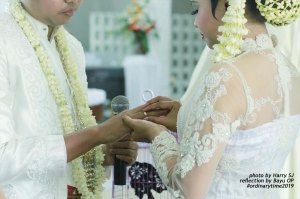
wedding ardiMary who was once a bride and has passed through the tiny-gritty of a Jewish wedding can sense immediately something goes wrong. The wine is running out. In the Jewish context, wine is an essential ingredient in every joyous occasion, as it is ordained by God to “gladden men’s hearts” (Ps 104:15) The lack of it can spell a disastrous result. It is the source of shame, and even a family dispute.
Everyone knows that it is the responsibility of the bridegroom to provide the wine, yet Mary does something unexpected. Instead of notifying the groom, she approached Jesus and points to him the gravity of the looming disaster. However, instead of getting an immediate favorable response, the plot twists even more. In a surprising statement, Jesus says to his mother, “Woman, how does your concern affect me?” (Jn 2:4). This statement is a Semitic expression indicating that the issue at hand is not Jesus’ problem. In a sense, Jesus is right because it is the job of the groom to fix the problem, but in a much more profound sense, Mary is also right because Jesus is the true Bridegroom.

Jesus understands that He is the Bridegroom, but the hour is not at Cana, but at the Cross. Thus, He says, “My Hour has not yet come.” (Jn 2:4) Yet, Mary as a mother knows her Son best. She has faith in Jesus, that Jesus is not only the Bridegroom at the Cross who gives His life for His Bride, the Church, but Jesus is also the Bridegroom in every marriage, family, a community that reflects this Church. Thus, when Jesus transforms the water into wine, it does not happen in historical level, but in a more profoundly symbolical way. Yes, Jesus helps the couple from disaster, but more than that, He supplies what is fundamentally lacking in every marriage: the best wine, the true joy of married life.

One of my duties as a deacon is to check whether the particular couple is canonically fit for the Church’s marriage. To fulfill this, I need to interview the couple and ask some pertinent questions. Yet, I usually go beyond, and I remind them why the Church does not recognize civil marriage. The answer is plain yet very basic: Jesus, the true Bridegroom, is not there, or to be precise, we make a deliberate effort to exclude Him in our marriage. The union between man and woman is not just a human, social and cultural phenomena but a divine reality. When a man and a woman commit themselves into marriage, God Himself who wills to make them one. Therefore, marriage is primarily and fundamentally God’s grace working in the human relationship. And if God unites them together, He will be the one who sustains and brings into perfection. This is why marriage is elevated into the level of sacraments of the Church.

However, I continue reminding the couples that marriage in the Church does not only mean to celebrate the sacrament of matrimony but to stay within the Church, the Bride of Christ, throughout their lives: to attend the Eucharist as a family, to participate actively in the Church as a couple, to pray regularly together. As the wine is impossible without a jar of waters, God’s grace will not work in our marriages unless we open ourselves to this grace. Like Mary who points Jesus what is lacking in the wedding in Cana, so the Church asks Jesus to fulfill every marriage with the best wine.

Deacon Valentinus Bayuhadi Ruseno, OP

Yesus Sang Mempelai Pria Kita

Minggu kedua dalam Masa Biasa [20 Januari 2019] Yohanes 2: 1-12

wedding 1Maria yang pernah menjadi seorang pengantin dan mengerti detail pernikahan Yahudi dapat segera merasakan ada sesuatu yang tidak beres. Anggur habis! Dalam konteks Yahudi, anggur adalah unsur penting dalam setiap acara yang menggembirakan, karena anggur telah dijadikan oleh Allah untuk “membuat hati manusia gembira” (Mzm 104: 15). Kekurangan anggur dapat menyebabkan konsekuensi buruk. Itu adalah sumber rasa malu, dan bahkan pertikaian antar keluarga.

Semua orang tahu bahwa mempelai laki-laki bertanggung jawab untuk menyediakan anggur, tetapi Maria melakukan sesuatu yang tidak terduga. Alih-alih memberi tahu sang pengantin pria, dia mendekati Yesus dan menunjukkan kepada-Nya betapa beratnya keadaan yang dihadapi keluarga di Kana. Namun, alih-alih mendapatkan respons yang positif dari Yesus, alur ceritanya malah semakin tak terduga. Dalam sebuah pernyataan yang mengejutkan, Yesus berkata kepada ibunya, “Perempuan, apakah ini bagimu dan bagiku?” (Yoh 2: 4 – terjemahan sendiri). Pernyataan ini adalah ungkapan Semitik yang menunjukkan bahwa masalah yang dihadapi bukan urusan Yesus. Dalam arti tertentu, Yesus benar karena ini adalah tugas mempelai laki-laki untuk menyelesaikan masalah yang ada, tetapi dalam arti yang lebih mendalam, Maria juga benar karena Yesus adalah Mempelai Pria yang sejati.

Yesus mengerti bahwa Dia adalah Mempelai Laki-laki, tetapi waktunya bukan di Kana, tetapi di Kayu Salib. Maka, Ia berkata, “Waktuku belum tiba.” (Yoh 2: 4) Namun, Maria sebagai seorang ibu mengenal Putranya dengan sangat baik. Dia memiliki iman kepada Yesus, bahwa Yesus bukan hanya Mempelai Pria di Kayu Salib yang memberikan hidup-Nya bagi Mempelai Perempuan-Nya, Gereja, tetapi Yesus juga Mempelai Laki-laki dalam setiap pernikahan, keluarga, komunitas yang mencerminkan Gereja ini. Jadi, ketika Yesus mengubah air menjadi anggur, itu tidak hanya terjadi dalam level sejarah, tetapi juga menjadi sebuah kenyataan simbolis. Ya, Yesus membantu pasangan di Kana menghindari musibah, tetapi lebih dari itu, Dia menyediakan apa yang secara mendasar kurang dalam setiap pernikahan: “anggur terbaik”, sukacita sejati kehidupan pernikahan.

Salah satu tugas saya sebagai diakon adalah untuk memeriksa apakah calon pasangan yang akan menikah secara kanonik dapat menikah Gereja. Untuk memenuhi ini, saya perlu mewawancarai pasangan tersebut dan mengajukan beberapa pertanyaan terkait. Namun, saya biasanya melangkah lebih jauh, dan saya mengingatkan mereka mengapa Gereja tidak mengakui pernikahan sipil. Jawabannya jelas namun sangat mendasar: Yesus, Mempelai Pria yang sejati, tidak ada di sana, atau tepatnya, kita melakukan upaya yang disengaja untuk mengecualikan-Nya dalam pernikahan kita. Persatuan antara pria dan wanita bukan hanya fenomena manusia, sosial dan budaya, tetapi kenyataan ilahi. Ketika seorang pria dan wanita mengikatkan diri dalam perkawinan, Tuhan sendirilah yang berkeinginan untuk menjadikan mereka satu. Karena itu, pernikahan pada dasarnya dan rahmat Tuhan bekerja dalam hubungan manusia. Dan jika Tuhan menyatukan mereka bersama, Dia juga akan menopang dan membawa kesempurnaan pada pernikahan tersebut. Inilah sebabnya mengapa pernikahan dinaikkan ke tingkat sakramen Gereja.

Namun, saya terus mengingatkan para pasangan bahwa pernikahan di Gereja tidak hanya berarti merayakan sakramen pernikahan tetapi untuk setia berada di dalam Gereja, Sang Mempelai Kristus, sepanjang hidup mereka: untuk menghadiri Ekaristi sebagai keluarga, untuk berpartisipasi aktif dalam Gereja, untuk berdoa bersama secara teratur. Karena anggur tidak mungkin terjadi tanpa kendi air, rahmat Allah tidak akan berhasil dalam pernikahan kita kecuali jika kita membuka diri terhadap rahmat Allah. Seperti Maria yang menunjukkan pada Yesus apa yang kurang dalam pernikahan di Kana, maka Gereja meminta Yesus untuk memenuhi setiap pernikahan dengan anggur terbaik.

Diakon Valentinus Bayuhadi Ruseno, OP

Fatherhood

The Baptism of the Lord [January 13, 2019] Luke 3:15-16, 21-22

“You are my beloved Son; with you I am well pleased.” (Lk. 3:22)

baptism2One of the greatest joys of being a deacon is to baptize babies and little children. The joy is not simply springing from touching the cheeks of a cute little baby or be part of festive parents, but it is something deeper. In fact, my experiences with baptism are not always pleasant. I remember at my first baptism in Sto. Domingo Parish, Metro Manila, when I began pouring water upon the baby’s forehead, the little girl suddenly burst in tears and cried aloud. I realized the water has touched the baby girl’s eyes. I was shocked and almost paralyzed not knowing what to do next. The good thing is the parents were able to handle the situation well. As the little baby calmed down, I apologized and continued the rite. Traumatizing!

After that experience, the baptisms I minister do not seem to be any better. In Manaoag, Pangasinan, I could baptize 15 or more babies in each baptism. Often, with so many people jampacked in a small room, and with many babies crying, the experience, far from happy, could be stressful and forgettable for everyone including myself. So, where do I get the joy of baptizing babies?

It is springing from the Church’s understanding of baptism itself. Baptism as the sacrament instituted by Christ Himself as a means for us to receive the grace of salvation is not only Biblical and upheld by earliest Christian testimonies, but it is spiritually liberating and joy-engendering. Surely, we need one semester or more to discuss the biblical foundation and theology of baptism, and this is not the place for such discussion. Thus, allow me to share one of the reasons why baptizing is one of my most joyous moments as a deacon, and it is not far from our Gospel today.

Today we are celebrating the Baptism of the Lord, and our Gospel ends with an extremely rare revelation of God the Father in Jesus’ life. This reveals two things: First, Jesus is the Son of the Father; second, He is not only any son, but Jesus is also the joy of the Father. It is not just any rare revelation, but it is a revelation of joy. Yet, this joy is not surprising for it is natural for a father to be delighted in his newly born baby because he sees the best of himself in the baby. It is a joy of fatherhood.

One of the greatest gifts of baptism is our spiritual generation. It is true that in baptism, nothing much changes in our physical aspects, except our heads are getting wet. But, when the water of baptism touches our foreheads and the Trinitarian formula is pronounced, our souls are changed for eternity. We are not just the children of humanity, but wonderfully the children of God. And as we emerge from the baptism, our Father in heaven sees us, recognizes us as His own and says, “You are my beloved children, with you I am well pleased.”

It is my greatest privilege to share this spiritual fatherhood. As I minister baptism, I spiritually beget these little babies as my children, the children of God. As a young father rejoices in his baby, so I take delight in every newly spiritually born baby. I do not have my own children, and yet I am blessed to become a father. As looking forward to priestly understand, we understand why we call a priest “father” because he is indeed a father to his spiritual children. He begets his children in Baptism, he nourishes them in Eucharist, he leads the youth into maturity in Confirmation, he unites the love among them in Marriage, he brings back the stray in Penance, and he heals the sick in the Anointing. It is the joy of fatherhood.

Deacon Valentinus Bayuhadi Ruseno, OP

Menjadi Seorang Bapa

Pesta Pembaptisan Tuhan [13 Januari 2019] Lukas 3: 15-16, 21-22

“Engkaulah Anak-Ku yang Kukasihi, kepada-Mulah Aku berkenan.” (Luk. 3:22)

baptism1Salah satu sukacita terbesar menjadi seorang diakon adalah saat membaptis bayi dan anak. Kegembiraan tidak hanya hadir dari menyentuh pipi dari bayi kecil yang imut, tetapi ada sesuatu yang lebih dalam. Sebenarnya, pengalaman saya dengan pembaptisan tidak selalu menyenangkan. Saya ingat saat baptisan pertama saya di Paroki Sto. Domingo, Metro Manila, ketika saya mulai menuangkan air ke dahi sang bayi, sang gadis kecil itu tiba-tiba menangis dengan keras. Saya menyadari air telah menyentuh mata bayi perempuan itu. Saya terkejut dan tak bergerak karena tidak tahu apa yang harus saya lakukan selanjutnya. Untungnya, sang orang tua mampu menangani situasi dengan baik. Ketika bayi kecil itu tenang kembali, saya meminta maaf dan melanjutkan perayaannya. Sungguh membuat trauma!
Setelah pengalaman itu, baptisan yang saya layani tampaknya tidak lebih baik. Di Manaoag, Pangasinan, saya bisa membaptis 15 bayi atau lebih dalam setiap baptisan. Seringkali, dengan begitu banyak orang yang memadati di sebuah ruangan kecil, dan dengan banyak bayi menangis, pengalaman ini bisa menjadi sebuah stres bagi semua orang yang hadir termasuk saya. Jadi, dari mana saya mendapatkan sukacita membaptis bayi?

Ini datang dari pemahaman Gereja tentang pembaptisan itu sendiri. Pembaptisan sebagai sebuah sakramen yang didirikan oleh Kristus sendiri sebagai sarana bagi kita untuk menerima rahmat keselamatan bukan saja Alkitabiah dan ditegakkan oleh kesaksian jemaat Kristiani yang paling awal, tetapi juga melahirkan sukacita yang mendalam. Tentunya, saya tidak bisa membahas semua hal di sini karena kita perlu satu semester atau lebih untuk membahas dasar alkitabiah dan teologi! Karena itu, izinkan saya untuk membagikan salah satu alasan mengapa membaptis adalah salah satu momen yang paling membahagiakan sebagai diakon, dan ini tidak jauh dari Injil kita hari ini.

Hari ini kita merayakan Pembaptisan Tuhan, dan Injil kita hari ini berakhir dengan pewahyuan Allah Bapa yang sangat jarang terjadi dalam kehidupan Yesus. Ini mengungkapkan dua hal: Pertama, Yesus adalah Putra Bapa; kedua, Dia bukan hanya seorang Anak, tetapi Yesus juga adalah sukacita Bapa. Ini bukan sekedar wahyu yang langka, tetapi itu adalah wahyu sukacita. Namun, kegembiraan ini bukanlah hal yang aneh karena wajar bagi seorang ayah untuk bahagia dengan bayinya yang baru lahir karena ia melihat yang terbaik dari dirinya di dalam bayinya. Ini adalah sukacita seorang ayah.

Salah satu karunia pembaptisan terbesar adalah kelahiran spiritual kita. Memang benar bahwa dalam pembaptisan, tidak ada banyak perubahan dalam aspek fisik kita, kecuali kepala kita menjadi basah. Tetapi, ketika air baptisan menyentuh dahi kita dan formula Tritunggal diucapkan, jiwa kita diubah untuk selamanya. Kita bukan hanya anak-anak manusia, tetapi juga anak-anak Allah! Dan ketika kita dibaptis, Bapa kita di surga melihat kita, mengakui kita sebagai milik-Nya dan berkata, “Kamu adalah anak-anakku yang terkasih, denganmu aku senang.”

Adalah hak istimewa terbesar saya untuk berbagi kebapakan spritual ini. Sewaktu saya membaptis, saya secara spiritual melahirkan bayi-bayi kecil ini sebagai anak-anak saya, yakni anak-anak Allah. Seperti seorang ayah muda bersukacita pada bayinya, sayapun bergembira dengan setiap bayi yang baru lahir secara rohani. Saya tidak memiliki anak sendiri, namun saya diberkati untuk menjadi seorang ayah dengan banyak anak! Menatap imamat, saya memahami mengapa kita menyebut seorang imam sebagai “romo” karena dia memang seorang ayah bagi anak-anak rohaninya. Dia melahirkan anak-anak dalam Pembaptisan, dia merawat mereka dalam Ekaristi, dia memimpin anaknya yang muda menuju kedewasaan dalam Penguatan, dia menyatukan cinta dalam Pernikahan, dia membawa kembali yang hilang dalam Penitensi, dan dia menyembuhkan yang sakit di Pengurapan. Itu adalah sukacita seorang bapa.

Diakon Valentinus Bayuhadi Ruseno, OP

Fear

The Epiphany of the Lord [January 6, 2019] Matthew 2:1-12

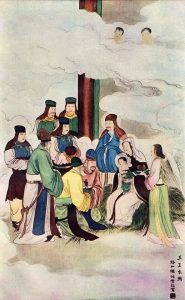
three magi chineseThe third question Archbishop Socrates Villegas asked me during my ordination was “Are you afraid enough? Just like the first two questions, this one is also counterintuitive. One of my favorite phrases in the Bible is “Do not be afraid!” In many occasions in the Scriptures, this statement does not simply convey encouragement, but also a life-changing mission. When Abram was getting old and he was childless, he doubted to enter the convent with the Lord who promised him descendants like the stars in heaven, God said, “do not fear!” (Gen 15) Then, Abraham became the father of all nations. When God called Jeremiah to prophesy to Judah, he found an excuse in his young age, but God said, “do not be afraid!” (Jer 1:8) Then, Jeremiah became one of the greatest prophets of Israel. When Joseph felt betrayed and yet in his mercy, planned to divorce Mary in secret, the angel said to him, “Joseph, son of David, do not be afraid to take Mary your wife into your home.” (Mat 1:20) Then, Joseph became the foster father of the Son of God. When Mary received the Good News from the angel Gabriel, she did not understand what was happening, Gabriel said to her, “Do not be afraid, Mary, for you have found favor with God.” (Luk. 1:30) Then, she became the Mother of God.
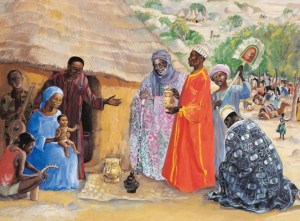
We need in the Church, the people who are not afraid to follow God’s call to love and to serve. We need priests who do not fear to proclaim the Gospel despite hardship, trials, and even threats to their lives. We need religious men and women who do not fret to serve the poor, the marginalized and the forgotten. We need the clergymen who dare to say no to the comfort of life, to fight off laziness, and to serve and to be served. We need lay men and women who are courageous in making their daily sacrifice for their families and in witnessing to Jesus Christ. We can learn also from the three Magi who traveled a thousand miles from the east, braved all dangers including the bandits and violent weathers, and challenged the power-hungry Herod, just to see the baby Jesus.

However, to have no fear does not mean recklessness. In the same Bible, we discover also that there is one fear that is needed and in fact, holy. This is the fear of the Lord (Job 28:28; Psalm 110:10). It is not the fear that flows from the fearsome and vengeful image of God. We are afraid because God will punish us and throw us to hell! No, it is a wrong image. We fear the Lord because we are afraid to offend someone who loves, someone who has loved us tremendously. We should be afraid that we lose God because of our sinful attachments. We must fear that we are separate from God who is the source of our life. The priests should be afraid to celebrate the Eucharist unworthily. The lay men and women must be afraid to approach the Eucharist and other sacraments in vain. The clergymen should be afraid to steal the money of the Church. The men of God must fear to deny the spiritual needs of the people. Again, the three Magi are our good model. They dared many challenges and defied Herod the great, but before the baby Jesus, they prostrated themselves and gave homage. It is the holy fear of God.

Deacon Valentinus Bayuhadi Ruseno, OP

Takut

Hari Raya Penampakan Tuhan [6 Januari 2019] Matius 2:1-12

three magi africanPertanyaan ketiga yang diajukan Uskup Agung Socrates Villegas kepada saya saat saya ditahbiskan adalah, “Apakah kamu takut? Sama seperti dua pertanyaan sebelumnya, pertanyaan ini juga berlawanan dengan intuisi dasar. Salah satu ungkapan favorit saya dalam Alkitab adalah “Jangan takut!” Dalam banyak kesempatan dalam Kitab Suci, pernyataan ini tidak hanya menyampaikan dorongan semangat, tetapi juga sebuah misi yang mengubah hidup. Ketika Abram menjadi tua dan tidak memiliki anak, dia ragu dengan janji Tuhan yang menjanjikan keturunan seperti bintang-bintang di langit, Allah berkata, “Jangan takut!” (Kej 15) Akhirnya, Abraham menjadi bapak dari bangsa-bangsa. Ketika Allah memanggil Yeremia untuk bernubuat kepada Yehuda, ia ragu dan beralasan bahwa usianya yang masih muda, tetapi Tuhan berkata, “Jangan takut!” (Yer 1:8) Lalu, Yeremia menjadi salah satu nabi terbesar Israel. Ketika Yusuf merasa dikhianati saat dia mengetahui Maria mengandung diluar nikah, namun dalam belas kasihannya, ia berencana untuk menceraikan Maria secara rahasia, malaikat pun berkata kepadanya, “Yusuf, anak Daud, jangan takut untuk mengambil Maria sebagai istrimu.” (Mat 1:20) Kemudian, Yusuf menjadi ayah angkat Putra Allah. Ketika Maria menerima Kabar Baik dari malaikat Gabriel, dia tidak mengerti apa yang sedang terjadi, Gabriel pun berkata kepadanya, “Jangan takut, Maria sebab engkau beroleh kasih karunia di hadapan Allah.” (Luk. 1:30) Lalu, dia menjadi Bunda Allah.

Kita membutuhkan di Gereja, orang-orang yang tidak takut untuk mengikuti panggilan Allah untuk mengasihi dan melayani. Kita membutuhkan para imam yang tidak takut untuk memberitakan Injil terlepas dari kesulitan, cobaan, dan bahkan ancaman terhadap hidup mereka. Kita membutuhkan biarawan-biarawati yang tekun melayani yang miskin, yang terpinggirkan dan yang terlupakan. Kita membutuhkan imam yang berani mengatakan tidak untuk kenyamanan hidup, untuk melawan kemalasan, dan untuk melayani dan bukan dilayani. Kita membutuhkan pria dan wanita awam yang berani dalam melakukan pengorbanan setiap hari untuk keluarga mereka dan dalam memberikan kesaksian kepada dunia. Kita dapat belajar juga dari ketiga orang Majus yang melakukan perjalanan ribuan mil dari timur, menantang semua bahaya termasuk para perampok dan cuaca yang tidak bersahabat, dan berhadapan dengan Herodes yang haus kekuasaan, hanya untuk melihat bayi Yesus.

Namun, tidak memiliki rasa takut bukan berarti nekat, ceroboh dan seenaknya sendiri. Dalam Alkitab yang sama, kita juga menemukan bahwa ada satu ketakutan yang diperlukan dan pada kenyataannya, kudus. Ini adalah takut akan Tuhan (Ayub 28:28; Mazmur 110: 10). Ini bukanlah rasa takut yang mengalir dari citra Allah yang menakutkan dan penuh dendam. Kita takut karena Tuhan akan menghukum kita dan melemparkan kita ke neraka! Tidak, ini gambar yang salah.

Kita takut akan Tuhan karena kita takut melukai seseorang yang mengasihi kita dan seseorang yang sangat kita kasihi. Kita harus takut saat kita kehilangan Tuhan karena kelekatan kita terhadap dosa. Kita harus takut bahwa kita terpisah dari Tuhan yang merupakan sumber kehidupan kita. Para imam harus takut untuk merayakan Ekaristi dengan tidak layak. Kaum awam harus takut untuk mendekati Ekaristi dan sakramen-sakramen lainnya dengan keadaan berdosa. Para imam harus takut untuk mencuri uang Gereja. Para klerus harus takut menolak kebutuhan rohani umat. Sekali lagi, ketiga majus adalah model yang baik kita. Mereka berani menghadapi banyak tantangan dan menentang Herodes agung, tetapi di hadapan bayi Yesus, mereka bersujud dan memberi hormat. Jangan takut terhadap hal-hal yang menghalangi kita jalan kita menuju Tuhan, dan kita takut dengan hal-hal yang menjauhkan kita dengan Tuhan.

Diakon Valentinus Bayuhadi Ruseno, OP

Jesus and Joseph

The Feast of the Holy Family [December 30, 2018] Luke 2:41-52

holy familyWe are celebrating the feast of the Holy Family of Nazareth, the feast day of Jesus, Mary, and Joseph. The last event in the Bible that presents the Homily Family together is the Finding of the Child Jesus in the Temple. After this event, Joseph no longer appeared in the Bible, and according to the tradition, he passed away even before he was able to see Jesus in His public ministry. Since this is the last episode where Joseph gets involved in the narrative, we shall reflect more about him.

In today’s Gospel, we discover a seemingly a fatal mistake of Joseph and Mary. They allow the child Jesus to be lost! That was careless! Yet, are Joseph and Mary really careless? Looking deeper into their context, it is not really the case. When Joseph and Mary go to Jerusalem for the festival of Passover, they do not go by themselves, but with other relatives and neighbors from Nazareth. Traveling together may slow them down, but it gives protection from robbers and avoids the food shortage. The responsibility of taking care of the children are also shared among the adults. After all, Jesus is twelve years old and big enough to take care of younger members of the group. Surely, it is not carelessness, but the trust is given to Jesus that allows Jesus to stay behind in Jerusalem. As dedicated parents, Joseph and Mary are looking for Jesus anxiously. To look for a boy in the capital city Jerusalem is just like finding a needle in the mount of straw, but, miraculously, they are able to find Him: Jesus is in the midst of teachers of the Jewish Laws, discussing and answering them with eloquence.

When Mary asks Jesus why he is missing, Jesus’ answer is mind-boggling, “Did you not know that I must be in my Father’s house?” (Lk. 2:41) Mary does not understand with the answer, and she is pondering all these things in her heart. But, how about Joseph, the foster father of Jesus? What will be his reaction and feeling when he hears, “… I must be in my Father’s house?” Will Joseph punish Jesus for disrespect to him and Mary? Will he get furious after Jesus goes away without permission? Will Joseph disown Jesus after Jesus seemingly refuse to call him as a father?

Though it is hard to determine because Joseph is a silent man, I do believe Joseph will not do these violent things because he is a peaceful person. When Joseph knew Mary was pregnant out of wedlock, he could have thrown the first stone. Yet, he chose mercy and spared Mary from vengeance. As he was merciful to Mary, so he will be merciful to Jesus. Yet, there is something more. Beyond these initial reactions, I believe that Joseph is grateful and proud of Jesus. And why should he be thankful and proud? We recall that Joseph is described as the righteous man or in original Greek, “diatheke”. He is righteous not only because he knows well the Law of God, and abide by it, but because he loves the Law dearly. One of the basic duties of a Jewish father is to teach his children to learn and to love the Law. Thus, If Jesus is able to answers the teachers, to a certain extent, it is because Joseph has taught Him well. Moreover, Jesus prefers to engage with His Father’s affairs. This means Joseph does not only teach Jesus the technicalities of the Law but fundamentally, to love God above all.

St. Joseph becomes an example of every man, especially how to raise children. The first and foremost duty of every father is to lead their children to the Lord and to teach them to love God, and to love others for the sake of God. And how to do that? Like St. Joseph, we need to teach our children by example.

Deacon Valentinus Bayuhadi Ruseno, OP

Deacon Valentinus Bayuhadi Ruseno, OP