
Bersukacitalah, Tetapi Mengapa?

Minggu ke-3 Masa Adven [B]

15 Desember 2024

Lukas 3:10-18

Sekarang kita berada di hari Minggu ketiga masa Adven, yang juga dikenal sebagai Minggu Gaudete. “Gaudete” adalah sebuah kata dalam bahasa Latin yang berarti ”Bersukacitalah!” Nama ini berasal dari antifon pembuka Misa, yang diambil dari Flp. 4:4-5, “Bersukacitalah selalu dalam Tuhan, sekali lagi aku akan berkata: Bersukacitalah. Hendaklah kelembutanmu diketahui semua orang. Tuhan sudah dekat!” Namun, mengapa kita harus bersukacita di masa Adven ini?

Kedatangan Tuhan pada dasarnya adalah alasan untuk bersukacita. Pada hari Minggu pertama masa Adven, kita mendengar tentang peristiwa-peristiwa menakutkan seputar kedatangan Yesus yang kedua kali di akhir zaman, “kuasa-kuasa langit akan goncang (Luk 21:26).” Namun, ketakutan ini hanya akan dirasakan oleh mereka yang tidak mengasihi Yesus, yaitu mereka yang takut akan penghakiman-Nya. Bagi mereka yang mengasihi Yesus dan hidup sesuai dengan perintah-perintah-Nya, kedatangan-Nya adalah alasan untuk bersukacita, karena kita yakin bahwa kita akan bersama dengan-Nya.

Tetapi mengapa kita mengalami sukacita yang mendalam ketika kita bersama Yesus? Kita bisa membandingkannya dengan hubungan kita dengan orang-orang yang kita kasihi. Ketika kita mengasihi seseorang, kita ingin dekat dan berbagi waktu bersama mereka. Ikatan ini memberikan kita sukacita dan kedamaian. Ketika kita mengasihi anak-anak kita, kita ingin bersama dan menghabiskan waktu bersama mereka. Pengalaman ini membawa sukacita dalam hati kita. Sama halnya dengan Yesus. Jika kita sungguh-sungguh mengasihi Yesus, kita rindu untuk bersatu dengan-Nya, dan ketika kita memeluk Yesus, kita menerima sukacita yang didambakan oleh hati kita. Semakin dalam kita mengasihi Yesus, semakin dalam pula sukacita yang kita alami ketika Dia datang.

Akan tetapi, hal yang sebaliknya juga benar. Jika kita tidak mengasihi Yesus sebagaimana mestinya, atau bahkan membenci Yesus, maka kita tidak akan bersukacita atas kedatangan-Nya. Sebaliknya, kita akan takut akan kedatangan-Nya. Tetapi apakah yang dimaksud dengan “membenci” Yesus? Hal ini bisa jadi lebih halus daripada yang kita pikirkan.

  • Meninggalkan Yesus: Kita “membenci” Yesus ketika kita meninggalkan-Nya atau tidak lagi percaya kepada-Nya.
  • Lebih mengasihi hal-hal lain: Kita “membenci” Yesus juga ketika kita lebih memprioritaskan hal-hal lain seperti kekayaan, popularitas, dan kesenangan daripada Yesus.
  • Mengasihi diri sendiri secara berlebihan: Mungkin, yang paling tidak disadari, kita “membenci” Yesus ketika kita mengasihi diri kita sendiri secara berlebihan dan tidak teratur. Pusat kehidupan kita tidak lain adalah diri kita sendiri, dengan kata lain, kita menjadi narsis. Kita harus sangat berhati-hati dengan cinta yang berlebihan kepada diri kita sendiri karena kita mungkin tidak menyadarinya. Kita selalu pergi ke Gereja atau aktif dalam banyak organisasi di paroki, tetapi motivasi sebenarnya adalah agar kita dapat dilihat orang lain sebagai pria atau wanita yang saleh.

Kita bersukacita karena kita mengasihi Yesus. Yesus mengerti betapa sulitnya berada jauh dari orang yang sangat kita kasihi. Oleh karena itu, Ia datang kepada kita melalui Firman-Nya dan di dalam Ekaristi. Meskipun ini bukanlah persatuan yang sempurna, ini cukup bagi kita untuk bersukacita di dalam Tuhan.

Roma

Valentinus Bayuhadi Ruseno, OP

Pertanyaan-pertanyaan untuk direnungkan:

Apakah kita mengasihi Yesus di atas segalanya? Bagaimana kita mengasihi Yesus dalam konteks kita sebagai orang tua, pasangan, anak, profesional, atau pelajar? Apakah kita lebih mengasihi diri kita sendiri daripada Yesus? Apakah kita mengajar orang lain untuk mengasihi Yesus?

Thorn in the Flesh

14th Sunday in Ordinary Time

July 7, 2024

2 Cor 12:7-10

St. Paul in his letter to the Corinthians reveals to us that he is struggling with ‘a thorn in the flesh’ caused by the devil. Yet, what does it mean for St. Paul to have ‘a thorn’ in his flesh? And, how does St. Paul deal with this situation?

There are at least three possible answers to this thorn in the flesh. The first posibility is that the thorn refers to the spiritual assaults coming from the evil spirits. Either in the forms of physical harassment or constant inner temptations. The second possible answer may refer to his health condition, especially his eye problem. One time St. Paul complained about his difficulty to read. In his letter to the Galatians, he writes, “you know that it was because of a physical illness that I originally preached the gospel to you, and you did not show disdain or contempt because of the trial caused you by my physical condition…Indeed, I can testify to you that, if it had been possible, you would have torn out your eyes and given them to me.” (Gal 4:13-15). The third possibility is that the thorn may point to his struggles and hardship he endures as he deals with different communities. He often narrates how he was slandered, backstabbed and unfaithfullness.

Which among the three possibilites is the most probable? St. Paul may in fact deal with these three conditions in the course of his ministries, but in my personal opinion, this ‘thorn’ speaks of Paul’s struggle with Christian communities he serves. Ultimately, we are not really sure, but what is important is how Paul deals with this thorn. Firstly, Paul recognizes that God allows satan to cause this thorn. It is a good theology. A perfect God does not directly cause evil since only goodness comes from Him, but God may allow evil to take place as long as He has a sufficient reason, that is to bring out the even greater goodness. Secondly, Paul asks the thorns to be removed. Yet, his prayer is not granted because God wants that thorn to stay and He will use that for His glory.

St. Paul admits that the thorn is to keep St. Paul away from being arrogant. Paul receives a lot of spiritual gifts from the Lord, and these gifts may lead to spiritual pride as he may compare himself with less mature Christians. Thus, the thorn serves as a constant reminder that he is also struggling just like other Jesus’ disciples.

Furthermore, St. Paul realizes that God allows Paul to suffer the thorn because He supplies Paul with nececssary grace. The Lord says to Paul, “My grace is sufficient for you.” It is precisely God’s grace that sustains Paul in coping with the troublesome sitaution. St. Paul discerns that he is able to survive and even flourish through sufferings and weakness because of God’s grace. Paul cannot boast of himself, of his power, his intellegence, and his eloquence because all these things crumble before the weight of sufferings. Paul only can boast of weakness, his sufferings, his hardships, his thorn because precisely in his weakness, people can see how God’s grace works and sustains Paul.

What are our thorns in our lives? Are we angry because God does not take away our thorns? Do we relly solely on our strenght? Do we ask suffient grace to endure and flourish through sufferings?

Valentinus Bayuhadi Ruseno, OP

Called for Holiness

All Saints’ Day

November 1, 2020

Matthew 5:1-12

Today the Church is celebrating the Solemnity of all saints. This is one of the ancient feasts in the Church that commemorates and honors all holy people who had gone before us and received their eternal reward, God Himself. We may recognize some of them, like St. Ignatius, St. Dominic de Guzman, St. Francis of Assisi, and St. Catharine of Siena, but this is only a tiny fraction of the entire heavenly host. There are countless we are not aware of. The good news is that all of them are praying for us, and who knows, some of our departed beloved have been parts of this holy communion.
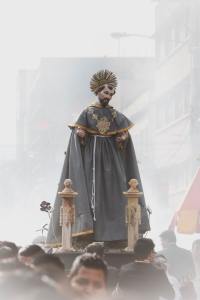
Speaking of the saints, the first thing that often pops up in our mind is that these are giants of our faith. Many saints, like the majority of the apostles, are martyrs. They offered their lives for Christ in gruesome ways. Many saints are performing unparalleled miracles. St. Benedict of Nursia was reported to raise a young man killed in an accident during the building of his monastery. Not only miracles, but some saints are also performing unthinkable deeds. A tradition says that St. Anthony of Padua decided to preach to the fish when the heretics refused to listen to him, and the fishes were giving their attention to the preacher of truth. When St. Vincent Ferrer preached, his voice could be heard even as far as 3 KM away. St. Catharine of Siena received the gift of stigmata, the wounds of the crucified Christ. St. Padre Pio of Pietrelcina had the gift to penetrate the depth of human hearts so that people cannot hide anything before him during the confession.

Looking at the lives of the saints, we may wonder, “Is sainthood for me?” I am afraid to die, let alone as martyrs. I do not possess super abilities; not even I can speak with my pets. Worse, I continue to struggle with my sins. Holiness is far from many of us.

However, the truth is all of us are created to become saints. Yes, the purpose of why God created us is to be holy, to be part of heaven, and to share His divine life. In fact, we have only two fundamental options in the final analysis: for God or against God. If we are for God, then our destiny is heaven, and membership in eternal joy is for the saints. Yet, if we refuse to be with God, then we are doomed to hell. Thus, our choice is only two: to be saints or go to hell. Tough choice!

Yet, the saints with marvelous stories are the only tip of the iceberg. The majority of the saints are living a simple yet faithful life. St. Martin de Porres lived his entire life as a simple brother, cleaning and taking care of the convent. St. Therese of Lisieux did not do any extraordinary things during her life, but sincere prayer to the Lord. St. Louis and Azelie Martin, a simple couple yet faithful parents, raised 5 nuns, and one of them is St. Therese. And, Beato Carlo Acutis was young and liked to play Playstation, but he was also recognized as a blessed one. We are called to holiness, and we are designed for heaven. We need to be open to God’s grace to work in us.

All Saints pray for us!

Valentinus Bayuhadi Ruseno, OP

photocredit: grant witty


Dipanggil Menjadi Orang Kudus

Hari Raya Semua Orang Kudus

1 November 2020

Matius 5: 1-12

Hari ini Gereja merayakan hari raya semua orang kudus. Ini adalah salah satu pesta kuno di Gereja yang memperingati dan menghormati semua orang yang telah berpulang dan menerima pahala kekal mereka, Tuhan Sendiri. Kita mungkin mengenali beberapa dari mereka, seperti St. Dominikus de Guzman, St. Fransiskus dari Assisi, dan St. Catharine dari Siena, dan St. Ignatius, tetapi ini hanya sebagian kecil dari seluruh penghuni surgawi. Kabar baiknya adalah bahwa mereka semua berdoa untuk kita, dan siapa tahu, beberapa dari orang-orang yang kita kasihi yang telah meninggal telah menjadi bagian dari persekutuan kudus ini.

Berbicara tentang orang-orang kudus, hal pertama yang sering muncul di benak kita adalah bahwa mereka adalah para raksasa iman kita. Banyak orang kudus adalah martir. Mereka mempersembahkan hidup mereka untuk Kristus dengan menghadapi kematian yang mengerikan. Banyak orang kudus melakukan mukjizat yang tak tertandingi. St. Benediktus dari Nursia pernah membangkitkan seorang pemuda yang tewas dalam kecelakaan saat membangun biaranya. Tidak hanya mukjizat, beberapa orang kudus juga melakukan perbuatan-perbuatan yang tidak terpikirkan. Sebuah tradisi mengatakan bahwa Santo Antonius dari Padua memutuskan untuk berkhotbah kepada ikan ketika para bidaah menolak untuk mendengarkannya, dan ikan-ikan itu memberikan perhatian mereka kepada pengkhotbah kebenaran. Ketika St. Vincentius Ferrer berkhotbah, suaranya dapat didengar bahkan sejauh 3 KM. St. Katarina dari Siena menerima karunia stigmata, yakni luka-luka Kristus di salib. St Padre Pio dari Pietrelcina memiliki karunia untuk menembus kedalaman hati manusia, sehingga orang tidak dapat menyembunyikan apapun di hadapannya selama pengakuan dosa.

Melihat kehidupan orang-orang kudus, kita mungkin bertanya-tanya, “Apakah kekudusan ini untuk saya?” Saya takut mati apalagi sebagai martir. Saya tidak memiliki kemampuan super, bahkan saya tidak bisa berbicara dengan hewan peliharaan saya di rumah. Lebih buruk lagi, saya terus bergumul dengan dosa-dosa saya. Sepertinya, kekudusan jauh dari kebanyakan dari kita.

Namun, pada kenyataannya kita semua diciptakan untuk menjadi orang kudus. Ya, tujuan mengapa Tuhan menciptakan kita adalah untuk menjadi kudus, menjadi bagian dari surga, dan untuk berbagi kehidupan ilahi-Nya. Dalam analisis terakhir, kita hanya memiliki dua pilihan mendasar: untuk Tuhan atau melawan Tuhan. Jika kita untuk Tuhan, maka tujuan akhir kita adalah surga, dan keanggotaan dalam sukacita kekal ini adalah untuk orang-orang kudus. Namun, jika kita menolak untuk bersama Tuhan, maka neraka adalah tempat pembuangan akhir kita. Jadi, pilihan kita hanya dua sebenarnya: menjadi orang kudus atau pergi ke neraka. Pilihan yang sulit!

Namun, orang-orang kudus dengan cerita yang luar biasa hanyalah puncak gunung es. Mayoritas orang kudus menjalani kehidupan yang sederhana namun setia. St Martinus de Porres menjalani seluruh hidupnya sebagai seorang bruder yang sederhana, membersihkan dan merawat biara. St Theresia dari Lisieux tidak melakukan hal-hal luar biasa selama hidupnya, tetapi berdoa dengan tulus kepada Tuhan. St. Louis and Azelie Martin, pasangan sederhana, tetapi setia dalam iman, menjadi orang tua dari 5 orang biarawati, St. Theresia dari Lisieux satu di antaranya. Beato Carlo Acutis masih muda dan suka bermain Playstation, tetapi dia bisa menjadi kudus dengan mengikuti misa setiap hari, mengaku dosa seminggu sekali, dan berdoa rosario setiap hari. Kita dipanggil menuju kekudusan, dan kita dirancang untuk surga, kita hanya perlu terbuka pada kasih karunia Tuhan untuk bekerja di dalam kita.

Para kudus di surga, doakanlah kami!

Valentinus Bayuhadi Ruseno, OP

photocredit: Lisandro Garcia

Christ’s Body and Our Body

Solemnity of Body and Blood of Christ [Corpus Christi] – A

June 14, 2020

John 6:51-58

eucharist 3The solemnity of the Body and Blood of Jesus Christ takes its origin from the initiative of St. Juliana of Liege, who asked his bishop and his friends to honor, in a special way, the institution of the Eucharist, and the real presence of Jesus Christ in the Blessed Sacrament. The institution of the Eucharist itself took place in the Last Supper of the Lord, and every Holy Thursday, the Church celebrates this event. However, since Holy Thursday is an inseparable part of the Easter Triduum, the attention is given to the mystery of the Passion and Resurrection of our Lord. Because of its rootedness in Holy Thursday, the solemnity of Corpus Christi is celebrated on Thursday after the Trinity Sunday. Yet, in several countries, the celebration is moved to the next Sunday to accommodate the greater participation of the faithful.
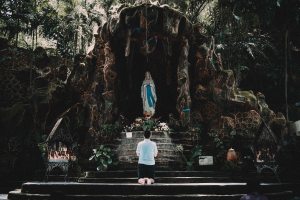
 In the Gospel, Jesus insists that His body is real food, and everyone who wants to have eternal life shall consume His body. We may wonder: why does in His infinite wisdom, Jesus decide to give His body as food for our spiritual nourishment? Why not infuse the grace directly to our souls? The answer may surprisingly simple. It is because our body is real and good. God created man and woman in their fulness human nature, including their bodies, as something very good. Though our body comes from the ground, it has been marvelously designed to receive the bread of God, the spiritual life. Our bodies are fundamentally good, and so good that our bodies are inclined to grace. In the word of St. Augustine, “Capax Dei” (capable of knowing and receiving God).

Since the earliest time, the Church has battling perennial heresy called Gnosticism. In essence, gnosticism teaches there is dualism in our creation, and that the spiritual realm is good and the material world, including our body, is evil. Thus, any material aspect of our humanity has to be disposed of. The Church vehemently opposed this because God has created our material world as good and beautiful. The battle continues in time of St. Dominic de Guzman, the founder of Order of Preachers, who fought the Albigensians [the middle age adaptation of gnosticism). Gratefully, the Albigentians were no more, but unfortunately, the gnosticism lives on.

As Christians, we carry the battle of the Church against the modern-day gnosticism. The kind gnosticism is surprisingly simple without any need to learn a complex system of belief. When we consider our body a mere instrument to achieve success, when we abuse our bodies to feel instant pleasures, when we treat our bodies as mere economic gain, when we say that my body is my right, we unconsciously fall into the trap of this heresy.

But wait, there’s more! The feast of Corpus Christi brings us even greater truth of our body. By becoming man and finally giving His body, Jesus teaches us that body is not only capable of receiving grace, but it is also capable of becoming grace and love for others. In the Last Supper, Jesus has given as a supreme expression that is to offer His own body in love. And yet, to be shared, it has to be broken, and yet despite broken, it is offered in thanksgiving.

 In this time of the pandemic, we are not able to attend the Holy Mass, and we miss a lot the Body of Christ. Yet, the good news is that it is our time also for us to become the Body of Christ for our neighbors in need. Only through sharing our body in love, we fulfill our purpose as bodily creatures created in His image.

Valentinus Bayuhadi Ruseno, OP

Berdoa seperti Yesus

Minggu Paskah ke-7

24 Mei 2020

Yohanes 17: 1-11a

man in prayer 4Doa adalah bagian mendasar dari kehidupan Yesus. Dia berdoa secara teratur, dan terutama ketika Dia bersiap untuk merangkul peristiwa-peristiwa yang menentukan, seperti Pembaptisan di Sungai Yordan [Lukas 3:21], pemilihan kedua belas rasul [Lukas 6:12], transfigurasi [Lukas 9:28], dan jalan salib-Nya [Mat 26:36-44]. Namun, kita jarang mendengar apa yang Yesus katakan dalam doa-doanya. Dalam Injil Sinoptik [Matius, Markus dan Lukas] kita cukup beruntung mendengar doa Yesus yang pendek dan emosional di Taman Getsemani sebelum Dia memasuki sengsara-Nya. Namun, penginjil Yohanes memastikan bahwa kita akan menemukan apa yang Yesus doakan dan hal ini jauh lebih panjang daripada yang pernah kita dengar sebelumnya.
Yohanes mencurahkan seluruh bab untuk doa ini [Yohanes 17: 1-26]. Yesus berdoa kepada Bapa dengan kasih dan keyakinan yang luar biasa. Namun, yang membuat doa ini  penting adalah bahwa Yesus tidak hanya berdoa tentang diri-Nya dan misi-Nya, tetapi juga berdoa untuk para murid-Nya. Yesus bertindak sebagai imam yang menjadi perantara bagi para murid-Nya. Itulah sebabnya kita menyebut bagian ini sebagai doa Yesus Kristus sebagai imam besar.

Dari doa Yesus, kita menggali beberapa pelajaran yang penting:

Pertama, jika doa sangat penting dalam kehidupan Yesus karena Yesus mengerti doa adalah jalur komunikasi-Nya kepada Bapa. Komunikasi adalah kunci untuk setiap hubungan untuk berkembang, dan Yesus mengetahui hal ini dengan baik. Mungkin, kita gagal melihat kebenaran ini, dan itulah sebabnya kita merasa doa itu membosankan. Kita malas menghadiri misa karena kita hanya memahaminya sebagai kewajiban. Kita menempatkan doa pribadi hanya sebagai tambahan karena kita menjadikan hal-hal lain sebagai prioritas kita. Anehnya, kita segera menyalahkan Tuhan jika rencana kita tidak berjalan sesuai dengan keinginan kita, atau kita bahkan mengancam Tuhan untuk mengabulkan keinginan kita. Jadi, mengubah perspektif tentang doa adalah penting dan bahkan akan mengubah kehidupan.

Kedua, jika doa adalah komunikasi, maka harus selalu berupa dialog. Sering kali ketika mulai tumbuh dalam doa, kita berpikir bahwa kita harus selalu mengatakan sesuatu kepada Tuhan. Saya ingat seorang frater bertanya kepada saya, “Romo, apa lagi yang harus saya katakan jika saya kehabisan kata-kata dalam doa saya?” Saya mengatakan kepadanya, “Mungkin, ini saatnya untuk mendengarkan Tuhan.” Pertanyaan selanjutnya adalah, “Bagaimana saya mendengarkan Tuhan?” Tentunya tidak ada jawaban yang baku, tetapi saya suka apa yang dikatakan St Heronimus, “Kamu berdoa: kamu berbicara kepada mempelai laki-laki [Yesus]. Kamu membaca [Kitab Suci]: Dia berbicara kepadamu. ” Namun, kita perlu ingat bahwa dialog kata-kata bukanlah akhir dari komunikasi. Akhirnya adalah orang-orang dalam dialog menjadi satu. Yesus berkata pada dirinya sendiri, “Aku di dalam Bapa-Ku, dan kamu di dalam Aku, dan Aku di dalam kamu [Yohanes 14:20].”

Terakhir, doa kita melibatkan orang ketiga. Ini adalah konsekuensi langsung dari doa imam Yesus. Doa adalah dialog, tetapi sama seperti dialog lainnya, doa dapat berbicara tentang orang lain. Inilah saatnya kita berdoa kepada Tuhan untuk orang lain. Karena Yesus memberi kita teladan dalam doa-Nya, maka semakin penting bagi kita untuk memelihara sesama melalui doa. Pada saatnya kita tidak dapat menjangkau orang lain yang membutuhkan bantuan kita, doa tetap menjadi cara terbaik untuk mencintai mereka. Sesungguhnya orang-orang kudus di surga terus memelihara kita meskipun tidak mampu secara fisik menampakkan diri kepada kita, melalui doa-doa mereka.

Doa menyatukan kita dengan Tuhan dalam kasih dan doa juga menyatukan kita dengan orang-orang yang kita kasihi di dalam Tuhan.

Valentinus Bayuhadi Ruseno, OP

Gifts of Mercy

laying of handsOne of the greatest as well as most humbling realization is that my life and existence is a gift from God. All that exist, from the sub-atomic particle to the purest seraphim owe their being from the Lord. If St. Thomas Aquinas defines justice as to give what is due, then existence is neither due to me nor to all of us. I cannot demand the Lord that He should create me to be the handsomest of all, the richest of all, and the brightest of all. Not even I can ask from Him to possess a face like a Korean actor! Then why did God create me?

The answer lies beyond the justice of God, and what is beyond his justice? It is His Mercy. If His justice asks for “tooth for a tooth” and “eye for an eye”, His Mercy enables one to “give to the one who asks of you, and do not turn your back on one who wants to borrow. (Matt. 5:42)”. If justice is to “love your neighbor and hate your enemy,” (Matt. 5:43), mercy is to “love your enemies, and pray for those who persecute you (Matt. 5:44 NAB).” If God simply exercises His justice, I would not have had my being, but a God is “gracious and merciful, slow to anger and abounding in love and fidelity (Exo 34:6).” And I am here now, alive and kicking, because of God’s mercy. It is a gift precisely because it does not come from my merit and achievement, but freely given.

However, the first gift of life is not the only gift He grants me. The precious gifts keep coming: the gift of family, the gift of faith, the gift of (Dominican) vocation.

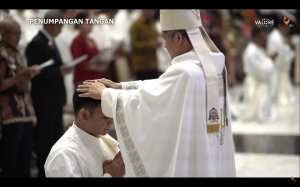
This series of precious gifts are leading me to another even more precious gift: the gift of priesthood. Looking into myself, I am aware that I am far from worthy. I have been sinful man, a broken in many possible ways, and I have hurt a numberless people. Often, I am ungrateful for tremendous gifts and blessing God has showered me. And yet, here I am, quoting the motto of Pope Francis, “miserando atque eligendo” – by God’s merciful choice, in front of the great mystery of faith. As I am ordained by the laying hands of Most. Rev. Antonius Subianto, OSC, DD, I will be, as Bishop Robert Barron would point out, “the bearer of the divine mystery”. This gift does not simply add some sacramental works in my sleeves, but it transforms my very being and identity into the image and likeness of Christ the Head [in persona Christi Capitis]. I participate in the identity and mission of the bishops and fellow priests as bridge-maker [pontifex] between God and humanity, to allow the people of God to embrace the divine mystery.

Every time I celebrate Eucharist [thanksgiving], I shall give thanks to the Lord for the gifts of Mercy. As I have received the gifs, it is now my turn to share these gifts to others so that people of God may feel His Mercy. At the heart of the Eucharist is the thanksgiving over the most precious gift of all, the body and blood of Jesus Christ, being blessed, broken and shared. As I receive this precious gift, my lips proclaim the Word of God, and my hands lift the bread of life and the chalice of salvation, I shall offer my life, like the life of Jesus, to be broken and shared to nourish the people of God.

However, despite tremendous power and privilege the ordination brings, I keep confessing that I am weak, sinful, and not worthy. Thus, as I begin this new chapter of my life, I implore for God’s Mercy and yours.


The Gift of Ordination

First Sunday of Advent [December 2, 2018] Luke 21:25-28, 34-36

ordinationI have been in the Dominican formation for more than 12 years, and if I add four years of my minor seminary formation in Indonesia, it stretches to 16 years! It is insanely long that it occupies a more than half of my life. If we believe that everything has a purpose, I can ask myself, “what is the point of this extremely lengthy formation?” Why should I stay through thick and thin of formation life, through hours of assiduous study, through various programs, through daily rigor of prayer life?

The answer is surprisingly not difficult to see. It is because I want to become a priest and not any priest, it is a Dominican priest, and not only any Dominican priest, but it is a holy, faithful and holistically mature Dominican priest. It looks a simple answer, but every word in that answer carries certain enormous understanding and consequences. Having this so noble aim perhaps explains why the formation is incredibly extensive and long.

However, after passing through literally more than 5 thousand days in the formation, battling many tough examinations, attending countless prayers and spiritual exercise, involving myself in community activities, I am now standing before the threshold of the being-transforming rite what we call the ordination. Looking back, I am aware that I have reached that unprecedented improvements and growth. However, it is also true that I have come short in many aspects. I have committed untold stupidities, things that 14-year-old Bayu would not dare to contemplate. Thank God, that despite these shortcomings, I am still alive!

Honestly evaluating these things, I realize that I am not worthy of this ordination. I could boast some of my achievements, both in academic and non-academic fields. I could show myself as a brother who lives a religious life with certain regularity. I could boast the numbers of talks and lectures I prepared and gave. I could boast the Latin honor I received in every graduation. However, these things are just a bunch of straws!

However, why does this ordination remain within my reach despite my unworthiness? I realize that the vocation to the diaconate is a gift. In Philosophy expounded by St. Thomas Aquinas, I learn my essence is not my existence, meaning to exist is not even my right. Yet, the mere fact, I exist, means God, who is the source of all existence, has willed that I should live. Fundamentally my life is not right or a must, but a gift. My existence is an utter gift of God and so also my ordination. It is not a gift based on a merit system, otherwise, it is called a reward. It is not a gift I could demand because it is my right. It is neither a gift coming from my inheritance nor a gift that I could purchase in the Church. It is a free, absolutely free. God in the mystery of His infinite mercy and wisdom, has decided to grant me this beautiful gift. As I receive this gift despite my unworthiness, I cannot be forever grateful.

The gift does not only speak of me, the recipient. Ultimately it points to the giver. The gift represents how the giver values the recipient. The more valuable the gift is, the more precious the recipient to the giver. The ordinary gift may symbolize the goodwill of the giver, but the gift that hurts the giver is certainly extraordinary because it bears the sacrificial love of the giver. The gift of ordination reveals who my God is. He is God who sees beyond my weakness and flaws, who considers me as His precious own, who dares to share His own life and mission with me. Thus, I am forever grateful.

Br. Valentinus Bayuhadi Ruseno, OP

Karunia Pentahbisan

Hari Minggu Pertama Adven [2 Desember 2018] Lukas 21: 25-28, 34-36

prostrationSaya telah berada di formasi Ordo Dominikan di Filipina selama lebih dari 12 tahun, dan jika saya menambahkan empat tahun formasi seminari kecil saya di Indonesia, totalnya sampai 16 tahun! Ini sangat panjang karena lebih dari separuh hidup saya berada di formasi. Jika kita percaya bahwa semuanya memiliki tujuan, saya bertanya pada diri sendiri, “apa tujuan dari formasi yang sangat panjang ini?” Mengapa saya harus tetap berada dalam kehidupan formasi dengan suka dan dukanya? Mengapa saya harus menghabiskan banyak waktu dalam belajar? Mengapa saya harus bertekun dalam doa?
Jawabannya ternyata tidak sulit untuk ditemukan. Ini karena saya ingin menjadi imam secara khusus seorang imam Dominikan. Namun, tidak hanya sekedar imam Dominikan, tetapi seorang imam Dominika yang kudus, setia  dan juga dewasa. Jawabannya tampak sederhana, tetapi setiap kata dalam jawaban ini membawa pemahaman dan konsekuensi yang sangat besar. Memiliki tujuan yang begitu mulia ini mungkin menjelaskan mengapa formasi saya harus sangat panjang.

Namun, setelah melewati lebih dari 16 tahun dalam formasi, berjuang menghadapi banyak ujian yang sulit, menghadiri doa dan latihan rohani yang tak terhitung jumlahnya, melibatkan diri dalam kegiatan komunitas, saya sekarang berdiri di depan ambang pintu yang akan merubah hidup saya selamanya, yakni pentahbisan. Melihat ke belakang, saya sadar bahwa saya telah berkembang dan bertumbuh. Namun, benar juga bahwa saya mengalami banyak kegagalan dan bahkan melakukan kebodohan yang tak terkatakan. Puji Tuhan, bahwa meskipun kekurangan ini, saya masih hidup!

Dengan jujur mengevaluasi hidup saya, saya menyadari bahwa saya tidak layak untuk pentahbisan ini. Saya dapat membanggakan beberapa pencapaian saya, baik di bidang akademik maupun non-akademik. Saya bisa menunjukkan diri sebagai seorang frater yang menjalani kehidupan religius dengan baik. Saya bisa membanggakan berbagai kerasulan yang saya berikan. Saya bisa membanggakan penghargaan yang saya terima di setiap kelulusan. Namun, hal-hal ini hanyalah sekedar angin yang datang dan pergi!

Namun, mengapa pentahbisan ini tetap berada dalam jangkauan saya meskipun ketidaklayakan saya? Saya sadar bahwa panggilan ke menjadi seorang daikon ataupun imam adalah sebuah karunia. Dalam Filosofi yang diuraikan oleh St. Thomas Aquinas, manusia bukanlah mahkluk yang mutlak. Keberadaan bukanlah hak manusia dan kapan saja manusia bisa kehilangan eksistensinya. Semua tergantung pada sang sumber dari segala kehidupan, Tuhan sendiri. Pada dasarnya hidup saya bukan hak atau keharusan, tapi karunia. Keberadaan saya adalah anugerah Tuhan dan begitu juga tahbisan saya. Ini bukan karunia berdasarkan sistem point, jika tidak, itu disebut upah. Ini bukan karunia yang saya bisa tuntut berdasarkan hak saya. Itu bukanlah karunia yang datang dari warisan saya atau yang dapat saya beli di Gereja. Ini adalah karunia yang sungguh cuma-cuma. Tuhan dalam misteri belas kasih dan kebijaksanaan-Nya yang tak terbatas, telah memutuskan untuk memberikan saya karunia yang indah ini. Menerima karunia ini walaupun ketidaklayakan saya, saya hanya bisa bersyukur.

Karunia ini tidak hanya berbicara tentang saya, sang penerima. Akhirnya ini menunjuk pada sang pemberi. Karunia menunjukkan bagaimana sang pemberi menghargai sang penerima. Semakin berharga karunianya, semakin berharga sang penerima bagi sang pemberi. Sebuah hadiah yang sederhana melambangkan niat baik dari sang pemberi, tetapi karunia yang menuntut pengorbanan sang pemberi, tentu saja luar biasa. Karunia pentahbisan mengungkapkan siapa Allah saya. Dia adalah Tuhan yang melihat di luar kelemahan dan kekurangan saya, yang menganggap saya sebagai milik-Nya yang berharga, yang berani berbagi kehidupan dan misi-Nya dengan saya. Sungguh, saya senantiasa bersyukur memiliki Allah yang adalah kasih.

Frater Valentinus Bayuhadi Ruseno, OP

Trinity and Us

The Solemnity of the Most Holy Trinity [May 27, 2018] Matthew 28:16-20

“Go, therefore, and make disciples of all nations, baptizing them in the name of the Father, and of the Son, and of the Holy Spirit, (Matt. 28:19)”

big bang
photo by Harry Setianto, SJ

This Mystery of Trinity is rightly called the mystery of all the mysteries because the Holy Trinity is at the core of our Christian faith. Yet, the fundamental truth we believe is not only extremely difficult to understand, but in fact, it goes beyond our natural reasoning. How is it possible that we believe in three distinct Divine Persons, the Father, the Son and the Holy Spirit, and yet they remain One God? Some of the greatest minds like St. Augustine, St. Thomas Aquinas and Pope Emeritus Benedict XVI have attempted to shed a little light on the mystery. However, in the face of such immense truth, the best explanations would seem like a drop of water in the vast ocean.


I have no illusion that I could explain the mystery better than the brightest minds of the Church, but we may reflect on its meaning in our ordinary lives. The joyful Easter season ended with the celebration of the Pentecost Sunday last week, and we resume the liturgical season of the year or simply known as the ordinary season. As we begin once again the ordinary season, the Church invites us to celebrate the Solemnity of the Most Holy Trinity or the Trinity Sunday. The Church seems to tell us that the unfathomable mystery of Trinity is in fact intimately closed to our day-to-day living, to our daily struggles and triumphs, to our everyday pains and joys. How is our faith in the greatest mystery of all connected to our ordinary and mundane lives?

We often have false images of God. We used to think that God or Trinity is the greatest person (or three persons) among things that exist He is like a universal CEO that manages things from an undisclosed location or a super big and powerful being that controls practically everything. Yet, this is not quite right. He is not just one among countless beings. God is the ground of our existence. He is the very reason why anything exists rather than nothing. Thus, the act of creation is not what happened at the Big Bang 13.7 billion years ago. It is fundamentally God’s gift of existence to us. To be created means that we do not necessarily exist. Every single moment of our life is God’s gratuitous gift.

The Scriptures reveals the mystery of our God. He is not solitary and self-absorbed God, but our God is one God in three divine persons. Our God is a community founded on creative mutual love and constant self-giving. Therefore, our creation is not a mere accident, but God’s creative act and His gift of love. We exist in the world because God cannot but love us and wants us to share in the perfect life of the Trinity. St. Thomas Aquinas rightly says that we only believe two fundamental teachings, two credibilia : first, God exists, and second, we are loved in Jesus Christ.

We often take for granted our lives and immerse in daily concern of life; we rarely ask what the purpose of this life is. Yet, it does not diminish the truth that God lovingly sustains our existence and cares for us, even to the tiniest fraction of our atom. Whether we are busy doing our works, focus on our family affairs, or simply enjoying our hobbies, God is intimately involved. Thus, apart from God, our lives, our daily toils, and concerns, our sorrows and joys are meaningless and even revert to nothingness. Celebrating the Trinity Sunday means to rejoice in our existence as a gift, and to glorify God who is immensely loving and caring for us.

Br. Valentinus Bayuhadi Ruseno, OP