

6th Sunday of Easter [B]
May 5, 2024
John 15:9-17
Happiness is a result of fulfilling our needs and desires. Since human beings have different needs, we also experience various kinds of happiness. We feel happy when we satisfy our hunger and complete our studies, but we also recognize that these are two distinct forms of happiness. Some types of happiness are emotionally intense but short-lived. Others do not give us thrills but are profound and lasting. Then, what kind of happiness do we need to set our eyes on?

To understand human needs, desires, and happiness, we need to understand who we are as a human person. We are beings with biological needs, and fulfilling these needs guarantees our survival. That is why things like good food, nice clothes and a proper house give us immediate pleasure. Part of our biological needs is the need to reproduce. Since this need relates to our basic survival as a species, nature has designed us to experience the most intense pleasure, but it also tends to be short-lived.
Yet, we are also beings with psychological needs. We look for emotional comfort, affirmation, and support. We do not only seek things to satisfy us but also other people who love us and to whom we express our emotions. The fulfilment of psychological needs yields more profound happiness and helps to counter various mental problems and disorders.
More than that, we are also beings with intellect and will. We also have a need to seek the truth and express our freedom and creativity. However, unlike other needs, this intellectual need requires us to spend a lot of effort and time, and often, it does not give us immediate, intense, emotionally charged pleasures. Yet, we know that though a good education is challenging and demands a lot of resources, its completion brings us profound satisfaction. Through education, we have grown, acquired skills and knowledge, and become better persons.
However, the Gospel teaches us that we are not only beings with biological, psychological, and intellectual needs. We are created not only for this earth. As the image of God, we are designed to go beyond this earthly life. The fathers of the Church speak of the human person as ‘capax Dei,’ that is ‘capable of God.’ Men and women are created for God. Then, how do we fulfil this spiritual need?
If we notice the dynamics between needs and happiness, we discover that the higher the needs, the more profound and lasting happiness we receive. Yet, the high-level needs require a higher level of effort. Consequently, to fulfil our need for God, we must be ready to give the most extraordinary effort, offering ourselves. More concretely, Jesus teaches us the way of true love, and the greatest love is to offer our lives to the persons we love. This is the paradox of true happiness. While other types of happiness are related to fulfilling needs for ourselves (we are the center), spiritual joy is moving away from ourselves. The more we are losing ourselves in love, the more we are open to God, the more we experience heavenly joy here on earth.
Rome
Valentinus Bayuhadi Ruseno, OP
 The original meaning of talent is not God’s given ability, but a unit of weight and value, normally gold and silver. More importantly, talent is a huge amount of money. One talent is equal to around six thousand denarii. If one denarius is the wage of ordinary daily labor, one talent means six thousand days of works or approximately seventeen to twenty years of work.
 Sejatinya talenta bukanlah bakat atau kemampuan yang diberikan Tuhan, tetapi sebuah unit bobot dan nilai, biasanya dari emas dan perak. Mudahnya, talenta adalah jumlah uang yang sangat besar. Satu talenta setara dengan sekitar enam ribu dinar. Jika satu dinar adalah upah kerja satu hari, satu talenta berarti enam ribu hari kerja atau sekitar tujuh belas hingga dua puluh tahun kerja.
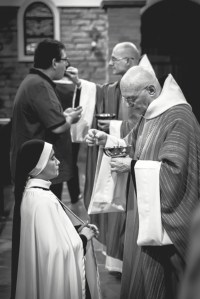 To understand the parable, we need to see the surprising elements that Jesus offers. Firstly, this is no ordinary wedding, but the royal wedding of the king’s son. Surely, people in the royal list are honored and privileged guests, but they refuse to come, decline the invitation twice and even mistreat the king’s servants. What they do are unthinkable! They fail to see how precious the invitation and rather choose their own trivial business. They are like throwing insult to the king who has honored them. No wonder, the king punishes them.
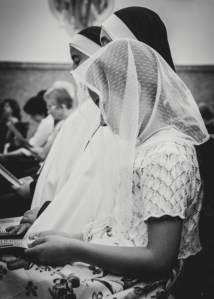 Untuk memahami perumpamaan yang kita dengar Minggu ini, kita perlu melihat elemen-elemen yang mengejutkan. Pertama, perjamuan ini bukalah perjamuan pernikahan biasa, tapi pernikahan putra raja. Tentunya, orang-orang dalam daftar undangan adalah tamu terhormat dan istimewa, tetapi mereka menolak untuk datang sampai dua kali dan bahkan menganiaya para utusan raja. Apa yang mereka lakukan tidak terpikirkan! Mereka gagal untuk melihat betapa berharganya undangan tersebut dan malah memilih urusan-urusan sepele mereka sendiri. Mereka sama saja melontarkan hinaan kepada raja yang telah menghormati mereka. Tak heran, raja menghukum mereka.
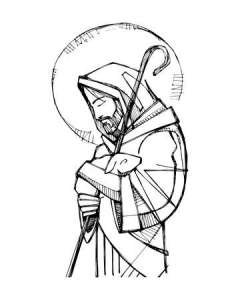 traditionally it is also called as the Good Shepherd Sunday. This is for an obvious reason. The Gospel reading tells us about Jesus who introduces Himself as the gate of the sheepfold and the Good Shepherd. The other readings also point the image of God as the good shepherd, like the world-renown psalm 23, “the Lord is my shepherd.”
 Hari ini adalah hari Minggu Paskah keempat dan secara tradisional juga disebut sebagai Minggu Gembala yang Baik. Bacaan Injil berbicara tentang Yesus yang memperkenalkan diri-Nya sebagai pintu gerbang domba dan juga Gembala yang Baik. Mazmur tanggapan diambil dari mazmur 23 yang menyatakan bahwa “Tuhanlah gembalaku.” St. Petrus dalam Suratnya mengatakan bahwa kita adalah domba-Nya yang hilang, tetapi sekarang telah kembali kepada Yesus sang Gembala [lih. 1 Pet 2:25].
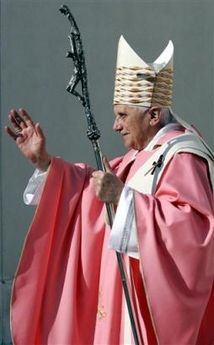 Today, we are going to see something different in the Church. Yes, the priests are not wearing a purple vestment, but a rose liturgical vestment. It is not because the priests are mistaken or want to make a fashion statement. It is because we are entering the third Sunday of Advent, also known as, the Gaudete Sunday. “Gaudete” is a Latin word meaning “rejoice!”. This color also symbolizes the joyful atmosphere. But, why do we need to celebrate Gaudete Sunday?
 Hari ini, kita akan melihat sesuatu yang berbeda di Gereja. Ya, para imam tidak mengenakan jubah ungu, tetapi jubah liturgis berwarna merah muda. Itu bukan karena para imam salah memakai baju atau ingin tampil trendi. Ini karena kita memasuki hari Minggu ketiga Adven, juga dikenal sebagai, hari Minggu Gaudete. “Gaudete” adalah kata Latin yang berarti “bersukacitalah!”. Warna merah muda ini juga melambangkan suasana sukacita. Tapi, mengapa kita perlu merayakan Minggu Gaudete?
 We were all born without bringing anything with us, and for sure, when we die, we will bring nothing with us. Job once said, “Naked I came forth from my mother’s womb, and naked shall I go back there. The LORD gave, and the LORD has taken away; blessed be the name of the LORD!” (Job 1:21). However, as we grow up and old, we begin to acquire things and possessions. Some are given, but some we earn it. As we are accumulating, we start attaching ourselves to these material belongings. Some of us are obsessed with collecting bags, shoes, and clothes, some others with more expensive things like electronic devices and cars. We believe these are ours, and we can own them until the Kingdom comes.
 In Medio Ecclesiae