

6th Sunday of Easter [B]
May 5, 2024
John 15:9-17
Happiness is a result of fulfilling our needs and desires. Since human beings have different needs, we also experience various kinds of happiness. We feel happy when we satisfy our hunger and complete our studies, but we also recognize that these are two distinct forms of happiness. Some types of happiness are emotionally intense but short-lived. Others do not give us thrills but are profound and lasting. Then, what kind of happiness do we need to set our eyes on?

To understand human needs, desires, and happiness, we need to understand who we are as a human person. We are beings with biological needs, and fulfilling these needs guarantees our survival. That is why things like good food, nice clothes and a proper house give us immediate pleasure. Part of our biological needs is the need to reproduce. Since this need relates to our basic survival as a species, nature has designed us to experience the most intense pleasure, but it also tends to be short-lived.
Yet, we are also beings with psychological needs. We look for emotional comfort, affirmation, and support. We do not only seek things to satisfy us but also other people who love us and to whom we express our emotions. The fulfilment of psychological needs yields more profound happiness and helps to counter various mental problems and disorders.
More than that, we are also beings with intellect and will. We also have a need to seek the truth and express our freedom and creativity. However, unlike other needs, this intellectual need requires us to spend a lot of effort and time, and often, it does not give us immediate, intense, emotionally charged pleasures. Yet, we know that though a good education is challenging and demands a lot of resources, its completion brings us profound satisfaction. Through education, we have grown, acquired skills and knowledge, and become better persons.
However, the Gospel teaches us that we are not only beings with biological, psychological, and intellectual needs. We are created not only for this earth. As the image of God, we are designed to go beyond this earthly life. The fathers of the Church speak of the human person as ‘capax Dei,’ that is ‘capable of God.’ Men and women are created for God. Then, how do we fulfil this spiritual need?
If we notice the dynamics between needs and happiness, we discover that the higher the needs, the more profound and lasting happiness we receive. Yet, the high-level needs require a higher level of effort. Consequently, to fulfil our need for God, we must be ready to give the most extraordinary effort, offering ourselves. More concretely, Jesus teaches us the way of true love, and the greatest love is to offer our lives to the persons we love. This is the paradox of true happiness. While other types of happiness are related to fulfilling needs for ourselves (we are the center), spiritual joy is moving away from ourselves. The more we are losing ourselves in love, the more we are open to God, the more we experience heavenly joy here on earth.
Rome
Valentinus Bayuhadi Ruseno, OP


 Dari dua hari Minggu sebelumnya, Yesus menunjukkan apa yang harus kita serahkan untuk menjadi murid-Nya. Dan hal-hal yang harus kita lepaskan demi Yesus sanggatlah sulit. Kita harus mengikuti Yesus ke mana pun Dia pergi. Kita harus mengasihi Yesus lebih dari yang lain bahkan orang tua kita. Kita harus siap untuk menderita, menanggung kesulitan, memikul salib, dan menyerahkan hidup bagi Yesus. Pilihannya adalah Yesus atau tidak sama sekali. Namun, mengikuti Yesus tidak semua tentang kesulitan dan pengorbanan. Hari ini kita mendengarkan bahwa menjadi murid-Nya, kita menerima “hal-hal baik” yang hanya Yesus bisa berikan.
 The journey of the three wise men from the East embodies the deepest human longing for a meaningful life and true happiness. Balthazar, Melchior and Gaspar, as the tradition called them, were neither Jews nor baptized Christians. In Greek ancient manuscripts of the Gospel, the word used to describe them is ‘magos’, meaning ‘someone with magical power’ or ‘magicians’, and practicing magic is detestable in the eyes of the Jews (2 Cro 33:6). Though we cannot be sure what kind of magic they crafted, but one thing is sure that they read the sign of times and followed the star. Because of this, they were instantaneously accused as one of those astrologers, star-readers who predict the human behaviors and the future, but I would argue that they were actually early astronomers instead astrologers. Like ordinary seamen who gazed the stars and hoped that they would guide them home, the magi did look at the star and believed that they would navigate their way to the true end.
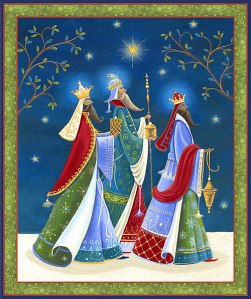 Perjalanan tiga orang bijak dari Timur menjadi symbol dari kerinduan terdalam manusia untuk kehidupan yang bermakna dan kebahagiaan sejati. Balthazar, Melchior dan Gaspar, sebagaimana tradisi menyebut mereka, bukanlah orang Yahudi ataupun Kristiani. Dalam naskah kuno Yunani dari Injil, kata yang digunakan untuk mendeskripsikan mereka adalah ‘magos’, yang berarti ‘seseorang dengan kekuatan magis’ atau ‘penyihir’, dan melakukan magis/sihir adalah kejahatan di mata orang-orang Yahudi (2 Taw 33:6). Meskipun kita tidak bisa memastikan apakah mereka sungguh penyihir apa bukan, satu hal yang pasti bahwa mereka membaca tanda-tanda zaman dan mengikuti sang bintang. Karena itu, mereka sering dituduh sebagai astrolog, pembaca bintang untuk memprediksi perilaku manusia dan masa depan, hal yang dilarang banyak agama, tapi saya berpendapat bahwa mereka sebenarnya adalah astronom. Seperti pelaut yang menatap bintang-bintang dan berharap bahwa bintang-bintang ini akan membimbing mereka pulang, orang majus ini juga melihat bintang dan percaya bahwa mereka akan berjalan di jalan yang benar.
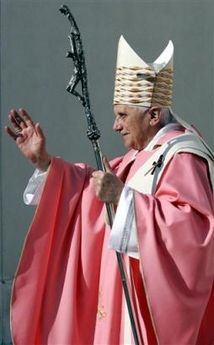 Today, we are going to see something different in the Church. Yes, the priests are not wearing a purple vestment, but a rose liturgical vestment. It is not because the priests are mistaken or want to make a fashion statement. It is because we are entering the third Sunday of Advent, also known as, the Gaudete Sunday. “Gaudete” is a Latin word meaning “rejoice!”. This color also symbolizes the joyful atmosphere. But, why do we need to celebrate Gaudete Sunday?
 Hari ini, kita akan melihat sesuatu yang berbeda di Gereja. Ya, para imam tidak mengenakan jubah ungu, tetapi jubah liturgis berwarna merah muda. Itu bukan karena para imam salah memakai baju atau ingin tampil trendi. Ini karena kita memasuki hari Minggu ketiga Adven, juga dikenal sebagai, hari Minggu Gaudete. “Gaudete” adalah kata Latin yang berarti “bersukacitalah!”. Warna merah muda ini juga melambangkan suasana sukacita. Tapi, mengapa kita perlu merayakan Minggu Gaudete?
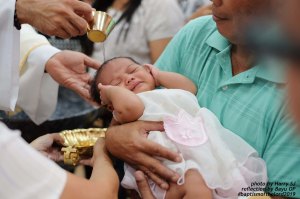 One of the greatest joys of being a deacon is to baptize babies and little children. The joy is not simply springing from touching the cheeks of a cute little baby or be part of festive parents, but it is something deeper. In fact, my experiences with baptism are not always pleasant. I remember at my first baptism in Sto. Domingo Parish, Metro Manila, when I began pouring water upon the baby’s forehead, the little girl suddenly burst in tears and cried aloud. I realized the water has touched the baby girl’s eyes. I was shocked and almost paralyzed not knowing what to do next. The good thing is the parents were able to handle the situation well. As the little baby calmed down, I apologized and continued the rite. Traumatizing!
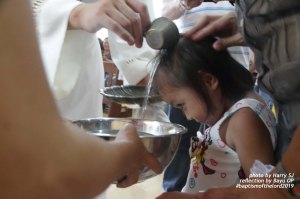 Salah satu sukacita terbesar menjadi seorang diakon adalah saat membaptis bayi dan anak. Kegembiraan tidak hanya hadir dari menyentuh pipi dari bayi kecil yang imut, tetapi ada sesuatu yang lebih dalam. Sebenarnya, pengalaman saya dengan pembaptisan tidak selalu menyenangkan. Saya ingat saat baptisan pertama saya di Paroki Sto. Domingo, Metro Manila, ketika saya mulai menuangkan air ke dahi sang bayi, sang gadis kecil itu tiba-tiba menangis dengan keras. Saya menyadari air telah menyentuh mata bayi perempuan itu. Saya terkejut dan tak bergerak karena tidak tahu apa yang harus saya lakukan selanjutnya. Untungnya, sang orang tua mampu menangani situasi dengan baik. Ketika bayi kecil itu tenang kembali, saya meminta maaf dan melanjutkan perayaannya. Sungguh membuat trauma!
 In Medio Ecclesiae